


Freecreat category
three-dimensional scanning
Browse models in this category, preview details, then continue to download when ready.

Skull model of a kanglion
This is a model of the skull of a kanglion. The most prominent feature of the bag lion is its large, scissor-like split meat teeth (located on the sides of the upper and lower jaws), and large front, rodent or primate-like incisors, rather than the canines of modern cats. It was not a real lion, but a carnivorous marsupial that lived in Pleistocene Australia. It is the largest carnivorous mammal in Australian history. It has a strong bite force and can hunt prey much larger than its own size.

Cave bear skull fossil
This is a fossil skull model of a cave bear. The cave bear (scientific name: Ursus spelaeus) is a bear that lived in Europe and Asia during the Pleistocene and became extinct about 20,000 years ago during the Ice Age. They are much larger than today's brown bears, standing up to 10 feet (about 3 meters) tall and weighing more than 1600 pounds (about 725 kilograms). Because most of their fossils were found in caves, they showed that they were more dependent on caves for habitat and hibernation than existing brown bears, hence the name "cave bear".

Ammonite fossil
This is the fossil of ammonites. Ammonites are an extinct marine cephalopod mollusk related to modern octopus, squid and nautilus. The most notable feature of ammonites is its flat-spun outer shell with tight spiral curls. This shell is not only their shelter, but also controls buoyancy by adjusting the internal air chamber like modern nautilus. They first appeared in the Triassic period about 0.24 billion years ago and became extinct with the dinosaurs at the end of the Cretaceous period (about 66 million years ago). The ammonite evolves extremely quickly and is widely distributed, so it is a very important "standard fossil" in geology ".

Fossilized skull of a forest australopithecus
This is the skull of a forest ancient ape (Proconsul), which is also known as the original Kangshul ape. They are extinct Australopithecus, living in eastern Africa about 23 million to 14 million years ago, and are considered to be one of the common ancestors of apes and humans. They have limb bones similar to those of monkeys, but no tails, and the tooth structure shows that they are fruit-eating apes.
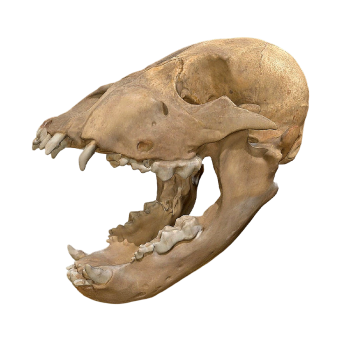
Cougar Skull
This is the skull of a cougar (American Lion). The cougar (Panthera leo atrix) is an extinct species of feline, one of the largest known. They lived during the Pleistocene (Pleistocene) and became extinct about 10,000 years ago. The cougar was found primarily in North America, from Alaska to Mexico, and was a predator at the top of the North American food chain at the time. As pure carnivores, their tooth structure is ideal for piercing and tearing meat, and their canines are large.

The skeleton of an Edwards' giant lemur
This is the gypsum skeleton of an extinct species of giant lemur, the Edwards' giant lemur. Edwards' giant lemur weighs about 50 kilograms and is one of the largest lemurs. They are slow-moving, large in size and similar in posture to modern koalas. These animals once lived on the island of Madagascar. The arrival of humans to the island 2,300 years ago led to a rapid decline in the species, which eventually went extinct about 500 years ago.

Skeleton of the Dinosaur
This is a skeleton model of Moa. The moa is an extinct group of giant, non-flying, flat-breasted birds that were once widely distributed in New Zealand. Dinosaurs are the tallest known birds, with species of the genus Dinosaur (Dinornis) standing up to more than 3 metres tall and weighing about 250 kilograms. They are characterized by a small head, a long, powerful neck and thick legs. Unlike most birds, the moa has no trace of its wings at all. Before the arrival of humans, there were no medium to large mammals in New Zealand, and the moa was the main herbivore in the local forest ecosystem.

Galena
Galena is a common mineral that is a sulfide with a metal (lead) to sulfur ratio of 1:1. It is the most important ore for lead and also an important source of silver. Galena is one of the most abundant and widely distributed sulfide minerals. Galena (also known as lead sulfide) is a common mineral and an important ore mineral for extracting lead. It is the most widely distributed lead mineral. Galena is a gray lead sulfide, and China has been extracting lead from galena since before the Shang Dynasty. Galena has a cubic shape, and many of these cubic crystals come together to form granules or blocks.

Photogrammetry of prickly lobster specimens

3D scanning specimen model of chameleon

Three color Macaw Specimen 3D Scanning of Cuban Macaw

National protected animal pangolin specimens
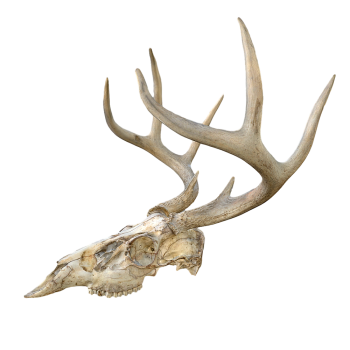
Full-color 3D scan of a deer's skull
![[3D Scanning] Mammoth Skeleton 3D Model AR Museum](https://file.freecreat.com/user/13/13/2023/0925/123842wZteEqcQ.png?x-oss-process=image/resize,m_pad,w_350/quality,q_80)
[3D Scanning] Mammoth Skeleton 3D Model AR Museum
This impressive mammoth skeleton was discovered in the south of France in 1869. It is currently seen at the "Palé ontologie Gallery" of the National Museum of Natural History in Paris. This young male mammoth is 3.80 meters/12.5 feet tall. Weight: Approximately 8 metric tons. Age: Approximately 1.2 million to 700000 years old. 3D scanning using Agisoft Metashape.

Random Model

Canon ts3380 printer (black)
854 View

Russian Toy Dog 3D Model Animation
968 View


Blue Whale Model 3D Animation
1546 View


Chinese antique bronze wine pot
1080 View

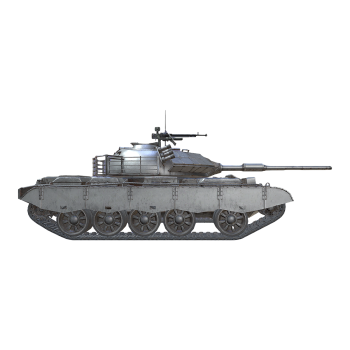
Type 59 Medium Tank
2306 View

scylla paramamosain
650 View