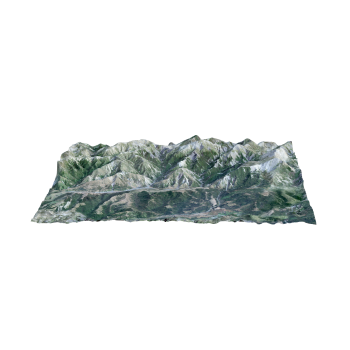
Northern Dead Sea region

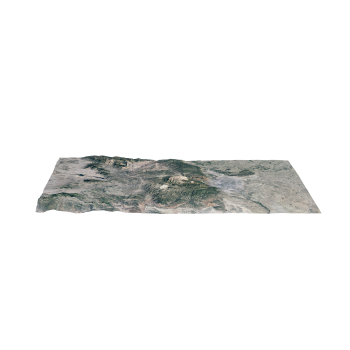
Northern Dead Sea region

It is a unique and striking natural landscape located at the border between Israel and Jordan. The Dead Sea is the lowest lake on Earth, located about 430 meters below sea level, known for its high salinity and mineral rich mud. These characteristics make the Dead Sea a popular health and wellness destination, where visitors can enjoy a unique floating experience while utilizing its mud and salt for skin treatments. You can experience spectacular desert landscapes and clear lake water. This region is a treasure trove of ecological diversity, and despite the high salinity of the Dead Sea, there are still some organisms adapted to extreme environments that survive here. The region also has rich historical relics.
Mount Judi, Türkiye

Mount Judi, Türkiye

Türkiye's Mount Judi is the site of Noah's Ark, which has been a controversial topic for a long time. Some traditional views suggest that the resting place of Noah's Ark was not Mount Ararat as it is known today, but Mount Judy, which is part of Mount Ararat. Located at the junction of Türkiye, Iraq and Syria, it is about 7000 feet above sea level and 175 miles away from Mount Ararat. In 1953, German geologist Friedrich Bendl discovered some fragments of wood and asphalt at the top of Mount Judy, which were buried about one meter deep underground. Carbon dating showed that these fragments could be traced back to about 6500 years ago.
Mount Fuji volcano crater in Japan

Mount Fuji volcano crater in Japan

It is a symbol of Japan and the highest peak in the country, with an altitude of 3776 meters. This volcano is located in the central part of Honshu Island, about 100 kilometers from Tokyo. It is an active stratovolcano with a volcanic eruption history dating back to about 10000 years ago. The crater of Mount Fuji is a huge caldera called Mount Fuji Crater Lake, formed by multiple volcanic eruptions. The last eruption was the Baoyong eruption in 1707, which had a huge impact on the surrounding areas. Renowned for its almost perfect cone shape and snow hat covering the mountaintop, it is a popular destination for hiking enthusiasts and photographers.
Türkiye's Yarra Mountains

Türkiye's Yarra Mountains

Called Agridag in Turkish, it is a dormant volcano in the east of Türkiye, close to the border between Iran and Armenia. It is famous for its unique double peak profile and cultural and historical significance. With an altitude of 5137 meters, it is the highest peak in Türkiye. It holds an important position in religious traditions, especially closely related to the story of Noah's Ark in the Bible. According to these traditions, it is believed to be the place where Noah's Ark anchored after the Great Flood, symbolizing hope and revival. Make this mountain a symbol of Jewish, Christian, and Islamic faith. It is a symbol of natural beauty and cultural heritage in eastern Türkiye.
Judean Desert in Israel

Judean Desert in Israel

Located in southern Israel, it is a region with a long history and full of mystery. This desert covers a vast area extending from southern Jerusalem to the Dead Sea and Jordan Valley, renowned for its dry climate, rugged terrain, and deep canyons. Not only is it a treasure trove of natural landscapes, but it is also an important place for religion and history. There are abundant archaeological sites, including ancient fortresses, monasteries, and caves, some of which are closely related to biblical stories. It is said that Moses received the Ten Commandments here, while Jesus Christ conducted his 40 day fasting and trial in this desert.
Machu Picchu, Peru

Machu Picchu, Peru

It is a historical site located in the Andes Mountains of Peru, recognized as one of the most spectacular archaeological sites of the Inca Empire. This ancient city is located on a cliff, at an altitude of about 2430 meters, overlooking the deep canyon of the Urubamba River. Built in the 15th century, it was not rediscovered by historian Hiram Bingham until 1911, which attracted worldwide attention. The architecture cleverly utilizes the terrain and harmoniously coexists with the surrounding natural environment, showcasing the superb architectural techniques and urban planning of the Indonesians. As one of the New Seven Wonders of the World, Machu Picchu attracts thousands of tourists and archaeologists every year.
Lochnis Lake, Scotland

Lochnis Lake, Scotland

It is a famous freshwater lake in the Scottish Highlands, renowned for its deep waters and the legendary Loch Ness Monster. The lake is approximately 39 kilometers long, with a width ranging from 1.6 to 2.4 kilometers and a maximum depth of 298 meters, making it one of the largest lakes in the UK. The magnificent natural scenery around has attracted countless tourists to explore and sightsee. Urquhart Castle, located next to Loch Loch Ness, is a historic castle that was built in the 13th century and was once one of the largest castles in Scotland. The castle has witnessed the historical changes of Scotland, including multiple wars and destruction. Although only ruins remain, it is still one of the most popular tourist attractions.
Jerusalem

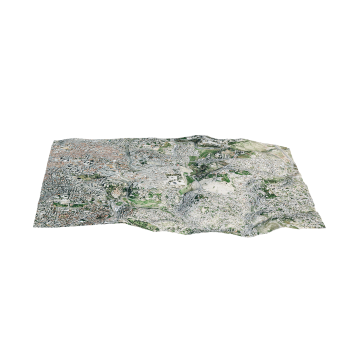
Jerusalem

It is a city with a long history, located in the Levant region of the Near East, situated in the Judean Mountains between the Mediterranean Sea and the Dead Sea. It is a holy site for the three major religions of Judaism, Christianity, and Islam, and is known as the "City of Peace". The ruins of Jerusalem, such as the Crying Wall, the Cathedral of the Holy Sepulchre, and the Dome of the Rock, are not only symbols of religious faith, but also important carriers of cultural history. It was listed as a World Cultural Heritage site by UNESCO in 1981. Not only is it the intersection of religion and history, but it is also the focus of modern politics and conflicts. Both Israel and Palestine claim this as their capital, but there are differences in the international community regarding this.
Honolulu, Hawaii

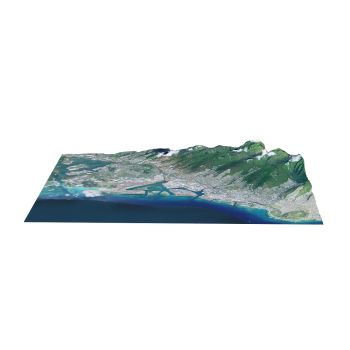
Honolulu, Hawaii

It is the capital of Hawaii, located on Oahu Island, and a shining pearl in the South Pacific. Renowned for its unique cultural fusion, beautiful beaches, and rich history. Honolulu's Waikiki Beach is one of the most famous beaches in the world, attracting tourists from all over the world with its delicate beaches, warm waters, and active surfing culture. Waikiki is not only a paradise for beach enthusiasts, but also a hot spot for shopping and dining. The shops, restaurants, and nightlife venues lining the streets provide tourists with diverse entertainment options. Honolulu also has many cultural and historical landmarks. Let people understand the history and culture of Hawaii.
Dulupinar, Türkiye

Dulupinar, Türkiye

Tend ü rek Mountain, located in eastern Türkiye, is a controversial rock structure due to its shape resembling a giant ship. The region is only 3 kilometers away from the Iranian border and has an altitude between 1966 and 2004 meters. Some people believe that this may be the final resting place of Noah's Ark mentioned in the Bible and the Quran, especially near Mount Kudi mentioned in the Quran. In 1959, map maker Ilhan Durupinal first discovered this ship shaped landform. There is currently no conclusive evidence to suggest that Durupinal is the location of Noah's Ark. A popular destination that attracts many pilgrims and tourists
Diamond Head Volcano, Honolulu, Hawaii

Diamond Head Volcano, Honolulu, Hawaii

It is a famous landmark in Honolulu, Hawaii, located at the southeast corner of Oahu Island. This extinct volcano is named after its circular shape and volcanic debris, which shimmer in the sunlight and resemble diamonds, hence the name "Diamond Head". It is one of the most famous volcanoes in the Hawaiian Islands, with its last eruption dating back to approximately 100000 years ago. A huge depression has formed inside, becoming a unique natural landscape. You can climb to the top of the mountain through a historic tunnel and a series of stairs, with an observation deck on top that offers magnificent views of Honolulu and the Pacific Ocean.
Dead Sea in the Jordan Rift Valley

Dead Sea in the Jordan Rift Valley

It is a salt lake located in eastern Jordan, Israel, and western West Bank, situated in the Jordan Rift Valley. The main tributary is the Jordan River. The water surface and shore are located 1410.8 feet below sea level, which is the lowest point on land on Earth. Known for its high salinity, its salt content is approximately 9 times that of other oceans, making it almost devoid of any living organisms, hence the name 'Dead Sea'. This high salinity also gives it unique buoyancy, allowing swimmers to easily float on the surface of the water. The surrounding area is rich in minerals that are believed to have therapeutic effects on the skin, thus attracting tourists from all over the world seeking health and relaxation
Cape Town

Cape Town

It is a beautiful city in South Africa, renowned for its rich culture, history, and natural beauty. Located in the southwest of South Africa, backed by Table Mountain and facing the Atlantic Ocean, it is a vibrant coastal city. Table Mountain is one of the most famous landmarks in Cape Town, attracting countless tourists with its flat summit and magnificent scenery. With a rich history, this city was once an important trading post of the Dutch East India Company and one of the oldest cities in South Africa. The historical relics here, such as Cape of Good Hope and Malay Quarter, showcase the colorful past of this city. In addition to history, it is also a paradise for nature enthusiasts, located near multiple nature reserves.
Jabal al Lawz Mountain in Saudi Arabia

Jabal al Lawz Mountain in Saudi Arabia

Also known as Maqla, it is a mountain located in Saudi Arabia and is believed to be the site of Mount Sinai, where Moses received the Ten Commandments. It holds an important position in Islamic tradition and is regarded by many Muslims and Christians as a key location in religious history. The distinctive feature is its unique red and black striped rocks, which are unparalleled in the region and have earned the title of 'Mount Sinai of Arabia'. Despite some controversy, many scholars and archaeologists believe that it matches the descriptions in the Bible, including its geographical location and natural features. Not only a destination for religious pilgrimage, but also a popular destination for mountaineers and explorers
Avaris, the capital of the Hyksos dynasty in ancient Egypt

Avaris, the capital of the Hyksos dynasty in ancient Egypt

It is a city in the eastern Nile Delta of ancient Egypt, and historically served as the capital of the Hyksos dynasty. They were a group of people from the Near East who ruled northern Egypt from the 17th century BC to the 16th century BC. According to archaeologist Manfred Bitak's research, the site of Avaris has been discovered near the modern village Tellel-Dab'a, where he has been leading archaeological excavations since 1966. Avaris was located on the Pelusian branch of the Nile River at that time, with a superior geographical location and convenient access to the Mediterranean coast and the Nile Valley.
Map of Mount St. Helens in the United States

Map of Mount St. Helens in the United States

It is a volcano located in the Cascade Mountains in southwestern Washington state, United States. Its eruption on May 18, 1980, was one of the largest recorded volcanic explosions in North America. It has an active geological history, and its oldest volcanic ash deposits can be traced back to at least 40000 years ago. Before the catastrophic eruption in 1980, there were nine major eruptions with varying intervals between each eruption. Resulting in 57 deaths and causing massive damage, destroying the plants, animals, and ecosystems in the surrounding areas. In response to this eruption, the US Congress established the National Volcano Monument in 1982.
Mount St. Helens

Mount St. Helens

It is a volcano located in the Cascade Mountains in southwestern Washington state, United States. Its eruption on May 18, 1980, was one of the largest recorded volcanic explosions in North America. It has an active geological history, and its oldest volcanic ash deposits can be traced back to at least 40000 years ago. Before the catastrophic eruption in 1980, there were nine major eruptions with varying intervals between each eruption. Resulting in 57 deaths and causing massive damage, destroying the plants, animals, and ecosystems in the surrounding areas. In response to this eruption, the US Congress established the National Volcano Monument in 1982.
Mount Mayon in the Philippines

Mount Mayon in the Philippines

It is a sacred and active stratovolcano located in the province of Albay in the Bicol region of Luzon Island, Philippines. Known for its almost perfect cone shape and magnificent natural scenery, it is hailed as the 'most perfect volcanic cone in the world'. It is one of the most active volcanoes in the Philippines, with over 47 recorded eruptions in history, with the most recent major eruption occurring in 2018. The activity has attracted the attention of geologists and volcanologists, but it has also brought certain challenges to the local area, as volcanic eruptions may have an impact on surrounding areas. Despite potential dangers, it remains a famous tourist destination in the Philippines. Providing spectacular natural landscapes for tourists
Mount Kilimanjaro in Africa

Mount Kilimanjaro in Africa

Located in Tanzania, it is the highest peak on the African continent and also the highest independent mountain in the world, with an altitude of 5895 meters. This dormant volcano consists of three volcanic cones: Kibo, Marwanji, and Hila. Jibo is the tallest volcanic cone and the main target for climbers to climb. Renowned for its unique geographical location and biodiversity. The mountain gradually transitions from tropical grasslands to alpine deserts, forming a diverse ecosystem. At the foot of the mountain are dense forests and tropical grasslands, while at the top of the mountain is a cold area covered by glaciers. Provided a valuable venue for biologists to study biodiversity and climate change
Mount Everest and the Himalayas

Mount Everest and the Himalayas

Also known as Mount Everest, it is the highest peak in the the Himalayas, with an altitude of 8850 meters, and is considered the highest point on the earth. Located on the border between China's Xizang Autonomous Region and Nepal, it has the Tibetan name "Qomolangma" and the Nepalese name "Sagamata". Not only is it the ultimate challenge pursued by mountaineers, but it is also an important place for geological, climatological, and ecological research. The steep mountain peaks, extreme climate, and high-altitude environment are both attractive and challenging for climbers. The the Himalayas, as one of the youngest mountains on the earth, has rich biodiversity and unique ecosystems.
Mount Carmel, Israel

Mount Carmel, Israel

A mountain range located in northern Israel, along the Mediterranean coast, renowned for its magnificent natural scenery and rich historical significance. This mountain range runs east-west and overlooks the Mediterranean, providing unparalleled coastal views. The highest point is Mount Mellon, with an altitude of about 546 meters, which is a popular destination for mountain climbers and nature enthusiasts. Known throughout history for its significant position in the Bible. According to 1 Kings chapter 18, the prophet Elijah engaged in a famous duel here, challenging the prophets who worshiped Baal and ultimately ending in Elijah's victory. This event symbolized the triumph of monotheism over polytheism
Alarat Mountain, Türkiye

Alarat Mountain, Türkiye

Located in the far east of Türkiye (traditionally belonging to Armenia), it is a snow covered dormant compound volcano, which consists of two main volcanic cones: Greater Ale Mountain and Lesser Ale Mountain. Mount Da'ale is the highest peak of Türkiye and Armenia plateau, with an altitude of 16853 feet. Da'ershan has become a destination for climbers and pilgrims due to its spectacular peaks and religious significance. The mountain is covered with thick snow, and the snow on the top of the mountain remains unchanged all year round, becoming a unique natural landscape. Despite controversy, it holds an important position in history, culture, and religion, continuing to attract tourists and explorers from around the world to explore
Baringer Crater

Baringer Crater

Located near Winslow, Arizona, USA, it is a huge impact crater formed by a meteorite impact event approximately 50000 years ago. With a diameter of approximately 1.2 kilometers and a depth of about 174 meters, it is one of the best preserved meteorite impact craters on Earth. The shape is very typical, with a clear central uplift area, which is the result of the compression and rebound of underground rocks during impact. The edge is about 40 meters higher than the surrounding desert plain, forming a steep outer wall. The bottom of the pit is relatively flat, covered with rocks and fragments ejected during impact. Having a visitor center and museum showcasing exhibitions related to meteorite craters and impact events.
Lunar Pit 3D Scene Model

Lunar Pit 3D Scene Model

Also known as lunar craters, they are a type of concave terrain that covers the surface of the moon and are traces left by ancient volcanic activity and meteorite impacts. The size of volcanic craters varies, ranging from tiny millimeter sized craters caused by micro meteorite impacts to large structures several miles wide, forming a unique topographic map of the lunar surface. The formation process can be traced back to the early geological period of the moon, when magma activity was frequent inside the moon. As magma erupted onto the surface of the moon, it cooled and formed many circular depressions, which later became known as volcanic craters. It may also have been formed by meteorite impacts, which left permanent marks on the surface of the moon
Lee's Ferry, Grand Canyon, Arizona, USA

Lee's Ferry, Grand Canyon, Arizona, USA

It is an important location located within the Grand Canyon National Park in Arizona, USA, marking the starting point of the Grand Canyon section of the Colorado River. Named after 19th century explorer John Wesley Powell, who led the first scientific expedition through here in 1869 to explore the Colorado River and Grand Canyon. It is one of the few places in the Grand Canyon that can be reached all year round, as it is located at the bottom of the Grand Canyon, with a lower altitude and a relatively mild climate. It is a popular fishing spot. The Colorado River rafting journey that begins here is considered one of the most spectacular river journeys in the world.
Jabal Maqla Peak, Saudi Arabia

Jabal Maqla Peak, Saudi Arabia

Located in the al Lawz Mountains of Saudi Arabia, many people believe that this area or its vicinity may be the true location of Mount Sinai as described in the Book of Exodus in the Bible. There are multiple locations on this mountain and its surrounding area that may be related to biblical events, including the possible Golden Calf Altar, Elijah's Cave, Moses Altar, and 12 stone pillars representing the twelve tribes of Israel. However, appropriate archaeological work is needed to better understand this site and evaluate the proposed theories. Renowned for its unique black mountaintop, some believe it may be evidence of God's fiery descent upon Mount Sinai.
GrassyMountainsGeo Geology of GrassyMountainsGeo

GrassyMountainsGeo Geology of GrassyMountainsGeo

It is a series of mountain ranges located in Montana, USA, renowned for its geological diversity and natural beauty. It is part of the Rocky Mountains and has a rich geological history, including ancient rock layers and diverse mineral resources. The geology of this region is mainly composed of sedimentary rocks, metamorphic rocks, and volcanic rocks, which record hundreds of millions of years of geological changes. The rock layers in the mountains reveal the sedimentary environments of ancient oceans, rivers, and lakes, as well as the subsequent processes of crustal uplift and erosion. These geological features provide valuable information for studying the tectonic activity, paleoenvironmental changes, and biological evolution of the Earth. You can also enjoy spectacular mountain views here.
Map of Grand Canyon and Little Colorado River Canyon

Map of Grand Canyon and Little Colorado River Canyon

The Grand Canyon is a spectacular canyon formed by the Colorado River cutting through the highlands of northwest Arizona, USA, known for its unique topography and rich colors. The rock layers of the Grand Canyon record different periods of Earth's history, ranging from ancient rocks over 2.5 billion years old to relatively recent volcanic activity. The Little Colorado River Canyon is the largest tributary of the Colorado River in the Grand Canyon, flowing through the Navajo Reservation in Arizona. Known for its gemstone blue water color, which is formed by the reaction of minerals in water with carbon dioxide in the air. It is a natural wonder, and the water color presents different beautiful colors in different seasons.
The confluence of the Grand Canyon and the Little Colorado River in the United States
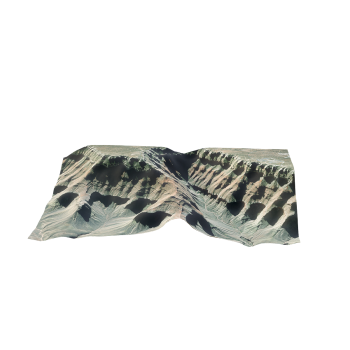
The confluence of the Grand Canyon and the Little Colorado River in the United States

It is a spectacular natural wonder located in Arizona, USA, formed by the erosion of the Colorado River over millions of years. Known for its deep canyons, colorful rock formations, and unique geological structure. One of the tributaries of the Colorado River merges with the main river in certain areas of the Grand Canyon, forming this unique location. This convergence point is not only the confluence of two rivers, but also a must visit destination for many tourists and nature enthusiasts. The sediment brought in settles on the riverbed, forming a distinct white sandy beach that contrasts sharply with the surrounding red rocks, adding a unique color to the Grand Canyon.
3D Scene Scanning of the Grand Canyon in the United States
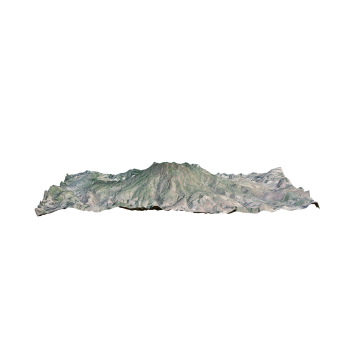
3D Scene Scanning of the Grand Canyon in the United States

The Grand Canyon, located in the northwest of Arizona, USA, is one of the world's natural wonders. Yaki Point and South Kebab Trail are two very popular viewing spots and hiking trails within the Grand Canyon. Yaki Point provides a magnificent panoramic view of the southern part of the Grand Canyon, making it an excellent location for watching sunrises and sunsets. You can overlook the winding Colorado River and the rock formations deep in the canyon, which record billions of years of Earth's history. The South Kaibabu Trail is a hiking trail that delves deep into the Grand Canyon, starting near Cape Yaki. Known for its steep descent and ascent, it provides an opportunity to experience the unique geology and ecosystem of the Grand Canyon up close.
A dormant volcano that no longer erupts

A dormant volcano that no longer erupts

3D Scene Scanning of Mount Carmelo in Israel

3D Scene Scanning of Mount Carmelo in Israel

It is a historic and religiously significant mountain range in northern Israel, overlooking the Mediterranean Sea. Not only is it a treasure trove of natural beauty, but it also carries rich cultural heritage and religious legends. Closely linked to the traditions of Christianity and Islam, especially in Christianity, this mountain is closely related to the story of the prophet Elijah, where he confronted the prophet Baal and accepted God's will. There are multiple religious and historical sites scattered on the mountain, including the Monastery of Deir Mohra Kagar Moro, which commemorates Saint Therese and has become an important destination for pilgrims and tourists. It is also a hot spot in archaeological exploration, with relics of ancient civilizations.
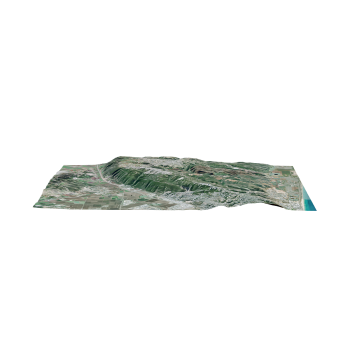
CalaRossa Beach, Italy

CalaRossa Beach, Italy

A famous beach located in the Liguria region of northwestern Italy, near the Cinque Terre National Park. Known for its unique red rocks and clear seawater, it is a popular leisure destination for tourists and local residents. The beach is relatively small, but very charming, providing a peaceful environment away from the hustle and bustle of the city. Surrounded by steep cliffs and lush vegetation, it provides a perfect backdrop for tourists to take photos and appreciate natural beauty. Here, you can enjoy sunbathing, swimming, or try some water sports. The water quality on the beach is crystal clear, making it perfect for snorkeling and observing marine life.
Volcanic Plateau in the United States

Volcanic Plateau in the United States

It is a unique geological region known for its vast volcanic landforms and rich geological history. Usually composed of ancient lava flows that emerged from volcanic eruptions at some point in Earth's history, then cooled and solidified to form flat highlands. Often displaying a desolate yet spectacular beauty, its surface is covered with black basalt, which, due to its hard texture, can resist erosion and maintain the flat shape of the plateau. In some places, these lava flows form columnar joints, which are hexagonal or polygonal stone pillars formed by the contraction of cooled lava.
Salt Hill in Iran

Salt Hill in Iran

The Zagros Mountains, located in southwestern Iran, is a geological wonder formed by the collision of the Eurasian Plate and the Arabian Plate. It is a geological phenomenon in which the salt layer flows upward under pressure deep underground during geological time, forming a dome shaped structure. The formation of salt domes is closely related to the sedimentary environment and tectonic history of the region, and is an important component of oil production in the Persian Gulf. Salt domes are formed by the upward flow of low-density salt layers under pressure in underground rock formations, which bend and cover the rock layers. As erosion progresses, the surrounding softer rocks are removed, revealing salt domes.