Diamond Head Volcano, Honolulu, Hawaii

Diamond Head Volcano, Honolulu, Hawaii

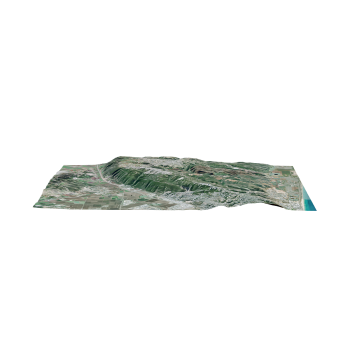
It is a famous landmark in Honolulu, Hawaii, located at the southeast corner of Oahu Island. This extinct volcano is named after its circular shape and volcanic debris, which shimmer in the sunlight and resemble diamonds, hence the name "Diamond Head". It is one of the most famous volcanoes in the Hawaiian Islands, with its last eruption dating back to approximately 100000 years ago. A huge depression has formed inside, becoming a unique natural landscape. You can climb to the top of the mountain through a historic tunnel and a series of stairs, with an observation deck on top that offers magnificent views of Honolulu and the Pacific Ocean.
Dead Sea in the Jordan Rift Valley

Dead Sea in the Jordan Rift Valley

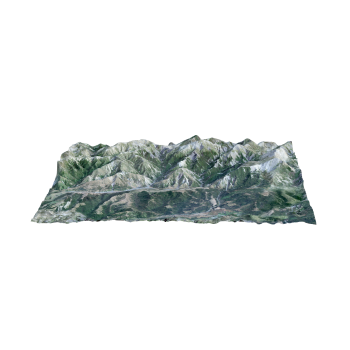
It is a salt lake located in eastern Jordan, Israel, and western West Bank, situated in the Jordan Rift Valley. The main tributary is the Jordan River. The water surface and shore are located 1410.8 feet below sea level, which is the lowest point on land on Earth. Known for its high salinity, its salt content is approximately 9 times that of other oceans, making it almost devoid of any living organisms, hence the name 'Dead Sea'. This high salinity also gives it unique buoyancy, allowing swimmers to easily float on the surface of the water. The surrounding area is rich in minerals that are believed to have therapeutic effects on the skin, thus attracting tourists from all over the world seeking health and relaxation
Jabal al Lawz Mountain in Saudi Arabia

Jabal al Lawz Mountain in Saudi Arabia

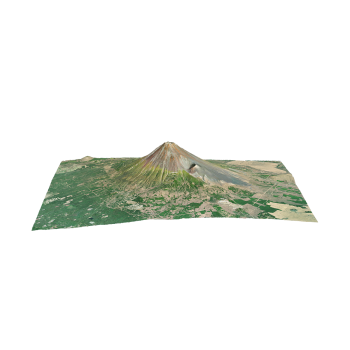
Also known as Maqla, it is a mountain located in Saudi Arabia and is believed to be the site of Mount Sinai, where Moses received the Ten Commandments. It holds an important position in Islamic tradition and is regarded by many Muslims and Christians as a key location in religious history. The distinctive feature is its unique red and black striped rocks, which are unparalleled in the region and have earned the title of 'Mount Sinai of Arabia'. Despite some controversy, many scholars and archaeologists believe that it matches the descriptions in the Bible, including its geographical location and natural features. Not only a destination for religious pilgrimage, but also a popular destination for mountaineers and explorers
Map of Mount St. Helens in the United States

Map of Mount St. Helens in the United States

It is a volcano located in the Cascade Mountains in southwestern Washington state, United States. Its eruption on May 18, 1980, was one of the largest recorded volcanic explosions in North America. It has an active geological history, and its oldest volcanic ash deposits can be traced back to at least 40000 years ago. Before the catastrophic eruption in 1980, there were nine major eruptions with varying intervals between each eruption. Resulting in 57 deaths and causing massive damage, destroying the plants, animals, and ecosystems in the surrounding areas. In response to this eruption, the US Congress established the National Volcano Monument in 1982.
Mount St. Helens

Mount St. Helens

It is a volcano located in the Cascade Mountains in southwestern Washington state, United States. Its eruption on May 18, 1980, was one of the largest recorded volcanic explosions in North America. It has an active geological history, and its oldest volcanic ash deposits can be traced back to at least 40000 years ago. Before the catastrophic eruption in 1980, there were nine major eruptions with varying intervals between each eruption. Resulting in 57 deaths and causing massive damage, destroying the plants, animals, and ecosystems in the surrounding areas. In response to this eruption, the US Congress established the National Volcano Monument in 1982.
Mount Mayon in the Philippines

Mount Mayon in the Philippines

It is a sacred and active stratovolcano located in the province of Albay in the Bicol region of Luzon Island, Philippines. Known for its almost perfect cone shape and magnificent natural scenery, it is hailed as the 'most perfect volcanic cone in the world'. It is one of the most active volcanoes in the Philippines, with over 47 recorded eruptions in history, with the most recent major eruption occurring in 2018. The activity has attracted the attention of geologists and volcanologists, but it has also brought certain challenges to the local area, as volcanic eruptions may have an impact on surrounding areas. Despite potential dangers, it remains a famous tourist destination in the Philippines. Providing spectacular natural landscapes for tourists
Mount Kilimanjaro in Africa

Mount Kilimanjaro in Africa

Located in Tanzania, it is the highest peak on the African continent and also the highest independent mountain in the world, with an altitude of 5895 meters. This dormant volcano consists of three volcanic cones: Kibo, Marwanji, and Hila. Jibo is the tallest volcanic cone and the main target for climbers to climb. Renowned for its unique geographical location and biodiversity. The mountain gradually transitions from tropical grasslands to alpine deserts, forming a diverse ecosystem. At the foot of the mountain are dense forests and tropical grasslands, while at the top of the mountain is a cold area covered by glaciers. Provided a valuable venue for biologists to study biodiversity and climate change
Mount Everest and the Himalayas

Mount Everest and the Himalayas

Also known as Mount Everest, it is the highest peak in the the Himalayas, with an altitude of 8850 meters, and is considered the highest point on the earth. Located on the border between China's Xizang Autonomous Region and Nepal, it has the Tibetan name "Qomolangma" and the Nepalese name "Sagamata". Not only is it the ultimate challenge pursued by mountaineers, but it is also an important place for geological, climatological, and ecological research. The steep mountain peaks, extreme climate, and high-altitude environment are both attractive and challenging for climbers. The the Himalayas, as one of the youngest mountains on the earth, has rich biodiversity and unique ecosystems.
Mount Carmel, Israel

Mount Carmel, Israel

A mountain range located in northern Israel, along the Mediterranean coast, renowned for its magnificent natural scenery and rich historical significance. This mountain range runs east-west and overlooks the Mediterranean, providing unparalleled coastal views. The highest point is Mount Mellon, with an altitude of about 546 meters, which is a popular destination for mountain climbers and nature enthusiasts. Known throughout history for its significant position in the Bible. According to 1 Kings chapter 18, the prophet Elijah engaged in a famous duel here, challenging the prophets who worshiped Baal and ultimately ending in Elijah's victory. This event symbolized the triumph of monotheism over polytheism
Alarat Mountain, Türkiye

Alarat Mountain, Türkiye

Located in the far east of Türkiye (traditionally belonging to Armenia), it is a snow covered dormant compound volcano, which consists of two main volcanic cones: Greater Ale Mountain and Lesser Ale Mountain. Mount Da'ale is the highest peak of Türkiye and Armenia plateau, with an altitude of 16853 feet. Da'ershan has become a destination for climbers and pilgrims due to its spectacular peaks and religious significance. The mountain is covered with thick snow, and the snow on the top of the mountain remains unchanged all year round, becoming a unique natural landscape. Despite controversy, it holds an important position in history, culture, and religion, continuing to attract tourists and explorers from around the world to explore
Lee's Ferry, Grand Canyon, Arizona, USA

Lee's Ferry, Grand Canyon, Arizona, USA

It is an important location located within the Grand Canyon National Park in Arizona, USA, marking the starting point of the Grand Canyon section of the Colorado River. Named after 19th century explorer John Wesley Powell, who led the first scientific expedition through here in 1869 to explore the Colorado River and Grand Canyon. It is one of the few places in the Grand Canyon that can be reached all year round, as it is located at the bottom of the Grand Canyon, with a lower altitude and a relatively mild climate. It is a popular fishing spot. The Colorado River rafting journey that begins here is considered one of the most spectacular river journeys in the world.
Jabal Maqla Peak, Saudi Arabia

Jabal Maqla Peak, Saudi Arabia

Located in the al Lawz Mountains of Saudi Arabia, many people believe that this area or its vicinity may be the true location of Mount Sinai as described in the Book of Exodus in the Bible. There are multiple locations on this mountain and its surrounding area that may be related to biblical events, including the possible Golden Calf Altar, Elijah's Cave, Moses Altar, and 12 stone pillars representing the twelve tribes of Israel. However, appropriate archaeological work is needed to better understand this site and evaluate the proposed theories. Renowned for its unique black mountaintop, some believe it may be evidence of God's fiery descent upon Mount Sinai.
GrassyMountainsGeo Geology of GrassyMountainsGeo

GrassyMountainsGeo Geology of GrassyMountainsGeo

It is a series of mountain ranges located in Montana, USA, renowned for its geological diversity and natural beauty. It is part of the Rocky Mountains and has a rich geological history, including ancient rock layers and diverse mineral resources. The geology of this region is mainly composed of sedimentary rocks, metamorphic rocks, and volcanic rocks, which record hundreds of millions of years of geological changes. The rock layers in the mountains reveal the sedimentary environments of ancient oceans, rivers, and lakes, as well as the subsequent processes of crustal uplift and erosion. These geological features provide valuable information for studying the tectonic activity, paleoenvironmental changes, and biological evolution of the Earth. You can also enjoy spectacular mountain views here.
Map of Grand Canyon and Little Colorado River Canyon

Map of Grand Canyon and Little Colorado River Canyon

The Grand Canyon is a spectacular canyon formed by the Colorado River cutting through the highlands of northwest Arizona, USA, known for its unique topography and rich colors. The rock layers of the Grand Canyon record different periods of Earth's history, ranging from ancient rocks over 2.5 billion years old to relatively recent volcanic activity. The Little Colorado River Canyon is the largest tributary of the Colorado River in the Grand Canyon, flowing through the Navajo Reservation in Arizona. Known for its gemstone blue water color, which is formed by the reaction of minerals in water with carbon dioxide in the air. It is a natural wonder, and the water color presents different beautiful colors in different seasons.
The confluence of the Grand Canyon and the Little Colorado River in the United States
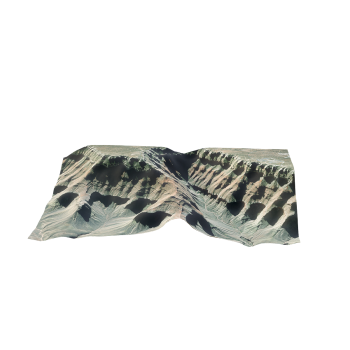
The confluence of the Grand Canyon and the Little Colorado River in the United States

It is a spectacular natural wonder located in Arizona, USA, formed by the erosion of the Colorado River over millions of years. Known for its deep canyons, colorful rock formations, and unique geological structure. One of the tributaries of the Colorado River merges with the main river in certain areas of the Grand Canyon, forming this unique location. This convergence point is not only the confluence of two rivers, but also a must visit destination for many tourists and nature enthusiasts. The sediment brought in settles on the riverbed, forming a distinct white sandy beach that contrasts sharply with the surrounding red rocks, adding a unique color to the Grand Canyon.
3D Scene Scanning of the Grand Canyon in the United States
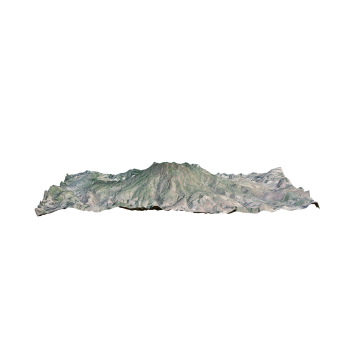
3D Scene Scanning of the Grand Canyon in the United States

The Grand Canyon, located in the northwest of Arizona, USA, is one of the world's natural wonders. Yaki Point and South Kebab Trail are two very popular viewing spots and hiking trails within the Grand Canyon. Yaki Point provides a magnificent panoramic view of the southern part of the Grand Canyon, making it an excellent location for watching sunrises and sunsets. You can overlook the winding Colorado River and the rock formations deep in the canyon, which record billions of years of Earth's history. The South Kaibabu Trail is a hiking trail that delves deep into the Grand Canyon, starting near Cape Yaki. Known for its steep descent and ascent, it provides an opportunity to experience the unique geology and ecosystem of the Grand Canyon up close.
A dormant volcano that no longer erupts

A dormant volcano that no longer erupts

3D Scene Scanning of Mount Carmelo in Israel

3D Scene Scanning of Mount Carmelo in Israel

It is a historic and religiously significant mountain range in northern Israel, overlooking the Mediterranean Sea. Not only is it a treasure trove of natural beauty, but it also carries rich cultural heritage and religious legends. Closely linked to the traditions of Christianity and Islam, especially in Christianity, this mountain is closely related to the story of the prophet Elijah, where he confronted the prophet Baal and accepted God's will. There are multiple religious and historical sites scattered on the mountain, including the Monastery of Deir Mohra Kagar Moro, which commemorates Saint Therese and has become an important destination for pilgrims and tourists. It is also a hot spot in archaeological exploration, with relics of ancient civilizations.
CalaRossa Beach, Italy

CalaRossa Beach, Italy

A famous beach located in the Liguria region of northwestern Italy, near the Cinque Terre National Park. Known for its unique red rocks and clear seawater, it is a popular leisure destination for tourists and local residents. The beach is relatively small, but very charming, providing a peaceful environment away from the hustle and bustle of the city. Surrounded by steep cliffs and lush vegetation, it provides a perfect backdrop for tourists to take photos and appreciate natural beauty. Here, you can enjoy sunbathing, swimming, or try some water sports. The water quality on the beach is crystal clear, making it perfect for snorkeling and observing marine life.
Volcanic Plateau in the United States

Volcanic Plateau in the United States

It is a unique geological region known for its vast volcanic landforms and rich geological history. Usually composed of ancient lava flows that emerged from volcanic eruptions at some point in Earth's history, then cooled and solidified to form flat highlands. Often displaying a desolate yet spectacular beauty, its surface is covered with black basalt, which, due to its hard texture, can resist erosion and maintain the flat shape of the plateau. In some places, these lava flows form columnar joints, which are hexagonal or polygonal stone pillars formed by the contraction of cooled lava.
Salt Hill in Iran

Salt Hill in Iran

The Zagros Mountains, located in southwestern Iran, is a geological wonder formed by the collision of the Eurasian Plate and the Arabian Plate. It is a geological phenomenon in which the salt layer flows upward under pressure deep underground during geological time, forming a dome shaped structure. The formation of salt domes is closely related to the sedimentary environment and tectonic history of the region, and is an important component of oil production in the Persian Gulf. Salt domes are formed by the upward flow of low-density salt layers under pressure in underground rock formations, which bend and cover the rock layers. As erosion progresses, the surrounding softer rocks are removed, revealing salt domes.
Mount Fuji in Japan

Mount Fuji in Japan

An active volcano that has almost become a national symbol, renowned for its almost perfect cone shape and magnificent scenery. Located in the central southern part of Honshu, with an altitude of 3776 meters, it is the highest peak in Japan and one of the largest active volcanoes in the world. The mountain top is covered in snow all year round, complementing the blue sky and forming a typical Japanese landscape painting. Not only is it a popular destination for mountaineering enthusiasts, but it is also a symbol of Japanese spiritual culture. Every summer, thousands of climbers attempt to climb Mount Fuji and experience the magnificent scenery of standing at the top overlooking the sea of clouds. The Fuji Five Lakes area at the foot of the mountain attracts many tourists with its clear lake water and rich natural ecology.
China Mustagh Peak

China Mustagh Peak

Known as the 'father of icebergs', it is a magnificent mountain peak located in the Pamir Plateau of Xinjiang Uyghur Autonomous Region, China. As a part of the Kunlun Mountains, it is renowned for its majestic posture and unique glacial landforms. The altitude is usually considered to be 7509 meters, but sometimes it is also referred to as 7546 meters. The mountain is round and looks like Mantou. It is covered with snow all the year round. The snow line is about 5200 meters above sea level. The glaciers are well-developed, with over 128 modern glaciers, among which the largest, the Koksayi Glacier, covers an area of 86.5 square kilometers. The climate is cold and dominated by solid precipitation throughout the year, which is very conducive to the formation and development of glaciers.
Southern Spain - Mesa Roldan

Southern Spain - Mesa Roldan

Located in southern Spain, it is part of the Cabo de Gata Volcano Province, situated between the towns of Agua Amalga and Calponeiras. Known for its unique geological structure, it is a geological wonder composed of rocks from the Miocene period, built on a volcanic rock base. Geological features reveal volcanic activity throughout Earth's history, providing important clues for studying Earth's evolution. The coastline here is rugged and varied, with clear seawater, making it a paradise for diving and snorkeling enthusiasts. At the same time, the rich wildlife and plant ecology provides opportunities for nature enthusiasts to explore. This region is also a treasure trove of culture and history.
Hilly River Landscape

Hilly River Landscape

It is a unique natural scenery known for its undulating terrain and winding water flow. Rivers often flow in hilly areas, forming a series of beautiful valleys and riverbanks. Usually clear to the bottom, with dense vegetation on both sides, providing abundant habitats for wildlife and plants. The terrain is constantly changing, and rivers exhibit different styles in different areas. In steeper river sections, the river flows rapidly, forming spectacular waterfalls or rapids; In relatively flat areas, rivers appear calm and wide, with blue skies and white clouds often reflected on the water surface. Not only does it provide visual enjoyment for tourists, but it also allows for outdoor activities such as hiking, camping, fishing, etc
Underground river caves in Mauritania

Underground river caves in Mauritania

It is a mysterious and unique geological landscape located in Mauritania. This underground river cave system is hidden deep beneath the desert and is a valuable subject of study for explorers and geologists. It is a hidden waterway that flows beneath the surface, providing an unexpected source of water for arid desert regions. These caves not only provide clues for scientists to study geological history and hydrogeology, but also offer opportunities for biologists to study cave ecosystems. Due to its concealment, it retains its original appearance and natural beauty. This also means that accessing these caves may require professional guides and appropriate equipment.
Mauritania Underground River

Mauritania Underground River

It is a natural wonder located in Mauritania, consisting of a groundwater system that includes the Aouk underground river and the Kuom and AirAouk springs. These underground water sources provide valuable water sources in the desert areas of Mauritania and play a crucial role in maintaining the balance of the local ecosystem. As a natural outlet for groundwater flow, it has formed an oasis, attracting a diverse population of flora and fauna, and becoming a vibrant green space in the desert. Not only is it crucial for local wildlife and plants, but it may also have a significant impact on the lives of residents in surrounding communities, providing drinking water and irrigation sources.
Dover White Cliffs, UK

Dover White Cliffs, UK

It is a spectacular group of white cliffs in the Dover area of Kent, England, mainly composed of chalk, hence the name "White Cliffs". Towering above the English Channel, it is one of the most famous natural landmarks in the UK and a symbol of the country. The formation can be traced back to the Cretaceous period, about 100 million years ago, when the Cretaceous layer was deposited from the remains of marine organisms. These sediments gradually hardened under the pressure of geological strata, forming the Cretaceous rocks we see today. The height of the white cliffs can reach 350 feet, and on clear days, they stand out particularly on the sea surface. Not only is it a natural beauty, but it is also an important geological and archaeological site.