Transportation
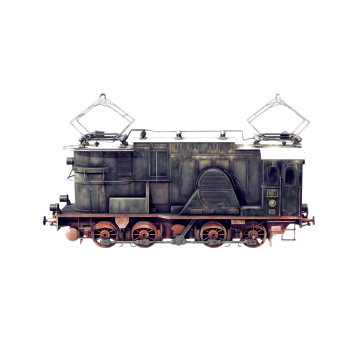
EG 507
The surface of the component may have model identification (such as "EG 507"), parameter scale or brand logo; The screws, bolts, buckles and other details of the connection parts are clearly visible; If it is a functional equipment, it may include details such as operating rods, display screens, pipeline interfaces, etc. The layout conforms to the logic of human-computer interaction and restores the design concept of "function first" for industrial products.
ED310 High Speed Train
The ED310 high-speed train is a high-speed EMU of China Railway, which belongs to the CRH(China Railway High-speed) series. This train is mainly used to connect the rapid transportation needs between cities. The maximum operating speed is 350 km/h, which can greatly shorten the travel time. Equipped with advanced anti-lock braking system, emergency braking system, etc., to ensure passenger safety. Equipped with modern seats, air conditioning system, charging socket, etc., to ensure passenger comfort.
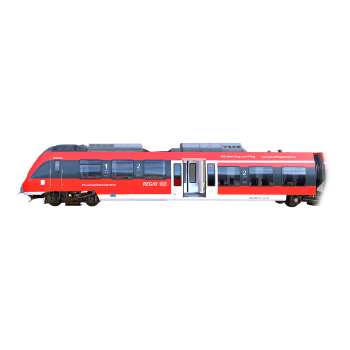
Bombardier TALENT train
The Bombardier TALENT train is a modern multi-unit train designed and manufactured by Bombardier. The interior is designed for passenger comfort, with spacious seats, ample legroom and modern amenities. The train adopts advanced power system and intelligent control technology to ensure efficient and safe operation.
Type 56 Train EWS Painting
The Type 56 Locomotive was a diesel-electric train produced by British Rail between 1976 and 1984. This train is mainly used for heavy freight, especially coal transportation. EWS(English, Welsh & Scottish Railway) painting is an iconic painting of the British Rail Freight Company.
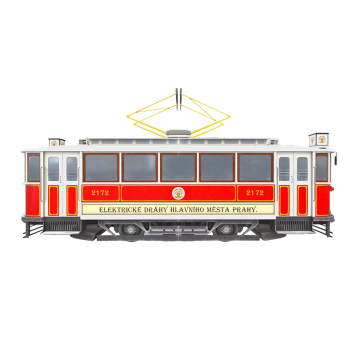
Czech vintage Prague tram
The Prague Historic Tramway is a classic form of transport in Prague, the capital of the Czech Republic. These trams are not only part of the city's public transport system, but also a symbol of Prague's rich history and culture. Prague's tram system was built at the end of the 19th century and is still in operation, retaining many of the old tram models.
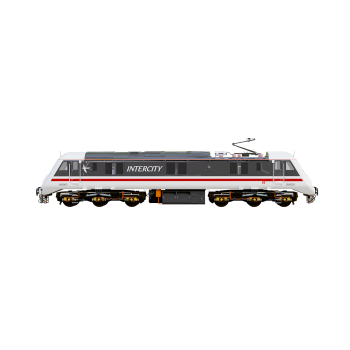
British Railways Class 89 Prototype Electric Locomotive
Nicknamed "FlyingBadger" (flying squirrel), is a prototype electric locomotive built in 1986 by British Rail Engineering Ltd's Crewe factory. It is famous for its advanced power control system and strong power of more than 6,000 horsepower. It was originally designed as a prototype for a planned series of locomotives that would take over the electrified high-speed trains on the East Coast Main Line and supplement the existing power on the West Coast Main Line. The design was later considered for the Channel Tunnel, but was eventually replaced by BrushClass92.
British Railways Type 03 shunting locomotive (green)
It is a diesel hydraulic shunting locomotive, manufactured by British Railway Engineering Limited in the late 1950 s to early 1960 s. It is a diesel hydraulic shunting locomotive, manufactured by British Railway Engineering Limited in the late 1950 s to early 1960 s. The simple and robust design makes them easy to maintain and reliable in all weather conditions. They are usually assigned to shunts around the UK, performing shunts and light haulage duties. It was an important part of British railway history, representing the development of diesel locomotive technology in that era.
British Railway Type 33 locomotive
Also known as the BRCW3 type, it was a batch of diesel-electric locomotives purchased by British Railways in 1957, mainly serving the southern region. Both passenger and cargo, equipped with a 1550-horsepower Sulzer engine with a maximum speed of 85 mph. Because its electrical equipment is produced by the Cromton Parkinson Company, it is also known as the "Cromton Train". The first batch of 65 locomotives was put into use in December 1959 and completed production in 1961. The second batch was completed in 1962, totaling 98 locomotives. Most of the passenger and freight missions to Dover were undertaken in the South East and also for the South West.
British Railway Type 05 shunting machine
It is a diesel mechanical shunting locomotive manufactured by HunsletEngineCompany in the 1950 s. Known for its sturdy and compact design, it is mainly used in the British Rail East and Scotland. It is equipped with a Gardner8L3 engine that produces 204 horsepower, a maximum speed of 18 miles per hour, and a traction of 14500 pounds. It is favored for its excellent performance and versatility. Currently, four Type 05 locomotives have been preserved and the rest have been scrapped. It is a testament to the ingenuity and craftsmanship of the British railway industry.
British Railway Type 03 shunting locomotive (blue)
It is a diesel hydraulic shunting locomotive, manufactured by British Railway Engineering Limited in the late 1950 s to early 1960 s. It is a diesel hydraulic shunting locomotive, manufactured by British Railway Engineering Limited in the late 1950 s to early 1960 s. The simple and robust design makes them easy to maintain and reliable in all weather conditions. They are usually assigned to shunts around the UK, performing shunts and light haulage duties. It was an important part of British railway history, representing the development of diesel locomotive technology in that era.
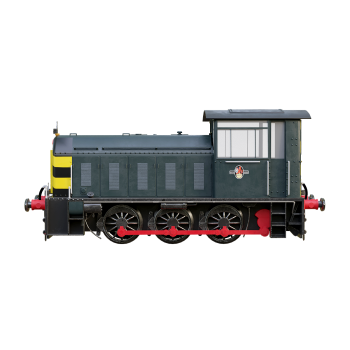
British Railway Type 07 shunting locomotive
Is a diesel locomotive, mainly used for shunting operations. Designed and manufactured by British Railway Engineering Limited in the 1950 s, they have a 0-6-0 wheeled configuration, meaning they have six moving wheels and no guide or subordinate wheels. Known for its excellent traction and maneuverability, it is very suitable for working in compact environments such as freight yards and shunts. They are usually assigned to shunts around the UK, performing shunts and light haulage duties. The simple and robust design makes them easy to maintain and reliable in all weather conditions. It is an important part of British railway history.
British Railway Class 02 shunts
It was 20 0-4-0 diesel hydraulic shunting locomotives, built by the Yorkshire Engine Company between 1960 and 1961. Designed for shunts in areas with limited loading limits and curves, such as docks. It has a distinctive rear cab door and a balustraded terrace, which is very rare for British railway locomotives. It is known for its short wheelbase, its ability to adapt to sharp turning tracks, and even the use of traditional wagon turntables. It was originally used for dockside shunting and goods yard operations in the north of England, and due to its small size, it played a role in places that many locomotives could not reach. A total of 20 Type 02 trains were produced.
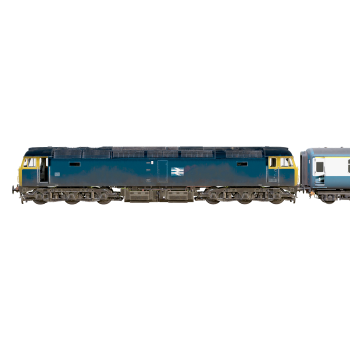
British British Rail Class 47 Diesel Electric Locomotive
Also known as BrushType4, is a diesel-electric locomotive developed by BrushTraction in the 1960 s. These locomotives occupy an important position in the history of British railways and are the largest number of diesel cars in the British main line. It is known for its Sulzer12LDA28C twin-engine twelve-cylinder engine. Not only for passenger transport, but also for freight transport, it has been in service on British Rail for more than 55 years. Despite the introduction of more modern types of traction, a considerable number of Class47 locomotives were still in use, both on main line railways and heritage railways.
British Class 47 Freightliner Diesel Electric Locomotive
It was a diesel-electric locomotive developed by BrushTraction in the 1960 s. A total of 512 units were produced, the largest number of a class of mainline diesel cars in the UK. Used on British Railways for more than 55 years in passenger and freight services, a considerable number of locomotives are still in use, both on main line and heritage railways, despite the introduction of more modern types of traction. As of July 2024, 76 Class47 locomotives still exist. Acclaimed for its durability and versatility, it is an important symbol in the history of British railways.
Random Model
Jewelry Tortoise
725 View
New Bailun 574 Children's
670 View
Indoor Hanging Dart Target
840 View
Porsche 959 Supercar
779 View