Animals/Organics
Python (with 3D animated model)
It is a large and powerful snake belonging to the snake order and python family. Widely distributed in tropical and subtropical regions of Asia, Africa, and Australia. Known for its strong body and unique hunting methods, it typically involves entangling prey, strangling them with the strength of its body, and then swallowing them whole. Pythons have very sharp eyesight and smell, which makes them efficient hunters. Food includes small mammals, birds, and other reptiles. Long lifespan, some species can live up to 20 years or longer. Due to habitat destruction and illegal hunting, some species of pythons are facing survival threats.
3D animated model of rattlesnake
It is a venomous snake species living in North America, belonging to the Viperidae family. The most prominent feature is a string of keratin rings at the end of the tail, which make a sound when shaken, hence the name "rattlesnake". The body is usually larger, with a sturdy body, a triangular head, and vertical pupils in the eyes. Mainly by sensing heat sources to locate prey, preying on small mammals, birds, and lizards. Venom contains various neurotoxins and blood toxins, which can quickly incapacitate prey. Despite their strong toxicity, rattlesnakes generally do not attack humans without reason and only engage in defensive attacks when threatened.
Gecko model 3D animation
It is a small reptile belonging to the gecko family of the lizard order. Known for its unique ability to walk freely on vertical walls and even hang upside down from the ceiling. There are thousands of tiny hairs on the soles of the feet, which can generate van der Waals forces with the surface, allowing them to adhere to smooth surfaces. Usually active at night, feeding on insects such as mosquitoes and flies. Highly sensitive to environmental changes, it is often used as a symbol of ecological health. Their regenerative ability is also very strong. If their tail is caught, they can cut off their tail on their own to escape predators, and then their tail can grow back.
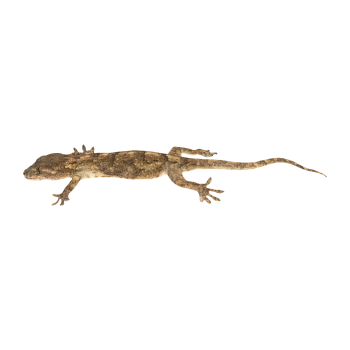
Gekko japonicus
Multi wart geckos are a species belonging to the phylum Chordata, class Reptiles, order Scales, family Gecko, and genus Gecko. The body shape of the gecko with multiple warts is medium, with a flat head and a body length of 52-57 millimeters, and a tail length of 54-57 millimeters. The head is medium-sized and oval in shape. The kiss is slanted and flat, except for slightly larger scales on the snout, the rest are granular scales, and the middle of the forehead is slightly concave. The ear hole is small and oval in shape. The eardrum is deeply sunken, the nose is located at the snout end, and there are fine teeth on the upper and lower jaws. The tongue is broad, concave at the top, and sticky. One pair of chin scales, pentagonal.
Viper
The pit viper is a reptile belonging to the family Viperidae in the order Serpentes. The body length of the pit viper is 60-70 centimeters, and its head is slightly triangular; The back is gray brown to brown, with a dark "∧" - shaped spot on the head and back, and the belly is gray white to gray brown with black spots. The pit viper, when touched, will flip over, and when bitten, people will also flip over, hence its name. The pit viper is distributed in China except for Guangdong, Hainan, and Guangxi. It often inhabits plains, hills, low mountainous areas, fields, streams, and ditches with scattered rocks or grass, and bends into a disc or wave shape. The reproduction, feeding, and activity of pit vipers are all constrained by temperature.
red-eared slider
The red eared painted turtle (scientific name: Trachemys scripta elegans) is a subspecies of the painted turtle in the family Turtles. Adult elongated, with a gently raised carapace, distinct ridges, and a serrated posterior edge. The head is wide and blunt, with yellow and green stripes on the neck, and one long red patch on each side behind the eyes. There are yellow green lines on the sides of the head, neck, and abdomen. Eyes of equal size, neck short and thick. The whole body has a variety of colors, colorful and vibrant. The back armor is emerald green, and each shield has yellow green inlaid circular patterns.
Wart tailed lizard tiger cub
Hemidactylus frenatus Dumeril and Bibron (1836) is a reptile of lizard genus of Gecko family, which is distributed in Ryukyu Islands, Korean Peninsula, Southeast Asia, South Asia, Africa, Taiwan Island, Hainan, Guangdong, Yunnan and other places in Chinese Mainland, and mainly lives in the hot zone and often under the eaves and on the wall at night. The type locality of this species is Java, Indonesia.
Hemidactylus frenatus
Hemidactylus frenatus Dumeril and Bibron (1836) is a reptile of lizard genus of Gecko family, which is distributed in Ryukyu Islands, Korean Peninsula, Southeast Asia, South Asia, Africa, Taiwan Island, Hainan, Guangdong, Yunnan and other places in Chinese Mainland, and mainly lives in the hot zone and often under the eaves and on the wall at night. The type locality of this species is Java, Indonesia.
Japanese pit viper
The Japanese pit viper (Gloydius blomhofii) is a venomous snake species belonging to the subfamily Viperinae of the family Viperidae, found in Japan. Unique species of Japan. In Japan, it is commonly referred to as "pit viper".
Japanese grass lizard
The Japanese grass lizard is a reptile belonging to the grass lizard family. Its back is gray black to brown, while its belly is yellow white to yellow brown. There are usually three color bands on the side of the body: a black brown band that extends from directly above the nostrils, through the eyes and ears, to the front end of the tail, and a black brown band that originates from the lower edge of the eyes, passes below the ears, and extends to the back half of the body. Between these two color bands is a yellow brown band. But sometimes these ribbons only extend to the vicinity of the forelimbs and no longer continue to extend further.
Blackened species of rattlesnake
The rattlesnake is a reptile belonging to the family Viperidae in the order Scorpaeniformes. The body of a rattlesnake is yellow green with diamond shaped black brown spots on its back; The tail end has a series of keratin rings, which are remnants after multiple molts. When encountering enemies or rapid movements, the tail ring of the tail can quickly swing 40-60 times per second, making a loud sound for a long time, making enemies afraid to approach or scared away, hence the name.
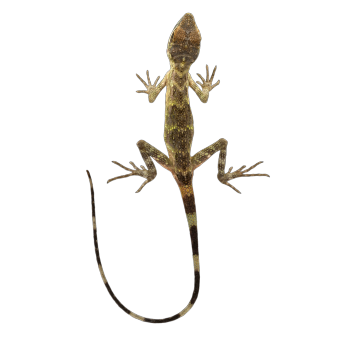
Tiger Cane Lizard
The Diploderm Polygonatum, also known as the Ryukyu Lizard or Okinawan Tree Lizard, is a lizard found in the Ryukyu Islands and Taiwan. It lives day and night in trees. Adult male tiger canes are 61 millimeters long from the nose to the vent, and 152 millimeters long from the vent to the tip of the tail; The total length is 213 millimeters.
Polygonal double skinned lizard
The female and male body sizes of the polygonal double skinned lizard are different, with males reaching a total length of 27 centimeters and females reaching 20 centimeters. The tail accounts for about 70% of the body, and the head and body length of males are about 4.8-7.7cm, while females are 4.7-6.8cm. The population of Miyako Islands is larger than that of Yaeyama Islands
Tiger Cane Lizard
The Diploderm Polygonatum, also known as the Ryukyu Lizard or Okinawan Tree Lizard, is a lizard found in the Ryukyu Islands and Taiwan. It lives day and night in trees. Adult male tiger canes are 61 millimeters long from the nose to the vent, and 152 millimeters long from the vent to the tip of the tail; The total length is 213 millimeters.
house lizard
Gecko is a reptile belonging to the gecko genus in the gecko family. The body is relatively flat, with a total length of 10-15 centimeters, and the length of the tail and head is basically the same. The back of the body is covered with granular scales. Because it inhabits walls and is good at catching scorpions and flies, it is named gecko. Gecko is distributed in Guangxi, Guangdong, Fujian, Yunnan and other places in China; They prefer to live in secluded places such as between walls and under eaves, and appear on ceilings and walls at night, hunting insects such as mosquitoes and flies. The medicinal value of geckos is very high, and they can be used to treat conditions such as epilepsy, scrofula, tuberculosis, and swelling. Their dried products are called "Tianlong".
crocodile
Crocodiles are reptiles belonging to the Crocodylidae and Alligatoridae families, with a total of 8 genera and 23 species. Crocodiles have a longer torso; Muscular development; Crocodiles are mostly distributed in tropical regions of Africa, Asia, North and South America, and Australia, with only Yangtze alligators and American alligators living in temperate regions. Crocodiles inhabit areas such as lakes, swamps, and shallow waters. Living together in common groups; Enjoy a warm environment. Crocodiles mainly prey on vertebrates, as well as mollusks and crustaceans. Crocodiles, as one of the oldest species on Earth to date, retain many features of early dinosaur reptiles and are also known as "living fossils".
Green iguana
The green iguana is an animal belonging to the genus of American green iguanas in the family Hymenonidae of the order Perciformes. Young green iguanas typically have a green body and use it to evade attacks from predators; As one grows older, green will gradually fade away and be replaced by colors such as light yellow, light blue, or brown; The main features of green iguanas include comb like scales on the back, black circular stripes on the tail, and large, drooping throat fans in adult males. Also known as: American Green Iguana. Distributed in tropical rainforest areas from Mexico to Paraguay in Central and South America. It mainly inhabits tropical rainforests and is a diurnal arboreal lizard. Omnivorous animals.
komodo dragon
It is a reptile belonging to the genus Varanidae in the family Varanidae. The skin is rough, with many raised bumps, no scales, dark brown, and the mouth is filled with huge and sharp teeth. Named after the island of Komodo in Indonesia, it is also known as the Komodo dragon. Mainly inhabiting the jungles around Java Island. I like living alone and only get together during the breeding season. I have fast running speed, strong diving ability, and can climb trees. As its size increases, my claws are mainly used as weapons, which is not conducive to climbing. Carnivorous animals, most of which eat carrion. The Komodo dragon is a reptile capable of parthenogenesis. It is the largest living lizard in the world.
Wolf Spider
Wolf spider is a general term for the family of wolf spiders in the order of arachniformes. Due to its excellent hunting skills, agile movements, large predation, and fierce nature, it is named Wolf Spider. Currently, there are 2400 species belonging to 123 genera in the wolf spider family, distributed worldwide. China is known to have 26 genera and 310 species. Mostly active on the surface and edges of rice paddies or other fields. Gluttony, large predation, diverse diet. Spider venom is usually colorless, bitter in taste, and has an alkaline reaction. It is soluble in water but insoluble in alcohol and ether. In history, in 1952, the United States used a species of wolf spider in the family Colubridae to make bacterial weapons. At present, the wolf spider family has been included in the list of spiders in China's Jiuzhaigou Valley Scenic and Historic Interest Area Nature Reserve.
Green sea turtle
Green sea turtles are reptiles of the family Turtles in the order Turtles, also known as sea turtles. The lifespan can reach over 100 years. Green sea turtles are distributed in warm waters of the Atlantic, Pacific, and Indian Oceans, and are found along the coasts of Shandong, Zhejiang, Fujian, Guangdong, Taiwan, and other regions in China. Food sources include fish, crustaceans, mollusks, and seaweed. According to the survey, green sea turtles are the most frequently occurring and widely distributed sea turtles in China, but their numbers have significantly decreased. The main reasons for the decline in its population are human predation, destruction of spawning grounds, death from fishing nets, and seawater pollution. Listed as a first-class protected animal in China.
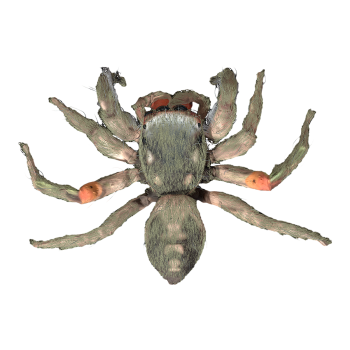
jumping spider
Jumping spider is a general term for the family Jumping Spider in the order Spider. The jumping spider family is the largest family in the spider order, with approximately 3000 species worldwide. The body is mostly short, thick, and slightly flat, with thick, short, and strong feet. It is good at jumping, hence the name. Jumping spiders are mainly distributed in tropical and subtropical regions. Jumping spiders are wandering spiders that, apart from hiding, molting, and laying eggs, do not usually form webs. They are fierce in nature and can prey on various pests. They have good eyesight and unique discernment ability. Jumping spiders capture prey through different movements such as stealth, chasing, and jumping. Jumping spiders are the only animals that can live for a long time at high altitudes on Mount Everest.
Geochelone nigra
It is the largest tortoise in the family Turtles and genus Turtles, and the largest tortoise in the family Turtles and genus Turtles. It is herbivorous and feeds on cacti, fruits, pineapples, ferns, leaves, and grass. Can live in drier environments. It is also a very slow moving animal, only able to move 260 meters per hour. Only distributed on 14 islands in the Galapagos Islands of Ecuador, a South American country. The two most famous individuals of this species are the lonely George and the tortoise Diego.
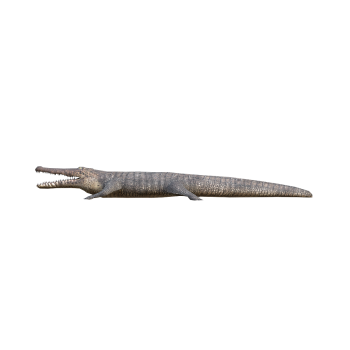
Teleosaurus
The true lizard crocodile existed as an animal in the early Jurassic period. Living in the sea. It has an extremely narrow and long mouth lined with many sharp teeth. The body length is about 3 meters. It closes its mouth, and these teeth interlock thousands of times, forming an ideal clamp that can catch smooth fish or squid. It may swim by twisting its slender body and tail, with its short forelimbs tightly attached to its body while swimming.
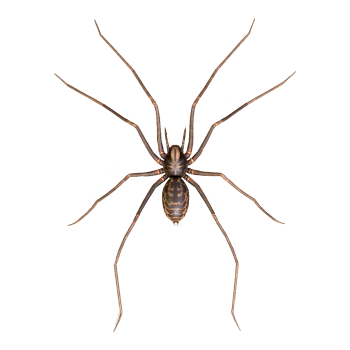
spider
Spiders belong to arthropods. The body of a spider is divided into a head, chest, and abdomen, which are connected by a slender ventral stalk; The head has a pair of claws in front of the head, and the end of the claws is the venomous teeth of the venom gland duct; There are four pairs of feet on both sides of the chest, with hard claws at the tips of the feet; Spiders have single eyes, as well as eight eyes, six eyes, and four eyes. Wang Anshi's "Zishuo" records that a web was set up on one side, and when an object touched it, it was executed, hence the name "Spider". Spiders are distributed throughout China, mostly inhabiting eaves, corners of walls, and between trees, forming wheel shaped webs. Spiders have a diverse diet, mainly feeding on insects such as flies. They are tolerant to hunger, have strong reproductive ability, and have a long lifespan.
Tegenaria agrestis
One of the most famous venomous spiders in the world of homeless spiders, living on the Pacific coast in the northwest. The homeless spider is also a type of funnel web spider, but it needs to be distinguished from the Australian funnel web spider. The medical understanding of its bite is still shallow and there is some debate. Spider individuals weave a funnel-shaped filamentous web and wait inside the web for insects to collide with it before hunting. Stray spiders sometimes nest in and around human settlements.
Taman ichthyosaur
Tayman ichthyosaur, also known as Pterodactylus or Pterodactylus, is an extinct ichthyosaur. Fossils have been discovered in Europe, dating back to the Early Jurassic period from the Hetang stage to the Toal stage. Taiman ichthyosaur is a large ichthyosaur with a maximum length of over 9 meters. Taiman ichthyosaur is the only valid genus in the Taiman ichthyosaur family, which belongs to the suborder ichthyosaurs, order ichthyosaurs, class Xus, class Longfin, class Meis, class True ichthyosaurs, class Small Belt, and class Neoichthyosaurs.
Triassic flat Kenyan beast
Giant flattened Kenyan beast, a member of the Kenyan mammal family and the genus Kenyan beast
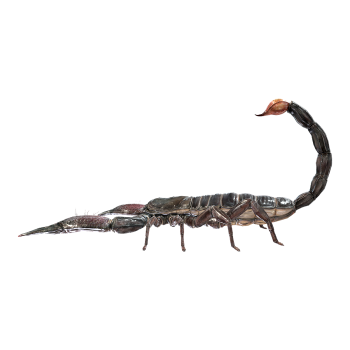
Emperor Scorpion
The emperor scorpion is a scorpion in the family Scorpaenidae, also known as the true emperor scorpion or the African emperor scorpion. The body is black, with strong tactile limbs (with significant granular texture) and a caudal segment. The emperor scorpion is mainly distributed in central and southern Africa, including the Democratic Republic of Congo, Senegal, Sudan, Tanzania, Liberia, and other places. They mostly inhabit hot and humid forests, hiding under logs or rocks, in caves, and prefer to live in fallen leaves, forest debris, riverbanks, and termite nests. Usually preys on insects such as termites and other arthropods, occasionally preys on small vertebrates. The Emperor Scorpion is the largest scorpion in the world.
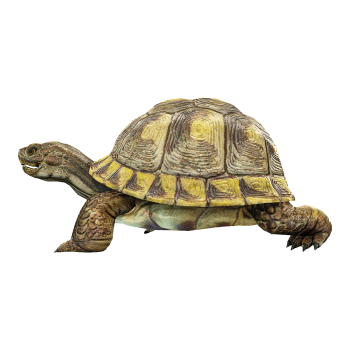
tortoise
Turtle is a reptile belonging to the family Turtles in the order Turtles and the genus Turtles. Also known as grass turtle, mud turtle, golden turtle, fragrant turtle, etc. Turtles are distributed in various provinces in southern China, with the highest number in the Yangtze River Basin. They are also found in countries such as Korea and Japan. They prefer to inhabit streams, lakes, rice paddies, and aquatic plants. Turtles are semi aquatic, omnivorous, and ectothermic animals. I enjoy eating animal based foods such as insects, worms, small fish and shrimp, as well as plants such as tender leaves, duckweed, grass seeds, and rice. In ancient China, turtles were revered as objects of worship and were particularly fond of raising turtles. The turtle is also known as one of the "Four Spirits".
lizard
Lizards are reptiles belonging to the family Varanidae in the order Scorpaeniformes. Lizards are distributed on all land except for Antarctica and a few Arctic regions. Lizards have a relatively fixed living environment, with only a few living in high mountains or water. There are approximately 5461 species of lizards in the world, which are one of the most charming reptiles due to their diverse body color, appearance, and obedience. Many species are kept as pets. Modern genetic research has shown that lizards and snakes are a group, with snakes evolving from lizards. Lizards have a snake like body, thin scales, are four or five inches long, and have four limbs, hence they are also known as "four legged snakes".
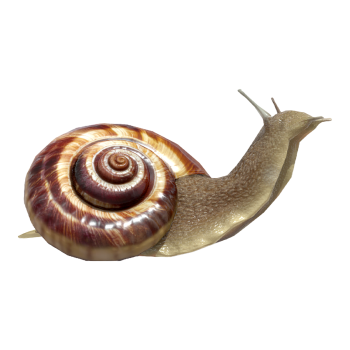
snail
Snails are mollusks of the family Snails, with over 25000 known species worldwide. Snails are named because they have two horn like antennae on their heads when crawling. Snails have a wide variety of species and are distributed around the world. Snails like to live in dark, damp, loose, and humus rich environments. They work during the day and stay up at night, and are most afraid of direct sunlight, making them sensitive to environmental reactions. Snails mainly feed on plant-based foods, especially vegetables, fruit tree buds, and crop roots and leaves. Snails are a well-known traditional Chinese medicine with a sweet, salty, and cold taste. They have the effects of clearing heat, diuresis, detoxification, reducing swelling, relieving heat, removing phlegm, and promoting lactation.
Geochelone nigra
It is the largest tortoise in the family Turtles and genus Turtles, and the largest tortoise in the family Turtles and genus Turtles. It is herbivorous and feeds on cacti, fruits, pineapples, ferns, leaves, and grass. Can live in drier environments. It is also a very slow moving animal, only able to move 260 meters per hour. Only distributed on 14 islands in the Galapagos Islands of Ecuador, a South American country. The two most famous individuals of this species are the lonely George and the tortoise Diego.
Flying webbed palace guard
Flying webbed geckos are a type of reptile belonging to the lizard family. In the southwestern region, they are known as four footed snakes, geckos, and lizards. They have a flat back and abdomen, and are covered in scales or mixed with wart scales. They are a species under the Convention on International Trade in Endangered Species of Wild Fauna and Flora.
Eastern Golden Turtle
The Eastern Golden Turtle is a reptile belonging to the family Turtles in the order Turtles and the genus Turtles. Medium sized head, dark olive color, with several light yellow stripes on the top of the head; There are yellow vertical stripes in the middle and lower back of each eye. The Eastern Golden Turtle is distributed in the eastern part of North America. It inhabits slow-moving water bodies with soft substrates, sun backed areas, and aquatic plants, such as ponds, swamps, lakes, and streams, and sometimes enters slightly salty water bodies. Omnivorous. The Eastern Golden Turtle has certain ornamental and economic value. [2] Artificial breeding is very common in China, and the price is relatively low, which is loved and raised by many turtle lovers.
Random Model
Ball valve
184 View
Sony Handycam Vision camera
168 View
ANTS 3D ANIMATED MODEL
138 View
diorite
205 View
A7B Soviet Military Radio
165 View
Wind chimes
183 View