


Freecreat category
Food & Beverage
Browse models in this category, preview details, then continue to download when ready.

Hami melon
Hami melon is mainly produced in the Turpan Basin (collectively known as Hami Basin and Turpan Basin). It has different shapes, unique flavor, plump flesh, crisp and refreshing. Hami melon is rich in nutrients, with a sugar content of up to 21%. The cantaloupe from Hami became a tribute variety during the Yongping period of the Eastern Han Dynasty. In the Qing Dynasty, it was named Hami Melon after being offered as a tribute by the Hami King and rewarded by Kangxi. When Hami melons were offered as tribute in previous years, they were not abundant in Hami, and those who were offered as tribute really came out of Hami. Tracing back to its roots, Hami melon originated in the Shanshan County area of Turpan.

Cut open red papaya
Red papaya, known as the "King of Hundred Beneficial Fruits". The fruit is large in size, beautiful in appearance, with red flesh, thick and delicate, sweet and fragrant, soft and juicy. It has a very different taste from other papayas. It matures naturally on the tree, with many black seeds and no artificial ripening. It is more natural and nutritious, making it a masterpiece among papayas. Originating from the picturesque city of Sanya in Hainan, Hainan has a tropical and subtropical monsoon climate characterized by high temperatures and abundant rainfall, with long summers and no winters. It is the region in China with the richest heat and water resources, making it suitable for the growth of tropical crops. Papaya is a tropical fruit. Hainan has abundant sunshine and a large temperature difference between day and night, making it easy to grow papaya.

Peeled sweet orange
Sweet orange is a citrus tree in the Rutaceae family, with few or no thorns on its branches; The flowers are white, with fewer flowers having a light purple red color on the back; The fruit is round, flattened, or elliptical in shape, ranging from orange yellow to orange red; The leaves are oval or ovoid in shape; The skin is generally difficult to peel off, and the flesh is light yellow, orange red, or purple red, with a sweet or slightly sour taste; The flowering period is from March to May; The fruiting period is from October to December, and the fruiting period of late maturing varieties is from February to April of the following year. In "Pulse of Macau", it is mentioned that the origin of the name "Sweet Orange" comes from the abbreviation of "Old Tree Sweet Orange", which evolved into "Sweet Orange" after being passed down orally.
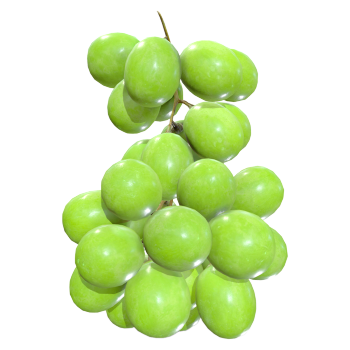
Qingti grape
Qingti grape, also known as seedless white chicken heart, is a Eurasian variety. Originating from California, USA, it is a grape variety cultivated through hybridization experiments conducted by researchers at California State University in the 1970s. Since the introduction of this variety in our country in 1987, except for Jilin Province, all other provinces in the northern region have carried out introduction and cultivation, especially in the southern part of Northeast China, as well as most parts of North China and Northwest China. The cultivation performance is good, with excellent fruit quality, late maturity, storage and transportation resistance, and high yield, making it the preferred high-quality and efficient variety for grape development.

Gourd Gourd
Gourd with bumps is a special type of gourd with many prominent "bumps" on its surface. These lumps make the gourds visually more three-dimensional and aesthetically pleasing. The selection method for lumpy gourds is similar to that of large lumpy gourds. The overall shape is good, and the lumpy gourds are full and prominent.
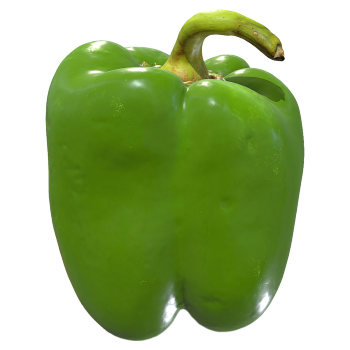
Sweet pepper 3D model
Sweet pepper is an annual herbaceous plant of the Solanaceae family and the Chili genus. The leaf eggs are round or oval in shape, and the leaf surface is smooth and green in color. The white petals are radiating. The fruit is relatively large, lantern shaped, with a smooth surface and skin colors including green, red, yellow, white, etc. Sweet peppers are native to tropical regions and were introduced to China in the late Ming Dynasty. They are cultivated in various parts of China, with a greater distribution in the coastal areas of Northeast, North, and South China. Enjoys warm weather and is more resistant to high temperatures; I like scattered light but am afraid of strong sunlight and light. I am not tolerant to drought or humidity and require low air humidity. It is suitable for planting in organic or sandy soils with deep soil layers and good drainage.

Cut grapefruit
Grapefruit (Citrus × aurantium Linnaeus) is a woody plant of the Citrus genus in the Rutaceae family. Branches have long spines; The leaves are ovate oblong or elliptical in shape; The sepals are hairless, and the petals are slightly smaller than those of grapefruit flowers; The fruit is spherical or flattened, with a thick and difficult to peel skin that is orange yellow or vermilion red in color, uneven and uneven. The flesh has a sour and sometimes bitter taste. The fruiting period is from October to November. Grapefruits are very close to each other when they hang, usually in clusters. Because the fruits of grapefruits are not large and look like grapes hanging, they are called grapefruits.
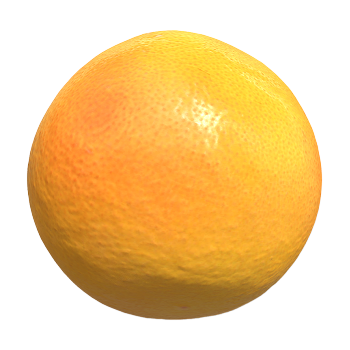
Grapefruit 3D model
Grapefruit (Citrus × aurantium Linnaeus) is a woody plant of the Citrus genus in the Rutaceae family. Branches have long spines; The leaves are ovate oblong or elliptical in shape; The sepals are hairless, and the petals are slightly smaller than those of grapefruit flowers; The fruit is spherical or flattened, with a thick and difficult to peel skin that is orange yellow or vermilion red in color, uneven and uneven. The flesh has a sour and sometimes bitter taste. The fruiting period is from October to November. Grapefruits are very close to each other when they hang, usually in clusters. Because the fruits of grapefruits are not large and look like grapes hanging, they are called grapefruits.
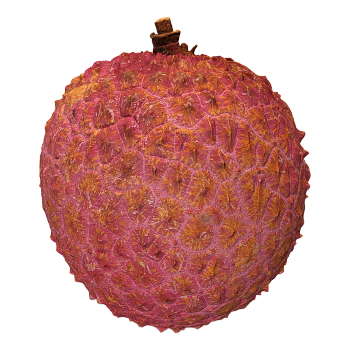
Litchi 3D model
Litchi chinensis Sonn. is an evergreen tree of the Lychee genus in the Sapindaceae family. Litchi has even feathered compound leaves, hairless, stalked, and slender lateral veins; No petals; The fruit nucleus is fruit shaped and nearly spherical; The seeds are all wrapped in fleshy false seeds. The flowering period of lychee is from March to April, and the fruiting period is from May to August. The name Litchi comes from Sima Xiangru's "Shanglin Fu", which was written as "Lizhi" in the text, and later changed to "Litchi" around the Eastern Han Dynasty.
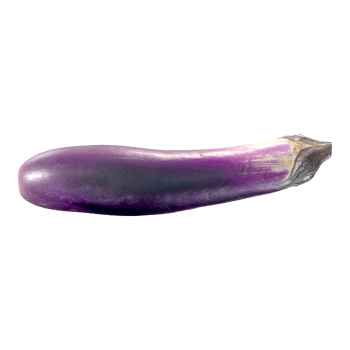
Eggplant
Eggplant contains nutrients such as protein, various vitamins, trace elements, and various food alkalis, which have high edible benefits. Eggplant is an important vegetable crop with high economic value. Eggplant has potential effects in anti-cancer, anti-aging, prevention of cardiovascular disease, diabetes and inflammation; The roots, stems, and leaves of eggplant can be used as medicine, which can clear heat, promote blood circulation, reduce swelling, and so on. There are many varieties of eggplants, with rich fruit colors and high ornamental value.
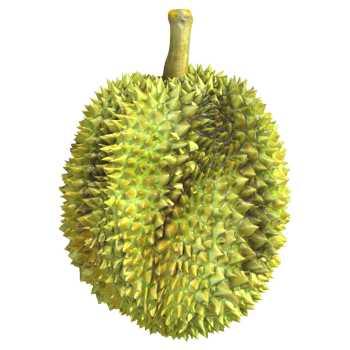
Durian
Durian, also known as durian. It is a giant tropical evergreen tree in the family Malvaceae, belonging to the order Malvaceae. Its leaves are long and slender, with pointed tips and clustered inflorescences. Its flowers are light yellow in color, and its fruit is the size of a soccer ball. The skin is solid, with dense triangular spines, and the flesh is composed of flesh from a false seed coat. The flesh is light yellow, sticky, and juicy, making it a highly valuable economic fruit. Durian is one of the famous tropical fruits originating from Malaysia. Some Southeast Asian countries have more cultivation, among which Thailand has the most cultivation. It is also grown in Guangdong and Hainan provinces of China. Durian is renowned in Thailand as the "King of Fruits". It has a strong odor, praised by those who love it and hated by those who dislike it.

Half a durian
Durian, also known as durian. It is a giant tropical evergreen tree in the family Malvaceae, belonging to the order Malvaceae. Its leaves are long and slender, with pointed tips and clustered inflorescences. Its flowers are light yellow in color, and its fruit is the size of a soccer ball. The skin is solid, with dense triangular spines, and the flesh is composed of flesh from a false seed coat. The flesh is light yellow, sticky, and juicy, making it a highly valuable economic fruit. Durian is one of the famous tropical fruits originating from Malaysia. Some Southeast Asian countries have more cultivation, among which Thailand has the most cultivation. It is also grown in Guangdong and Hainan provinces of China. Durian is renowned in Thailand as the "King of Fruits". It has a strong odor, praised by those who love it and hated by those who dislike it.

Chinese cabbage
The biennial herbaceous plant of the Brassicaceae family and the Brassica genus in Chinese cabbage is rich in vitamin C and has strong antioxidant properties, which can prevent the production of carcinogens and inhibit the proliferation of cancer cells. Height of 40-60 centimeters, often hairless throughout the plant with numerous basal leaves, large in shape, inverted ovate oblong to broadly ovate; The petiole is white and flat; The upper stem has leaves that are oblong ovate, elongated lanceolate to elongated lanceolate; The flowers are bright yellow with inverted petals; The long horned fruit is thicker and shorter, flattened on both sides, and upright; The seeds are spherical in shape and brown in color. Chinese cabbage is classified as a subspecies of Chinese cabbage in the Brassica species, and is divided into four varieties: loose leaf, semi heading, flower center, and heading.

Fig 3D model
Ficus carica Linn. (Latin name: Ficus carica Linn.) is a deciduous shrub or small tree in the Ficus genus of the Moraceae family. The plant has many branches, and the leaves are small lobes ovate with irregular blunt teeth on the edges; The fruit grows between the leaf axils and is pear shaped, with a purple red or yellow color when ripe. Figs actually have flowers, but the inflorescence is a hidden inflorescence, and the flowers are hidden in the fruit. The fruits that are usually consumed are mainly the flowers of figs. Wild fig trees can only be pollinated by insects such as fig wasps.
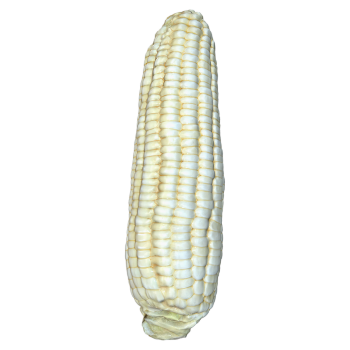
Waxy corn
Waxy corn, also known as sticky corn or waxy corn, has simple cultivation techniques, short cycles, high economic value, nutritional value, and processing value, and is highly welcomed by corn industry players. Glutinous corn originated in China. The hard corn planted in southwestern China has undergone a mutation and gradually developed a glutinous type through artificial selection. From the scientific name Zea mays L. sinensis Kulesh, it means' Chinese species'.

Dry corn
Corn, also known as corn, corn kernels, corn kernels, pearl rice, etc., is an annual tall herbaceous plant in the Poaceae family of the genus corn. Corn stalks are upright, usually unbranched, 1-4 meters high, with aerial support roots at each node of the base, flat and broad leaves, linear lanceolate, and orange yellow anthers; The caryopsis is spherical or oblate in shape, and its size varies with different growth conditions. The flowering and fruiting period is in autumn. It is cultivated in various parts of China and widely grown in tropical and temperate regions around the world as an important grain. Corn has strong drought resistance, cold resistance, poor tolerance, and excellent environmental adaptability, with high nutritional value.
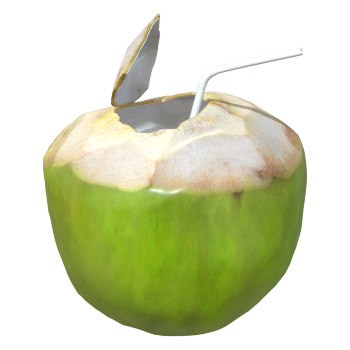
Cut open coconut green
Coconut (scientific name: Cocos nucifera L.), also known as cocoa coconut; It is an evergreen tree belonging to the palm family and the coconut genus, with a height of 15-30 meters. The stem is thick and has circular leaf scars; Leaves are fully lobed and 3-4 meters long; The fruit is ovoid or nearly spherical in shape, 15-25 centimeters long, with 3 edges at the top. The fruit cavity contains endosperm, embryo, and juice (coconut water); The flowering and fruiting period mainly occurs in autumn.

Coconut green
Coconut (scientific name: Cocos nucifera L.), also known as cocoa coconut; It is an evergreen tree belonging to the palm family and the coconut genus, with a height of 15-30 meters. The stem is thick and has circular leaf scars; Leaves are fully lobed and 3-4 meters long; The fruit is ovoid or nearly spherical in shape, 15-25 centimeters long, with 3 edges at the top. The fruit cavity contains endosperm, embryo, and juice (coconut water); The flowering and fruiting period mainly occurs in autumn.

Annona lychee
Annona is a deciduous small tree in the Annona genus of the Annona family, which resembles lychee in appearance, hence the name "Annona"; The fruit is formed by the fusion of many mature ovaries and flower beds, resembling a Buddha's head, hence it is called Buddha's head fruit or Shakyamuni fruit. 3-5 meters high, thin bark, gray white in color, with many branches. The leaves are thin paper, arranged in two rows, elliptical or oblong in shape, with a sharp or blunt tip at the top, a wide wedge-shaped or circular base, and a pale green back; Flowers solitary or 2-4 clustered at the top of branches or opposite leaves, green yellow in color; The fruit is oblong in shape, hairless, yellow green in color, covered with a layer of white frost, and the flesh is creamy. The fruit period is from June to November.

Annona lychee
Annona is a deciduous small tree in the Annona genus of the Annona family, which resembles lychee in appearance, hence the name "Annona"; The fruit is formed by the fusion of many mature ovaries and flower beds, resembling a Buddha's head, hence it is called Buddha's head fruit or Shakyamuni fruit. 3-5 meters high, thin bark, gray white in color, with many branches. The leaves are thin paper, arranged in two rows, elliptical or oblong in shape, with a sharp or blunt tip at the top, a wide wedge-shaped or circular base, and a pale green back; Flowers solitary or 2-4 clustered at the top of branches or opposite leaves, green yellow in color; The fruit is oblong in shape, hairless, yellow green in color, covered with a layer of white frost, and the flesh is creamy. The fruit period is from June to November.

Beans
Vigna unguiculata subsp. sesquipedalis (L.) Verdc, The legume cowpea is an annual climbing plant, measuring 2-4 meters in length. The pods droop and expand slightly when tender. When tender, the pods are used as vegetables, and the varieties can be roughly divided into four types based on the color of the pods: white skinned (light green), green skinned, red skinned, and spotted; The seeds are kidney shaped, measuring 8-12 millimeters in length; Flower and fruit period in summer.

3D model of celery
Celery, a perennial or biennial herbaceous plant in the Apiaceae family, has a cone-shaped main root and numerous branch roots; The stem is cylindrical with longitudinal edges and nodes, and has branches at the upper part; Odd feathered compound leaves, with one to two fully lobed lobes, ovate or nearly rhombic lobes; Multiple compound umbels; Petals oval, green white; Double hanging fruit is oblong elliptical or long ovate in shape, with distinct branches, sharp edges, and a strip like shape; The flowering period is in May; The fruiting period is from July to September.

Purple Radish 3D Model
Purple radish is a germplasm of the Brassicaceae family and the Radish genus, with the Latin name Raphanus sativus L. Purple radish fruit has a purple color and high nutritional value, rich in anthocyanins, vitamin C, carotenoids, and various minerals.

Kale
Kale (scientific name: Brassica oleracea var. acephala DC.) is a biennial herbaceous flower of the Brassicaceae family and the Brassica genus. Kale leaves are wide and spoon shaped, with smooth and hairless leaves and fine wavy folds at the edges; The petiole is thick and winged; In April, it will sprout and bloom, with colors ranging from golden yellow to orange yellow; Long horned fruit cylindrical; The seeds are spherical in shape and gray brown in color. The observation period is from December to March of the following year. In Wu Wei's book "Cultivation Techniques for Protected Special Vegetables," it is written: "The whole plant of kale is shaped like a peony, so people also call it leaf peony

Cabbage balls
Brussels Sprout, also known as soup cabbage, is a type of cabbage. Brassica oleracea, a small cabbage in the Brassicaceae family, is widely cultivated in Europe and the United States. Originating from the Mediterranean coast, with fresh and tender small leaf balls as the edible part, it has been one of the important vegetables in European and North American countries for nearly two centuries, with a small amount of cultivation in Taiwan Province, China.

Blueberries
Blueberries are deciduous shrubs of the Rhododendron family and the Vaccinium genus, with green twigs that are angular or cylindrical in shape and usually have rows of soft hairs; The leaves are nearly leathery, ovate to elliptical in shape, with a sharp apex and a cherry shaped to nearly circular base. The edges are serrated to entire, dark green, and hairless above and hairy below; The inflorescence grows on the branches of the previous year, with green flowers and no hair; Corolla white to pink, nearly cylindrical; The filaments usually have soft hairs. Berry spherical, dark blue, hairless, covered in white powder; The flowering period is from June to July; The fruiting period is from August to September. The name blueberries comes from the literal translation of the English word 'blueberry', which means blue berry.

A pot of blueberries
Blueberries are deciduous shrubs of the Rhododendron family and the Vaccinium genus, with green twigs that are angular or cylindrical in shape and usually have rows of soft hairs; The leaves are nearly leathery, ovate to elliptical in shape, with a sharp apex and a cherry shaped to nearly circular base. The edges are serrated to entire, dark green, and hairless above and hairy below; The inflorescence grows on the branches of the previous year, with green flowers and no hair; Corolla white to pink, nearly cylindrical; The filaments usually have soft hairs. Berry spherical, dark blue, hairless, covered in white powder; The flowering period is from June to July; The fruiting period is from August to September. The name blueberries comes from the literal translation of the English word 'blueberry', which means blue berry.
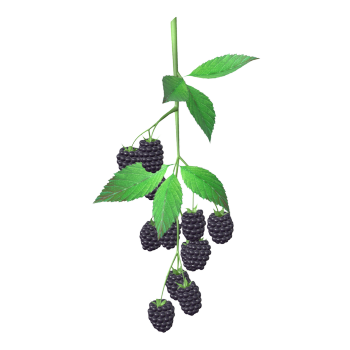
blackberry
Blackberry, a deciduous creeping shrub of the Rosaceae family, belonging to the genus Rubus. The branches of blackberries are arched or climbing, and they often take root at the point of contact with the ground; Small leaves are broadly elliptical in shape, with rounded and blunt tips, and wide wedge-shaped or nearly circular bases. The leaf margins have coarse serrations; Small leaves have short stalks; Terminal inflorescence; Petals white, pink or red, anthers purple; Aggregate fruit nearly spherical, black or dark purple red, hairless; Blackberry flowering period from May to June; The fruiting period is from July to August. The name "blackberry" no longer has a clear origin, but it was first recorded in "Bencao Tongxuan": "Raspberry, sweet and smooth, enters the kidneys, promotes impotence, solidifies essence and absorbs drowning." Raspberry refers to blackberry.

Pineapple 3D model
Pineapple (Ananas comosus (L.) Merr.) It is a terrestrial herbaceous plant of the Pineapple genus in the Pineapple family, with a relatively short stem; The leaves are numerous, with a lotus like appearance and a sword shaped shape. The leaves at the top of the inflorescence become smaller and often appear red; Petals are oblong in shape, pointed at the tip, with a purple red upper part and a white lower part; The flowering period is from summer to winter. According to the records in Taiwan Chronicles, "The fruit is born in the foliage. The peel is yellow like jackfruit, sweet and sour. The tip has green leaves like a phoenix tail, so it is named pineapple."

3D model of cauliflower
Cauliflower (Brassica Oleracea Var. Botrytis Linnaeus) is a variety of wild cabbage in the Brassicaceae family and the Brassica genus. Two year old herb, 60-90 cm tall, covered in powdery frost; The stem is upright, thick, and branched; Basal leaves and lower leaves are oblong to elliptical in shape; The upper leaves of the stem are small and sessile, oblong to lanceolate, and embrace the stem; At the top of the stem, there is a milky white fleshy head like body densely composed of total flower stalks, flower stalks, and undeveloped flower buds; The inflorescence is terminal and axillary; The flowers are light yellow, then turn white; The seeds are wide elliptical in shape and brown in color. The flowering period is in April and the fruiting period is in May.

Melon 3D model
Cucumis melo L. is a plant of the Cucurbitaceae family and the Cucurbitaceae genus. Melon stems, branches, and petioles are rough with shallow grooves; Leaves are nearly circular or kidney shaped, with white rough hairs on the top and dense rough hairs along the veins on the bottom; Corolla yellow, lobes ovate oblong; Smooth skin without prickly protrusions, white, yellow or green flesh; The flowering and fruiting period is summer. Melon is named after its sweet taste and is also known as cantaloupe due to its refreshing fragrance

Coconut
Coconut (scientific name: Cocos nucifera L.), also known as cocoa coconut; It is an evergreen tree belonging to the palm family and the coconut genus, with a height of 15-30 meters. The stem is thick and has circular leaf scars; Leaves are fully lobed and 3-4 meters long; The fruit is ovoid or nearly spherical in shape, 15-25 centimeters long, with 3 edges at the top. The fruit cavity contains endosperm, embryo, and juice (coconut water); The flowering and fruiting period mainly occurs in autumn.

Cut open coconut
Coconut (scientific name: Cocos nucifera L.), also known as cocoa coconut; It is an evergreen tree belonging to the palm family and the coconut genus, with a height of 15-30 meters. The stem is thick and has circular leaf scars; Leaves are fully lobed and 3-4 meters long; The fruit is ovoid or nearly spherical in shape, 15-25 centimeters long, with 3 edges at the top. The fruit cavity contains endosperm, embryo, and juice (coconut water); The flowering and fruiting period mainly occurs in autumn.

Xiaomi banana
Xiaomi banana is one of the fruits in Guangdong and Hainan regions, also known as pink banana in the Pearl River Delta region. Mainly divided into Taishan, Lingshui, Sanya, Pingnan, Wenchang, Qionghai, Wanning, Chengmai, Lingao, and others.
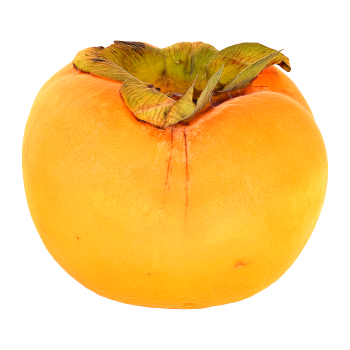
Yellow persimmon 3D model
Persimmon (Diospyros kaki Thunb.) is a tree plant in the family Persimmonaceae, belonging to the genus Persimmon. The leaves are elliptical or nearly circular in shape, with sparse and soft hairs on the new leaves. The upper part of the old leaves is dark green and shiny, while the lower part is green and soft or hairless; The flowers are dioecious, with rare male plants having a few female flowers and female plants having a few male flowers; The fruit has various shapes, including spherical and flattened spherical; The flesh is crisp and hard, and when it matures, it becomes soft and juicy, appearing orange red or bright red. Persimmons bloom from May to June and produce fruits from September to October.

Random Model


Portrait of Joseph II on horseback
983 View


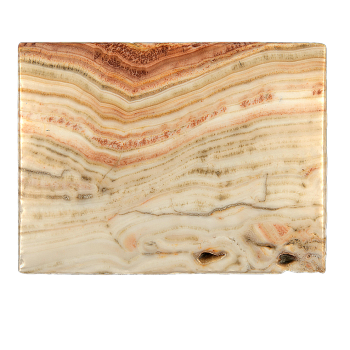
Limestone limestone
910 View


Latvian Sun ā kstes White Church
922 View


Ziphius cavirostris
999 View
