Telescopic forklift T30104

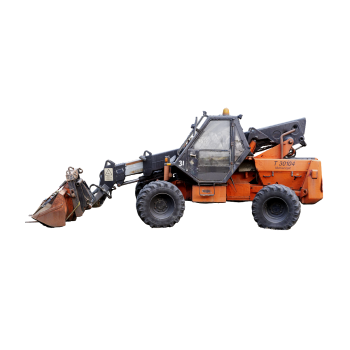
Telescopic forklift T30104

It is a multifunctional material handling equipment. The chassis adopts four-wheel drive, rigid suspension, hydraulic mechanical transmission, hydraulic power steering and hydraulic braking, and rear wheel steering. The operating device is two quadrilateral telescopic working arms, which can realize fork, hanging, loading, grasping, lifting, clamping and other operations. It is applicable to the unpacking, packing fork or lifting operations of pallet materials in containers, as well as the loading and unloading, palletizing and short-distance handling operations of all kinds of container materials. It is suitable for operation in a variety of working environments. It is an ideal equipment for loading, unloading, lifting and transportation in industries such as mining, enterprises, construction, building materials, ports, and municipal engineering.
French Talbot-Lago T150-SS Goutte d'eau car 1937 models
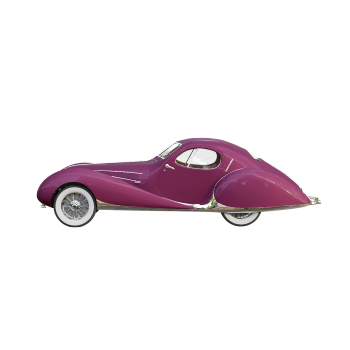
French Talbot-Lago T150-SS Goutte d'eau car 1937 models

It is a classic car produced by French car manufacturer Talbot-Lago and is known for its elegant teardrop-shaped design. Designed by the FigonietFalaschi Body Manufacturing Company, a OvidioFalaschi of Italian-born designers GiuseppeFigoni and businessmen, it has been hailed as one of the most beautiful cars of the 20th century. The design combines streamlined and aerodynamic features, reflecting the pinnacle of ArtDeco style. It is a milestone in the history of automobile design and a symbol of the perfect combination of technology and aesthetics in that era.
Vessel "dubasa" in Vistula, Poland

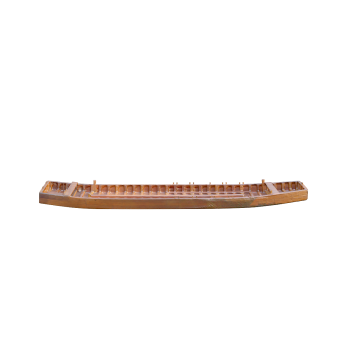
Vessel "dubasa" in Vistula, Poland

It is a kind of ship used for inland water transportation in Poland. Widely used between the 16th and 18th centuries, it is known for its unique design and function, mainly for transporting grain. The design is adapted to the natural conditions of the Viswa River, with a flat hull and slightly upturned bow and stern. It has a large load capacity and can carry 600-800 barrels of grain. It usually consists of 12-14 crew members who are responsible for operating the vessel and transporting cargo. It is now housed in the National Maritime Museum in Gdansk, Poland. It is an important part of Polish water transport and an important symbol of Polish culture and history.
Vessel "galar" in Veswa, Poland

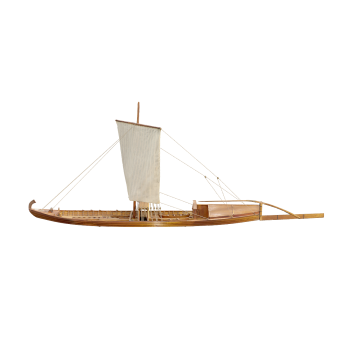
Vessel "galar" in Veswa, Poland
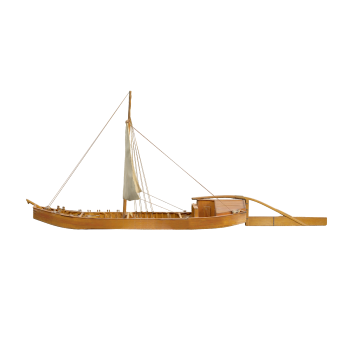
It is an important inland water transport vessel in the history of Poland. It was widely used in the late 18th and early 19th centuries, mainly for transporting timber and other goods. The design is adapted to the natural conditions of the Viswa River. They are usually without masts, and the hull is made of wooden boards, with the bow and stern slightly upturned, relative to the flat bottom. The deadweight is about 280 to 400 barrels, and the crew is 6 to 8 people. It is an important part of Polish water transportation and an important symbol of Polish culture and history, reflecting the characteristics and technological development level of river transportation at that time.
Vessels of the "Bull" type in the Veswa River, Poland

Vessels of the "Bull" type in the Veswa River, Poland

It is an important inland water transport vessel in the history of Poland. This kind of ship is famous for its strong construction and strong carrying capacity, and is mainly used to transport bulk commodities such as grain. It was widely used on the Vistava River during the 16th to 18th centuries, especially in the southern regions of Poland. The design is adapted to the natural conditions of the Vistava River, with a flat and sturdy hull capable of carrying heavy loads, with a sharp bow and a strong stern to accommodate the flow and shoals of the river. It is an important part of Polish water transport and an important symbol of Polish culture and history. Models of these ships are kept in the National Maritime Museum in Gdansk, Poland.
Historic steam roller

Historic steam roller

It is a heavy construction machine that began to appear in the 1860 s. It is used to level the ground, airports or to compact asphalt when laying roads. Different from the tractor, its characteristic is that the two rear driving wheels are flat and smooth to prevent tire marks from being printed on the soil or asphalt, while the front wheels are two drums combined together and installed in a frame. The frame is supported by a fulcrum, so that the weight of the roller falls on the front wheels. It was used throughout the UK and even until the 1960 s, including in the construction of the M1 motorway. Many of the steam rollers have been preserved and can be seen at steam exhibitions around the country.
Traditional boats on the Vishwa River in Poland
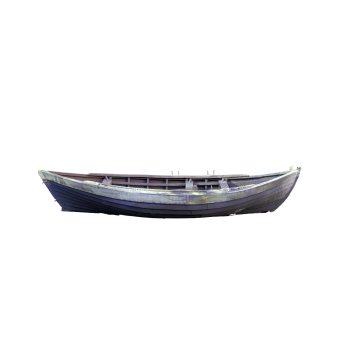
Traditional boats on the Vishwa River in Poland

It is a model of a traditional Polish vessel that represents the large flat-bottomed boats used to transport food on the Vishwa River from the 16th to 18th centuries. Known for its enormous size and carrying capacity, it is capable of carrying 1100-1140 barrels of grain and requires a crew of 16-18 to operate. It was the largest barge on the Vistava at the time, with a flat bottom and solid structure, with a sharp bow and a strong stern. Designed to adapt to the natural flow of the river, the crew uses sails and paddles to control the ship's progress. An opportunity for history lovers to learn about and recreate the history of navigation in Poland.
Kuź nica fishing boat

Kuź nica fishing boat

A sailing rowboat used by fishermen from Kuź nica is equipped with a central plate box with two slots. This design enhances the stability of the boat. In 1994, the historic and cultural boat was acquired by the Gdansk National Fisheries Museum and became part of the museum. The National Maritime Museum in Gdansk, Poland, was established in 1962 to collect, study and preserve artifacts related to shipping, international trade, fisheries and maritime workers. The fishing boat shows the region's reliance on and use of traditional fishing tools at the time.
Fiat 500 Small Car 1970

Fiat 500 Small Car 1970

It is a classic Italian small car, known for its small size and practicality. The weight of the car is only 470kg and the maximum load is 680kg. It is equipped with a 479cc engine with a maximum power of 18 horsepower. The interior space is considered one of the most practical trolleys, despite its small size. With its unique design and practicality, it has become the national car of Italy. It has produced more than 3.9 million sets and penetrated into all aspects of the life of the Italian generation. The 1970 Fiat 500 is still loved by fans around the world for its economy, convenience and retro charm.
Triumph TR6 sports car

Triumph TR6 sports car

It is a classic British six-cylinder sports car, produced by Triumph Motors between 1968 and 1976. As the most popular model in the TR series, it is known for its streamlined design and excellent driving performance. It is known for its strong acceleration performance and top speed. The front and rear ends are designed to be square. This change is said to be based on a consulting contract with Karmann. This design is called Kamm tail and was a common feature of cars in the 1970 s. It is still loved by fans all over the world, thanks to an active club and reliable parts suppliers.
Ford GT Super Run 2006

Ford GT Super Run 2006

It is a mid-rear drive super sports car, inheriting the design language of Ford GT40 in the 1960 s. Known for its excellent performance and powerful engine, it is equipped with a 5.4-liter V8 supercharged engine with a maximum power of 550 horsepower and a peak torque of 500 pound-feet, matched with a six-speed manual transmission. The exterior design combines retro and modern elements, and the interior is simple and full of fighting atmosphere, with the pursuit of speed as the highest guiding principle. With its excellent handling performance and pure driving experience, it became one of the most popular super sports car on the market at that time.
Tank Car 3D Model

Tank Car 3D Model

It is a special vehicle specially designed to transport liquid goods, especially flammable and explosive liquids such as petroleum, gasoline, diesel and so on. It is usually composed of one or more cylindrical tanks and a chassis. The inside of the tank may be provided with partitions to separate different types of liquids. The tank body is usually made of high-quality steel or aluminum alloy to ensure strength and safety, while reducing its own weight and increasing its effective load. Equipped with a dedicated loading and unloading system, including top or bottom manhole covers and loading and unloading pipes to facilitate quick loading and unloading of liquids. It is an indispensable part of the supply chain of petrochemical products and plays an important role in ensuring energy supply and logistics transportation.
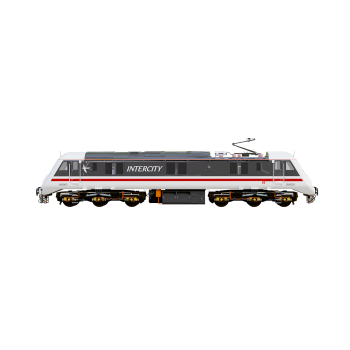
British Railways Class 89 Prototype Electric Locomotive

British Railways Class 89 Prototype Electric Locomotive

Nicknamed "FlyingBadger" (flying squirrel), is a prototype electric locomotive built in 1986 by British Rail Engineering Ltd's Crewe factory. It is famous for its advanced power control system and strong power of more than 6,000 horsepower. It was originally designed as a prototype for a planned series of locomotives that would take over the electrified high-speed trains on the East Coast Main Line and supplement the existing power on the West Coast Main Line. The design was later considered for the Channel Tunnel, but was eventually replaced by BrushClass92.
Porsche 959 Supercar

Porsche 959 Supercar

It is a super sports car introduced in the mid-1980s and is known for its excellent performance and advanced technology. This twin-turbocharged 959 was considered in 1986 to be one of the most advanced road sports car in the world at the time. The body is made of aluminum and Kevlar fiber composite materials, as well as Nomex floor, so that the weight of the vehicle is controlled at about 1450kg, which significantly improves the performance. The aerodynamic design was excellent, with a drag coefficient of only 0.31, which was extremely good data at the time. It is also equipped with an all-wheel drive system. It is still considered the masterpiece of Porsche's classic super sports car.
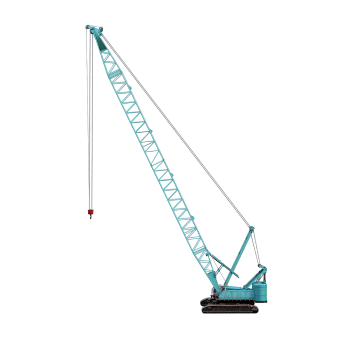
Hitachi Sumitomo SCX2800-2 crawler crane

Hitachi Sumitomo SCX2800-2 crawler crane

It is a 275-ton crawler crane jointly produced by Hitachi and Sumitomo, which sets a new global standard with its high lifting performance and advanced technical characteristics. The maximum lifting capacity of 275 tons, the main arm length of 15.25 meters, with a strong lifting capacity and operational performance. The plan focuses on rapid assembly and disassembly, and adopts a "quick pull-out" system and a "hook-type" design, which simplifies the self-assembly process and reduces the labor intensity of side frame assembly. Environmentally friendly, its low-emission engines meet EU Phase III emission standards, demonstrating the crane's minimal environmental impact.
Kato KA-2000 crane

Kato KA-2000 crane

It is a high-performance crane produced by Kato, known for its excellent workability and economy. The overall model is designed to achieve a low center of gravity and improve the stability of about 5%, thus improving the efficiency of the operation and making it possible to complete more difficult operations. Two operation modes, fuel-saving mode and fast mode, are provided to adapt to different working conditions. Its superior loading height and operating range, as well as KATO's unique three-pump combined hydraulic technology, have increased the digging force by 10% and made the operation smoother. With its high efficiency, environmental protection, comfort and safety, it has become a popular crane choice in the market.
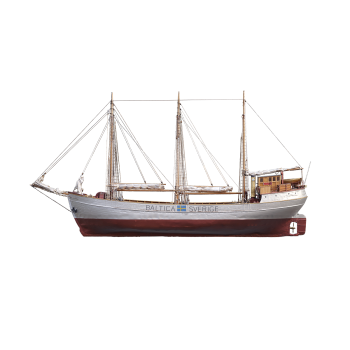
Swedish three-masted ship Baltica

Swedish three-masted ship Baltica

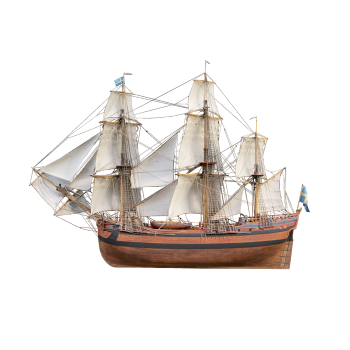
It was launched in 1940 as a cargo ship, mainly on the route between Gotland and the Swedish mainland. Known for its rugged construction and navigational ability, it plays an important role in maritime transport. It sank due to a leak on April 9, 1963, but fortunately, all five crew members survived and were rescued by a passing ship three days later. Its history and its ultimate fate became a landmark event in Swedish maritime history. The original model of the Baltica is preserved in the Swedish Maritime Museum, providing future generations with a detailed interpretation and commemoration of the famous sailboat.
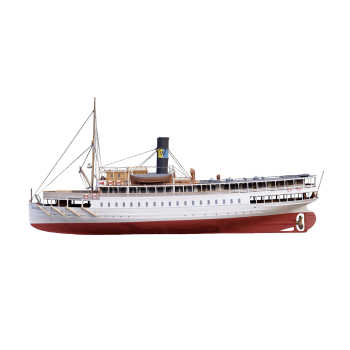
Swedish passenger steamship Nortelje

Swedish passenger steamship Nortelje

It was a passenger steamboat built in 1900 by the Stockholm WilliamLindberg Shipyard and designed by the ErnstHemberg of Designers. The ship served the Stockholm-Furusud-Norrtälje route for many years and was a common sight in the Stockholm archipelago. Since 1968, the Nortelje was moored in Norrtälje Harbour and opened to the public as a museum ship and restaurant. Its original model was ranForss by Gö at the Swedish Maritime Museum between 1965 and 1970.
Sweden Ettan Steam Ferry

Sweden Ettan Steam Ferry

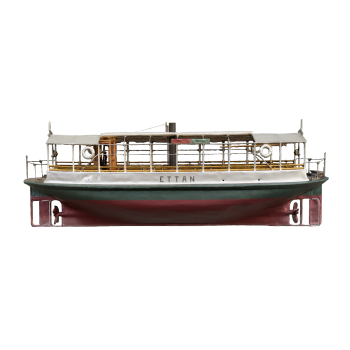
Ettan ("No.1") was a steam ferry that was launched in 1886 at the WilliamLindberg Shipyard in Stockholm, Sweden. The ferry serves a number of routes between the 14 islands within the city of Stockholm. The design and construction of Ettan reflects the technical characteristics of steam-powered ships in the late 19th century. Its original model, built by JanClaesson at the Swedish Maritime Museum between 2015 and 2021, provides insight into the historic steam ferry.
David Brown 25D Tractor

David Brown 25D Tractor

It is a product manufactured by DavidBrownTractors in Huddersfield, England in 1946. Known for its 25 hp four-cylinder engine and six-speed gearbox, DB Tractor was one of the important contributions to the advancement of agricultural technology, especially helping Britain recover from the food crisis during World War II. Known for its Perkins diesel engine, the engine is known for its reliability and durability. It can be used with a variety of agricultural tools and becomes a valuable asset for the farm. The operation is simple, even inexperienced drivers can easily operate, and the price is close to the people.
9th century Gokstadsskeppet Viking ship
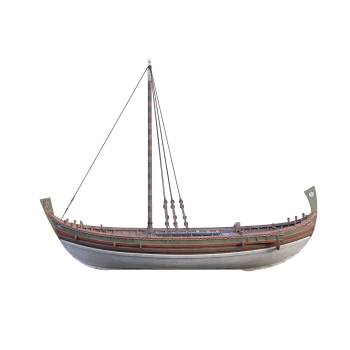
9th century Gokstadsskeppet Viking ship

A 9th-century Viking ship, it was discovered in 1880 in a tomb mound in Gokstad, Norway. It is constructed of plywood and is mainly used for war, trade, and the transportation of people and goods. The crew is about 40 to 70 people, and the maximum speed can reach 11-12 knots. Through the analysis of the annual rings of the wood, it is determined that the ship was built in about 890 years. The design and construction techniques demonstrate the advanced Viking shipbuilding skills as a powerful marine vehicle and a noble burial place for Viking chiefs, reflecting the social importance of the ship in Viking culture. Preserved at the Viking Ship Museum in Oslo
Roman Period Anse de Laurons 2 Sailboat

Roman Period Anse de Laurons 2 Sailboat

was the shipwreck of a small Roman-period galleon, dated to the end of the 3rd century AD, probably sunk in a storm, and was at anchor for refuge in the shallow port of Laurons, west of modern-day Marseille, France. It is about 15 meters long and has an estimated displacement of about 30 tons. It may only trade between small ports on the local coast. When the ship was sunk, its left side was quickly covered with sediment, ensuring an excellent state of preservation down to the deck and even the railing. There are preserved rigging elements, spare rudders, and fragments of wooden panels that may cover the cargo hold, as well as rarely preserved structures used to support the side rudders. This reconstruction is based on the plans of R.Bockius
Mercedes-Benz S-Class W140 car

Mercedes-Benz S-Class W140 car

Also known as the "Tiger Head Run", it was a flagship model of the generation produced between 1991 and 1999. With its innovative design and excellent quality, it has become a legend in Mercedes-Benz models. For the first time, a new linear side facade design is adopted to make the body more streamlined and reduce air resistance. Provides a variety of engine options, including 3.2-liter, 4.2-liter and 6.0-liter gasoline engines and 3.0-liter and 3.5-liter diesel engines. The chassis adopts a series of advanced technologies, including intelligent stability control technology, active damping control technology, Air suspension system, etc., was one of the most advanced chassis designs in the automotive industry at that time
Lamborghini Gallardo LP560-4 Super Run

Lamborghini Gallardo LP560-4 Super Run

It is a high-performance super sports car, known for its excellent power and handling performance. Equipped with a 5.2-liter V10 naturally aspirated engine, the maximum horsepower reaches 560 horsepower, the peak torque is 540 N · m, the acceleration from 0 to 100 km/h takes only 3.7 seconds, and the top speed exceeds 300 km/h. "LP" stands for vertical engine placement, "560" refers to the maximum power of 560 horsepower, and "4" stands for four-wheel drive system. In appearance, the front face design has been updated, the headlights are narrower and longer, the air intake grille lines are tougher, and the overall shape is more radical. It is also equipped with an advanced suspension system and brake system.
BMW E39 car (red)

BMW E39 car (red)

It is the fourth generation model of the BMW 5 Series, produced from 1995 to 2004. Known for its excellent handling, powerful power and elegant appearance, it is widely regarded as one of the representative works of the BMW brand. The design was written by Chris Bangor, and the lines have become more rounded than ever. The biggest change in appearance features is the integration of four independent round lamps into an integrated lampshade, forming BMW's famous "Angel Eye" headlights. The proportion of aluminum alloy used in chassis components has been significantly increased, which improves the rigidity and handling of the body. Not only is the performance strong, but also the strongest in the past dynasties in terms of public relations and communication capabilities.
Mercedes-Benz G63 AMG SUV car

Mercedes-Benz G63 AMG SUV car

It is an SUV that combines luxury, performance and off-road capabilities. It is equipped with a 4.0-liter V8 twin-turbocharged engine that produces up to 577 horsepower and 627 pound-feet of torque. Equipped with a full-time four-wheel drive system, it can intelligently distribute power to each wheel, providing excellent traction and stability. High ground clearance makes it easy to pass rough terrain. Its rigid chassis can withstand various challenges, including bumpy roads and intense off-road driving, maintaining the stability of the vehicle. It is also equipped with a variety of off-road driving modes, which can be switched according to driving conditions and needs to adapt to different off-road environments.
AlphaTauri AT04 RACING

AlphaTauri AT04 RACING

It is a Formula One car designed by ScuderiaAlphaTauri for the 2023 FormulaOneWorldChampionship. Known for its blue-and-white color scheme and red new sponsor logo, it carried a HondaRBPT power unit, marking Honda's return to F1 after its exit at the end of the 2021 season. With its evolutionary version of the design, attention is paid to aerodynamic efficiency and component layout to improve downforce and reduce vehicle weight. 18-inch Pirelli tires are used, designed to provide greater front-end grip and reduce understeer
Ferrari F1 SF90 Racing

Ferrari F1 SF90 Racing

Ferrari launched the F1 car SF90 in 2019 to mark the team's 90th anniversary. It is the 65th single-seater car built by Ferrari for the Formula One World Championship. It is manufactured according to the new rules. Compared with the 2018 season's car, there are corresponding changes. The most significant changes are the front nose and tail of the car. The front nose is wider and the aerodynamic design is simpler, while the tail is wider and taller. The breaking plate reduces the height and the design of the front brake duct is simplified. It is equipped with a 1.6-liter turbocharged V6 internal combustion engine. It was played by Sebastian Vettel and Charles Leclerc.
Aston Martin F1 AMR23 Racing

Aston Martin F1 AMR23 Racing

It is the F1 car launched by Aston Martin Team in 2023, marking the team's third model since returning to F1 competition in 2021. With its bold and radical design, it has a significant change from the previous generation AMR22. Major aerodynamic improvements have been made, including redesigned front wings, new side boxes, and a new hood with larger air intakes. The goal is to improve performance, reduce the bounce of the car in high-speed corners, and increase downforce. Was a significant development from last year's car and has been improved in every key area.
McLaren MCL60 Racing

McLaren MCL60 Racing

McLaren unveiled the new MCL60 in 2023 to celebrate the team's 60th anniversary. It inherits McLaren's signature papaya orange and blue livery and features an "exposed carbon" look, a weight-saving technique. The design has no major changes in concept from the previous season's MCL36, but has been optimized in detail. The goal is to improve the chassis performance under ground effect, which is the focus of the teams, because the lap speed improvement obtained from the chassis performance is much greater than the exterior of the body and the wings. McLaren is hoping the MCL60 will help the team return to the top of the constructors' standings.
United States Navy 26-foot motorcycle lifeboat
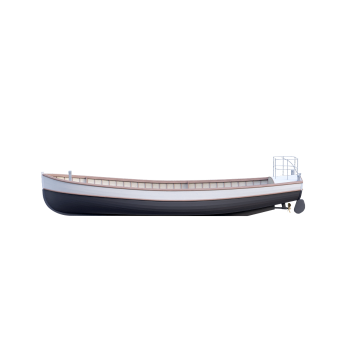
United States Navy 26-foot motorcycle lifeboat

It was a multi-purpose vessel widely used during World War II. Designed by the Navy to withstand the impact of 20-foot waves and be able to perform tasks in extreme sea conditions, such as rescue in a storm or impact the hull without damage. Designed to be carried on naval vessels as lifeboats, officers' boats, shore group boats, mail boats, etc. The FRP structure far exceeds the general military specifications, can maintain the comfort of passengers during the mission, and has excellent handling performance and easy handling. It has a safe design, such as a circular passenger area. After decommissioning, it is often purchased by the private sector for various purposes, including leisure and commercial use.
American Wooden Motorboat

American Wooden Motorboat

It is a class of small, fast vessels used primarily for coastal patrol, anti-submarine warfare, and rapid deployment. It was used in both world wars, especially during World War II, where it played a major role in coastal defense and attack operations. The design emphasizes speed and mobility, enabling them to respond quickly to various maritime threats. In the war also used for reconnaissance, rescue and transport missions. The miniaturized design allows it to operate effectively in an offshore environment, providing the U.S. Navy with valuable flexibility and rapid response capabilities.
Kalak sailing ship

Kalak sailing ship

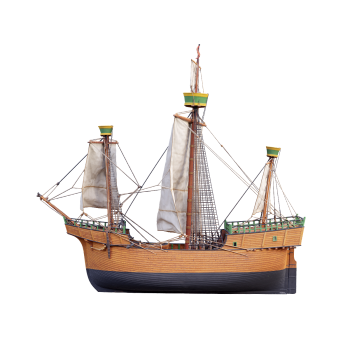
They were large ships used for trade, war and exploration in the 15th and early 16th centuries. Originating in the Mediterranean, it is a product of the development of sailing technology. It is known for its stability on rough seas, and has plenty of space to load cargo and supplies, suitable for long-distance sailing. Known as a "holk" in northern Europe, and were built of clinker, meaning they used an overlapping wood board structure, which was considered strong and durable at the time. The design includes a tall forecastle and stern, and multiple masts, usually equipped with square sails and Latin sails, allowing it to adapt to different wind directions.
Royal Barge, Baron Anders von Hopken, Sweden
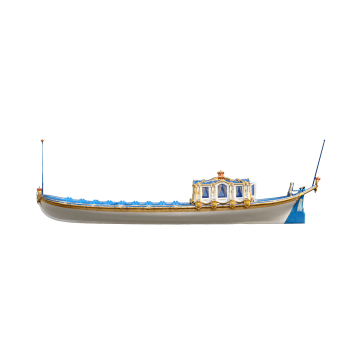
Royal Barge, Baron Anders von Hopken, Sweden

It was a Swedish royal barge built in 1759. The ship was built by shipyard owner Eric Hånga at the Jatkojoki shipyard in Finland and launched that year with a length of 130 feet, capable of carrying 6000 barrels of French salt, equivalent to 295 Swedish tons. The registered port is Stockholm, and the shareholders include a number of businessmen. Named after Anders Johann von Hopken, a famous Swedish politician, cultural figure, one of the founding members of the Swedish Academy of Arts, and one of the founders of the Royal Swedish Academy of Sciences. Burned outside the Djurgardsvarvet in Stockholm in 1804.
Swedish Vasaorden Royal Barge

Swedish Vasaorden Royal Barge

It is a Swedish royal barge designed by FredrikHenrikafChapman. It was built in 1774. It was used for ceremonial occasions such as state visits and royal weddings. It was 18.6 meters long and 3.2 meters wide. It was first used for the 1774 wedding of Prince Carl and Princess Hedwig Elizabeth Charlotte of Holstein-Gotorp. It was presided over by King Gustav III. The original barge was destroyed by fire at a navy dock in Stockholm in 1921, but two years later, in 1923, an exact replica was built and launched. It is still used in official ceremonies.