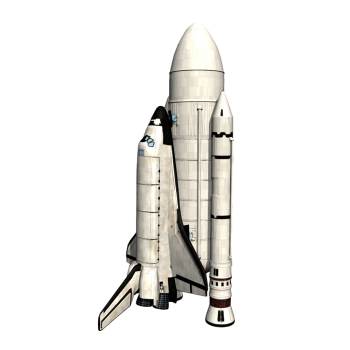
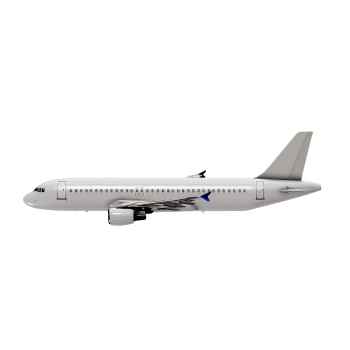
satellite

satellite

A satellite refers to a natural celestial body that orbits a planet in a closed orbit and performs periodic movements. Artificial satellites are also commonly referred to as satellites. Artificial satellites are devices built by humans and launched into space using spacecraft such as rockets and space shuttles, orbiting the Earth or other planets like natural satellites. Often, gas planets have many satellites. The eight major planets have a total of 218 satellites, with all planets except Mercury and Venus having satellites orbiting them. The ranking order by the number of satellites is Saturn 82, Jupiter 92, Uranus 27, Neptune 14, Mars 2, and Earth 1.
Fuga Magic Mentor Jet Trainer

Fuga Magic Mentor Jet Trainer

The French two seater jet trainer aircraft of the 1950s was developed and manufactured by French aircraft manufacturer É tablissements Fouga&Cie. The V-shaped tail is easily recognizable and has been built in France for nearly 1000 vehicles, with permits obtained in West Germany, Israel, and Finland. In 1948, Fouga began developing a new design for a junior trainer aircraft that utilized newly developed jet propulsion technology. The first flight was on July 23, 1952, and the first production order for this model was received on January 13, 1954.
Airbus helicopter EC145

Airbus helicopter EC145

The Airbus EC145 helicopter is a twin engine light utility helicopter developed and manufactured by Airbus Helicopters. The H145 was initially designated as BK 117, based on the MBB/Kawasaki BK 117 C1, which became part of the merged lineup of Eurocopter in 1992 when the Daimler Benz helicopter division of Messerschmitt Burkoff Blom was merged into Eurocopter. This helicopter was previously named EC145; The updated version EC145 T2 was renamed H145 in 2015.
Airbus A310-300

Airbus A310-300

The A310-200 has an increased range and is almost identical in appearance to the 200- The 300 has increased maximum takeoff weight and endurance through the addition of central and horizontal tail fuel tanks. The maximum fuel capacity has increased from 55200L for the -200 model to 75470L. Introduced wingtip winglets to improve aerodynamic performance (some A310-200s are also equipped with this device). It made its maiden flight in July 1985 and was officially put into use in 1986.
Airbus A310-200

Airbus A310-200

To compete with the Boeing 767, Airbus Industries has developed the Airbus A310, a 200 seater medium to short range dual aisle wide body aircraft. On the basis of Airbus A300B, the fuselage has been shortened, new wings have been designed, and a two person crew has been adopted. The cabin is a typical two-level cabin layout with a standard passenger capacity of 220 people. The A310 marked the beginning of Airbus' development, and the market performance of the A300 and A310 ensured Airbus' position as a major competitor to Boeing. By the time of discontinuation in 2007, a total of 260 A310 aircraft had been produced.
Russian medium to short haul mainline passenger aircraft MC21

Russian medium to short haul mainline passenger aircraft MC21

MC21 is a new type of medium to short range mainline passenger aircraft from Russia. Its MC-21-300 model completed its maiden flight on May 28, 2017, making it Russia's first civilian aircraft designed entirely according to Western standards.
Boeing 767-300F

Boeing 767-300F

The Boeing 767-300F has a length of 54.94 meters, a height of 15.8 meters, and a wingspan of 47.57 meters. The Boeing 767-300F is the all cargo version of the Boeing 767-300ER, and its starting user is UPS. The 767-300F can accommodate up to 24 standard pallets (220 x 320 cm), and the lower cargo hold can hold 30 LD2 containers, with a total cargo hold volume of 438 cubic meters.
Boeing 777 twin engine wide body aircraft from the United States

Boeing 777 twin engine wide body aircraft from the United States

The Boeing 777 is a twin engine wide body aircraft developed by the American company Boeing. It was officially launched on October 29, 1990, and the first Boeing 777 made its maiden flight on June 12, 1994. The Boeing 777 is between the B767-300 and B747-400 in terms of size and range, with the characteristics of flexible cabin layout, wide range, and different models that can meet constantly changing market demands. The Boeing 777 is parked on the runway. One of its most prominent identification features is its three-axis six wheel main landing gear system and two front wheels.
Airbus A330-200F aircraft

Airbus A330-200F aircraft

The Airbus A330-200F aircraft was introduced by Airbus in 2007 after the discontinuation of the A300 and A310 freighters, to fill the gap in Airbus' passenger aircraft fleet. The size of the aircraft is between the Boeing 767-300F and Boeing 777F. When selecting the range mode, the A330-200F cargo aircraft can have a range of 7400 kilometers and can carry 64 tons of cargo; When selecting the payload mode, the load capacity can reach 69 tons and the range is 5930 kilometers.
Boeing VC-25 aircraft from the United States
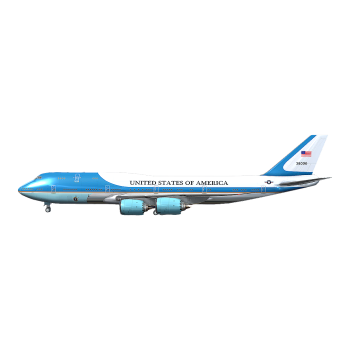
Boeing VC-25 aircraft from the United States

The Boeing VC-25 is a passenger aircraft designated by the United States Air Force, a military version of the Boeing 747 airliner. The A-type machine, also known as VC-25A, is the only model of VC-25. The most famous feature of VC-25 is that it serves as Air Force One, with its call sign indicating any aircraft of the United States Air Force carrying the President of the United States.
Airbus A320 series aircraft

Airbus A320 series aircraft

The Airbus A320 series aircraft is a single channel twin engine medium to short range 150 seater passenger aircraft developed and produced by Airbus in Europe. It is the first commercial aircraft to use a digital fly by wire flight control system, and also the first civil aircraft to relax its static stability design. Improve cabin adaptability and comfort in design. The A320 series of aircraft includes the A318, A319, A320, and A321, forming the single aisle aircraft series. Intended to meet the low-cost operation needs of airlines for short to medium haul routes, it provides operators with the greatest commonality and economy among 100 to 220 seat aircraft.
Small civilian stunt aircraft Sukhoi Su-29 aircraft

Small civilian stunt aircraft Sukhoi Su-29 aircraft

The Sukhoi Su-29 is a renowned high-performance stunt aircraft known for its exceptional agility and precision. With its stylish, streamlined design and powerful engine, the Su-29 is the Sky Master, capable of elegantly and accurately performing various stunt flying maneuvers. Its sturdy body and advanced avionics make it a favorite among professional stunt pilots, allowing them to break through the boundaries of the aerial performance world. Whether in the hands of competitive stunt flying champions or dazzling air show performers, the Su-29 continues to attract aviation enthusiasts with its breathtaking aerial art displays
Double winged civilian aircraft Bucker Bu 133

Double winged civilian aircraft Bucker Bu 133

The Bucker Bu 133 is a classic and iconic biplane that captures the essence of the golden age of aviation. With its beautiful lines, open cockpit design, and clear biplane configuration, it exudes a vintage charm and nostalgia. The wings of Bu 133's biplane aircraft feature unique interlocking, sturdy landing gear, and detailed radial engines, faithfully reproducing this agile and nimble aircraft. Whether in exhibitions or in flight, the Bucker Bu 133 proves the enduring charm of old-fashioned aviation.
Small civilian stunt aircraft Extra 330 SC

Small civilian stunt aircraft Extra 330 SC

The Extra 330 SC is a high-performance stunt flying aircraft known for its agility and precision in stunt flying. It is part of the Extra 300 series aircraft, designed specifically for stunt flying and favored by professional stunt pilots and air show performers. The Extra 330 SC is a single seat low wing monoplane with a stylish and aerodynamic optimized design. It is mainly made of composite materials, making it lightweight and sturdy.
NASA Space Shuttle

NASA Space Shuttle

Spaceship: A spacecraft capable of conducting space activities independently and transporting personnel, materials, and equipment between the ground and a space station. A spacecraft flying along the Earth's core orbit is called a satellite spacecraft, which is a disposable spacecraft; Spaceships that fly to other celestial bodies are called interstellar ships or expedition ships. The spacecraft that transports personnel is called a manned spacecraft, and the spacecraft that transports materials and equipment is called a cargo spacecraft.
SpaceX Falcon 9

SpaceX Falcon 9

The reusable medium launch vehicle developed by SpaceX in the United States. The full thrust version of the Falcon 9 rocket has a carrying capacity of 22.8 tons for low Earth orbit payloads and 8.3 tons for geosynchronous transfer orbit, which can meet the launch requirements of most spacecraft. Falcon 9 completed its first launch on June 4, 2010 and its first recovery on December 21, 2015.
Star Wars X-Wing Fighter

Star Wars X-Wing Fighter

The X-wing fighter is a fictional starfighter derived from the "Star Wars" series. It is a fighter made by Inkang. It entered the battlefield for the first time in the Galactic Civil War. It was the main force of the resistance organization (Resistance) starfighter force in the struggle between the resistance organization and the "first order. "Incom's T-65 X-wing Starfighter was the very fighter that destroyed the Death Star, and it was the perfect balance of speed and maneuverability and shield that made the Rogue Squadron choose it."
NASA's Perseverance rover (to land on Mars in 2021)

NASA's Perseverance rover (to land on Mars in 2021)

American nuclear-powered rover. "Perseverance" (Perseverance) Mars rover is a new generation of Mars rover announced by NASA, named after Alexander Mather, a junior high school student in the United States, to search for evidence of past life on Mars. On July 30, 2020, the US Mars rover "Perseverance" lifted off from Cape Canaveral Air Force Base in Florida. The Perseverance probe will make a nearly seven-month trip to Mars and land safely in a spectacular "aerial crane" at around 4:55 a.m. Beijing time on February 19, 2021 in the Martian Jezero crater.
Airbus A320 engine

Airbus A320 engine

Airbus A320 series aircraft is a short-range 150-seat passenger aircraft developed and produced by European Airbus. It is the first commercial aircraft to use a digital fly-by-wire flight control system, and it is also the first civil airliner to relax the design of static stability. The A320 family of aircraft is designed to enhance cabin adaptability and comfort. The A320 family of aircraft consists of the A318, A319, A320 and A321, which make up the single-aisle aircraft family.
India's third lunar mission probe (Moonship 3)
India's third lunar mission probe (Moonship 3)

Lunar ship 3 (English: Chandrayaan-3) is India's third lunar mission probe and the country's second attempt to land on the lunar surface. The Indian Space Agency (ISRO) is scheduled to launch from the Satish Dhawan Space Center on an Indian carrier rocket Mark-3(LVM3) at 17: 05 Beijing time on July 14, 2023. The goal is to be the first country to land near the moon's south pole, which has been little explored by humans.
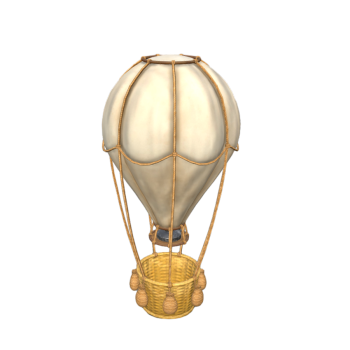
Retro Hot Air Balloon 3D Model

Retro Hot Air Balloon 3D Model

NASA Space Shuttle

NASA Space Shuttle

The United States Space Shuttle is the world's first reusable space vehicle to and from the ground and space. It consists of an orbiter, an external tank and a solid booster. Each orbiter can be reused 100 times, each time it can send up to 29.5 tons of payload into 185 to 1110 kilometers of low-earth orbit, and bring 14.5 tons of payload back to the ground. The space shuttle is 56.14 meters long and 23.34 meters high. The orbiter can carry three to seven people and fly in orbit for seven to 30 days.
3D model of communication satellite

3D model of communication satellite

Alloy warhead alien UFO aircraft 3D model

Alloy warhead alien UFO aircraft 3D model

Abandoned An -2 Transport Aircraft 3D Model AR Aircraft

Abandoned An -2 Transport Aircraft 3D Model AR Aircraft

An -2 is a light multi-purpose single-engine biplane designed by the Soviet Antonov Design Bureau in 1946. It has stable flight and reliable structure. It was put into production in 1947, and the main production line was discontinued in 1991, with a total output of more than 18000. Its nearly 45 years of production was once the Guinness Book of World Records. China successfully copied it in 1957 and named it Yun -5. Until 2011, it was still producing a small amount in Shijiazhuang Aircraft Factory.
Large Aerospace Passenger Aircraft 3D Model

Large Aerospace Passenger Aircraft 3D Model