


Freecreat category
Animals/Organics
Browse models in this category, preview details, then continue to download when ready.

Tian Bie
Tian Fu (Negative) stink bug, also known as Tian Fu (Negative) stink bug, is a member of the family Nematophoridae in the order Hemiptera. It is a type of aquatic insect that is easily confused with species such as the stink bug and scorpion bug. The field turtle does not lay eggs and directly lays them on the stems of aquatic plants. The stink bug is about 2 centimeters long, while the field turtle can grow up to 12 centimeters. The common individual in China is 7 to 9 centimeters long, with smaller individuals only about 5 centimeters long. It is a widely distributed insect in China. It has a small head, a flat and wide body, lives in water, and its breathing tube is at the end of its abdomen. It feeds on small fish and insects in the water and is fierce in nature.
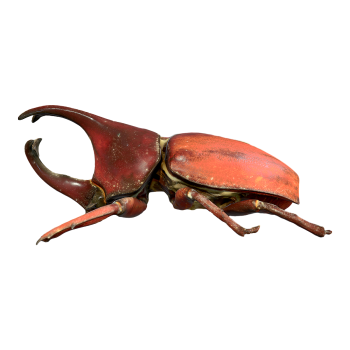
rhino beetle
Rhinoceros beetles belong to the order Coleoptera. Mostly distributed in tropical regions, with the most abundant species in Central and South America, more species in Africa and Oceania, and relatively fewer species in Asia. Seven genera and twelve species have been discovered in Yunnan, China. The head and pronotum often have prominent forked angles resembling rhinoceros horns, hence the name. Among them, the protruding sugarcane turtle, rubber rhinoceros beetle, and double forked rhinoceros beetle are commonly known as unicorn immortals.
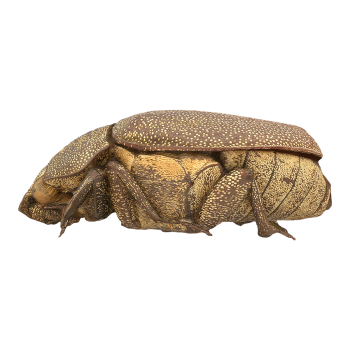
Polyphylla laticollis Lewis
The large cloud gill turtle belongs to the family of gill turtles. Adult insects have a body length of 31-38.5mm and a body width of 15.5-19.8mm. Large in size, elliptical in shape, with a prominent arch on the back. Chestnut brown to dark brown. The color of the head, thorax, and feet is often darker, while the color of the elytra is lighter, with various white or milky white scales on top.
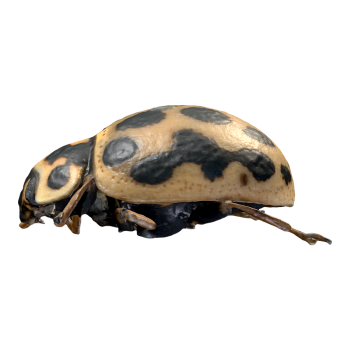
Ladybug
Ladybugs are small insects in the family Ladybulaceae of the order Coleoptera, and are a general term for beetles with circular protrusions; Hongniang, Golden Turtle, Golden Turtle, Stinky Turtle, and Flower Sister. The body is brightly colored, often with red, black, or yellow spots, and has a hemispherical shape, only the size of a soybean grain; The wings are hard and have a metallic luster. Ladybugs are beneficial insects, with the Seven Star Ladybug being the most well-known. Adult ladybugs can prey on pests such as wheat aphids, cotton aphids, locust aphids, peach aphids, scale insects, and wall lice, greatly reducing damage to trees, fruits, and various crops caused by pests. They are known as "live pesticides" by people.

Furry spider
Belonging to arthropods. Nicknames: Networm, Flat Spider, Garden Spider, etc. Its body is divided into a head, chest, and abdomen, which are connected by a slender abdominal stalk; The head has a pair of claws in front of the head, and the end of the claws is the venomous teeth of the venom gland duct; There are four pairs of feet on both sides of the chest, with hard claws at the tips of the feet. Wang Anshi's "Zishuo" records that a web was set up on one side, and when an object touched it, it was executed, hence the name "Spider". Spiders are distributed throughout China, mostly inhabiting eaves, corners of walls, and between trees, forming wheel shaped webs. Spiders are natural enemies of many agricultural and forestry pests and play an important role in biological control. Protecting and utilizing spiders has become an important aspect of biological control.

Rhinoceros Beetle (Unicorn Fairy)
The rhinoceros beetle (Phileurus didymus) belongs to the order Coleoptera. Mostly distributed in tropical regions, with the most abundant species in Central and South America, more species in Africa and Oceania, and relatively fewer species in Asia. Seven genera and twelve species have been discovered in Yunnan, China. Among them, the protruding sugarcane turtle, rubber rhinoceros beetle, and double forked rhinoceros beetle are commonly known as unicorn immortals.
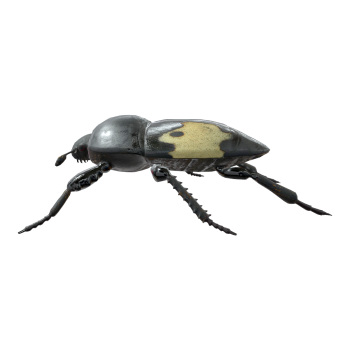
The Beatles
Beetles are a general term for arthropods in the order Coleoptera of the subphylum Tracheal, and are the largest group (order) in the insect class. There is a significant difference in size between different species, and the body wall is hard; Chewing mouthparts, with the upper palate generally well-developed; The forewings are keratinized, hard, and lack wing veins, known as elytra. When at rest, they cover the back, the middle and posterior thorax, and most or all of the abdominal segments (the scutum of the middle thorax is usually exposed). The inner edges of the two elytra meet at the midline of the back to form a straight line.

Locust (grasshopper)
Locusts are insects belonging to the locust family and the locust genus. Their entire body is usually green, gray, brown, or black brown, with well-developed hind leg muscles and thick hind leg joints that are suitable for jumping. Their strong jumping ability makes them jumping experts.
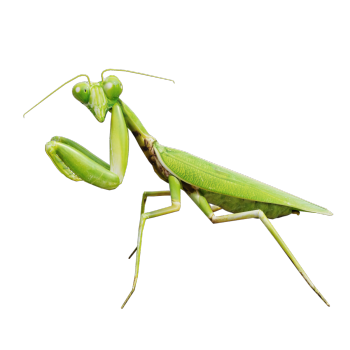
Carnivorous insect Green Mantis

Dragonfly
The dragonfly is an insect animal of the genus Odonata. Dragonfly has well-developed wings, and the base of hindwing is slightly larger than the base of forewing. At rest, the four wings are spread out and laid flat on both sides. The head is flexible and has short antennae. The compound eye is well-developed, with three monocular eyes and powerful chewing mouthparts. The abdomen is slender, with thin and weak feet and hooked thorns. The larvae are short and thick, with rectal gills and tailless. Dragonfly is a typical incomplete metamorphosis insects, but also the eyes of the most insects. "Compendium of Materia Medica" contains: "Dragonfly, said its tail green also; Wing rainbow, said its shape alone also, or cloud its tail as nails also, or cloud its tail good high and upright. Therefore, it is called, flying, and flying."

a cockroach
Cockroaches generally refer to insects belonging to the "cockroach" (scientific name), belonging to the arthropod, insects, cockroaches (Blattaria), commonly known as cockroaches, are common medical insects. Among them, only about dozens of species will invade human homes, and there are several species that are kept by humans as pets and as food for pets. Most of the species can only be seen in wild mountain streams and forests or insect museums. The most common cockroach at home, the big one is about 5.0cm long.

Locust
Locusts are insect animals of the genus Alocusts, usually green, gray, brown or dark brown, with muscular hind legs and thick hind legs, suitable for jumping, and their strong jumping ability makes them experts in jumping. Locusts are found in tropical, temperate grasslands and desert areas around the world. Locusts are herbivorous insects, like to eat thick leaves, such as sweet potato, water spinach, cabbage leaves, etc., there are social and scattered type of points, with migratory, locusts almost have a typical protective color, usually most of the habitat among plants.
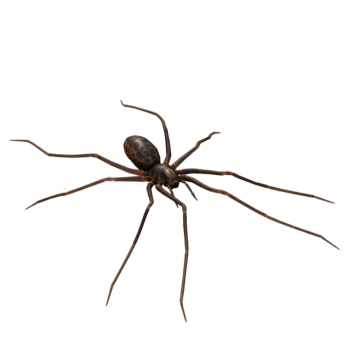
Horror Foot Spider 3D Model

3D scanned insect mantis model

Hard-working bee 3D model

Black Beetle 3D Insect AR Model Beetle
The beetle is a collective term for the insects of the order Coleoptera, commonly known as the beetle. Belong to the whole metamorphosis insects, beetle body external hard shell, the front wing is horny, thick and hard, hindwing is membranous, common beetles are beetles, beetles, weevil and so on. The beetle's body is usually divided into three parts: the head, the chest, and the abdomen. There are six legs, and their forewings become wingsheaths to protect the hindwings and body. When flying, first lift the sheaths of the wings and then open the hindwings to fly.

Oversized tweezers ant soldier ant 3D model

Random Model
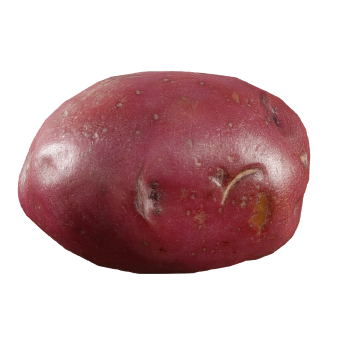
red potato
464 View

Rusty shovel
796 View
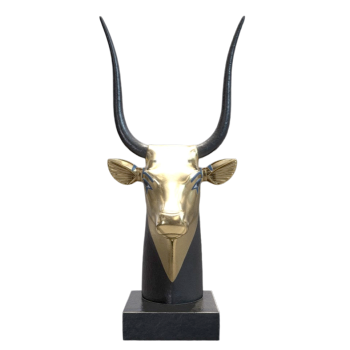
Hathor's head image (3D printable)
544 View

Nephele
1346 View

Leather Long Coral Riding Boots
653 View

Three-person electric reclining sofa
620 View

Blue Baseball Cap
783 View

Rocking Chair by Natalia Patrai
569 View


Merrell moab speed GORE-TEX®Sneaker
729 View