Grey Populus euphratica

Grey Populus euphratica

Populus pruinosa Schrenk is a small tree in the family Salicaceae, belonging to the genus Populus, with a height of up to 20 meters. Crown development; The bark is light grayish yellow; Cute branches densely covered with gray short hairs; The small branches have gray short hairs. Cute branches and leaves elliptical in shape, covered in gray hairs on both sides; Short branches and leaves kidney shaped, with sparse teeth on the entire edge or tip, gray blue on both sides, densely covered with short hairs; The petiole is slightly flattened on the side. The fruit stalk, stem, and capsule are all densely covered with short hairs. The capsule is oval in shape, blooms in May, and bears fruit from July to August.
Apple saplings

Apple saplings

Apples (Malus pumila Mill.) are deciduous trees in the Rosaceae family, with tall stems and short, thick, cylindrical branches; The leaves are elliptical in shape, with a smooth surface and serrated edges. The petiole is thick and robust; The flowers are small and umbrella shaped, light pink in color, with a fuzzy surface; The fruit is large, flattened in shape, and the stem is short and thick; The flowering period is in May; The fruiting period is from July to October. The name of an apple was first mentioned in Wang Shimao's "Xuepu Yushu" during the Ming Dynasty, which stated that "the apple fruit of the northern soil is a variation of the flower red variety.
apple

apple

Apples (Malus pumila Mill.) are deciduous trees in the Rosaceae family, with tall stems and short, thick, cylindrical branches; The leaves are elliptical in shape, with a smooth surface and serrated edges. The petiole is thick and robust; The flowers are small and umbrella shaped, light pink in color, with a fuzzy surface; The fruit is large, flattened in shape, and the stem is short and thick; The flowering period is in May; The fruiting period is from July to October. The name of an apple was first mentioned in Wang Shimao's "Xuepu Yushu" during the Ming Dynasty, which stated that "the apple fruit of the northern soil is a variation of the flower red variety.
silver birch

silver birch

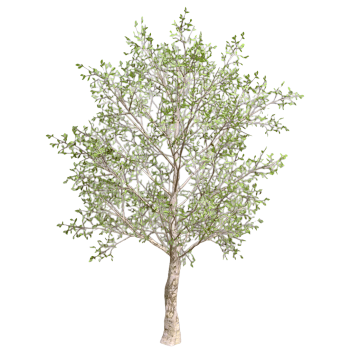
Deciduous tree, up to 25 meters tall, with straight trunk ends. The white paper like bark will peel off layer by layer in any season; Slender branches; Triangular ovate leaves with irregular heavy serrations on the edges, 5-8 pairs of lateral veins, and a small amount of hairy or hairless; First leaf flowering, single sex, monoecious, inflorescence of catnip; The cylindrical fruit sequence is solitary and drooping; Nuts are small and flat, with wide wings on both sides, and mature in autumn.
oak

oak

Oak tree (also known as oak or oak tree) is a general term for plants in the Fagaceae family, including species of oak, green oak, and oak, usually referring to oak plants, not a specific tree species. There are 615 species in the oak genus, of which 450 are from the oak subgenus and 188 are from the green oak subgenus. Their fruit is called acorns, and their wood is generally referred to as oak. Oak trees mostly grow in the northern hemisphere. About 200-250 species of oak trees are distributed in the Americas, and more than 300 species of oak trees grow in Asia, Europe, and northern Africa. Although China has abundant resources of more than 50 species of oak trees, most of them are distributed in hilly and mountainous areas, and there are few species of autumn leaf trees, which affects their application in landscaping. The sentence is:.
Du Song

Du Song

Juniperus rigida Siebold&Zucc. is an evergreen shrub or small tree in the family Cupressaceae, belonging to the genus Juniperus. It can grow up to 10 meters tall and has a cylindrical crown with a round head when old. Large branches stand upright, small branches droop. Its leaves are spike shaped, hard, and pointed, with deep grooves on top and a narrow white powder band inside the groove. There are obvious longitudinal ridges on the back. The cone, when ripe, appears light brownish yellow or blue black and is coated with white powder. The seed is nearly oval in shape, with a pointed tip and four inconspicuous ridges.
coconut tree

coconut tree

Coconut (Cocos nucifera L.) is a fruit produced by plants in the palm family of the genus Cocos. This plant is a tall and sturdy tree like plant with thick stems; The leaves are fully lobed, with most of the petals being linear lanceolate, and the petioles being thick and robust; Petals are oval or nearly spherical in shape; The outer skin is thin, the middle skin is thick and fibrous, and the inner skin is woody; When seeds germinate, they emerge through holes, and the fruit cavity is rich in endosperm and juice. The skin is thin, and the seeds germinate excessively; The flowering and fruiting period mainly occurs in autumn. The origin center of coconut trees is in the Melanesian Islands and New Zealand in the Pacific Ocean, where archaeologists have discovered coconut fossils dating back one million years in the alluvial deposits.
Joshua Tree

Joshua Tree

The Joshua tree, scientific name Yucca brevifolia, is a monocotyledonous plant of the Liliaceae family. The Joshua tree can develop from seeds and underground stems. They grow slowly, reaching 10-20cm in the first few years and then increasing by 10cm annually. The stem of the Joshua tree is composed of a large amount of small fibers and has no annual rings. Due to its small root system and relatively heavy canopy, it is not very stable, but it can survive for 200 years in harsh desert environments. The highest can reach about 15 meters. The leaves are dark green in color and have thorny edges in a linear pattern.
Joshua saplings

Joshua saplings

The Joshua tree, scientific name Yucca brevifolia, is a monocotyledonous plant of the Liliaceae family. The Joshua tree can develop from seeds and underground stems. They grow slowly, reaching 10-20cm in the first few years and then increasing by 10cm annually. The stem of the Joshua tree is composed of a large amount of small fibers and has no annual rings. Due to its small root system and relatively heavy canopy, it is not very stable, but it can survive for 200 years in harsh desert environments. The highest can reach about 15 meters. The leaves are dark green in color and have thorny edges in a linear pattern.
Withered Populus euphratica

Withered Populus euphratica

Populus Euphratica Oliv. is a plant species belonging to the phylum Angiosperma, order Magnoliaceae, family Salicaceae, and genus Populus. It is a medium-sized natural deciduous tree with a diameter of up to 1.5 meters and wide, fragrant leaves. Drought and flood resistance, tenacious life, it is one of the rare tree species in nature. Poplar trees are 15-30 meters tall and generally 100-300 years old. The Populus euphratica in China is distributed in the desert and Gobi areas of the northwest region.
Fragrant Fir

Fragrant Fir

Xiangzhi fir is an evergreen tree in the pine family, also known as Canadian fir, North American fir, and Balsan desert fir. Plants can grow up to 8-20 meters in height; The bark of the old tree is thick and dark reddish brown, with scaly lobes. The young trees are relatively smooth, gray, and the young branches are light yellow green with gray short hairs; Winter buds are small, nearly spherical or broadly ovoid, with resin; The leaves on a tree undergo significant changes, with two rows of flat, dark green leaves arranged on either side.
Banyan tree fruit

Banyan tree fruit

Ficus microcarpa L. f. is a plant in the family Moraceae and genus Ficus. Large trees can reach heights of 15-25 meters, with a diameter at breast height of 50 centimeters and a wide crown width; Old trees often have rusty brown air roots. The bark is dark gray. The leaves are thin and leathery, narrowly elliptical in shape, with a dark green surface and glossy edges. Ficus microcarpa grows in pairs axillary or on leaf axils of fallen leaves, yellow or slightly red when mature, flattened spherical, with 3 basal bracts, broadly ovate, persistent; Male flowers, female flowers, and galls grow together in the same fig fruit, with a few short hairs between the flowers; Periphyllum 3, broadly ovate, style proximal, stigma short, rod-shaped. The achene is oval in shape. The flowering period is from May to June.
Date

Date

Phoenix dactylifera L. is a tree species in the palm family, belonging to the genus Ziziphus. It has a long, large, and thick spatula, with short stalked male flowers that are white in color and nearly spherical female flowers that are short stalked; The fruit is oblong or elongated in shape, with a deep yellow color when ripe and thick flesh; Leaves and feathers are needle shaped, gray green in color, with raised keels, slender and flat petioles; The flowering period is from March to April, and the fruiting period is from September to October.
Wealthy Palm

Wealthy Palm

Howea belmoreana (C. Moore et F. Muell.) Becc It is a clustered shrub plant belonging to the palm family and the genus Coconut. The plant height can reach 1-2 meters; The stem is short and thick, with dense nodes; The leaves are fully lobed and can grow up to 50-80 centimeters in length. The tip is curved and flattened, and the leaves are dark green in color with a glossy surface. The ventral surface of the petiole is shallow grooved; The fleshy inflorescence is extracted from the rhizome; When ripe, the fruit is reddish brown and nearly round in shape; The fruiting period is from October to December.
Thick shelled cinnamon fruit

Thick shelled cinnamon fruit

Thick shelled cinnamon is a tree in the Lauraceae family, belonging to the genus Thick shelled cinnamon. It can reach a height of up to 20 meters and has rough bark. The old branches are thick, angular, light brown, with cylindrical branches. The leaves are alternate or opposite, leathery, elongated and elliptical, with a long or short pointed tip. The base is broad and wedge-shaped, with a shiny upper part and a pale white lower part. The petiole is concave and convex on the back. The inflorescence is axillary and terminal, covered with yellow small hairs. The flowers are light yellow in color, with extremely short flower stems and yellow small hairs on both sides of the perianth. The perianth tube is spiral shaped, and the perianth lobes are nearly inverted. The filaments are soft haired, and the ovary is rod-shaped. The style is linear, and the fruit is spherical or flattened. It is purple black when ripe, blooms from April to May, and bears fruit from August to December.
Red eggplant

Red eggplant

tree; The bark is brown with longitudinal fissures; The pillar root hangs down into the ground. Leaves are broadly elliptical to rectangular in shape, measuring 10-16 cm in length and 5-10 cm in width. The tips are blunt or short pointed, and the base is wedge-shaped. The midrib and petiole are both green; The petiole is thick and robust, measuring 2.5-5 centimeters in length; The length of the leaves is 5.5-8.5 centimeters. Red eggplant is the bark or root of Rhizophora mucronata Poir, a plant in the mangrove family. Distributed in Taiwan. It has the effects of detoxification, clearing heat and dampness, cooling blood and stopping bleeding. Commonly used for sore throat, diarrhea, dysentery, hematuria, and traumatic bleeding.
Beech tree

Beech tree

Beech is a member of the dry shelled family, genus Beech, and its English name is BEECH. Beech is widely distributed in the northern hemisphere and is produced in both Europe and the United States. In southern China, especially in western Hubei and eastern Sichuan, there is a pure forest belt, and domestically produced Chinese beech trees are also known as water green hills.
bamboo

bamboo

Bamboo is a perennial herbaceous plant belonging to the Poaceae family and the Bamboo genus. Its stems are mostly woody with some grassy material, slightly hollow in the middle, and have many dense nodes. It is usually 5-10 meters tall, and some can even reach over 40 meters; Bamboo leaves are narrow lanceolate in shape, with a dark green leaf surface; Bamboo flowers resemble rice ears, with the main color being yellow; The flowering period is usually in May, and the fruiting period is in October. The name "bamboo" comes from its ancient Chinese characters, which represent drooping bamboo leaves and later evolved into the current Chinese character "bamboo".
banana tree

banana tree

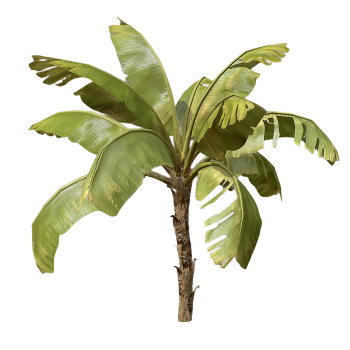
Banana (Musa nana Lour.), a perennial herbaceous plant in the genus Musa of the family Musa, grows in clusters and has creeping stems; False stems are thick green with black spots; The leaves are oblong in shape, with a dark green color on top and no white powder, and a light green color on the bottom; The flowers are milky white or light purple in color; The fruit is curved and arched, with edges. The skin is greenish green and turns yellow when ripe; The flesh is soft, yellow white, sweet and fragrant, and seedless.
an acacia

an acacia

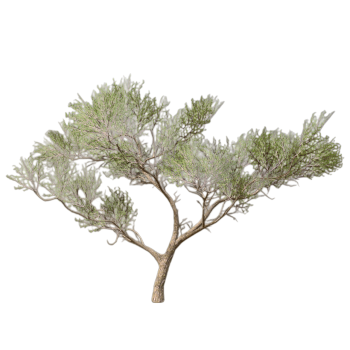
Acacia farnesiana (L.) Wight&Arn Fabaceae is a shrub of the genus Acacia, whose stem surface is rough and appears black brown; The supporting leaves are thorny and sharp, the compound leaves are feather shaped, and the small leaves are linear and rectangular in shape; Its flowers are numerous and dense, mostly spherical in shape, with a yellow color and fragrant taste; The fruit is cylindrical in shape, while the seeds are oval in shape, mostly brown. Its flowering period is in spring, and its fruiting period is in summer and autumn. Due to its golden appearance when in full bloom, it is named Acacia.
Willow

Willow

Willow trees are trees of the willow genus in the willow family. Branches are cylindrical in shape, with a nearly circular pith; No apical buds, lateral buds usually adhere closely to the branch, and bud scales are single; Leaves alternate, sparsely opposite, usually narrow and long, often lanceolate, feather veins, serrated or entire, petiole short, with supporting leaves, often serrated; The inflorescence of the hibiscus is upright or obliquely spread, with the bracts covering the entire edge, and the pistil composed of two carpels; The capsule is split into two petals; The seeds are small and often dark brown in color. The flowering period is from February to March, and the fruiting period is from March to April. The name of willow tree comes from its head wood working method. The result of the head tree homework is to preserve the trunk for continuous use of the branches, and the pronunciation of the word "willow" is the same as that of "liu", hence the name "willow tree".
Spruce

Spruce

Spruce is a perennial green tree that inhabits mountainous areas and river valleys at elevations of 2000 meters (6600 feet) to 3800 meters (12500 feet). The Hardiness Zones are classified as level 6 to 7, requiring sufficient sunlight, a moist environment, good drainage, and neutral to acidic soil. It can grow in poor or strong acidic soil, but cannot adapt to air pollution environments and grows slowly. In natural environments, it often accumulates into vast pure forests, resembling white clouds from afar, hence the name Spruce.
Monkey Joyful Fruit

Monkey Joyful Fruit

Monkey Joy (Sloanea sinensis (Hance) Hemsl.) It is a tree of the genus Monkey Joy in the family Du Ying, with a height of up to 20 meters; The leaves are thin and leathery, with varying shapes and sizes, usually oblong or narrow ovate, with a short and acute apex, and the petiole is hairless. Multiple flowers clustered in the axils of branches and leaves; The flower stem is covered with gray fur; Sepals are broadly ovate in shape, petals are white with slight hairs on the outer side, stamens are of equal length to petals, ovary is ovate in shape, styles are fused, capsules vary in size, fruit petals are of different lengths, seeds are black and shiny, false seed coat is long, millimeter, yellow. It blooms from September to November and matures in June to July of the following year.
Pine

Pine

Pinaceae (scientific name: Pinaceae) is a family of pine trees in the order Pinaceae, commonly known as pine or pine trees. Although many species are called "fir" in Chinese, their general characteristic is that their leaves are shaped like needles to prevent large amounts of water from evaporating. And in some places with less hot climates, around 40 to 60 degrees north latitude (such as Europe), this type of plant is also common. There are 11 genera and approximately 220-250 species in the pine family, mainly distributed in the northern hemisphere.
Iron holly fruit specimen

Iron holly fruit specimen

Iron holly is an evergreen tree or shrub of the holly family and genus, with gray branches, angular branches, and reddish brown color; Leaves alternate, oval to elliptical in shape, with a glossy surface on top; Flowers are unisexual, dioecious, with umbels, oval shaped, small female flowers, and thick stems; The drupe is spherical to elliptical in shape and turns red when ripe; The flowering period is from May to June, and the fruiting period is from September to October. Due to its deep green leaves, purple tender branches, and bright red fruits, it is called "Wan Zi Qian Hong" in garden applications. Iron holly is distributed in North Korea, Japan, Vietnam, and China. Most regions in China, such as Jiangsu, Anhui, and Jiangxi, have cultivation.
Outdoor Courtyard Park Red Leaf Dwarf Trees
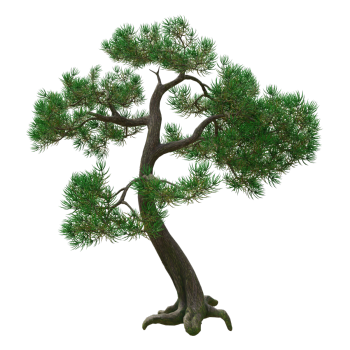
Outdoor Courtyard Park Red Leaf Dwarf Trees

Welcome pine bonsai, real tree, indoor plants, living room, office decorations, potted plants, saplings

Welcome pine bonsai, real tree, indoor plants, living room, office decorations, potted plants, saplings

Tropical seaside coconut grove
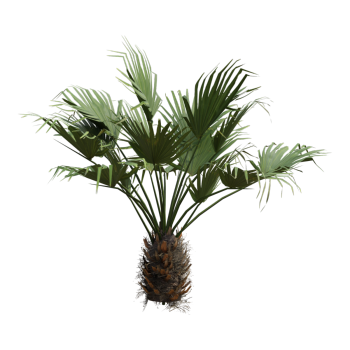
Tropical seaside coconut grove

Tropical plant, fan sunflower, palm tree, and palm palm tree

Tropical plant, fan sunflower, palm tree, and palm palm tree

Tropical plants, palm trees, and palm trees

Tropical plants, palm trees, and palm trees

Magnolia, a plant in the family Magnoliaceae, with white flowers
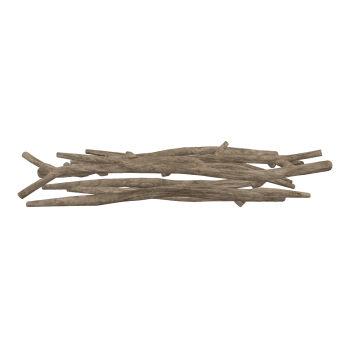
Magnolia, a plant in the family Magnoliaceae, with white flowers

Magnolia is a variety of magnolia that blooms white flowers. Also known as Mulan, Yulan, etc. Deciduous tree, up to 17 meters tall, a famous flower and tree in China, an important ornamental tree in early spring in northern China, and the city flower of Shanghai. It has a cultivation history of about 2500 years and is a precious ornamental tree in gardens. In ancient times, it was often planted in front of pavilions, terraces, buildings, and pavilions. It is now commonly found in gardens, factories, and mines as solitary or scattered plants, or as roadside trees on both sides of roads. In the north, there are also potted plants with a stake view. It has been introduced and cultivated all over the world.
A bundle of tree branches

A bundle of tree branches

Winter snow covered coniferous tree Changbai pine

Winter snow covered coniferous tree Changbai pine

Rubber tree

Rubber tree

Evergreen woody foliage plant. Rubber tree leaves are large, thick and leathery, shiny, round to oblong; The leaves are dark green, the back of the leaves is light green, and the early stage is wrapped outside the terminal bud. After the new leaves are stretched, the stipulation falls off and leaves leaf marks on the branches. Its mosaic variety has yellow-white patches on green leaves, which are more beautiful and pleasing to the eye, but its leaves are poisonous. The rubber tree is a mulberry evergreen tree with a height of more than 25 meters. Leaf blade on young leaves col thickly leathery with glossy elliptic to oblong; leaf surface dark green or reddish green abaxially light green.
Fig Tree

Fig Tree

Fig tree (scientific name: Ficus carica Linn.) belongs to Moraceae, Ficus deciduous shrub, subtropical deciduous small trees. Long-term growth in tropical and temperate zones. Figs have strong growth potential and many growth habits. The growth of new shoots and long branches of young trees can reach more than 2m in that year. Germination force and branching force are weak, backbone branches grow obviously, and there are many latent buds on them, and their life span is very long, reaching decades. Figs are drought-tolerant, shade-tolerant, salt-tolerant, and have the advantages of fast-growing, early fruit and high yield.