Specimen of the Horned Antelope

Specimen of the Horned Antelope

The ornis belong to the bovidae. The neck of the horned antelope is relatively short, and the shoulder is slightly higher than the hip. The limbs are thicker and the feet are wide. The tail is round and thin, 25-35cm long, with long hair at the end. The hair in winter is long and rough, mainly grayish brown, and the hair in summer is sandy yellow. The forehead of the head has large black tufts of hair. Small eyes; The horns of both male and female are about 80cm long and female, and female, and female, which are relatively thin, curved posteriorly and then upward, respectively, and slightly resembled a flat spiral. There is also an easy to identify feature, in their forehead has a much darker than the body hair color, and the face hair is whiter than the body hair.
goat specimen

goat specimen

Goat (scientific name: Capra hircus) is a mammal of the genus Bovine Goat. Also known as summer sheep, black sheep. There are more than 150 goat breeds in the world, including dairy goat and hairy goat; there are more than 40 goat breeds in China, including Yimeng black goat and Cangshan black goat. The goat has a compact structure, a deep and broad chest, arched ribs, a straight back and waist, a large abdomen without drooping, regular limbs, strong bones, well-developed and elastic breasts, and large and neat nipples. Tip of mouth, sharp teeth, thin lips. Both male and female sheep have horns and beard. The coat is mostly white, accounting for more than 85%, the outer layer is coarse hair and the inner layer is fluff.
Snail

Snail

The snail is a terrestrial taxon of the mollusk phylum gastropod, which belongs to the group of invertebrates. The body is soft and usually protected by a spiral hard shell. The head has two pairs of antennae, the longer one for sensing the environment and the shorter one associated with smell and taste. The foot is muscular and moves slowly on various surfaces by secreting mucus. The shell is one of its distinctive features. The shape and color of the shell vary from type to type. It is not only a protective device for snails, but also helps them retain moisture and adapt to a dry environment. It is an omnivorous animal that feeds on the leaves, stems and fruits of plants, and some species also eat humus or small insects.
Snail 3D Model

Snail 3D Model

The snail is a terrestrial taxon of the mollusk phylum gastropod, which belongs to the group of invertebrates. The body is soft and usually protected by a spiral hard shell. The head has two pairs of antennae, the longer one for sensing the environment and the shorter one associated with smell and taste. The foot is muscular and moves slowly on various surfaces by secreting mucus. The shell is one of its distinctive features. The shape and color of the shell vary from type to type. It is not only a protective device for snails, but also helps them retain moisture and adapt to a dry environment. It is an omnivorous animal that feeds on the leaves, stems and fruits of plants, and some species also eat humus or small insects.
African Snail

African Snail

The African giant snail, also known as the brown cloud agate snail, is a large terrestrial snail native to East Africa. The shells are long-ovoid, slightly thick and glossy, usually yellow or dark yellow, with a pyrobrown haze pattern. Adult individuals generally 7-8cm long, up to 20cm, weight up to 800 grams. It has the habit of nocturnal and nocturnal, likes humid environment, and often inhabits vegetable fields, orchards, overgrown areas and humus soil. It is an omnivorous animal that feeds on vegetables, flowers, fruits and other crops, causing certain harm to agriculture. The reproductive ability is extremely strong, the life span is generally 5-6 years.
Monarch butterfly group 3D animation model

Monarch butterfly group 3D animation model

Monarch butterfly is a large butterfly, belonging to the family Papilionidae. The wings are orange with blackish veins and margins, and a row of small white spots along the edges. This unique color combination makes it very eye-catching when flying. The life cycle includes four stages: egg, larva, pupa and adult. The larvae feed on milkweed, a plant that contains toxins that gives monarch butterflies a certain defense against natural enemies after they become adults. The adults mainly feed on nectar, have strong flight ability and long migration distance. The most famous feature is its large-scale migratory behavior. This migratory behavior is one of the most spectacular phenomena in the insect world.
Snail in vivo structure 3D model

Snail in vivo structure 3D model

The snail is a general term for the terrestrial taxa of the mollusk phylum gastropod, which belongs to invertebrates. The body is soft and usually protected by a spiral hard shell. The head has two pairs of antennae, the longer one for sensing the environment and the shorter one associated with smell and taste. The foot is muscular and moves slowly on various surfaces by secreting mucus. The shell is one of its distinctive features. The shape and color of the shell vary from type to type, from simple conical to complex spiral. It is a protective device for snails, and it can also help them retain moisture and adapt to dry environments. It's an omnivorous animal. It is often used for scientific research, ecological education or as a food.
South African Sword Antelope Skull Specimen

South African Sword Antelope Skull Specimen

South African gazelle is about 150-200cm long and has a shoulder height of about 110-130cm. Weighing about 100-200kg, it is the largest species in the genus Sword Antelope. Both males and females have long, straight horns, with males having larger horns, up to about 120cm in length. The hair covering the body is grayish brown, but the hair on the face, abdomen and lower limbs is white. There are black hair distributions in the center of the face, around the eyes to the mouth, on the side of the body between the forelimbs and the hind limbs, on the shins of the limbs and on the tail. Inhabit in dry grassland and desert areas, dusk activities, during the day when the temperature is higher in the shade to rest.
Grant gazelle skull specimen

Grant gazelle skull specimen

The Gazella gazelle, also known as the great gazelle, is a species of gazelle that lives in East Africa and is known for its elegance and speed. Grant's gazelle has a beige to orange fur with a white belly. Shoulder height is about 75-95cm (30-37 inches). Males weigh between 50-80kg (110-180 lb) and females are slightly lighter, weighing about 35-50kg (77-110 lb). Both males and females have horns, but males have more prominent horns, measuring 45-81cm (18-32 in) in length, presenting a parabolic shape with a thicker base.
Sika Deer Skull Specimen

Sika Deer Skull Specimen

Sika deer (scientific name: Cervus nippon) belongs to the genus Cervidae, with a body length of 140-170cm, a shoulder height of 85-100cm, a tail length of 12-13cm, and a weight of 100-150kg. Males have horns, while females have no horns. The horns of stags are usually divided into 3-4 forks. The sika deer has large, erect ears, slender limbs, a well-proportioned trunk, and a short tail. The fur is red, with multiple rows of irregular white spots along the sides of the spine, the lower jaw is white, the nasal surface and cheeks are sandy yellow, the back of the tail is dark brown, the lower part of the tail and the groin are white, and the abdominal hair is pale brown.
Ezo Deer Skull Specimen

Ezo Deer Skull Specimen

Ezo deer or known as Hokkaido sika deer, is a subspecies of sika deer, mainly found in the Hokkaido region of Japan. Bucks are large in size, weighing more than 200kg in autumn. The length of their horns is usually more than 35 inches (about 0.89 meters), and the longest record is 44 inches (about 1.12 meters). Hokkaido sika deer are social animals, usually in small groups.
High-horned gazelle skull specimen

High-horned gazelle skull specimen

The high-horned antelope (scientific name: Aepyceros melampus) is a mammal of the cloven-hoofed bovine family high-horned antelope, also known as wide-angle antelope and impala. There are vertical black spots on both sides of the buttocks and black spots on the back heel. The female has no horns; the male's horns are long and harp-like, reaching 0.5-0.8 metres. The average life expectancy is 12 years. The high-horned antelope is distributed in Kenya, Uganda and South Africa in central and southern Africa. Likes to live in grasslands and open woodlands. Usually form a small group of 15-25 live together. In the dry season, small groups will gather together to form large groups of more than a few hundred.
Serval Antelope Skull Specimen

Serval Antelope Skull Specimen

Serval Antelope (scientific name: Tragelaphus scriptus): body length 100-125cm, shoulder height 90cm, weight 45-80kg. Males are slightly larger. Mainly brownish red or yellowish brown. They have distinct vertical markings and the males have long spiral horns. There are 11 subspecies, with different patterns of fur and white streaks and spots on the face, depending on the subspecies with geographically different distribution.
Southern Elephant Seal Skull

Southern Elephant Seal Skull

The southern elephant seal is a mammal of the elephant seal family. The male beast is 6.5 meters long and weighs 4000 kilograms. The female is slightly smaller, 3.5 meters long and weighs 1000 kilograms. The reproductive male is about four times as large as the female. The body is spindle-shaped, very thick and fat, but the body is soft and can be bent into a U-shape towards the back. The male has a long cockscomb-shaped nose that swells when excited or angry. The body color is silver gray, the old beast is pale brown and yellowish, into a filthy tone, the dorsal side is deeper than the ventral side. The incisors are small and the male canines are large.
Neutrophils (Microscopic 3D Schematic)

Neutrophils (Microscopic 3D Schematic)

White tailed sea eagle specimen

White tailed sea eagle specimen

The White tailed Eagle, scientific name Haliaeetus albicilla, is a large raptor widely distributed in temperate Eurasia. They usually live near large open water bodies, such as coastal saltwater areas, inland freshwater lakes, wetlands, and rivers. The white tailed sea eagle is known for its strong hunting ability and opportunistic scavenging behavior, mainly preying on fish and waterbirds.
Virus with DNA helix (microscopic 3D schematic)

Virus with DNA helix (microscopic 3D schematic)

Mycobacterium tuberculosis (microscopic 3D sectional view)

Mycobacterium tuberculosis (microscopic 3D sectional view)

The structure of neuronal cells

The structure of neuronal cells

Bacteria with Dna helix (microscopic 3D schematic)

Bacteria with Dna helix (microscopic 3D schematic)

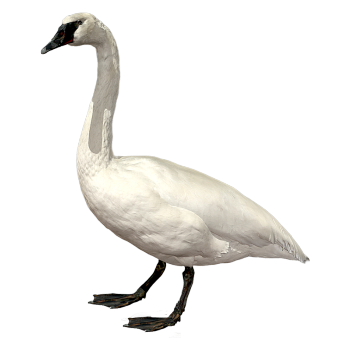
Small lymphocytes, large lymphocytes, and monocytes (microscopic 3D perspective view)
Small lymphocytes, large lymphocytes, and monocytes (microscopic 3D perspective view)

Black billed swan specimen

Black billed swan specimen

The black billed swan, also known as the trumpet swan, is the largest native waterfowl in North America and is named after its unique horn like call. The body length is usually between 138 and 165 centimeters, the wingspan can reach 185 to 304.8 centimeters, and the weight is between 7 and 13.6 kilograms. They are the heaviest flying birds in North America. Due to overfishing and habitat loss, the population sharply declined in the early 20th century. By implementing protective measures and reintroducing the project, the population has now recovered to some extent
Wolverine specimen

Wolverine specimen

The thylacine, also known as the Tasmanian wolf, is an extinct carnivorous marsupial. They once lived on the Australian mainland, Tasmania, and New Guinea. Due to being considered a threat to farm livestock, the wombat was heavily hunted and killed in the late 19th and early 20th centuries. The last known wolverine passed away in Hobart Zoo, Tasmania in 1936.
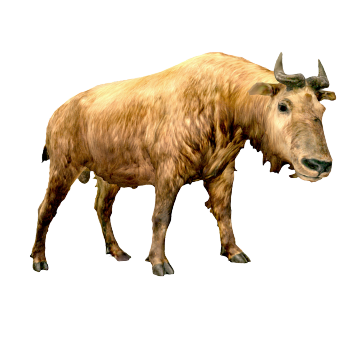
Takin specimen

Takin specimen

Takins are also known as takins. This large ungulates are mainly distributed in the eastern the Himalayas, including Bhutan, China, India and Myanmar. It is a large ungulates belonging to the Bovidae family and Caprinae subfamily. They usually live in mountainous areas with an altitude of 2000 to 4500 meters and enjoy activities on the edges of forests and grasslands.
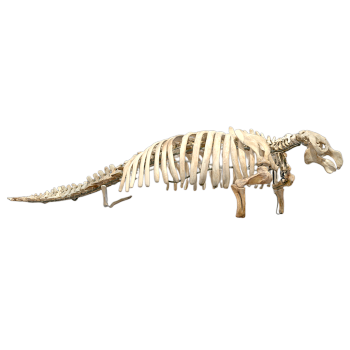
Stella manatee skeleton

Stella manatee skeleton

The Steller manatee, also known as the giant dugong, is an extinct species of manatee, first described by German naturalist Georg Wilhelm Steller in 1741. This giant marine mammal once lived near the Command Islands in the Bering Sea, mainly distributed in the waters between Alaska and Russia. Due to its slow movement and fearlessness of humans, the Stella manatee was overhunted within 27 years of its discovery and eventually became extinct in 1768.
Snow leopard specimen

Snow leopard specimen

The snow leopard, also known as the grass leopard, lotus leaf leopard, or mugwort leopard, is a species of the feline leopard genus in the carnivorous order. The body size of snow leopards is slightly smaller than that of ordinary leopards, with a tail length of about 3/4 of the head length. Its relatively long and thick tail is a significant feature that distinguishes it from other similar species. Its head is small and round, its snout is short, and its limbs are relatively short. The whole body is covered with long and dense fluffy hair, mainly gray white in color; The back and ribs are scattered with fuzzy or irregular large black circular patches, presented in a sparse arrangement of five vertical rows, with small spots dotted inside the patches; Black circular spots arranged in rows can be seen below the head, neck, and limbs.
Green Bird's Nest Coral Specimen

Green Bird's Nest Coral Specimen

Green Bird's Nest Coral is a group of hard corals belonging to the Pocilloporidae family. It usually forms a shrub like cluster structure and is mainly distributed in East Africa, the Red Sea, and the West Indo Pacific region. This type of coral has thicker branches and blunt ends. The coral holes are mostly arranged in rows and have a cover like structure similar to Stylophora. They usually grow on shallow reef slopes, especially on the back reef slopes, with a depth of up to about 25 meters.
Green Bird's Nest Coral Specimen

Green Bird's Nest Coral Specimen

Green Bird's Nest Coral is a group of hard corals belonging to the Pocilloporidae family. It usually forms a shrub like cluster structure and is mainly distributed in East Africa, the Red Sea, and the West Indo Pacific region. This type of coral has thicker branches and blunt ends. The coral holes are mostly arranged in rows and have a cover like structure similar to Stylophora. They usually grow on shallow reef slopes, especially on the back reef slopes, with a depth of up to about 25 meters.
Przewalski's Mustang specimen

Przewalski's Mustang specimen

The Przewalski's horse is a mammal belonging to the mammalian family Macroma in the order Neodactyla; Its body shape is similar to that of a domestic horse, with a large head and thick neck, short and round ears, no long frontal hair, short and upright mane, a black ridge line in the center of the back, short tail base hair, and black front of the lower limbs; Its summer fur is light brown on the back, light on the sides, and yellow white on the abdomen; its winter fur is long and thick, with a lighter color, appearing light yellow. The Przewalski's wild horse is also known as the Mongolian wild horse or the Junggar wild horse. Due to multiple reasons such as ruthless hunting by humans and the deterioration of the ecological environment in their habitats, Przewalski's horses became extinct in the wild in the mid-20th century.
Cauliflower coral specimen

Cauliflower coral specimen

This type of coral lives in tropical and subtropical regions of the Indian Ocean and Pacific Ocean. They usually form clustered groups up to 30 centimeters in height, with irregular wart like protrusions on the surface. Cauliflower coral comes in a variety of colors, including green, pink, yellow brown, or light brown. This type of coral is the main builder of reefs, growing rapidly and having strong competitiveness. Their tentacles extend at night to prey on plankton.
Javanese Rhinoceros Specimen

Javanese Rhinoceros Specimen

The Javan rhinoceros is a mammal of the Rhinoceros genus in the Rhinoceros family, also known as the small unicorn rhinoceros. Strong and robust physique. The skin is mostly brown black, gray black, and has wart like protrusions. Except for obvious hair on the tips and tails of the ears, the rest of the body is almost hairless. The average weight is around 1500 kilograms. The body length is 2-3.5 meters, and the shoulder height is about 1.5 meters. The ears are oval in shape, with a thick and long head and a short and thick neck. The upper part of the nose has a low solid horn, which is usually not prominent in adult females. Its horn is smaller than that of the Indian rhinoceros, hence it is also known as the small unicorn rhinoceros. The lifespan is around 40 years. The Javan rhinoceros is the smallest of the five existing rhinoceros species, with less than 100 individuals, and is on the brink of extinction in the wild.
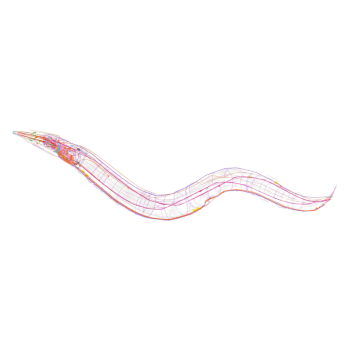
COVID-19 Covid-19 (microscopic 3D structure diagram)
COVID-19 Covid-19 (microscopic 3D structure diagram)

Coronavirus disease 2019, abbreviated as COVID-19, is an infectious disease caused by severe acute respiratory syndrome coronavirus type 2 (SARS-CoV-2), which has led to a sustained outbreak and become one of the deadliest epidemics in human history.
The nervous system of Caenorhabditis elegans

The nervous system of Caenorhabditis elegans

Caenorhabditis elegans (C. elegans) is a non-toxic and harmless nematode that can survive independently. It is small in size, with an adult length of only 1.5mm, and is hermaphrodites. Male individuals make up only 0.2% of the population and can undergo self fertilization or bisexual reproduction; The average life history at 20 ℃ is 3.5 days, and the average reproductive capacity is 300-350; But if mated with male insects, it can produce up to 1400 or more offspring.
Besikti ankylosaurus skeleton

Besikti ankylosaurus skeleton

Bissektipelta (genus name: Bissektipelta, meaning "shield armor of Bissektipelta") is a genus of armored dinosaurs in the subfamily Ankylosauridae, which lived in Asia during the Late Cretaceous period. Fossils were discovered in the Bissektipelta Formation in present-day Uzbekistan. Besiktivosaurus is a monotypic genus that only includes the type species B. archibaldi.
Blue antelope specimen

Blue antelope specimen

The Blue Antelope is a member of the Oxidae family, with a shoulder height of approximately 102-120 centimeters and a weight of around 180 kilograms. Its gray fur appears blue gray under strong sunlight. Distributed in South Africa, it became extinct in 1799 AD.