


Popular Science Education

Chromosome Structure (Microscopic 3D Schematic)

Internal structure of bacteria (microscopic 3D schematic diagram)
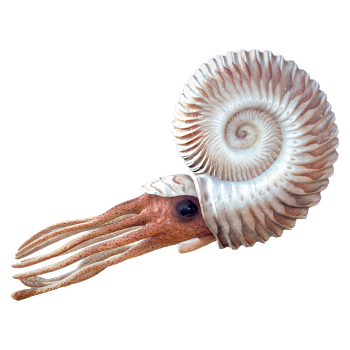
Ancient Kikushi (3D Restoration Animation)
Kikushi, a collective term for cephalopods and ammonites in the phylum Mollusca, is a group of extinct marine organisms. Kikushi lived from the early Devonian to the late Cretaceous period, and its shell is often preserved in the form of fossils in the strata. The outer shell of ammonite is a single petal, consisting of three parts: the fetal shell, the gas shell, and the living room. It usually spirals around the fetal shell along a plane, with each revolution forming a spiral ring. Adult ammonite shells generally have 5 to 9 spiral rings, symmetrical on both sides, and can be straight, curved, or even irregular.
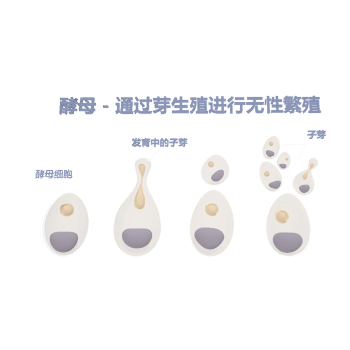
Yeast Asexual Reproduction (Microscopic 3D Schematic)

Rabbit skeleton

Western European bison skeleton
The Western bison is a member of the family Oxidae in the order Artiodactyla. The body length is 220-300 centimeters, the tail length is 40-60 centimeters, and the weight is 450-1000 kilograms. Both female and male animals have horns, which are slender and elongated. The horns first turn inward, then turn upward, and then bend forward. The tips of the horns then bend inward. Female animals have shorter and thinner horns. Small head, exposed snout, small eyes, and short ears. The neck is relatively short, with obvious hanging hair from the lower cheeks to the chest.
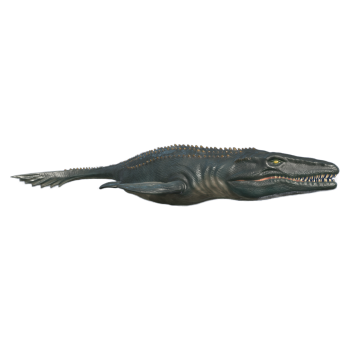
Canglong (3D Restoration Animation)
Canglong is a marine reptile belonging to the family Canglong in the order Scales. Its largest individual can reach about 20 meters, with a long barrel shaped body, a strong tail, and a snake like appearance. It has high fluid dynamics; Teeth are curved, sharp, and conical in shape; The forelimbs of Canglong have five toes, while the hind limbs have four toes. The limbs have evolved into fin like limbs, with the forelimbs being larger than the hind limbs.
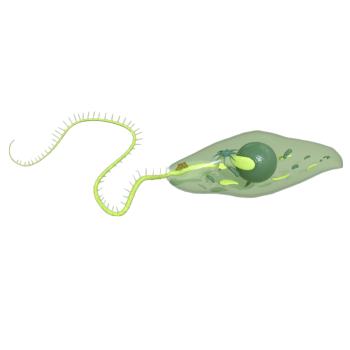
Eyeworm (Microscopic 3D Schematic)
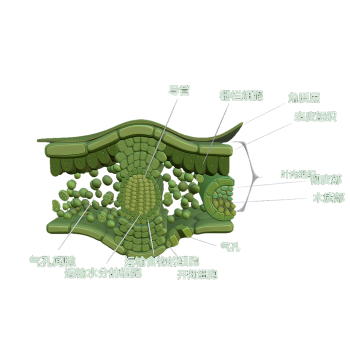
Microscopic mesophyll tissue (3D schematic diagram)

Exocrine gland (sectional schematic diagram)
Exocrine gland is a gland that secretes externally, usually composed of two parts: the gland surrounded by glandular epithelium and the excretory duct that excretes secretions, hence also known as ductal gland. It can be divided into single-cell glands and multicellular glands, and can also be called sweat glands, mucous glands, serous glands, etc. according to the type of secretion.
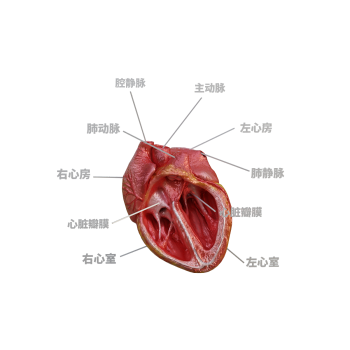
Heart structure diagram 3D animation model glb
The heart is the core organ of the human circulatory system, located slightly to the left in the center of the chest cavity, roughly the size of a person's fist. By regular contractions and relaxations, blood is pumped to various parts of the body, providing oxygen and nutrients to cells while carrying away metabolic waste. The heart is mainly composed of myocardium, which has automatic rhythmicity and can autonomously control the heart rate and intensity. The four chambers of the heart include two atria and two ventricles. The right atrium and right ventricle are responsible for receiving and pumping blood to the lungs for oxygenation, while the left atrium and left ventricle are responsible for delivering oxygenated blood throughout the body.

Random Model

Locust (grasshopper)
1047 View


komodo dragon
1105 View

Black Pearl
1262 View




lemon
1033 View

Saint George Dragon Slayer Statue
1539 View