Saw shovel shaped worm specimen

Saw shovel shaped worm specimen

Prosopocoilus inclinatus, also known as serrated shovel worm, is a species of insect in the family Prosopocoidae. Distributed in Japan and South Korea. The sawdust beetle is named after its serrated, horn like curved jaws, which likely evolved to compete with the unicorn fairy for resin. The larval stage lasts for 1-3 years, while the pupal stage lasts for over a month. Adult males measure 26-74.5 millimeters, while females measure 19.5-41 millimeters.
Giraffe saw shovel specimen

Giraffe saw shovel specimen

The giraffe saw shovel is an insect in the family Scaridae, with a long upper jaw and serrated teeth. Giraffe saws and shovels live in Southeast Asia. The body length is 4-12 centimeters. It has the longest upper jaw and the sharpest serrations in the shovel armor. The end of the upper jaw has two forks, and the teeth on the left and right sides are asymmetrical and slightly curved. The protruding teeth on the upper jaw may appear aggressive, but in reality, the biting force is not strong. The tips of the teeth may appear sharp, but in reality, they are easily broken. There is also a glossy black shell. But the female insect does not have an upper jaw, while the young male insect likes to fight. The male insect's tooth roots are highly destructive and can cause certain injuries to various shovels.
Tiger skull

Tiger skull

Tigers belong to the feline carnivore family and hunt a variety of animals for food. They are usually accustomed to hunting from dawn to sunset and mainly feed on large mammals. It can hunt prey larger than its own size, and a tiger weighing 250 kilograms can hunt an Indian bison weighing 900 kilograms. Tigers in the wild can eat up to 40 kilograms of meat at a time. Without disturbance, they usually return to the hunting site within three to six days after catching prey to enjoy the remaining food until there is little left. The difference between tigers and other cats is that they are good at swimming.
Upper skull of armadillo

Upper skull of armadillo

Armadillo is a mammal of the family Armadillidae in the order Heterodontoides. The bone armor covers the head, body, tail, and outer legs. The bone armor in the head, front half, and back half is separated, and the bone armor in the body forms a band shape, allowing for flexible movement; Having sparse hair in areas of the body without bone armor; There are strong claws on the front foot. The armadillo is named after the nine layered ribbon on its body. Distributed in the southern tip of South America, the Caribbean coast, and the Central American continent, it often inhabits dense shrubs, grasslands, wilderness, and has strong adaptability. It is a burrowing animal that lives underground, crouching during the day and emerging at night. Its vision is poor, but its sense of smell is excellent.
Squirrel skull

Squirrel skull

Squirrels are mammals belonging to the family Squirrels in the order Rodentia. Squirrels have a slender body shape and longer hind limbs; There are no skin wings between the front and back limbs, and the limbs are strong and robust; The eyes are large and bright, the ears are long, and there is a bundle of hair on the tips of the ears, especially prominent in winter. Because it looks like a mouse and most of them like to gnaw on nuts such as pine cones, they are accustomed to living on trees, especially pine trees, hence the name. Widely distributed in Asia, North and South America, and Europe. Squirrels have diverse habitats. Active during the day, frequent in the early morning, with developed vision and hearing, no hibernation, and a habit of storing food. It is an omnivorous animal that eats a variety of plants and small insects.
Chihuahua skull

Chihuahua skull

Chihuahua is a carnivorous mammal in the family Canidae, also known as a teacup dog, Chihuahua dog, etc. Petite in size, with an apple shaped head, large and thin ears, and two ears standing upright. Widely distributed around the world. Intelligent, lively, clingy, vigilant in action, with a tenacious will, very brave, and even possessing certain hunting abilities. I enjoy the heat, love sunbathing, and dislike the cold. It is the smallest ornamental dog breed in the world and one of the oldest breeds in the world. As early as the era of the Inca Empire, it was the inviolable dog of the Holy Spirit in people's minds at that time. In 1923, the Chihuahua Dog Club was established in Mexico; Britain was also established in 1949.
Fossil skull of Egyptian heavy footed beast

Fossil skull of Egyptian heavy footed beast

The scientific name of the Egyptian heavy footed beast was taken in honor of the queen of Ptolemy II, Arsinoe II, as the initial fossils were found near the ruins of her palace. The bones found here are the only complete, and the most famous species is the Qi's heavy footed beast. It is about 4.5 meters long, 2.5 meters high, and weighs about 4 tons. The most prominent feature of the Egyptian heavy footed beast is a pair of giant horns protruding from its nose. It has 44 strong teeth in its mouth, which can easily chew rough and hard plants. The Egyptian heavy footed beast evades the hunting of most predatory animals with its massive body. The era of life was approximately 37 to 23 million years ago.
Fossil upper skull of ancient giant turtle

Fossil upper skull of ancient giant turtle

The ancient giant turtle, the largest sea turtle in history. Also known as the Emperor Turtle, Ancient Turtle, Terror Turtle, Mock Turtle, or Ancestral Turtle, it is an extinct genus of sea turtle and the largest sea turtle in history. It is similar to the current leatherback turtles, both of which live in the sea. The body shape is very similar to that of today's sea turtles, with a beak that has huge biting power, and may feed on animals such as squid. The first fossil of the ancient giant turtle genus was discovered in 1895, and this fossil is very famous. On the one hand, it is huge, and on the other hand, it lacks a right hind foot, which is likely to have been bitten off by some giant predator.
Mole skull

Mole skull

Moles are a collective term for animals in the family Hylidae, also known as long snouted mole rats or flip over mice. The body is round and has long gray fur; Short limbs, pointed head, long snout, short and thick neck, small or completely degenerated ears; The short tail is pink and hairless; Small eyes, sometimes covered by skin; The forelimbs have five claws, with the palms flipping outward and the ends of the five toes being long and sharp claws. Distributed around the world. Social animals. It inhabits broad-leaved forest belts, forest grasslands, and even semi desert areas, and prefers dryness. Engaged in underground activities for life, occasionally climbing out of the ground to walk at night. The food mainly consists of underground insects and worms, as well as wild plants.
African ostrich skull

African ostrich skull

The African ostrich is a species of ostrich in the ostrich family of the ostrich order. The head is small and triangular, the mouth is short and flat, the neck is slender and composed of several keratin sheaths, the upper part is yellow, and the lower part is pink; There is a pair of short wings that cannot fly and have degenerated into a state without flight feathers. The tail feathers are fluffy and drooping, and each tail vertebra is separated; The legs are long and thick, with some bare feathers, pink in color; The feet are large, and there are keratin pads under the toes, which are elastic and can insulate heat. Distributed in Africa and other regions. Often inhabiting deserts, grasslands, and shrubs. Strong heat resistance, most active in the early morning and dusk, loves to live in groups, enjoys drinking water and bathing.
Wild duck skull

Wild duck skull

Wild duck is a bird species belonging to the family Anatidae in the order Anseriformes. It is a general term for various wild ducks, commonly known as water ducks, reed ducks, and clam geese. The narrow definition of wild duck only refers to the mallard. Female wild ducks have a smaller body size, measuring 50-56 centimeters in length and weighing approximately 1 kilogram. They enjoy group activities and living in groups. In summer, they inhabit freshwater rivers, lakes, and swamps with abundant aquatic plants in small groups. During winter, they gather into flocks of over a hundred ducks. They have a wide and diverse diet, often feeding on small fish, shrimp, crustaceans, insects, as well as seeds, stems, leaves, algae, and grains of plants. Feathers have high economic value, are not wet, have a soft texture, and have good insulation properties.
Fossil skull of pterosaur

Fossil skull of pterosaur

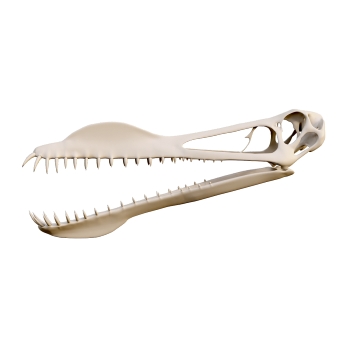
Pterodactylus, a pterosaur of the late Jurassic period, is characterized by a lightweight and compact skull composed of thin, hollow bones. Its first finger is particularly elongated to support membrane wings, and its hind limbs are short. All members of the Pterodactylidae family have short tails and long heads. Some species of pterosaurs have a body size similar to sparrows; Others can be as big as eagles, with wings extending up to 30-70 centimeters, feeding on insects, and some may forage for fish. The entire group of pterosaurs is a suborder of pterosaurs. In terms of classification, it does not truly belong to dinosaurs, but is only a close relative of dinosaurs.
Specimen of Cichlid

Specimen of Cichlid

Cichlids, also known as "cicadas", are insect species. Category: Cicadaceae, Cicadaceae/Hemiptera, with two pairs of wings, both front and rear wings are membranous wings, and the mouthparts are piercing sucking. The body length is about 2.5cm. It is a relatively small cicada, with a purple blue color and black stripes. Its hind wings are black except for the edges, and it is widely distributed. It chirps from May to June, from morning till night, with a "chup chup" sound. Its call is not as loud as that of large cicadas such as black cicadas, and it is relatively fragile. Not as loud as large cicadas. There are also larger cicadas.
Fossil skull of Heterodontosaurus

Fossil skull of Heterodontosaurus

Heterodontosaurus, also known as Heterodontosaurus or Spinosaurus, is a carnivorous animal resembling a mammal that lived during the Permian period. Heterodontosaurus has a close relationship with mammals, but a distant relationship with dinosaurs, lizards, birds, etc. Its fossils are found in North America and Europe. Heterodontosaurus is a carnivorous ancient organism from the Permian period. The general public associates Heterodontosaurus with a dinosaur, but it is not actually a dinosaur. More precisely, they are classified as Panosauriformes. Although it resembles a lizard in appearance, Heterodontosaurus has a closer relationship with mammals and is farther away from true reptiles such as dinosaurs, lizards, birds, etc.
Houttuynia cordata specimen

Houttuynia cordata specimen

Houttuynia cordata is a medicinal herb included in the Chinese Pharmacopoeia, sourced from the dried aboveground parts of the three white grass family plant, Houttuynia cordata. In summer, when the stems and leaves are lush and the flowers and ears are abundant, they should be harvested, removed of impurities, and dried in the sun. The stem is flattened cylindrical, twisted, and 20-35cm long; The surface is brownish yellow, with several longitudinal edges, obvious nodes, and residual fibrous roots on the lower nodes; Crispy and easy to break. Leaves grow alternately, with rolled and wrinkled leaves that flatten into a heart-shaped shape, measuring 3-5cm in length and 3-4.5cm in width; Sharp apex, entire margin; The upper surface is dark yellow green to dark brown, and the lower surface is gray green or gray brown; The petiole is slender, and the base forms a sheath like structure with the supporting leaves. When crushed, it has a fishy odor.
Rabbit skull

Rabbit skull

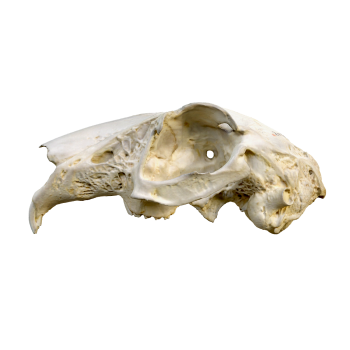
Rabbits are herbivorous vertebrates belonging to the Rabbit family of the Rabbit order. The rabbit head is small, slightly longer, the mouth is shorter, the upper lip has a longitudinal cleft, the eyeball is larger, and the eye color varies with the breed; Large ears, upright or drooping, thin skin, underdeveloped sweat glands, only a few sweat glands near the lips, and respiratory function of the skin. Commonly found in deserts, grasslands, dry grasslands, forests, or forests. Has nocturnal and drowsy characteristics, is very active at night, and appears quiet during the day, timid and easily startled, with a gentle temperament but poor social behavior. Herbivorous animals feed on the roots, stems, leaves, and seeds of plants, and only eat their favorite foods.
Honeysuckle specimen

Honeysuckle specimen

Honeysuckle, officially known as honeysuckle. The name 'Honeysuckle' comes from the Compendium of Materia Medica. Due to the fact that honeysuckle flowers initially turn white and then turn yellow, they are named 'Honeysuckle'. The medicinal herb Honeysuckle is a plant of the Lonicera genus in the Lonicera family, as well as dried flower buds or flowers with initial blooming in the same genus. Honeysuckle flowers bloom in March, with five blooms and a slight fragrance. The stems are red, and the flowers turn white when they first bloom. After one or two days, they turn yellow, hence the name honeysuckle. Also known as the Mandarin Duck Vine, it has one stem and two flowers, with two stamens protruding outward, forming pairs that are inseparable, resembling male and female companions, as well as mandarin ducks dancing together.
Rabbit upper skull

Rabbit upper skull

Rabbits are herbivorous vertebrates belonging to the Rabbit family of the Rabbit order. The rabbit head is small, slightly longer, the mouth is shorter, the upper lip has a longitudinal cleft, the eyeball is larger, and the eye color varies with the breed; Large ears, upright or drooping, thin skin, underdeveloped sweat glands, only a few sweat glands near the lips, and respiratory function of the skin. Commonly found in deserts, grasslands, dry grasslands, forests, or forests. Has nocturnal and drowsy characteristics, is very active at night, and appears quiet during the day, timid and easily startled, with a gentle temperament but poor social behavior. Herbivorous animals feed on the roots, stems, leaves, and seeds of plants, and only eat their favorite foods.
Spade armor specimen

Spade armor specimen

Spades are a collective term for insects in the order Coleoptera, family Spades, of the phylum Arthropods. The adult body of the shovel beetle is elliptical in shape, black or brown in color, mostly glossy, and has a solid surface; The upper forehead of male insects is mostly large and protruding like deer antlers. Some species have teeth on the upper jaw, while others have forked horns at the end of the upper jaw; The elytra cover the entire abdomen. The spade beetle is named because its shape resembles that of a shovel when its elfin is closed. Spade armor, also known as shovel shaped armor, shovel shaped insect, or deer antler insect.
Rat skull

Rat skull

Mouse is a general term for rodents in the order Rodentia and family Muridae. The body length of a mouse is about 17.5 centimeters, and its tail is shorter than its body length; Short and thick ears; The hind legs are thicker and longer than 33 millimeters. Due to its sharp pointed mouth and ability to make holes, it is also known as a mouse. Commonly found in residential areas, sewers, haystacks, farmland, vegetable gardens, graveyards, riverbanks, and other places. Its cave system is complex, with multiple and long branches, and it is most active at midnight. Rats are omnivorous and often steal crops. Due to the frequent biting of hard objects by mice, their vitality is also extremely strong. They not only engage in sexual theft and cause harm everywhere, but also spread diseases, posing a great threat to human life.
Specimen of Dahua Pill

Specimen of Dahua Pill

Lilium grandiflorum is a variety of lemon lily belonging to Liliaceae. It is a rhizomatous perennial herb with spherical bulbs, scattered leaves, narrow lanceolate leaves, racemes, and few single flowers; Bracts leaf shaped, lanceolate, long peduncles, drooping flowers, rolled petals, red with purple spots, papillate protrusions on both sides of nectaries, filaments, hairless, anthers orange red; Ovary cylindrical, flowering period from July to August. Distributed in Japan, North Korea, Russia (Far East region), and China; Distributed in Northeast, North China, Shaanxi and other places in China. Growing in sandy valleys below an altitude of 1290 meters.
Andean bald eagle skull

Andean bald eagle skull

The Andean bald eagle is a massive bird species and one of the largest flying animals in the world. Because they are too large (weighing up to 15 kilograms at most), even a wingspan of 3 meters requires the same assistance to succeed. Therefore, this bird prefers to live in windy areas so that they can glide effortlessly in rising hot air currents. As their name suggests, Andean bald eagles are more common in mountainous areas, but some also live on coasts with strong sea winds, and even in desert areas with hot air currents. They are scavengers, so they always fly in high altitude to search for animal carcasses to feed themselves. I like to eat large animals.
Specimen of Spartina alterniflora

Specimen of Spartina alterniflora

Toothed Leaf Ash is a plant of the Hydrangeaceae family and the Ash genus. Shrubs, 1-3 meters high; The flower branches are 8-12 centimeters long. Leaves papery, ovate or ovate lanceolate, petiole 3-8 mm long, sparsely covered with stellate hairs. The inflorescence is 5-10 centimeters long, with many flowers sparsely covered with star shaped hairs; Flower buds are oblong in shape; Crown diameter 1.5-2.5 centimeters; The flower stem is 3-5 millimeters long; Calyx tube cup-shaped, lobes ovate, densely covered with yellow brown star shaped hairs along with the flower stem and calyx tube; The petals are white, narrowly elliptical in shape, with a sharp apex and a narrowed base. The outer surface is covered with star shaped hairs, and the flower buds are arranged in a closed manner inward; The outer stamen is 8-10 millimeters long, while the inner stamen is shorter; Anthers are oblong in shape.
Male roe deer upper skull

Male roe deer upper skull

The roe deer (scientific name: Capreolus pygargus) is a species of deer in the family Deer and genus Deer. The body length is about 1.2 meters, the weight is about 30 kilograms, and it has a slender neck and large eyes and ears. No fangs, hind limbs slightly longer than forelimbs, short tail, male roe deer with horns, female without horns, male long horns only divided into three forks. They inhabit different types of deciduous forests, mixed forests, and forest grasslands, and are active in sparse forest belts, river valleys, and gentle slopes. The family group consists of female roe deer and their offspring, usually 3-5 individuals, and male roe deer only join the group in midsummer. Morning and evening activities, most active at night, herbivorous animals. Usually twins.
Milk sample

Milk sample

Milk seed is a deciduous shrub belonging to the Euphorbia genus in the Euphorbia family. Branches with thorns, small branches very open, densely covered with silver white and yellow brown scales when young; Leaves are papery or membranous, ranging from elliptical to ovate elliptical or ovate lanceolate in shape, with a pure pointed tip and a rounded or wedge-shaped base. They have white star shaped hairs or scales when young, and are densely covered with silver white and a small amount of brown scales below; Flowers bloom before leaves, yellow white, fragrant, densely covered with silver white shield shaped scales; The fruit is nearly spherical or oval in shape, green when young, covered with silver white or brown scales, and red when mature. The flowering period is from April to May, and the fruiting period is from July to August.
Spinous shell

Spinous shell

Spiny snails are a type of animal belonging to the phylum Mollusca, with large and thick shells. The shell height is 125.1mm and the shell width is 103.0mm. The shell surface is yellow white. The spiral layer is about 8 layers. The suture line is shallow. Each snail layer has 3 longitudinal swollen ribs, with thick and strong branching spines on the ribs. There are approximately 7-10 visible spines on the longitudinal ribs at the edge of the shell opening. There are tumor like protrusions between the longitudinally swollen ribs. The shallow groove is a flattened semi tubular shape, and there are usually three large spines on the right side of the shallow groove.
Flamingo skull

Flamingo skull

The flamingo is a bird species belonging to the stork family of the stork order, with a total of six species under its genus. It is a large waterfowl with a body length of 1-2 meters; The neck and feet are long, the mouth is short and thick, slightly curved downwards. They mainly live in Africa, South America, and India. It often inhabits shallow waters of salt lakes, swamps, and lagoons in warm and tropical regions. It is a bird that lives by water and likes to live in groups. Mild temperament, timid and alert. Once an enemy situation is detected, it will chirp and fly into the sky. As long as one flies up, the rest will follow closely, chirping while flying. Eating shrimp, clams, insects, algae, etc. They are a very ancient family of birds, with their presence dating back to 40 million years ago.
Camel skull

Camel skull

Camel deer is a mammal of the camel genus in the family Camelidae of the order Artiodactyla. Camel deer have a larger body size, generally ranging from 2-2.6 meters in length. The body resembles a camel, with four long legs similar to a camel. The shoulders are high, the head is large, the eyes are small, the face is long, the neck is short, the nose is enlarged and slightly drooping, and the upper lip is 5-6 centimeters longer than the lower lip. The hair color of the whole body is brown, the nose is thickened, and there is a chin pouch under the throat. The antlers of adult male deer are the largest among deer, with palmar branches and rough horn surfaces. The moose is named after its hump shaped back hump and horn shaped lower jaw.
Labrador Duxiang specimen

Labrador Duxiang specimen

Labrador Juniperus evergreen shrub, short, branched, containing resin. Leaves with short stalks, leathery, narrow and round, entire margin, curled edges, rust brown or soft hairs below. The flowers are small, white, and have multiple flowers forming a terminal umbel like inflorescence; The base of the flower stem has bracts; The corolla is white, the filaments are filamentous, the ovary is ovoid, covered with scales, the capsule is elliptical, and there are many seeds. The seeds are small, the outer seed coat is loose, and the endosperm is fleshy. Distributed in North America, in the Labrador Peninsula of Canada, it uses Labrador Du Xiang as a substitute for tea, hence also known as Labrador tea. Labrador Duxiang is one of the subspecies of Duxiang. Belonging to shrubs or dwarf shrubs, with upright or upward or outward leaning stems.
Japanese Copper Luo Flower Golden Turtle Specimen
Japanese Copper Luo Flower Golden Turtle Specimen

The body length of the Japanese copper dragon flower golden turtle is 25-29mm, and the width is 12-14.5mm. It is relatively large and slightly shiny. The head, anterior thorax, and small scutum are mostly dark olive green or dark green with red coloration, and the yellow flesh is below. The antennae, most of the leg joints, tibia, and tarsal joints are dark brown, near dark green or black. The upper part of the lip base is nearly square, with a high longitudinal protuberance and dense circular engraved points. The leading edge is curved and slightly curved, and the back is smooth with almost no engraved points. The anterior thoracic and dorsal plates are densely covered with deep circular incisions, while the disc area has relatively small incisions. The base is the widest and gradually narrows forward on both sides, with a narrow border. The posterior corner is slightly rounded, the posterior edge is horizontal, and the concave is shallow.
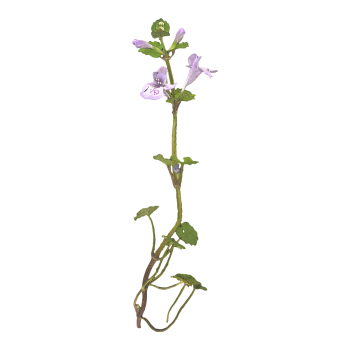
European Blood Activating Pill Sample

European Blood Activating Pill Sample

Ouhuoxue Dan is a creeping herbaceous plant belonging to the family Lamiaceae and the genus Huoxue Dan. The stem is four diamond shaped, with a light purple red base; Leaf grass texture, nearly circular; The leaves are kidney shaped or kidney shaped circular, with a heart-shaped base; Umbrella inflorescence, forming a whorl shaped structure, calyx tube shaped, corolla purple, disk cup-shaped, style slender; Mature small nuts are not seen. The flowering period is in May. Ouhuoxue Dan is native to various countries in Northern and Western Europe, and is also distributed in Xinjiang, China. Ouhuoxue Dan is resistant to yin and prefers moisture. It grows best under semi shaded conditions in the forest, but slightly weaker under full day sunlight. It prefers fertile, loose, and well drained soil. The propagation method of Ouhuoxue Dan is through cutting or division propagation.
Double Forked Rhinoceros Turtle Specimen

Double Forked Rhinoceros Turtle Specimen

The Double Forked Rhinoceros Beetle, also known as the Unicorn Fairy, is an animal of the family Scaridae in the genus Scarabacus. The adult double forked rhinoceros beetle has a body length of 30-50mm and a body width of 20-30mm. Its body is elliptical in shape, with smooth or slightly furry surfaces on the back, and more furry surfaces on the abdomen; The head is small, the compound eyes are deep reddish brown, and the antennae have 10 segments, of which the gill section consists of 3 segments. The upper lip is flat and shovel shaped with an upward curl. Distributed in eastern and northeastern China, Japan, Thailand and other places, living in forests, with strong phototaxis. Adults feed on humus formed from decaying leaves or wood under the forest, and prefer to lick the sap or ripe fruits flowing from tree wounds.
Lily Lily Sample

Lily Lily Sample

Juandan lily is a perennial bulbous plant of the lily genus in the lily family. The bulb is wide ovate and flattened, and the scale leaves are wide ovate; The stem often has purple stripes and white hairs; The leaves are oblong lanceolate or lanceolate in shape, with nearly hairless on both sides. The leaf edges have papillary protrusions, and the upper leaf axils have bulbous buds; The bracts are leaf shaped, ovate lanceolate, with rolled petals that are orange red in color and have purple black spots. The ovary is cylindrical in shape; The capsule is narrow and oval shaped; The flowering period is from July to August. Due to its fiery red color and curled petals, it is called "Juandan".
Double horned hornbill skull

Double horned hornbill skull

The double horned hornbill is a bird species belonging to the family Rhinocerotidae in the order Nymphalidae, also known as the Great Rhinoceros, the Great billed Sparrow, the Robby, and the Vajra. It is distributed in India, Bangladesh, Indochina Peninsula, western Indonesia and other places. In China, it is mainly distributed in the west and southwest of Yunnan and southeast of Xizang. Residing in evergreen broad-leaved forests in low mountains and foothills below an altitude of 1500 meters. Mainly feeds on fruits and seeds of various tropical plants, as well as animal food such as large insects, reptiles, and rodents. During the season when the fruits are ripe, hornbill flocks mostly stay in one place to feed until they run out of food before switching to a new feeding location.
Long live big eyed crab specimen

Long live big eyed crab specimen

Macrophthalmus banzai (scientific name: Macrophthalmus banzai) is an animal belonging to the genus Macrophthalmus in the family Macrophthalmidae of the sand crab superfamily. The eye sockets are long, the eye stalks are slender, the palms are long, and the two directions are bent downwards. The fingertips are spoon shaped, and the whole body is earthy brown, but the color of the sting is relatively light. When hidden in water, the slender eyes stand upright and protrude from the water surface, and male big eyed crabs have the habit of swinging their double stings, so they are also known as "long live big eyed crabs". Distributed in Japan, Taiwan, China, Hong Kong and Shandong