Porcelain from Lyon, France (3D action model)

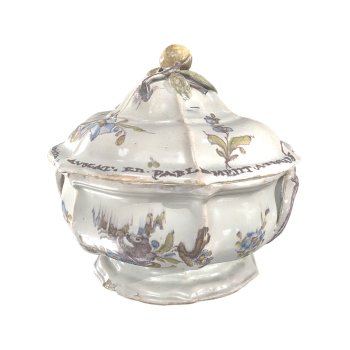
Porcelain from Lyon, France (3D action model)

This ribbed round soup bowl is decorated with multi-colored floral decorations. It has two application handles. Its lid takes the shape of a fruit, surrounded by embossed branches. At the bottom of the cover there is a partially illegible inscription "[…] avocat en parlement à Thouars"
Two Musketeers Warrior Figure

Two Musketeers Warrior Figure

Gesture Sculpture

Gesture Sculpture

This is a decorative sculpture ornament shaped by hand. The sculpture accurately captures the dynamic moment when the hand stretches upward. This kind of design is very popular in modern home decoration, often called "gesture sculpture". The surface presents a marble-like texture or crack glaze effect, which is usually to create a quaint, artistic or antique visual perception. Such decorations are usually made of resin (Resin) or ceramics, and some high-end products are carved from real marble.
Pottery Tilder Pot

Pottery Tilder Pot

This is a pottery tipping pot, often used for brewing tea or boiling water. The body of the pot presents a rough cut effect (Faceted), showing the original texture of the clay. This style is very typical in modern pottery works, such as the works of American pottery master Warren MacKenzie or New Zealand pottery artist Len Castle. The top of the kettle is equipped with a thick rattan or bamboo lifting beam, which is connected by the ear of the kettle. This design not only has the function of anti-scald, but also adds natural flavor to the simple and simple ceramic body.
Nineteenth Century Antique English Luggage
Nineteenth Century Antique English Luggage

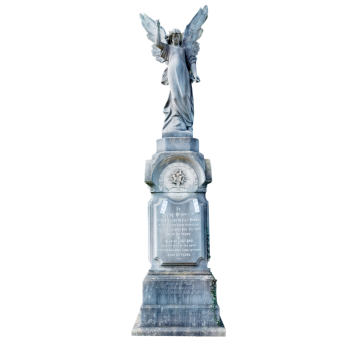
Arnos Valley Cemetery-Angel Statue

Arnos Valley Cemetery-Angel Statue

Enamel yellow flower pattern bowl (China Qing Dynasty Kangxi period)

Enamel yellow flower pattern bowl (China Qing Dynasty Kangxi period)

This exquisite porcelain is an enamel yellow flower pattern bowl from the Kangxi period of the Qing Dynasty. This ware is usually called "enamel yellow flower pattern bowl" or "imperial yellow glaze peony pattern bowl" and belongs to the works of the Kangxi period of the Qing Dynasty (1662-1722). The porcelain body of this kind of bowl is usually fired in Jingdezhen, and its complicated enamel decoration is completed in the imperial workshop (manufacturing office) in the Imperial Palace in Beijing. This kind of bowl is usually made of enamel color, which is characterized by bright colors, filling color full, with a strong court elegant and luxurious style. Because of this kind of enamel porcelain in the early stages of technological development in the Kangxi period, the number of handed down scarce.
Stone lion

Stone lion

In East Asian cultures, the stone lion was an ancient symbol of conservation, longevity and prosperity. They are often placed in pairs in front of palaces, temples or government offices as symbols of power and status. The lion's paw was on a hydrangea. In traditional paired stone lions, the male usually steps on the hydrangeas (a symbol of power) and the female is a cub (a symbol of prosperity). Such stonework is usually made of granite or marble. Historically, heavy stonework has also been used as ballast stone for ships to increase stability.
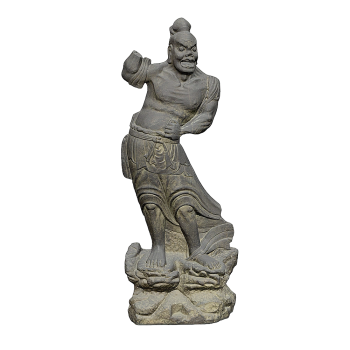
King Kong Rex

King Kong Rex

This sculpture is the Buddhist King Kong Hercules (also known as the two generals of hum and ha), which is the patron saint of Buddhist temples and usually appears in pairs to defend the entrance to the temple. Its image usually has strong muscles and an angry face, symbolizing the power of Buddhism to protect it from evil. This style is common in the stone carving art of the Chinese Northern Qi Dynasty (550-577 AD) or the Tang Dynasty (618-907 AD). Such limestone statues have also been unearthed at sites such as the Longmen Grottoes. In some museum collections (such as the Litberg Museum in Zurich), a statue of the Northern Qi King Kong with a similar missing arm can be seen.
Frog on the Rock statue

Frog on the Rock statue

The statue depicts a frog squatting on an irregularly shaped stone, presenting a realistic and age-eroded gray appearance, possibly with mossy green or yellow markings.
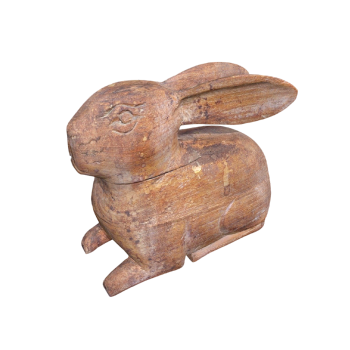
Wood Carved Rabbit Box

Wood Carved Rabbit Box

This is a decorative box or jewelry box with a lid that can be used to store small items or jewelry. The upper part of the box can be removed, revealing a hidden storage space. Hand-carved from solid wood, it retains the natural wood grain and copper luster, with a rustic folk art style.
Green Glazed Teapot

Green Glazed Teapot

This is Shiwan kiln green glaze teapot, also often referred to as "a finger pot". Produced in Shiwan Town, Foshan, Guangdong Province, Shiwan Kiln is one of the famous folk kilns in the Ming and Qing Dynasties. This type of teapot usually dates from the late Qing Dynasty to the Republic of China, that is, the 19th or early 20th century. In the old Chinese shops, this large teapot was often used to hold tea or rice wine for employees to quench their thirst or entertain customers. Because of its unique way of carrying (only one finger can be inserted into the lift ear), it is vividly called "one finger pot" in Cantonese-speaking areas ".
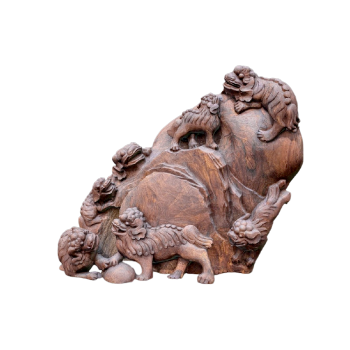
Wood carving "Lion Rock"

Wood carving "Lion Rock"

Chinese arts and crafts master Liang Fengzhu was produced in 2014 and is now collected in Liang Fengzhu Arts and Crafts Art Museum in Hengyang, China. The work is carved from natural wood, retaining the natural texture of the wood. The carving is fine, depicting the scene of many lions (which may mean "nine lions" or "too many lions and few lions") playing among the rocks, which is vivid and powerful. In traditional Chinese culture, the lion is a common object to ward off evil spirits and an auspicious symbol.
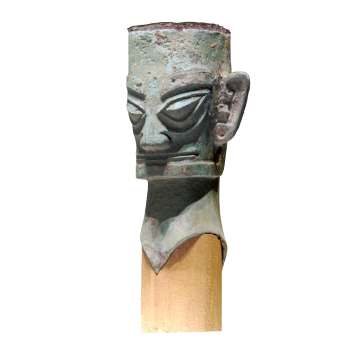
Sanxingdui Bronze Head

Sanxingdui Bronze Head

This is a bronze human head (or bronze mask) in Sanxingdui, one of the representative cultural relics of ancient Chinese Shu culture. The No. 2 sacrificial pit unearthed in 1986 at the Sanxingdui site in Guanghan, Sichuan, belongs to the late Shang Dynasty (about 3200 years ago). These bronze human heads have unique shapes, such as exaggerated apricot eyes, wide mouths and large ears. Some are even painted with black eyebrows and vermilion lips. Scholars speculate that they may have been used in religious or sacrificial ceremonies, representing gods or ancestors, and may have been mounted on wooden supports or totem poles, or even clothed in clothing.
Wood carving "Christ by the Pillar"

Wood carving "Christ by the Pillar"

This sculpture is likely a wood-carved version of the "Christ by the Pillar", also often referred to as the "Son of Worry" or "Christ on Cold Stone". This sculpture depicts Jesus tied to a pillar (or sitting on a stone) after being whipped and before being crucified. He usually wore a crown of thorns and had his hands tied before him, with an expression of pain or contemplation, awaiting execution. This is a devotional theme common in Christian art, which aims to elicit strong empathy and emotional resonance from the viewer by depicting the physical pain and vulnerability of Christ.
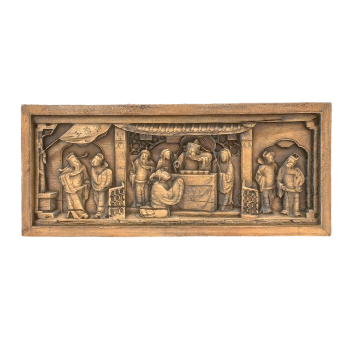
ancient chinese wood carving

ancient chinese wood carving

This is an ancient Chinese wood carving relief board, usually as a building component or part of furniture decoration, depicting a character story scene. This type of wood carving board is usually used to decorate the doors and windows of traditional Chinese buildings, screens, under the eaves, or inlaid on large furniture (such as sleeping beds and desk tables). The central area of the relief board depicts an interior scene that appears to be a family gathering, a trial, or a theatrical scene. Some sit in high positions, others bow down or stand, and there are other characters around watching. Such carvings are usually based on traditional historical stories and literary classics (such as Romance of the Three Kingdoms and Twenty-four Filial Piety).
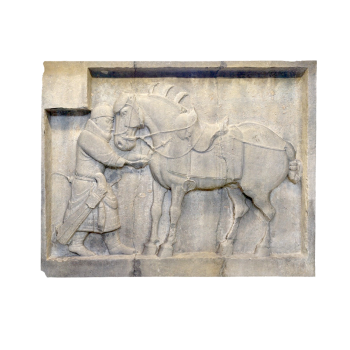
One of the stone reliefs of six horses in Zhaoling "Sa Lu Zi"
One of the stone reliefs of six horses in Zhaoling "Sa Lu Zi"

"Six Horses of Zhaoling" is a stone relief sculpture made by Emperor Taizong Li Shimin (reigned 626-649) to commemorate the six war horses he rode during the process of establishing the Tang Dynasty and unifying the whole country. This relief depicts the scene of Li Shimin's mount "Sa Lu Zi" (its name means "Qiu Lu" in Turkic language) after being injured by an arrow in battle, and the general Qiu Xinggong drew an arrow for it. In 1914, "Sa Lu Zi" and another war horse "Boxing Mao" were stolen and sold out of the country and are now in the Museum of Archaeology and Anthropology at the University of Pennsylvania.
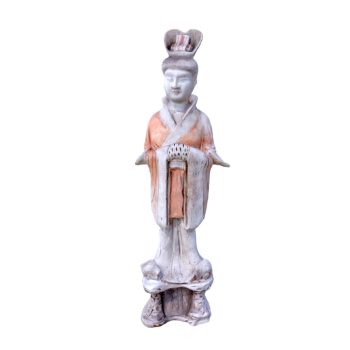
Painted pottery female figurines of the Tang Dynasty
Painted pottery female figurines of the Tang Dynasty

This is a Chinese Tang Dynasty painted pottery female figurines (or ladies figurines). It was made in China during the Tang Dynasty (618-907) and was one of the funerary objects (Ming ware) in the burial culture of that time. The terracotta figures are dressed in wide-sleeved gowns with cross-necked collars, their hands close to their chests, their hair in a high bun (similar to the popular "high bun" or "fallen horse bun" at the time), and their faces are plump and round. This plump shape is the embodiment of the aesthetic ideal represented by Yang Guifei in the prosperous Tang Dynasty. They usually appear in groups and are placed in the ear chambers or corridors of noble tombs, symbolizing the maids, kabuki or attendants of the tomb owner.
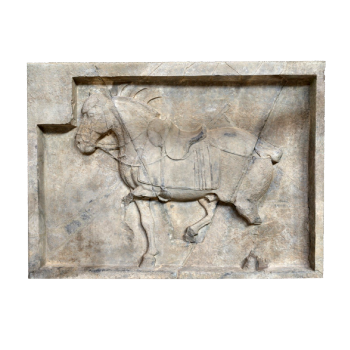
Liujun Stone Carving Relief in Zhaoling
Liujun Stone Carving Relief in Zhaoling

This is one of the stone reliefs of "Six Horses of Zhaoling. The six horses in Zhaoling are stone reliefs carved by Emperor Taizong Li Shimin (reigned from 626 to 649) to commemorate the six war horses he rode during his war. The horse in the image is called "Punch Hair", which is named after its curly hair. In the battle with Liu Hei-yi, Li Shimin rode this horse. The "Zhaoling Liujun" was originally located on both sides of the northern altar of the Tang Taizong Zhaoling in Liquan County, Shaanxi Province. Among them, "Boxing Mao" and "Lu Sa Zi" were stolen and sold to the United States in 1914 and are now in the Museum of the University of Pennsylvania. The remaining four Jun are now in Xi'an Forest of Steles Museum
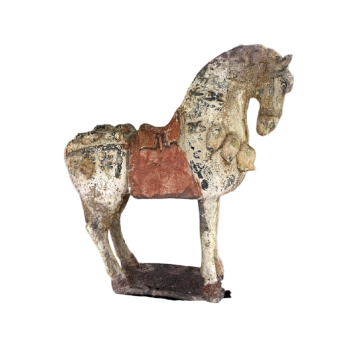
Ancient Chinese Painted Pottery Horse
Ancient Chinese Painted Pottery Horse

This is an ancient Chinese painted pottery horse, probably belonging to the period from the Northern Dynasty to the Tang Dynasty. It is a pottery figurine made of clay. The surface was originally decorated with painted decorations (such as red and white pigments), but most of them have fallen off due to age, revealing the plain tires at the bottom and some residual paintings. This craft was very common in ancient Chinese burial art. This realistic and vigorous image of horses prevailed in ancient China from the Northern Dynasties (such as the Northern Wei Dynasty and the Northern Qi Dynasty) to the Tang Dynasty (618-907). The depiction of horses in this period reached an artistic peak, reflecting the strong national strength and the emphasis on horses of the times.
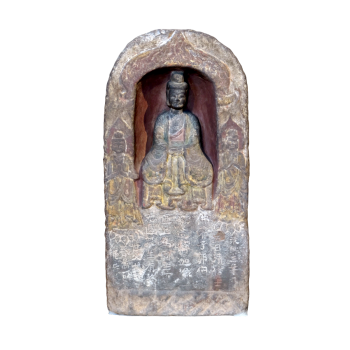
Ancient Chinese Buddhist Statues

Ancient Chinese Buddhist Statues

This is an ancient Chinese Buddhist statue, carved from sandstone or other stone, with obvious signs of age and weathered. According to its carving style, the character's clothing (especially the way the folds are depicted) and the layout of the inscriptions, this statue tablet was probably made from the late Northern Dynasty to the Sui Dynasty (about the 6th century AD). The stele is arched with a shrine carved above it. In the center of the niche is a legged Buddha (probably Sakyamuni Buddha or Maitreya Buddha), and on each side is a threatening bodhisattva or disciple statue.
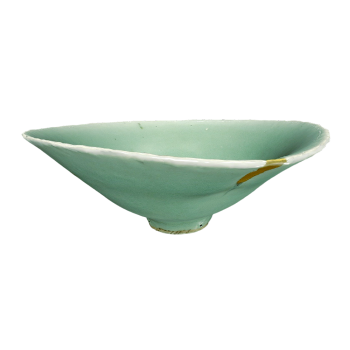
Southern Song Dynasty Longquan Kiln Green Glazed Hat Bowl

Southern Song Dynasty Longquan Kiln Green Glazed Hat Bowl

This is a Southern Song Dynasty Longquan kiln green glaze hat-style bowl. Longquan kiln from China, fired during the Southern Song Dynasty (1127-1279). Longquan kiln was a famous celadon producing area in the Song Dynasty, which reached its historical peak in the Southern Song Dynasty. The device is in the shape of a hat, the mouth is skimming outward, the circle is small, and the shape is elegant and generous. There is a fine green glaze, glaze color presents elegant turquoise, "like ice like jade" reputation, in line with the Song Dynasty introverted rational advanced aesthetic. There is an obvious damage along the bowl mouth, which has been repaired using the traditional Japanese gold (Kintsugi) process.
Gilt Bronze Kirin Sculpture

Gilt Bronze Kirin Sculpture

This is a gilt bronze sculpture of Kirin. The object is golden yellow and metallic, most likely made of brass or gilded bronze. It has the body structure and limbs of a horse, but its head is more like a dragon, with an open mouth, tusks and horns-like protrusions, which is a typical image of a Chinese mythical Swiss beast. In Chinese mythology, the unicorn is a mythical beast that represents auspicious and auspicious, and has the functions of protecting the house, warding off evil spirits and making money. It is usually depicted as a deer body, horseshoe, oxtail, one-horned or two-horned on the top of the head, and scales on the body.
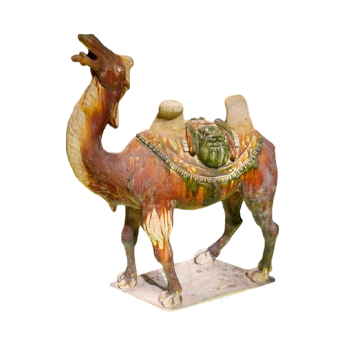
Tang tricolor camel

Tang tricolor camel

Tang tri-colored camel, an ancient Chinese pottery figurines art. It is a low-temperature glazed pottery made of clay, usually using yellow, green, white (or brown) and other glaze, hence the name "three colors". This style of pottery figurines prevailed in the Tang Dynasty (618-907) and was a treasure of the ceramic firing process at that time. Tang tricolor camels are mainly used as burial objects (ghost), reflecting the tomb owner's desire to enjoy a rich life in the grave. In the Tang Dynasty, the camel was an important means of transport on the Silk Road, known as the "ship of the desert".
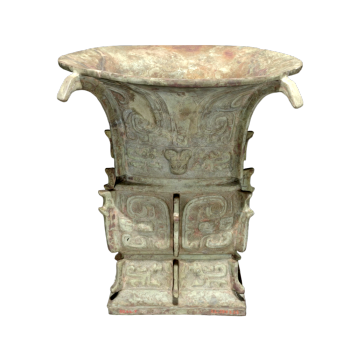
Ancient Chinese bronze square statue

Ancient Chinese bronze square statue

This is an ancient Chinese bronze square statue, a bronze ritual vessel used for wine or sacrifice. The utensils were square, mouth open, neck long, circle foot high, the overall shape dignified and elegant. The body is decorated with mysterious animal patterns such as gluttonous patterns, banana leaf patterns and Kuilong patterns. These decorations are usually symmetrically distributed with the center of the leaf edge, with a majestic and mysterious artistic style. Zun was one of the important bronze ritual vessels in the Shang and Western Zhou dynasties. In ancient times, this type of bronze was a symbol of aristocratic status and power, used to worship ancestors and important rituals.
Oracle Tortoise Shell

Oracle Tortoise Shell

This is a piece of tortoise shell (the tortoise's belly armor) engraved with oracle bones. Oracle bone inscriptions are the earliest ancient characters with a relatively complete system that have been discovered in China. They mainly refer to characters engraved on tortoise shells or animal bones. They prevailed in the late Shang Dynasty (about 14th century BC to 11th century BC). In ancient times, the royal family and nobles of the Shang Dynasty used tortoise shells and ox shoulder blades to make divination, predict good or bad luck or inquire about important matters (such as weather, war, harvest, sacrifice, etc.). During divination, the sorcerer would drill holes in the back of the tortoise's shell, then burn it with fire, judge the good or bad according to the cracks (called "omens") generated on the front, and engrave the divination content or result on the oracle bone.
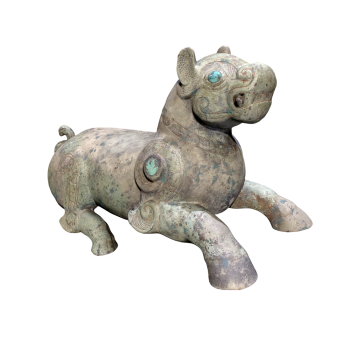
Ancient Chinese Bronze-Xizun

Ancient Chinese Bronze-Xizun

This is an ancient Chinese bronze animal shaped utensils, the specific name is usually Xizun, is a kind of bronze ritual vessel used for wine or sacrifice. This artifact combines a variety of animal features (such as tiger head, Buffalo hoof, etc.), belonging to the mythical Swiss beast. The surface of the body has exquisite decorative patterns, and inlaid with turquoise as eyes and decoration. During the Shang and Zhou dynasties in China, bronzes were used in important sacrificial rites as symbols of power and status. This animal-shaped ritual was very rare and precious at the time. Many similar animal-shaped bronzes, such as tiger statue and rhinoceros statue, have been found in ancient tombs and sites in Hubei, Shanxi and other places in China.
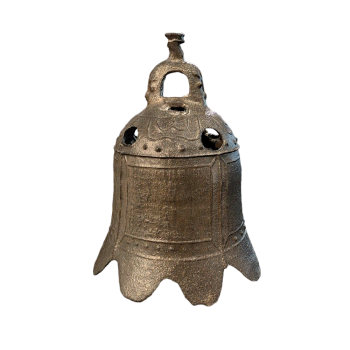
Ancient Chinese Temple Bell

Ancient Chinese Temple Bell

It is a Chinese antique temple bell, usually made of bronze or cast iron. The top of this clock has a double dragon-shaped handle for hanging, and the main body has a raised decorative pattern or inscription box. The lower edge of the bell is usually wavy or scalloped, which is typical of temple bells in East Asia (especially China). This kind of bell is one of the necessary instruments of the temple, used for Buddhist rituals or important activities.
Bronze Head of Holy Bishop

Bronze Head of Holy Bishop

The sculpture depicts characters wearing hats similar to the episcopal crowns worn by senior Catholic clergy (e. g., bishops, cardinals, popes) in formal liturgy.
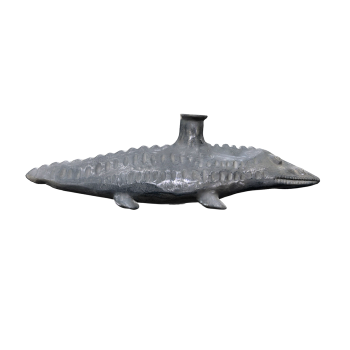
Crocodile-shaped vase

Crocodile-shaped vase

This animal-shaped vase depicts a crocodile with a cylindrical neck and everted lips. The crocodile's eyes and nostrils are located above the jaw and use high relief techniques (deep circles and central pits); the scales are represented by short, wide engraved lines.
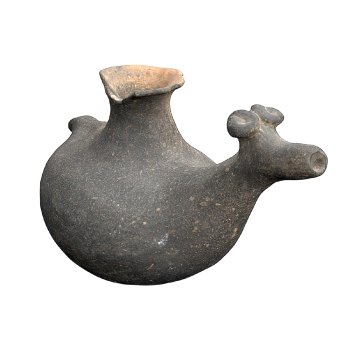
sheep-shaped pottery kettle

sheep-shaped pottery kettle

It is an antique artifact dating from the late Bronze Age to the Iron Age (c. 1350-800 BC), found mainly in western Iran (such as the Amrash or Malik cultural regions) and Mesopotamia. This unique animal-shaped pottery is likely to be used for ritual or religious purposes, such as drinking or pouring sacrificial drinks. The liquid is poured from the opening at the top and out through the drain at the mouth of the sheep. In ancient Near Eastern mythology, sheep were often associated with fertility, power, and auspiciousness, and the item may have had significant symbolic or status value in the societies of the time.
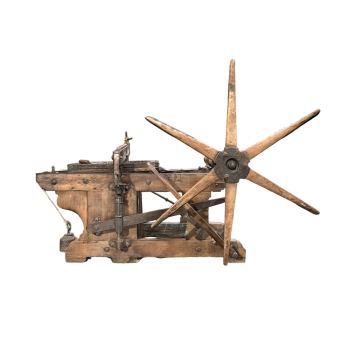
old wooden lithographic printing machine
old wooden lithographic printing machine

This item is an ancient wooden lithographic press, also known as a star-wheel press. It is a manually operated lithography equipment. Lithography is a printing technology that uses the principle of oil-water incompatibility, usually using slate as a printing plate. This wooden hand-operated lithographic press was mainly popular in the late 18th to early 19th centuries. After movable type printing, the development of lithography has made it possible to reproduce text and images efficiently and at low cost, playing an important role in education, communication and artistic dissemination.
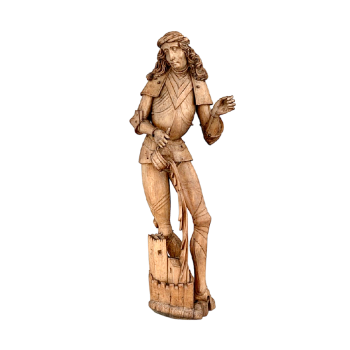
Wooden statue of St. Florian

Wooden statue of St. Florian

This is a wooden statue of Saint Florian. St. Florian is a Catholic saint. He is honored as the chief saint of firefighters, chimney cleaners and winemakers. He is also regarded as the chief guarantor against fires and floods. The statue depicts St. Florian as an image of a Roman soldier. He usually holds a bucket or basin, symbolizing his role in dousing flames and protecting people from fire hazards. Legend has it that in the 4th century AD, St. Florian used a bucket of water to put out a fire and save a city, which made him the patron saint of firefighters.
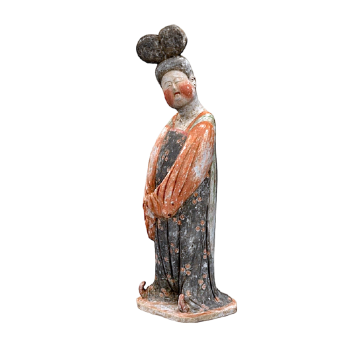
Painted Handmaid Figurines of Tang Dynasty in China
Painted Handmaid Figurines of Tang Dynasty in China

This item is a painted pottery female figurines from the Tang Dynasty (618-907 AD) in China, commonly known as the Tang Dynasty maid figurines. The style of sculpture clearly reflects the artistic characteristics of the Tang Dynasty. In the Tang Dynasty, the national power was strong and the aesthetic preference was for a rich female image, which was fully reflected in the round cheeks and posture of the pottery figurines. This kind of pottery figurines is a ghost, that is, funerary objects, unearthed in the tombs of the nobles of the Tang Dynasty. They are designed to simulate the life of the tomb owner in the afterlife, including servants, maids, musicians, dancers, horses and camels.
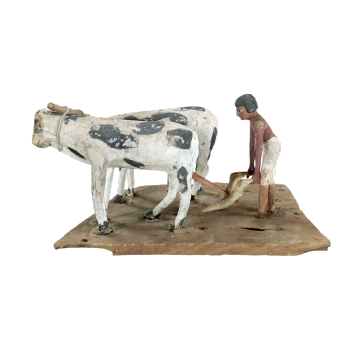
Ancient Egyptian Wooden Farming Scene Model

Ancient Egyptian Wooden Farming Scene Model

This is a model of an ancient Egyptian wooden farming scene. This model is part of the ancient Egyptian burial supplies. In ancient Egyptian religion, such models were designed to ensure by magical means that the deceased would have an adequate supply of food in the afterlife (the fields of Osiris). It depicts an important food production activity in everyday life-plowing. Its production dates back to the Middle Kingdom period (about 2040 BC to 1750 BC). The model is carved and painted from wood.
1 2 3 4 5 6 7 8 9 ... 76 Next