
Ancient clay horse statue

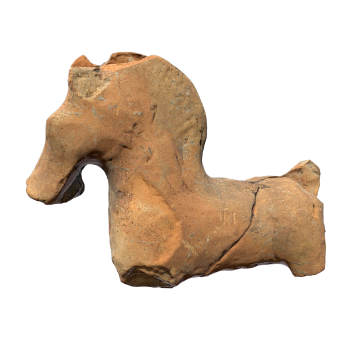
Ancient clay horse statue

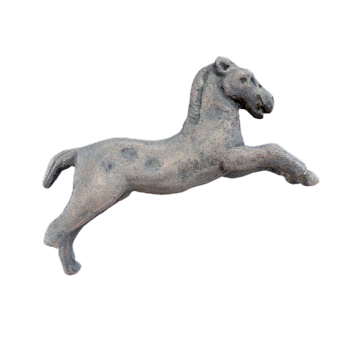
The style and material of this horse statue indicate that it is likely to be from the archaic period of ancient Greece, about 600 BC to 480 BC. Pottery horse figurines were very popular at the time and were found in a large number of tombs and temple sites in areas such as Bolivia. In ancient Greek culture, the horse was a symbol of wealth and status. These small statues of pottery horses are often used as sacrificial offerings or funerary objects and placed in tombs to symbolize the social status of the deceased. The statue is made by hand-kneading and molding technology, and its shape is abstract and simple, highlighting the basic characteristics of the horse, revealing a naive and simple aesthetic feeling.
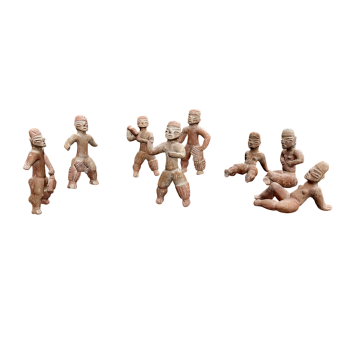
Pottery Figurines of Ancient Cuqiu Team in Mexico

Pottery Figurines of Ancient Cuqiu Team in Mexico

These pottery figurines belong to a pre-Columbian culture, an ancient artifact of Michoacán in western Mexico. These terracotta figures are usually depictions of participants in the Mesoamerican game of kickball or related sacrificial activities. In ancient Central America, this kind of ball game was not only a sport, but also a ritual with profound religious and cosmological significance, sometimes even related to life and death.
Pre-Columbian terracotta figures

Pre-Columbian terracotta figures

This item is a terracotta figurine of pre-Columbian West Mexico, commonly known as Pretty Lady or Michoacan style figurines. It originated in the Michoacán region of present-day western Mexico and dates back to the Late Preclassical period, between about 550 BC and 100 BC. These terracotta figures are mostly female figures, often with exaggerated feminine features as their main manifestations, such as plump breasts, possibly reflecting a cult of fertility and motherhood.
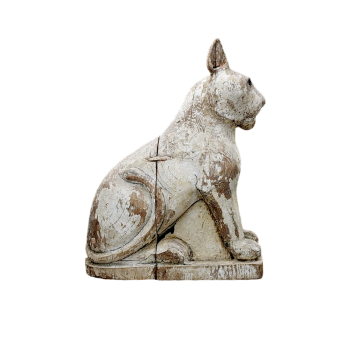
Ancient Egyptian wooden cat-shaped mummy box

Ancient Egyptian wooden cat-shaped mummy box

This is an ancient Egyptian wooden cat-shaped coffin (or cat-shaped mummy box). In ancient Egypt, cats were seen as incarnations of the gods, especially associated with the goddess Bastet. This hollow wooden sculpture is specially designed to hold the coffin of a cat mummy. X-ray examination confirmed that many of these sculptures contained a complete cat mummy inside. Cats were mummified and placed in elaborate coffins, usually as offerings to the temple, intended to serve as messengers between humans and the divine world through the animal's soul.
Ancient Rome bronze Minerva (Minerva) goddess head
Ancient Rome bronze Minerva (Minerva) goddess head

This is the ancient Roman bronze Minerva goddess head, Minerva corresponds to the Greek mythological wisdom and war goddess Athena, she is the goddess of wisdom, craftsmanship and war. The statue is cast in bronze and presents a copper-green oxidation trail. She wears an Attica-style helmet adorned with a feathery headdress, one of the goddess's signature features that underlines her status as a warrior goddess.
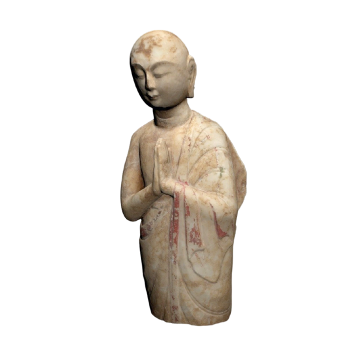
White White Jade Standing Arhat Statue

White White Jade Standing Arhat Statue

This is a Chinese Northern Qi period (550-577 AD) white marble standing arhat statue. According to art historians, such images of young monks are often considered to be Ananda (Ānanda), one of the ten disciples of the Buddha. The style of the statue dates back to the 6th century AD China's Northern Qi Dynasty, and the art of this period is known for its serene, introspective expressions and smooth lines of clothing. It has the classic "Oriental smile", reflecting the peak level of Buddhist art at that time. The statue is carved from high quality white marble.
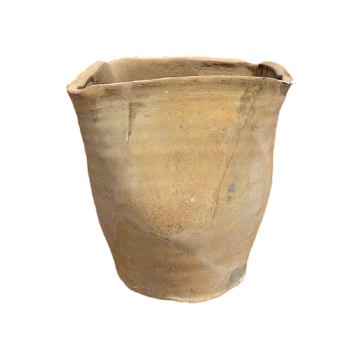
Handmade clay bowl (3D printing)

Handmade clay bowl (3D printing)

This is a handmade clay bowl that can also be used as a flower pot. This type of container is often used as a bonsai pot, succulent plant pot or minimalist style home decoration bowl.
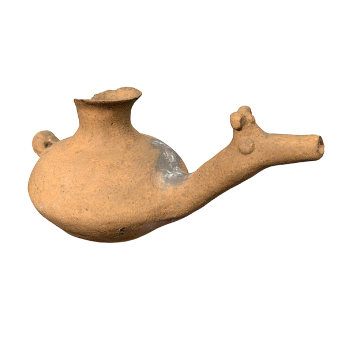
sheep-shaped pottery wine jug

sheep-shaped pottery wine jug

It is a sheep-shaped pottery antique artifact dating from the Late Bronze Age to the Iron Age (c. 1350 BC to 800 BC), found mainly in western Iran (such as the Amrash or Malik cultural areas) and Mesopotamia. This unique animal-shaped pottery is likely to be used for ritual or religious purposes, such as drinking or pouring sacrificial drinks. The liquid is poured from the opening at the top and out through the drain at the mouth of the sheep. In ancient Near Eastern mythology, sheep were often associated with fertility, power, and auspiciousness, and the item may have had significant symbolic or status value in the societies of the time.
Ancient Egyptian hippo statue

Ancient Egyptian hippo statue

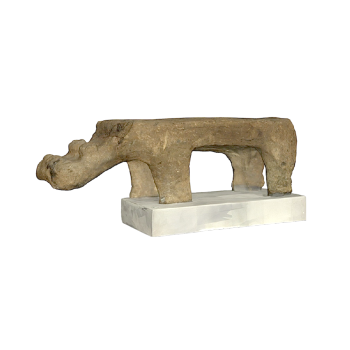
This is an ancient Egyptian hippo statue dating back to the Middle Kingdom period (c. 1961-1878 BC). This statue is the unofficial mascot of the Metropolitan Museum of Art and has a famous nickname "William". It is made of Egyptian glazed pottery (faience), a ceramic material made of quartz powder with a unique blue glaze. The statue was found in a shaft in the burial chamber of a steward named Senbi in the Mayr region of Egypt.
Ancient Greek pottery female statue

Ancient Greek pottery female statue

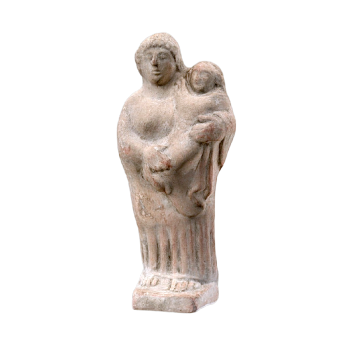
This object is a small pottery female statue from the Greek period, depicting a woman holding a child. The statue is made of terra cotta and was common in ancient Greece, especially in the Boeotia (Tanagra) style statues of the region of Boetia. Such small statues are often used as offerings to deities in charge of fertility and child protection.
Inuit carpets of reindeer bones

Inuit carpets of reindeer bones

This is a bone carving reindeer artwork made by the Inuit (Inuit). This type of sculpture is typical of Inuit art in the Canadian Arctic. Inuit artists are known for their superb animal sculpting skills, often depicting the wildlife and everyday life scenes around them. The sculpture may have been carved from materials such as local reindeer horn and whale bone. Reindeer are an important source of food and material for the Inuit and are therefore a common subject of depiction in their artwork.
Florida Native Four-Lattice Pottery

Florida Native Four-Lattice Pottery

This is a Florida native pottery. This four-compartment pottery is from the Tarrant Collection of the Bishop Museum of Science and Nature (formerly the Museum of South Florida) in Bradenton, Florida. It consists of four connected circular grooves, forming a whole square or plum-shaped container. The surface is rough, the color is yellow and brown, and there are signs of wear. It is speculated that it may be carved from stone. In ancient times, similar four-compartment containers were found in different cultures. For example, four-compartment containers of bronze, marble or pottery used to hold pigments were unearthed at the sites of the late Shang Dynasty in China.
Model of the Sacrificial Banquet House (Nayarit region)
Model of the Sacrificial Banquet House (Nayarit region)

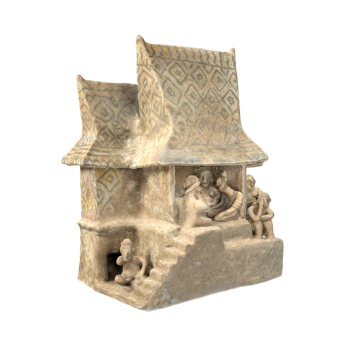
This is the "sacrificial banquet house model" of the Nayarit culture. The model comes from the Nayarit region of western Mexico in ancient Central America and belongs to the Eastlandel Rio culture. It was made between 100 BC and 300 AD. The model is made of terracotta with residual pigments. The figures are stylized, showing scenes of people sitting or standing under the eaves for social activities, possibly preparing food or performing rituals. The original sculpture is in the Museum of the Art Institute of Chicago.
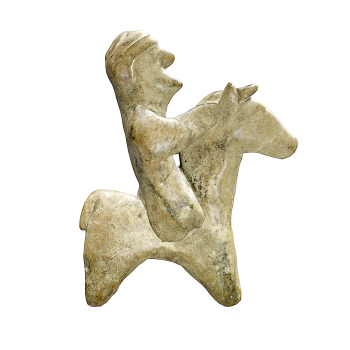
Pottery statue of horse and rider in ancient Cyprus

Pottery statue of horse and rider in ancient Cyprus

This is an ancient Cypriot pottery statue of a horse and rider. This kind of sculpture is usually made in the archaic period of Cyprus, between 700 BC and 450 BC. The statue is handcrafted from terracotta, usually unglazed, and presents a natural light brown or off-white color. These small figurines and animal sculptures were widely used in ancient Cyprus as tomb offerings or temple offerings. At the time, horses were a symbol of status and wealth. The use of statues of horses and riders as funerary objects may symbolize the prominent social status of the deceased or their devotion to the gods.
Sculpture of Lao Zi

Sculpture of Lao Zi

This is a sculpture or ornament of Lao Zi (or Lao Dan, Lao Jun). Lao Tzu is a famous philosopher, thinker and founder of Taoism in ancient China. In Taoism, he is revered as "Taishanlaojun". Lao Tzu in the statue is in a sitting posture, leaning slightly, with his left hand resting on his knee, and his right hand may have originally held a scroll or dust, sitting on a package. Laozi's ideas had a profound influence on Chinese philosophy and religion.
Paleolithic mammoth ivory horse statue
Paleolithic mammoth ivory horse statue

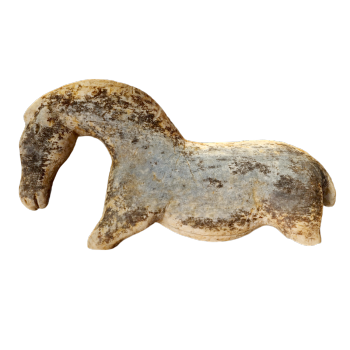
This is the Vogelhurd Cave Horse statue, the oldest known horse art sculpture, carefully carved from mammoth ivory. The statue was made in the Orina culture period of the late Paleolithic age. It has a history of about 35,000 to 40,000 years. It is one of the earliest figurative works of art created by early modern humans. The Vogelhurd Cave, known for unearthing a large number of Ice Age artworks, is now listed as a UNESCO World Heritage Site. This remarkable artifact is now in the collection of the Chateau Museum of Hohentubingen, Tubingen, Germany.
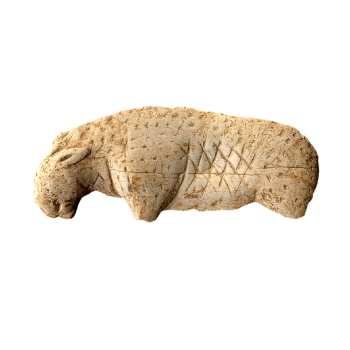
Ice Age mammoth ivory lion statue

Ice Age mammoth ivory lion statue
This is the mammoth ivory lion statue found in Vogelhurd cave, one of the oldest known figurative works of art in the world. The sculpture belongs to the Late Paleolithic Oreina culture and is between 35,000 and 40,000 years old. The statue is carved from mammoth ivory. It is very small and easy to carry (about 8.7cm long). The surface of the statue is engraved with a fine grid or cross-hatched pattern. Archaeologists believe that these ice age animal carvings may be related to hunting rituals, prehistoric beliefs or shamanic practices.
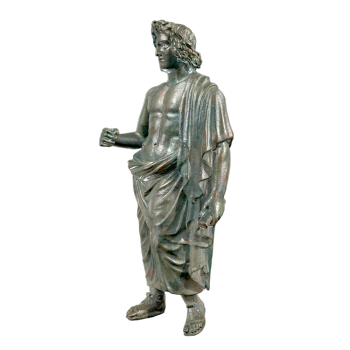
Bronze statue of Asclepius

Bronze statue of Asclepius

This is a bronze statue of Asclepius, the ancient Greek god of medicine. He stands steadily, with his center of gravity on one leg and the other leg slightly curved (dual balanced standing posture). His right hand is clenched (he may have originally held a scepter, scroll or spear, which is now missing), his left arm naturally droops, and he may also hold a scroll in his hand. Age: Statues in this style usually date back to the Greco-Roman period from the 1st century BC to the 2nd century AD.
Bronze Arrow

Bronze Arrow

This is a bronze arrow. This type of weapon was widely used in the Bronze Age (about 3300 BC to 1200 BC, the specific time varies from region to region) and may have lasted until the early Iron Age. It was an ancient weapon component used for hunting or warfare and needed to be installed on a long wooden pole for use. The larger is usually used as a stabbing weapon (spear) and the smaller as a throwing weapon (javelin or arrow). Many ancient bronze weapons have been found in archaeological excavations, such as tombs, weapons depots or wetlands (such as the swamps of Ireland), some of which are well preserved due to long periods of oxygen-deficient conditions.
Gryphon bronze sculpture

Gryphon bronze sculpture

This is an ancient bronze sculpture of a griffin image. The griffin is a creature in Western mythology, often described as the body of a lion and the head and wings of an eagle, symbolizing power, vigilance and the guardian of treasure. This image originated in the ancient Near East and ancient Greek art, and became popular in Greece between the 7th and 6th centuries BC. The sculptural style in the picture has the typical features of ancient Greek metalwork: the beak part is open, revealing a curled tongue, the head has horse-like ears and a decorative ball on the top. Many ancient griffin sculptures were originally decorated with the edges of bronze cauldrons, or used as fountain heads.
Ancient Roman bronze horse sculpture

Ancient Roman bronze horse sculpture
This is an ancient Roman bronze horse sculpture in the collection of the Evora Museum. This work can be traced back to the ancient Roman Empire, about the 1st to 3rd centuries AD. The statue was found at a Roman site in Évora, Portugal, and is currently in the collection of the local Évora Museum. The sculpture captures the dynamic moment of the horse's leap, with its front legs off the ground and its hind legs bent and firmly supported on the ground, demonstrating the Roman artist's superb realistic skills and in-depth understanding of animal anatomy.
Ancient pottery furnace

Ancient pottery furnace

This pottery is probably an ancient pottery jar, similar to the painted pottery jar of the Yangshao culture in China. Such pots are usually made of terracotta clay and are used for storage, cooking or ceremonial purposes. Such large containers are often used as water storage, food containers, and may also be part of the urn.
Wood Carving: Antelope Family

Wood Carving: Antelope Family

The sculpture depicts a heartwarming scene of a female antelope with a baby antelope. The mother antelope holds her head high, while the baby antelope looks down and seems to be grazing or nursing. This style of carving is common in medieval style or African tribal art. It has abstract and smooth lines, focusing on the simple beauty of animal form. It is a decorative ornament, suitable for home decoration.
Doe Sculpture (Doha Museum of Islamic Art)
Doe Sculpture (Doha Museum of Islamic Art)

This is Doha Doe, a famous bronze fountain head sculpture of Islamic art. Made in the Spanish Umayyad Caliphate (Umayyad al-Andalus) in the middle of the 10th century, it was originally the outlet of a fountain, which was placed beside the pool or fountain in the palace courtyard, and water would spray out through the pipe at the base. The sculpture is made of copper alloy (gunmetal), with fine engraving patterns on the surface. The pattern is a half palm leaf pattern in a circle, giving the impression of being covered by gorgeous fabric. The original is now in the collection of the Museum of Islamic Art in Doha, Qatar.
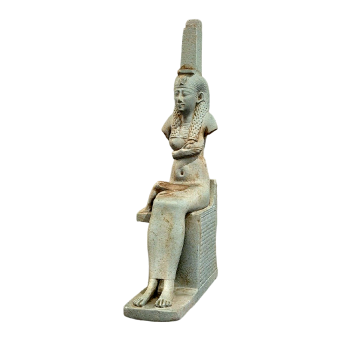
Statue of ancient Egyptian goddess Isis nursing Horus

Statue of ancient Egyptian goddess Isis nursing Horus

This is a statue of the ancient Egyptian goddess Isis nursing Horus. In ancient Egyptian mythology, Isis was the goddess of magic and healing. She raised and protected her son Horus alone and eventually avenged her father Osiris. This image of "suckling Isis" (Lactans) was very popular in the later period of Egyptian history to the Ptolemaic period (c. 664 BC to 30 BC).
Parry Albert's bust sculpture

Parry Albert's bust sculpture

The sculpture depicts the Hungarian politician, writer and journalist Albert Parry (1823-1867). The work was created by Hungarian sculptor Izsó Miklós.
Meritaten bust stone statue

Meritaten bust stone statue

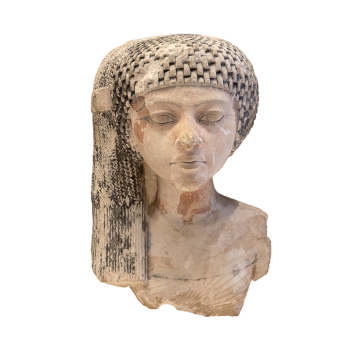
This sculpture is a limestone bust of Princess Meritaten from the period of Amarna in ancient Egypt. This statue was made during the Amalna period of the 18th Dynasty of the New Kingdom period of ancient Egypt (about 1353-1336 BC). It depicts one of the daughters of Pharaoh Ehnatun and his queen Naftiti, most likely their eldest daughter Melitati (Meritaten). The statue has a unique Amarna art style, which is characterized by the realism of the figure and slender, soft facial features. The statue is currently in the collection of the Louvre Museum in Paris, France.
ivory horn

ivory horn

This is an antique musical instrument called the Ivory Horn (oliphant). The ivory horn is usually carved from a whole piece of ivory. The name "oliphant" comes from Old French, meaning "elephant". In medieval times, ivory horns were used primarily as signal horns in hunting or warfare to communicate over large areas. Many of the extant ivory horns were made in the 10th to 16th centuries by Muslim artisans in southern Italy or Sicily for the European market. They can be seen in museums and church treasures all over Europe (such as France, Germany and the United Kingdom), and are regarded as precious collections.
Copper Boar Sculpture

Copper Boar Sculpture

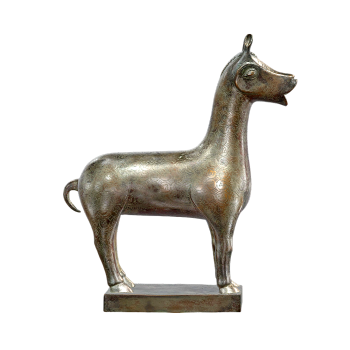
This is a bronze sculpture of a wild boar. The ornaments are made of bronze or similar metal alloys, with obvious patina (green-brown) rust spots, giving people an antique or vintage feeling. The sculpture depicts a wild boar (boar) with a three-dimensional and realistic shape. The boar stands on a rectangular base, which itself is similar to metal and patina.
wood carving deer

wood carving deer

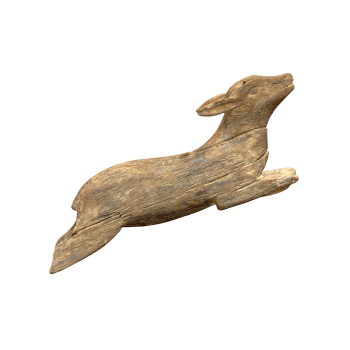
The sculpture is carved from solid wood. It depicts a deer in a jumping or running position with its head held high.
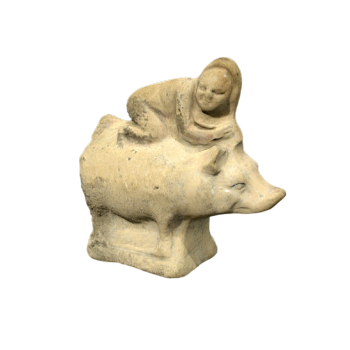
Ancient Greek clay sculpture "child riding a pig"

Ancient Greek clay sculpture "child riding a pig"

The statue dates back to the Hellenistic period (3rd to 1st century BC) and may have come from southern Greece or southern Italy. In ancient Greek culture, pigs or wild boars were considered the patron saint of young children and had the function of warding off evil spirits. This image may represent Eros riding on a wild boar, or depict a carefree child.
Wood statue of Emperor Kazimiri III the Great

Wood statue of Emperor Kazimiri III the Great

This is a statue of King Casimir the Great. Kazimierz III was the last Polish king of the Piast dynasty and the only monarch in Polish history to be awarded the title of "Great Emperor. The king in the statue is dressed in silver armor, with a gold cloak over his shoulders and lined with purple fabric. He wears a crown in the shape of precious stones and lilies, and holds the symbols of kingship-the scepter and the kingship ball (cross holy ball). It is a Gothic wood carving with facial features similar to his image on a sarcophagus at Wawel Cathedral. This statue was in 1930.
Burial reliefs of Berenger de Cole

Burial reliefs of Berenger de Cole

It is a plaster reproduction of the "Berenguer de Coll Tomb Relief. The relief depicts eight figures surrounding the body of the deceased (Berenger de Cole). The dead man was dressed in armor, with his hands crossed and a lion at his feet. These figures, including the bishop of Girona, Ramón de Monkada, are watching the dead.
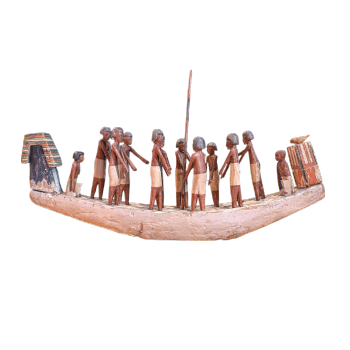
Ancient Egyptian Sun Ship Model

Ancient Egyptian Sun Ship Model

This is an ancient Egyptian ship model, often called the ghost ship or the sun ship model. This type of wooden model is an important funerary object of the ancient Egyptian Middle Kingdom period (about 2000-1760 BC) tombs. The ancient Egyptians believed that these models could work in the afterlife, helping the deceased navigate the Nile in the afterlife. The ship symbolizes the pilgrimage to Abados (the center of faith of the god Osiris of the Underworld), a journey necessary for resurrection and eternal life. Some of the models represent the holy ship that the sun god Ra takes to help the deceased join Ra's daily journey through the sky and the underworld.
Painted wood bust of St. Gereon

Painted wood bust of St. Gereon

St. Gereon was an officer in the Legion of Thebes who refused to carry out orders to persecute Christians and was said to have been beheaded and martyred in Cologne. This wood bust of the guardian saint of Cologne was probably made by Hermann Kessel around 1683/88 and is now hidden in the Catholic parish church of St. Gillian in Cologne (originally the college church).