
World War II Soviet heavy tank KV-1 heavy tank

World War II Soviet heavy tank KV-1 heavy tank

KV-1 heavy tank, designed by Joseph Yakovlevich Koshin of the Soviet Union in the early stages of World War II. Named after Marshal Klimt Yevlemovich Voroshilov, the Soviet Defense Commissioner. The KV-1 heavy tank weighs 46 tons and is equipped with a water-cooled diesel engine with a power of 410 kilowatts. It has a maximum highway speed of 35 kilometers per hour and a maximum driving range of 225 kilometers; Equipped with a 76.2mm tank gun and 4 7.62mm caliber DT machine guns, usually used in offensive operations as a vanguard to break through enemy defenses.
During World War II, the American bomber SBD Dauntless dive bomber
During World War II, the American bomber SBD Dauntless dive bomber

The SBD Dauntless was a three seat single engine carrier based dive bomber developed by Douglas Company in the United States, primarily active on the Pacific theater during World War II. In the early 1930s, with the help of a large number of government orders, the United States recovered from the catastrophic economic crisis, and its naval strength was strengthened due to the policy of expanding orders. In 1934, the United States Naval Aviation Administration began to replace its complex and disorganized carrier based dive bombers with a unified aircraft model.
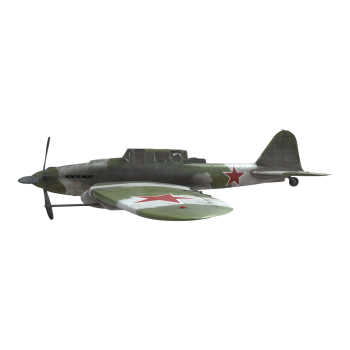
During World War II, the Soviet fighter jet Il-2 attack aircraft

During World War II, the Soviet fighter jet Il-2 attack aircraft

The Il-2 attack aircraft was a type of ground attack aircraft developed and equipped by the Soviet Union during World War II.
World War II British heavy tank Churchill Mk VII

World War II British heavy tank Churchill Mk VII

The Churchill infantry tank was the last British infantry tank and the largest tank produced by Britain during World War II, with a total production of 5640 units. The Churchill tank is an infantry tank that replaces the Matilda, developed under the code name A20. However, during the development process, the UK discovered that the A20 prototype did not yet meet their requirements. So, in July 1940, Vauxhall Automobile Company accepted the contract to develop the A22 infantry tank. Produce the first prototype car 7 months later. In June 1941, the first batch of 14 production tanks were delivered to the British army.
1960s tracked tank BMP-1 infantry fighting vehicle

1960s tracked tank BMP-1 infantry fighting vehicle

The BMP-1 infantry fighting vehicle is a tracked infantry fighting vehicle developed by the Soviet Union in the mid-1960s, with a combat weight of 13.3 tons, 3 crew members, and 8 passengers. The maximum highway speed is 65 kilometers per hour and the maximum travel distance is 600 kilometers. The front of the car has a streamlined sloping deck with good bulletproof performance. The front of the vehicle can withstand attacks from 12.7mm bullets, and the single person turret at the top of the middle of the vehicle is equipped with one 2A28 73mm smoothbore gun, one 7.62mm parallel machine gun, and a top mounted AT-3 "refractory box" anti tank missile launcher.
During World War II, the American fighter P-51B

During World War II, the American fighter P-51B

The P-51B fighter was one of the main fighter planes of the United States Army Air Forces during World War II, and it made its maiden flight in 1940. The P-51B fighter jet is a model of the American North American company's P-51 Mustang, originally designed by the North American Aircraft Company in 1940 to replace the large number of P-40Ds provided by the United States to Britain as a replacement for the British fighter jet. On October 26 of the same year, the first prototype successfully flew, with the factory code NA-73 and the nickname "Wild Horse". The first batch of "Wild Horse" B was delivered to Britain in August 1941, and the actual combat test results were excellent.
Fighter Bf-109 during World War II

Fighter Bf-109 during World War II

The Bf-109 fighter was a single seat, single engine, single wing, all metal piston fighter jet from Germany. It was one of the main fighter planes of the Nazi German Air Force during World War II and also one of the most outstanding light fighters in terms of comprehensive performance. The Bf-109 fighter jet features wings located beneath the fuselage, a full face cockpit, retractable landing gear, and a body and wings made entirely of metal. It belongs to the new generation of fighter jets and outperforms the Zero fighter jet in terms of performance, making it the most widely used military aircraft by Axis air forces. The Bf-109 fighter jet was designed by Messerschmitt, a designer at the Bavarian Aircraft Works in Germany.
During World War II, the British fighter jet Typhoon fighter jet
During World War II, the British fighter jet Typhoon fighter jet

The Hawker Typhoon was a combat bomber produced by the United Kingdom during World War II, serving as a direct replacement for the Hawker Hurricane fighter and capable of performing mid to low altitude interception missions. The Typhoon fighter bomber can carry bombs and RP-3 rockets, giving it strong ground attack capabilities. It is precisely because of this that the Typhoon became one of the most successful ground attack aircraft of World War II.
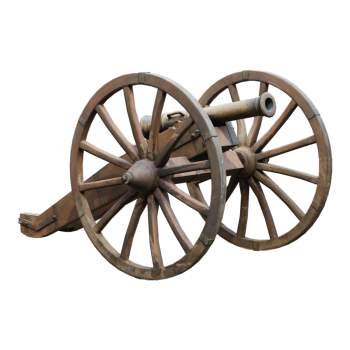
The artillery of the Battle of Poltava in the 18th century

The artillery of the Battle of Poltava in the 18th century

High definition photogrammetric measurement of Soviet 2S3 tank

High definition photogrammetric measurement of Soviet 2S3 tank

Binding timed bomb C4 bomb

Binding timed bomb C4 bomb

Wooden handle grenade

Wooden handle grenade

Longquan Tai Chi Sword Martial Arts Performance Morning Exercise Cold Weapon Gift Collection Copper Boutique Tai Chi Knife

Longquan Tai Chi Sword Martial Arts Performance Morning Exercise Cold Weapon Gift Collection Copper Boutique Tai Chi Knife

Longquan Town Mansion Treasure Sword Collection Tai Chi Sword Exercise Peony Sword Outdoor Fitness Martial Arts
Longquan Town Mansion Treasure Sword Collection Tai Chi Sword Exercise Peony Sword Outdoor Fitness Martial Arts

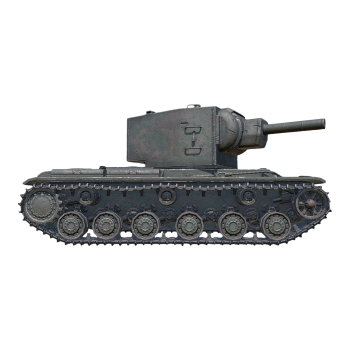
Soviet KV-2 Heavy Tank

Soviet KV-2 Heavy Tank

The KV-2 heavy tank was a type of heavy tank developed and equipped by the Soviet Union in 1942. The KV-2 heavy tank is assembled with a new turret and artillery on the chassis of the KV-1 heavy tank. The tank has a combat weight of 53 tons and a crew of 6 people. The main gun is the M10 152mm howitzer, which fires various types of shells including lethal grenades, explosive grenades, and armor piercing shells. The firing rate of the artillery is 2-4 rounds per minute. The maximum range for indirect shooting is 12000 meters. The armor piercing thickness when firing armor piercing shells can reach 124 millimeters. The maximum speed of the tank is only 26 kilometers per hour.
Soviet 2S3 self-propelled howitzer

Soviet 2S3 self-propelled howitzer

The 2S3 self-propelled howitzer is a 152mm self-propelled howitzer developed by the former Soviet Union in the late 1960s. This type of howitzer is composed of a PI-20 howitzer and a Sam-4 missile launch vehicle chassis, with a barrel length of 29 times the caliber, equipped with muzzle brakes and smoke exhaust devices, and loaded with ammunition by a mechanical loader. The body is enclosed and has strong three defense capabilities, making it suitable for air transportation. When firing grenades, the 2S3 howitzer has an initial velocity of 670 meters per second, a maximum range of 18.5 kilometers, and a maximum firing rate of 4 rounds per minute. It can fire various types of ammunition such as grenades, rocket extended range shells, armor piercing shells, as well as nuclear and chemical bombs.
Hungarian Army Knife - Light Cavalry Curved Sword

Hungarian Army Knife - Light Cavalry Curved Sword

16th century Hungarian style cavalry sword.
British 3.7-inch self-propelled artillery during World War II

British 3.7-inch self-propelled artillery during World War II

The 3.7-inch mobile anti-aircraft gun from World War II is now located next to HMS Ocelot at the Chatham Historical Shipyard in Kent. This gun was used by British artillery to defend the town of Medway.
Fictional Cold War era tank war game Tank
Fictional Cold War era tank war game Tank

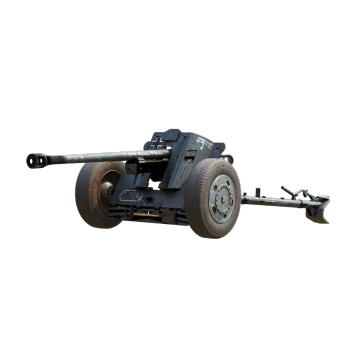
World War II German Pak 38 50mm anti tank gun

World War II German Pak 38 50mm anti tank gun

The military equipment developed by Germany in 1938, the World War II German Pak 38 50mm anti tank gun was developed in 1938, with a total length of 4.75 meters, a width of 1.85 meters, a barrel length of 3.137 meters, a weight of 813kg, and a crew of 3-6 people.
Soviet Kamov Ka-35 helicopter

Soviet Kamov Ka-35 helicopter

North Wind God 955A Strategic Nuclear Submarine

North Wind God 955A Strategic Nuclear Submarine

The 955 strategic nuclear submarine (Russian: проекта 955 Борей, English: Project 955 Borey, NATO codename: Borei class/Dolgorukiy class, translated as the North Wind God class) is the fourth generation strategic nuclear submarine of Russia.
F/A-18 fighter attack aircraft

F/A-18 fighter attack aircraft

The F/A-18 Strike Fighter, also known as Hornet or Hornet Strike Fighter, is a third-generation supersonic jet fighter aircraft of the United States Navy
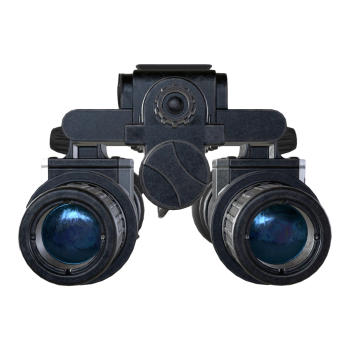
American military AN-PVS-31-BNVD night vision binoculars
American military AN-PVS-31-BNVD night vision binoculars

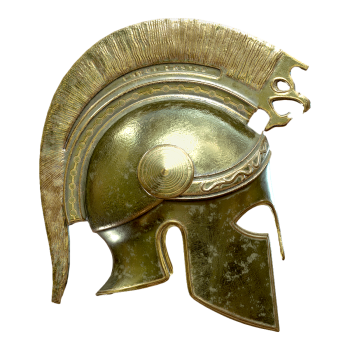
Ancient Greek Gladiator Helmet

Ancient Greek Gladiator Helmet

The Ancient Greek Gladiator Helmet, also known as the Corinthian Helmet, was a type of helmet used by ancient Greek soldiers (known as Hoplitts). It is one of the most representative symbols of ancient Greek military equipment and was widely used in ancient Greek archaeological and classical periods.
Modern Military Firearms M249 Light Machine Gun Portable Removable Sight Model

Modern Military Firearms M249 Light Machine Gun Portable Removable Sight Model

L-ATV Light Combat Tactical ATV

L-ATV Light Combat Tactical ATV

The L-ATV (Light Combat Tactical All-terrain Vehicle) is a light utility/combat utility vehicle, a joint light tactical vehicle of the United States military-led Army.
F-14 Fighter

F-14 Fighter

F-14 fighter (English: F-14 fighter, number: F-14, code/nickname: Tomcat, translation: Tomcat), is an American supersonic multi-role carrier-based fighter. The F-14 fighter has a two-seat, two-shot, two-tail, and one-wing layout. It was developed in accordance with the requirements of the U.S. Navy's fleet air defense and escort from the 1970 s to the 1980 s. It mainly performs fleet defense, interception, strike, and reconnaissance tasks.
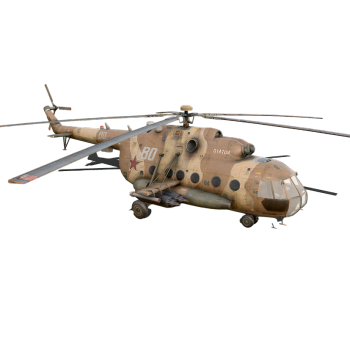
Soviet/Russian Mi-8 helicopter

Soviet/Russian Mi-8 helicopter

The Mi-8 helicopter (English: Mi-8 Transport Helicopter) is a medium-sized transport helicopter developed by the Miri Design Bureau of the Soviet Union from the late 1950 s to the early 1960 s. The Mi-8 is a twin-bladed, single-rotor, medium-sized helicopter. In 1964, the Mi-8 military and civilian types began to be put into production at the same time. It is the largest helicopter in the world and is known as the "Kalashnikov" in the helicopter kingdom ".
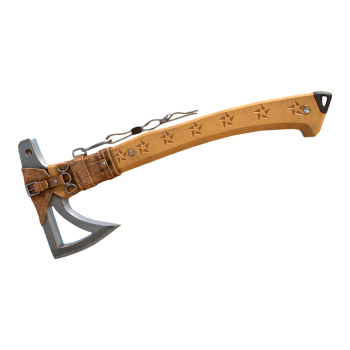
The axe in the action game "The Gone Light"

The axe in the action game "The Gone Light"

Dying Light is an action game developed by Techland and released on January 27, 2015. "Dying Light: Platinum Edition" landed on Nintendo Nintendo Switch platform in October 21. The game is set in a huge open world with ominous day-night cycles. During the day in the game, players will traverse a vast urban environment ravaged by a virus outbreak, searching the world for supplies and homemade weapons to resist the growing number of infected people.
submarine torpedo

submarine torpedo

Torpedo, underwater weapons capable of self-navigation, guidance, attack surface or underwater targets. Carried by submarines, surface ships and aircraft, used to attack submarines, surface ships and other underwater targets. The torpedo has a wide range of uses, can automatically search for attack targets, and has the characteristics of good concealment, strong anti-interference ability, high hit rate, and high explosive power. It is one of the main attack weapons of the Navy.
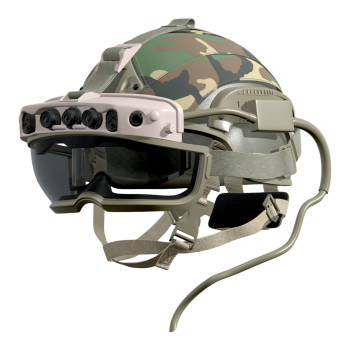
US Army Military Helmet IVAS (Head-Mounted Hololens Goggles)

US Army Military Helmet IVAS (Head-Mounted Hololens Goggles)

IVAS is an integrated vision enhancement system created by the US Army and Microsoft. This set of equipment is composed of Microsoft HoloLens AR glasses (HUD), individual computing unit (Puck), battery pack (CWB), team radio, class immersive virtual trainer (SiVT), tactical cloud package (TCP), cloud service, adaptive team architecture (ASA) and soldier performance evaluation system.
The atomic bomb dropped by the United States in Nagasaki, Japan-"Fat Man"

The atomic bomb dropped by the United States in Nagasaki, Japan-"Fat Man"

Fat Man, the name of the atomic bomb dropped by the United States on Nagasaki, Japan during World War II. The name was inspired by Churchill's body shape. On August 9, 1945, at 11:22 a.m. local time in Japan, it exploded at an altitude of 1,800 feet (550 meters). "Fatty" is the second nuclear weapon used in human history, and it is also the last nuclear weapon used in actual combat. About 40,000 people died directly from the fat man's explosion, and about 25,000 people were injured. About 7000 square metres of the building was razed. Tens of thousands of people died from cancer caused by nuclear dust radiation.
medieval steel plate armor

medieval steel plate armor

Modern Sniper Rifle 3D Model

Modern Sniper Rifle 3D Model

Sniper rifles refer to special rifles selected from ordinary rifles or specially designed and manufactured, with high shooting accuracy, long distance and good reliability. The military is mainly used to shoot each other's important targets (such as commanders, vehicle drivers, machine gunners, etc.). The structure of sniper rifles is basically the same as that of ordinary rifles, except that sniper rifles are mostly equipped with scopes for accurate aiming. The barrel is specially processed and the precision is very high. When shooting, it is mostly semi-automatic or manual single shot.