Japanese Samurai Helmet

Japanese Samurai Helmet

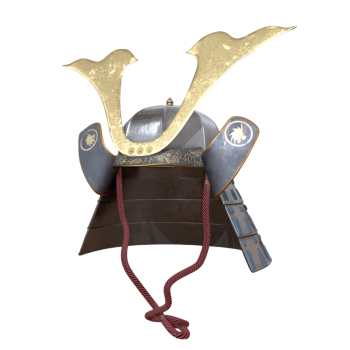
Japanese samurai helmet, called "kabuto" (kabu) in Japanese. It is an important part of traditional Japanese armor and is mainly used to protect the head and neck of the samurai. The dome part is riveted from several metal plates and is used to protect the top of the head. The golden horn decoration on the helmet is a front stand, designed to show the wearer's strength and serve as a deterrent to enemies on the battlefield. Samurai helmet is not only protective equipment, but also a symbol of samurai identity, status and family tradition.
Game Ready Edition Colt Python Revolver

Game Ready Edition Colt Python Revolver

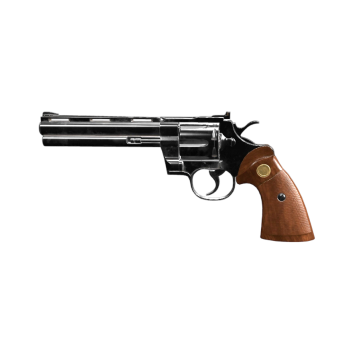
Adapt to the requirements of shooting games and military scenes-can be used as the main/secondary weapons of game characters, weapons depot display props or core elements of tactical scenes; Support in-game interaction (such as wheel rotation, hammer pulling, loading animation and other bone binding); The detailed design is compatible with the first-person perspective (FPV) and the third-person perspective (TPV) display, and the proportion of barrel and grip is suitable for the character to hold. The overall style realistic hard core, it conveys the precision and reliability of revolvers, adapts to various types such as tactical shooting games, western theme games or military simulation games, and meets the needs of weapon science popularization and military collection digitization.
Tanks

Tanks

Adapt to the requirements of military historical scenes-it can be used as the core equipment of reconnaissance mission scenes in the European battlefield and North African battlefield of World War II, or used for the construction of scenes such as armored troops marching and field deployment; The detailed design supports static display or dynamic simulation (such as track rotation, turret rotation, gun barrel pitch and other basic actions); The scale of the model conforms to the real size, it can interact with other World War II armored vehicles (such as British cruiser tanks and German light tanks) to form scenes. The overall style is realistic and rigorous, and the positioning and history of MK VII Tetrach tanks in World War II light armored forces are transmitted through accurate restoration.
Titan submersible

Titan submersible

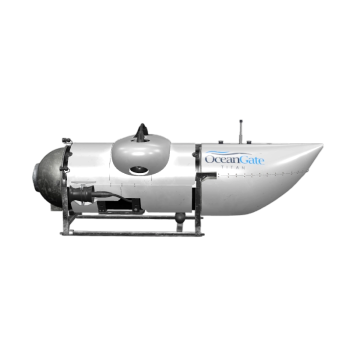
Adapt to the special scene requirements of deep-sea exploration-the model can be used as a core prop alone or integrated into deep-sea environment scenes (e. g. with submarine terrain, shipwreck, marine life and other elements); The detailed design supports static display or dynamic simulation (such as propeller rotation and mechanical arm activities), and is suitable for popular science animation, virtual roaming or engineering demonstration. The overall atmosphere is serious and professional, conveying the scientific and technological theme of "human exploration of deep sea limit, at the same time, through precise structural restoration, it indirectly reflects the technological breakthroughs of deep-sea submersibles in the fields of material science and fluid mechanics, and has both visual expression and popular science value.
Medieval Armor

Medieval Armor

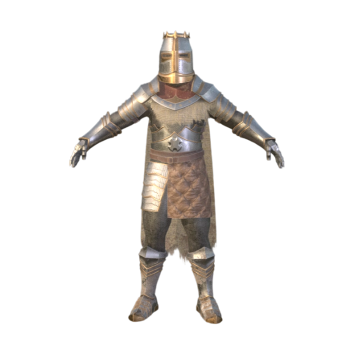
The model takes into account both historical realism and creative flexibility-it can restore the armor style of a specific medieval period (such as the slender lines of Gothic armor and the rounded outline of Milan armor); The surface decoration is simplified or refined and adjustable (for example, the family coat of arms can be presented by texture or geometric carving); Armor can be used as a whole or divided into parts (suitable for character changing and equipment display scenes); the material supports a variety of rendering styles (realistic metal, stylized matte), adapts to different needs such as historical documentary visualization, medieval game characters, fantasy theme scenes, etc., and conveys the majesty of knight culture and the historical value of military technology.
Mars rover

Mars rover

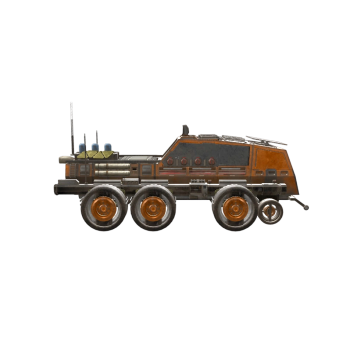
It presents a six-wheel or four-wheel mobile platform structure. The body is a solid rectangular or polygonal chassis (carrying scientific instruments and energy systems), with towering communication antennas (such as dish-shaped high-gain antennas) and solar panels (unfolded or folded) on top. The overall shape is low and compact to adapt to the complex terrain of Mars.
folding rotorcraft

folding rotorcraft

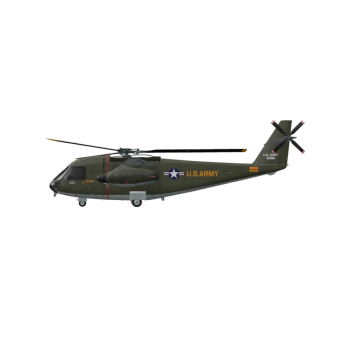
The layout of a single-seat or two-seat experimental machine is presented. The fuselage is streamlined (taking into account the lift of rotor mode and drag reduction of fixed wing mode). The wing is short-range flat wing or swept wing. The core feature is the foldable rotor system on the upper part of the fuselage-the rotor blades can be folded along the axis and stored above the fuselage or wing (simulating the experimental function of "rotor stowing and switching fixed wing flight"). The rotor shaft and transmission structure are clearly visible.
armored personnel carrier

armored personnel carrier

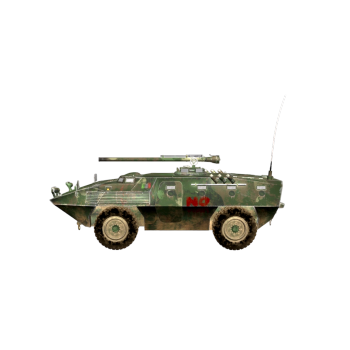
The exterior design of the Fiat 6614 is accurately restored, including rounded body lines, unique turret shapes, detailed wheels and suspension systems, etc. Even the welding seams of the body and the texture of weapons and equipment are clearly visible.
Transporter

Transporter

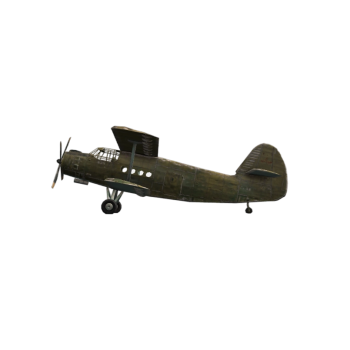
Strictly restore the AN-2's two-wing layout, single star piston engine, fixed landing gear and other iconic designs. The cockpit glass may be broken or dusty, and the fuselage identification (such as model number and number) may be partially faded and blurred. If visible inside, there may be traces of crude seats or freight, which are close to the characteristics of real transport aircraft.
supersonic fighter

supersonic fighter

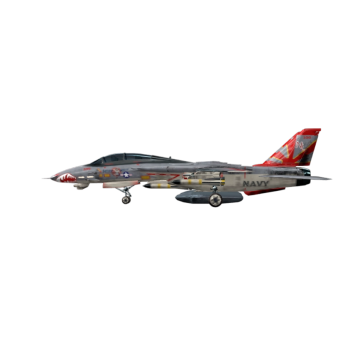
F-14 has participated in the Gulf War, the Kosovo War and other actual combat in history. Because the movie "Top Gun" (Top Gun) has become a global military cultural symbol, after retiring from the U.S. Navy in 2006, some of them are still serving in the Iranian Air Force (Iran is its only overseas user). Its variable sweep wing technology, long-range interception concept and iconic shape make it one of the most legendary fighters in aviation history.
Abyss Crown ornaments (support 3D printing)
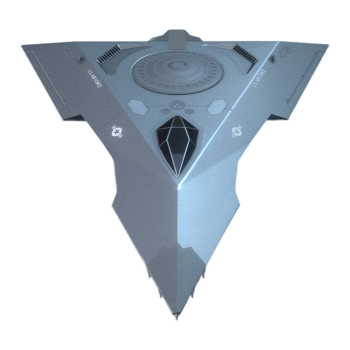
Abyss Crown ornaments (support 3D printing)

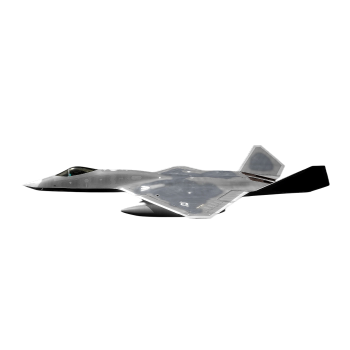
TR3-Black Manta
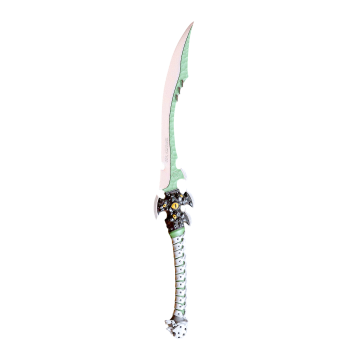
TR3-Black Manta

The TR-3 is said to be a subsonic stealth reconnaissance aircraft with a flying wing design. It was allegedly used in the Gulf War to give laser nomenclature to F-117A Nighthawk bombers in order to target laser-guided bombs (smart bombs). However, there is no conclusive evidence that any other stealth aircraft were involved in the Gulf War. William Scott referred to Black Manta as a TR-3, not knowing that ER-2 was the name NASA, not the Department of Defense, because ER stands for "Earth Resources".
Blade of the Void (3D printable)

Blade of the Void (3D printable)

Spanish seventeenth-century blunderbuss

Spanish seventeenth-century blunderbuss

One of the core physical evidence of Spanish military history, focusing on the development and military application of firearms technology in Spain in the 17th century. These firearms are not only the material carrier of the military hegemony of Spain's "Golden Century" (1492-1700), but also the key witness of the transformation of modern military technology in early Europe, bearing the multiple historical connotations of "imperial expansion", "technological innovation" and "war memory.
Spanish eighteenth-century blunderbuss

Spanish eighteenth-century blunderbuss

This firearm is one of the core physical evidence of Spanish military history, focusing on the development and military application of firearm technology in Spain in the 18th century. These firearms are not only the material carrier of Spain's "golden century" military hegemony, but also the key witness of the transformation of modern military technology in early Europe, carrying the multiple historical connotations of "imperial expansion", "technological innovation" and "war memory.
Spanish sixteenth-century short-tube blunderbuss

Spanish sixteenth-century short-tube blunderbuss

The sixteenth-century short-barrelled firearm is one of the core material evidence of Spanish military history, focusing on the development and military application of firearm technology in Spain in the sixteenth century. These firearms are not only the material carrier of the military hegemony of Spain's "Golden Century" (1492-1700), but also the key witness of the transformation of modern military technology in early Europe, bearing the multiple historical connotations of "imperial expansion", "technological innovation" and "war memory.
Spanish sixteenth-century blunderbuss

Spanish sixteenth-century blunderbuss

One of the core material evidence of Spanish military history, focusing on the development and military application of firearms technology in Spain in the 16th century. These firearms are not only the material carrier of the military hegemony of Spain's "Golden Century" (1492-1700), but also the key witness of the transformation of modern military technology in early Europe, bearing the multiple historical connotations of "imperial expansion", "technological innovation" and "war memory.
Toledo Type 43 Cannon

Toledo Type 43 Cannon

The Toledo Type 43 Cannon "(" Cannon 43a Toledo ") was a classic artillery model produced by the Toledo Arsenal in Spain in the 16th century. Spanish conquistadors in Peru, Chile war, carrying 43 type artillery to deter the indigenous people. When Spain suppressed the "Araucan War" in Chile in 1582, the roar of Type 43 cannons not only destroyed the indigenous stone fortresses, but also accelerated the colonization process through psychological deterrence.
Toledo Type 42 Cannon

Toledo Type 42 Cannon

The Toledo Type 42 Cannon "(Cannon 42a Toledo) was a classic artillery model produced by the Toledo Arsenal in Spain in the 16th century. In the "struggle for hegemony in the Mediterranean" between the Ottoman Empire and Spain, Toledo artillery was deployed in Sicily, Naples and other places controlled by Spain. In the Battle of Le Banto in 1571, the Type 42 cannon carried by the Spanish fleet caused a devastating blow to the Ottoman battleship. Its stone shells could penetrate the thick wooden hull of the Ottoman paddle sailboat and were called "the smasher of the sea fortress".
ZBL-11 infantry fighting vehicle

ZBL-11 infantry fighting vehicle

The ZBL-11 infantry fighting vehicle is one of the core equipment of the Chinese Army's rapid response force. It made its first public appearance at the military parade commemorating the 70th anniversary of the victory of the Anti-Japanese War on September 3, 2015. It was driven by the officers and soldiers of the 54th Army of the Jinan Military Region "Tiger Division" armored regiment. The equipment team was inspected. This type of assault vehicle adopts an amphibious design and has all-weather combat capabilities in multiple regions such as plateaus, deserts, ice and snow, rivers and lakes. It can perform rapid deployment, seizure and control of important areas, and ground assault missions. It is mainly used to destroy enemy armored targets and field operations. Fortifications and effective force.
ZBL-09 infantry fighting vehicle

ZBL-09 infantry fighting vehicle

ZBL-09 infantry fighting vehicle is also known as ZBL-08 8 × 8 wheeled infantry fighting vehicle, 09 type infantry fighting vehicle or 09 type wheeled infantry fighting vehicle. It is an 8 × 8 wheeled infantry fighting vehicle equipped by the Chinese people's Liberation Army. Its development unit is the People's Republic of China North Industry Corporation. The ZBL-08 infantry chariot weighs 16 tons and has a crew of 3 and 7 loaders. It adopts the layout of the international wheeled chariot standard. The power cabin is located on the right side of the front of the chariot, the driver and the captain are located on the left side of the power cabin, the combat room is in the center, and the rear part is the crew cabin. There are 3 passengers and 7 passengers.
Bomb -6K bomber

Bomb -6K bomber

The H-6K bomber is a medium-and long-range bomber and an important air-based long-range strike force. It has the capabilities of long-range attacks, large-area patrols, and off-zone strikes. The H-6K "God of War" bomber is equipped with a fire control system and a photoelectric turret, which can achieve night bombing and new radar attacks on the ground and the sea. The aircraft engine has high thrust, low fuel consumption, and long life. The left and right wings can hang multiple air-launched cruise missiles and air-to-surface missiles at the same time. The self-defense electronic countermeasures system interferes with incoming missiles and improves the survivability of the aircraft.
Soviet World War II warship mixed battleship Moldova

Soviet World War II warship mixed battleship Moldova

In the 1930 s, Japan's frantic expansion in East Asia caused the Soviet Union to be wary. In view of Japan's refusal to renew the London Naval Treaty, the Soviet Union decided to adopt the Pr.1058B scheme designed to build a hybrid warship "Moldova" for the Far East Pacific Fleet in response to the Japanese naval threat. The ship is equipped with a four-seat triple-mounted 406mm main gun, and the performance of the new Su-6 carrier-based attack aircraft is far superior to that of the same period, with stronger firepower and air combat mobility.
Soviet program ship Georgia mixed battleship

Soviet program ship Georgia mixed battleship

The Soviet Navy's top brass planned to use Pr. Guided by the 1058 engineering design plan, the hull of the Soviet-class battleship under construction was transformed to deal with potential threats. The plan was named "Georgia. But with the invasion of the Soviet Union by Germany's blatant non-aggression pact, the plan ultimately failed to be implemented.
Soviet programme ship Mix battleship Jaroslavwitz

Soviet programme ship Mix battleship Jaroslavwitz

Soviet designers borrowed the Italian idea of setting up a seaplane platform at the stern of the ship and designed this hybrid warship. Because the difference between carrier-based aircraft and seaplane was not fully considered, the narrow flight deck made it difficult for the aircraft to land, and the mooring deck aircraft could not cope with the bad sea conditions, so the plan was rejected immediately.
Japanese 1920 s warship Kaga-class Tosa battleship

Japanese 1920 s warship Kaga-class Tosa battleship

The Kii-class battleships are the blueprints for the remaining four battleships of the eight battleships in the 88th Fleet program, following the Nagmen-class battleships and the Kaga-class battleships.
Japanese battleship Satsuma-class Anyi during the 1920 s.

Japanese battleship Satsuma-class Anyi during the 1920 s.

An Yi (Japanese: An Yun/Aki) is the second ship of the Japanese Navy's Satsuma-class quasi-dreadnought, named after An Yi, which is now in Hiroshima Prefecture. At that time, the original word "An Yi" was used as the name of the ship.
Italian World War II Plan Ship RE D'ITALIA Battleship

Italian World War II Plan Ship RE D'ITALIA Battleship

Italian World War II warship Luigi Rizzo class cruiser Luigi Rizzo

Italian World War II warship Luigi Rizzo class cruiser Luigi Rizzo

Italian World War II warship Giuseppe Garibaldi class Giuseppe Garibaldi No.

Italian World War II warship Giuseppe Garibaldi class Giuseppe Garibaldi No.

World War I (1915-1918) involved in the blockade of Austro-Hungarian ports, in 1917 converted into an anti-submarine cruiser, carrying deep-projectile throwers and sonar prototypes. In World War II (1940-1943), he was involved in the blockade of Malta (1941-1942) to provide reconnaissance support to the Italian fleet, which was attacked several times by British submarines. The ship was decommissioned in 1943 due to serious aging, damaged by Allied bombing in 1944 and dismantled in the 1950 s.
Italian World War II warship Giuseppe Garibaldi-class Costanzo Ciano light cruiser

Italian World War II warship Giuseppe Garibaldi-class Costanzo Ciano light cruiser

Giuseppe Garibaldi class Costanzo Ciano, commissioned in 1934. Before World War II, the Spanish Civil War (1936-1939) carried out a blockade of Republican ports and shelled cities such as Barcelona. The Battle of Cape Matapan (1941) exchanged fire with the British Mediterranean Fleet and was withdrawn to Taranto for repair after damage. After the Italian surrender in September 1943, the port of La Spezia was captured by German forces and renamed "FK.3". The warship was badly damaged in 1944 Allied air strikes and the wreckage was dismantled in 1947.
Italian World War II Program Ship Giuseppe Garibaldi Class Cesare Borja Plan B Cruiser

Italian World War II Program Ship Giuseppe Garibaldi Class Cesare Borja Plan B Cruiser

Cesare Borja Plan Type B is only a proposal that stays in the drawing stage.
Italian World War II warship Giuseppe Garibaldi class Cesare Borja cruiser

Italian World War II warship Giuseppe Garibaldi class Cesare Borja cruiser

The Giuseppe Garibaldi-class cruiser Cesare Borja began service in 1930 and was commissioned in 1934. After Italy surrendered in 1943, it was captured by the German army. It was destroyed by allied bombing in 1944 and dismantled in 1947. The power system has 4 Parsons steam turbines, 8 Yarrow oil-fired boilers, a total power of 85,000 horsepower, four-axis propulsion, 6 152mm naval guns for main guns, 4 76mm anti-aircraft guns for auxiliary guns, and 6 533mm torpedo tubes.
Italian World War II warship Andrea Doria class Francesco Morosini battleship

Italian World War II warship Andrea Doria class Francesco Morosini battleship

The Andrea Doria-class battleship Francesco Morosini was started in 1912, served in 1915, scuttled in 1943 due to Italian surrender, and completely damaged by Allied bombing in 1944. 18 coal-fired boilers, 4 steam turbines, total power 32,000 horsepower, four-axis propulsion, speed of 21.5 knots, 4 twin 305mm main guns, 16 152mm sub-guns.
Japan's World War II Plan Ship B65 Battle Cruiser

Japan's World War II Plan Ship B65 Battle Cruiser

In 1943, due to the deterioration of the war situation in the Pacific Ocean, the Japanese Navy gave priority to the construction of submarines and light ships, and the B65 plan was canceled.
1 2 3 4 5 6 7 8 9 ... 17 Next