
French 50 s warship Colbert class cruiser

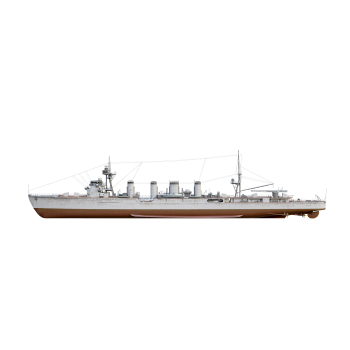
French 50 s warship Colbert class cruiser

The Colbert class (Colbert-class) was part of France's post-war naval reconstruction program and was designed based on the pre-World War II "Algerian-class treaty cruiser" (7,600-ton cruiser built in the 1930 s). The service period was 1956-1991 (the last ship was decommissioned). Main gun 3-seat triple-mounted 152mm naval gun (Modèle 1943 type). Anti-aircraft guns have 8 twin-mounted 100mm naval guns and 12 twin-mounted 37mm anti-aircraft guns. Anti-submarine weapons 2 550mm torpedo tubes and deep projectiles.
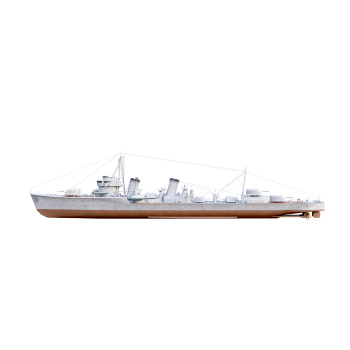
French 50 s warship T-47-class destroyer USS La Bourdones

French 50 s warship T-47-class destroyer USS La Bourdones

The ship is named La Bourdonnais (La Bourdones) Class T-47, with a total of 12 ships (D626 to D637) built. They are all anti-submarine escort destroyers, belonging to the French Mediterranean Fleet, and perform anti-submarine patrol missions of the North Atlantic Treaty Organization (NATO). The Suez Canal Crisis (1956) participated in joint operations between France and Britain, supported Suez withdrawal operations, and provided fire cover and anti-submarine vigilance. The Algerian War of Independence (1954-1962) enforced a naval blockade in Operation Dolphin to prevent the Algerian National Liberation Front from acquiring weapons.
Dutch 50 s ship USS Jacob van Hemskelke-class van Ghent destroyer

Dutch 50 s ship USS Jacob van Hemskelke-class van Ghent destroyer

The Jacob van Hemskirk-class destroyer was commissioned in 1951, commissioned in 1957 and retired in 1976. It is a multi-purpose destroyer, focusing on anti-submarine and air defense, adapting to NATO's North Sea defense system. Holland's first domestic missile destroyer after the war, equipped with early air defense missile system. In 1965, the "Sea Cat" short-range air defense missile (Seacat) was installed to replace some of the "Beagle" systems. After decommissioning in 1976, some equipment was used for subsequent ship upgrades.
Dutch 50 s ship Terkel Sides' class van Galen frigate

Dutch 50 s ship Terkel Sides' class van Galen frigate

Six Terkel Hedes-class frigates built by the Netherlands for the Indonesian Navy in the 1950 s for anti-submarine and area air defense missions. The Van Galen was commissioned in 1953, commissioned in 1957 (during the Indonesian Navy) and transferred to the Dutch Navy in 1962. It is named after Dutch Lieutenant General Johan van Galen (1604-1653), a famous commander in the Anglo-Dutch War.
Dutch 50 s ship Dutch-class frigate Holland

Dutch 50 s ship Dutch-class frigate Holland

Started in 1950 and entered service in 1953, with a total of 2 ships. The multi-purpose frigate undertakes anti-submarine, air defense and sea strike missions. The Netherlands is the first domestic large-scale surface ship after the war, integrating British and American technologies. Displacement 2,750 tons (standard)/3,650 tons (full load). The size is 113 meters by 12 meters by 4 meters, the power is 2 steam turbines, the total power is 55,000 horsepower, the double-shaft propulsion is 30 knots (speed), and the range is 4,500 nautical miles/18 knots.
Dutch World War II warship USS Gerald Callenburg-class destroyer

Dutch World War II warship USS Gerald Callenburg-class destroyer

The Kalundberg-class destroyer was commissioned in October 1937, launched in October 1938, and commissioned in September 1939. As the main destroyer of the Dutch Navy, responsible for escort, anti-submarine and regional air defense tasks. After serving under the Dutch East India Fleet, responsible for the defense of the Dutch East Indies. In May 1940, the German invasion of the Netherlands, the ship was ordered to return to Europe, but on the way due to fuel shortages stranded in North Africa. After the Dutch surrender, the Gerard Callenburg attempted to flee to England, but was spotted by the Luftwaffe in the English Channel. The ship sank itself near Dunkirk, but the Germans later salvaged and repaired it and renamed it TA. 3.
Soviet 50 s warship 68 modified cruiser

Soviet 50 s warship 68 modified cruiser

68 modified cruiser (Russian: Крейсера проекта 68-бис, NATO's first ship of this class, Sverdlov, claims to be a Sverdlov class cruiser). The 68 modified cruiser has a full load displacement of 17500 tons and is equipped with 12 152mm guns, 12 100mm guns and 24 anti-aircraft guns. It was the first cruiser of the Soviet Union after World War II and the last traditional artillery cruiser. However, some Soviet admirals at the time still believed that cruisers still had value in bad weather before the emergence of all-weather aircraft carriers.
China's four and a half generation fighter J-15

China's four and a half generation fighter J-15

J-15 (English: J-15, Chinese nickname: Flying Shark "Fēishā", English: Flying Shark, NATO code: Flanker D, English: Flanker-D [15]) is a single-seat double-engine carrier-based fighter developed and developed by China based on the domestic J -11 fighter T-10K-3 the prototype of the Su -33 fighter obtained from Ukraine. The J-15 belongs to the fourth generation fighter improvement in the generation division, that is, the fourth generation and a half fighter.
Chinese fifth-generation fighter J-20 animation model

Chinese fifth-generation fighter J-20 animation model

The J-20 (English: Chengdu J-20, code name: Veyron) is a stealth fifth-generation air-control fighter with high stealth, high situational awareness, and high maneuverability. The latest generation (the old European and American standards are the fourth generation, and the new Russian standard is the fifth generation) dual-engine heavy stealth fighter developed by the PLA is used to replace the future heavy fighter models of the third-generation air superiority/multi-purpose fighters such as J-10 and J-11, the aircraft will undertake the task of safeguarding the sovereignty of the Chinese Air Force over the air and sea in the future.
China's Third Generation Fighter J-11

China's Third Generation Fighter J-11

The J-11 (English name: J11 code: Ying Long) is a single-seat dual-engine multi-function heavy jet fighter of the Chinese Air Force. It is a domestically assembled aircraft of the Soviet/Russian patented and authorized Su-27SK fighter purchased by China. It is one of China's third-generation fighters. The J-11 inherits the excellent characteristics of the Su-27. With its representative aerodynamic shape, engine performance, high fuel load, and wide flight altitude and speed range, it can intercept air targets very efficiently. It can not only use missiles to carry out long-distance attacks, but also gain the upper hand in close air combat.
China's third-generation fighter J-10

China's third-generation fighter J-10

The J-10 (Raptor) fighter (English: J-10, nickname: Raptor) is a high-performance, multi-purpose, all-weather third-generation fighter independently developed by China. The Chinese Air Force gave it the number J-10, which is known as J-10 or F-10. The J-10 fighter is a high-performance, multi-purpose third-generation fighter developed by China with independent intellectual property rights. It has high reliability, high survivability and high maneuverability. It has a large combat radius, short take-off and landing distance, and attack capabilities. Strong, comprehensive combat effectiveness has reached the advanced level of similar international fighters.
Chinese Navy Type 051 guided missile destroyer Zunyi

Chinese Navy Type 051 guided missile destroyer Zunyi

The Zunyi ship is an improved model 051D of the Chinese Navy's 051 guided missile destroyer (NATO code-named "brigade class"). It served from the 1980 s to the 2010 s and was the main surface combat ship independently designed and built by China in the 20th century.
Soviet World War II warship Sverdlov class light cruiser

Soviet World War II warship Sverdlov class light cruiser

The Sverdlov class design began in the late 1930 s. It was originally planned to fight against German Hipper class heavy cruisers. However, due to the interruption of the Soviet-German War (1941-1945), actual construction began in 1948 and was completed in 1955 (after the war). It has a standard displacement of 13,600 tons and is equipped with 152mm main guns, anti-aircraft guns and torpedoes. The design focused on high speed (32 knots) and anti-ship capability, but the armor was relatively weak. A total of 14 ships were built, which was one of the main surface ships of the Soviet Union after the war. In the 1950 s, anti-aircraft missile test equipment (such as the "57mm anti-aircraft gun system") was installed, but no major upgrades were made.
Antique Chinese bronze dagger

Antique Chinese bronze dagger

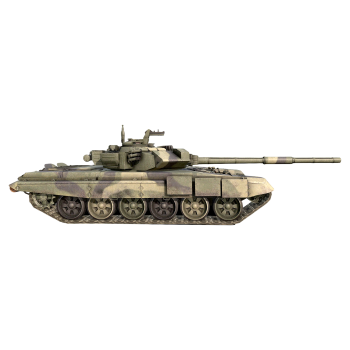
Russian T-90 main battle tank
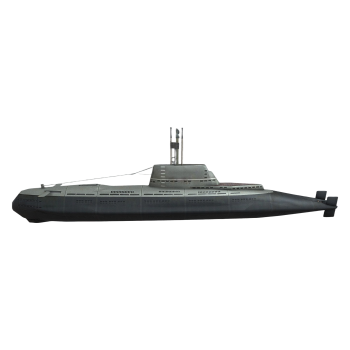
Russian T-90 main battle tank

The T-90 tank is a Russian-developed main battle tank that was first commissioned in 1993. It is an extension of T-72 tank technology, combined with a T-80U fire control system. The T-90 is equipped with Kontakt-5 explosive reactive armor and multi-layer composite armor, equipped with the 1A45T fire control system, and the main weapon is the 125mm 2A46M smoothbore gun, which can fire a variety of ammunition, including the tail stable shell piercing bomb (APFSDS), high explosive disc killing grenade (HE-FRAG) and 9M119 anti-tank missile. The maximum speed is 65km.
German-style XXIX-H submarine

German-style XXIX-H submarine

The Type XXIX-H submarine was an unbuilt scheme submarine designed by Germany during World War II. It was designed to replace the type VIIC submarines that were widely used at the time. The Type XXIX-H submarine was the first to introduce stealth into its design. Its sides and conning tower adopted a polyhedral design similar to that of a F-117 stealth fighter, designed to deflect the active sonar waves of enemy warships.
F/A-18 Combat Attack

F/A-18 Combat Attack

F/A-18 Combat Attack Aircraft (English: F/A-18 Strike Fighter, nickname: Hornet, translation: Hornet Strike Fighter, translation: Hornet Strike Fighter, general name: Boeing F-18 "Hornet", official number: F/A-18), is the third generation of US Navy supersonic jet fighter. The F/A-18 combat attack aircraft adopts a single-seat/tandem two-seat swept-wing aerodynamic layout and is equipped with two turbofan engines. It is a multi-purpose carrier-based fighter.
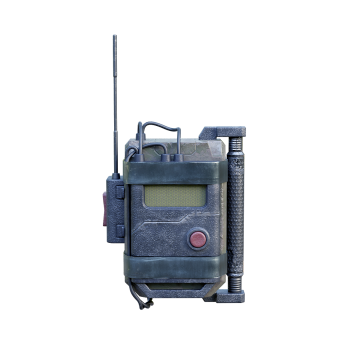
Large explosive package

Large explosive package

Improvised C4 Bomb

Improvised C4 Bomb

China's Chengdu J-36 "Venom" fighter
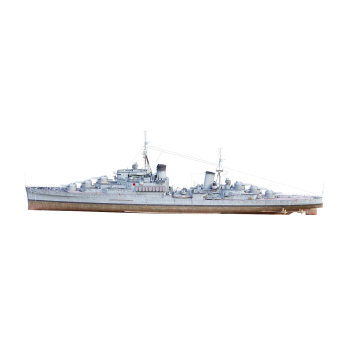
China's Chengdu J-36 "Venom" fighter

It is a next-generation stealth fighter being developed by China's Chengdu Aircraft Industry Group (CAIG) and is considered a candidate for China's sixth-generation fighter. Known for its unique tailess, delta-wing layout, this design significantly reduces the radar cross-section and enhances the aircraft's stealth capabilities. The advanced flight control system eliminates the traditional vertical stabilization surface and relies on a computer-aided control surface to maintain stability and maneuverability. The development of J-36 Venom marks a key milestone in China's military aviation program, demonstrating China's competitiveness and influence in the global military aviation field.
British CLAA Tier 7 MINERVA Cruiser

British CLAA Tier 7 MINERVA Cruiser

It is a light cruiser belonging to the seventh class of the British Navy. Known for its speed, agility and powerful firepower, it performs a variety of missions at sea, including reconnaissance, escort and fleet support. Equipped with advanced weapon systems and sensors, it can play a key role in modern naval warfare. MINERVA-class cruisers are designed with a focus on multi-tasking capabilities and high efficiency, allowing them to adapt to changing battlefield environments. As part of the British Navy, the MINERVA-class cruisers carry out missions around the world, protecting national interests and maintaining maritime security.
Chinese People's Liberation Army Navy Guangdong Ship Aircraft Carrier

Chinese People's Liberation Army Navy Guangdong Ship Aircraft Carrier

It is an aircraft carrier under the jurisdiction of the Chinese People's Liberation Army Navy. As an important force in the Chinese navy, the Guangdong ship represents China's development and achievements in the field of aircraft carriers. It is one of the aircraft carriers designed and built by China, which has important strategic and symbolic significance. It not only enhances the ocean-going combat capability of the Chinese navy, but also marks a new step in the modernization of the Chinese navy. Equipped with advanced weapon systems and carrier-based aircraft, it can perform tasks in a variety of complex sea conditions. As the star ship of the Chinese Navy, the Guangdong ship has demonstrated the strength and image of the Chinese Navy on many occasions at home and abroad.
German "Oswald Boerk" super aircraft carrier
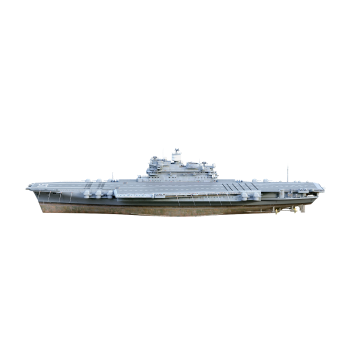
German "Oswald Boerk" super aircraft carrier

It is an aircraft carrier named after German World War I ace pilot Oswald Bolk. Built in Hamburg by the NorderwerftKoser & Meyer shipyard, it was launched in 1942 and completed in December of the same year. As an aircraft carrier, it was designed and built to represent the naval power of the German Navy during World War II. Unfortunately, it was sunk by a Russian bomber on April 8, 1945, ending its short and tragic history. Despite failing to play a significant role in the war, its name and history remain closely tied to the German Navy's aircraft carrier program.
Chinese People's Liberation Army Navy 891 Aircraft Carrier Project

Chinese People's Liberation Army Navy 891 Aircraft Carrier Project

It was a medium-sized aircraft carrier construction plan proposed by China in the late 1980 s. The project was formally established in January 1989 with the aim of developing a medium-sized aircraft carrier on China's own. The People's Navy has carried out a series of research topics around this project, including the overall structure of the ship, combat systems, steam catapults, blocking devices, and fixed-wing early warning aircraft and fighters. It is an important attempt by the Chinese Navy to build an aircraft carrier independently. Although it failed to be actually built in the end, its research results laid a solid foundation for China's subsequent aircraft carrier development projects and greatly affected the development of Chinese aircraft carriers.
Chinese People's Liberation Army Navy 707 Aircraft Carrier Project
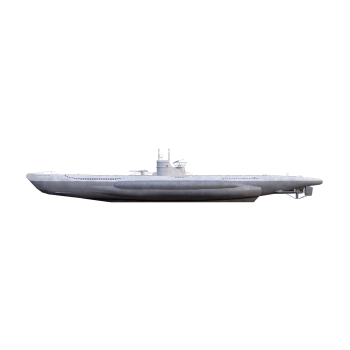
Chinese People's Liberation Army Navy 707 Aircraft Carrier Project

It is an important stage of development in the history of the Chinese navy. It was China's first attempt to develop an aircraft carrier in the 1970 s, marking the initial exploration of the Chinese Navy in the field of aircraft carriers. Designed to develop an escort aircraft carrier. However, due to the lack of relevant information and technology about aircraft carriers in China at that time, the progress of the project faced many challenges. In the end, due to technical and financial constraints, especially the lack of steam catapult technology, 707 project ultimately failed to achieve. However, the experience and lessons of 707 project have accumulated valuable experience for the development of China's subsequent aircraft carriers.
German U-557 submarine

German U-557 submarine

It was a Type VIIC submarine of the German Navy that served during World War II. Built by the Blohm & Voss shipyard, the keel was laid on 6 January 1940, launched on 22 December 1940, and commissioned on 13 February 1941. Led by its commander, OttokarPaulssen, four combat patrols were conducted, sinking six merchant ships and one British light cruiser HMSGalatea battleship. On December 16, 1941, it was accidentally hit and sunk by the Italian torpedo boat Orione west of Crete, killing all the crew.
Japanese destroyer IJN Fubuki (Blowing Snow)

Japanese destroyer IJN Fubuki (Blowing Snow)

It was the first ship of the Snow-blowing class destroyer built by the Japanese Navy after World War I. A total of 24 destroyers were built, which was considered one of the most advanced destroyers in the world at that time, and was even hailed as "the world's first modern destroyer". Known for its large size, powerful engines, high speed, large range and unprecedented weaponry, its firepower is comparable to some light cruisers of other navies. Construction began on June 19, 1926, was launched on November 15, 1927, and commissioned on August 10, 1928. He played an important role in the Pacific War and participated in many battles, including the attack on Pearl Harbor.
german Z-23 destroyer

german Z-23 destroyer

It was one of 15 Type 1936A destroyers built by the German Navy during World War II. Ordered on 23 April 1938, launched on 20 September 1939 and completed on 14 September 1940. As a type 1936A destroyer, it is known for its powerful firepower. It operated primarily in Norwegian and French waters during the war, performing escort duties and occasionally engaging Allied battleships. It was sunk by the Royal Air Force on 21 August 1944, salvaged by the British in 1945 and renamed "Leopard", and finally dismantled on 7 October 1951.
Japanese cruiser IJN Sendai

Japanese cruiser IJN Sendai

It is the first ship of the Kawaguchi-class light cruiser of the Japanese Navy. It is an improvement from the previous Changliang grade, with a better boiler layout and four chimneys, while the Changliang grade has only three. Construction began on February 16, 1922 at Mitsubishi Nagasaki Shipyard, launched on October 30, 1923, and commissioned on April 29, 1924. Participated in a number of important operations during the Second World War. It was sunk by a U.S. Navy cruiser during the Battle of the Surigao Strait on November 3, 1943, which was one of the major victories of the U.S. Army against the Japanese in the Pacific War. The sinking of the Kawachi marked the end of its operations in the war.
New Zealand HMNZS Leander Cruiser

New Zealand HMNZS Leander Cruiser

Originally HMSLeander, it was a member of the Leander-class light cruiser of the British Royal Navy and later served with the Royal New Zealand Navy during the Second World War. He was commissioned into the Royal Navy on 24 March 1933 and transferred to New Zealand on 30 April 1937, becoming part of the Royal New Zealand Navy. Known for its elegant design and powerful firepower, it carried out multiple missions in the Pacific and Indian Oceans, including against Italian and Vichy French merchant ships. He returned to the Royal Navy on 27 August 1945 and was eventually sold for dismantling on 15 December 1949.
Japanese battleship IJN Fuso

Japanese battleship IJN Fuso

It is the first ship of the Japanese Navy's Fuso-class battleship and the first dreadnought ship of the Japanese Navy. Construction began on March 11, 1912 at the Wu Navy Factory, launched on March 28, 1914, and commissioned on November 8, 1915. As one of the most powerful warships in the world at the time, the Fuso and its sister ship Yamatsuyama embodied Japan's imperial ambitions in Asia. The design was influenced by the British HMSDreadnought and was the first Japanese independent design of a super dreadnought. It was sunk during the Battle of the Suriago Strait on 25 October 1944.
British battleship HMS Nelson (hull number 28)

British battleship HMS Nelson (hull number 28)

It was the first ship of the Nelson-class battleship in the Royal Navy, named after British Admiral Horatio Nelson, who won the Battle of Trafalgar. They were the first ships to be built after the Washington Naval Treaty and are therefore also known as the first treaty ships. The Nelson class was the only ship in the Royal Navy to carry three main guns, all of which were located in the bow of the ship, a design that was unusual at the time. Served in 1927. In the Second World War, participated in many important operations. Outstanding performance in the war, for the British Royal Navy combat operations provided important support.
British HMS Hood (hull number 51) battlecruiser

British HMS Hood (hull number 51) battlecruiser

It is a general-class battlecruiser of the British Royal Navy, named after the 18th century British Admiral Samuel Hood. The construction was ordered under the War Emergency Response Act of 1916. The original plan was to build four ships. However, due to the problems exposed by the design of British warships in the Battle of Jutland, the construction of subsequent ships was canceled. Only the Hood was completed, becoming the last battlecruiser of the British Royal Navy. It is one of the largest and most powerful warships in Britain and even in the world. It is known as the "Almighty Hood" and has become the symbol and pride of the Royal Navy.
Japanese IJN Takao cruiser

Japanese IJN Takao cruiser

It was the first ship of the Japanese Navy's Kaohsiung-class heavy cruiser, one of the largest and most modern cruisers in the Japanese fleet at that time. Construction began on April 28, 1927 at the Yokosuka Naval Shipyard, launched on May 12, 1930, and officially entered service on May 31, 1932. He participated in many important battles in World War II, including the Philippine landings, the Battle of Java, and two-front operations in the Aleutian Islands and Midway. After the end of the war, it surrendered to British forces on 21 September 1945 and was used as a target ship on 29 October 1946, when it was sunk by HMSNewfound.
United States USS Cleveland (CL-55) Cruiser

United States USS Cleveland (CL-55) Cruiser

The first ship of the United States Navy's Cleveland-class light cruiser, it was built during World War II. Named after the city of Cleveland, Ohio, it is the second ship to be named after this city. Construction began on July 1, 1940, was launched on November 1, 1941, and commissioned on June 15, 1942. As a new class of warship at that time, it was mainly active in the Atlantic and Pacific theaters during the war, participated in many important battles, and received 13 battle stars. It was decommissioned on 7 February 1947 and was sold for dismantling in 1960.