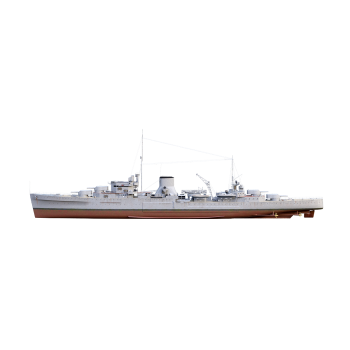
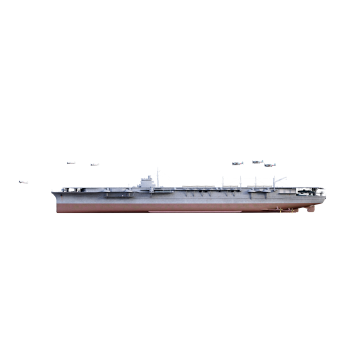
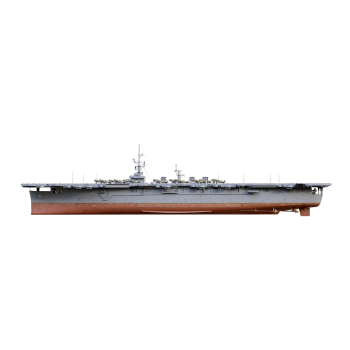
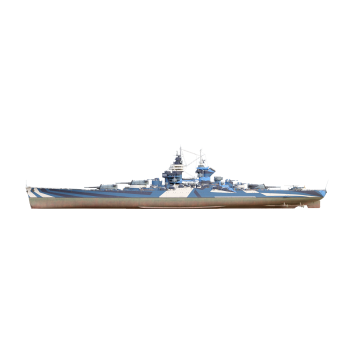
Japanese battlecruiser IJN Amagi

Japanese battlecruiser IJN Amagi

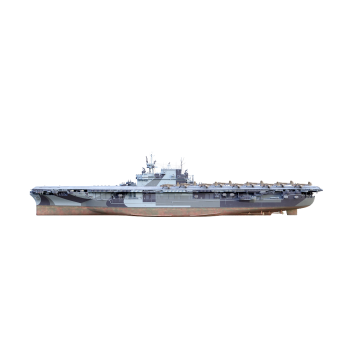
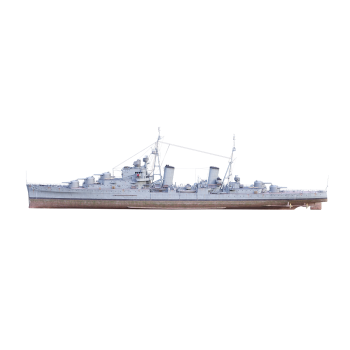
Originally a battlecruiser planned by the Japanese Navy, it belonged to the Tiancheng class. Due to restrictions imposed by the 1922 Washington Naval Treaty, it was planned to be converted into an aircraft carrier. Unlike the sister ship USS Chicheng (which later became the IJNAkagi aircraft carrier), the Tiancheng suffered severe damage in the Great Kanto Earthquake of 1923, resulting in a damaged keel that was ultimately beyond repair. As a result, plans to build the Sky City were canceled and it was dismantled in 1924. The Tiancheng-class plan and the fate of the Tiancheng reflected the tensions of the time between the naval arms race and treaty restrictions, as well as the unintended effects of natural disasters on military planning.
British HMS Unicorn (boat number I72) aircraft carrier

British HMS Unicorn (boat number I72) aircraft carrier

It was a light aircraft carrier and aircraft maintenance ship built for the British Royal Navy during World War II. Originally designed as a maintenance ship and light aircraft carrier, the design dates back to the first British armored aircraft carrier, the Brilliant class. The design takes into account the dual role in peacetime and wartime, and is designed to support fleet carriers far from home. It has a complete flight deck and catapults, which can carry out aircraft takeoff and landing and maintenance work. It is a unique presence in the Royal Navy. Construction began in 1939 and was completed in March 1943, but the construction process was slow due to delays and priority issues. It was eventually sold for dismantling in 1959.
F-AT(Fast Anti-Tank) Anti-Tank Vehicle

F-AT(Fast Anti-Tank) Anti-Tank Vehicle

It is a military vehicle designed for rapid response to anti-tank missions. Characterized by high mobility and powerful firepower, it can be quickly deployed to key positions on the battlefield to fight against enemy armored forces. The design focuses on the combination of rapid maneuvering and firepower attack, and can move quickly on various terrains, including complex battlefields such as urban environments, mountains and jungles. Armor protection, although relatively weak, but their main advantage is mobility and rapid strike capability. It can carry a variety of anti-tank weapons to suit different battlefield needs. The design also takes into account a variety of ways to achieve anti-tank warfare in modern warfare.
F-UC(Fast Utility & Communications) Communication Vehicle

F-UC(Fast Utility & Communications) Communication Vehicle

It is a fast universal communication vehicle designed to provide rapid and efficient communication and multi-purpose support. Can be quickly deployed to a variety of environments. Equipped with advanced communication equipment to ensure stable communication with the outside world at any location. Internal operation area, equipment area and roof area for installation and operation of various communication and monitoring equipment. The design focuses on flexibility and adaptability, enabling it to adapt to different mission requirements, such as safe emergency response, border prevention and control, power inspection, etc. The high mobility and versatility of this vehicle make it a modern emergency communication and on-site command. Important assets.
F-IC(Fast Infantry Carrier) Infantry Transporter

F-IC(Fast Infantry Carrier) Infantry Transporter

It is a fast infantry transport vehicle designed to improve infantry mobility and rapid deployment capabilities. Able to quickly transport infantry units to the battlefield and provide them with the necessary fire support. It is usually equipped with heavy armor to protect the crew from small-calibre weapons and shell fragments. Able to move quickly on various terrains. The design focuses on flexibility and versatility, enabling it to adapt to different operational needs. Equipped with machine guns, grenade launchers and other light weapons to provide self-defense and suppression fire. In emergency situations that require rapid response and deployment, infantry forces can be quickly deployed to key areas.
United States USS Northampton (CL/CA-26) Cruiser

United States USS Northampton (CL/CA-26) Cruiser

It is the first ship of the Northampton class cruiser of the United States Navy. Originally classified as a light cruiser, it was reclassified as a heavy cruiser under the London Naval Treaty. He served in the Pacific theater during World War II and was involved in several major operations. Sailed with the USS Enterprise during the Pearl Harbor incident on December 7, 1941, and returned to Pearl Harbor the next day. In 1942, he was involved in shelling operations on Warjay Island and Wake Island, and was counterattacked by Japanese forces during operations on Wake Island on 24 February. He was honored with six battle stars in World War II.
British aircraft carrier HMS Ark Royal (hull 91)

British aircraft carrier HMS Ark Royal (hull 91)

It was an aircraft carrier of the British Royal Navy during World War II. It is known for its innovative design features such as an enclosed "hangar" deck and an "island" superstructure. Entered in 1938, it was one of the first ships of the Royal Navy designed specifically for aircraft carriers. Participated in several key operations during the war, including the Battle of Taranto and the search for the German battleship Bismarck. The design began in 1934 to improve on the limitations of existing aircraft carriers. The research led to a design with innovative blueprints, including an enclosed hangar for two deck levels, both of which are accessible via aircraft lifts.
Soviet Tashkent-class destroyer

Soviet Tashkent-class destroyer

It was a first-class destroyer built by the Italian OTO company Livorno shipyard before World War II by the Soviet Navy. Originally planned to build 10 ships, but in the end only the first ship "Tashkent" completed. The power system is a two-shaft gear steam turbine with four Yarrow boilers. Construction began in 1937 and was completed in 1939. During World War II, he participated in the siege of Odessa and Sevastopol, carried out the task of transporting supplies and personnel, and provided naval gunfire support for the Soviet army. It was sunk by Axis bombers in the harbor in 1942, after which it was salvaged and scrapped in 1944.
Japan Shokaku aircraft carrier

Japan Shokaku aircraft carrier

It was an aircraft carrier of the Japanese Navy during World War II and belonged to the first ship of the Shokuru-class aircraft carrier. Participated in many naval battles in the Pacific War, including the attack on Pearl Harbor, the Battle of the Coral Sea, and the Battle of the Santa Cruz Islands. It is famous for its Mitsubishi A6M "Zero" fighter and Nakajima B5N torpedo bomber, the latter equipped with the Type 91 torpedo. It is famous for its Mitsubishi A6M "Zero" fighter and Nakajima B5N torpedo bomber, the latter equipped with the Type 91 torpedo. The design allows it to carry 72 aircraft, plus an additional 12. It was eventually sunk by American submarines in the Battle of the Philippines.
German battlecruiser Sachnhorst

German battlecruiser Sachnhorst

It was the first ship of the Sachnhorst-class battlecruisers of the German Navy during World War II. Construction began on June 15, 1935 at the Imperial Naval Shipyard in Wilhelmshaven, launched on October 3, 1936, and commissioned on January 7, 1939. Known for its size, firepower, and speed, it is often classified as a battleship and battlecruiser. It was one of the fastest battleships of the time. The armor belt is up to 350mm thick and the deck armor is up to 50mm thick. It was sunk by the British Royal Navy during the Battle of North Point on 26 December 1943.
German KMS Gneisenau battlecruiser

German KMS Gneisenau battlecruiser

It is the No. 2 ship of the Schanhorst-class battlecruiser of the German Navy, named after the Army Marshal August von Grenesenau of the Kingdom of Prussia, and the third warship named after "Grenesenau. Construction began at the Deutsche Shipyard in Kiel in February 1934, but was rebuilt in May 1935 due to constant design modifications, which delayed construction. It was scuttled and sunk on 23 March 1945 as a blocking ship. Together with the sister ship Sachnhorst, he carried out many operations in the early stages of World War II, including a series of attacks on the British merchant fleet, and was one of the best designed German ships of the time.
British battleship HMS King George V

British battleship HMS King George V

It was the first ship of the King George V class battleship of the British Royal Navy during World War II. Construction began in January 1937 at Vickers-Armstrong's Walker Naval Shipyard, launched on February 21, 1939, and officially completed on December 11, 1940. It is known for its advanced design, powerful firepower, and important role in key naval battles, especially in the pursuit and sinking of the German battleship Bismarck. He participated in several important operations in World War II, including the sinking of the German Navy battleship Bismarck with the USS Rodney on May 27, 1941.
USS Essex

USS Essex

The first ship of the Essex-class aircraft carrier, it was built during World War II. It is the fourth warship of the U.S. Army to be named Essex, in honor of the donation of the first Essex ship to the U.S. government by residents of Essex County, Massachusetts in 1799. Construction began on April 28, 1941, was launched on July 31, 1942, and commissioned on December 31, 1942. He has participated in numerous campaigns in the Pacific theater, earning a U.S. Presidential Troop Citation and 13 Battle Stars. It was modernized after the war and returned to service in the early 1950 s. It was finally decommissioned on 30 June 1969.
The aircraft carrier "Yoguang" of the Republic of China

The aircraft carrier "Yoguang" of the Republic of China

In the mid-1960s, the Chiang Kai-shek government planned to introduce and refit the American aircraft carrier "Saipan" in order to implement the "Guoguang Plan" to counterattack the mainland. The revamped "Eu-ray" received an all-pass deck and its avionics system was enhanced. According to the naming principles of the National Navy, aircraft carriers and combat ships are named after celestial bodies, and the name "Eau Guang" is taken from the Big Dipper. The aircraft carrier is equipped with a self-developed "R & D 0" fighter, which is a carrier-based aircraft specially designed for aircraft carriers. At the same time, torpedo bombers and bombers are undertaken by V11 aircraft.
Japanese battlecruiser IJN Kongo

Japanese battlecruiser IJN Kongo

It is the first ship of the old Japanese Navy's King Kong-class battle cruiser and the world's first warship equipped with a 14-inch main gun. Construction began in 1911 at the British Vickers Shipyard and was formally commissioned in 1913. Originally designed as a battlecruiser, it had four twin-mounted main turrets, two front and two rear, a configuration that allowed all eight main guns to fire on one target at the same time. The design was influenced by the British Navy, which was designed with heavy armament, high speed and limited armor protection. It was eventually sunk by a U.S. Navy submarine, the last record of a battleship being sunk by a submarine in Navy history.
Japanese cruiser IJN Mogami

Japanese cruiser IJN Mogami

It was the first ship of the oldest heavy cruiser of the old Japanese Navy, and was originally built as a light cruiser under the restrictions of the London Naval Treaty. Construction began on October 27, 1931, sea trials began on March 14, 1934, and was officially commissioned on July 28, 1935. The design was considered a failure in naval architecture because they were too light when they were originally built, and because of the overweight and welded seams that cracked when the main gun fired, all four ships needed to be rebuilt during the first years of service to remain seaworthy. It can also carry three Aichi E16A reconnaissance seaplanes. All of these cruisers were sunk in World War II.
german Z-57 destroyer

german Z-57 destroyer

It was one of a series of large destroyers planned to be built by the German Navy during World War II. It was originally planned for ocean-going operations in support of large German warships far from the base. The Type 1942 destroyer was designed by the German Navy late in the war to use an all-diesel power system for longer endurance. Due to continued Allied bombardment and resource shortages, the Z-57 and its peers did not actually complete construction. It was canceled in 1944 and dismantled in 1946. The construction plans reflected the German Navy's ambitions for the design and construction of destroyers later in the war, though these plans ultimately failed to materialize.
French Muselier Cruiser

French Muselier Cruiser

It was named after French admiral Emile mileMuselier. Built before its missile age, it was later replaced by Kolbe-class cruisers. It was equipped with a new 139/65mm DP naval gun and a 100mm/55 model 68 anti-aircraft gun. These weapon configurations enhanced its firepower and air defense capabilities at sea. As a traditional artillery cruiser, it represents the military technology and maritime power of the French Navy of that era.
French battleship "Lorraine"

French battleship "Lorraine"

Also known as the "Lorraine", it was one of the "Brittany"-class battleships built by the French Navy in the 1910 s, named after the French region of Lorraine. Construction began in August 1912 at the ChantiersdePenho Shipyard in Saint-Nazaire, launched in September 1913 and commissioned in March 1916. It served in the Mediterranean in both world wars. During World War I, it was stationed mainly on Corfu to prevent the Austro-Hungarian fleet from leaving the Adriatic, but actual fighting was not seen. At the outbreak of World War II, he transported gold from the French treasury to Bermuda and subsequently participated in combat operations in the Mediterranean.
Japan IJN CV Shokaku aircraft carrier

Japan IJN CV Shokaku aircraft carrier

It is an aircraft carrier of the Japanese Navy and belongs to the Shokuru class. It was launched in 1939 and was one of the fastest and most advanced aircraft carriers in the Japanese Navy at the time. The design focuses on speed and protection. Its vertical protection includes 215mm of armor on the main armor deck above the machinery, ammunition depot and aviation fuel tank, while the horizontal protection includes 215mm of armor along the waterline, which gradually decreases outward. To 150mm. Unlike British aircraft carriers, aviation fuel tanks are integral to the hull structure, a design that has shown vulnerability to impact and risk of leakage in wartime experience. He participated in many important battles in World War II.
Chile Branco Ncarada-class destroyer

Chile Branco Ncarada-class destroyer

The Branco Nkarada-class destroyer of the Chilean Navy entered service on 12 August 1987. The number of crew is 471. The weapon system includes 1 Mk8 "Vickers" naval gun, 2 20mm guns, 2 8-unit "Barak-I" ship-to-air missile vertical launchers, 4 "Flying Fish" MM40 anti-ship missiles, and 2 triple-mounted 324mm torpedo tubes. The electronic system includes 965M air search radar, EL/M-2221 fire control radar and 184M sonar. The aircraft are two NAS332SC Super Puma helicopters.
United States USS Grand Rapids (CL-70/CAG-2) Cruiser
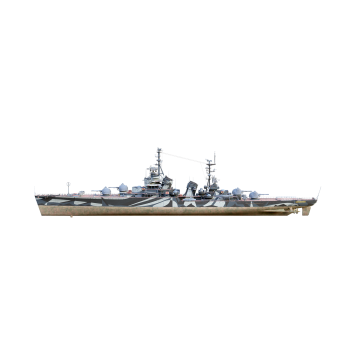
United States USS Grand Rapids (CL-70/CAG-2) Cruiser

was a Cleveland-class light cruiser of the United States Navy, originally commissioned as a light cruiser and later reclassified as a light aviation cruiser. It was commissioned in 1945 and named after Grand Rapids, Michigan. He was involved in several World War II operations, including operations in the Pacific theater. Known for its fast sailing speed and powerful firepower, it is equipped with multiple main guns and anti-aircraft weapons. It was converted after the war into an aviation cruiser for carrying and operating helicopters, a new type of naval warfare capability for the time. Retired in the 1970 s.
Soviet cruiser "СОВРЕМЕННЫЙ"

Soviet cruiser "СОВРЕМЕННЫЙ"

It was the first of a series of cruisers built by the Soviet Navy during World War II. Construction started in 1935, launched in 1938 and officially entered service in 1940. Known for its powerful firepower and high-speed performance, it is equipped with a triple-mounted 152mm main gun and multiple 100mm sub-guns, as well as torpedo tubes. Participated in numerous combat operations in World War II, including operations against the German Navy and Allied support missions. The design and performance were considered very modern at the time and represented a major advance in cruiser construction for the Soviet Navy.
USS Hornet (CV-8) aircraft carrier

USS Hornet (CV-8) aircraft carrier

A York City-class aircraft carrier of the United States Navy, it entered service on 20 October 1941 and was the third and final ship of this class. Commissioned a few weeks before Pearl Harbor, the ship was built before World War II and its dimensions were limited by international naval treaties of the 1930 s. The first mission was the Doolittle air raid in April 1942, the first American air raid on a Japanese home island and a response to the attack on Pearl Harbor. He continued to fight in the Pacific theater, participating in historic campaigns such as the Battle of Midway, but suffered a fatal blow in the Battle of the Santa Cruz Islands in October 1942.
British light cruiser Somnus

British light cruiser Somnus

Named after the god of sleep, it was based on a project to modernize the British Navy's Dido-class and Edinburgh-class light cruisers. Originally planned to be equipped with 133mm naval guns, but because their lower firing rate could not cope with the threat posed by the rapid development of aviation technology in the late World War II, all naval guns were replaced with 113mm RP10MarkIV naval guns. After the war, this naval gun became the standard main gun caliber for British naval destroyers. The Somnus class would replace the rear torpedo set, equip a more advanced anti-aircraft gun set, and add anti-aircraft firepower and electronics.
British CLAA Tier 6 SIRIUS light cruiser

British CLAA Tier 6 SIRIUS light cruiser

It was the second batch of No. 5 of the Dido-class light cruiser and was part of the 1937 construction plan. Construction was started on 6 April 1938, launched on 18 September 1940, and completed on 6 May 1942. As a Daido class anti-aircraft cruiser, a main gun was added to enhance the air defense capability. First served in the Home Fleet, then transferred to the Mediterranean Fleet, participated in many operations, including the Battle of Skore Bay, and provided fire support in the Sicily and Normandy landings. He served in the 15th Cruiser Squadron at the end of World War II. He successfully survived and retired after the war. He retired in 1949 and was sold and demolished in 1956.
Chinese aircraft carrier "Haihong"

Chinese aircraft carrier "Haihong"

It was a light aircraft carrier planned by the Chinese Beiyang Navy after World War I. The background of the construction is that the Beiyang Navy has inherited the mantle of the Beiyang Fleet, and after seeing the strength of aviation operations, plans to use the existing hull transformation to enhance the naval strength. With a displacement of about 15,000 tons, it is based on the enlarged hull design of the cruisers "Ninghai" and "Zhaohe" and is equipped with a full-scale flight deck. Reflecting the Beiyang Navy's pursuit of modern naval aviation power, although it was not actually built in the end, it has a place in the history of the Chinese Navy and marks the early exploration of the concept of aircraft carrier by the Chinese Navy.
german Z-56 destroyer

german Z-56 destroyer

The German Third Reich Navy's destroyer leader Z-56 was the last fleet destroyer designed by the German Navy during World War II, belonging to Type 1944. It was intended to be used against Allied destroyers, especially large, heavily armed destroyers against Britain and France. It is equipped with 8 128mm high-level dual-purpose naval guns, which have excellent air and sea firepower. At the same time, the hull also has light armor protection, which greatly improves the survivability of warships. The design emphasized firepower and protection, but in the course of the war, due to resource and time constraints, the construction of Z-56 and its class ships was slow and ultimately could not be completed.
The Chinese People's Liberation Army Navy Guangzhou ship (hull number 168) destroyer

The Chinese People's Liberation Army Navy Guangzhou ship (hull number 168) destroyer

It is a new type of guided missile destroyer developed by China, which belongs to the first ship of type 052B destroyer. Construction started in Jiangnan Shipyard in February 2000, launched in May 2002, and joined the People's Navy combat sequence in September 2004. It is a modern multi-purpose missile destroyer with all-round combat capability against sea, air and anti-submarine, equipped with helicopters and formation command system. Since its service, the Guangzhou ship has successfully completed major combat readiness exercises and training tasks such as the 60th anniversary of the founding of the People's Navy, escort in the Gulf of Aden, multinational naval joint military exercises, tracking and surveillance, and combat readiness on duty. It shows the vigorous and heroic posture of the People's Navy.
Chinese People's Liberation Army Navy Chengdu Ship (boat number 120) destroyer

Chinese People's Liberation Army Navy Chengdu Ship (boat number 120) destroyer

The 052D "Chinese Aegis" guided missile destroyer designed and built by Dalian Shipyard was launched in August 2016 and officially served in the North Sea Fleet at Lushun Military Port on November 21, 2019. It is known as one of the "strongest warships in East Asia" for its high level of stealth and informatization. The main weapons include 64 mounted missile universal vertical launchers, capable of launching anti-ship, air defense and anti-submarine missiles. Anti-submarine capability is provided by two triple-mounted 324mm torpedo launchers and Ka-28 anti-submarine helicopters. The entry of the Chengdu ship has significantly improved the modern combat capability of the Chinese navy.
German HAGEN large cruiser

German HAGEN large cruiser

It is a large cruiser in the German Navy's plan and belongs to the improved model of the Hipper Navy's general class. The design inherits the characteristics of the general class of the Hipper Navy, but has been modernized, with the addition of cruise missile and anti-ship missile launchers and updated electronic equipment. As one of the planned cruisers, if completed, it will be an important surface combat ship for the German Navy during World War II. Due to the course of the war and the allocation of resources, it was ultimately not built, as was the case with other planned ships, and remained in the drawing and planning stages. Reflecting the German Navy's demand and design ambitions for large surface ships during World War II
German Hildebrand Defense Ship

German Hildebrand Defense Ship

It is a coastal defense ship of the German Navy and belongs to the Siegfried class. They were the first real major battleships built by Germany and the last before Kaiser Wilhelm II began a large-scale naval construction program. Equipped with three 24cm main guns, although the firepower is not particularly strong, but the first German ships to install the main gun in the closed turret. During World War I, these old ships were still used for coastal defense, and all ships survived. As they were too old and no longer suitable for further military service, most were disassembled, while some were converted into civilian transport vessels.
German FRITHJOF large cruiser

German FRITHJOF large cruiser

The large cruiser FRITHJOF of the German Third Reich Navy was a ship planned to be built during World War II. It was originally a planned large cruiser, but due to the frequent malfunctions of the main gun turret of the German Navy's first large cruiser Beowulf in actual use, the Germans urgently canceled the construction of the second ship FRITHJOF. The original plan adopted D6 design scheme, equipped with triple 283mm main gun turret. However, due to technical problems and the impact of the war process, it was not completed, and only some design drawings and models were handed down.
Chinese People's Liberation Army Navy Nanjing ship (boat number 131) destroyer

Chinese People's Liberation Army Navy Nanjing ship (boat number 131) destroyer

It is a Chinese self-designed brigade-class guided missile destroyer manufactured by Shanghai Zhonghua Shipyard. It was officially served in the East China Sea Fleet of the Chinese People's Liberation Army on February 6, 1977. It was the first domestically-made first-generation guided missile destroyer of the East China Sea Fleet at that time. During its more than 30 years of service, it has sailed 450000 nautical miles, successfully completed more than 20 major combat readiness and military exercises, received more than 40 heads of state and dignitaries, and is known as the "diplomatic star ship". In September 2012, the Nanjing ship held a solemn retirement ceremony, ending its brilliant service career.
Chinese People's Liberation Army Navy Hangzhou ship (hull number 136) destroyer

Chinese People's Liberation Army Navy Hangzhou ship (hull number 136) destroyer

The Russian Navy's 956 missile destroyer was originally a part of the East China Sea Fleet after it was received by China. It is known for its powerful firepower and excellent combat performance. It has been modernized and equipped with a domestically produced weapon system. It is also equipped with two AK-130-type double-tube 130mm water-cooled naval guns, with a maximum range of 29.5 kilometers, an effective range of 23 kilometers for sea strikes, an interception distance of 15 kilometers for fighters, and an interception distance of 5 kilometers for anti-ship missiles. It has strong firepower. After the transformation, the information combat level of the Hangzhou ship has been greatly improved, fully integrated into the Chinese naval combat system, and the comprehensive combat performance has been significantly enhanced.