United States USS Missouri (BB-63) battleship

United States USS Missouri (BB-63) battleship

It is one of the Iowa-class battleships of the United States Navy and the last battleship built in American history. Completed in 1944, it fought in the Pacific theater, including the battles of Iwo Jima and Okinawa, and shelled the Japanese home islands. The deck was the site of Imperial Japan's surrender, marking the end of World War II. In 1984, the Missouri was reactivated and modernized with the addition of cruise and anti-ship missile launchers and updated electronics. While serving in the Persian Gulf, he escorted tankers and provided fire support during Operation Desert Storm in 1991. Decommissioned in 1992
Chinese People's Liberation Army Navy Qingdao Ship (boat number 113) destroyer

Chinese People's Liberation Army Navy Qingdao Ship (boat number 113) destroyer

it belongs to the brigade-shanghai-class (type 052) missile destroyer, manufactured by jiangnan shipyard. Construction began on February 29, 1992, was launched on October 18, 1993, and was commissioned by the North Sea Fleet on May 28, 1996. Because of the implementation of many missions, known as the "diplomatic star ship". In 2004 and 2011, it was modified and upgraded successively, and the fully upgraded shipborne weapons are all made in China. As the second-generation guided missile destroyer independently developed and built by New China, it once occupied an important position in the Chinese Navy's surface fleet and made outstanding contributions to the development of maritime power.
French Desaix destroyer

French Desaix destroyer

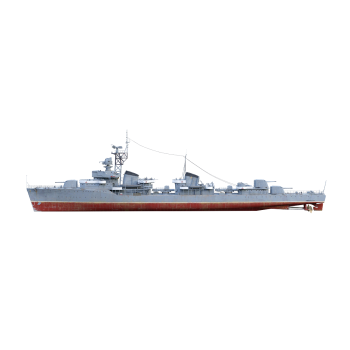
It is a destroyer of the French Navy, formerly known as the German Kriegsmarine PaulJacobi(Z5), belonging to the 1934A destroyer. Built between 1935 and 1938, it was distributed to France as war reparations in 1945. The main weapons include 4 twin 138mm guns. Torpedo: 2 triple 550mm torpedo tubes and 2 double 550mm torpedo tubes; Air defense weapons: 4 37mm anti-aircraft guns and 4 13mm anti-aircraft guns; Anti-submarine weapons: 2 deep-water bomb throwing slots. It was dismantled in 1954.
Japan's nine-headed light cruiser

Japan's nine-headed light cruiser

It was a light cruiser of the old Japanese Navy, equipped with a 155mm dual-purpose gun. It is a new type of artillery developed by the Japanese Navy in the 1930 s to counter modern Western cruisers. With a split ammunition design, the shell weight is 55.87kg, and the propellant is available in two sizes. The design took into account modern Western cruisers with strong defensive power, so special armor-piercing shells were developed to improve the penetration effect. The design and construction reflects the Japanese Navy's innovation and improvement in the firepower of battleships and cruisers, which played an important role in the Pacific War.
United States aircraft carrier USS Gerald R. Ford

United States aircraft carrier USS Gerald R. Ford

It is the first ship of the latest Ford-class nuclear-powered aircraft carrier in the U.S. Navy. It is named after the 38th President of the United States, Gerald R. Ford, who served on the USS Monterrey, a light aircraft carrier during World War II. A number of new technologies have been adopted, including electromagnetic aircraft ejection systems, advanced blocking devices, dual-band radars, advanced weapon elevators, etc., which have increased aircraft sorties and reduced personnel requirements. It is a large-scale mechanized combat platform and a brand-new information-based combat platform, which will have a great impact on future naval warfare. It is a central node in the future US naval and air cyber warfare.
Italian Francesco Morosini battleship

Italian Francesco Morosini battleship

It was an ironclad ship built for the Italian Royal Navy in the late 19th century. Named after Francisco Morosini, Viceroy of Venice in the 17th century, the ship was the second ironclad of the RuggierodiLauria class. It is equipped with four 356mm main guns, has a 451mm thick armored belt, and can reach a maximum speed of 17 knots. The keel was laid at the Venice Naval Shipyard on December 4, 1881, launched on July 30, 1885, and completed on August 21, 1889. Due to the rapid development of naval technology at the end of the 19th century, its long construction cycle meant that the ship was outdated by the time it entered service.
USS Louisiana Battleship

USS Louisiana Battleship

It is a Connecticut-class battleship belonging to the United States Navy. The keel was laid on February 7, 1903 at Newport News Shipyard in Newport News, Virginia, launched on August 27, 1904, and commissioned on June 2, 1906. During his service, he was involved in a number of important missions, including carrying President Theodore Roosevelt to Panama to inspect the construction of the Panama Canal and participating in the circumnavigation of the "Great White Fleet" to demonstrate U.S. naval power. During World War I, the ship was used primarily as a training ship and assisted in the return of American troops from Europe to the United States after the war.
United States Mitscher-class destroyers

United States Mitscher-class destroyers

were four experimental large destroyers built by the US Navy shortly after World War II. It was larger than all previous destroyers, but was reclassified as Destroyer Leader during construction. It served in 1953-1954, two of which remained in service until 1969, and were dismantled in the 70 s. The other two were converted into guided missile destroyers, which remained in service until 1978 and were sold for dismantling in 1980. It was designed to test different propulsion systems and other equipment to determine the best option for future destroyer designs. The design and construction provided valuable lessons for future destroyer development for the U.S. Navy.
German heavy cruiser "Admiral Scheer"
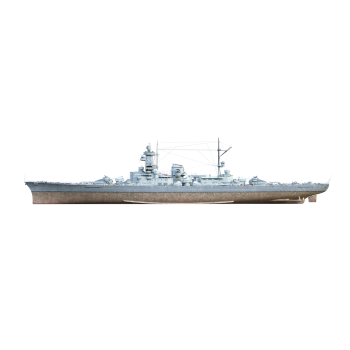
German heavy cruiser "Admiral Scheer"

It is a member of the German class heavy cruiser, and is often called a "pocket battleship" by the British ". Named after German Admiral Reinhard Schell, he served in the German Navy during World War II. It was launched on 1 April 1933 and commissioned on 12 November 1934. It was designed to circumvent the Treaty of Versailles's restrictions on the tonnage of German ships, while being equipped with powerful firepower and armor. It was dismantled after the war, but due to its large hull, the government had no economic reason to completely salvage the destroyed hull after the war. The wreckage is still buried under the rubble and rubble of the Elbrek district of Kiel city.
German BEOWULF large cruiser

German BEOWULF large cruiser

It is a program in the design of D-class armored ships. In response to the construction of the Dunkirk-class battleships by the French Navy, Germany had to make major design changes to the D-class armored ships and built two new armored ships, code-named D and E. The German Navy chose the D5a option equipped with two quad-mounted 283mm guns. Designed and built to counter the new French naval threat, the German Navy's demand and design ambitions for large warships during World War II. However, for a number of reasons, including changes in political and military strategy, these plans ultimately failed to materialize and the BEOWULF was not actually built.
British Bacchus class light cruiser

British Bacchus class light cruiser
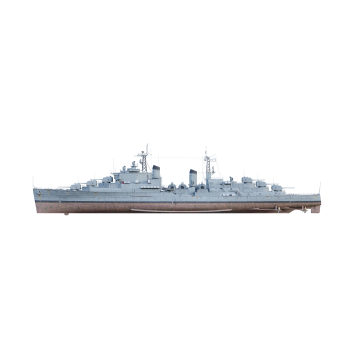
Named after Bacchus, the god of wine, corresponding to the star Bacchus in the celestial body. In order to make up for the outdated and insufficient firepower of the battle-class destroyers on the main gun fire control and targeting system, the British Navy designed a cruiser for coordination and command of the battle-class destroyers, the Bacchus class. The design was inspired by the Edinburgh-class cruiser's hull construction concept. A six-seat twin-mounted 113mm RP10MarkIV rapid-fire gun is installed along the central axis. The sub-charged ammunition is used to obtain better ballistic performance. It can fire about 15-20 rounds per minute. Due to the poor financial situation of the United Kingdom, ships of this class were not actually built.
British Uranus Super Light Cruiser

British Uranus Super Light Cruiser
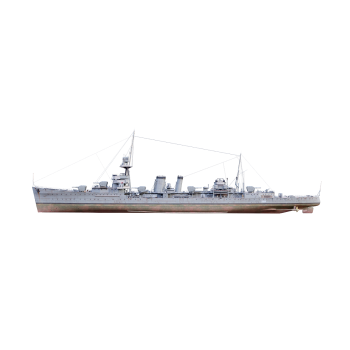
Named after the god of the sky in Roman mythology, it corresponds to the celestial planet Uranus. After World War II, the British colonies and territories continued to erupt in revolts, threatening British rule, and the British Navy therefore restarted the design and rearmament of new cruisers. It was the product of Britain's failed struggles. With the introduction of American technology, the N1 127mm rapid-fire gun replaced the slightly obsolete 113mm naval gun. The automatic loader and water cooling device provided a solid guarantee for the continuous firing of the gun, theoretically increasing the firing rate of the gun to 66 rounds per minute. However, because the turret was too heavy, it had to be installed on the ship in the form of a single gun.
British NOX class II light cruiser

British NOX class II light cruiser

Named after the goddess of the night, it is a light cruiser in the first-class design proposal. At the end of the First World War, the British Navy, in response to rumors of the German Navy building high-speed cruisers, redesigned the D-class cruiser and submitted numerous proposals. The NOX class represented a design proposal for the installation of a small caliber rapid-fire naval gun. It is planned to adopt a twin-mounted 113mm/45x diameter QF Mk.I(Mk.IIIUD gun base) gun as a dual-purpose anti-aircraft gun. This artillery uses fixed ammunition and has a firing rate of up to 12 rounds per minute. It is commonly found on aircraft carriers such as HMS Royal Ark and HMS Glory and HMS Glory.
British Challenger 2 main battle tank

British Challenger 2 main battle tank

It is the main fighting vehicle of the British army and has been in service since 1998. This third-generation main battle tank is known for its excellent protection, firepower and accuracy, and has operated in the Balkans, Iraq and Afghanistan. Designed and manufactured by the British VickersDefenceSystems (now BAESystemsLand & Armaments), it is the successor model to Challenger 1, and development began in 1986. The chassis and turret used second-generation Chobham armor, which provided excellent protection. It is currently undergoing a major upgrade and is in service until 2040.
Swedish Three-decker Ancient Warship

Swedish Three-decker Ancient Warship

is an unpainted three-deck model of a battleship and is considered one of the oldest models of a battleship in the world. Although there is no exact identification, the latest research links it to the Swedish ship Riksäapplet, which was designed by British shipbuilder FrancisSheldon and launched in Gothenburg in 1661. It was part of the Swedish Navy, involved in the naval battles of 1675-1676, and served as deputy flagship in the battle of southern Orland. It retreated to the naval base at Dalarö after the Battle of Orland and later sank while trying to protect the ship during a storm.
Swedish submarine Hajen

Swedish submarine Hajen

Also known as the "Shark", launched in 1904, it was the first submarine built for the Swedish Navy. Designed by CarlRichson, he worked and gained experience in American shipyards, influenced by the Holland work of submarine pioneer J.P. The design includes an electric propeller, powered by an internal combustion engine when sailing on the surface and powered by batteries when sneaking. Retired in 1922, it was an important force in the Swedish Navy during its service. It was nearly dismantled after decommissioning, but was eventually saved and exhibited at the Submarine Pavilion at the Naval Museum in Carlscrona.
Swedish Storkyrkoskeppet warship

Swedish Storkyrkoskeppet warship

It means "Cathedral Ship" and is a Swedish warship built around 1600. As a typical Nordic warship of that era, it reflected the military strength and shipbuilding technology of the Swedish Navy at that time. Known for its enormous size and firepower, it is usually equipped with heavy artillery, capable of playing an important role in the naval battles of the time. Not only the war machine, but also a symbol of Swedish maritime power, reflecting the Swedish naval hegemony in the Baltic region at that time. The design and construction showcased the Nordic countries' advances in marine engineering and naval tactics from the late 16th to early 17th centuries.
Swedish Spica Class Fast Torpedo Boat

Swedish Spica Class Fast Torpedo Boat

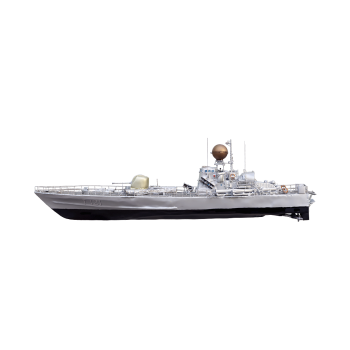
It was a class of high-speed torpedo boats built for the Swedish Navy in the mid-1960s and decommissioned in the late 1980 s. Built by the Götaverken and Carlscrona Naval Shipyard, a total of six were built, with one T121Spica preserved as a museum ship. The design of the Spica class was based on a model developed by the German shipyard Lürssen, and its aggressive tactics and heavy armament made it a dangerous adversary for any invading fleet during the Cold War. The hull was made of steel, unlike some designs of the time that used plywood. The hull can be closed while operating in a nuclear radiation area.
British Pluto light cruiser

British Pluto light cruiser

Named after the Roman god Pluto, corresponding to the celestial body Pluto. The primary armament was the Type N2 127mm naval gun developed for the 1950 Large Destroyer Program. The gun is equipped with an advanced ammunition supply and cooling system, and the average firing speed is 2.8 seconds, which can dump a large amount of firepower on enemy ships in a very short time. Its excellent ballistic performance helps Pluto attack more distant targets. Modern masts provide a favorable platform for the installation of new fire control equipment, and artillery targeting radars can coordinate naval artillery and anti-aircraft fire to carry out fierce attacks on incoming enemy aircraft. In a short time, the enemy plane was shot down quickly.
US Northrop Grumman B- 2 Spirit Bomber

US Northrop Grumman B- 2 Spirit Bomber

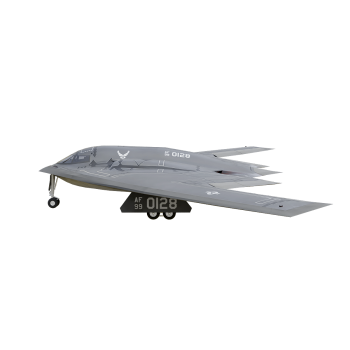
Nicknamed "Ghost", it is a low-detectability flying wing bomber developed by Northrop Grumman and Boeing in conjunction with the Massachusetts Institute of Technology for the US Air Force. It is the world's only active stealth strategic bomber, known for its excellent stealth technology and long-range strike capabilities. Capable of penetrating advanced air defense systems and performing nuclear/regular strike missions. Stealth design is not limited to radar detection, but also includes reducing infrared, visible light and noise signals, greatly reducing the possibility of detection and locking. With its unique design and powerful combat capability, it has become the core of the US Air Force's strategic strike force.
French aircraft carrier Charles de Gaulle(R91)

French aircraft carrier Charles de Gaulle(R91)

It is the flagship of the French Navy and the only nuclear-powered aircraft carrier in service outside the United States. Named after the famous French military leader and former President Charles de Gaulle, the aircraft carrier has become a symbol of French naval power since it entered service in 2001. Nuclear-powered propulsion, equipped with two K15 pressurized-water nuclear reactors, provides an almost unlimited range of operations and requires only shipboard supplies. The flight deck covers an area of 12000 square meters and can carry up to 40 aircraft, including Rafale M fighter jets and E-2C Hawkeye early warning aircraft. It is also equipped with advanced radar systems, air defense weapons and missile launch capabilities.
Soviet BTR-80 Armored Carrier

Soviet BTR-80 Armored Carrier

It is an 8 × 8 wheeled armored personnel carrier developed during the Soviet Union to replace BTR-60 and BTR-70 and was officially put into service in 1986. The design draws on the experience and lessons of BTR-70 in actual combat, and combines several key advantages to introduce various new equipment in accordance with the changes in the modern battlefield environment. The main armament was a 14.5mm KPVT machine gun and a 7.62mm PKT machine gun placed side by side, mounted on a turret at the front of the body. It also has amphibious capabilities. Designed with a degree of self-protection in mind, losing two of the eight wheels and still driving normally.
KpfPz 70 Main Battle Tank

KpfPz 70 Main Battle Tank

It is a main battle tank jointly developed by the United States and West Germany in the 1960 s, aiming to replace the US M60 and German M48 tanks. Launched in 1963, the project was jointly designed by the Allison division of General Motors in the United States and Krauss-Maffei in Germany, with a number of innovative technologies. The project was eventually canceled in 1970 due to cost overruns, technical challenges and disagreements between the two countries over weapons systems. Although it failed to achieve mass production, its technology and design had a profound impact on the development of later tanks. Germany applied the experience gained from the project to the next generation of tanks.
Willys Jeep SAS Desert Patrol

Willys Jeep SAS Desert Patrol

It is a jeep used by special forces during World War II and is famous for its excellent performance in desert operations. It was used by units such as the British Special Air Service Regiment and the Long Range Desert Group for missions deep behind enemy lines, performing reconnaissance, patrol and assault missions. Specially modified to suit desert environments and special operations needs. It is usually equipped with multiple machine guns to provide strong fire support. The cooling system has been modified to adapt to the high temperatures in the desert, providing the best airflow through the radiator by cutting off most of the front grille, ensuring maximum cooling efficiency. It is a multi-functional and highly mobile desert combat vehicle in World War II.
Soviet T-55A main battle tank

Soviet T-55A main battle tank

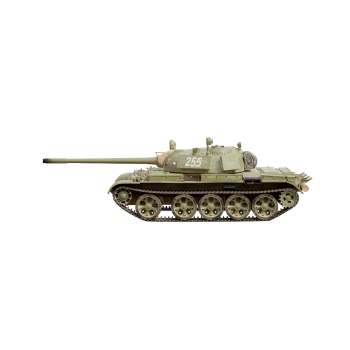
It is a main battle tank developed by the Soviet Union in the mid-20th century and is an improved model of the T-54 series. It was introduced into service in 1961 with enhanced nuclear, biological and chemical protection and improved armor compared to T-54. Designed for its firepower, protection and production convenience, it is a multi-purpose main battle tank whose main tasks include front-line operations, support infantry operations and anti-armor combat. Equipped with a 100mm D-10T2S rifled gun, the stability and fire control system of this main gun have been improved. The rugged design and relatively low cost made it one of the most widely used tanks of the second half of the 20th century.
Yugoslav M-84 main battle tank

Yugoslav M-84 main battle tank

It is a Yugoslav model based on the improvement of Soviet T-72 tanks. Production began in 1983 and entered service in 1984. The main features of the T-72 are retained, including large-caliber applicable artillery, automatic loading system, smaller volume, low profile and high-quality armor protection, while improvements have been made in multiple systems and attributes to make up for the T-72's technical comparison with Western tanks. Equipped with a 125mm 2A46M smoothbore gun, it can fire a variety of ammunition, including explosive penetrators, shaped shells and sub-caliber shells, with a high rate of fire of 8 rounds per minute. It was the main fighting vehicle in the Yugoslav army.
German HortenPlane fighter

German HortenPlane fighter

Also known as the HortenHo229, it was an all-wing jet fighter designed by the German Horton brothers during World War II. Known for its unique flying wing design, without the traditional fuselage and tail, this design significantly reduces drag, improves the lift-to-drag ratio and overall efficiency. It was the first jet-powered flying-wing aircraft whose design foreshadowed the direction of modern stealth technology and influenced later aircraft designs. Although it was not mass-produced at the time and failed to play an actual role in the war, its innovative design and contribution to aviation technology made it an important milestone in aviation history.
German GothaGo229 fighter

German GothaGo229 fighter

Also known as the HortenHoIX, it was a flying-wing jet fighter designed by the Holden Brothers at the end of World War II. Known for its unique flying wing layout and jet power system, it is considered a technological pioneer of modern stealth fighters. It is the only model in the series to achieve powered flight, equipped with two Juncker Jumo004B turbojet engines. The center cabin of the aircraft is made of welded steel pipe, while the wing part is made of multi-layer plywood. This design meets the strength requirements while reducing weight. Although it failed to mass produce and entered the war, its innovative design occupies an important position in the history of aviation.
British CenturionMKIII Tank

British CenturionMKIII Tank

It is a medium-sized tank developed by the United Kingdom after World War II and is the third model in the Centurion tank series. It is famous for its powerful firepower, strong armor and good mobility. The OQF 20-pounder gun equipped with 84mm caliber provided excellent accuracy at the time, and was equipped with a new dual-axis fully automatic stabilization system, allowing the gunner to fire while moving and maneuvering. There are two storage locations at the front of the body for the track links. In service in 1948, it was produced more than the MKII model and played an important role in the Korean War.
South Korea AS21Redback Infantry Fighting Vehicle

South Korea AS21Redback Infantry Fighting Vehicle

It is a modern infantry fighting vehicle designed by South Korea Hanwha Defense Company for the third phase of the Australian Army's "Land 400" project. Based on the upgrade of the K21 infantry fighting vehicle used by the South Korea army, the prototype was publicly shown for the first time in 2019. Known for its excellent protection, firepower and electronic equipment, it can immediately find the target and cause damage to it. The protection level is high, and the armor is made of homogeneous steel, which can resist 7.62mmAP attacks and reach the STANAG4569 secondary protection standard. It is also equipped with a hard kill active defense system, modular additional armor plates, and an integrated sensor kit with 360 ° coverage.
German HortenHo229 fighter

German HortenHo229 fighter

It was a revolutionary flying wing jet fighter developed by Germany during World War II and designed by the Holden Brothers. Known for its unique flying wing layout and jet power system, it is considered the technical prototype of modern stealth fighters. The wingspan is 16.76 meters, the captain is 7.47 meters, the shape is extremely streamlined, and the tailess flying wing design greatly reduces air resistance. The fuselage is mainly made of wood and composite materials, and the surface is coated with resin to reduce weight and reduce radar reflection signals. Although the Ho229 failed to mass produce and entered the war, its innovative design held an important place in aviation history.
US F-14A Swordsmen Fighter

US F-14A Swordsmen Fighter

It is a supersonic two-seat two-engine multi-purpose carrier-based fighter developed by Grumman in the 1970 s. It is the first production model of F-14 "Tomcat. It is famous for its variable swept wing design, powerful power system and advanced avionics. It first flew on December 21, 1970 and entered service in 1974, replacing the F-4 Phantom II as the U.S. Navy's workhorse carrier fighter. Although it is now gradually retired, it still occupies an important position in aviation history and is an iconic fighter in the history of the US Navy.
Soviet Su-25 "Frogfoot" sonic attack aircraft (dark green camouflage)

Soviet Su-25 "Frogfoot" sonic attack aircraft (dark green camouflage)

It is a single-seat two-engine subsonic attack aircraft developed by the Soviet Union's Sukhoi Design Bureau and is mainly used for close air support. The nickname given by NATO is "frog foot". It has good subsonic performance and low-altitude maneuverability. The fuselage is short and thick. The bottom of the fully welded cockpit is equipped with 24mm titanium alloy bulletproof steel plates. It has strong survivability and can resist general ground artillery attacks. It can take off from airstrips, cooperate with Mi-24 armed helicopters, and cooperate with ground forces to attack tanks, armored vehicles and important fire points. The main feature is the ability to take off and land on airstrips close to the front line and perform close combat support missions.
American F-15EStrikeEagle Bombers

American F-15EStrikeEagle Bombers

It is a two-seater, supersonic fighter-bomber developed by McDonnell Douglas (now Boeing) based on the F-15 Eagle air superiority fighter, designed for all-weather strike missions. Entered service with the United States Air Force in 1988, known for its dual mission air superiority and ground attack capabilities. It is similar in shape to the F-15D, but with a number of improvements, including increased range, doubling the number of weapon racks, and adopting a digital fly-by-wire control system with automatic terrain tracking capability and an advanced electronic cockpit display system. The design and capabilities have made it an important asset for the United States Air Force.
German Gepard 1A2 Anti-aircraft Gun System

German Gepard 1A2 Anti-aircraft Gun System

It is a self-propelled anti-aircraft gun system manufactured by the German Krauss-MaffeiWegmann company based on the Leopard 1 tank chassis. Equipped with a twin 35mm Erley hole KDA automatic gun, it has all-weather combat capability and can react quickly and strike air targets. It is the latest version in the Gepard series, designed to meet the defensive challenges of modern combat aircraft, attack helicopters, remote-controlled missiles and rockets in the 21st century, while also effectively countering drones. Its ballistic projectiles cannot be destroyed by electronic defense measures, and the resulting fragmentation cloud can reliably destroy the target.