
Howitzer Tank 3D Scan

Howitzer Tank 3D Scan

Also known as self-propelled howitzer, is a howitzer mounted on the chassis of a tank with armored protection and self-propelled artillery system. Equipped with large-caliber howitzers, it can launch a variety of ammunition such as high-explosive bombs, armor-torn bombs, and incendiary bombs to adapt to different combat environments. It combines the mobility of tanks and the firepower of artillery, capable of rapid deployment and transfer on the battlefield. With a certain degree of armor protection, able to survive and fight in complex environments. It can not only provide fire support in war, but also play a role in non-war military operations. With its powerful firepower, good mobility and protection ability, it plays an important role in the modern battlefield.
Japanese Type90Kai main battle tank

Japanese Type90Kai main battle tank

It is an improved model of the Type 90 main battle tank equipped by the Japanese Ground Self-Defense Force. The Type 90 tank is the third-generation main battle tank that Japan began to equip in 1990, and Type90Kai has carried out a series of modernization upgrades on this basis. The armor uses composite armor technology to improve the protection of modern anti-tank weapons, especially the protection of the tail stable shell-piercing projectile. It is equipped with a 120mm smoothbore gun capable of firing a variety of munitions, including tail-stabilized shell-piercing shells. While maintaining the excellent performance of the original 90 tank, it also adapts to the needs of the modern battlefield.
North Korea Hwasong-17 intercontinental ballistic missiles

North Korea Hwasong-17 intercontinental ballistic missiles

It is an intercontinental ballistic missile displayed by North Korea and debuted at a military parade in October 2020, the 75th anniversary of the founding of the Workers' Party of Korea. Carried by an 11-axis transport vertical launch vehicle, the size and configuration of this large missile indicate that North Korea has the ability to manufacture such vehicles, which has previously been a factor in limiting North Korea's ICBM power by preventing foreign-made TEL procurement. The first flight test took place on March 24, 2022, and North Korea announced that it had successfully tested the missile. The development of such missiles is seen as the core strike means of North Korea's self-reliance and nuclear deterrent.
French AMX-13 Light Tank

French AMX-13 Light Tank

It is the first generation of light tanks developed by France after World War II. It was designed in 1946 and officially put into production in 1952. It is named for its weight of 13 tons, has a sturdy and reliable chassis, and is equipped with a rotary magazine-type swing turret produced by GIAT Industrial Group (now NexterSystems). The design positioning is used for reconnaissance and has certain anti-tank capabilities. Its chassis is small and compact, suspended by torsion bars, and each side has five load wheels and two supporting wheels. The biggest feature is its swing turret design, the gun is fixed on the upper part, and the lower part is installed on the turret seat ring.
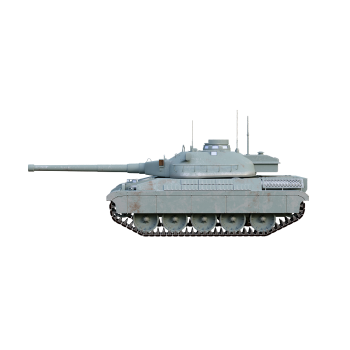
French AMX-40 main battle tank

French AMX-40 main battle tank

It is a third-generation main battle tank prototype developed by France in the early 1980 s and intended for export markets as a successor model for AMX-30B and AMX-32. Built by GiatIndustries, four prototypes were built, from 1983 to 1985. Significant improvements in firepower, protection and mobility over its predecessors failed to attract any orders and the project was eventually canceled in 1990. It was equipped with a 120mm bore smoothbore gun, which was very powerful at the time, with welded steel armor and hardened steel composite armor plates in the front arc.
French AMX10RCR Tank Destroyer

French AMX10RCR Tank Destroyer

It is an upgraded version of the French AMX-10 series of wheeled tank destroyers, mainly used for reconnaissance and anti-tank missions. This 6x 6 wheeled armored vehicle began to equip the French Army in the late 1970 s and is known for its high mobility and firepower. The main weapon is a 105mm rifled gun capable of firing a wide range of ammunition, including tail stabilized shell-piercing shells, armor-piercing shells and grenades. The advanced fire control system, including laser rangefinders and a variety of ballistic correction sensors, enables the vehicle to aim at the first target in only 10 seconds after starting the aiming and shooting system. It has excellent mobility and firepower.
Japanese Type10 main battle tank

Japanese Type10 main battle tank

It is the fourth-generation main battle tank equipped by the Japanese Ground Self-Defense Force and manufactured by Mitsubishi Heavy Industries. Development began in the 1990 s and production began in 2010 to replace or supplement the Type 74 and Type 90 main battle tanks in active service. It is equipped with a 120mm smoothbore gun, produced by Nippon Steel, capable of firing new armor-piercing shells and all standard NATO 120mm ammunition. The armor consists of modular sections that can provide varying degrees of protection depending on the mission configuration and weight requirements. A liquid-gas suspension system is also used, which can adjust the attitude of the tank according to the terrain, absorb the recoil force during shooting, and can install a bulldozer.
French AMX-30 main battle tank

French AMX-30 main battle tank

It is the second-generation main battle tank developed by France in the 1960 s and was developed by the Isi Lemurino Manufacturing Plant. In 1967 officially listed as the French army standard equipment, began to gradually replace the M47 tank. Equipped with a 105mm rifling gun, it has long-range firepower and good maneuverability, but the armor protection is relatively weak. The fire control system includes an artillery telescopic sight, a laser rangefinder, a computer and various sensors, and a low-light television system is used for night operations. It has good maneuverability and working ability in high temperature environment. The design idea is to strike a balance between firepower and mobility at the expense of some armor protection.
French AMX-30Roland Missile Launcher

French AMX-30Roland Missile Launcher

It was a self-propelled surface-to-air missile launcher developed by France based on a AMX-30 tank chassis, specifically designed to operate the Roland missile, which was jointly developed with West Germany. It was officially adopted in 1977 and a total of 183 vehicles were produced. It is intended to provide the troops with additional anti-aircraft protection, covering areas well beyond anti-aircraft guns. The main structure was completely revamped to integrate missile launchers. The mobility of the AMX-30 is retained, making the vehicle have good all-terrain mobility and agility. The design and equipment demonstrate France's deep understanding of innovation and combat needs in air defense weapon systems, making it an important air defense platform during the Cold War.
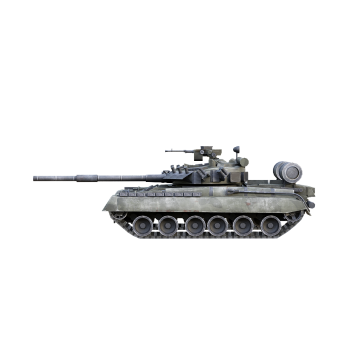
Soviet T-80UD main battle tank

Soviet T-80UD main battle tank

It is a tank designed by Ukraine's Kharkov Morozov Mechanical Design Bureau in the early 1980 s during the Soviet era and mass produced by the Marishev factory in 1985. It is famous for its advanced fire control system, which can achieve high-precision strikes on fixed and moving targets by gunners or vehicle commanders in a stationary or moving state. Multi-layer armor and explosive reactive armor packages are used to provide it with a high level of battlefield survivability. You can also disguise yourself by releasing smoke or aerosol screens, with four electric smoke grenade launchers on each side of the turret. The design and performance made it an important main battle tank in the Soviet army during the Cold War.
Israeli M51IsraelSuperSherman main battle tank

Israeli M51IsraelSuperSherman main battle tank

It is a main battle tank modified and upgraded by Israel in the 1960 s based on American M4Sherman tanks. It is mainly used to deal with the tank threat in the Middle East war, especially against the Soviet IS-3 heavy tank and the British Centurion tank. It was equipped with a powerful French 105mm D1508 L/51 gun. Capable of firing high-explosive anti-tank shells with a penetration of up to 400mm armor. A new turret, designed by the French arsenal of Bourges, with a larger gun shield and a unique muzzle retractor was also used. Designed and used to showcase Israel's modernization of military equipment.
United States HummerArmy Multipurpose Wheeled Vehicle
United States HummerArmy Multipurpose Wheeled Vehicle

That is, the military Humvee, is a high-mobility multi-purpose wheeled vehicle produced by the US AMGeneral Company for the US military. Known for its excellent mobility, off-road performance, reliability and durability, it is widely used in various military operations. It can adapt to a variety of terrains, has high ground clearance and a powerful four-wheel drive system, and can carry a variety of military equipment, such as machine guns, grenade launchers and anti-tank missiles. Has excellent load and transport capacity. The design takes into account the car family, with more than 30 types of variant vehicles, including personnel/material delivery vehicles, light combat vehicles, anti-tank missile launch vehicles, etc.
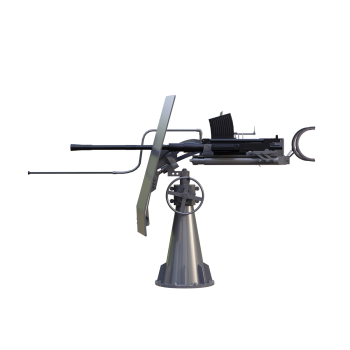
German 20mmFLAK38 anti-aircraft gun

German 20mmFLAK38 anti-aircraft gun

It was a light anti-aircraft gun used by Germany in World War II. Designed by Rheinmetall, it is an improved model of FLAK30 to improve the rate of fire. The design began in the late 1930 s, and in 1939 it was accepted as the standard anti-aircraft gun for the German Army and was used extensively throughout the war. Used as a single-barrel towed gun, it was also installed on a variety of vehicles and fixed positions, including a quadruple-mounted version, which greatly enhanced anti-aircraft fire. Because of its excellent performance and high rate of fire, it became a nightmare for the Allied Air Force.
British GKNSankeySimba armored personnel carrier
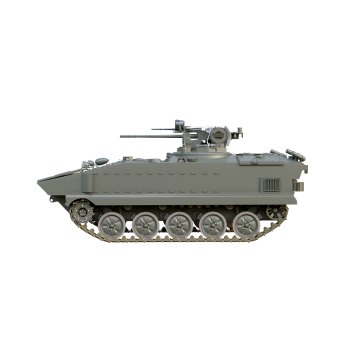
British GKNSankeySimba armored personnel carrier

It is an armored personnel carrier designed by British company GKN, mainly serving the Philippine army. It entered service in the 1990 s and is still in use today. Designed for export market sales, it was originally intended to complement GKNSaxon armored vehicles. It is considered an upgraded version of Saxon for its larger size and improved performance. The 4x 4 chassis and large-size wheels, combined with a good power-to-weight ratio, make it have good performance in both road and off-road conditions. The Philippines is the only user of Simba, and the United Kingdom does not use this type of armored vehicle. A total of 150 Simba were procured.
French AMX-10P Infantry Fighting Vehicle

French AMX-10P Infantry Fighting Vehicle

It was developed by the French AMX manufacturer in 1965 according to the requirements of the French army to replace the old AMXVCI infantry fighting vehicle. The first prototype was made in 1968, production began in 1972, and the first batch of vehicles were delivered to the French army in 1973. The car body is welded with aluminum alloy, the engine is front, and the cockpit is located on the left side of the front of the car body. With full amphibious capability, it is propelled by water jets on both sides of the rear of the vehicle in the water. Before entering the water, the front anti-wave plate of the vehicle is erected and the bilge drainage pump is turned on. AMX-10P infantry fighting vehicles have been used in several conflicts.
Soviet 2K12 "Kub" surface-to-air missile

Soviet 2K12 "Kub" surface-to-air missile

It is a mobile medium-and low-altitude, medium-range field surface-to-air missile system developed in the Soviet Union. Designed by the OKB-15GKAT to protect ground forces, especially armored forces, from low-and mid-flying aerial attacks. It is installed on the crawler chassis and has good maneuverability. It officially entered service in 1967 and was widely deployed in the 1970 s. He has proved his effectiveness in many conflicts. The design makes it a low-to-hollow interceptor, and its tracking characteristics ensure that it can be deployed anywhere to defend critical installations.
Israeli Merkava Main Battle Tank

Israeli Merkava Main Battle Tank

It is the main fighting vehicle of the Israel Defense Forces armored force and is known for its unique design and excellent protection capabilities. The design began in 1970, and the first model of the Merkava Mark1 was officially put into service in 1979. The design focuses on occupant protection. The front-engine design not only increases frontal protection, but also provides additional protection for occupants to a certain extent. The main weapon is a 105mm or 120mm calibre smoothbore gun, capable of firing a variety of munitions including LAHAT anti-tank missiles. It is a symbol of Israel's military power and a manifestation of the technological progress of its armored fighting vehicles.
American LAV-25 Infantry Fighter

American LAV-25 Infantry Fighter

It is a type of wheeled infantry fighting vehicle developed and equipped by the United States in the early 1980 s. It is a Piranha wheeled armored vehicle produced by the diesel engine division of General Motors of Canada under the license of Movag of Switzerland. It belongs to the category of light wheeled armored vehicles, with a total combat weight of only 13.4 tons. It can be airdropped by C- 130 transport aircraft and has the capability of amphibious operations. The main weapon is a 25mm "Viper" chain cannon, equipped with advanced two-way stabilization devices, so that the cannon can maintain a continuous fire output during the movement of the armored vehicle. Designed with a focus on rapid deployment and mobility.
Japanese Type 90 main battle tank

Japanese Type 90 main battle tank

It is the third-generation main battle tank equipped by the Japanese Ground Self-Defense Force. It was designed and manufactured by Mitsubishi Heavy Industries to replace Type 61 and some Type 74 tanks. It entered service in 1990 and is known for its superior firepower, mobility and protection. Equipped with a 120mm smoothbore gun of German Rheinmetall licensed by Japan, equipped with an automatic loader, a laser rangefinder integrated in the gun's long sight, and a thermal imager, with the ability to shoot between marches and at night. The main parts adopt composite armor or interval armor, with three-proof device, automatic fire extinguishing device and laser detection and alarm device, which enhances the survivability of the tank.
missile boat

missile boat

It is a small, fast, and usually missile-equipped military ship designed for rapid strike and defense missions in offshore or coastal waters. Known for its high speed, agility and concealment, it is able to maneuver quickly between complex coastlines and islands, posing a threat to enemy ships. The main weapon is the cruise ship-to-ship missile. It plays an important role in modern navies, especially in local conflicts and coastal defense. Able to use speed and concealment to conduct surprise attacks on enemy ships. The design usually focuses on stealth performance to reduce the radar cross-sectional area and improve survivability.
US AH-64D "Longbow Apache" gunship

US AH-64D "Longbow Apache" gunship

It is the main armed helicopter of the United States Army and is manufactured by Boeing (formerly Hughes Helicopter Company). It is an improved version based on the AH-64A model, with significantly improved performance and capabilities. Known for its all-weather combat capability and powerful firepower, it is one of the world's deadliest, most survivable, most deployed and best-maintained multi-mission helicopters. Equipped with advanced sensors, power and weapons systems, it can detect, classify, prioritize and strike enemy targets at long distances in adverse weather conditions. With its superior performance and firepower, it has become an indispensable part of the military of the United States and its allied countries.
Soviet S-75 missile launchers

Soviet S-75 missile launchers

NATO codenamed SA-2 "Sam -2", is a Soviet-era development of a surface-to-air missile system. It is composed of missile launchers, radar units and command vehicles, and is mainly used to deal with aerial targets such as bombers, fighter jets and reconnaissance aircraft. With a maximum range of about 45 miles and up to 100000 feet, the missile is equipped with a high-explosive warhead that causes significant damage to its target. It is known for its excellent range and altitude performance. It was widely deployed during the Cold War and used in multiple conflicts, including the famous downing of a U-2 spy plane. Despite more advanced missiles, S-75 are still considered valuable in modern conflicts.
German FlakpanzerGepard anti-aircraft gun

German FlakpanzerGepard anti-aircraft gun

It is a self-propelled anti-aircraft artillery system developed by Germany during the Cold War to provide mobile air defense capabilities for armored and mechanized forces against aerial threats such as low-flying aircraft and helicopters. Based on the chassis of the Leopard1 main battle tank, equipped with a double-mounted 35mm OerlikonKDA automatic gun, the turret can achieve 360-degree omnidirectional rotation, and the main gun can be almost vertical to a 90-degree angle. Equipped with advanced fire control systems, including search radar, tracking radar and laser range finders, these systems make it possible to accurately track and hit targets even when moving. It entered service in the 1970 s.
missile launcher

missile launcher

It is the key equipment used to launch, guide and control missiles in modern military equipment. It usually consists of the following parts: power system, guidance and control system, communication system and warhead system. Material selection is key to ensuring system performance and reliability, and commonly used materials include high-strength alloy steels, titanium alloys, and composite materials that require a balance between multiple requirements for strength, durability, corrosion resistance, and weight. The advantages include high-precision strike capabilities, long-range strikes, rapid response and deployment capabilities, as well as high-speed flight and complex flight trajectories, making it difficult for enemy defense systems to intercept.
Pakistan Shaheen-II surface-to-surface ballistic missile

Pakistan Shaheen-II surface-to-surface ballistic missile

It is a medium-range surface-to-surface ballistic missile developed by Pakistan and is considered to be one of the Pakistan Army's most deterrent weapons. The range can reach 1500 to 2000 kilometers, which is enough to cover important targets in the area. It is a two-stage solid-fuel missile capable of carrying a regular or nuclear warhead. The missile is presumed to have a hit error of 350 meters, but it could be smaller, as Pakistan claims the missile has "surgical accuracy". The launch platform is a six-axle transport vertical launch vehicle. The successful test of the missile enhances Pakistan's strategic deterrence capability, especially amid tensions with India.
American M60A3 main battle tank

American M60A3 main battle tank

It is the ultimate improvement of the American M60 "Patton" series main battle tank and is known as the "ultimate Patton". In 1971 began to develop, code-named M60A1E3. During the development process, the reliability of key components such as the engine and passive sighting instrument was improved. Four more improvements were made in 1978, including the installation of a new rangefinder, a ballistic calculation device, an M240 aircraft gun, and an M239 smoke launcher. The fire control system has been significantly improved, improving the accuracy of shooting. Its design and improvement made it an important armored force for the United States and its allies during the Cold War.
armored personnel carrier

armored personnel carrier

It is an armored military vehicle designed to transport personnel and equipment in combat areas. The idea is to quickly transport infantry to any location on the battlefield and to resist light weapons attacks. Compared with infantry fighting vehicles, the level of armor protection is lower, usually not equipped with weapons exceeding 20mm caliber, and mainly focuses on transportation rather than direct participation in combat. The track type has lower ground pressure and better off-road maneuverability, but the track wears faster and usually requires long-distance transportation by rail or truck. It also has amphibious capabilities and can traverse waters, usually by propeller, water jet or track propulsion.
Indonesia Sigma-class frigate Diponegoro-class frigate
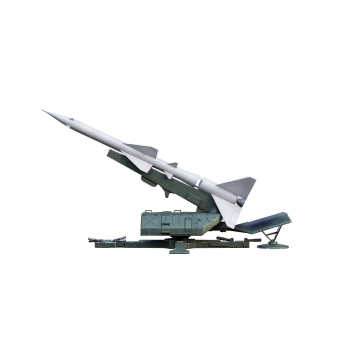
Indonesia Sigma-class frigate Diponegoro-class frigate

It is a light frigate equipped by the Indonesian Navy and developed and produced by the Dutch Damen Shipbuilding Group. Modular design, can adapt to a variety of operational needs, with excellent reliability and affordability. It has a length of 90.71 meters, a width of 13.02 meters, a draft of 3.60 meters and a displacement of 1,692 tons. The design focuses on low-track design, including reducing radar cross-sectional area, infrared signal, noise and vibration, so that it has better stealth performance. The main tasks include surface patrol, economic sea patrol and some anti-submarine operations.
Soviet Union SA-2 "Guidline" surface-to-air missile system

Soviet Union SA-2 "Guidline" surface-to-air missile system

The Soviet Union called S-75Dvina, a medium-high altitude surface-to-air missile system. Since its first deployment in 1957, it has become one of the most widely deployed and used anti-aircraft missiles in history. Designed to defend against fixed targets and field forces, it is primarily aimed at small aircraft formations rather than large-scale air strikes. With a two-stage solid fuel booster, it can reach a top speed of 1864 mph, a range of 30 miles, and a shot height of more than 60,000 feet. The missile warhead weighs about 434 pounds and can be equipped with proximity, contact and command fuses, and some models can even be equipped with a nuclear warhead.
stealth destroyer

stealth destroyer

It is a modern warship that is specially designed to reduce radar cross-sectional area (RCS) and infrared radiation, making it difficult to detect by the enemy. The inclined hull design and superstructure are adopted to avoid being perpendicular to the water surface to reduce the reflection of radar waves. Antennas and electronics are often conformal in design and built into the hull to reduce radar signals. The use of absorbing materials and special coatings is also a common means of reducing RCS. The design not only considers radar stealth, but also includes reducing infrared signatures to reduce the possibility of being detected by enemy infrared detection equipment.
United States USSJohnPaulJones(DDG-53) missile destroyer

United States USSJohnPaulJones(DDG-53) missile destroyer

It is the third U.S. Navy Arleigh Burke-class guided missile destroyer and the first ship of this class to be deployed on the west coast. Named after the United States Navy hero John Paul Jones, he inherited his motto: "I wish to have nothing to do with any ship that does not gallop, for I intend to go down a dangerous path." Construction began on 8 August 1990 at Bath Steel Works, launched on 26 October 1991 and commissioned on 18 December 1993. It represents the modern combat effectiveness of the U.S. Navy and is equipped with the most advanced weapons, engineering and damage control systems.
Spider Armored Transport Robot

Spider Armored Transport Robot

North Korea Musudan missile launcher

North Korea Musudan missile launcher

Also known as Hwasong-10, it is a road-mobile medium-range ballistic missile developed by North Korea. First developed in the 1990 s, its design was derived from Russia's R-27/SS-N-6 submarine-launched ballistic missile. It uses liquid propellant, has a payload capacity of about 1200kg, uses inertial guidance, and has an estimated range of between 2500 and 4000 kilometers. Designed to be able to carry a regular or nuclear warhead, the warhead weighs between 500 and 1200kg. It is based on the MAZ series of vehicles, which can carry and launch missiles and have good maneuverability.
American Arleigh Burke-class missile destroyer

American Arleigh Burke-class missile destroyer

It is a type of multi-mission surface warship of the United States Navy, known for its comprehensive combat capability. Able to operate independently or as part of carrier strike groups, surface action groups, amphibious reserve groups and supply groups. Heart is the Aegis combat system, which integrates the ship's sensors and weapons systems to counter anti-ship missile threats. The design focuses on stealth and protection capabilities. It is equipped with a "three defenses" filtration and ventilation system for nuclear, biological, and chemical warfare. The hull has a strong ability to withstand attacks. It was the first destroyer used by the U.S. Navy after World War II to adopt steel ships. With its strong combat capability and advanced technology, it continues to play an important role in the U.S. Navy.
Soviet BMP-1 Infantry Fighting Vehicle

Soviet BMP-1 Infantry Fighting Vehicle

It is a type of infantry fighting vehicle designed and produced in the Soviet era. The main task is to enable infantry to keep up with the speed of tanks and provide cover to eliminate enemy forces. Have good mobility and a certain degree of protection. The body is welded with armor to withstand small-caliber bullets and fragmentation, and carries artillery and machine guns to support infantry in street battles. The main weapon is a 73mm caliber 2A28 low-pressure smoothbore gun, which can fire high-explosive anti-tank shells and grenades, with 40 rounds of ammunition. The front upper armor of the car body is 6mm, arranged at an inclination of 10 °, providing a certain degree of ricoche probability. Tilt design to increase protection