
Freecreat category

Animals/Organics

Browse models in this category, preview details, then continue to download when ready.

Giant Sand Kat 3D animation model

Giant Sand Kat 3D animation model

The giant sand is a giant insect living in New Zealand, belonging to the family Orthoptera. It is one of the largest insects known at present, with an adult body length of 8-10cm and a weight of up to 80g. It has barely evolved in nearly 0.2 billion years, and its shape and features have been preserved to this day. It lives mainly on Little Barrier Island in New Zealand and several isolated islands around it. Due to the lack of large predators on these islands, they were able to evolve into huge body sizes. It is a nocturnal insect that feeds on plants, small insects and fruits. Although large, but generally do not take the initiative to attack humans, only when threatened to defend themselves
Army Ant 3D Model Animation

Army Ant 3D Model Animation

The marching ant is a group of ants known for their colony migration and strong predation ability, belonging to the hymenopteran family. Mainly distributed in South America, Africa, some species also migrated to North America and Asia. No fixed nest, in the form of group migration, a group of up to 1 millions or 2 millions. An omnivorous animal that preys mainly on terrestrial arthropods, such as spiders and centipedes, and also sucks plant sap. Predation behavior is extremely aggressive and will form dense columns or horizontal lines that quickly surround and shred prey. During the migration process, the marching ants use themselves to form "ant bridges" so that the entire colony can quickly pass through obstacles.
3D model animation of gladiator lacewings

3D model animation of gladiator lacewings

The gladiolus is an insect of the family gladiolidae, similar in appearance to a small mantis, with a distinctive catchy forefoot and an elongated front chest. The body length is generally between 2 and 20cm, the front chest is developed, the antennae are rod-shaped, the wings are two pairs, the wing veins are rich, and sometimes imitate the wasp for mimicry. The eggs are white, have short stalks, and usually lay hundreds of grains in pieces on the bark. There are two forms of larvae, one is well-developed and active, and the other is short-footed, white and fat, resembling grubs. Most of them are parasitic on the eggs or larvae of tarantulas, and a few of them are parasitic on the hive of Hu. It is a predatory insect that feeds on small insects and uses its forefoot to catch prey.
Black Sun Flash Butterfly 3D animation model
Black Sun Flash Butterfly 3D animation model

Black sun flash butterfly is a butterfly of the genus flash butterfly of the family flash butterfly, large in size, wings about 10cm wide, and colorful. The forewings are silver-gray and blue-green on the upper side, with a broad black-brown outer margin, and the hindwings have similar features, with a black band at the basal costal margin. The lower ventral surface is composed of copper brown, black white and orange, with black, white and orange lines. It is a completely abnormal insect, with hemispherical eggs and larvae living in clusters, feeding on legumes and emitting pungent odors to drive away predators in case of danger. Mainly distributed in Brazil, Colombia, Guyana, Suriname, Ecuador and Peru.
Six-spot hetero ladybug

Six-spot hetero ladybug

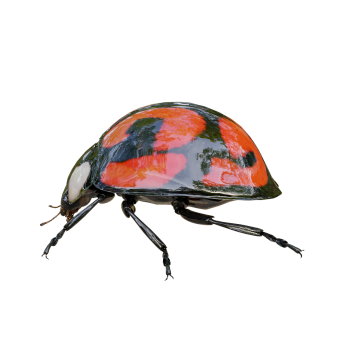
The six-spotted heteropyridis is medium in size, with adult body length up to 13mm, body color is usually black, with multiple white or yellow spots on the anterior thoracic back and elytra, and 6 obvious white or yellow spots on the elytra. Mainly found in parts of Europe and Asia, it is common in sunny areas such as forests, meadows and gardens. It is a predatory insect, which mainly feeds on the insects of the leaf nail family and has a certain effect on the control of pests. The adults migrate from the forest to sunny rocky hillsides or buildings in early autumn in search of overwintering sites, forming clusters of up to several hundred individuals that maintain higher temperatures by aggregating to survive the winter.
Japanese Swallowtail Butterfly

Japanese Swallowtail Butterfly

The Japanese swallowtail butterfly, also known as the black belt swallowtail butterfly or the horse butterfly, is a large butterfly with a wing span of 100-120mm. The female is usually larger than the male, the wings are mainly black with yellow or white markings, the forewings have two yellow banded stripes, the hindwings have yellow spots and blue flashes, and the hindwings have prominent caudal processes. Mainly distributed in East Asia, often inhabiting forest edges, grasslands and mountains, preferring sunny environments. The adults feed on nectar and the larvae feed on Rutaceae. In Japan, swallowtail butterflies are regarded as auspicious symbols and often appear in works of art, but their numbers have declined due to habitat destruction and environmental pollution.
Chinese broadsword gladiator 3D animation model

Chinese broadsword gladiator 3D animation model

The Chinese gladiator, also known as the Chinese mantis or Japanese gladiator, is a large mantis species belonging to the family Mantidae. The female body length can reach 47-90mm, the male body length 68-77mm. The body color is usually yellowish-brown or green, the head is triangular, the compound eyes are large, the forefoot base is long, and the lower edge has blunt teeth. It is a carnivorous insect that preys mainly on other insects and occasionally on small vertebrates. Usually in the morning and evening activities, love shade afraid of heat, hot summer at noon often perched in the shade of the crown. Because of its large size, large appetite, wide range of insect-eating, strong fecundity and other characteristics, it has become an important predatory insect.
Ellegaon spade

Ellegaon spade

A small shovel is a small spade worm, male 15-20mm long, reddish brown, with a black striped elytra. Mainly distributed in Southeast Asia. Male individuals have short and curved large jaws with fused internal teeth and unique morphology. It usually lives in mountainous areas at higher elevations and is adapted to warm and humid environments. In rearing, the larvae feed on rotten wood, and the adults can eat insect-specific jellies or sweet fruits. Because of its small size and unique appearance, it is loved by insect lovers and suitable for beginners.
Giant Ants

Giant Ants

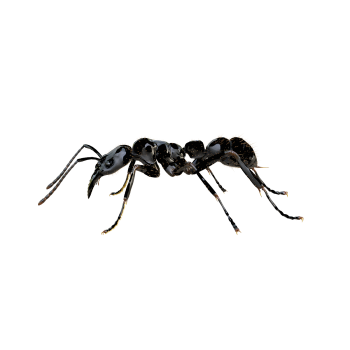
Giant Ants is one of the largest ants in the world, belonging to the Formicidae needle ant subfamily. The body length can reach 25-40mm, mainly distributed in the tropical rain forests of South America. The body is huge, black in color, shiny, and the surface is covered with fine hair. Nests are usually located in soil with large nesting chambers and tunnels up to 1.2 meters deep. It feeds on small insects, but mainly on the nectar and sweet juice of plants. The venom is very strong, and the sting is very painful, lasting for 48 hours, and can even cause symptoms such as swollen lymph nodes, edema, and tachycardia. Nevertheless, there is a role for pest control in the ecosystem.
Ghost Slub Insect 3D Animation Model

Ghost Slub Insect 3D Animation Model

The ghost stick insect, also known as the giant spiny stick insect or mccley's ghost, is a larger species of stick insect native to australia and new guinea. Known for its unique appearance, the female can be up to 15-18cm long, covered with thorn-like thorns, and has a variety of colors, including brown, green, yellow and white. The male is small, about 12-13cm, with well-developed wings and capable of flight. The adults feed primarily on eucalyptus leaves and have a unique defense mechanism that, when threatened, rolls up their belly to mimic the tail of a scorpion and releases a taffy-like scent to scare off predators.
South America Lantern Wax Cicada 3D Model Animation

South America Lantern Wax Cicada 3D Model Animation

The South American lantern wax cicada, also known as the peanut-headed lantern fly or alligator, is a larger insect of the order Hemiptera. Mainly living in the tropical rain forests of South and Central America, it has a distinctive head protuberance resembling a peanut shape with a prosthetic eye that looks like the head of a lizard or snake. The head protrusion may be used for camouflage and defense, and the artificial eye markings on its wings expand when threatened to scare off predators. It also releases unpleasant chemicals to ward off threats and is not deadly toxic. It feeds on the sap of large trees.
Spider Bee

Spider Bee

Spider wasp is a large solitary bee, belonging to Hymenoptera spider wasp family. It is known for hunting spiders, especially the larger tarantulas. The venom is painful in humans, but usually not fatal. The body length can reach 30-50mm, the body is blue-black or green-black, with a metallic luster, and the wings are usually orange or brown-red. Mainly distributed in the tropical and subtropical regions of South America. The habitat is mostly dry desert and grassland areas. In predation behavior, the spines at the tail end are used to inject the spider with venom, paralyze it, and then drag it back to the nest as a host for spawning.
Five-line slippery-tailed scorpion

Five-line slippery-tailed scorpion

The five-line slippery-tailed scorpion, also known as the Israeli golden scorpion or death scorpion, is a highly venomous scorpion that lives in North Africa and the Middle East. The body length is usually between 7 and 8cm, and the body color is yellowish brown or dark brown. The venom contains a strong neurotoxin that is potentially deadly to humans. The habitat is mostly dry desert areas, often digging caves under rocks or in sand dunes. Predators are mainly other insects and small invertebrates. Due to the strong toxicity of its venom, the five-line smooth-tailed scorpion is considered one of the most toxic species in the scorpion kingdom.
Golden Ring Wasp

Golden Ring Wasp

The golden-ringed wasp, also known as the Asian hornet, is the largest wasp in the world. Head orange, body dark brown. It is mainly distributed in the subtropical and temperate regions of eastern and southeastern Asia, and widely distributed in China. It is a social insect that overwinters as a fertilized queen bee in tree holes, wall crevices or rock crevices. It mainly preys on other insects, including bees, caterpillars, etc., and has a certain effect on pest control in the ecosystem. It also poses a threat to the bee farming industry, capable of quickly destroying bee nests. Venom is dangerous to humans, especially to people with allergies. In Japan, the Golden Ring wasp is responsible for 30 to 50 deaths a year.
Margarita Stick

Margarita Stick

The margarita lou is a species of beetle belonging to the family Rhinoceridae, known for its unique appearance and rarity. It is mainly distributed in the Brazilian state of Para in South America. The head has two similar rhinoceros horn protuberances, chest horn is also more developed, the front chest will appear red-green metallic luster. The larval period is longer, usually 5-12 months, the dormancy period is 2-4 months, and the adult life span is 2-6 months. The adults feed mainly on rotten wood and fruit. The reproductive cycle is long, the female lays eggs after mating, and the larvae hatch and grow in a suitable environment. Because of its unique appearance and feeding difficulty, it has gradually attracted the attention of insect lovers.
3D Animated Model of Rhino Beetle

3D Animated Model of Rhino Beetle

The rhinoceros beetle, commonly known as the unicorn, is a large beetle belonging to the Coleoptera golden tortoidae. It is known for the prominent bifurcated horns on its head and forearboard, which resemble rhino horns, hence its name. Amazing strength, can lift 850 times their own weight. Mainly distributed in the tropics. It belongs to the complete metamorphosis development insect. The adults feed mainly on plant secretions or vegetables, while the larvae develop in rotting plants, dead leaves or tree holes. During the mating season, it will show strong territorial and aggressive, and the males will fight fiercely for their mates. Because of its unique appearance and powerful strength, it is often kept as a pet.
Emperor Scorpion 3D animation model

Emperor Scorpion 3D animation model

The emperor scorpion, also known as the African emperor scorpion or overlord scorpion, is one of the largest scorpions in the world, with a body length of up to 20cm. It is dark black and has strong chelicerae and red tail spines. This species of scorpion is found mainly in the rainforests of central and western Africa. It is a nocturnal animal that feeds on insects and other small arthropods. Although the venom is not a deadly threat to humans, it has a certain degree of defense. It grows slowly and needs to be grown by multiple shelling. Due to habitat destruction and illegal capture, the field population of the emperor scorpion is threatened and has been listed in the Convention on International Trade in Endangered Species of Wild Fauna and Flora.
Black Garden Ant

Black Garden Ant

The black garden ant, also known as the common black ant, is a widely distributed species of ant belonging to the family Hymenopteridae. There is a clear division of labor in the colony, with worker ants responsible for building nests, caring for larvae and foraging, while queens are responsible for reproduction. Nests are usually located outdoors in soil or under slabs laid on the sun-facing side of the building. Likes a warm environment and often nests in cities, parks and gardens. It feeds on the secretions of aphids, so it often symbiosis with aphids and protects aphids from natural enemies. Because of its strong adaptability, rapid growth and easy feeding, it is often used as a pet ant. Longer life, the queen can live to 15 to 30 years. It is distributed in many regions of the world.
Big Blue Flash Butterfly

Big Blue Flash Butterfly

The Great Blue Flash Butterfly, also known as the Blue Moore Fu Butterfly and the Blue Demon Ji, is the largest species of the Flash Butterfly genus in the Flash Butterfly family. Known for its metallic blue wings, the upper surface of the wings is bright blue, while the lower surface is similar to the leaves, showing mottled brown, gray, black or red. It lives mainly in the rainforests of Central and South America. The wings have a unique structural color, and their scales are complex in structure. They are composed of multi-layer three-dimensional fences. When the light is irradiated, they will produce physical phenomena such as refraction, reflection and diffraction, thus showing a brilliant metallic luster. The adults feed on the sap of rotting fruit. The larvae are hosted by cocaceae and legumes.
Aqua green dragonfly

Aqua green dragonfly

Dragonflies are a class of ancient insects belonging to the order Odonata. They have a slender body with two pairs of transparent and multi-winged wings that flatten out on either side of the body at rest. The head has a pair of compound eyes, which occupy most of the head, making it have excellent visual ability and can keenly capture moving objects. Incomplete metamorphosis insect. The larvae live in water, breathe through the gills, and prey on small aquatic organisms. The adults, on the other hand, fly through the air, feed on other insects and are excellent fliers, able to move, hover and turn quickly in the air. It is widely distributed around the world, especially in tropical and subtropical regions.
Dragonfly

Dragonfly

Dragonflies are a class of ancient insects belonging to the order Odonata. They have a slender body with two pairs of transparent and multi-winged wings that flatten out on either side of the body at rest. The head has a pair of compound eyes, which occupy most of the head, making it have excellent visual ability and can keenly capture moving objects. Incomplete metamorphosis insect. The larvae live in water, breathe through the gills, and prey on small aquatic organisms. The adults, on the other hand, fly through the air, feed on other insects and are excellent fliers, able to move, hover and turn quickly in the air. It is widely distributed around the world, especially in tropical and subtropical regions.
giant flat stick insect

giant flat stick insect

The giant flatworm, also known as the Malay giant flatworm or jungle nymph, is one of the heaviest known bamboo worms. Adult females can reach 15-17cm in length, weigh about 30-65 grams, have spikes all over their bodies, and look a little fierce and scary. It lives mainly in the rainforests of Southeast Asia, including Malaysia, Singapore, Thailand, Sumatra and Borneo. Females are bright green or bright yellow, with wide body size, short wings and can not fly; while males are small, about 10cm, brown, with developed wings and can fly. It feeds on the leaves of a variety of plants, including oak, beech, blackberry, and ivy.
Limulus 3D model

Limulus 3D model

The horseshoe crab is a kind of ancient marine arthropod, which belongs to the class Limulus. The body is divided into three parts: head and chest, abdomen and sword tail. The cephalothorax is horseshoe-shaped, with 3 longitudinal ridges and 1 compound eye on each side of the longitudinal ridges. The abdomen is small, hexagonal, with 6 pairs of appendages, of which the first pair is more pliform left and right, with a reproductive foramen below. Sword tail slender, used to support the body. Blood is blue because it contains the copper ion hemocyanin. It mainly lives in shallow sandy seabed and prefers to live in estuaries with low salinity. It is a carnivorous animal that feeds on worms and small-sized mollusks. Known as "living fossils" because they have existed since the Ordovician
Borneo Lantern Fly Specimen

Borneo Lantern Fly Specimen

The Borneo lantern fly is an insect belonging to the family Cicadae, mainly found in the Borneo region of Southeast Asia. Known for its distinctive appearance, the head has a distinct protuberant structure, usually red or orange in color. The wings are brightly colored, often with green or white, and dotted with yellow spots. It lives mainly in tropical rainforests and feeds on the sap of plants. It plays an important role in the ecosystem of Borneo and is an important part of the biodiversity of the region. Due to its unique appearance and ecological habits, the Borneo lantern fly has also attracted the attention of many nature lovers and researchers.
Crawling spider 3D animated model

Crawling spider 3D animated model

Xihe and silk butterfly 3D model animation

Xihe and silk butterfly 3D model animation

Xihe and Sericidae is a rare butterfly belonging to the family Sericidae of Lepidoptera. The wing span is about 69mm, the wings are white, and there is a column of black circular spots on the sub-outer margin. There is a large black spot in the middle and end of the anterior wing middle chamber, two black spots in the middle chamber, and a red spot with black edge in the middle of the posterior edge. Female butterflies have more dark scales on the wing surface than male butterflies, and there is often an extra black spot on the hindwing, while the red spots on the forewings of male butterflies sometimes degenerate into small red spots. The larvae are host plants of the genus Sauerella, the genus Sauerella and the genus Saueropsis. It lives in arid low-altitude mountainous areas at an altitude of 500 to 3000 meters. The survival situation is not optimistic, and its habitat is destroyed.
Wasp 3D Model

Wasp 3D Model

Wasp is a general term for hymenoptera wasp insects, is a class of large, with obvious striped bees. The body is usually black and yellow, with a smooth exoskeleton and a pair of transparent wings. The body size is large, the body length can reach 20-30mm, the head is triangular, and the antennae are slender and curved. It is a social insect that lives in colonies consisting of queen bees, worker bees and drones. Nests are usually built in tree holes, under eaves or in corners. The nests are made of beeswax and plant fibers and are paper-shaped. The structure of the nest is complex, with multiple hexagonal hives inside, which are used to hatch larvae and store food. It is a predatory insect that feeds on small insects and spiders.
Orchid Mantis 3D Model Animation

Orchid Mantis 3D Model Animation

The orchid mantis, also known as the flower mantis, is a species of mantis that lives in the tropical rainforests of Southeast Asia. Known for its amazing mimicry abilities, the body is white or pink, with green eyes and an olive-green ring-shaped chest, and the limbs have large petal-like leaves that closely resemble orchids. This mimicry not only helps them avoid predators, but also attracts prey. Mainly distributed in Malaysia, Myanmar, Thailand, the Philippines and Indonesia and other places. It usually inhabits orchid-blooming areas and uses mimicry to catch pollinating insects, such as butterflies, moths, and beetles. It is an ambush hunter who will stand still and wait for the prey to approach before catching it quickly.
Stem eye fly 3D animation model

Stem eye fly 3D animation model

The stem-eye fly, also known as the hammerhead fly or the malay stem-eye fly, is an insect belonging to the family Diptera exophthalmicidae. It is famous for its unique head structure. Its eyes are located on the long stalks on both sides of the head. This structure is called "eyestalk" and is its most prominent feature. It is mainly distributed in the tropical and subtropical regions of Asia. The adult body is about 10mm long and has a metallic luster, usually green or blue. Males usually have longer eyestalks than females, and this sexual ditype plays an important role in mate selection. The larvae usually live in the stems of plants and feed on plant tissue, while the adults feed on nectar and other small insects.
Tiger Beetle 3D Animated Model

Tiger Beetle 3D Animated Model

Tiger beetle is the coleopteran tiger beetle family insects collectively, is a class of medium-sized beetle, with bright metallic luster and rapid action ability is known. The head is large, the compound eyes are prominent, the antennae are filiform, and the elytra is long and can cover the entire abdomen. The adult body length is generally 17.5-22mm, 7-9mm wide, and each part of the body has a strong metallic luster. It is a carnivorous insect that is active during the day and can fly low to prey on small insects. Spend most of the time on the ground, good at chasing small insects and catching prey with long, powerful jaws. The larvae live in vertical holes dug by adults and retreat into the holes when frightened.
stripe shield bug

stripe shield bug

The striped shield bug is an insect belonging to the family Hemiptera Pentatomidae. Its adult body is 8-12mm long, the body is almost round, with a large shield. The upper lateral base color is orange-yellow with a broad black longitudinal stripe, with six black bands on the pronotum and black antennae. This insect is widely distributed in Europe and feeds mainly on umbelliferae. Eggs are usually placed in groups at the base of host plant leaves, and individuals in the nymphal stage look like mini-adults with irregular patterns, but lack fully developed wings. Adults emerge through a final molt, displaying distinct streaks and a sturdy shield-like body.
potato beetle

potato beetle

The potato beetle, also known as the Colorado potato beetle, is a world-famous destructive quarantine pest. Native to the Rocky Mountain region of North America, it initially feeds on wild solanaceae plants and has gradually become a major pest with potato cultivation. The adult body is about 10mm long, oval, orange, with ten black longitudinal stripes on the elytra. Both larvae and adults feed on the leaves of Solanaceae plants, especially potato, which can lead to the complete consumption of leaves and seriously affect crop yield. It has strong adaptability and fecundity, and is resistant to a variety of pesticides, making it extremely difficult to control.
European spade

European spade

European spade nail, also known as stag spade nail or European deep mountain spade nail, is a large beetle, belonging to the Coleoptera spade family. The body length of the male individual can reach 35-60mm, and the female is slightly smaller. The male insect has a large red upper jaw, shaped like a deer horn, used to compete for mates. It is mainly distributed in Europe, from southern Britain to Bulgaria, Greece and other places in Eastern Europe, and even in the Mediterranean coast of North Africa and West Asia. It is the largest native beetle in Europe. The adults are often active in late spring to summer, gathering in broad-leaved forest trees to suck sap or juice, and are phototactic. are completely metamorphic insects. The larvae live in rotting wood and feed on dead wood
Serrated spade worm

Serrated spade worm

The serrated spade worm, also known as the Indonesian gold spade worm, is a spade beetle insect distributed in Indonesia and Papua New Guinea. It is known for its varied metallic colors, including gold, green, blue and purple. The body is 25 to 57mm long and has a large, upwardly curved, three-forked jaw. It is a diurnal insect that often moves on flowers during the day. Male insects cut through the epidermis of plants to absorb juice, while female insects rely on the juice "prepared" by male insects. The larvae feed mainly on rotten wood, and adults can eat sweet fruits or jelly for beetles. Breeding is easier, larval development period is short, suitable for beginners breeding.
3D animated model of grimace moth

3D animated model of grimace moth

The grimaced moth, also known as the human surface moth, belongs to the genus Lepidoptera surface moth. It is known for the skull-shaped markings on the back of its chest. Adult wings span 100-125mm, body color is dark black brown, front wings have gray white spots, hindwings yellow, base, middle and outer edge of a wide black band of three. Mainly distributed in Asia. The larvae feed on Solanaceae, Leguminosae, Oleaceae, Bignoniaceae and Labiaceae. The adults are nocturnal, phototactic and stop on tree trunks during the day. When disturbed, the grimaced moth flies around the ground and makes a "squeak" call.