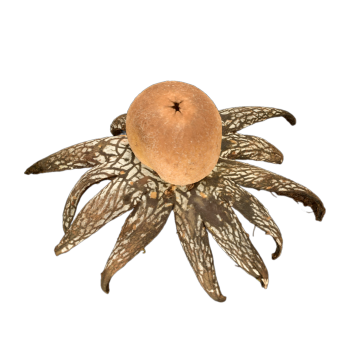

White grain big king flower tortoise

White grain big king flower tortoise

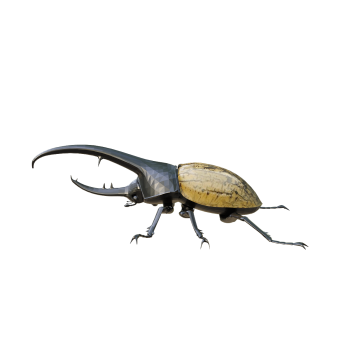
The white-striated king golden tortoise, also known as the tiger-spotted golden tortoise, is a large insect in the genus Golden Tortoise. The body length is 45-75mm in males and 40-50mm in females. Mainly distributed in Africa in South Africa, Zimbabwe, Zambia, Malawi, Tanzania and Mozambique. The distinctive feature is that the body color is black and white, and the black stripes on the elytra are horizontal and transverse. The larvae develop in termite dung, a unique habit of this species. Females dig shallow holes in termite droppings to lay eggs, and the larvae feed on decaying vegetation. The adults feed on sugar-rich foods, such as sap and fruit.
grimaced moth specimen

grimaced moth specimen

The grimace moth, also known as the human face moth and the skull moth, belongs to the family Lepidoptera Sphinidae. Its distinctive feature is that there are skull-shaped markings on the back of the chest, the color of the wings is mainly dark dark brown, the front wings are black, cyan, and yellow, the rear wings are yellow, and there are wide black bands at the base, middle and outer edges. Wing span is about 100-125mm, adults appear in July-August, phototaxis at night, and stop on tree trunks during the day. When disturbed, it squeaks and jumps. With Solanaceae, Leguminosae, Oleaceae and other plants as hosts, larvae harm crops such as flax. The grimace moth is widely distributed and is common in the low-altitude mountains of Asia.
3D model of a bee

3D model of a bee

Honeybee is an insect of Hymenoptera honeybee family, belonging to social insects, with a high degree of organization and division of labor. The head has a pair of compound eyes for sensing light and movement, and a pair of antennae for smell and touch. The thorax has three pairs of feet and two pairs of wings, and pollen baskets on the hind legs for pollen collection. It feeds on nectar and pollen by collecting nectar and converting it into honey for storage. Honey is not only a food source for bees, but also an important food for humans. Bees play an important role in the ecosystem. They help pollinate plants by visiting flowers and absorbing honey, which is of great significance to maintain ecological balance and increase agricultural production.
Black Widow 3D Animated Model

Black Widow 3D Animated Model

Black widow is a strong toxic spider, belonging to the arachnid, arachnids, spherical arachnids. The body size is small, the body length is usually between 8-13mm, the female is larger, the male is smaller. The body color is black, with red or orange hourglass-shaped markings on the abdomen, which is its distinctive feature. Widely distributed in the temperate regions of North America, often inhabited in dry, dark places. The net takes the form of an irregular reticulated structure and is usually located near the ground. It feeds on insects and other small animals and catches prey through its powerful cobwebs. The venom contains neurotoxins, which are dangerous to humans and animals.
Specimen of Pine Scarab

Specimen of Pine Scarab

Pine beetles, also known as pine-leaf beetles, are one of the largest species of beetles in Europe. Up to 38mm in length, the body is reddish brown or black, covered with fine white fluff, forming marble-like markings. Males have seven tassels at the end of their antennae, while females have only six and are narrower and shorter. It is mainly distributed in North Africa, Europe and the Middle East, especially in Central and Southern Europe. It usually inhabits sandy environments. The adults mainly live from June to July in summer, feeding on the needles of pine trees. Females lay eggs in sandy soil near pine forests, and larvae feed on herbaceous roots.
gem golden turtle specimen

gem golden turtle specimen

The gem tortoise is a genus known for its metallic luster in the family Tortoidae. It has a wide range of species, bright colors, and a very high ornamental value for its shell. The body color is diverse, and its metallic luster is strong, as if it were silver-plated. Mainly distributed in Central America, South America and parts of Asia. The larvae usually live in soil or saprowood and feed on plant roots or humus, while the adults feed on nectar and plant sap. The metallic luster of adults not only has ornamental value, but also may be related to their survival strategy. Because of its unique appearance, it is often used for insect specimen collection and even made into jewelry.
Japanese HIKA Hotaru 3D Model Animation

Japanese HIKA Hotaru 3D Model Animation

Hirakaya is a famous firefly found in Japan, South Korea and the Russian Far East. The larvae live in water, usually in rice fields, wetlands and other environments, while the adults are active in the summer night, emitting green cold light. The adult body is about 6.5-7.5mm long, and the male emits light rhythmically, while the female emits light continuously. Luminous behavior is primarily used to attract mates, with males finding females by flickering light and subsequently mating. It has an important position in Japanese culture and is often used for summer viewing activities, symbolizing the arrival of early summer. The number is decreasing due to habitat loss and environmental pollution.
Broken grain rotten Yan Jia

Broken grain rotten Yan Jia

The broken grain rotten is an insect belonging to the family Yanjia, which is small in size, usually oval in shape, and has a metallic luster. Its body length is generally between 3.5-5.5mm. There are distinct indentions on both sides of the anterior plate, which do not extend to the base. elytra posteriorly truncate, usually exposing ventral terminal 1-2 segments. It mainly lives in saprophytic microenvironment such as rotten wood, rotten grass, rotten fungus or animal carrion, and feeds on larvae, eggs or adults of other insects. The antennae are knee-shaped, the first segment is longer, and the end segments 3 and 4 are club-shaped. This kind of beetle is widely distributed in the world, especially in Eurasia.
Ten spot pot step armor

Ten spot pot step armor

Ten-spotted pot step carapace is a species of beetle belonging to the family Pacapidae. It is small in size, about 3.5-5mm in length, with a yellow ground color and black spots. The pronotum is black with an irregular yellow stripe in the middle and 10 black spots on the elytra, features that give it its name. It lives mainly in wet deciduous forests, with a particular preference for hillside environments with swamps or wetlands. The larvae usually live in mobile "pots" made from their own droppings and feed on fallen leaves, while the adults feed on the living leaves of their host plant. It is extremely rare in the UK, concentrated in parts of Scotland and England. It is currently classified as a vulnerable species.
Jewelry Tortoise

Jewelry Tortoise

The jewel golden tortoise belongs to Gidinko and is one of the most striking beetles in the world. Known for its metallic luster and jewel-like color, the body length is usually between 1.5-60mm. Color does not come from pigments, but from the reflection and refraction of light by the microscopic structure of its shell. Widely distributed in the world, the most abundant species in the tropics. The larvae usually live in the xylem of a tree or plant and feed on woody material, while the adults feed on nectar, pollen and plant leaves. The peak of activity is in the warm summer, often collecting honey on flowers. Its metallic luster is not only used for camouflage, but also as a warning signal.
bumblebee specimen

bumblebee specimen

Bumblebees are social insects belonging to the genus Bumblebee in the family Honeybee, with three forms: queen bee, worker bee and drone bee. The body is large, covered with fluff, and has strong resistance to low temperature and low light. Even in the cold weather when bees do not come out of the nest, bumblebees can move normally. The mouthpart is long and suitable for collecting pollen of deep crown tube flowers, so it is of great value in agricultural pollination. Belongs to completely metamorphic insects. The selectivity of pollen and nectar is strong, with high pollination efficiency. Widely distributed in cold and temperate regions, China has more than 120 kinds. It plays an important role in the ecosystem.
Cricket 3D Model Animation

Cricket 3D Model Animation

Cricket is the general name of the orthoptera crickets, is a common insect, known for its unique song. The body length is usually between 1 and 3cm, the body color is mostly brown or black, with two pairs of wings, the forewings are harder and the hindwings are softer. There are special articulators on the forewings, which produce chirps by friction and are used to attract females or declare territory. The larval stage requires multiple molts to develop into an adult. Mainly to plant roots, stems, leaves for food, some species will also prey on small insects. Its chirping is one of the representative sounds of summer and autumn nights, usually at dusk or at night. It is considered a symbol of autumn.
One-horned specimen

One-horned specimen

The unicorn belongs to the subfamily Rhinoceridae, a large beetle. It has a prominent Y-shaped bifurcation angle, the head and front chest back are black or dark brown, and the surface is smooth and shiny. The forewings are crusty and the hindwings are transparent, relying on the hindwings to fan in flight. It is mainly distributed in East Asia, including China, Japan, South Korea and the Korean Peninsula. Activities are frequent in the summer evenings. The adults feed on sap and fruit, while the larvae feed on saprophylla and humus. The larval period is long, and it usually takes 1-2 years to eclosion into an adult. Due to its unique appearance and large size, the unicorn fairy is often kept as a pet in Japan and China
Japanese Black Migratory Locust Specimen

Japanese Black Migratory Locust Specimen

The black migratory locust, also known as the black-tailed swamp locust or the black incarapa, is a large locust that lives in East Asia and belongs to the family Orthoptera. The male body length is 33-42mm, the body color is yellowish brown, and the hind knees and wing apex are black; the female body length is 45-49mm, the body color is brown. It mainly inhabits wetlands, swamps or tall grasses, and is distributed in Japan, the Korean Peninsula and parts of China. The active period is from July to September, feeding on grasses. The larvae appear from April to June and feed on herbaceous plants. Although these locusts are larger, they do not harm paddy fields.
periodic cicada specimen

periodic cicada specimen

Cyclic cicada is a kind of cicada insect with unique life cycle, mainly distributed in North America. With a life cycle of 13 or 17 years, most of the time in the form of larvae living in the ground, sucking the juice of tree roots. Every 13 or 17 years, the larvae collectively crawl out of the ground, molt and become adults, complete mating and oviposition. Adulthood has a short life span, usually only a few weeks, and is mainly used for reproduction. The adult body is about 2.5-3cm long, with black body color, red compound eyes, transparent wings and yellow veins. Males emit calls by vibrating the tympanic membrane in their abdomen, attracting females. They have an impact on the ecosystem.
Japanese Bear Cicada Specimen

Japanese Bear Cicada Specimen

The Japanese bear cicada, also known as the black giant cicada, is a common large cicada in Japan. With a body length of about 40-48mm and a wing end length of 60-65mm, it is one of the largest cicadas in Japan. It is mainly distributed in the area west of Kanto, Japan, including Shikoku, Kyushu, Okinawa, Taiwan and the Korean Peninsula. The body color is mainly black, the surface is shiny, the body surface of fresh individuals is covered with yellow and white micro hair, and there are white stripes on both sides of the abdomen. The larvae feed on tree roots, while the adults suck sap and often gather on mulberry, poplar, persimmon and other plants. Belongs to the incomplete metamorphosis insect. It takes seven years for hatching to eclosion, while the adult life span is only about two weeks.
Specimen of Pteris

Specimen of Pteris

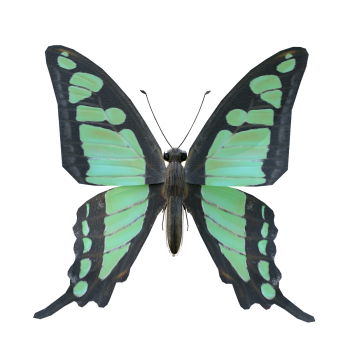
The Papilionus is a general term for the insects of the family Papilionidae, belonging to the suborder Lepidoptera butterflies. Large, colorful, often eye-catching markings on the wings, is a very ornamental species of butterflies. The forewings are long, the hind wings are clearly caudal, and the posture is graceful when flying, often referred to as the "queen of the butterfly". There are many kinds, about 600 species are known in the world, and they are widely distributed, from tropical rain forests to temperate regions. The host plants are diverse. The larvae usually feed on plants such as Citrus, Magnolia, and Aristolochaceae, while the adults live on nectar and often dance in the flowers. plays an important role in the ecosystem.
Elephant Hawk Moth 3D Animation Model

Elephant Hawk Moth 3D Animation Model

The elephant hawk moth is a large moth belonging to the family Lepidoptera. Its name comes from the fact that the larvae elongate their bodies when they feed, resembling the trunk of an elephant. The adult body is 35-40mm long, the wing span is about 70-80mm, the body color is bright, the front wing is pink and green, and the rear wing is bright pink. The larvae have a unique defense mechanism. When frightened, they will retract their bodies and use their spots to disguise themselves as snakes to scare off natural enemies. The adults are mainly nocturnal, feed on nectar and have a strong ability to fly. The larvae feed on the willow family, while the adults visit the flowers at night to absorb honey.
Peacock Moth 3D Animation Model

Peacock Moth 3D Animation Model

Peacock moth is a large and beautiful moth, mainly distributed in the forests and grasslands of Europe, Asia and North America. The whole body is covered with reddish brown fluff, there is a white bow tie around the neck, there are gray and brown dots on the wings, and a pale zigzag line runs through the middle. There is a circle of gray white edges around the wings, and there is an eye-like pattern in the center, which is composed of curved lines of black, white, maroon and purple. These patterns make them stand out when flying. The larvae feed on the leaves of the plant, while the adults do not feed, and the lifespan is usually only 2-3 days. Looking for a spouse in a short life.
Elephant beetle specimen

Elephant beetle specimen

The elephant beetle, also known as the weevil, belongs to the family Coleoptera, is one of the largest species in the insect kingdom, with more than 60000 species recorded worldwide. The distinctive feature is a long beak extending in front of the head, similar in shape to the trunk of an elephant, and a mouthpiece at the end of the beak, which is used for feeding and laying eggs. The body is diverse, ranging from small to large, and most species are covered with scales. Both adults and larvae are herbivorous, larvae are usually foot-free, curved C- shaped body, feeding mainly on plant roots, stems, leaves or seeds. Ecological habits are diverse, mostly terrestrial, slow-moving, with false death, a few species have phototaxis.
Goliath Beetle Specimen

Goliath Beetle Specimen

The Goliath beetle is a large-sized insect of the family Goliathus, mainly found in the rainforests and savannas of Africa. Is one of the world's largest insects, adult body length up to 11.4cm, weight up to 100 grams. The appearance is very striking, usually with black and white stripes on the back of the chest, the abdomen is bright red or orange. The larvae are large and feed on decaying plant and animal debris, while the adults feed mainly on sap and fruit. Males have a pair of Y-shaped horns on their heads to compete for mates and food; females have no horns and have a wedge-shaped head, which is more suitable for digging egg holes.
Flies 3D animated model

Flies 3D animated model

Fly is a common Diptera insect. The scientific name "housefly" is small in size, with a body length of about 6-7mm, and the whole body is gray and black. The body is divided into three parts: head, chest and abdomen. The head has a pair of compound eyes and a pair of antennae. The compound eyes are composed of many small eyes, which can sense light and movement. The thorax has three pairs of feet and two pairs of wings, and the hindwings degenerate into balance bars to help maintain balance during flight. Living habits are complex and highly adaptable. It mainly feeds on decaying organic matter, garbage, feces, etc., and can also spread a variety of germs and parasites. Extremely strong reproductive capacity. Is considered to be an important vector of insects, can spread dysentery, cholera, typhoid and other diseases
oil gourd specimen

oil gourd specimen

Oil gourd, also known as yellow-faced oil gourd, Beijing oil gourd, is an insect of the family Orthoptera crickets. Large body, body length 18-26mm, the whole body is dark brown or brown, the surface is shiny. The head is spherical, the face is yellowish brown, there are light yellow eyebrow pattern above the compound eye, and the antennae are black around. forewings brown and glossy, lateral yellow, hindwings developed, extending ventral end. Widely distributed, almost all over China, often inhabiting fields, hillsides, rock crevices and weeds, hidden during the day, night activities. The roots, stems and leaves of plants are harmful to crops.
Taiwan Saus Specimen

Taiwan Saus Specimen

Taiwan Saosi, also known as Taiwan textile niang, is a large katydids insect. Its body length can reach 50-75mm, its body color is green and brown, and its body shape is similar to a flat pod. There are large black spots on both sides of the back of the head, which is a prominent feature. Male individual antennae slender, beyond the wing end, hind legs developed, good at jumping. Mainly living in low-altitude woods next to the scrub or grass, adult mostly in the summer and autumn season. Male Taiwanese saos make loud chirps at night, used to attract females, while during the day they are still and look like leaves, making them difficult to detect.
damselfly specimen

damselfly specimen

The damselfly is a small carnivorous insect belonging to the Insecta, Odonata, and Bundle-winged suborder. It is similar in shape to the dragonfly, but with a more slender body. The body is slender, the compound eye is developed, the antennae are setae, the front and rear wings are similar in shape and almost the same size, and the wings will unite and stand on the back when resting. Bright color, with metallic luster, usually live close to the water, to mosquitoes, flies and other small insects for food. The reproduction process is very unique, the female will lay eggs on the water side of the plant or in the water, the larvae live in the water, after many molts after eclosion into adults. It is a beneficial insect for human beings and can help control the number of pests.
(mantis) specimen

(mantis) specimen

The mantis, also known as "cicadas", belongs to the hemiptera cicadae. It is a small cicada with a body length of about 2.5cm and a purple-blue or yellow-green color with black stripes. The hindwings are transparent except for the black margin. Males have articulators in their abdomen and can make "chi-chi" calls, which are not as loud as large cicadas, but last longer. Widely distributed, common in China, Japan, the Korean Peninsula and other places. Usually inhabited in lowland, mountainous or urban environments, with a particular preference for trees such as cherry blossoms and pines. It is one of the cicadas that appear earlier in summer. The larvae live in moist soil and feed on the sap of plant roots.
red-winged moth specimen

red-winged moth specimen

The red-winged moth is a common insect of the family Noctuidae. Its distinctive feature is that its wings are brightly colored, usually mainly red, with black or other colored stripes or spots, and have a high degree of recognition. The front wings are mostly grayish brown or dark, with a protective color, while the rear wings are bright red, and the red wings are exposed when flying, which is very eye-catching. The body size is medium, the wing span is generally between 30-60mm, the specific size varies with species. It is mainly active at night, has strong phototaxis, and is often attracted by lights. Widely distributed, it is common in temperate and subtropical regions, especially in forest edges, farmland and urban green space.
Chinese dagao gladiator

Chinese dagao gladiator

The Chinese gladiator, also known as the Chinese giant roach and the Chinese sword, is a progressive carnivorous insect of the Arthropoda, Insecta, Mantis, Mantis, Mantis. It is one of the largest mantis in China, with a body length of 7-9cm and a green and brown color type. The specific color varies with the living environment. The head is triangular, with prominent compound eyes and short antennae. The forearm is long and the forefoot is strong, with spikes, suitable for catching prey. The main prey on locusts, moths, butterflies, flies and other pests, and occasionally prey on small reptiles. Widely distributed in the north and south of China, also found in Japan, Vietnam, the United States and other places.
Snail shell (3D printed)

Snail shell (3D printed)

Snails are mollusks of the family Snails, with over 25000 known species worldwide. Snails have a soft body with a spiral shaped outer shell, and their body is divided into a head and feet; There are 2 pairs of antennae on the head, 1 pair of longer antennae on the back, and 1 pair of eyes at the top of the antennae. There are jaws and file shaped teeth in the mouth, which are used for chewing and chopping food; The abdomen and feet are flat and secrete mucus at the bottom, making it convenient for the feet to use muscle contractions to glide on different surfaces. Breathing occurs in tissues similar to lungs, and air enters through the inhalation port. Snails are named because they have two horn like antennae on their heads when crawling.
Conch

Conch

Conch shells are produced in coastal areas such as Guangdong and Fujian in China. It is also distributed in the vast sea area from northern Honshu, Japan to Hokkaido and the Sea of Okhotsk. Living in shallow waters, accustomed to crawling slowly. The lifespan of seashells is around three years. Traditional Chinese medicine believes that conch meat has therapeutic and health benefits for diseases such as jaundice, athlete's foot, and hemorrhoids. The nutrition in conch meat is relatively balanced, containing abundant vitamin A, protein, iron, calcium and other elements.
3D animation of Tyrannosaurus rex model

3D animation of Tyrannosaurus rex model

He was a top predator in the late Cretaceous period, known for his enormous size and powerful abilities. Fossils were first discovered in 1902 by American paleontologist Barnum Brown in the Hale Creek area of Montana. The skull is huge, the teeth are sharp, the forelimbs are short, the hind limbs are strong, and the tail is long and powerful, making it an important tool for hunting and balancing the body. With a large body size and extremely strong biting force, it is one of the strongest known land predators. Fossils have been discovered in multiple regions around the world, especially in North America. It is one of the most well-known dinosaurs of the dinosaur era, but further research is needed on its classification and evolutionary history.
Blue Whale Model 3D Animation

Blue Whale Model 3D Animation

As the largest living animal, it is a giant in the ocean. The body is streamlined, with a deep blue gray back and a shallow abdomen with white spots and over 20 folds. The entire body resembles a razor, hence it is also known as the "razor whale". The head is relatively small and flat, with two jet holes located on the top of the head. Their mouths are huge, without teeth, but they have 300 to 400 black whiskers. The power of blue whales is astonishing, emitting approximately 1500 to 1700 horsepower. The appetite is huge, consuming 4000 to 8000 kilograms of food per day, mainly consisting of krill. Distributed in all oceans around the world.
3D animation of humpback whale model

3D animation of humpback whale model

Also known as the humpback whale, humpback whale, or humpback whale, it is a large marine mammal belonging to the family of baleen whales and the genus of humpback whales. Known for its posture of leaping out of the water, long forewings, and complex vocalizations. It is distributed in all oceans around the world, especially in the waters of Antarctica. They feed on krill and group swimming small fish, usually using bubble net predation to catch krill. Every year, there is a regular north-south migration, during which the huge tail fin is exposed while diving, and the body is often leaped out of the water or one side of the fin limb is raised sideways. There is a strong sense of attachment between male and female humpback whales, as well as between mother and son. Recognized as a national first-class protected wild animal.
Turtle Model 3D Animation

Turtle Model 3D Animation

It is a type of reptile that lives in the ocean, belonging to the order Turtles and family Turtles. Distributed in tropical and subtropical waters around the world, it feeds on seagrass, jellyfish, mollusks, and crustaceans. Long lifespan, some individuals can live to over 100 years old. The body is streamlined and the limbs have evolved into paddle shaped fins, making it very suitable for swimming in water. The shell is divided into the carapace and the plastron, with the carapace being their main protective structure and the plastron providing stability during swimming. The breeding method is special. Females will build nests and lay eggs on the beach, then bury the eggs in the sand and rely on the heat of the sun to naturally hatch. Many species are listed as endangered.
Tuna model 3D animation

Tuna model 3D animation

It is a type of oceanic important commodity food fish distributed in tropical and subtropical waters around the world, belonging to the order Perciformes, family Scombridae, and class Actinopterygii. Known for its streamlined body, fast swimming ability, and rich nutritional value. It is a carnivorous fish that feeds on small fish, crustaceans, and other marine organisms. It has extremely high commercial value and is a high priced commodity in the global seafood market, commonly used for making sushi, sashimi, and other seafood dishes. The meat is delicious and rich in protein, healthy fats such as omega-3 fatty acids, as well as various vitamins and minerals. Due to overfishing, it has been listed as an endangered species by the International Union for Conservation of Nature.