


Freecreat category
Animals/Organics
Browse models in this category, preview details, then continue to download when ready.

Great Hornet
The Great Hornet is an animal belonging to the Yellow Hornet genus of the Hornet family. The female body is 30-35 millimeters long, with a brown head and a raised head. Hornets are distributed in Guangdong, Hainan Island, Guangxi and other places in China. The Chinese Journal of Medicinal Animals records that the Great Hornet "has the function of reducing swelling and detoxifying. It is mainly used for treating carbuncles, sores, and toxins, as well as spider and centipede bites." In summer and autumn, the Great Hornet is captured, boiled in boiling water, dried in the sun, and all adult insects are used as medicine or ground for later use. This product has the effects of detoxification, reducing swelling, and treating boils. It can be taken orally or applied externally. When faced with attacks or unfriendly disturbances, giant wasps will attack in groups, which can cause allergic and toxic reactions in the attacked animals.

Hammerhead sharks
The hammerhead shark is a collective term for the family of hammerhead sharks in the order Siluriformes of the phylum Chordata. The hammerhead shark, also known as the hammerhead shark, is named after its T-shaped head shape. The hammerhead shark is distributed in the Bohai Sea, Yellow Sea, East China Sea and other sea areas of China, as well as in the Atlantic Ocean, Indian Ocean, and Pacific Ocean. It often appears on beaches, bays, and river mouths. Previously, all eight subspecies of the hammerhead shark were included in the IUCN Red List of Threatened Species.

Pterosaur
Pterosaurs are a collective term for reptiles in the order Pterosauriformes, which are closely related to dinosaurs and crocodiles. Their name means winged lizards. Pterosaurs are extinct reptiles and vertebrates capable of flight. Pterosaur fossils have been found in Xinjiang, Inner Mongolia, Liaoning, Hebei, Gansu, Sichuan, Shandong, Zhejiang and other places in China, while pterosaur fossils have been found on various continents worldwide, including Antarctica. The pterosaurs lived from the late Triassic to the late Cretaceous, almost spanning the entire Mesozoic era.

Doberman Pinscher
The Doberman Inu is a carnivorous mammal belonging to the family Canidae and genus Canis. Doberman Inu, also known as Doberman Inu. The Doberman Inu was named after Mr. Louis Doberman, who cultivated this breed, to ensure its safety during missions. The Doberman Inu is native to Germany and has a lively, alert, firm, agile, brave, loyal, and obedient personality; Suitable for urban living, heat-resistant and cold resistant, does not require frequent grooming, easy to train, but not easy to get along with other dogs. Its absolute obedience to its owner is destined to make this breed of dog a natural "soldier", the best "border guard", and the first choice for border guards to carry out tasks
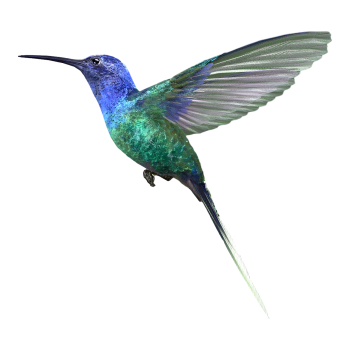
Swallowtail Blade winged Hummingbird
The swallowtail knife winged hummingbird, a precious bird of the hummingbird family, is distributed in South America. Hummingbirds are named after the buzzing sound they make when flapping their wings, resembling that of bees. Hummingbirds are the only bird species that can fly both backwards and forwards. Due to its small and exquisite size, the feathers are extremely colorful and dazzling, deeply loved by people. In the 19th century, women in Europe and America often used hummingbird feathers as headwear, and merchants purchased hummingbird skins, posing a great threat to the survival of hummingbirds. In modern society, with the deforestation and development of farming, the habitats that hummingbirds rely on for survival are gradually being destroyed, and some hummingbirds are also facing the danger of extinction.

Greenland Sleeping Shark
The Greenland sleeper shark, also known as the Greenland shark, is a marine animal belonging to the family Nymphalidae in the order Squaliformes. Named after its main distribution area in the waters near Greenland. The Greenland sleeper shark is distributed in the cold waters of high latitudes in the North Atlantic, as well as in the southern hemisphere of South Africa, Argentina, and the Antarctic. The Greenland sleeper shark is a benthic shark species that inhabits deep water environments. In summer, it migrates to shallow or estuarine waters at depths of 180-300 meters, living alone and swimming slowly. Their diet is very diverse, they almost eat whatever they encounter. He is fierce by nature and can also hunt polar bears. The Greenland sleeping shark is not only the largest fish species in cold sea areas, but also the fourth largest shark species in the world
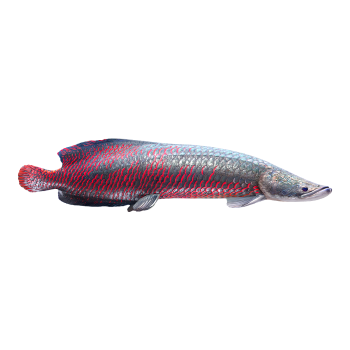
Giant Bone Tongue Fish
The giant bony tongue fish is a species of ray finned fish, bony tongue fish family, and giant bony tongue fish genus, also known as walrus fish. Adult fish can grow up to 2-6 meters in length and weigh up to 100 kilograms. Large in size, elongated, slightly flattened. The skull is composed of free plate-like bones. They often inhabit freshwater rivers. Eating fish, shrimp, and frogs. Heavy in size and slow in movement. Meat can be made into dried or salted products and is a popular food in production areas. After drying, teeth can be used as a substitute for filing tools. Live fish have beautiful colors and are used for viewing. Originating from the Amazon River in South America, it is one of the largest freshwater fish in the world.

Papilio ulysses
The wingspan of the Heavenly Butterfly can reach up to 105mm. The front and rear wings are pure navy blue from the base angle to approximately 1/2 to 2/3 of the (front) trailing edge. Residing in tropical continents, they migrate seasonally in search of food as they warm up. The Heavenly Phoenix Butterfly has beautiful and huge wings, and its whole body sparkles with a pure blue luster on a black velvet background, as if descending from the scorching sun and blue sky. Therefore, it is recognized by the local indigenous people as messengers from heaven and named them "Heavenly Phoenix Butterflies". This butterfly is also a tourism symbol of Queensland, Australia.

Emperor Butterfly
The Emperor Butterfly is an animal belonging to the subfamily Satyrinae of the family Nymphalidae, also known as the Emperor Butterfly or the Black veined Golden Butterfly. The emperor butterfly has prominent orange and black markings on its wings, with a width of 8.9-10.2 centimeters. The distribution range of monarch butterflies mainly migrates between North and Central America, with some crossing the Atlantic to reach islands near Africa and Portugal. The Emperor Butterfly is a unique species in Parsifek Grove, and its breeding habitat is protected. A butterfly parade is also held in early October every year. The Emperor Butterfly is one of the most common butterflies in North America and the only migratory butterfly on Earth

dove
Pigeons are birds belonging to the pigeon family in the pigeon shaped order. Pigeons are widely distributed, except in Antarctica, high latitude regions of the Northern Hemisphere, and extremely arid areas in deserts. Most of them inhabit forests or forests, while some inhabit open areas or near cliffs. The main plant-based food includes fresh green leaves, fruits, and seeds, and the parent bird feeds the chicks milk produced by the crop. Pigeons have high nutritional and medicinal value, as the ancient Chinese saying goes, 'One pigeon is worth nine chickens.'. Pigeon meat, eggs, and feces can all be used as medicine. Pigeon meat has a mild nature and a salty taste, and has the effects of nourishing the kidneys, qi, blood, dispelling wind, and detoxifying. Pigeons are often seen as symbols of peace, beauty, and happiness.

Raccoon
A mammal of the order Carnivora and family Raccoonidae, with an adult body length of 40-65 centimeters and a tail length of 20-40 centimeters. It weighs 4-10 kilograms and is slightly larger in males than females. Small in size. Black eye spots on the face, comical appearance, nicknamed "Masked Thief"; There are 5 to 7 black and white stripes on the tail. Raccoons have strong adaptability and can be found in various habitats, making them easy to live near humans. They need to fetch water at any time. I enjoy living in damp forests. Nocturnal animals have little activity during the day.

The sperm whale
Marine mammals of the order Cetiformes and family Sperm Whales. With a body length of up to 18 meters and a weight of over 50 tons, it is the largest toothed whale and the deepest and longest diving mammal. Like a fish in size, it breathes through its lungs. Sperm whales prefer to live in groups, often consisting of a small number of male whales and large groups of female and juvenile whales forming large groups of dozens or even two to three hundred. Sexually fierce. The marriage system of one male and multiple females. The geographical range of distribution is very wide. But it is usually found in the continental slope or deeper waters. The dried secretion of sperm whale intestines is called "ambergris", which is not only a precious spice but also a precious traditional Chinese medicine.
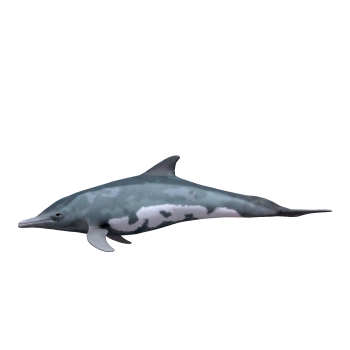
Stenella coeruleoalba
Striped dolphin, a species of dolphin in the family of dolphins, with a beak of equal length. Striped dolphins are capable of performing various aerial movements, such as jumping into water and colliding with water. There is a unique behavior of them, called 'tail turning', where they jump high and quickly rotate their tail leaves in front of water. This species was originally very abundant and is a common dolphin in the Pacific Ocean. In recent years, due to the deteriorating ecological environment, the population has sharply declined and urgently needs protection.

Ziphius cavirostris
The Coelacanth beaked whale is a mammal of the genus Coelacanth in the family Coelacanthae of the order Cetacean. Also known as the Corvinus beaked whale, goose beaked whale, Corvinus beaked whale, or goose beaked whale, it is usually inconspicuous and rarely observed at sea, but it is a widely distributed and numerous beaked whale. The Coelacanth beaked whale is also the mammal with the deepest diving depth, with a record high of 2992 meters, slightly higher than the sperm whale. It can hold its breath for up to 2 hours in water. The Coelacanth beaked whale can be said to be found all over the world, mainly inhabiting deep waters from tropical to cold temperate zones.

Wolf Spider
Wolf spider is a general term for the family of wolf spiders in the order of arachniformes. Due to its excellent hunting skills, agile movements, large predation, and fierce nature, it is named Wolf Spider. Currently, there are 2400 species belonging to 123 genera in the wolf spider family, distributed worldwide. China is known to have 26 genera and 310 species. Mostly active on the surface and edges of rice paddies or other fields. Gluttony, large predation, diverse diet. Spider venom is usually colorless, bitter in taste, and has an alkaline reaction. It is soluble in water but insoluble in alcohol and ether. In history, in 1952, the United States used a species of wolf spider in the family Colubridae to make bacterial weapons. At present, the wolf spider family has been included in the list of spiders in China's Jiuzhaigou Valley Scenic and Historic Interest Area Nature Reserve.

Green sea turtle
Green sea turtles are reptiles of the family Turtles in the order Turtles, also known as sea turtles. The lifespan can reach over 100 years. Green sea turtles are distributed in warm waters of the Atlantic, Pacific, and Indian Oceans, and are found along the coasts of Shandong, Zhejiang, Fujian, Guangdong, Taiwan, and other regions in China. Food sources include fish, crustaceans, mollusks, and seaweed. According to the survey, green sea turtles are the most frequently occurring and widely distributed sea turtles in China, but their numbers have significantly decreased. The main reasons for the decline in its population are human predation, destruction of spawning grounds, death from fishing nets, and seawater pollution. Listed as a first-class protected animal in China.
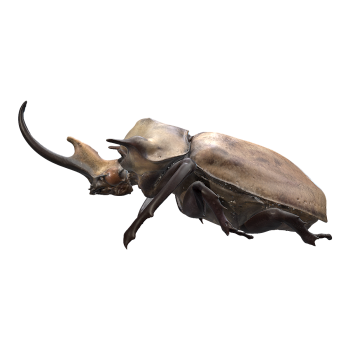
rhino beetle
Rhinoceros beetles belong to the order Coleoptera. Mostly distributed in tropical regions, with the most abundant species in Central and South America, more species in Africa and Oceania, and relatively fewer species in Asia. Seven genera and twelve species have been discovered in Yunnan, China. The head and pronotum often have prominent forked angles resembling rhinoceros horns, hence the name. Among them, the protruding sugarcane turtle, rubber rhinoceros beetle, and double forked rhinoceros beetle are commonly known as unicorn immortals.
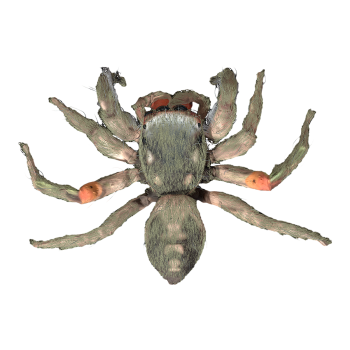
jumping spider
Jumping spider is a general term for the family Jumping Spider in the order Spider. The jumping spider family is the largest family in the spider order, with approximately 3000 species worldwide. The body is mostly short, thick, and slightly flat, with thick, short, and strong feet. It is good at jumping, hence the name. Jumping spiders are mainly distributed in tropical and subtropical regions. Jumping spiders are wandering spiders that, apart from hiding, molting, and laying eggs, do not usually form webs. They are fierce in nature and can prey on various pests. They have good eyesight and unique discernment ability. Jumping spiders capture prey through different movements such as stealth, chasing, and jumping. Jumping spiders are the only animals that can live for a long time at high altitudes on Mount Everest.

Geochelone nigra
It is the largest tortoise in the family Turtles and genus Turtles, and the largest tortoise in the family Turtles and genus Turtles. It is herbivorous and feeds on cacti, fruits, pineapples, ferns, leaves, and grass. Can live in drier environments. It is also a very slow moving animal, only able to move 260 meters per hour. Only distributed on 14 islands in the Galapagos Islands of Ecuador, a South American country. The two most famous individuals of this species are the lonely George and the tortoise Diego.
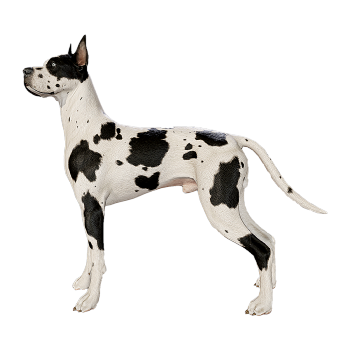
Spotted Great Dane
The Great Dane originated in Denmark in 2000 BC and its name comes from French. The Great Dane is mainly produced in Germany, and is also distributed in Italy and Spain. The Great Dane is easy-going, considerate, kind, intelligent, brave, and loyal to its owner. As an independent breed, the Great Dane has been cultivated for about 400 years. Like other ancient breeds, the original breeding of the Great Dane was to help people work. The Germans used the Great Dane to hunt wild boars. Now used for guard dogs, companion dogs, and working dogs. The Great Dane is known as the "Emperor of Dogs" and "Warrior of Dogs" in Germany. It is also known as the "easy-going giant" in the dog world and is easy to train.

Carcharhinus melanopterus
The black winged true shark is an aquatic animal belonging to the true shark family of the true shark order. Its body is thick and over 4 meters long, with a gradually shrinking tail in the shape of a spindle, and a wide and flat head. The true shark with black wings is distributed in the East China Sea and South China Sea, as well as in Japan, Indonesia, the Red Sea, the Indian Ocean, and the Southwest Pacific. It inhabits tropical and subtropical seas. Black winged sharks usually live alone and occasionally hunt in groups. Food includes reef fish, crabs, mantis shrimp, and other crustaceans. The black winged shark is one of the few sharks that can completely jump out of the water. Sometimes it can be preyed upon by humans, as well as by large sharks or even large groupers.

crow
The common name for several species of black birds in the Crow family and Crow genus. Also known as Lao Lu, his mouth is filled with joyful cries. It is the largest bird in the Passeriformes order, with a body length of about 50 centimeters. The whole body or most of the feathers are blackish black, hence the name. It mainly inhabits various forest types such as broad-leaved forests, mixed coniferous and broad-leaved forests, coniferous forests, secondary mixed forests, and artificial forests in low mountains, plains, and mountainous areas, especially sparse forests and forest edge zones. Most of them are resident birds. Strong clustering, with a group of up to tens of thousands of individuals. The behavior is complex and exhibits strong intellectual and social activities. Generally fierce in personality, rich in aggressive habits, often preying on eggs and chicks in waterfowl and wading bird nests. Omnivorous.

Big Grizzly Bear
The grizzly bear, also known as Ursus horribilis, is classified as a subspecies of brown bear (also known as Ursus arctoshorribilis) and is the largest bear species after polar bears and Kodiak brown bears. Generally, adult grizzly bears are about 2.5 meters long and weigh 450 kilograms, with larger ones even weighing up to 700 kilograms. The male bear has a shoulder height of about 1.3 meters when crawling and a height of about 2.7 meters when standing. Grizzlies are an important "indigenous" species in North America and one of the most representative animals in the western United States and Alaska. National protection level 2.
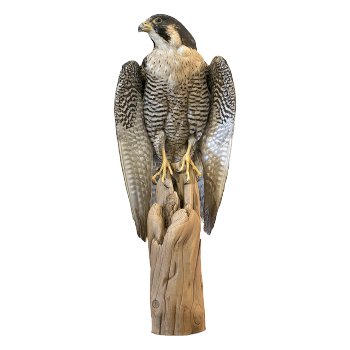
peregrine falcon
The peregrine falcon (y ó u s ǔ n) is a medium-sized raptor of the falcon family and genus, with a total of 18 subspecies. The body length is 41-50 centimeters. The wings are long and pointed, with yellow around the eyes. There is a thick, vertically downward black mustache on the cheeks. The head to the back of the neck is gray black, and the rest of the upper body is blue gray. The tail has several black horizontal stripes. It mainly inhabits mountainous, hilly, semi desert, swamp and lake coastal areas. Distributed all over the world. It is the national bird of the United Arab Emirates and Angola. On February 5, 2021, it was listed as a second-class species in China's National Key Protected Wildlife List.

British Bloodhound
The Bloodhound appeared in Europe long before the Holy War, and the first dog came from Constantinople. There are two varieties: black and white. The black breed was a famous St. Hubert hound in the 8th century, while the white breed later became a famous Southern hound. Black blood was imported into the UK. Both breeds play an important role in the development of other hunting dogs and dog breeds. In the 12th century, bishops at that time happened to use dogs as a means of transportation, and church dignitaries were one of the first to develop blood hunting dogs. A large number of senior pastors provide for a group of hunting dogs, and dog farms are an important part of every monastery.

Teleosaurus
The true lizard crocodile existed as an animal in the early Jurassic period. Living in the sea. It has an extremely narrow and long mouth lined with many sharp teeth. The body length is about 3 meters. It closes its mouth, and these teeth interlock thousands of times, forming an ideal clamp that can catch smooth fish or squid. It may swim by twisting its slender body and tail, with its short forelimbs tightly attached to its body while swimming.

Black Rhinoceros
The black rhinoceros is a mammal belonging to the family Rhinocerotidae in the order Rhinoceros, also known as the black rhinoceros or the pointed snouted rhinoceros. Black rhinoceros is mainly distributed in vast areas of eastern, central, western, and southern Africa. It mainly inhabits mountainous areas near water sources, usually in dense multi spine shrubs or Robinia pseudoacacia shrubs. Often feeds on the tender branches, leaves, and fruits of woody plants, especially fond of eating acacia, and occasionally eats green grass. Living alone or forming small groups. The black rhinoceros was once the most abundant species in the rhinoceros family, with an estimated 850000 individuals in history. Due to uncontrolled hunting, habitat loss, and recent poaching, the number has dropped to less than 2000.

Pheasant
Pheasant, also known as wild chicken or mountain chicken, is a member of the pheasant family in the order Galliformes, specifically the ring necked pheasant. The male pheasant has bright and gorgeous feathers, with a wide white ring neck, hence the name ring necked pheasant. Pheasants are found all over China except Hainan Island and the Qiangtang Plateau in Xizang, and also in Southeast Europe, Central Asia, West Asia, the United States, Mongolia, North Korea, Russia, Vietnam and Myanmar. It inhabits low mountains, hills, plains, swamps, and farmland. Individual or small group activities, good at running. Omnivorous. Pheasants have been regarded as "auspicious birds" since ancient times. In Chinese Ming and Qing porcelain, pheasants and peonies are often painted together, symbolizing auspiciousness and wealth.

bream
The sea bream is a species of cichlid fish belonging to the genus Korofi, also known as the Kagagi fish, Bangaji fish, Kaga red snapper, and Copper basin fish. The meat of sea bream is delicious and is a highly popular edible fish. Fish species such as golden eyed snapper and spiny tailed fish are named snappers, but in reality they are not actually snappers, and this situation is very common. Sea bream feeds on shellfish, shrimp, and marine animals in deeper areas near the coast.

spider
Spiders belong to arthropods. The body of a spider is divided into a head, chest, and abdomen, which are connected by a slender ventral stalk; The head has a pair of claws in front of the head, and the end of the claws is the venomous teeth of the venom gland duct; There are four pairs of feet on both sides of the chest, with hard claws at the tips of the feet; Spiders have single eyes, as well as eight eyes, six eyes, and four eyes. Wang Anshi's "Zishuo" records that a web was set up on one side, and when an object touched it, it was executed, hence the name "Spider". Spiders are distributed throughout China, mostly inhabiting eaves, corners of walls, and between trees, forming wheel shaped webs. Spiders have a diverse diet, mainly feeding on insects such as flies. They are tolerant to hunger, have strong reproductive ability, and have a long lifespan.
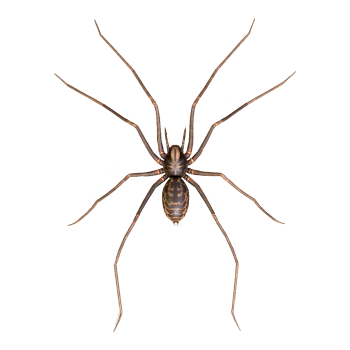
Tegenaria agrestis
One of the most famous venomous spiders in the world of homeless spiders, living on the Pacific coast in the northwest. The homeless spider is also a type of funnel web spider, but it needs to be distinguished from the Australian funnel web spider. The medical understanding of its bite is still shallow and there is some debate. Spider individuals weave a funnel-shaped filamentous web and wait inside the web for insects to collide with it before hunting. Stray spiders sometimes nest in and around human settlements.

goat
Goat is a mammal belonging to the subfamily Goat in the order Artiodactyla, family Auchenipteridae. Also known as Xia sheep or Black sheep. [9] There are over 150 goat breeds in the world, including dairy goats, wool goats, etc; There are over 40 goat breeds in China, including Yimeng Black Goat, Cangshan Black Goat, and others. Both male and female sheep have horns and whiskers. Goats live in Asia, Central Europe, North Africa, and North America. They can adapt to deserts, dangerous cliffs, Arctic wastelands, and mountain peaks. Goats are agile and quick witted, enjoy climbing high, adept at wandering, and love fighting. It is a typical social animal that enjoys activities together. Goat is one of the earliest domesticated livestock by humans.
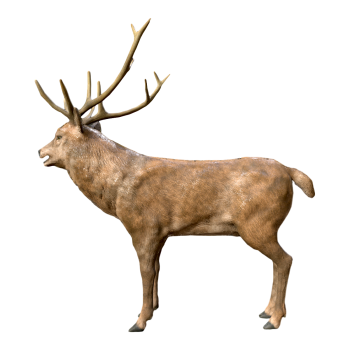
cervus elaphus
It is an animal of the deer family and deer genus. The large deer species, second only to the moose, has a total of 7 subspecies. It is named after its body shape resembling that of a galloping horse, with short summer fur and no fuzz. It is generally reddish brown in color, with a darker back and a lighter belly, hence the name "red deer". European deer prefer open forests and avoid dense, untouched virgin forests. Usually lives in coniferous swamps, open spaces, poplar broad-leaved forests, and coniferous broad-leaved forests. I like living in groups. Good at running and swimming. Eating various grasses, leaves, tender branches, bark, and fruits, and enjoying licking salt alkali.

Starfish
Starfish are echinoderms of the order Syngnathidae, also known as sea chariots or starfish. Flat, star shaped, with a hollow wrist. Vibrant colors. Generally, it is hermaphroditic, with some cases being hermaphroditic. The lifespan can reach up to 35 years. Starfish are distributed in various seas around the world, with the North Pacific having the highest distribution. It can also be seen along the coasts of Bohai and Yellow Seas in China. Likes to live in groups and often inhabits the seabed with sand, rocks, or coral. In terms of medical value, the ingredients contained in starfish have good therapeutic effects on hyperlipidemia and cardiovascular and cerebrovascular diseases. Starfish can also extract gelatinous substances from their bodies to make capsules. In industry, it is commonly used to process into powdered feed.

Rottweiler
It is an animal belonging to the canine family, with a strong body, swift movements, and a powerful aura. It is one of the most courageous and powerful dog breeds in the world. The Rowena was once used to guard cattle herds and is a strong breed of dog. Nowadays, it is widely praised in the field of military and police dogs. The Rowena is an outstanding guard dog that can attack intruders. The Rowena dog has a strong body, swift movements, and a powerful aura, and has been banned from keeping dogs in many cities.

Random Model


High Detail Human Bones
899 View




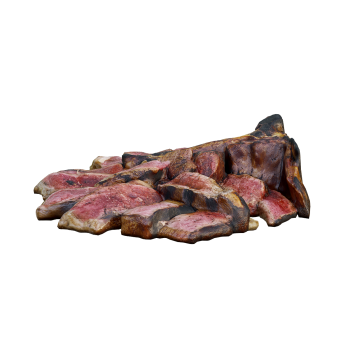
Italian Florence Steak
742 View