Freecreat category
Animals/Organics
Browse models in this category, preview details, then continue to download when ready.

Tiger spotted butterfly specimen
The tiger spotted butterfly (scientific name: Danaus genutia, English common name: Common Tiger, Indian Monarch, Orange Tiger, alias: Black veined birch spotted butterfly, pseudo sandalwood butterfly, black striped birch spotted butterfly, tiger striped blue spotted butterfly, etc.) is a butterfly belonging to the Nymphalidae family, a species of the butterfly genus, and has evolved into 15 subspecies. Widely distributed in the Eastern Ocean and the New Territories of Australia. The mode of origin is Guangdong, China.
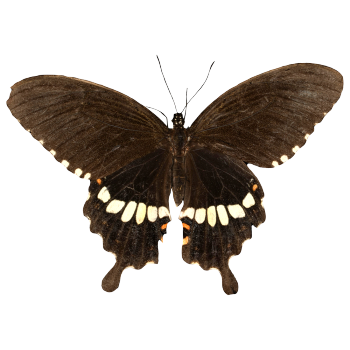
Jade Belt Butterfly Specimen
Jade banded swallowtail butterfly is an insect belonging to the family Papilionidae in the order Lepidoptera, also known as white banded swallowtail butterfly, black swallowtail butterfly, striped swallowtail butterfly, and Liangshanbo swallowtail butterfly. There are seven large yellow white spots arranged in bands on the outer edge of the male butterfly's forewings and in the center of its hindwings. Mature larvae are dark green in color, with a yellow brown head and a black linear stripe with teeth on the anterior edge of the thorax. There are black eye spots on both sides, and wide diagonal stripes on both sides of the abdomen.

Musk Phoenix Butterfly Specimen
The musktail butterfly is an insect of the genus Musktail butterfly in the order Lepidoptera, family Nymphalidae. Narrow wings and elongated tail processes. Body black; There are red hairs on the sides of the chest and abdomen, as well as on the head and neck; The wings are black or brown, with brown longitudinal stripes between the wing veins, and four brown longitudinal stripes in the middle chamber of the forewings; There are 5 positive and 7 slightly crescent shaped erythema on the posterior edge of the hind wing. Named after its faint musky scent.
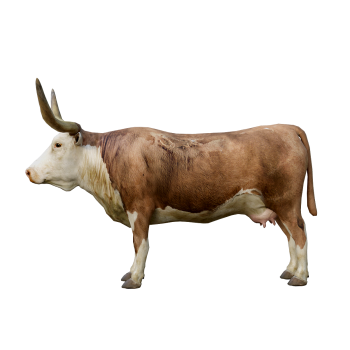
Texas Longhorns
A breed of cattle derived from the southern U.S. state of Texas, hence the name. Known for its prominent long horns and rough appearance, the horns of bulls can often grow to be very long, sometimes reaching or exceeding 7 feet. In the 16th century, when the Spanish conquistadors brought cattle to the New World, these cattle then multiplied freely in the vast grasslands of Texas. Very adaptable to tough grazing conditions, able to tolerate extreme climates and rough grazing environments. It is favored by cattle farmers for its strong disease resistance, heat and cold resistance, high fecundity and low feeding cost. It has also become a symbol of western American culture because of its unique appearance and cultural significance.

frog
Frogs are amphibians belonging to the family Ranidae, with a slightly triangular head that grows wider; Large and protruding eyes; The forelimbs are short, the fingertips are blunt and pointed, the hind limbs are short and thick, and the toes are almost fully webbed. It is most common and abundant in the plains and hilly areas from North China to South China; It is also distributed in Japan, the Korean Peninsula, Russia and other places. Suitable for living in amphibious environments, it mostly inhabits low-lying and humid places such as rivers, ponds, streams, ditches, lakes, and shallow waters with abundant aquatic plants; During the day and at night, they move around and search for food; Both juvenile and adult frogs are carnivorous and typically prey on rice pests.

zebra
Zebra is a mammal of the genus Macroma in the order Quetziformes, native to eastern, southern, and southwestern Africa, mainly inhabiting tropical and subtropical forests and grasslands. Social animals, usually in groups of dozens or hundreds, will go to ponds or streams to drink water in the morning and evening. Having a timid and cowardly personality, one will quickly flee when feeling scared, with a speed of up to 70 kilometers per hour; They rely on keen perception and rapid running to avoid attacks from predators. Feed on tender leaves of wild grass. Strong disease resistance and good at self-protection. The black and white stripes of zebras can interfere with the sight of predators in sunlight and moonlight.

Little Rhinoceros
Rhinoceros is a large mammal in the family Rhinocerotidae of the order Rhinoceros. Fat and clumsy, with thick and rough skin arranged in folds; The fur is sparse and hard; The ears are oval in shape; Big and long head; Short and thick neck; No canine teeth; The tail is thin and short, and the body is yellow brown, brown, black or gray; Solid single or double horns on the head and nose; Both males and females have double horns, with females having longer horns than males. Rhinos are distributed in Asia, such as India in South Asia; It inhabits sparse grasslands and dense forests in tropical and subtropical regions. They often come out to forage in the early morning, evening, or night, with poor vision and sensitive sense of smell and hearing; Living alone often with little contact between individuals.

Jurassic Park - Velociraptor Blue
In the Jurassic Park film series, Blue is a particularly striking velociraptor known for its loyalty and intelligence. First appearing in Jurassic World, domesticated by animal trainer Owen Grady, she established a deep emotional bond with Owen. Bru not only demonstrates extraordinary teamwork skills, but also exhibits a high degree of intelligence, able to understand complex instructions and demonstrate problem-solving abilities. In the subsequent film series, Bloom continued to play a key role, and her storyline deepened, including her experience of becoming a mother.

Black striped dragonfly
The Black striped Velociraptor is an insect in the family Scolopoda and genus Velociraptor. Males have a belly length of 56-59 millimeters and hind wings of 46-48 millimeters. Male upper and lower lips are yellow, and the anterior edge of the upper lip is black. The base of the front and back lips is green yellow. Green with one black "T" - shaped stripe. The top of the head, antennae, and back of the head are black. The front of the chest and back is green with no markings, while the chest and spine are yellow; Yellow green color on the side of the chest. There is a small black dot above and in front of the stomata. The wings are transparent, the anterior veins are yellow, the wing veins are black, and the wing moles are yellow brown. The abdomen is black with blue spots. The first and second abdominal segments are enlarged, with the base of the first and second segments being green. The lateral sides of the third to seventh segments each have three blue spots and one longitudinal spot of the same color.

house lizard
Gecko is a reptile belonging to the gecko genus in the gecko family. The body is relatively flat, with a total length of 10-15 centimeters, and the length of the tail and head is basically the same. The back of the body is covered with granular scales. Because it inhabits walls and is good at catching scorpions and flies, it is named gecko. Gecko is distributed in Guangxi, Guangdong, Fujian, Yunnan and other places in China; They prefer to live in secluded places such as between walls and under eaves, and appear on ceilings and walls at night, hunting insects such as mosquitoes and flies. The medicinal value of geckos is very high, and they can be used to treat conditions such as epilepsy, scrofula, tuberculosis, and swelling. Their dried products are called "Tianlong".

Red Deer
Red deer, a species of deer in the family Deer. Red deer were widely distributed in many parts of the world, originally found in Asia, Europe, and North America, and later introduced to New Zealand. Red deer usually live separately for both sexes and only gather together during the mating season. At this point, the male deer engages in intense combat with the female deer in order to mate. Red deer living in the forest have long been the best prey for humans, with the purpose of not only consuming their delicious meat, but also widely regarded as a great form of entertainment and exercise. Many subspecies of red deer are now at risk of extinction. This includes North African red deer, Kashmir red deer, and Corsican red deer.

crocodile
Crocodiles are reptiles belonging to the Crocodylidae and Alligatoridae families, with a total of 8 genera and 23 species. Crocodiles have a longer torso; Muscular development; Crocodiles are mostly distributed in tropical regions of Africa, Asia, North and South America, and Australia, with only Yangtze alligators and American alligators living in temperate regions. Crocodiles inhabit areas such as lakes, swamps, and shallow waters. Living together in common groups; Enjoy a warm environment. Crocodiles mainly prey on vertebrates, as well as mollusks and crustaceans. Crocodiles, as one of the oldest species on Earth to date, retain many features of early dinosaur reptiles and are also known as "living fossils".

cow
Cows are mammals belonging to the family Taurus in the order Artiodactyla. They are tall and have a well proportioned structure, thin skin, low fat content, short capillaries, and often have distinct black, white, or yellow fur. Chinese Holstein cattle are the main dairy cow breed in China, currently distributed throughout the country, mainly in northern grassland areas such as Heilongjiang, Inner Mongolia, and Xinjiang, while other areas are distributed in urban and suburban areas and some suburban rural areas. Cattle are mainly fed with coarse feed, silage feed, energy feed, and protein feed. Adding seasonings such as spices, sodium saccharin, sodium glutamate, and organic acids to the feed can increase the cow's feed intake and milk production.

giraffe
Giraffe (scientific name: Giraffa camelopardalis): It is a ruminant cloven hoofed animal that grows in Africa, and its Latin name means "camel with leopard print". They are the tallest living terrestrial animals in the world. When standing, it can reach 6-8 meters from head to feet, weigh about 700 kilograms, and the newborn baby is 1.5 meters tall. It inhabits tropical and subtropical savannas, shrubs, open acacia forests, arid and open savanna areas, and semi desert areas with sparse trees in Africa. It is a herbivorous animal that feeds mainly on leaves and small branches.

Bactrian camel
Bactrian camels, also known as wild camels. Bactrian camels are mammals of the camel family in the order Artiodactyla. The body shape is similar to that of a domesticated Bactrian camel, but the hump is smaller, the hooves are narrower, and the ears are also smaller; The back has twin peaks and the neck is long and curved. The lower neck hair, upper outer body hair, and tail hair of the limbs are all short; The fur is sandy yellow brown, with a slightly gray snout. Bactrian camels have a very sensitive sense of smell and are tolerant of hunger and thirst. They can go without drinking water for more than 10 days or even longer. When they are extremely dehydrated, they can break down the fat inside their humps, producing water and heat. Bactrian camels are also resistant to high and cold temperatures, wind and sand, and are good at long-distance running. They can run hundreds of kilometers in a short period of time.

Black Rhinoceros
The black rhinoceros is a mammal belonging to the family Rhinocerotidae in the order Rhinoceros, also known as the black rhinoceros or the pointed snouted rhinoceros. Strong and robust in physique, with skin ranging from brown to gray, and sparse and hard fur; The skin is thick and rough, with less obvious wrinkles on the shoulders and waist compared to Indian rhinoceros, and there are no wart like protrusions on the surface of the body; The ears are oval in shape, with a thick and long head and a short and thick neck; The upper part of the nose has solid anterior and posterior double horns, with the largest anterior horn measuring up to 1.4 meters in length; There is a sharp protrusion in the middle of the upper lip that can stretch and curl. Males have a slightly larger body weight than females. Black rhinoceros is mainly distributed in vast areas of eastern, central, western, and southern Africa. Often feeds on the tender branches, leaves, and fruits of woody plants, especially fond of eating acacia, and occasionally eats green grass.

Cicada
Cicadas are insects in the Cicadaceae family, commonly known as cicadas. There are currently about 2000 species of cicadas, with a body length of 2-5 centimeters. Cicadas with two pairs of membranous wings, protruding compound eyes, and the ability to sing are all male cicadas. The vocal organ at the base of the male cicada's abdomen is like a large drum covered with a layer of eardrum, which vibrates and produces sound. Due to the fact that cicadas' vocal muscles can stretch and contract about 10000 times per second, and the gap between the lid and eardrum can resonate, their vocalizations are particularly loud. However, female cicadas, due to their incomplete body structure and lack of eardrums, are unable to produce sound and are known as "mute cicadas".

Eastern honey bee
The Oriental honey bee, a species of honey bee under the genus Apis, has a natural distribution range of west to Pakistan, east to Taiwan and Japan, northwest to Qinghai and Gansu, south to Indonesia and Papua New Guinea, including the entire South Asia, Southeast Asia, and East Asia. In recent years, it has expanded to northern Australia, and there are also plans to reintroduce it to certain islands in Japan. The Eastern honey bee has different common names, such as Asian honey bee, native honey bee, wild honey bee, etc. The names vary from place to place, and in China they are called Chinese honey bee, Chinese honey bee, and Chinese honey bee.

monarch butterfly
The Monarch butterfly is a large butterfly commonly found in North America. In Australia, this butterfly is called Wanderer Bufferfly and is also a very common butterfly. In North America, emperor butterflies typically fly 3000 kilometers to their destination for breeding. The emperor butterfly may be the most well-known butterfly in the world. There are two reasons: firstly, because the emperor butterfly is very beautiful and is known as the most beautiful butterfly in the world. The second reason is that the emperor butterfly is the only migratory butterfly. They fly thousands of kilometers every year to avoid the severe cold in North America.

bear
Bear is a general term for carnivorous animals in the family Ursidae. All types have a broad head; Maxillofacial protrusion; The skeleton is huge; The claws are thick, sharp and powerful; Covered with coarse hair on the body; The size varies depending on the type; Short and thick neck; The mouth and nose are pointed in shape; Short ears and small eyes. The lifespan of wild bears is about 15-20 years. Bears are more common in northern temperate regions and are widely distributed in North America, Europe, and Asia. Residing in mountainous, temperate, or tropical forests. Most of them are good at climbing trees and swimming Due to continuous hunting, the numbers around the world are decreasing. Nowadays, many countries protect it in national parks and require strict adherence to hunting regulations.

Ants
Ants are a type of insect in the family Antidae of the order Hymenoptera. Ants have a small and elongated body, a large head, a pair of compound eyes, and long antennae. Ants have an oval shaped abdomen and come in various colors, including black, white, yellow, red, and brown. Among them, female and male ants have wings, while worker ants do not. Ants are also known as ant mays, black foals, or ants. According to modern morphological science classification, ants can be divided into two major populations: ants and termites. There are many types of ants, with over 9000 known species in the world and over 600 confirmed species in China.

worker-priest
Ants are a type of insect in the family Antidae of the order Hymenoptera. Ants have a small and elongated body, a large head, a pair of compound eyes, and long antennae. Ants have an oval shaped abdomen and come in various colors, including black, white, yellow, red, and brown. Among them, female and male ants have wings, while worker ants do not. Ants are also known as ant mays, black foals, or ants. According to modern morphological science classification, ants can be divided into two major populations: ants and termites. There are many types of ants, and it is known that there are over 9000 species of ants in the world.

Flamingo
The flamingo is a bird species belonging to the stork family of the stork order, with a total of six species under its genus. Flamingos are large waterfowl with a body length of 1-2 meters; Neck and feet are both long, mouth is short and thick, slightly curved downwards; The majority of the body's feathers range from pink to deep red, with flying feathers appearing black; The beak and feet are usually bright red or yellow, and the eyes are orange. The name flamingo comes from Latin, meaning "flame" or "fire", vividly expressing the color of their wings.

Overturned pufferfish
The overturned pufferfish is a fish species belonging to the family Tetraodontidae in the order Tetraodontiformes, also known as the overturned pufferfish, stingray, or stingray. Short and extremely flattened, oval in shape; The body height is about 2/3 of the body length; The head is slightly short, extremely flattened, and nearly semi-circular; Blunt and round snout, slightly protruding snout tip; Eyes are small and slightly tall; The tail is very short and has no tail handle; Small mouth, front position; Body without scales; No lateral lines; The dorsal fin is short and extremely high; Mid position pectoral fin, very small, nearly circular; The anal fin is similar to the dorsal fin and is symmetrically positioned; The caudal fin is wide and short, with wavy grooves, and the posterior edge is connected to the dorsal and anal fins. The back of the body is gray brown, with silver gray on both sides, white on the belly, and most of the fins are gray brown.

Stingray fish
Ray fish, a general term for cartilaginous fish in the order Rayiformes. The body shape is flat, slightly circular or diamond shaped, resembling a thin disk; The surface of the fish has various patterns, which are brown or black in color; The abdomen is white; The tail is slender, with spines on the caudal peduncle, and the tip of the spines is hooked. The stingray is also known as the "devil fish".

Killer whale
Orcas are mammals belonging to the family of dolphins in the order of Whale Artiodactyla. Adult weight 6600 kilograms, average body length 6-9 meters; The head is slightly round, with an indistinct beak or no beak; The body is black and white in color; There are oval shaped white eye spots above and behind the eyes; There are 10-12 conical teeth on each side of the upper and lower jaws; Males are longer than females and weigh about twice as much as adult females. The killer whale has a large head, black and white colors, and looks like a tiger, hence its name.

Manta ray
Manta ray is a collective term for several marine fish species in the family Mantidae of the order Rayiformes. There are currently 13 species of manta rays. Manta rays are most closely related to sharks. Manta rays have a flat body; The kiss end is wide and flat horizontally; There are two protruding head fins differentiated from pectoral fins in front of the head; The tail is slender like a whip; The gill pores are wide. Manta rays are named after their swimming posture that resembles bats flying at night.

humpback
The humpback whale is a mammal belonging to the family Cetidae in the order Cetacean. Enlarged body, broad upper jaw, with tumor like protrusions along the central line from the breathing hole to the snout and on both sides of the upper and lower jaws; The dorsal fin is relatively small, located at 2/3 of the posterior body length; The fin limbs are very large, about one-third of the body length, with irregular serrated protrusions on the leading edge; The caudal fin is wide and the outer edge is also irregularly serrated; There are fewer folds and grooves on the ventral surface, ranging from 14 to 35, extending from the lower jaw to the front of the navel. The back is black with black stripes, the abdomen is black or white, and the body color varies greatly among individuals; There are more white parts above the fins than black parts, and white parts below; The ventral surface of the caudal fin is white, with black edges.

Devouring shark
The great white shark, also known as the man eating shark, is a fish species in the family Muridae of the order Muriformes. The body is spindle shaped; The tail handle is flat and has a protrusion on one side; Each of the upper and lower parts of the tail base has a depression; Blunt and pointed kisses, relatively short; No blinking membrane in the eyes; The nostrils are close to the mouth; The mouth is longer than the kiss in front of the mouth; Short lip folds; Teeth large, triangular, with fine serrations on the edges; 5 gill pores; The first dorsal fin is tall and triangular in shape; The second dorsal fin is very small; The caudal fin is forked, wide and short; The anal fin is the same shape and size as the second dorsal fin, located below and behind the second dorsal fin; The pelvic fins are located approximately below the center of the gap between the two dorsal fins; The pectoral fins are sickle shaped. The dorsal side is greenish brown or dark brown, while the lower and ventral sides are light gray to white.

Green iguana
The green iguana is an animal belonging to the genus of American green iguanas in the family Hymenonidae of the order Perciformes. Young green iguanas typically have a green body and use it to evade attacks from predators; As one grows older, green will gradually fade away and be replaced by colors such as light yellow, light blue, or brown; The main features of green iguanas include comb like scales on the back, black circular stripes on the tail, and large, drooping throat fans in adult males. Also known as: American Green Iguana. Distributed in tropical rainforest areas from Mexico to Paraguay in Central and South America. It mainly inhabits tropical rainforests and is a diurnal arboreal lizard. Omnivorous animals.

High horned antelope
The Aepycerosmelampus is a mammal belonging to the family Auchenipteridae in the order Artiodactyla, also known as the wide-angle antelope or the black antelope. Distributed in countries such as Kenya, Uganda, and South Africa in central and southern Africa. I enjoy living on grasslands and open forests. Usually form small groups of 15-25 and live together. In the dry season, small groups gather together to form large groups of hundreds or more. Very good at jumping. When threatened by enemies, they will quickly hide in the jungle. Activity occurs day and night, alternating between eating and resting. Eating various leaves, grass, and fruits.

Blue Whale
Blue whale is a marine mammal belonging to the family of baleen whales and the genus of baleen whales. There are four subspecies in total. The blue whale is considered the largest animal known to have lived on Earth, measuring up to 33 meters in length and weighing 181 tons. The body of a blue whale is slender and long, with a bluish gray back, but sometimes it appears lighter in water. The fin limbs of blue whales are 3-4 meters long. Above is gray with narrow white edges. Below is completely white. The head and tail fins are generally gray. But the back and sometimes the fins are usually mottled.

Jumping Mouse
Dipodidae, also known as jumping pocket mice, belongs to the rodent order and rodent family. The jumping mouse has a medium to small body, a large head, large eyes, a short and wide snout, and long whiskers. The fur color is light, mostly sandy yellow or sandy gray, without luster; Close to the scenery of the habitat. Originating from southwestern Africa, it is widely distributed in arid and semi-arid regions of Asia, Africa, and Europe, living in the northern parts of North America and Eurasia, as well as in desert and grassland areas throughout China. Having a hibernation habit, one will find a hole to hide, build a nest, and then hibernate, using the fat accumulated in the tail to supplement the body's energy consumption during hibernation; It mainly eats plants and also preys on insects in summer.

The sperm whale
Sperm whales are marine mammals belonging to the order Cetiformes and family Spermatidae. With a body length of up to 18 meters and a weight of over 50 tons, it is the largest toothed whale, with its head occupying one-third of its body. The head is huge, the lower jaw is small, and only the lower jaw has teeth. No dorsal fin; Highly capable of diving, it is the mammal with the deepest and longest diving time. Like a fish in size, it breathes through its lungs. Short neck, the head seems to be connected to the torso; Cervical spine healing; The nostrils are spray holes located at the snout end, the forelimbs become fins, the forearms degenerate, the palms become longer, and the number of toes increases, but the toes and claws cannot be seen from the outside; Hind limb degeneration; The tail is like a fish, with horizontal tail fins, and it swings by the tail when swimming.

komodo dragon
It is a reptile belonging to the genus Varanidae in the family Varanidae. The skin is rough, with many raised bumps, no scales, dark brown, and the mouth is filled with huge and sharp teeth. Named after the island of Komodo in Indonesia, it is also known as the Komodo dragon. Mainly inhabiting the jungles around Java Island. I like living alone and only get together during the breeding season. I have fast running speed, strong diving ability, and can climb trees. As its size increases, my claws are mainly used as weapons, which is not conducive to climbing. Carnivorous animals, most of which eat carrion. The Komodo dragon is a reptile capable of parthenogenesis. It is the largest living lizard in the world.

Random Model


Hanging Temple of Datong City
974 View

Round Sesame Spiral Bread
891 View

Z-1V High Voltage Pistol
1491 View


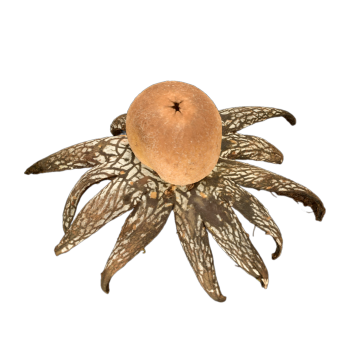
Geastrum hygrometricum
1049 View