Freecreat category

Animals/Organics

Browse models in this category, preview details, then continue to download when ready.

Metopograpsus quadridentatus

Metopograpsus quadridentatus

The Four Toothed Large Crab (scientific name: Metopograpsus quadridentatus) is an animal belonging to the genus Large Crab in the family Crabs. It is distributed in Malacca, Java, Balibaban, Kalimantan, New Guinea, the Indian Ocean, and Guangdong, Fujian, Zhejiang, Shandong and other places in Chinese Mainland. Its living environment is sea water, which is mostly found in rock cracks or under rocks at the low tide line.
Chasmagnathus convexus

Chasmagnathus convexus

Chasmaganathus converxus, also known as the long backed open mouth crab, belongs to the family of square crabs. Some individuals have a bright purple color all over their body and red joints, which are easily recognizable, but some individuals have a yellowish color that is very similar to Taiwan thick crabs. Cave dwellings are found around grassy marshes near river mouths, between field ridges, mangrove swamps, and along earthen embankments. There are collection records in both the Jianxing ephedra forest and the Wenliao mangrove forest.
Dehani Sawa Crab

Dehani Sawa Crab

The Geothelphusa dehaani crab (scientific name: Geothelphusa dehaani) is a type of crab classified in the order Shrimp (Decapoda), suborder Crabs, and family Characidae. It is a unique species in Japan, a pure freshwater crab that spends its entire life in freshwater areas. The specific name dehaani in the scientific name is named in honor of the Dutch zoologist Wilhelm de Haan, who made contributions to the classification of crustaceans in Japan.
Chiromantes dehaani

Chiromantes dehaani

Chiromantes dehaani, formerly known as Chiromantes dehaani, originally belonged to the family Characidae and genus Chiromantes. After separating from the family Characidae, Chiromantes dehaani was reclassified as Chiromantes and genus Chiromantes dehaani. It is distributed in Korea, Japan, Taiwan Island, Hainan Island, Guangdong, Fujian, Zhejiang, Jiangsu, Liaodong Peninsula and other places in Chinese Mainland, and generally lives on the muddy banks of offshore freshwater rivers or in offshore marshes. It is the second intermediate host of mouse lung flukes.
Sea squirt shrimp

Sea squirt shrimp

Thalassina anomala (scientific name: Thalassina anomala) is an animal belonging to the family Thalassidae in the order Decapoda of the phylum Arthropoda in the animal kingdom. The head and chest armor of the sea squirt shrimp genus is slightly flattened and swollen on the side, slightly elliptical in shape, calcified and thick, with two longitudinal sutures (sea squirt shrimp sutures), small frontal horns, and pointed spines. Abdominal degeneration, slender and flat, without obvious lateral armor. The first and second steps are characterized by sub chelation of the feet, with the first pair being thick and asymmetrical, with the knuckles greatly extending beyond the end of the immobile fingers.
Anthropomorphic face crab

Anthropomorphic face crab

The anthropomorphic crab is a species of crab in the anthropomorphic crab family, also known as the carrier crab. It occurs in the eastern Atlantic and Mediterranean, from Angola to Norway, the Northern Islands, and Iceland. It is benthic and occurs at depths of 10-1212 meters, but is mainly found at depths exceeding 80 meters. It prefers areas with soil and emerging rocks, and has been observed in deep-water coral gardens and sponge gathering areas.
Red eyed Snow Crab

Red eyed Snow Crab

Red eyed snow crab, also known as Bai's snow crab or long footed crab, is a type of snow crab. It is very similar to the gray eyed snow crab and is both found in the Bering Sea. The difference is that it is only found in the northern Pacific Ocean and is commonly referred to as the "snow crab" when sold. In the United States, it is also known as the cobbler crab, and in Japan, it is also known as the Great Chu crab or the big headed dwarf crab. Due to overfishing, the population of red eyed snow crabs has significantly decreased.
Platycodon grandiflorus crab

Platycodon grandiflorus crab

Platycodon grandiflorus, commonly known as orange mud crab, is a species of important commercial value in the mangrove crab genus. It is one of several crabs known as mud crabs, distributed in mangrove areas from Southeast Asia to Pakistan, from Japan to northern Australia. Like other species in the Scylla genus, it is widely cultivated using wild caught populations in aquaculture.
sesarma haematocheir

sesarma haematocheir

The red clawed hand crab is an arthropod belonging to the family Tetraodontidae in the order Decapoda. The width of the head and chest armor is slightly larger than its length, square in shape, and has a smooth surface. Wide forehead, straight leading edge, sharp ridge behind forehead; The outer eye socket is triangular in shape; Sharp and toothless edges. Steps 1-4: The last 3 segments of the foot have black hard bristles; Abdominal triangle, tail segment nearly circular. Male claws are larger than females, with high palmar nodes and granular dorsal edges. The middle of the inner side has granules, while the outer side is smooth and often blood red in color; The gap between the two fingers of the male claw is larger than that of the female claw, and the inner edges of the two fingers are serrated, with one larger tooth at each end. The female abdomen is round and large.
Female Flying Frog

Female Flying Frog

The flying frog is a species of amphibian belonging to the Rhacophoridae family. This kind of frog breeds in a special way. They make foam nests underground. They will crawl on the edges of rice paddies and swamps, and dig caves above the water surface. The female carries the smaller male on her back, and both are buried in a hole that is 6-9 centimeters wide and 10-15 centimeters above the water surface. The interior of this nest is smoothed out through female movement, and then at night, it is filled with white material filled with air bubbles.
Flying Frog Male

Flying Frog Male

The flying frog is a species of amphibian belonging to the Rhacophoridae family. This kind of frog breeds in a special way. They make foam nests underground. They will crawl on the edges of rice paddies and swamps, and dig caves above the water surface. The female carries the smaller male on her back, and both are buried in a hole that is 6-9 centimeters wide and 10-15 centimeters above the water surface. The interior of this nest is smoothed out through female movement, and then at night, it is filled with white material filled with air bubbles.
Zelu Frog Female

Zelu Frog Female

The Zelu frog (scientific name: Fejervarya Multistriata) is a species of amphibian in the family Ranidae, belonging to the genus Ranunculus. The head length is slightly larger than the head width, the snout end is blunt and pointed, the pupils are horizontally elliptical, and the distance between the eyes is very narrow, which is 1/2 of the upper eyelid; The eardrum is circular. The skin on the back is rough, without dorsal folds, and there are several rows of longitudinal folds of varying lengths on the back of the body. There are small warts between the folds, on the side of the body, and on the back of the hind limbs; The skin on the body and abdomen is smooth.
Zelu Frog Male

Zelu Frog Male

The Zelu frog (scientific name: Fejervarya Multistriata) is a species of amphibian in the family Ranidae, belonging to the genus Ranunculus. The head length is slightly larger than the head width, the snout end is blunt and pointed, the pupils are horizontally elliptical, and the distance between the eyes is very narrow, which is 1/2 of the upper eyelid; The eardrum is circular. The skin on the back is rough, without dorsal folds, and there are several rows of longitudinal folds of varying lengths on the back of the body. There are small warts between the folds, on the side of the body, and on the back of the hind limbs; The skin on the body and abdomen is smooth.
Forest Frog

Forest Frog

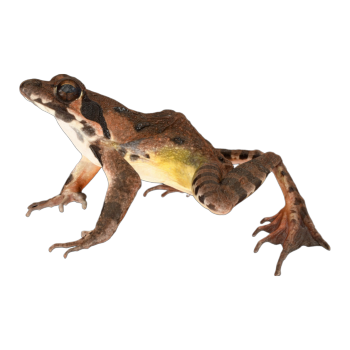
The forest frog is a species of amphibian in the family Ranidae of the order Anura, commonly known as the toad, husky horse, snow clam, etc. Flat head, slender limbs; The eardrum is round, with triangular black brown spots on the eardrum; The back of the body is mostly earthy yellow, with dark spots scattered on the warts; The dorsal fold curves diagonally outward above the eardrum.
Male Mountain Red Frog

Male Mountain Red Frog

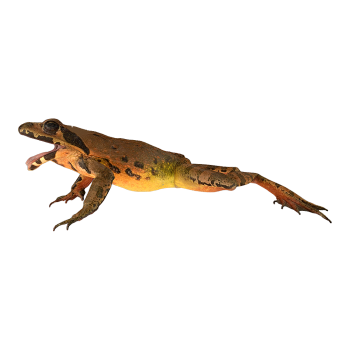
The mountain red frog is a species of frog in the Ranidae family. The body length of the mountain red frog can reach approximately 4.2-7.8 centimeters. Females are slightly larger than males. The body color on the back is brown, reddish brown, or dark brown, while the belly is light yellow.
Female Mountain Red Frog

Female Mountain Red Frog

The mountain red frog is a species of frog in the Ranidae family. The body length of the mountain red frog can reach approximately 4.2-7.8 centimeters. Females are slightly larger than males. The body color on the back is brown, reddish brown, or dark brown, while the belly is light yellow.
Bi Feng Butterfly

Bi Feng Butterfly

The Bi Feng butterfly is an animal belonging to the family Papilionidae in the order Lepidoptera. The wings are triangular, the outer edge of the hind wings is wavy, and the body wings are black; The upper half of the forewings is pale in color, with scattered golden yellow, golden blue, or golden green scales between the wing veins,; There are 6 pink or blue bird shaped spots on the outer edge of the hind wing, and a semi-circular pink spot on the buttock corner; A large blue area is formed in the mid wing region, especially near the leading edge, with a pale color on the reverse side and very distinct markings; The middle chambers of the front and rear wings are closed, and the tail process is also covered with blue and green shiny scales, but only black scales are present at the edges to form a black frame; The color and markings of male and female butterflies are almost the same, and the orange red crescent pattern on the outer edge of the hind wings of female butterflies is slightly more developed than that of male butterflies.
Forest Green Tree Frog

Forest Green Tree Frog

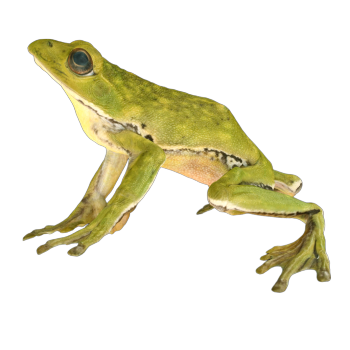
The forest green tree frog is a species of amphibian belonging to the Rhacophoridae family. This kind of frog breeds in a special way. They make foam nests underground. They will crawl on the edges of rice paddies and swamps, and dig caves above the water surface.
Gekko hokouensis

Gekko hokouensis

Lead mountain geckos are reptiles. The physiological characteristics are similar to lizards, but with one difference, there is nothing between the two ears. We can see inside from one ear of the gecko and directly see outside through the other ear. The central nervous system of geckos is located in the spinal cord. It generally inhabits gaps and holes in buildings, as well as under bricks and grass in the wild. The model habitats of this species distributed in Japan, Taiwan Island and Chinese Mainland, such as Anhui, Jiangsu, Shanghai, Dajinshan Island, Zhejiang, Fujian, Jiangxi and Hunan, are northeast Jiangxi, estuaries and salt mountains.
red-eared slider

red-eared slider

The red eared painted turtle (scientific name: Trachemys scripta elegans) is a subspecies of the painted turtle in the family Turtles. Adult elongated, with a gently raised carapace, distinct ridges, and a serrated posterior edge. The head is wide and blunt, with yellow and green stripes on the neck, and one long red patch on each side behind the eyes. There are yellow green lines on the sides of the head, neck, and abdomen. Eyes of equal size, neck short and thick. The whole body has a variety of colors, colorful and vibrant. The back armor is emerald green, and each shield has yellow green inlaid circular patterns.
Wart tailed lizard tiger cub

Wart tailed lizard tiger cub

Hemidactylus frenatus Dumeril and Bibron (1836) is a reptile of lizard genus of Gecko family, which is distributed in Ryukyu Islands, Korean Peninsula, Southeast Asia, South Asia, Africa, Taiwan Island, Hainan, Guangdong, Yunnan and other places in Chinese Mainland, and mainly lives in the hot zone and often under the eaves and on the wall at night. The type locality of this species is Java, Indonesia.
Hemidactylus frenatus

Hemidactylus frenatus

Hemidactylus frenatus Dumeril and Bibron (1836) is a reptile of lizard genus of Gecko family, which is distributed in Ryukyu Islands, Korean Peninsula, Southeast Asia, South Asia, Africa, Taiwan Island, Hainan, Guangdong, Yunnan and other places in Chinese Mainland, and mainly lives in the hot zone and often under the eaves and on the wall at night. The type locality of this species is Java, Indonesia.
Zelu Frog

Zelu Frog

The Zelu frog (scientific name: Fejervarya Multistriata) is a species of amphibian in the family Ranidae, belonging to the genus Ranunculus. The head length is slightly larger than the head width, the snout end is blunt and pointed, the pupils are horizontally elliptical, and the distance between the eyes is very narrow, which is 1/2 of the upper eyelid; The eardrum is circular. The skin on the back is rough, without dorsal folds, and there are several rows of longitudinal folds of varying lengths on the back of the body. There are small warts between the folds, on the side of the body, and on the back of the hind limbs; The skin on the body and abdomen is smooth.
Chuancun Land Frog

Chuancun Land Frog

Chuancun Land Frog is a composite species of Zelu Frog, which is distributed throughout Southeast Asia from India to Japan. The Ze Lu frog is distributed from south to north in China, with a wide distribution range and large area. However, there is relatively little research on the relationship between the Ze Lu frog and its composite species in China, and there has been controversy over its taxonomic status.
Japanese pit viper

Japanese pit viper

The Japanese pit viper (Gloydius blomhofii) is a venomous snake species belonging to the subfamily Viperinae of the family Viperidae, found in Japan. Unique species of Japan. In Japan, it is commonly referred to as "pit viper".
Toad

Toad

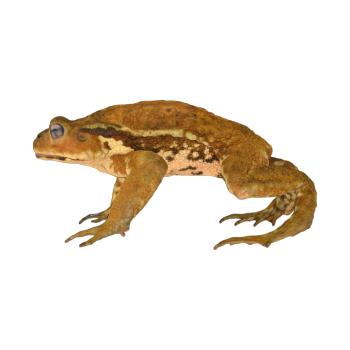
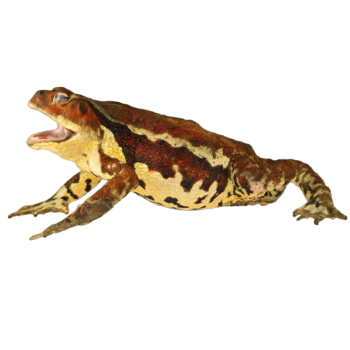
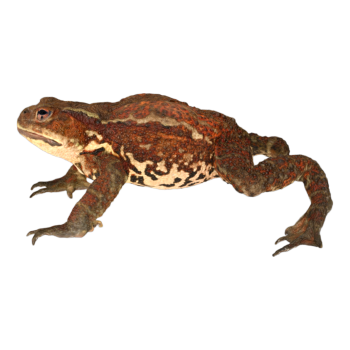
The toad has a sturdy body, a wide head, a wide mouth, and a round tip; Large and protruding eyes; The body is short and wide, the forelimbs are thick and long, the hind limbs are thick and short, and the left and right roots do not meet; The skin on the whole body is extremely rough, and the skin color on the back changes with the seasons, and females and males are different. During the reproductive season, the back of males is mostly black green, with light colored markings on the sides of the body; The female's dorsal color is lighter, with a milky yellow wart and sometimes black longitudinal spots running diagonally along the body from behind the eyes; The ventral surface is not smooth, with brown or black fine flower spots.
Black eyed toad

Black eyed toad

Black eyed toad, belonging to the family Bufonidae in the order Anura. The black eyed toad is relatively large, with a body length of 6-10 centimeters, and male toads are slightly smaller in size than female toads; Rough skin, mostly yellow brown or gray black on the back, with black brown mottled spots on the cloth; The abdomen is mostly milky yellow in color; The forelimbs are relatively slender, while the hind limbs are thicker and shorter, circular in shape, with only half fins and black fingertips. It is named after its appearance with black eye sockets.
Hyla simplex

Hyla simplex

The South China tree frog is mostly slender and flat in body, with long hind legs and large suction cups. It has developed fins between its fingers and toes, which can be used for gliding in the air. There are 10-12 genera and 200-300 species in the tree frog family, widely distributed in tropical and subtropical regions of Asia and Africa, and can also be seen on the island of Madagascar. The most famous South China tree frogs are several flying frogs in Asia, such as the black footed South China tree frog Rhacophorus nigropalmatus and the black webbed South China tree frog R Rewardti and others.
Japanese tree toad male

Japanese tree toad male

The breeding season of Japanese tree frogs is from April to August. At this time, male frogs migrate to still water areas such as low altitude rice paddies and wetlands to chirp loudly, laying about 250-800 eggs at a time. During the non breeding season, it often calls before rain and is a true rain frog.
Japanese tree toad female

Japanese tree toad female

The breeding season of Japanese tree frogs is from April to August. At this time, male frogs migrate to still water areas such as low altitude rice paddies and wetlands to chirp loudly, laying about 250-800 eggs at a time. During the non breeding season, it often calls before rain and is a true rain frog.
Damo Frog

Damo Frog

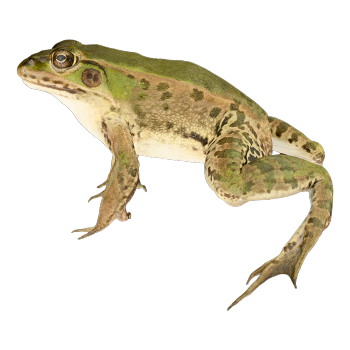
The wild habitats of the Damo frog include temperate grasslands, rivers, wetlands, ponds, irrigated farmland, waterways, etc. The average size of male frogs is about 3.5-6.2 centimeters, while the average size of female frogs is 3.7-7.3 centimeters. The length of the larvae (i.e. tadpoles) can exceed 5 centimeters. There are significant black spots on the back of the adult, and their jumping ability is poor due to underdeveloped hind limbs.
Euploea eunice

Euploea eunice

The black purple spot butterfly (scientific name: Euploea eunice) is a genus in the subfamily Satyrinae of the family Nymphalidae. Mainly distributed in Southeast Asia, including Hainan, Guangdong, Taiwan, Vietnam, and Malaysia within China. Spread your wings about 70 to 90 millimeters. Similar in appearance to the Jealous Purple Spot Butterfly, except for one or two large white spots in the center of the back of the forewings. The posterior edge of the male butterfly's forewings protrudes in an arc shape, and there is a gray brown spot near the middle chamber on the back of the hind wing; The posterior edge of the female butterfly's forewings is in a straight line. The larvae of the black spotted butterfly feed on fig trees, white fleshed fig trees, pearl lotus trees, rough leaved fig trees, etc.
Japanese toad

Japanese toad

The Japanese toad (Bufo japonicus) is a species of toad native to freshwater waters in Japan. The Japanese use it to make toad oil. The length of the head and tail is 17.5 cm (7 inches), and females are slightly larger. The webbed toes are not obvious, and the body is gray brown, yellow brown, or dark brown. During the breeding season, the body color is slightly lighter.
Japanese grass lizard

Japanese grass lizard

The Japanese grass lizard is a reptile belonging to the grass lizard family. Its back is gray black to brown, while its belly is yellow white to yellow brown. There are usually three color bands on the side of the body: a black brown band that extends from directly above the nostrils, through the eyes and ears, to the front end of the tail, and a black brown band that originates from the lower edge of the eyes, passes below the ears, and extends to the back half of the body. Between these two color bands is a yellow brown band. But sometimes these ribbons only extend to the vicinity of the forelimbs and no longer continue to extend further.
Japanese forest frog

Japanese forest frog

The Japanese forest frog (scientific name: Rana japonica) is a species of amphibian in the family Ranidae. Male frogs have a body length of 34-59mm, while female frogs have a body length of 39-67mm. Head length is greater than width; The snout end is blunt and pointed, located in the lower jaw. The snout edge is blunt, and the cheek is slightly inclined outward. The cheek surface is concave, and the nose is located between the snout and eyes. Near the snout end, the distance between the eyes is smaller than the distance between the nose, and the temporal folds are thin and weak. The eardrum is large and round. The plow bone teeth are located between the internal nostrils, sloping backwards towards the midline without touching each other. The tongue is oval in shape, with a free posterior end and deep incisions.