Freecreat category

Animals/Organics

Browse models in this category, preview details, then continue to download when ready.

Damo Pond Frog

Damo Pond Frog

The scientific name of the Damo pond frog is Pelophalax porosus. It is a species of amphibian belonging to the frog family. The average body length of males is 3.5 to 6.2 centimeters, while the average body length of females is 3.7 to 7.3 centimeters.
Japanese River Toad

Japanese River Toad

The Japanese river toad, also known as the Honshu toad, is a species of toad in the family Bufonidae. In 1976, during his research at Kyoto University, Masanori Matsui first described it as a "medium to large toad" with "peculiar color patterns" and "stream dwelling habits".
Black spotted side folded frog male

Black spotted side folded frog male

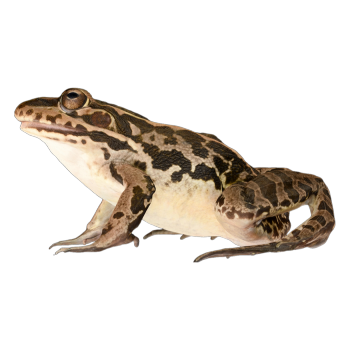
The black spotted side folded frog is a species of amphibian in the family Ranidae, also known as the spiny male toothed frog or black frog. Head length is greater than head width; The snout is slightly pointed, the snout tip is blunt and round, protruding from the lower lip, the nostrils are in the middle of the kissing eye, and the distance between the noses is equal to the width of the eyelids; The eyes are large and prominent, with a narrow distance between them, smaller than the distance between the nose and the width of the upper eyelid; Short forelimbs, with forearm and hand lengths less than half of body length; The skin on the back is relatively rough, with obvious folds on the back side, and multiple longitudinal ridges of varying lengths between the folds. There are round warts and mole particles on the back, perianal area, and lower back of the thigh; Smooth belly surface. The back of the body has a variety of colors, including light green, yellow green, dark green, gray brown, etc., mixed with many black horizontal stripes of different sizes.
Black spotted side folded frog female

Black spotted side folded frog female

The black spotted side folded frog is a species of amphibian in the family Ranidae, also known as the spiny male toothed frog or black frog. Head length is greater than head width; The snout is slightly pointed, the snout tip is blunt and round, protruding from the lower lip, the nostrils are in the middle of the kissing eye, and the distance between the noses is equal to the width of the eyelids; The eyes are large and prominent, with a narrow distance between them, smaller than the distance between the nose and the width of the upper eyelid; Short forelimbs, with forearm and hand lengths less than half of body length; The skin on the back is relatively rough, with obvious folds on the back side, and multiple longitudinal ridges of varying lengths between the folds. There are round warts and mole particles on the back, perianal area, and lower back of the thigh; Smooth belly surface. The back of the body has a variety of colors, including light green, yellow green, dark green, gray brown, etc., mixed with many black horizontal stripes of different sizes.
Japanese wrinkled frog male

Japanese wrinkled frog male

The Japanese wrinkled frog is a true frog native to Japan, introduced to Hawaii in the late 19th century. It is sometimes considered a single species, similar to the Imienpo station frog found on the East Asian continent. The difference between these two species and others lies in their rough and uneven skin. It lives and reproduces in various freshwater environments, including ponds, streams, and wetlands. The International Union for Conservation of Nature does not consider this species to face any significant threats.
Japanese wrinkled frog female

Japanese wrinkled frog female

The Japanese wrinkled frog is a true frog native to Japan, introduced to Hawaii in the late 19th century. It is sometimes considered a single species, similar to the Imienpo station frog found on the East Asian continent. The difference between these two species and others lies in their rough and uneven skin. It lives and reproduces in various freshwater environments, including ponds, streams, and wetlands. The International Union for Conservation of Nature does not consider this species to face any significant threats.
Male Ueno Brown Frog

Male Ueno Brown Frog

The Ueno brown frog Rana Uenoi is a species of amphibian belonging to the family Ranidae in the order Anura. This type of frog is called the Ueno Brown Frog. It is related to two other brown frogs in South Korea (R. huanreinsis and R. coreana), and researchers used species distribution modeling techniques to predict the distribution range of these frogs under future climate change based on observation points and environmental variables.
Female Ueno Brown Frog

Female Ueno Brown Frog

The Ueno brown frog Rana Uenoi is a species of amphibian belonging to the family Ranidae in the order Anura. This type of frog is called the Ueno Brown Frog. It is related to two other brown frogs in South Korea (R. huanreinsis and R. coreana), and researchers used species distribution modeling techniques to predict the distribution range of these frogs under future climate change based on observation points and environmental variables.
Male Field Frog

Male Field Frog

The Tianzi frog, scientific name Rana tagoi, is a species of frog in the family Ranidae of the order Anura in the class Amphibia. It lives in forests ranging from low mountains to altitudes below 2000 meters. The diet is animal food, including insects, spiders, land snails, etc. Before metamorphosis, young children consume the yolk in their bodies to sustain their lives. The basal subspecies lays 60-110 eggs from January to February or April to May, the subspecies キタゴガエ from February to March, and the subspecies クシマタゴガエ from October to April in areas such as puddles near streams or streams.
Female Field Frog

Female Field Frog

The Tianzi frog, scientific name Rana tagoi, is a species of frog in the family Ranidae of the order Anura in the class Amphibia. It lives in forests ranging from low mountains to altitudes below 2000 meters. The diet is animal food, including insects, spiders, land snails, etc. Before metamorphosis, young children consume the yolk in their bodies to sustain their lives. The basal subspecies lays 60-110 eggs from January to February or April to May, the subspecies キタゴガエ from February to March, and the subspecies クシマタゴガエ from October to April in areas such as puddles near streams or streams.
Male Shuleigelin frog

Male Shuleigelin frog

The Rhacophorus schgelii frog is a species of frog in the family Frogidae, order Anura, of the class Amphibia. It is a unique species in Japan, distributed in Honshu, Shikoku, Kyushu and surrounding islands, but not on Tsushima Island. The scientific name means' Mr. Schuyler's Frog ', which comes from Hermann, the director of the Royal Museum of Natural History in Leiden, Netherlands.
Shuleigelin frog female

Shuleigelin frog female

The Rhacophorus schgelii frog is a species of frog in the family Frogidae, order Anura, of the class Amphibia. It is a unique species in Japan, distributed in Honshu, Shikoku, Kyushu and surrounding islands, but not on Tsushima Island. The scientific name means' Mr. Schuyler's Frog ', which comes from Hermann, the director of the Royal Museum of Natural History in Leiden, Netherlands.
Flying Frog

Flying Frog

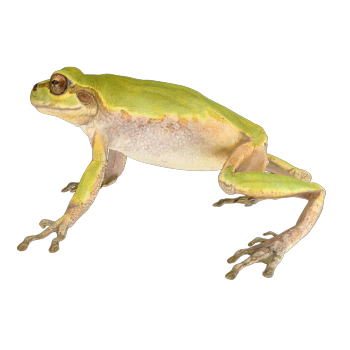
The tree frog is a species of amphibian belonging to the Rhacophoridae family. This kind of frog breeds in a special way. They make foam nests underground. They will crawl on the edges of rice paddies and swamps, and dig caves above the water surface. The female carries the smaller male on her back, and both are buried in a hole that is 6-9 centimeters wide and 10-15 centimeters above the water surface. The interior of this nest is smoothed out through female movement, and then at night, it is filled with white material filled with air bubbles.
Blackened species of rattlesnake

Blackened species of rattlesnake

The rattlesnake is a reptile belonging to the family Viperidae in the order Scorpaeniformes. The body of a rattlesnake is yellow green with diamond shaped black brown spots on its back; The tail end has a series of keratin rings, which are remnants after multiple molts. When encountering enemies or rapid movements, the tail ring of the tail can quickly swing 40-60 times per second, making a loud sound for a long time, making enemies afraid to approach or scared away, hence the name.
Tiger Cane Lizard

Tiger Cane Lizard

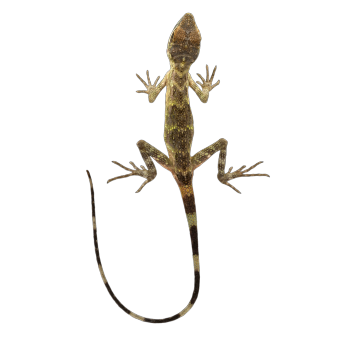
The Diploderm Polygonatum, also known as the Ryukyu Lizard or Okinawan Tree Lizard, is a lizard found in the Ryukyu Islands and Taiwan. It lives day and night in trees. Adult male tiger canes are 61 millimeters long from the nose to the vent, and 152 millimeters long from the vent to the tip of the tail; The total length is 213 millimeters.
Five Belt Green Sky Bull

Five Belt Green Sky Bull

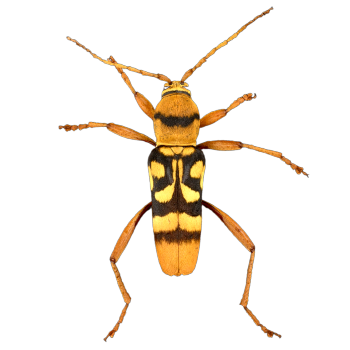
The five banded green beetle is a beetle with a body length of 16-17 millimeters. Its head is relatively small, with coarse dots scattered on the surface. The gap between the antennae is narrow. The antennae are not particularly long, and when extended, they can only barely reach the front half of the forewings. The peduncle is the longest, and the 5 basal segments have fur on the lower edge. The anterior chest is oval shaped, with dense granules and dots at the top of its back. When the forewings are folded, they gradually narrow towards the back, and the tip feels like it has been directly cut, from where you can see that the end of the abdomen always protrudes. There is a slight scratch on the back of the forewings, but due to the dense fur, it cannot be seen. The hind legs are particularly long, with their joints extending beyond the posterior end of the forewings,
Mytilus galloprovincialis

Mytilus galloprovincialis

The Mediterranean mussel (scientific name: Mytilus galloprovincialis) is a species of shellfish in the genus Mytilus. It is an invasive species in many parts of the world, but is also a common species in aquaculture. The Invasive Species Expert Group (ISSG) of the International Union for Conservation of Nature's Species Survival Committee is listed as one of the world's top 100 invasive alien species.
Mipu dragonfly larvae

Mipu dragonfly larvae

Planaeschna milnei (scientific name: Planaeschna milnei) is an insect belonging to the family of dragonflies and the genus Planaeschna. Males have a belly length of 56-57 millimeters and hind wings of 45-46 millimeters. Females have a belly length of 53-56 millimeters and hind wings of 47-50 millimeters. Males have a yellow middle lip and black brown side leaves. The base half of the upper lip is yellow green. The base of the front lip is brown, and the base of the back lip is green. The upper forehead is yellow green, with most of the forehead black, forming a shovel shaped black spot with the front edge of the upper forehead. The antennae and back are black. Black chest, black chest and back, with yellow green stripes. Yellow green on the chest side, with black stripes. Black feet with yellow spots on the forefoot. The wings are transparent, and there are wing moles.
High sand deep mountain shovel shaped insect

High sand deep mountain shovel shaped insect

Lucanus maculifemoratus (scientific name: Lucanus maculifemoratus), belonging to the family Scaridae in the order Coleoptera. The male insect has a body length of 29.9-78.6 millimeters (1.18-3.09 inches), while the female insect is 25-45.1 millimeters (0.98-1.78 inches). It is distributed in cooler forests in mountainous areas of Taiwan at an altitude of 500-1800 meters.
Asian Giant Mantis

Asian Giant Mantis

The Asian giant praying mantis, commonly known as the Asian praying mantis or the Halabiro praying mantis, is a species of praying mantis in the family Mantidae. Males are about 45-65 millimeters long, while females are about 65-75 millimeters long. Individual colors can range from green to brown. Although this species is quite large for a typical mantis, it is one of the smallest members of the Hierodula genus, with many species reaching 110-150 millimeters.
Black edged grasshopper male

Black edged grasshopper male

The black edged grasshopper Stethophyma magister (Rehn, 1902) is a species of Orthoptera insect. It belongs to the Acrididae family, particularly the Oedipodina subfamily and Parapleurini tribe. The ecological environment of this insect is on land.
Black edged grasshopper female

Black edged grasshopper female

The black edged grasshopper Stethophyma magister (Rehn, 1902) is a species of Orthoptera insect. It belongs to the Acrididae family, particularly the Oedipodina subfamily and Parapleurini tribe. The ecological environment of this insect is on land.
Narrow and Cunning Spider

Narrow and Cunning Spider

The narrow and long spider is a species of spider belonging to the family Mycelidae and the genus Mycelidae. Belonging to the phylum Arthropoda, order Spider, family Spider, and genus Spider in the animal kingdom. This spider is distributed in Japan as well as in Guizhou, Sichuan and other parts of China.
Polygonal double skinned lizard

Polygonal double skinned lizard

The female and male body sizes of the polygonal double skinned lizard are different, with males reaching a total length of 27 centimeters and females reaching 20 centimeters. The tail accounts for about 70% of the body, and the head and body length of males are about 4.8-7.7cm, while females are 4.7-6.8cm. The population of Miyako Islands is larger than that of Yaeyama Islands
Melanitis phedima

Melanitis phedima

The forest night eyed butterfly, also known as the black tree shade butterfly, belongs to the order Lepidoptera, family Nymphalidae, and genus Nymphalidae. It is mainly distributed in Guizhou, Yunnan, Zhejiang, Jiangxi, Fujian, Guangdong, Guangxi, Hainan, Chongqing, Sichuan, Xizang, Taiwan and other places. Its characteristics are brown, dark brown, or yellow brown on the back and abdomen of the body, and the shape of the forewings is similar to a right angled triangle, while the hindwings are nearly oval shaped. In Taiwan, adult butterflies can be seen year-round and belong to multiple generations. Its main activity time is when the sky is close to dusk, hence it is named "Twilight Eye Butterfly". The larvae of the night eyed butterfly are hosted by the brown leaved dogweed of the Poaceae family.
Xiashan pepper fish

Xiashan pepper fish

The male length of Xiashan pepper fish is 8.4-11.9 centimeters. The length of the head and torso is 4.7-6.7 centimeters. The tail is very short, accounting for approximately 69.5% of the length of the head and body. There are 13 wrinkles (ribs) on the side of the body. The species nickname Nebula means "cloud like" in Latin. Yellow stripes appear on the back of the tail and the outer edge of the abdomen.
Creek tree frog

Creek tree frog

The brook tree frog (scientific name: Buergeria robusta) is an amphibian belonging to the tree frog family and the brook tree frog genus, which is endemic to Taiwan, China, China. Head width is greater than head length; The tip of the kiss is slightly pointed, with distinct edges; The cheeks tilt outward; Nostrils slightly closer to the snout; The width of the upper eyelid is smaller than the distance between the eyes; Obvious tympanic membrane; The plow bone teeth are short rod-shaped; The tongue is larger. The forearm is thick and robust; Microwebbed between fingers; The palmar process is not obvious.
Buergeria oxycephala

Buergeria oxycephala

The Hainan Creek Tree Frog (scientific name: Buergeria oxycephala) is a species of amphibian belonging to the Tree Frog family and the Creek Tree Frog genus, endemic to China. The body is flat and narrow in length, with a pointed snout end and distinct snout edges. The nostrils are slightly closer to the snout end, and the distance between the upper eye face and the eyes is equal. The eardrum is obvious, the plow bone teeth are slender, and the tongue is large. The lateral metatarsal fins are well-developed; The inner metatarsal process is small and there is no outer metatarsal process. The skin on the back is smooth or has small warts; The temporal folds are obvious. The abdomen is covered with flat warts, and the throat is relatively smooth. In strong sunlight, the back of the lower body appears gray, and in dark and humid environments, the color darkens, with some appearing dark brown or brownish red.
Tiger Cane Lizard

Tiger Cane Lizard

The Diploderm Polygonatum, also known as the Ryukyu Lizard or Okinawan Tree Lizard, is a lizard found in the Ryukyu Islands and Taiwan. It lives day and night in trees. Adult male tiger canes are 61 millimeters long from the nose to the vent, and 152 millimeters long from the vent to the tip of the tail; The total length is 213 millimeters.
Red eared turtle

Red eared turtle

The red eared turtle (Latin name: Trachemys scripta elegans), also known as the Brazilian turtle or the painted turtle, is a species of red eared painted turtle in the reptile class. The head, neck, limbs, and tail of the red eared turtle are covered with uneven yellow green inlaid stripes. There are two thick red stripes on both sides of the head, and the cornea of the eyes is green with a black dot in the center. The snout is blunt, and there are irregular yellow green inlaid spots in the center of each shield of the dorsal and ventral shells. Red eared turtles are lively and sensitive to water and vibration, and prefer to inhabit clear ponds. The red eared turtle is mainly distributed in the Mississippi River and Grand River systems in the United States and Mexico.
vanessa indica

vanessa indica

Vanessa indica (Herbst, 1794), a large red butterfly, has black brown wings with wavy outer edges. The M1 veins of the forewings extend outward in a angular shape, with several white dots at the tips of the wings, four white spots arranged diagonally at the subtidal angles, and a wide red irregular oblique band in the center. Most of Asia and Europe, northwest Africa.
Japanese female toad

Japanese female toad

The Japanese toad (Bufo japonicus) is a species of toad native to freshwater waters in Japan. The Japanese use it to make toad oil. The length of the head and tail is 17.5 cm (7 inches), and females are slightly larger. The webbed toes are not obvious, and the body is gray brown, yellow brown, or dark brown. During the breeding season, the body color is slightly lighter.
Northeast Rain Frog

Northeast Rain Frog

The Northeast Rain Frog (scientific name: Hyla japonica) is a species of amphibian in the Rain Frog family. Distributed in Hokkaido and Yakushima in Japan, as well as along the Heilongjiang River in North Korea and Northeast China, including Heilongjiang, Liaoning, Jilin, and Inner Mongolia. The type locality of this species is in Japan. In 1990, Japanese astronaut Toyohiro Akiyama brought some Northeastern rain frogs to the Soviet Union's Mir space station.
Male Japanese toad

Male Japanese toad

The Japanese toad (Bufo japonicus) is a species of toad native to freshwater waters in Japan. The Japanese use it to make toad oil. The length of the head and tail is 17.5 cm (7 inches), and females are slightly larger. The webbed toes are not obvious, and the body is gray brown, yellow brown, or dark brown. During the breeding season, the body color is slightly lighter.
Double spine beetle

Double spine beetle

The double ridged longhorn beetle is a beetle belonging to the longhorn family. This beetle is distributed in Taiwan and China. The body length is 9.5-17.0 millimeters. The body is covered with extremely thick and dense light colored fuzz, ranging from light grass green to light blue, and decorated with black stripes, composed of a base color and black fuzz. The variation between light and black colors is significant, forming different spotted patterns, especially in elytra. The anterior chest and back panel are pale in color, with circular black spots on both sides of the central area. Each elytra has three large black spots, the first of which is located on the outer side of the base, including the shoulders; The second one is slightly lower, before the middle; Stretching inward wider, but not reaching the middle seam.