Golden Phoenix Butterfly

Golden Phoenix Butterfly

The golden phoenix butterfly is an animal belonging to the family Papilionidae in the order Lepidoptera. The golden butterfly is a medium-sized butterfly with a wingspan of 70-84 millimeters. The underside of the wings is black brown with black veins, and the wing chambers have yellow spots; The base of the dorsal surface of the forewings is dark yellow, with a black sub outer edge and a row of small yellow spots inside; The posterior wing has a black broad border in the sub outer edge area, gray blue stripes on the inner side, yellow stripes on the outer side, and an orange red circular spot in the buttock area. The posterior wing has a pair of slender caudal processes. The golden phoenix butterfly is also known as the yellow phoenix butterfly, fennel phoenix butterfly, or carrot phoenix butterfly.
Idea leuconoe

Idea leuconoe

Idea leuconoe is a species of insect in the family Nymphalidae, belonging to the order Entomophthorales. It is also known as the Great White Spot Butterfly. Mainly distributed in Taiwan, Diaoyu Islands, Malay Peninsula, Indonesia, Japan and other places in China.
Green Phoenix Butterfly

Green Phoenix Butterfly

The Green Butterfly, scientific name Graphium sarpedon, is a species of butterfly in the family Papilionidae, also known as the Camphor Green Butterfly, Green Banded Camphor Butterfly, Blue Banded Green Butterfly, or Blue Banded Yellow Butterfly. It can be classified into spring and summer types, with the spring type being slightly smaller and the wing surface having slightly wider blue-green stripes. More than one year and overlapping generations, overwintering as pupae. Adults appear from March to October and are visible throughout the year in tropical regions. The green swallowtail butterfly has strong flying ability and likes to visit flowers and suck honey. It often moves in damp and open areas at low altitudes, and is also common in gardens, streets, and forest spaces. Mainly distributed in Asia and Oceania. The hosts are mostly plants of the Lauraceae family.
kaniska canace

kaniska canace

The Liuli Nymphalidae is an arthropod belonging to the family Nymphalidae in the order Lepidoptera, also known as the Blue banded Nymphalidae. The outer edge of the adult's forewings protrudes from the apex to the M1 vein end, and from the Cu2 vein end to the posterior horn, forming a wavy circular arc shape; The front of the wings is black brown, with one white spot at the sub tip; There is a gray blue broad band running through the outer middle area of the two wings, which forms a "Y" shape on the front wing and a black dot on the gray blue broad band on the back wing. The M3 vein on the outer edge of the hind wing protrudes in a toothed shape. The base half of the dorsal wing is black brown, the end half is brown, and there is one brown white spot in the middle compartment of the hind wing.
Neptis hylas

Neptis hylas

The Central Sailer (scientific name: Neptis hylas, English common name: Common Sailer, alias: Ryukyu Three line Butterfly, Thin winged Grass Butterfly, Wood Three line Butterfly, Autumn Butterfly) is also known as the Bean Ring Butterfly in Taiwan. It belongs to the Nymphalidae family and is a species of the Ring Butterfly genus. Widely distributed in the Eastern Ocean, including India to Japan and Southeast Asia. The mode of origin is Guangdong, China. Adults are visible throughout the year and love to visit flowers, absorb decay, and water; The host of larvae is mainly leguminous plants.
Ideopsis similis

Ideopsis similis

The wingspan of the proposed spotted butterfly ranges from 75.0 to 85.0 mm. There are white spots on the head and chest. The front and rear wings are black brown with translucent light blue spots. The forewings have 5 longitudinal bands extending outward from the base of the wing, and 10 spots on the outer side of the longitudinal bands. There are three small longitudinal bands in the interior of the hind wing, surrounded by six spots or longitudinal bands. There are horizontal spots on the sub terminal and terminal parts of the front and rear wings.
Athyma selenophora

Athyma selenophora

The Athyma selenophora (Latin name: Athyma selenophora) is a species of butterfly in the family Nymphalidae, distributed in Hainan, Guangdong, Guangxi, Yunnan, and Fujian. Belonging to a multi generational butterfly species. Adult butterflies have a habit of visiting flowers, and in the early stages of larvae, they have a habit of wrapping silk around feces particles to make rod-shaped "feces towers" to hide.
Pale white spotted bean pink butterfly

Pale white spotted bean pink butterfly

Colias erate is a butterfly belonging to the family Colubridae and the genus Colubridae. The male butterfly has yellow wings, with wide black stripes on the outer edge of the forewings and black stripes on the outer edge of the hindwings that are often connected in a row. There are two types of female butterflies: type one has a pale yellow green or light white wing surface (with the same markings as male butterflies); The other type has a yellow wing surface, identical to that of male butterflies. The color on the underside of the wings is relatively light, with one column of dark spots at the sub end.
Pale yellow green spotted bean pink butterfly

Pale yellow green spotted bean pink butterfly

Colias erate is a butterfly belonging to the family Colubridae and the genus Colubridae. The male butterfly has yellow wings, with wide black stripes on the outer edge of the forewings and black stripes on the outer edge of the hindwings that are often connected in a row. There are two types of female butterflies: type one has a pale yellow green or light white wing surface (with the same markings as male butterflies); The other type has a yellow wing surface, identical to that of male butterflies. The color on the underside of the wings is relatively light, with one column of dark spots at the sub end.
Nymphalidae butterfly

Nymphalidae butterfly

The Nymphalidae butterfly is a species of insect in the Nymphalidae family. The wing surface has orange and black checkered patterns, and both the wing surface and the wing base have a row of black dots below the edges and a black centerline spanning the wings. There is a light orange spot with a black edge on the underside of the wing surface. The underside of the wing base is mottled with brown and gray, accompanied by a pale band.
Green belt emerald butterfly specimen

Green belt emerald butterfly specimen

Papilio maackii, also known as the deep mountain butterfly, is a species of the genus Papilio in the family Papilionidae. It is distributed in South Korea, Japan, Taiwan, China, Chinese Mainland and other places. The wings are black and covered in golden green scales. The forelimb has yellow green horizontal stripes. There are six slightly crescent shaped red spots on the outer edge of the hind wing, and circular red spots on the buttock angle; There is a clear blue-green horizontal stripe on the outer edge of the near Asia region. There is also a blue-green line in the tail protrusion. The color tone on the reverse side of the wings is relatively light, and the red spots on the outer edge of the hind wings are particularly clear and obvious, with the blue-green horizontal band disappearing. It is one of the butterfly species widely collected by butterfly collectors, and butterfly traders call it the "Queen Butterfly".
The specimen of the sharp eyed butterfly

The specimen of the sharp eyed butterfly

The name of the butterfly is Lepidoptera, belonging to the family Nymphalidae. It is distributed in Hunan (southern Hunan), Henan, provinces and regions south of the Yangtze River, Taiwan, Yunnan, Xizang; Southeast Asia region. Host plants in the Poaceae family, etc.
Noble scallop specimens

Noble scallop specimens

The shell of the luxurious scallop is large and larger, with a shell length exceeding 100mm. The shell is tough and round in shape. The shell length is slightly equal to the shell height, the two shells are equal, the left shell is slightly more convex than the right shell, and the sides of the shell are slightly equal. The dorsal edge of the shell is straight, and the ventral edge is circular. The top of the shell is located in the middle of the back edge, small and not convex, with shell ears in front and behind the top of the shell. The two ears are unequal, with the left anterior ear slightly larger and both ears forming triangles, with 7-8 thin ribs on the ribs; There is a significant difference between the front and back ears of the right shell; The front ear is large, nearly triangular, with about 4 thick ribs on the surface, and there are several small comb teeth in the foot silk holes below; Rear ear triangle with several thin ribs.
Two color river clam specimen

Two color river clam specimen

The external characteristics of the shell range from medium to large. The shell beak is located at the front end. Thin shell. The true bead layer did not extend to the end. Lack of twisted teeth. The scar on the anterior adductor muscle is small and located at the front end, while the scar on the posterior adductor muscle is large and located in the center. There are no water pipes. Attach the front foot fibers to the substrate and bury them in the substrate with the back edge facing upwards.
Dark veined cabbage butterfly specimen

Dark veined cabbage butterfly specimen

The Dark veined Cabbage Butterfly, also known as the Mountain Green veined Butterfly, is a species of butterfly in the family Papilionidae. The veins on the wings are particularly prominent, especially in the upper wing section. The basic color of females ranges from yellow to grayish brown. In some cases, males are almost indistinguishable because sexual dimorphism is almost non-existent. In some cases, the entire outer edge of the forewings has a black gray band. The ends of the veins on the hind wings may enlarge to form dark triangles. Summer generations have lighter colors than spring generations, and overall, the forewings are lighter than the hindwings, and the veins are not as distinct. The wingspan is approximately 4 to 4.4 centimeters.
Cabbage Butterfly Specimen

Cabbage Butterfly Specimen

The cabbage butterfly is an insect belonging to the family Papilionidae in the order Lepidoptera. The body of the butterfly is gray black, and its wings are pink white; The base of the female butterfly's forewings is mostly gray black, with a triangular black spot at the apex; The black spots on the base of the male butterfly's forewings and the triangular black spots on the apex are relatively small. The Chinese cabbage butterfly is distributed throughout China, from northern America to eastern India. It inhabits farmland, especially vegetable fields, wastelands, and urban park green areas. Enjoying visiting flowers to absorb nectar, they also absorb water on the ground and fly slowly. They often inhabit the opposite side of the leaves of clustered plants. They mainly feed on cruciferous vegetables and are still oligotrophic pests. The oviposition ability of females varies from generation to generation, ranging from 20 to 500 eggs.
Tiger spotted butterfly specimen

Tiger spotted butterfly specimen

The tiger spotted butterfly (scientific name: Danaus genutia, English common name: Common Tiger, Indian Monarch, Orange Tiger, alias: Black veined birch spotted butterfly, pseudo sandalwood butterfly, black striped birch spotted butterfly, tiger striped blue spotted butterfly, etc.) is a butterfly belonging to the Nymphalidae family, a species of the butterfly genus, and has evolved into 15 subspecies. Widely distributed in the Eastern Ocean and the New Territories of Australia. The mode of origin is Guangdong, China.
Jade Belt Butterfly Specimen

Jade Belt Butterfly Specimen

Jade banded swallowtail butterfly is an insect belonging to the family Papilionidae in the order Lepidoptera, also known as white banded swallowtail butterfly, black swallowtail butterfly, striped swallowtail butterfly, and Liangshanbo swallowtail butterfly. There are seven large yellow white spots arranged in bands on the outer edge of the male butterfly's forewings and in the center of its hindwings. Mature larvae are dark green in color, with a yellow brown head and a black linear stripe with teeth on the anterior edge of the thorax. There are black eye spots on both sides, and wide diagonal stripes on both sides of the abdomen.
Musk Phoenix Butterfly Specimen

Musk Phoenix Butterfly Specimen

The musktail butterfly is an insect of the genus Musktail butterfly in the order Lepidoptera, family Nymphalidae. Narrow wings and elongated tail processes. Body black; There are red hairs on the sides of the chest and abdomen, as well as on the head and neck; The wings are black or brown, with brown longitudinal stripes between the wing veins, and four brown longitudinal stripes in the middle chamber of the forewings; There are 5 positive and 7 slightly crescent shaped erythema on the posterior edge of the hind wing. Named after its faint musky scent.
Texas Longhorns

Texas Longhorns

A breed of cattle derived from the southern U.S. state of Texas, hence the name. Known for its prominent long horns and rough appearance, the horns of bulls can often grow to be very long, sometimes reaching or exceeding 7 feet. In the 16th century, when the Spanish conquistadors brought cattle to the New World, these cattle then multiplied freely in the vast grasslands of Texas. Very adaptable to tough grazing conditions, able to tolerate extreme climates and rough grazing environments. It is favored by cattle farmers for its strong disease resistance, heat and cold resistance, high fecundity and low feeding cost. It has also become a symbol of western American culture because of its unique appearance and cultural significance.
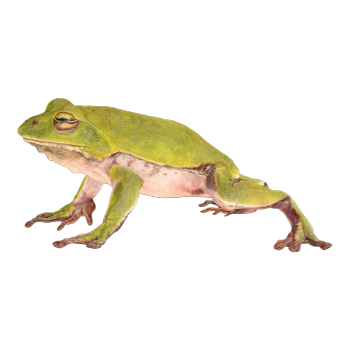
frog

frog

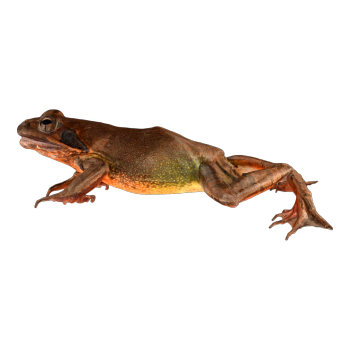
Frogs are amphibians belonging to the family Ranidae, with a slightly triangular head that grows wider; Large and protruding eyes; The forelimbs are short, the fingertips are blunt and pointed, the hind limbs are short and thick, and the toes are almost fully webbed. It is most common and abundant in the plains and hilly areas from North China to South China; It is also distributed in Japan, the Korean Peninsula, Russia and other places. Suitable for living in amphibious environments, it mostly inhabits low-lying and humid places such as rivers, ponds, streams, ditches, lakes, and shallow waters with abundant aquatic plants; During the day and at night, they move around and search for food; Both juvenile and adult frogs are carnivorous and typically prey on rice pests.
zebra

zebra

Zebra is a mammal of the genus Macroma in the order Quetziformes, native to eastern, southern, and southwestern Africa, mainly inhabiting tropical and subtropical forests and grasslands. Social animals, usually in groups of dozens or hundreds, will go to ponds or streams to drink water in the morning and evening. Having a timid and cowardly personality, one will quickly flee when feeling scared, with a speed of up to 70 kilometers per hour; They rely on keen perception and rapid running to avoid attacks from predators. Feed on tender leaves of wild grass. Strong disease resistance and good at self-protection. The black and white stripes of zebras can interfere with the sight of predators in sunlight and moonlight.
Little Rhinoceros

Little Rhinoceros

Rhinoceros is a large mammal in the family Rhinocerotidae of the order Rhinoceros. Fat and clumsy, with thick and rough skin arranged in folds; The fur is sparse and hard; The ears are oval in shape; Big and long head; Short and thick neck; No canine teeth; The tail is thin and short, and the body is yellow brown, brown, black or gray; Solid single or double horns on the head and nose; Both males and females have double horns, with females having longer horns than males. Rhinos are distributed in Asia, such as India in South Asia; It inhabits sparse grasslands and dense forests in tropical and subtropical regions. They often come out to forage in the early morning, evening, or night, with poor vision and sensitive sense of smell and hearing; Living alone often with little contact between individuals.
Jurassic Park - Velociraptor Blue

Jurassic Park - Velociraptor Blue

In the Jurassic Park film series, Blue is a particularly striking velociraptor known for its loyalty and intelligence. First appearing in Jurassic World, domesticated by animal trainer Owen Grady, she established a deep emotional bond with Owen. Bru not only demonstrates extraordinary teamwork skills, but also exhibits a high degree of intelligence, able to understand complex instructions and demonstrate problem-solving abilities. In the subsequent film series, Bloom continued to play a key role, and her storyline deepened, including her experience of becoming a mother.
Black striped dragonfly

Black striped dragonfly

The Black striped Velociraptor is an insect in the family Scolopoda and genus Velociraptor. Males have a belly length of 56-59 millimeters and hind wings of 46-48 millimeters. Male upper and lower lips are yellow, and the anterior edge of the upper lip is black. The base of the front and back lips is green yellow. Green with one black "T" - shaped stripe. The top of the head, antennae, and back of the head are black. The front of the chest and back is green with no markings, while the chest and spine are yellow; Yellow green color on the side of the chest. There is a small black dot above and in front of the stomata. The wings are transparent, the anterior veins are yellow, the wing veins are black, and the wing moles are yellow brown. The abdomen is black with blue spots. The first and second abdominal segments are enlarged, with the base of the first and second segments being green. The lateral sides of the third to seventh segments each have three blue spots and one longitudinal spot of the same color.
house lizard

house lizard

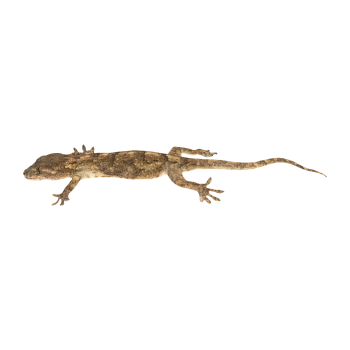
Gecko is a reptile belonging to the gecko genus in the gecko family. The body is relatively flat, with a total length of 10-15 centimeters, and the length of the tail and head is basically the same. The back of the body is covered with granular scales. Because it inhabits walls and is good at catching scorpions and flies, it is named gecko. Gecko is distributed in Guangxi, Guangdong, Fujian, Yunnan and other places in China; They prefer to live in secluded places such as between walls and under eaves, and appear on ceilings and walls at night, hunting insects such as mosquitoes and flies. The medicinal value of geckos is very high, and they can be used to treat conditions such as epilepsy, scrofula, tuberculosis, and swelling. Their dried products are called "Tianlong".
Red Deer

Red Deer

Red deer, a species of deer in the family Deer. Red deer were widely distributed in many parts of the world, originally found in Asia, Europe, and North America, and later introduced to New Zealand. Red deer usually live separately for both sexes and only gather together during the mating season. At this point, the male deer engages in intense combat with the female deer in order to mate. Red deer living in the forest have long been the best prey for humans, with the purpose of not only consuming their delicious meat, but also widely regarded as a great form of entertainment and exercise. Many subspecies of red deer are now at risk of extinction. This includes North African red deer, Kashmir red deer, and Corsican red deer.
crocodile

crocodile

Crocodiles are reptiles belonging to the Crocodylidae and Alligatoridae families, with a total of 8 genera and 23 species. Crocodiles have a longer torso; Muscular development; Crocodiles are mostly distributed in tropical regions of Africa, Asia, North and South America, and Australia, with only Yangtze alligators and American alligators living in temperate regions. Crocodiles inhabit areas such as lakes, swamps, and shallow waters. Living together in common groups; Enjoy a warm environment. Crocodiles mainly prey on vertebrates, as well as mollusks and crustaceans. Crocodiles, as one of the oldest species on Earth to date, retain many features of early dinosaur reptiles and are also known as "living fossils".
cow

cow

Cows are mammals belonging to the family Taurus in the order Artiodactyla. They are tall and have a well proportioned structure, thin skin, low fat content, short capillaries, and often have distinct black, white, or yellow fur. Chinese Holstein cattle are the main dairy cow breed in China, currently distributed throughout the country, mainly in northern grassland areas such as Heilongjiang, Inner Mongolia, and Xinjiang, while other areas are distributed in urban and suburban areas and some suburban rural areas. Cattle are mainly fed with coarse feed, silage feed, energy feed, and protein feed. Adding seasonings such as spices, sodium saccharin, sodium glutamate, and organic acids to the feed can increase the cow's feed intake and milk production.
giraffe

giraffe

Giraffe (scientific name: Giraffa camelopardalis): It is a ruminant cloven hoofed animal that grows in Africa, and its Latin name means "camel with leopard print". They are the tallest living terrestrial animals in the world. When standing, it can reach 6-8 meters from head to feet, weigh about 700 kilograms, and the newborn baby is 1.5 meters tall. It inhabits tropical and subtropical savannas, shrubs, open acacia forests, arid and open savanna areas, and semi desert areas with sparse trees in Africa. It is a herbivorous animal that feeds mainly on leaves and small branches.
Bactrian camel

Bactrian camel

Bactrian camels, also known as wild camels. Bactrian camels are mammals of the camel family in the order Artiodactyla. The body shape is similar to that of a domesticated Bactrian camel, but the hump is smaller, the hooves are narrower, and the ears are also smaller; The back has twin peaks and the neck is long and curved. The lower neck hair, upper outer body hair, and tail hair of the limbs are all short; The fur is sandy yellow brown, with a slightly gray snout. Bactrian camels have a very sensitive sense of smell and are tolerant of hunger and thirst. They can go without drinking water for more than 10 days or even longer. When they are extremely dehydrated, they can break down the fat inside their humps, producing water and heat. Bactrian camels are also resistant to high and cold temperatures, wind and sand, and are good at long-distance running. They can run hundreds of kilometers in a short period of time.
Black Rhinoceros

Black Rhinoceros

The black rhinoceros is a mammal belonging to the family Rhinocerotidae in the order Rhinoceros, also known as the black rhinoceros or the pointed snouted rhinoceros. Strong and robust in physique, with skin ranging from brown to gray, and sparse and hard fur; The skin is thick and rough, with less obvious wrinkles on the shoulders and waist compared to Indian rhinoceros, and there are no wart like protrusions on the surface of the body; The ears are oval in shape, with a thick and long head and a short and thick neck; The upper part of the nose has solid anterior and posterior double horns, with the largest anterior horn measuring up to 1.4 meters in length; There is a sharp protrusion in the middle of the upper lip that can stretch and curl. Males have a slightly larger body weight than females. Black rhinoceros is mainly distributed in vast areas of eastern, central, western, and southern Africa. Often feeds on the tender branches, leaves, and fruits of woody plants, especially fond of eating acacia, and occasionally eats green grass.
Cicada

Cicada

Cicadas are insects in the Cicadaceae family, commonly known as cicadas. There are currently about 2000 species of cicadas, with a body length of 2-5 centimeters. Cicadas with two pairs of membranous wings, protruding compound eyes, and the ability to sing are all male cicadas. The vocal organ at the base of the male cicada's abdomen is like a large drum covered with a layer of eardrum, which vibrates and produces sound. Due to the fact that cicadas' vocal muscles can stretch and contract about 10000 times per second, and the gap between the lid and eardrum can resonate, their vocalizations are particularly loud. However, female cicadas, due to their incomplete body structure and lack of eardrums, are unable to produce sound and are known as "mute cicadas".
Eastern honey bee

Eastern honey bee

The Oriental honey bee, a species of honey bee under the genus Apis, has a natural distribution range of west to Pakistan, east to Taiwan and Japan, northwest to Qinghai and Gansu, south to Indonesia and Papua New Guinea, including the entire South Asia, Southeast Asia, and East Asia. In recent years, it has expanded to northern Australia, and there are also plans to reintroduce it to certain islands in Japan. The Eastern honey bee has different common names, such as Asian honey bee, native honey bee, wild honey bee, etc. The names vary from place to place, and in China they are called Chinese honey bee, Chinese honey bee, and Chinese honey bee.
monarch butterfly

monarch butterfly

The Monarch butterfly is a large butterfly commonly found in North America. In Australia, this butterfly is called Wanderer Bufferfly and is also a very common butterfly. In North America, emperor butterflies typically fly 3000 kilometers to their destination for breeding. The emperor butterfly may be the most well-known butterfly in the world. There are two reasons: firstly, because the emperor butterfly is very beautiful and is known as the most beautiful butterfly in the world. The second reason is that the emperor butterfly is the only migratory butterfly. They fly thousands of kilometers every year to avoid the severe cold in North America.