Freecreat category

Animals/Organics

Browse models in this category, preview details, then continue to download when ready.

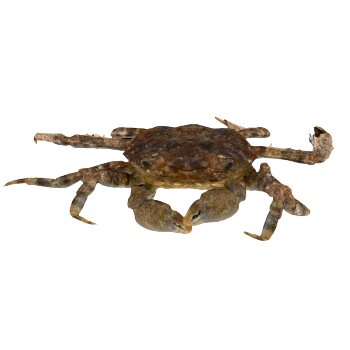
hemigrapsus penicillatus

hemigrapsus penicillatus

The Chinese name is Eriocheir sinensis, which belongs to the genus Eriocheir in the order Decapoda of the phylum Arthropoda of the animal kingdom. It is a marine organism. Crabs are distributed in North Korea, Japan and Chinese Mainland in Guangdong, Fujian, Zhejiang, Jiangsu, Shandong, Bohai Bay, Liaodong Bay, Taiwan Island and other places. Their living environment is sea water, and they are commonly found under rocks or in rock crevices on the seashore, and sometimes on estuarine mudflats. The head and chest armor are square in shape, with the front half slightly wider than the back half, and the surface has fine concave points. There are particles in all areas of the front and back of the body, and the liver area is low concave. The front and side stomach areas are raised and separated by a longitudinal groove.
Pilumnus vespertilio

Pilumnus vespertilio

Pilumnus vespertilio, also known as bat hairy crab, is an animal belonging to the genus of hairy crabs in the family of hairy crabs. They mainly live in seawater, especially in the crevices of rocks along the coast or in shallow waters of coral reefs. It is distributed in Japan, Hawaii, Australia, Thailand, Singapore, the Indian Ocean, the Red Sea, the east and south coast of Africa, as well as the Xisha Islands and Hainan Island in Chinese Mainland. The back of the body is densely covered with soil brown bristles of varying lengths, with longer bristles distributed along the edges of the head and chest armor and the surface of the feet.
Female Eriocheir sinensis

Female Eriocheir sinensis

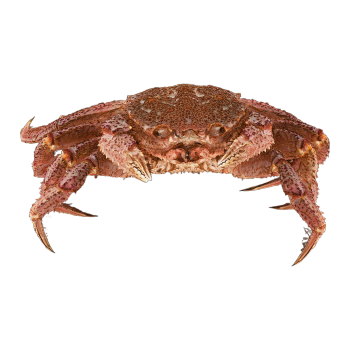
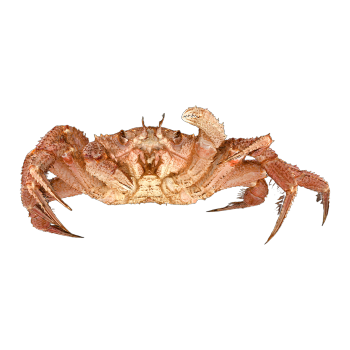
The Erimacrus isenbeckii, also known as the horseshoe crab or the chestnut crab, is an animal belonging to the genus Erimacrus in the family Ericaceae. They mainly live in seawater, especially in the Pacific Northwest and the marginal waters from the Pacific coast north of Ibaraki Prefecture in Japan to the coast of Alaska. They are important commercial resources, mainly captured in fishing cages. They are carnivorous animals that prey on benthic organisms such as polychaetes, shellfish, other shellfish, and small fish. The natural enemies are the Bering wolffish and the North Pacific giant octopus.
Male Eriocheir sinensis

Male Eriocheir sinensis

The Erimacrus isenbeckii, also known as the horseshoe crab or the chestnut crab, is an animal belonging to the genus Erimacrus in the family Ericaceae. They mainly live in seawater, especially in the Pacific Northwest and the marginal waters from the Pacific coast north of Ibaraki Prefecture in Japan to the coast of Alaska. They are important commercial resources, mainly captured in fishing cages. They are carnivorous animals that prey on benthic organisms such as polychaetes, shellfish, other shellfish, and small fish. The natural enemies are the Bering wolffish and the North Pacific giant octopus.
Gorgeous wine colored round fan crab

Gorgeous wine colored round fan crab
Baptozius vinosus, also known as the wine colored round fan crab, is an animal belonging to the genus of round fan crabs in the family of fan crabs. They mainly live in seawater, especially in the surface seabed of the Indo Western Pacific region. In many countries, it is widely used as a food crab. It is distributed in Japan, Solomon Islands, Celebes, Andaman and Hainan Island in Chinese Mainland.
Raft wood hidden crab

Raft wood hidden crab

The Chuanmu Hidden Crab is an animal belonging to the family of hand crabs and the genus of hand crabs. They mainly live in shallow seawater. The head and chest armor of the bamboo crab is square in shape, with a width of up to 3 centimeters. There are some deep grooves that divide it into several areas. The front half has intermittent horizontal ridges, mixed with rough particles. There is an inconspicuous tooth mark on the front edge except for the posterior teeth of the eyes. The side edges are straight and parallel, and the forehead is wide. The eyes are located near the corners of the front side, and the outer teeth of the eye socket are triangular, pointing forward.
Armed basket crab female

Armed basket crab female

Mursia armata, also known as armed basket crab, is an animal belonging to the genus Crab of Mantou crab family. They mainly live in seawater, especially on sandy bottoms at depths of 50-150 meters. It is distributed in Japan, Guangxi and Hainan Island in Chinese Mainland.
Armed basket crab male

Armed basket crab male

Mursia armata, also known as armed basket crab, is an animal belonging to the genus Crab of Mantou crab family. They mainly live in seawater, especially on sandy bottoms at depths of 50-150 meters. It is distributed in Japan, Guangxi and Hainan Island in Chinese Mainland.
Victory Liming Crab

Victory Liming Crab

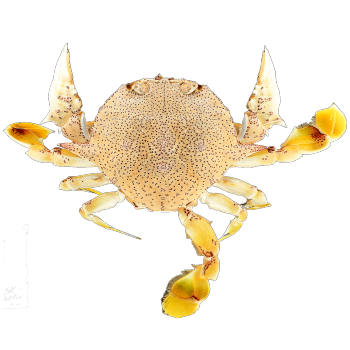
The Matuta victor, also known as the tenacious dawn crab, sand crab, or sand follower, is an animal belonging to the dawn crab genus of the dawn crab family. They mainly live in the outskirts of China, where seawater is semi saline. The head and chest armor of the Victory Dawn Crab is nearly circular, with the forehead slightly wider than the eye sockets. The front edge protrudes in the middle and is divided into two teeth by a "V" - shaped notch. The lower inner eye socket teeth are smooth and blunt circular, with three small blunt teeth on the edge.
Chinese Guan Gong Crab

Chinese Guan Gong Crab

The Chinese Guan Gong crab is an animal belonging to the Guan Gong crab family and the Guan Gong crab genus. They mainly live in seawater, especially in mud and sandy bottoms at depths of 15-50 meters. Guangong Crab is distributed in Guangdong, Hainan and other places in Chinese Mainland.
Japanese river sand crab

Japanese river sand crab

The Japanese river sand crab is an animal belonging to the sand crab genus of the family Crabs. They mainly live in seawater, brackish water, and freshwater environments. The Japanese river sand crab is considered a near threatened species because its habitat conditions are changing.
Toothed stone fan crab

Toothed stone fan crab

Epixanthus dentatus, also known as the toothed stone crab, is an animal belonging to the genus Epixanthus in the family Cymbidae. They mainly live in seawater, especially in the mangrove forests of East Africa. It is a predatory crab that typically inhabits mangrove forests in East Africa. Their behavior is usually nocturnal and elusive, which often hinders analysis of their natural diet and prey selection. The orange spots on the shell of the toothed stone fan crab can easily identify this common crab. They are usually hidden under driftwood.
Gorgeous wine colored round fan crab

Gorgeous wine colored round fan crab

The wine colored round fan crab is an animal belonging to the family of fan crabs and the genus of round fan crabs. They mainly live in seawater, especially in mangrove areas or mudflats near river mouths. It is distributed in Japan, Solomon Islands, Celebes, Andaman and Hainan Island in Chinese Mainland. In the Philippines, the wine colored round fan crab has been recorded in Puerto Galera, Mindoro I. They are commonly found under rocks on the edge of swamps.
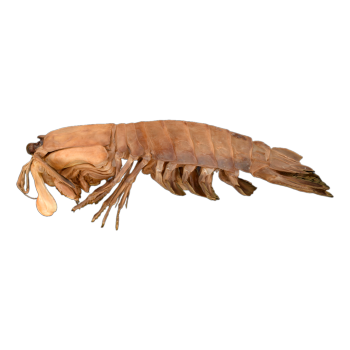
peacock mantis shrimp

peacock mantis shrimp

Odontodactylus scyllarus, also known as Peacock Mantis Shrimp, Striped Blue Dragon Shrimp, Striped Blue Dragon Shrimp, Sparrow Tail Mantis Shrimp, Rainbow Mantis Shrimp, Clown Mantis Shrimp, is an animal belonging to the family of toothed finger shrimp and the genus of toothed finger shrimp. They mainly live in seawater, especially in the surface seabed of the Indo Western Pacific region. The maximum body length can reach 18 centimeters, and the exterior is composed of various bright colors such as red, blue, and green. The second pair of jaws and feet of an individual are well-developed, like an iron fist.
Short spined crab

Short spined crab

Thalamita danae is an animal belonging to the genus Thalamita in the family Crabs. It is distributed in Japan, the Philippines, Australia, New Caledonia, Indonesia, India, the Red Sea, and Chinese Mainland's Guangxi, the Xisha Islands, Hainan Island and other places. Its living environment is sea water, and it mostly lives in the rock reefs near the low tide line and the sandy or muddy shallow seabed, especially in coral reef areas.
Jia Selin's Ugly Charm Trend

Jia Selin's Ugly Charm Trend

The Jacelin Chou Chao or Jacelin Chao Crab is a type of crab belonging to the sand crab family. They mainly live in seawater, especially in mangrove mudflats. Jia Selin's ugly and trendy head and chest armor is slightly rectangular, with a width of up to 2 centimeters, and the surface is uneven, with obvious H-shaped grooves in the stomach and heart regions. The right leg of a male crab is often larger than its left leg, known as the mating leg, and can even be larger than its body, weighing almost half of its entire body. The head and chest armor of male crabs are gray white to dark brown in color, with unclear patterns and varying body colors. The heart area is often light blue.
Guinot soldier crab

Guinot soldier crab

Guinot soldier crab is a soldier crab belonging to the Mictyris genus, only found in the Ryukyu Islands of Japan. They are named after Dani è le Guinot, a professor at the National Museum of Natural History in France. Subspherical body, slightly smaller than long, relatively smooth shell, and slender legs. Their colors range from light blue to dark blue, with occasional variations of light pink; They have darker colors when they are young and lighter colors when they are older. The observed shell length of adult male specimens ranges from 8 to 16 millimeters.
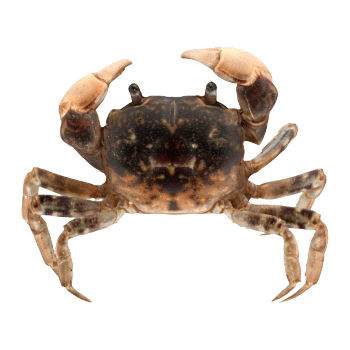
Like a square fake thick crab

Like a square fake thick crab

Pseudohelice subquadrata, also known as the False Thick Crab or Gray Crab, is a species of crab belonging to the family Crabs. They mainly live in seawater, especially in mangrove mudflats. This species is distributed from the eastern Indian Ocean to the western Pacific, north to Japan, south to eastern Australia, east to French Polynesia, west to Indonesia and Thailand. They live by digging holes in solid soil, solid sediment, or loose stones.
Medium sized hand crab

Medium sized hand crab

Medium sized hand crab, also known as medium-sized imitation hand crab. Its Latin scientific name is Sesarmops intermedius (De Haan, 1835). As a common member of the Sesarmidae family, it is also one of the common products in ornamental crabs. Their body color ranges from dark red to bright red, with a few individuals having a dark green red color on their back shell. Its claws gradually turn from red to white from the palmar nodes to the tips of the movable and fixed fingers. Legs are usually orange in color with a white belly.
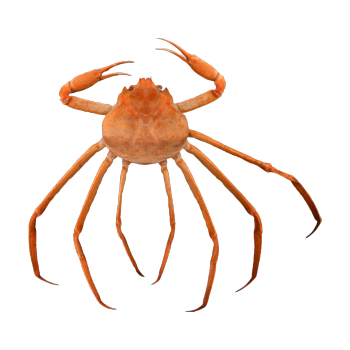
North Pacific Snow Crab

North Pacific Snow Crab

The North Pacific snow crab is a member of the Decapoda order of the sand crab family, also known as the pine leaf crab, Tsurugi crab, snow crab, and Far Eastern sea snow crab. It is a type of snow crab originating from the waters surrounding Russia and Japan. Belonging to large crabs that inhabit the deep sea. There are red eyed snow crabs and gray eyed snow crabs.
Male Four Toothed Large Crab

Male Four Toothed Large Crab

The four toothed large crab is an animal belonging to the large crab genus of the family Crabs. They mainly live in seawater, especially in mangrove mudflats along tropical and subtropical coasts. This species is distributed in New Caledonia, Indonesia, Malaya, Singapore, the Danlao Islands, India and Hainan Island in Chinese Mainland.
Female Four Toothed Large Crab

Female Four Toothed Large Crab

The four toothed large crab is an animal belonging to the large crab genus of the family Crabs. They mainly live in seawater, especially in mangrove mudflats along tropical and subtropical coasts. This species is distributed in New Caledonia, Indonesia, Malaya, Singapore, the Danlao Islands, India and Hainan Island in Chinese Mainland.
Japanese imitation thick crab

Japanese imitation thick crab

The Japanese imitation thick crab is an animal belonging to the family Crabaidae and the genus Crabapple. The species is distributed in Deji Island, South Korea, southern Japan and Shandong in Chinese Mainland.
Strong diamond crab

Strong diamond crab

The robust horseshoe crab Parthenope validus is distributed in North Korea, Japan, Samoa, Australia, the Indian Malay Sea, Singapore, including the South China Sea, East China Sea, Yellow Sea and Bohai Sea. They mostly live at the bottom of sediment in deep water areas.
Hyas alutaceus

Hyas alutaceus

Hyas alutaceus is a type of crab. It belongs to the Hyas genus, which is part of the Oregon crab family.
Square Large Crab

Square Large Crab

The Chinese name is the Square Large Crab, which belongs to the phylum Arthropoda, class Soft Armor, order Decapoda, family Characidae, and genus Large Crab in the animal kingdom. It is a marine organism. Crab is distributed in Hawaii, Tahiti, New Caledonia, Australia, Madagascar, the east coast of Africa, and Guangxi and Guangdong in Chinese Mainland. Its living environment is sea water, mainly inhabiting in intertidal rock crevices or under rocks.
Triangle spine lobster

Triangle spine lobster

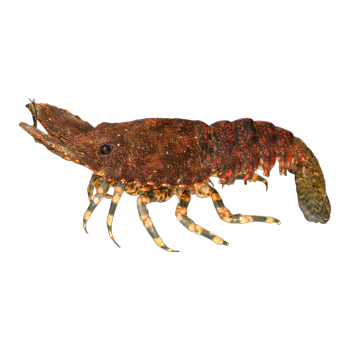
Linuparus trigonus, also known as Japanese spined lobster or triangular spined lobster in Chinese, is a species of crayfish belonging to the family Lobidae in the phylum Arthropoda of the animal kingdom. It is a marine organism. The triangular spined lobster is widely distributed in Japan, the South Pacific, and the Indian Ocean, and is an important species in the South Pacific. The triangular spined lobster is the only extant species in the fossil record of the spined lobster genus.
Japanese black crayfish female

Japanese black crayfish female

The Japanese black crayfish (scientific name: Cambaroides japonicus; Japanese: Ni ホンゆリガ) is a species of crayfish in the genus Crayfish, native to northern Japan. It is a small crayfish with a body length of generally 50-60mm and a gray shell. Due to the threat posed by the invasive species of Procambarus clarkii from the United States, the Japanese Ministry of Environment has listed it as a vulnerable species.
Japanese black crayfish male

Japanese black crayfish male

The Japanese black crayfish (scientific name: Cambaroides japonicus; Japanese: Ni ホンゆリガ) is a species of crayfish in the genus Crayfish, native to northern Japan. It is a small crayfish with a body length of generally 50-60mm and a gray shell. Due to the threat posed by the invasive species of Procambarus clarkii from the United States, the Japanese Ministry of Environment has listed it as a vulnerable species.
Curled Mantou crab

Curled Mantou crab

Mantou crab (scientific name: Calappa lophos) is an animal of Mantou crab family Mantou crab genus. It is distributed in Japan, Australia, Indonesia, Thailand, India, Sri Lanka, the Gulf of Iran, Africa, Taiwan, and Hainan Island in Chinese Mainland. Its living environment is seawater, mainly living on the soft sand bottom with a water depth of 30-100 meters.
scylla paramamosain

scylla paramamosain

The Chinese name for this species is the pseudo cave green crab, also known as the green crab, red sturgeon, Chinese sturgeon, or mud crab. It belongs to the phylum Arthropoda, order Mollusca, family Crabaidae, and genus Crabapple in the animal kingdom. The Chinese mitten crab is widely distributed in temperate, subtropical, and tropical sea areas. It is found in Guangdong, Guangxi Zhuang Autonomous Region, Fujian, Taiwan, Zhejiang, Shanghai, and the coastal areas of Jiangsu in China, with Guangdong and Fujian being particularly abundant. It is also found in Vietnam, Japan, the Ryukyu Islands, Thailand, the Philippines, Indonesia, Australia, New Zealand, the Indian Ocean, and the Red Sea.
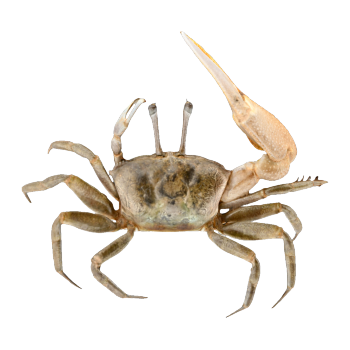
Ocypode ceratophthalmus

Ocypode ceratophthalmus

The horned sand crab, also known as the ghost crab, ghost crab, poop crab, and sand horse crab, belongs to the phylum Arthropoda, class Soft Armor, order Decapoda, family Characidae, and genus Sand Crab in the animal kingdom. It is a marine organism. The horned sand crab is distributed in Japan, Hawaii, the South Pacific, Australia, Thailand, India, the Red Sea, the eastern and southern coasts of Africa, Taiwan, and other places. Its living environment is seawater, and it is mostly found on beaches near the high tide line in the tropical regions of the Indo Pacific. The back of the horned sand crab has a dark "H" - shaped mark. The head and chest armor of the horned sand crab is about 3 to 8 centimeters long, with a width that is about 10% longer than its length. It is slightly rectangular in shape and has a raised surface.
Spotted Pseudomorphic Hand Crab Female

Spotted Pseudomorphic Hand Crab Female

The spotted hand crab (scientific name: Parasesarma pictum), also known as the miraculous hand crab, formerly belonged to the family Crabaidae and the genus Parasesarma. Later, the family Parasesarma separated from the family and was reclassified as the genus Parasesarma. Distributed in North Korea, Japan, Indonesia, South China, and East China (Guangdong, Hong Kong, Fujian, Taiwan, Zhejiang, Shandong), the living environment is seawater, mainly inhabiting under or near rocks at low tide lines.
Spotted Pseudomorphic Hand Crab Male

Spotted Pseudomorphic Hand Crab Male

The spotted hand crab (scientific name: Parasesarma pictum), also known as the miraculous hand crab, formerly belonged to the family Crabaidae and the genus Parasesarma. Later, the family Parasesarma separated from the family and was reclassified as the genus Parasesarma. Distributed in North Korea, Japan, Indonesia, South China, and East China (Guangdong, Hong Kong, Fujian, Taiwan, Zhejiang, Shandong), the living environment is seawater, mainly inhabiting under or near rocks at low tide lines.
Dehan Laomian Crab

Dehan Laomian Crab

Lauridromia dehaani is a species of crab in the family Crabaidae, belonging to the genus Lauridromia. Distributed in the coastal waters of the Indian Ocean and the western Pacific Ocean, it inhabits the bottom of fine sand, mud, and broken shells at depths of 8 to 150 meters. The body length can reach 10 centimeters. I like to put a sponge on my back armor by disguising myself. If I can't find a suitable sponge, I can carry an empty bivalve shell, a bundle of seaweed, or a piece of debris.