
Freecreat category

Animals/Organics

Browse models in this category, preview details, then continue to download when ready.
High Spinosaurus (3D animated model)
High Spinosaurus (3D animated model)

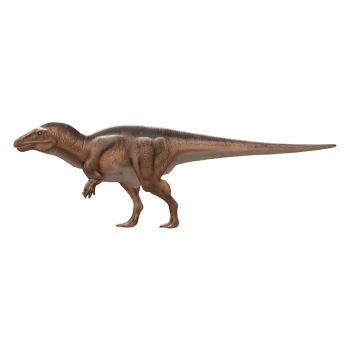
Spinosaurus is a large carnivorous dinosaur found in North America, with a body length of up to 11 meters. It belongs to the shark-toothed dinosaur in the Allosauridae superfamily. Its fossils are mainly found in Texas, Wyoming and Oklahoma in the United States. Fossils of its teeth have also been found in Maryland, suggesting that this top predator was once widespread on the North American continent. There is only one species of Acanthosaurus, Atoka Acanthosaurus. The survival time of high echinopus is from the Aptian period to the early Albu period of the early Cretaceous. High Spinosaurus was the largest predator in the ecosystem at the time, preying mainly on bird-breasts and giant sauropods.
Tyrannosaurus Rex (3D animated model)
Tyrannosaurus Rex (3D animated model)

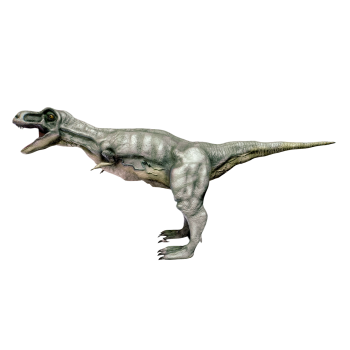
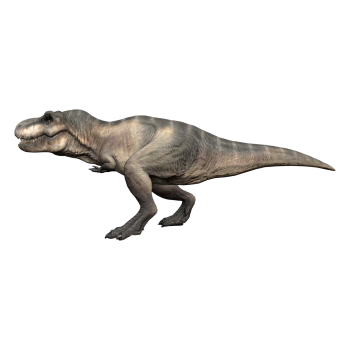
Tyrannosaurus belongs to the genus Tyrannosaurus within the superfamily Tyrannosauroidea and is the type species of that genus. It was described and named in 1905 by the American paleontologist Henry Fairfield Osborn, a member of the American Academy of Arts and Sciences. If one were to follow the transliteration conventions used for other dinosaur species names, its specific epithet would be more appropriately rendered as “King Tyrannosaurus.” Late Cretaceous: body length 10–13 meters, body weight 7.5–10 tons.
Like a crocodile dragon (3D animated model)
Like a crocodile dragon (3D animated model)

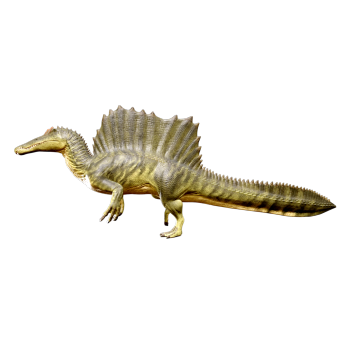
It is a large spinosaurus found in Africa. It is estimated that it can reach 12 meters in length and weigh about 3 tons. At present, there is only one species under this subordinate, namely, the model species Tenere resembles a crocodile. Compared with other spinosaurus, the skeleton of the alligator is relatively intact, making it one of the most clearly studied spinosaurus. The crocodile-like dragon has a long, narrow skull and dense, conical teeth. The vertebral nerve spines of the alligator-like dragon are somewhat extended in the dorsal abdomen, but are not as exaggerated as those of the spinosaurus, and may also support the structure of the dorsal sail like that of the spinosaurus.
Spinosaurus (3D animated model)

Spinosaurus (3D animated model)
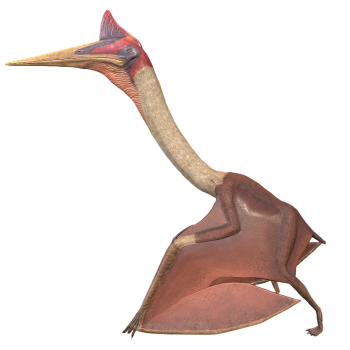
Spinosaurus was a large theropod dinosaur, with a body length comparable to that of Tyrannosaurus rex and southern behemoths. There is currently only one effective species under the genus Spinosaurus, the Egyptian Spinosaurus, named by the German paleontologist Stromer in 1915. It is a pity that the positive type specimen of Spinarus was blown up during World War II. For a long time, paleontologists' understanding of Spinosaurus has only been limited to photos of positive specimens and a few fossil fragments. These studies not only made scientists understand the history of Spinosaurus, but also made people realize that in the Mesozoic era, dinosaurs were not only the overlords on land, but also had their place in the water.
Wind God Pterosaur (3D animated model)
Wind God Pterosaur (3D animated model)

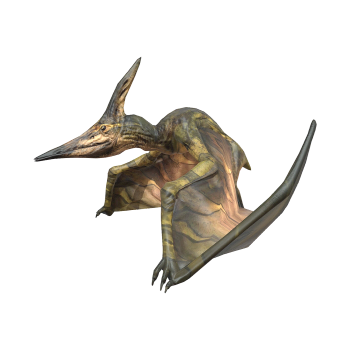
Afeng God pterosaur (Quetzalcoatlus) is a pterodactyl, also known as the Pterodactyl. Aeolus pterosaurus (Quetzalcoatlus) is a species of pterodactyl that lived in the late Late Cretaceous (Campanan to Maastricht), about 84 million to 65 million years ago. It is the largest known flying animal. Pterosaurs are advanced and lack of teeth pterosaurs. The origin of the name is the Aztec civilization of the feathered serpent god Queztke (Quetzalcoatl).
Toothless Pterosaur (3D animated model)
Toothless Pterosaur (3D animated model)

The toothless pterosaur (scientific name: Pteranodon) is a pterosaur in the order Pterosauridae, the toothless pterosauridae. There are no teeth in the mouth and the wingspan is 7 to 9 meters. Living in the late Cretaceous period, about 0.1 billion to 65 million years ago, fossils were found in Kansas and England. The toothless pterosaurs fed on fish and inhabited the coast of the inland seaways of western North America. In the Jurassic film series
Double-Ridged Dragon (3D Animated Model)
Double-Ridged Dragon (3D Animated Model)

Double-spine dragon (Latin scientific name: Dilophosaurus), also known as double-spine dragon, double-helmet dragon, saurohip theropod, is a kind of theropod dinosaur that lived in the early Jurassic period, nicknamed "early Jurassic demon", named after two large bone crowns on the top of the head. Because of its unique appearance, the double-ridged dragon often appears in film and television works.
Pee's Turon (3D animated model)

Pee's Turon (3D animated model)

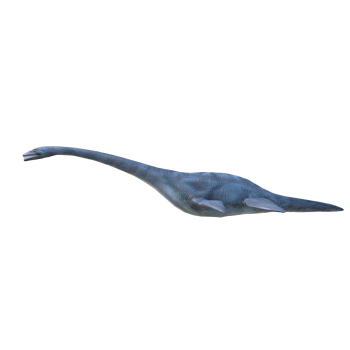
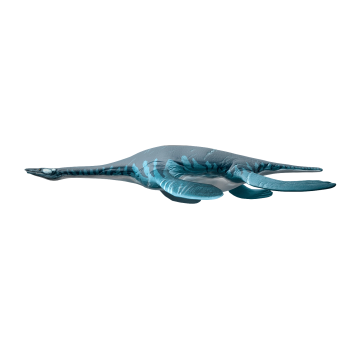
Piritosaurus (scientific name: Pistosaurus) is a marine reptile of the family Piritosauridae and the genus Piritosaurus, belonging to the order plesiosaurus, with an adult body length of more than 4 meters. The skull is cylindrical and has a slender anastomosis, with the characteristics of phantom dragon primitive palatine bone and forward tooth bone tooth. At the same time, it has plesiosaur stiff vertebrae, long neck (composed of 50 cervical vertebrae) and paddle-shaped flippers. Obvious toe contour can be seen under the epidermis, and the tail is cylindrical without scales. The fossil specimen of this species shows that the juvenile individual is about 2.2 meters long, which represents the transitional form of the evolution of the phylosaurus to the plesiosaurus.
Swollen Head Dragon (3D Animated Model)
Swollen Head Dragon (3D Animated Model)

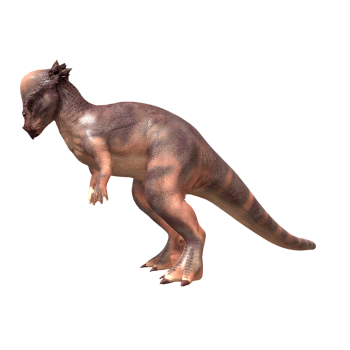
The swollen-headed dinosaur is a thick-headed dinosaur in the order ornithidae, a sauroid. The swollen head dragon is also called the thick head dragon. The head has a thick bone plate with a thickness of more than 20cm and a high elevation, just like a tumor. The original meaning of the scientific name "lizard with thick head" originates from this. The swollen-headed dragon has a body length of 4-6 meters and a weight of 0.5-4 tons. The head and tip of the nose are also covered with small bone tumors. Some have large and sharp spines behind the head.
Parasaurus (3D animated model)

Parasaurus (3D animated model)

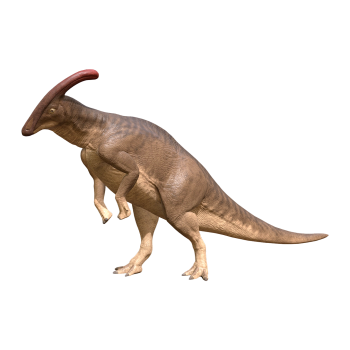
Paractenosaurus is a dinosaur of the family Auckbill, also known as Paracinosaurus, which means "almost crowned lizard". The most obvious feature of the paraphorosaurus is the extended crown on the head, which is rod-shaped and longer than other crowned dinosaurs. There is a thin tube in the crown of the head, which makes a sound when air passes by, and the parasaurus uses it to "talk". The forelimbs of parasaurus can support the body, swim and wade.
Hoffman Canglong (3D animated model)

Hoffman Canglong (3D animated model)
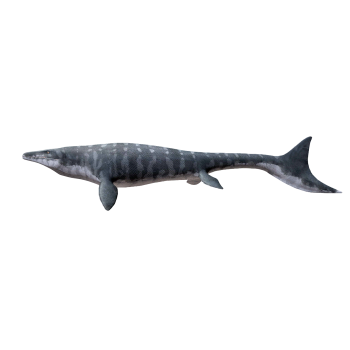
The main type species of Canglong is Hoffmann Canglong, which was discovered in Holland in 1780. Hoffmann Canglong is based on a piece of lower jaw unearthed in Russia. Two other huge square bones and a huge humerus are larger than, but smaller than, that huge square bone. Its teeth have cutting edges, Canglong has a large orbital part but its binocular vision is relatively low, and their olfactory organs are not developed. He thinks that Canglong, like Hoffman, is a predator living on the surface of water, and its living environment is still coastal waters. Hoffman Canglong is the largest Canglong specimen by 2022, with a body length of 18 meters and a weight of 20 tons.
Mamen Creek Dragon (3D animated model)
Mamen Creek Dragon (3D animated model)

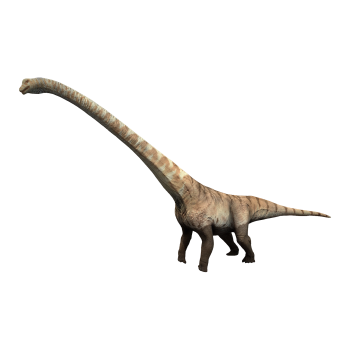
Mamengcreosaurus is a genus of sauropod dinosaurs known for their very long necks, which make up almost half of the total body length. Several species have been placed in the genus Mamentiron, and the attribution of individual species may be controversial. Its fossils have been found in several provinces in western China. It is closely related to Emeilong and belongs to Mamenxi Longaceae. Most of the Mamen Creek dragon body length can be more than 20 meters, a few individuals can be more than 30 meters. Estimates of the weight of the Mamen Creek dragon, the difference between different species is extremely large, the smaller species are considered to weigh less than 10 tons, and the largest species are considered to be more than 60 tons.
Tyrannosaurus Rex (3D animated model)
Tyrannosaurus Rex (3D animated model)

Tyrannosaurus rex belongs to the genus Tyrannosaurus, a type species of the genus, which was described and named in 1905 by Henry Osborne, an American paleontologist and academician of the American Academy of Arts and Sciences. If you refer to the translation format of other dinosaur species names, it would be more appropriate to translate its species name as "Tyrannosaurus rex. Late Cretaceous body length: 10-13 meters weight: 7.5 tons to 10 tons.
Velociraptor (3D animated model)

Velociraptor (3D animated model)
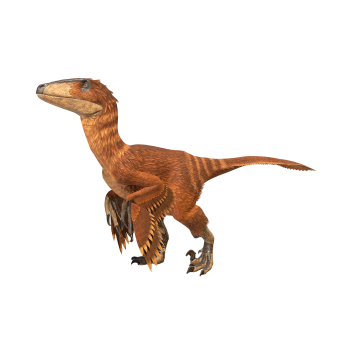
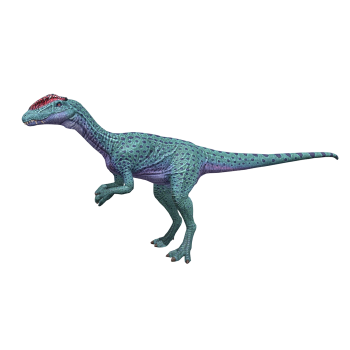
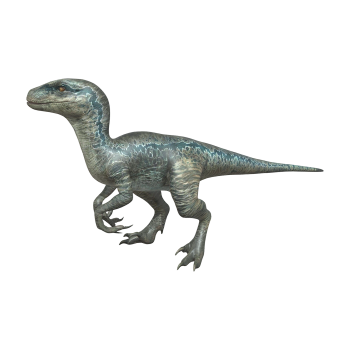
Velociraptor (scientific name: Velociraptor) is a dinosaur of the lizard-buttock-eyed dragon family, also known as raptor, Velociraptor, and Velociraptor. The whole body is covered with feathers. Small in size and similar to turkey. The head is very long and accounts for a large proportion of the body. The mouth is narrow and flat. Sharp teeth with serrated edges; Forelimbs are large and flexible. Strong hind limbs; There are four toes on the hind foot, and the sharp claw on the second toe on the inner side is thick and curved, sickle-shaped. The tail is long and accounts for more than half of the body length, the coccyx is horizontally curved in an "S" shape.
Edmonton Dragon (3D animated model)

Edmonton Dragon (3D animated model)
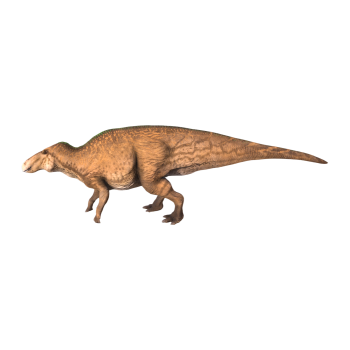
Edmontonosaurus is also translated as Edmontonosaurus and Edmontolosaurus, which are named after Edmonton in Alberta, Canada, where the fossil was found. Edmontonosaurus was a dinosaur of enormous size. They have a triangular side of the head, no crown, wide anterior and posterior segments of the head, narrow middle segment, and a snout similar to the duck's beak.
Diplodocus (3D animated model)

Diplodocus (3D animated model)
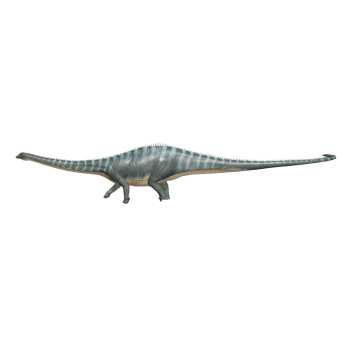
Diplodocus is a dinosaur of the genus Diplodocus in the family Diplodocus. The neck is very long, the head is very small, and the position of the nostrils is higher than the eyes; the front of the mouth has flat teeth, and the sides and back are toothless; the limbs are thick, the forelimbs are short, and the hind limbs are long; the hips are higher than the front shoulders; the palms have 5 fingers (toes); the tail is longer than the neck, gradually tapering to the end, whip-shaped, with more than 10 human characters in the middle. Because the top of the herringbone protrudes from two protrusions like double beams, it is named Shuanglianglong, usually called Diplodocus.
An angylosaur (3D Action Model)

An angylosaur (3D Action Model)

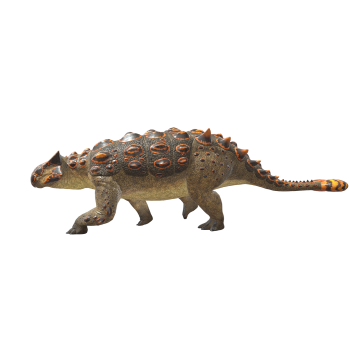
An ankylosaurus, a chordate reptilian ornithosaurus armored dinosaur. The body length is 5-6.5 meters and the body weight is about 4 tons. Short legs, short neck and wide head; The body is covered by hundreds of bone plates with smooth surface and horizontal arrangement. There is also a bone plate above the eyes, only the abdomen has no protective structure. The body is wide, the tail is short and thick, and the tail end has a tail hammer. Ankylosaurus was one of the first dinosaurs to be discovered and was originally described and named "forest lizard". Because of its heavy body, it can only crawl slowly on the ground with its limbs, shaped like a tank car, also known as "tank dragon".
Deinonychus (3D animated model)

Deinonychus (3D animated model)

Deinonychus is a chillosaur found in North America, up to 3 to 4 meters in length. Although this data is significantly smaller than other large theropod dinosaurs, it is significantly larger than other chiasaurus. The name of Deinonychus comes from the sickle-shaped claw of the second toe of the foot. Later studies have shown that this feature is widely present in chillosaurus and injured tooth dinosaurs. The morphological description of Deinonychus was published in the late 1960 s. Its discovery overturned people's understanding of dinosaurs at that time, making people realize that dinosaurs were not cold-blooded and heavy "big lizards", and they also had small and active members.
Red-mouthed Phoenix Snail Specimen

Red-mouthed Phoenix Snail Specimen

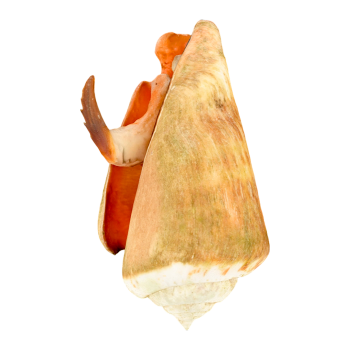
The red-mouthed Phoenix snail (Strombus luhuanus) is a tropical marine gastropod mollusk of the genus Phoenix snail in the family Phoenix snail, commonly known in Chinese as the Lu's Phoenix snail or the red-mouthed Phoenix snail. Widely distributed in the Indo-Pacific Ocean, including the South China Sea (Hainan, Taiwan), the Philippines, Indonesia, Malaysia, Australia, the Great Barrier Reef and Pacific Islands (such as Fiji, Solomon Islands), intertidal to shallow waters (0-20 meters), common Sandy or coral sand bottom.
Samoan Octopus Specimen

Samoan Octopus Specimen

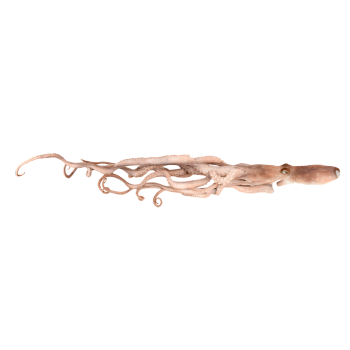
The Samoan octopus (scientific name: Octopus minorSasaki, 1920) is a shallow marine species with unusually slender brachiopods in the octopidae. It is also called or "Samoan octopus" because its body size is smaller than the octopus (Octopus vulgaris) distributed in the same domain ". It is distributed in the shallow waters of the Northwest Pacific, including Japan (southern Hokkaido to Okinawa), the Korean Peninsula, the East China Sea (along the coasts of Zhejiang and Fujian), Taiwan and the Sea of Japan. Preference is made to rock crevices, sand-mud mixing areas, seaweed beds (e. g. Kumbulin), water depth 0-50 m, water temperature 5-25°C (diving into deep water in winter).
Specimen of the thick-cled live hermit crab
Specimen of the thick-cled live hermit crab

The thick-chelated live hermit crab (DardanusCrassimanus) is the dominant species in the Indian Ocean-Pacific tropical beach and reef junction area (0-10 m water depth), distributed in the western Pacific: Japan (Hokkaido to Okinawa), Korean Peninsula, East China Sea (Zhejiang, Fujian beach), Philippines, Indonesia. Indian Ocean: Gulf of Thailand, Bay of Bengal coast. Diet omnivorous partial rot food, body length (including shell) 5-8cm, body width 3-5cm.
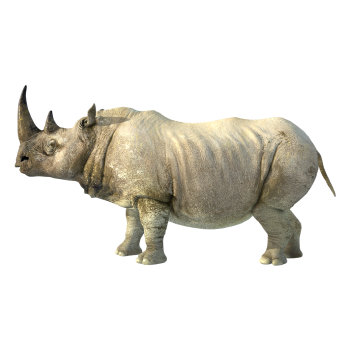
White Rhino (3D animated model)

White Rhino (3D animated model)

The white rhinoceros is a mammal of the genus White Rhinoceridae in the order Rhinoceridae. The body is round and thick, the skin is thick and smooth, and the body surface is similar to gray. The head is very long, the incisors and canines are degraded, and the developed 7 pairs of cheek teeth have a very thick calcareous layer. There are two horns, one large and one small, one in front and the other. The horns are not bone, but derivatives of epithelial tissue, which are accumulated by keratinous fibers, the medullary spines are connected with ligaments to support the head. The limbs are thick and strong, with three toes in the front and rear limbs. The upper lip is flat and wide, square, so it is called wide kiss rhinoceros and square kiss rhinoceros. The male weighs more than the female.
Moose (3D animated model)

Moose (3D animated model)

The moose is a mammal of the genus Camelidae in the order Artiodactyla. Moose is larger, generally 2-2.6 meters long.. The moose is named for its hump-shaped back hump and its horn-shaped mandible. Moose is distributed in Russia, Northern Europe, North America and other sub-frigid regions, and also in the northeast of China, the big and small Xing'an Mountains. Moose have a high status in many cultures. However, due to hunting and habitat destruction, moose is now included in China's "National Key Protected Wildlife List" and is recognized as a national first-level key protected animal.
Pigeon (3D animated model)

Pigeon (3D animated model)
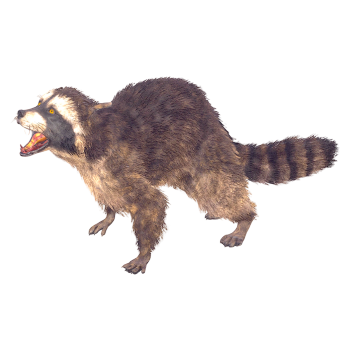
Realistic raccoon (3D animated model)
Realistic raccoon (3D animated model)

Raccoon (scientific name: Procyon lotor): a mammal of the order carnivora and raccoonidae, with an adult body length of 40-65cm, a tail length of 20-40cm, a weight of 4-10kg, and a male slightly larger than a female. Smaller body size. The face has black eye spots, the image is funny, nicknamed "masked thief"; the tail has 5 to 7 black and white ring patterns. The hair is dense, the whole body hair color is gray brown mixed, also can see the albino varieties. The claws cannot be contracted and are not sharp, but are very sensitive and can catch flying bugs.
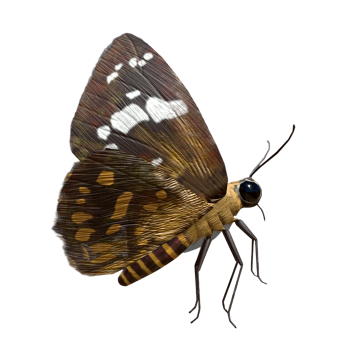
Taiwan Beautiful Butterfly (3D animation model)
Taiwan Beautiful Butterfly (3D animation model)

Taiwan's Celaenorrhinus taiwanus is a small and medium-sized butterfly of the genus "Noucaidae" (Celaenorrhinus) and is endemic to Taiwan, China (some classification systems regard it as a subspecies of Southeast Asian populations, but the mainstream view recognizes its endemic status in Taiwan). The "taiwanus" in its scientific name directly points to the model origin-Taiwan, which is a common representative species of butterfly in Taiwan's low-altitude forest and grassland ecosystem. The Taiwan butterfly is the dominant butterfly species in Taiwan's low-altitude (500-1500 m) forest edge grassland shrubs and brook woodlands.
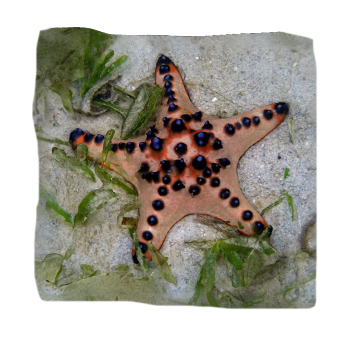
crown of thorns starfish

crown of thorns starfish

The crown-of-thorns starfish is a well-known top predator of coral reefs in the Asteroidea class (starfish). Its scientific name is now mostly classified as Acanthaster planci (often translated as "crown-of-thorns starfish" or "coral starfish" in Chinese). This kind of starfish is called "the nightmare of coral reefs" because its large-scale outbreak can lead to the death of large-scale bleaching coral reefs, is a key regulator of tropical coral reef ecosystems
Flat Coral

Flat Coral

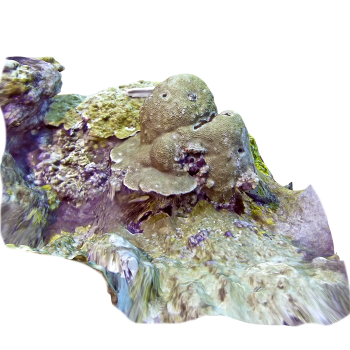
Flat coral is the "invisible cornerstone" of coral reefs-its dense skeleton, symbiotic relationship with zooxanthellae, and support for biodiversity make it a core species for maintaining reef health. In the face of climate change and man-made air disturbance, protecting this "flat engineer" is essentially injecting resilience into the entire coral reef ecosystem. Every gentle guardian of a coral reef is an investment in the future of the ocean.
leafy Monterey coral

leafy Monterey coral

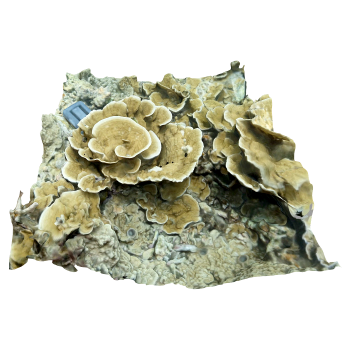
The leafy Monterey Coral is the elegant "leafy builder" of tropical coral reefs-its flaky skeletons, tiny coral polyps and zooxanthellae symbionts that together form the core framework of the coral reef ecosystem. However, climate change and man-made air disturbances are putting these "seafloor leaves" at risk of disappearing. Protecting foliated Montipora is essentially protecting the health of the entire coral reef ecosystem.
Rhino

Rhino

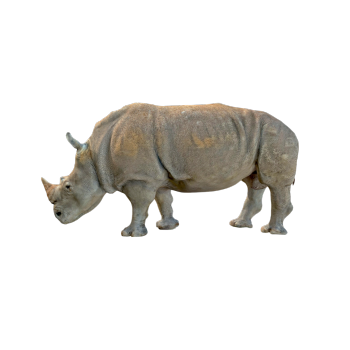
The core highlight is the real expression of skin texture-the skin surface presents rough granular texture, full of fine wart-like protrusions and deep folds (the depth of folds varies with body parts, such as neck and shoulder folds, which are more obvious); The color is mostly dark gray, black gray or brown gray, which may have local traces of soil adhesion (simulating the activity state in natural environment); There is shadow transition at the skin folds, enhance the skin's heaviness and three-dimensional sense; The texture of horny horn is different from the skin, showing the characteristics of hard, smooth and with subtle growth lines, and the base of the horn is naturally connected with the head skin.
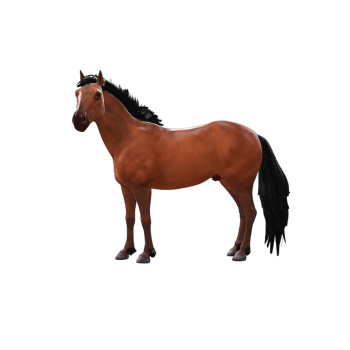
High Detail Brown Horse

High Detail Brown Horse

It presents the standard proportions of adult horses-shoulder height, body length, coordinated length of limbs, strong trunk, straight back or slightly natural radian, slender and powerful neck, moderate head proportion (natural connection with trunk), overall posture may be standing, walking or trotting (muscle tightness conforms to sports mechanics), restoring the horse's sense of strength and elegant posture. Details of the structure: muscle lines are clearly visible, such as the deltoid of the shoulder, back
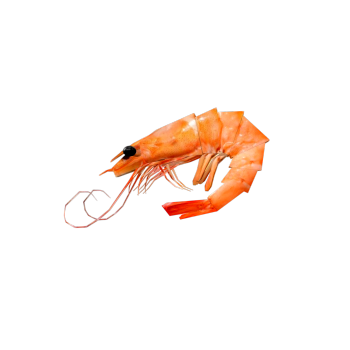
Shrimp

Shrimp

The body is naturally curved and streamlined, divided into three parts: head, chest and abdomen. The front end of the head has slender tentacles (simplified to several smooth lines), the eyes are protruding and spherical, the chest is connected with multiple pairs of walking feet (simplified to block or strip structure), the abdomen is composed of multiple sections, and the tail is a fan-shaped tail fan (outlined by a small number of triangular surfaces), the overall proportion fits the biological characteristics of real shrimp, ensuring high recognition under low mold.
black beetle

black beetle

"Eleodes" is a class of insects in the family Coleoptera, commonly known as "black beetle (darkling beetle)". It is widely distributed in arid and semi-arid areas and is characterized by its hard exoskeleton, black or dark brown body color and unique ecological adaptability. The model focuses on restoring the biological morphology, anatomical structure and detailed characteristics of these insects, which is both scientific and realistic, and may be used for biological teaching, ecological simulation or science visualization.
Elephant and Lion Statue

Elephant and Lion Statue

Combination and sense of scene: Elephant and lion statues may be presented in the form of collocation (such as juxtaposition, interaction or forming a specific scene). The base design may be simple or with decorative lines. The overall atmosphere tends to be solemn, majestic or natural theme, which is suitable for virtual construction requirements such as garden landscape, interior decoration and cultural scene.
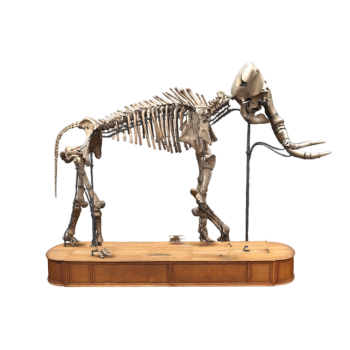
Mammoth

Mammoth

On the whole, the scheme may take regional characteristics and natural symbols as the core, and create design works with unique recognition and emotional resonance through the integration of materials, shapes and themes.