Freecreat category

Animals/Organics

Browse models in this category, preview details, then continue to download when ready.
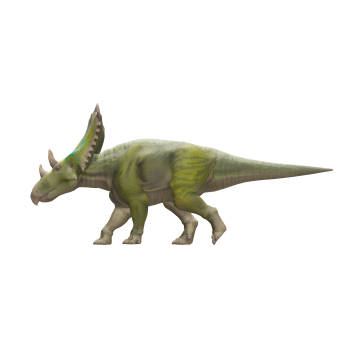
Open-horns (3D animated model)
Open-horns (3D animated model)

Cockerosaurus is a herbivorous dinosaur of the genus Cockerosaurus of the ornithopterosaurus family. Its Latin name means "open and split reptile", and it is also known as Gasperosaurus and Cracerosaurus. Its body length is 4.8-6 meters, its weight is 3.6 tons, its head shield is wide and heart-shaped with holes, its nose has short corners, and its frontal horn length varies by sex. The dorsum has a tumor-like protrusion 5cm in diameter, and the neck fold leaf structure is longer than that of Triceratops. The known species include Billerosaurus, Canadian killerosaurus, etc. Some fossils have been classified as agouhaerosaurus. The species lived in Late Cretaceous North America, and most fossils were found in Alberta, Canada.
Camarasaurus (3D animated model)

Camarasaurus (3D animated model)
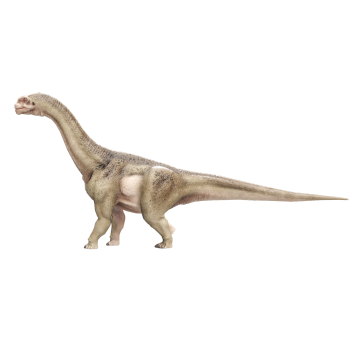
Camarasaurus (scientific name: Camarasaurus) is a herbivorous sauropod dinosaur of the genus Camarasaurus of the family Camarasaurus. The type species is Supreme Camarasaurus. Its body length can reach 18 meters and its weight is about 30 tons. It has strong body characteristics, short neck and tail, arch structure of head, spoon-shaped teeth and periodic replacement ability. There is cavity structure in vertebrae to reduce weight. Small pit marks were found on the surface of the jawbone, which may indicate the presence of blood vessels in the rostral tissue.
Brachiosaurus (3D animated model)

Brachiosaurus (3D animated model)
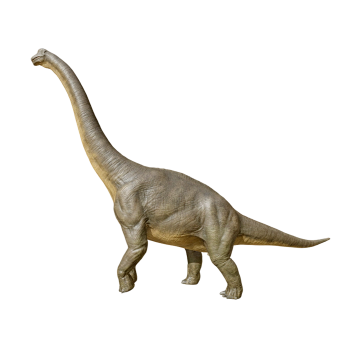
Brachiosaurus is a general term for the "Brachiosaurus" dinosaurs of the Jurassic period. The body length is 25 meters, the height is 15 meters, the weight is 30 tons, the tail is thick and short, the head is very small, the neck is very long, and the shape is similar to that of a giraffe. There are large claws on the inner side of the foreruns. The jaw is well developed, covered with 52 teeth up and down, and the edges of the teeth are sharp. The limbs are thick and strong. The nostrils are on top of the head. It is named for its long forelimbs.
The allosaurus (3D animated model)

The allosaurus (3D animated model)
The allosaurus is one of the most famous large carnivorous dinosaurs, occupying the top of the food chain of the Late Jurassic terrestrial ecosystem. Marsh described the naming in 1877. They are also the largest number of fossils found in the Late Jurassic. Adult allosaurs can reach 9 meters in length, with a few individuals thought to reach 12 meters. At the same time, the number of specimens of allosaurus is far more than that of tyrannosaurus rex, making it one of the most thoroughly studied dinosaurs by paleontologists. Due to the extremely large number of fossils excavated, allosaurus has become an iconic fossil species of the Morrison Formation.
Albertolon (3D animated model)

Albertolon (3D animated model)
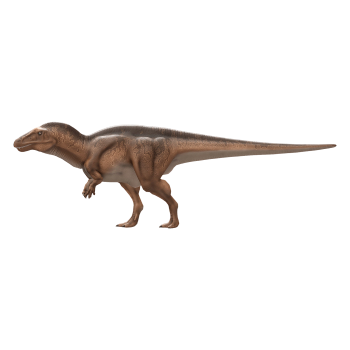
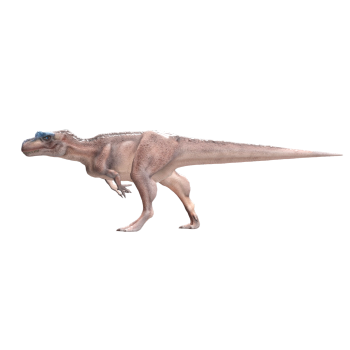
Albertolosaurus was one of the earliest members of the family Tyrannosaurus, and was known to have a maximum length of 11 meters. Its fossils were unearthed in Alberto, Canada. Albertolosaurus was a bipedal hunting dinosaur with a large head, a jawbone with many large teeth and a thin forelimb with two fingers. It could be at the top of the ecosystem food chain. Although larger in theropod, Albertolon was smaller than its famous relative, Tyrannosaurus, and weighed about the same as today's black rhinoceros.
High Spinosaurus (3D animated model)

High Spinosaurus (3D animated model)
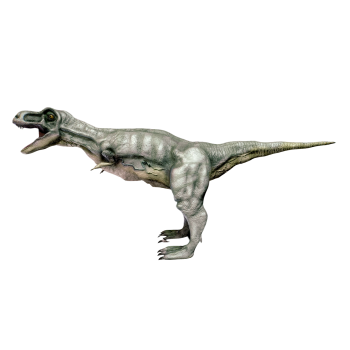
Spinosaurus is a large carnivorous dinosaur found in North America, with a body length of up to 11 meters. It belongs to the shark-toothed dinosaur in the Allosauridae superfamily. Its fossils are mainly found in Texas, Wyoming and Oklahoma in the United States. Fossils of its teeth have also been found in Maryland, suggesting that this top predator was once widespread on the North American continent. There is only one species of Acanthosaurus, Atoka Acanthosaurus. The survival time of high echinopus is from the Aptian period to the early Albu period of the early Cretaceous. High Spinosaurus was the largest predator in the ecosystem at the time, preying mainly on bird-breasts and giant sauropods.
Tyrannosaurus Rex (3D animated model)
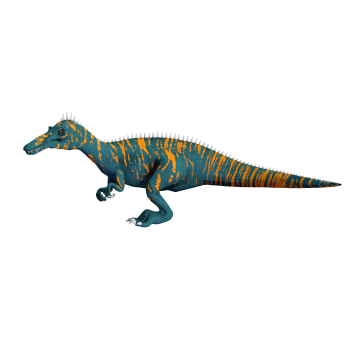
Tyrannosaurus Rex (3D animated model)

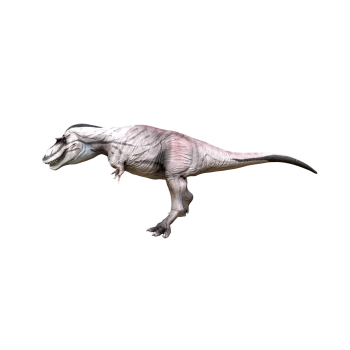
Tyrannosaurus belongs to the genus Tyrannosaurus within the superfamily Tyrannosauroidea and is the type species of that genus. It was described and named in 1905 by the American paleontologist Henry Fairfield Osborn, a member of the American Academy of Arts and Sciences. If one were to follow the transliteration conventions used for other dinosaur species names, its specific epithet would be more appropriately rendered as “King Tyrannosaurus.” Late Cretaceous: body length 10–13 meters, body weight 7.5–10 tons.
Like a crocodile dragon (3D animated model)
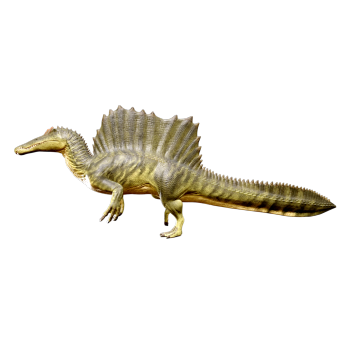
Like a crocodile dragon (3D animated model)

It is a large spinosaurus found in Africa. It is estimated that it can reach 12 meters in length and weigh about 3 tons. At present, there is only one species under this subordinate, namely, the model species Tenere resembles a crocodile. Compared with other spinosaurus, the skeleton of the alligator is relatively intact, making it one of the most clearly studied spinosaurus. The crocodile-like dragon has a long, narrow skull and dense, conical teeth. The vertebral nerve spines of the alligator-like dragon are somewhat extended in the dorsal abdomen, but are not as exaggerated as those of the spinosaurus, and may also support the structure of the dorsal sail like that of the spinosaurus.
Spinosaurus (3D animated model)

Spinosaurus (3D animated model)
Spinosaurus was a large theropod dinosaur, with a body length comparable to that of Tyrannosaurus rex and southern behemoths. There is currently only one effective species under the genus Spinosaurus, the Egyptian Spinosaurus, named by the German paleontologist Stromer in 1915. It is a pity that the positive type specimen of Spinarus was blown up during World War II. For a long time, paleontologists' understanding of Spinosaurus has only been limited to photos of positive specimens and a few fossil fragments. These studies not only made scientists understand the history of Spinosaurus, but also made people realize that in the Mesozoic era, dinosaurs were not only the overlords on land, but also had their place in the water.
Wind God Pterosaur (3D animated model)
Wind God Pterosaur (3D animated model)

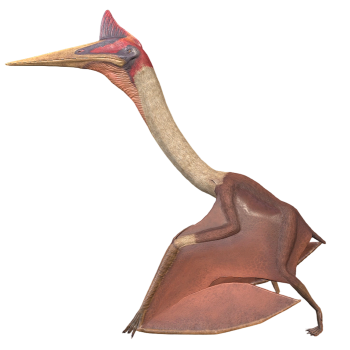
Afeng God pterosaur (Quetzalcoatlus) is a pterodactyl, also known as the Pterodactyl. Aeolus pterosaurus (Quetzalcoatlus) is a species of pterodactyl that lived in the late Late Cretaceous (Campanan to Maastricht), about 84 million to 65 million years ago. It is the largest known flying animal. Pterosaurs are advanced and lack of teeth pterosaurs. The origin of the name is the Aztec civilization of the feathered serpent god Queztke (Quetzalcoatl).
Toothless Pterosaur (3D animated model)
Toothless Pterosaur (3D animated model)

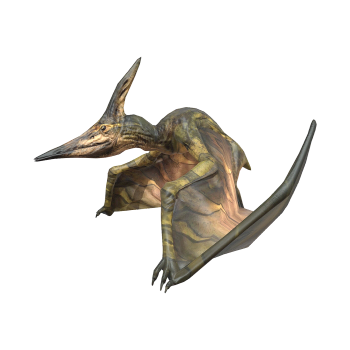
The toothless pterosaur (scientific name: Pteranodon) is a pterosaur in the order Pterosauridae, the toothless pterosauridae. There are no teeth in the mouth and the wingspan is 7 to 9 meters. Living in the late Cretaceous period, about 0.1 billion to 65 million years ago, fossils were found in Kansas and England. The toothless pterosaurs fed on fish and inhabited the coast of the inland seaways of western North America. In the Jurassic film series
Double-Ridged Dragon (3D Animated Model)
Double-Ridged Dragon (3D Animated Model)

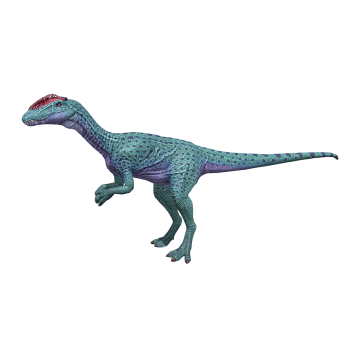
Double-spine dragon (Latin scientific name: Dilophosaurus), also known as double-spine dragon, double-helmet dragon, saurohip theropod, is a kind of theropod dinosaur that lived in the early Jurassic period, nicknamed "early Jurassic demon", named after two large bone crowns on the top of the head. Because of its unique appearance, the double-ridged dragon often appears in film and television works.
Pee's Turon (3D animated model)

Pee's Turon (3D animated model)

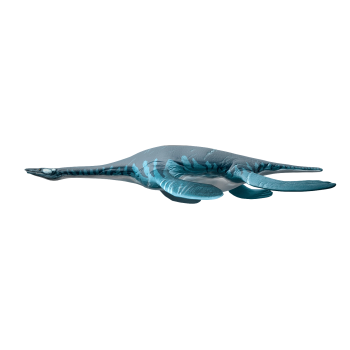
Piritosaurus (scientific name: Pistosaurus) is a marine reptile of the family Piritosauridae and the genus Piritosaurus, belonging to the order plesiosaurus, with an adult body length of more than 4 meters. The skull is cylindrical and has a slender anastomosis, with the characteristics of phantom dragon primitive palatine bone and forward tooth bone tooth. At the same time, it has plesiosaur stiff vertebrae, long neck (composed of 50 cervical vertebrae) and paddle-shaped flippers. Obvious toe contour can be seen under the epidermis, and the tail is cylindrical without scales. The fossil specimen of this species shows that the juvenile individual is about 2.2 meters long, which represents the transitional form of the evolution of the phylosaurus to the plesiosaurus.
Swollen Head Dragon (3D Animated Model)
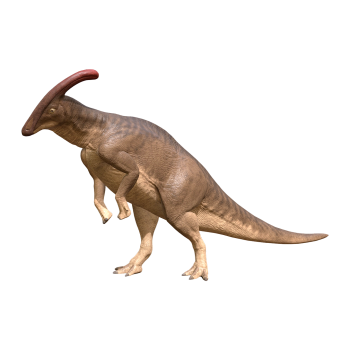
Swollen Head Dragon (3D Animated Model)

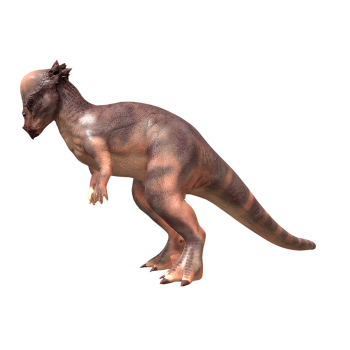
The swollen-headed dinosaur is a thick-headed dinosaur in the order ornithidae, a sauroid. The swollen head dragon is also called the thick head dragon. The head has a thick bone plate with a thickness of more than 20cm and a high elevation, just like a tumor. The original meaning of the scientific name "lizard with thick head" originates from this. The swollen-headed dragon has a body length of 4-6 meters and a weight of 0.5-4 tons. The head and tip of the nose are also covered with small bone tumors. Some have large and sharp spines behind the head.
Parasaurus (3D animated model)

Parasaurus (3D animated model)

Paractenosaurus is a dinosaur of the family Auckbill, also known as Paracinosaurus, which means "almost crowned lizard". The most obvious feature of the paraphorosaurus is the extended crown on the head, which is rod-shaped and longer than other crowned dinosaurs. There is a thin tube in the crown of the head, which makes a sound when air passes by, and the parasaurus uses it to "talk". The forelimbs of parasaurus can support the body, swim and wade.
Hoffman Canglong (3D animated model)

Hoffman Canglong (3D animated model)
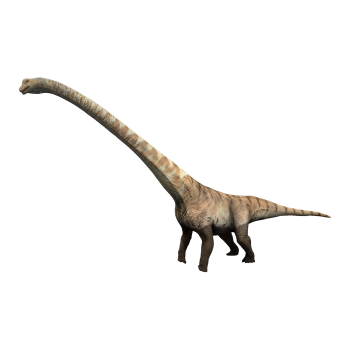
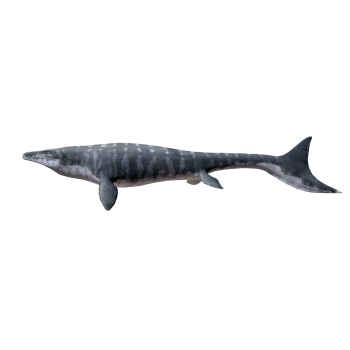
The main type species of Canglong is Hoffmann Canglong, which was discovered in Holland in 1780. Hoffmann Canglong is based on a piece of lower jaw unearthed in Russia. Two other huge square bones and a huge humerus are larger than, but smaller than, that huge square bone. Its teeth have cutting edges, Canglong has a large orbital part but its binocular vision is relatively low, and their olfactory organs are not developed. He thinks that Canglong, like Hoffman, is a predator living on the surface of water, and its living environment is still coastal waters. Hoffman Canglong is the largest Canglong specimen by 2022, with a body length of 18 meters and a weight of 20 tons.
Mamen Creek Dragon (3D animated model)
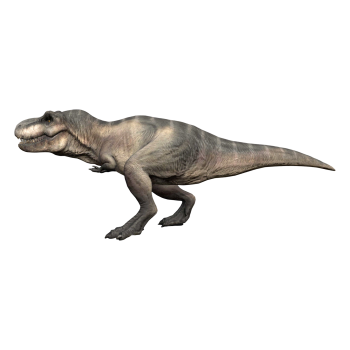
Mamen Creek Dragon (3D animated model)

Mamengcreosaurus is a genus of sauropod dinosaurs known for their very long necks, which make up almost half of the total body length. Several species have been placed in the genus Mamentiron, and the attribution of individual species may be controversial. Its fossils have been found in several provinces in western China. It is closely related to Emeilong and belongs to Mamenxi Longaceae. Most of the Mamen Creek dragon body length can be more than 20 meters, a few individuals can be more than 30 meters. Estimates of the weight of the Mamen Creek dragon, the difference between different species is extremely large, the smaller species are considered to weigh less than 10 tons, and the largest species are considered to be more than 60 tons.
Tyrannosaurus Rex (3D animated model)
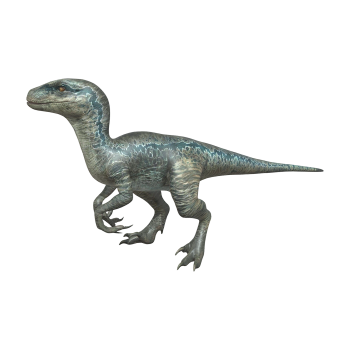
Tyrannosaurus Rex (3D animated model)

Tyrannosaurus rex belongs to the genus Tyrannosaurus, a type species of the genus, which was described and named in 1905 by Henry Osborne, an American paleontologist and academician of the American Academy of Arts and Sciences. If you refer to the translation format of other dinosaur species names, it would be more appropriate to translate its species name as "Tyrannosaurus rex. Late Cretaceous body length: 10-13 meters weight: 7.5 tons to 10 tons.
Velociraptor (3D animated model)

Velociraptor (3D animated model)
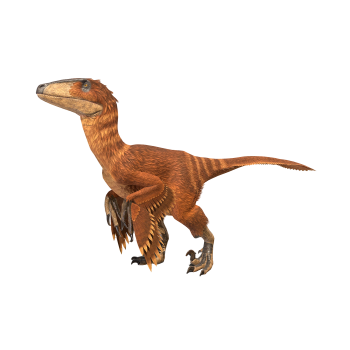
Velociraptor (scientific name: Velociraptor) is a dinosaur of the lizard-buttock-eyed dragon family, also known as raptor, Velociraptor, and Velociraptor. The whole body is covered with feathers. Small in size and similar to turkey. The head is very long and accounts for a large proportion of the body. The mouth is narrow and flat. Sharp teeth with serrated edges; Forelimbs are large and flexible. Strong hind limbs; There are four toes on the hind foot, and the sharp claw on the second toe on the inner side is thick and curved, sickle-shaped. The tail is long and accounts for more than half of the body length, the coccyx is horizontally curved in an "S" shape.
Edmonton Dragon (3D animated model)

Edmonton Dragon (3D animated model)
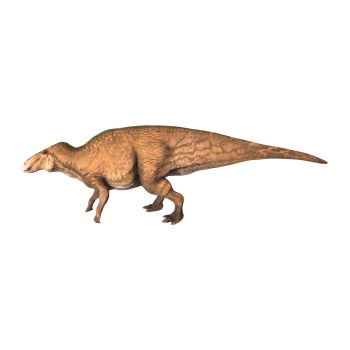
Edmontonosaurus is also translated as Edmontonosaurus and Edmontolosaurus, which are named after Edmonton in Alberta, Canada, where the fossil was found. Edmontonosaurus was a dinosaur of enormous size. They have a triangular side of the head, no crown, wide anterior and posterior segments of the head, narrow middle segment, and a snout similar to the duck's beak.
Diplodocus (3D animated model)

Diplodocus (3D animated model)
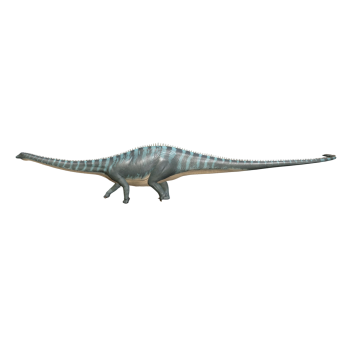
Diplodocus is a dinosaur of the genus Diplodocus in the family Diplodocus. The neck is very long, the head is very small, and the position of the nostrils is higher than the eyes; the front of the mouth has flat teeth, and the sides and back are toothless; the limbs are thick, the forelimbs are short, and the hind limbs are long; the hips are higher than the front shoulders; the palms have 5 fingers (toes); the tail is longer than the neck, gradually tapering to the end, whip-shaped, with more than 10 human characters in the middle. Because the top of the herringbone protrudes from two protrusions like double beams, it is named Shuanglianglong, usually called Diplodocus.
An angylosaur (3D Action Model)

An angylosaur (3D Action Model)

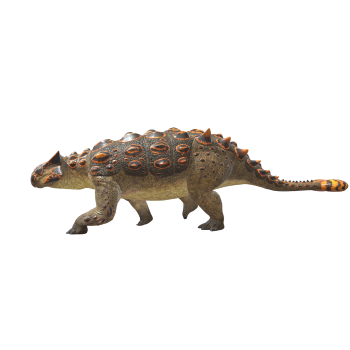
An ankylosaurus, a chordate reptilian ornithosaurus armored dinosaur. The body length is 5-6.5 meters and the body weight is about 4 tons. Short legs, short neck and wide head; The body is covered by hundreds of bone plates with smooth surface and horizontal arrangement. There is also a bone plate above the eyes, only the abdomen has no protective structure. The body is wide, the tail is short and thick, and the tail end has a tail hammer. Ankylosaurus was one of the first dinosaurs to be discovered and was originally described and named "forest lizard". Because of its heavy body, it can only crawl slowly on the ground with its limbs, shaped like a tank car, also known as "tank dragon".
Deinonychus (3D animated model)

Deinonychus (3D animated model)

Deinonychus is a chillosaur found in North America, up to 3 to 4 meters in length. Although this data is significantly smaller than other large theropod dinosaurs, it is significantly larger than other chiasaurus. The name of Deinonychus comes from the sickle-shaped claw of the second toe of the foot. Later studies have shown that this feature is widely present in chillosaurus and injured tooth dinosaurs. The morphological description of Deinonychus was published in the late 1960 s. Its discovery overturned people's understanding of dinosaurs at that time, making people realize that dinosaurs were not cold-blooded and heavy "big lizards", and they also had small and active members.
Spinosaurus 3D Model Animation

Spinosaurus 3D Model Animation

Spinosaurus was a large theropod carnivorous dinosaur that lived in the middle of the Cretaceous period, mainly in the estuarine delta region of northern Africa. It is one of the longest known carnivorous dinosaurs. The most prominent feature is the long spines on its back, which are extended by the nerve spines of the vertebrae to form a structure similar to a ship's sail. May be used to regulate body temperature, store fat, attract the opposite sex, or threaten an opponent. Is a semi-aquatic animal with body structures adapted to aquatic life, such as long, narrow upper and lower jaws and sharp teeth, suitable for catching fish and other small animals. The hydrophilicity increases in the high temperature season.
Red Tyrannosaurus Rex 3D Model Animation

Red Tyrannosaurus Rex 3D Model Animation

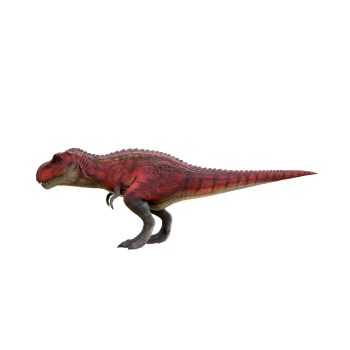
Tyrannosaurus rex was a large carnivorous dinosaur that lived in the late Cretaceous period. It is one of the largest known terrestrial carnivores, with a large head and sharp teeth suitable for biting and hunting. The forelimbs are very short, with only two fingers and claws, while the hind limbs are sturdy and powerful, able to support their large bodies and run quickly. It lived mainly in the forests and swamps of North America and fed on other dinosaurs, including large herbivorous dinosaurs such as Triceratops and Stegosaurus. Vision and sense of smell are very developed, able to accurately target prey. Despite its large size, it has a relatively low IQ and a simple brain structure. They usually live alone.
Behemoth Dragon 3D Model Animation

Behemoth Dragon 3D Model Animation

Megalosaurus, also known as Southern Megalosaurus, is a large carnivorous dinosaur that lived in the middle of the Cretaceous period, belonging to the theropod suborder sharkodosauridae. It was one of the largest terrestrial carnivorous dinosaurs of its time, smaller only than Spinosaurus and Tyrannosaurus. Large size, huge head, narrow mouth, sharp teeth, up to 20cm long, suitable for biting and hunting. The forelimbs are short, the hind limbs are stout, and they walk on two feet. Fossils were first discovered in Argentina in 1993, mainly in the Patagonia region of Argentina. The top predators in the ecosystem at the time were known for their strong predation and large size.
Lizard Dragon King 3D Model Animation
Lizard Dragon King 3D Model Animation

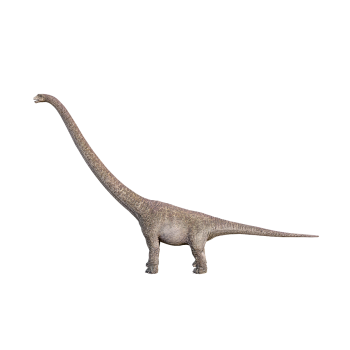
The lizard king dragon is a large theropod carnivorous dinosaur that lived in the late Jurassic period, belonging to the family Alitrosauridae. It was one of the largest carnivorous dinosaurs of the Jurassic period, second only to the North American Tan's Barbarian in size and slightly smaller than the Portuguese format Barbarian. Fossils were found in the latest layer of the Morrison Formation in New Mexico and Oklahoma, USA, indicating that they appeared very late in the area or were relatively rare in number. Huge size. The legs were thicker and longer than those of the allosaurus, indicating that it was much larger in height and weight than the allosaurus. In addition, the base of the dorsal nerve spine of the lizard dragon has a vertical lamina, which is their most prominent feature.
Mamen Xilong GLB model

Mamen Xilong GLB model

Mamenchixiosaurus, one of the largest sauropod dinosaurs found in China, lived about 0.16 billion years ago in the Late Jurassic. It is famous for its long neck, which can reach 12.1 meters in length, accounting for almost half of its body length. The head is relatively small, the teeth are thin and stick-shaped, suitable for gnawing high plants. The limbs are strong and strong, the forelimbs are short, the hind limbs are long, and the tail is long and strong, which helps to maintain the balance of the body. Living mainly in plains with lush plants and abundant water, they spend most of their time in lakes and marshes, floating their bulky bodies with the help of water. Foods on young leaves of tall trees and low shrubs.
Spinosaurus 3D Model Animated GLB Model

Spinosaurus 3D Model Animated GLB Model

Spinosaurus was a giant carnivorous dinosaur that lived in the Cretaceous period, about 112,000,000 to 93 million years ago. The body length can reach 15 to 20 meters, weighing about 6.4 to 14 tons. The most notable feature is a row of nerve spines up to 2 meters in length on the back. These nerve spines are formed by the extension of the vertebrae and support a structure similar to a sail. The skull is long and narrow, similar to modern crocodiles, with conical teeth, suitable for catching fish and other small animals. The limbs are short and strong, and the tail is flat and wide, suitable for swimming in the water. It is considered a semi-aquatic predator, feeding mainly on fish, but also hunting other small dinosaurs
Velociraptor 3D animated model

Velociraptor 3D animated model

Velociraptor, also known as Velociraptor and Velociraptor, is a dinosaur that lived in the late Cretaceous period about 83 million to 70 million years ago. It is nearly the size of a turkey, with a long, narrow head, large, sharp teeth, strong forelimbs, and long, flexible hind legs. The most notable feature is the large sickle-shaped toenail on the second toe, which is its main hunting weapon. It is a social animal that often hunts in groups and can collaborate to kill small dinosaurs and other animals. The brain is relatively large and is considered to have high intelligence, capable of team combat.
Tyrannosaurus 3D model animation

Tyrannosaurus 3D model animation

Tyrannosaurus was a large theropod dinosaur that lived in the Late Cretaceous period about 74 million to 70 million years ago. It is a distant relative of Tyrannosaurus Rex, mainly distributed in Mongolia and China in Asia. Fossils have also been found in Inner Mongolia, Xinjiang and other places. It is one of the largest carnivorous dinosaurs found in Asia. It has dozens of sharp teeth and strong bite force. The lower jaw has a special joint structure, which gives it an advantage when hunting. The forelimbs are the shortest and smallest in the family Tyrannosauridae, with strong hind limbs and a long, heavy tail for balancing the body. At the top of the food chain, it is a top predator, feeding mainly on large dinosaurs. Vision is poor, but the sense of smell and hearing developed.
Mamen Creek Dragon 3D Model Animation

Mamen Creek Dragon 3D Model Animation

One of the largest sauropod dinosaurs ever discovered in China, Mamenchixiosaurus lived during the Late Jurassic period, about 0.155 billion to 0.16 billion years ago. It is found in Mamen Creek, Yibin, Sichuan, China. The most notable feature is the extremely long neck, accounting for half of the body length, with up to 19 cervical vertebrae, the longest neck of all dinosaurs. The head is small, the teeth are thin and stick-shaped, suitable for nibbling leaves. It mainly lives in plains with luxuriant plants and abundant water, and feeds on the twigs and leaves of tall trees and low shrubs. Most of the time spent in lakes, swamps, with the help of water floating bulky body. The tail is long and strong and can be used to support the body
Stegosaurus 3D Model Animation

Stegosaurus 3D Model Animation

Stegosaurus is a large herbivorous dinosaur that lived in the late Jurassic period and belongs to the family Swordosaurus. The body length can reach 7-9 meters, the height is 2.35 to 3.5 meters, and the weight is about 2 to 4 tons. The most notable feature is a row of huge triangular bone plates on the back, which may be used to regulate body temperature, display or defense. The tail ends with four long spines for defense against predators. With a small head and relatively small brain volume, it is considered a less intelligent dinosaur. It walks on four legs and feeds mainly on low plants. Found mainly in North America and Asia, it is one of the most famous dinosaurs of the Jurassic period.
Velociraptor 3D Model Animation FBX Model

Velociraptor 3D Model Animation FBX Model

Velociraptor, also known as Velociraptor and Velociraptor, is a dinosaur that lived in the late Cretaceous period about 83 million to 70 million years ago. Fossils are mainly found in Mongolia, Inner Mongolia, China and Russia. It is small in size, with a long, narrow head, large, sharp teeth, strong forelimbs and long, flexible hind legs. The most notable feature is the large sickle-shaped toenail on the second toe, used for hunting and killing prey. It is a social animal that often hunts in groups and can collaborate to kill small dinosaurs and other animals. The brain is relatively large and is considered to have high intelligence, capable of team combat.
Anchor 3D Model Animation

Anchor 3D Model Animation

The ankylosaurus was a large herbivorous dinosaur that lived in the late Cretaceous period and belonged to the family of ornithophores. The body is large and flat, similar to a tank, so it is also called "tank dragon". The body is covered with hard decks and bone spurs, which are made up of intradermal bone, a bony structure embedded in the skin. The head is wide and flat, covered with a thick bone plate, and there are bone protrusions above and below the eyes, which play a protective role. The tail is stout, with a large tail hammer at the end, which can be used for defense against predators. Although highly defensive, the abdomen is relatively fragile, and large predators such as Tyrannosaurus rex may still pose a threat to it.