Freecreat category
Animals/Organics
Browse models in this category, preview details, then continue to download when ready.
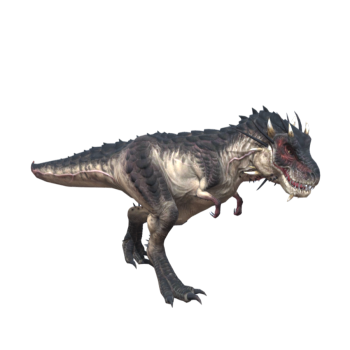
Kaijiaolong (with action 3D model)
It is a type of dinosaur that lived in the late Cretaceous period and is known for its unique head features, namely one or more pairs of large bony horns at the back of the skull. These horns are usually spear shaped and very spectacular. The ceratopsian dinosaurs belong to the bird hipped order and are a large group within the dinosaur family. They have a large body size, usually with strong limbs and thick skin, as well as a wide jaw and sharp teeth, suitable for chewing hard plants. Fossils of ceratopsian dinosaurs have been found in North America and Asia, and are important materials for studying dinosaur evolution and paleoecological environments.
Jialong (with action 3D model)
Ankylosaurus, scientific name, is a herbivorous dinosaur of the late Cretaceous period, belonging to the Ankylosauridae family. Living approximately 66 million years ago, distributed in today's North America region. Known for its unique physical features, the body is covered in bone armor and spikes, which provide excellent protection against the fierce carnivorous dinosaurs of its time. Large in size, with a body length of about 10 meters and a weight of several tons. Eating plants, possessing strong limbs and a short tail. The head is relatively small, but has a strong jaw that can chew hard plants.
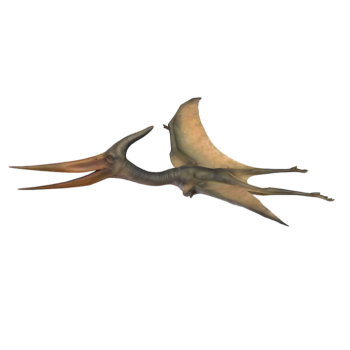
Toothless pterosaur
It is a flying reptile that lived in the Late Cretaceous period and belongs to the pterosaur order. Renowned for its enormous wingspan, which can reach up to 6 to 7 meters. The head is particularly eye-catching, with a huge bony crown that may be used for display or gender recognition. The jaw of this pterosaur lacks teeth, which is quite rare among pterosaurs. Mainly feeds on fish and mollusks, using their sharp beaks to catch prey. Fossils have been discovered in North America and are one of the important species for studying paleobiodiversity and Late Cretaceous ecosystems.
Jurassic Park - Velociraptor Blue
In the Jurassic Park film series, Blue is a particularly striking velociraptor known for its loyalty and intelligence. First appearing in Jurassic World, domesticated by animal trainer Owen Grady, she established a deep emotional bond with Owen. Bru not only demonstrates extraordinary teamwork skills, but also exhibits a high degree of intelligence, able to understand complex instructions and demonstrate problem-solving abilities. In the subsequent film series, Bloom continued to play a key role, and her storyline deepened, including her experience of becoming a mother.
Pterosaur
Pterosaurs are a collective term for reptiles in the order Pterosauriformes, which are closely related to dinosaurs and crocodiles. Their name means winged lizards. Pterosaurs are extinct reptiles and vertebrates capable of flight. Pterosaur fossils have been found in Xinjiang, Inner Mongolia, Liaoning, Hebei, Gansu, Sichuan, Shandong, Zhejiang and other places in China, while pterosaur fossils have been found on various continents worldwide, including Antarctica. The pterosaurs lived from the late Triassic to the late Cretaceous, almost spanning the entire Mesozoic era.
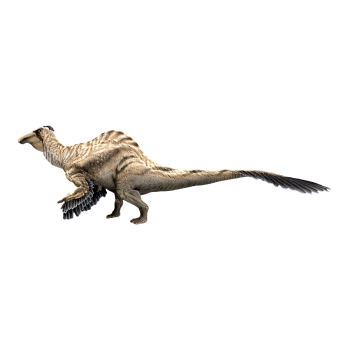
Deinocheirus
Stegosaurus is a giant theropod dinosaur belonging to the theropod suborder, which lived in southern Mongolia during the late Cretaceous period, about 70 million years ago. It belongs to the Stegosauridae family in the ornithopod suborder and is one of the largest ornithopod dinosaurs and theropod dinosaurs. It is 12 meters long and weighs 9.3 tons, with arms 2.5 meters long and claws 25 centimeters long. It is a giant omnivorous dinosaur and the largest theropod dinosaur discovered in Asia.
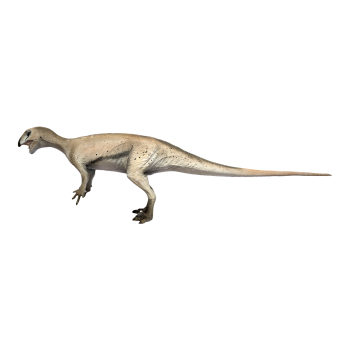
Hypsilophodon
Pristosaurus is a medium-sized, lightweight terrestrial bipedal animal. The anterior teeth of the upper jaw and the particularly long common rod facing towards the rear demonstrate its originality. Molar teeth have a cutting effect, arranged in a single row, and updated in groups of three. The foot has four toes, with each toe end in the shape of a pointed hoof. Distributed in Asia, Australia, Europe, and North America, it lived from the mid Jurassic to the late Cretaceous period.
Stegoceras
Stegoceras (genus name: Stegoceras), also known as the top horned dinosaur, is a herbivorous dinosaur belonging to the suborder Ornithischia, and lived in North America during the Late Cretaceous period. Sword horned dragon is 2 meters long. Sword horned dragon was named by Lawrence Lambe in 1902, and its scientific name means "horned head" in Greek. Sword horned dinosaur comes from the swollen headed dinosaur family and is a bipedal herbivorous dinosaur. They lived in the late Cretaceous period and had a body length of about 2 meters. The thick and round skull is the most prominent feature of stegosaurs.
Velociraptor
Velociraptor is a dinosaur belonging to the Saurischia family, also known as Velociraptor or Velociraptor. Velociraptors lived in China and Mongolia during the late Cretaceous period in Asia. Enjoy living in groups. Carnivorous animals mainly hunt small dinosaurs, dinosaur eggs, dinosaur juveniles, and small mammals. Velociraptors are known as "fast robbers" due to their agile movements. In 1971, the fossil specimen "Dinosaur in a Battle" was discovered by a Polish exploration team, and as a result, this fossil specimen is considered a national treasure by Mongolia.
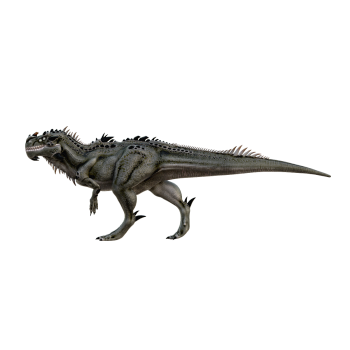
Concavenator corcovatus
There is only one species in the genus Kunka, the hunchbacked Kunka. The fossil of the Kunca hunting dragon was discovered in the Laggonian Formation of Spain, dating back to the Barremian period of the Early Cretaceous. Kunka Hunting Dragon is a small shark toothed dinosaur with a body length of only about 5 meters. Compared with other shark toothed dinosaurs, the most prominent feature of the Kunkarasaurus is the towering neural spines on the two dorsal vertebrae adjacent to the sacrum. Paleontologists speculate that the two dorsal vertebral nerve spines of Kunkalisaurus may have developed muscles attached to them, forming a structure resembling a fleshy mound, which is likely to have display functions..
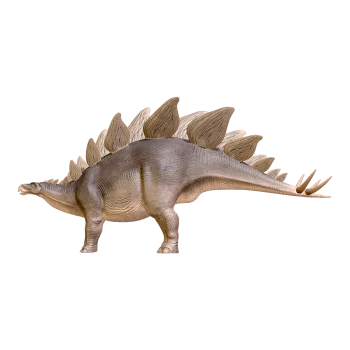
Sword Dragon
The stegosaur is an animal belonging to the family Stegosauridae in the suborder Stegosauria of the order Ornithischia, also known as the Bone Plate Dragon. The head is small, and the tip of the mouth has a bird like pointed beak without teeth. The teeth are distributed on both sides of the mouth and are very small. Jianlong is named after its large sword board and sharp tail spikes on its tail. Jianlong is distributed in China, the United States, and the United Kingdom, and lived from the mid to late Jurassic period to the early Cretaceous period. Their diet is herbivorous. Jianlong is a giant dinosaur with a peculiar appearance, known as the "roofed reptile" by people.
Triceratops
Triceratops is a herbivorous dinosaur belonging to the family Triceratops in the order Ornithischia. Ceratopsians are mostly distributed in North America and lived in the late Cretaceous period, approximately 68 to 65 million years ago. Triceratops is a herbivorous dinosaur that mainly feeds on plant branches, leaves, fruits, etc. Paleontologists have discovered a large number of Triceratops fossils, and 'Big John' is one of the most famous among them. Through the study of this ancient dinosaur fossil, scientists have uncovered a glimpse into the prehistoric world. Due to its unique appearance, this image often appears in movies, computer games, and television programs, such as Jurassic Park and Son of King Kong
brachiosaurus
Brachiosaurus is a general term for the "Brachiosaurus genus" dinosaurs of the Jurassic period. The body length is 25 meters, the height is 15 meters, the weight is 30 tons, the tail is thick and short, the head is small, the neck is long, and the appearance is similar to that of a giraffe. Brachiosaurus lived in late Jurassic North America and early Cretaceous North Africa. Mild temperament, enjoys living in groups. Feed on leaves and tender branches. Often foraging together. During walking, females lay eggs. Dinosaur eggs grew up alone without a nest or parental care. Brachiosaurus was one of the largest dinosaurs of the Jurassic period, and its name was once used by astronomers to name an asteroid.
S. aegyptiacus
Spinosaurus is a large theropod dinosaur with a body length comparable to that of Tyrannosaurus Rex and Southern Megalosaurus. There is currently only one valid species in the genus Spinosaurus, namely the Egyptian Spinosaurus, named by German paleontologist Stromer in 1915. Due to its unique appearance and massive size, Spinosaurus has received no less attention than Tyrannosaurus rex. Unfortunately, the holotype specimen of Spinosaurus was destroyed during World War II. In recent years, new fossil specimens and quantitative studies have shown that Spinosaurus had a highly specialized body structure and was a highly aquatic dinosaur. Spinosaurus is one of the longest carnivorous dinosaurs. Spinosaurus is 10 to 15 meters long and weighs 3 to 10 tons. The World of Animals
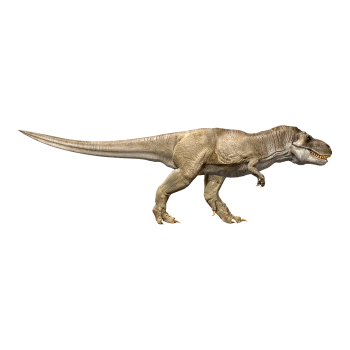
Tyrannosaurus Rex
Tyrannosaurus belongs to the Tyrannosaurus genus of the Tyrannosauridae superfamily and is the only species in this genus. It was named in 1905 by American paleontologist and member of the American Academy of Arts and Sciences, Henry Osborne. If we refer to the translation format of other dinosaur species, it would be more appropriate to translate its species name as' King Tyrannosaurus'. Adult Tyrannosaurus rex is about 12 meters long and weighs around 7 tons, making it one of the largest land predators in Earth's history.
Cretaceous Tyrannosaurus rex
The Tyrannosaurus genus is a member of the Tyrannosauridae family, and the only valid species is the type species Tyrannosaurus rex, also known as the Rex dinosaur. It is a large carnivorous dinosaur with a length of about 15 meters, a hip height of about 5 meters, and a weight of about 8 to 13 tons. Tyrannosaurus lived in the Maastrichtian stage of the late Cretaceous period, approximately 67 to 66 million years ago, and was one of the last dinosaur populations before the Cretaceous Tertiary extinction event. Fossils are distributed in the western United States and Canada in North America, with a wider distribution range than other tyrannosaurids.
Tyrannosaurus Rex
Tyrannosaurus belongs to the Tyrannosaurus genus of the Tyrannosauridae superfamily and is the only species in this genus. It was named in 1905 by American paleontologist and member of the American Academy of Arts and Sciences, Henry Osborne. If we refer to the translation format of other dinosaur species, it would be more appropriate to translate its species name as' King Tyrannosaurus'. Adult Tyrannosaurus rex is about 12 meters long and weighs around 7 tons, making it one of the largest land predators in Earth's history.
Meraxes Gigas Jurassic Dinosaur 3D Model
Paleontologists have described a new species of giant carnivorous dinosaur from a fairly complete skeleton in Patagonia, Argentina. The discovery could help shed light on the mystery of why such powerful predators have almost comical little arms. The new species, named Meraxes gigas, weighs more than 4 tons, is nearly 11 meters long and has a huge skull with a length of 1.3 meters.
Jurassic Giant Dinosaur Brachiosaurus 3D Model

Brachiosaurus is a general term for the "Brachiosaurus" dinosaurs of the Jurassic period. The body length is 25 meters, the height is 15 meters, the weight is 30 tons, the tail is thick and short, the head is very small, the neck is very long, and the shape is similar to that of a giraffe. There are large claws on the inner side of the foreleg. The jaw is well developed, covered with 52 teeth up and down, and the edges of the teeth are sharp. The limbs are thick and strong. The nostrils are on top of the head. It is named for its long forelimbs.
Random Model
Historic Tower in Romania
1054 View
Brazil Astros II rocket launcher
891 View
Shiva shrine model
488 View
German Bell Farmhouse
1229 View