Freecreat category

Animals/Organics

Browse models in this category, preview details, then continue to download when ready.

Dinosaur 3D animated model

Dinosaur 3D animated model

Durosaurus is a dinosaur that lived in the late Cretaceous period and belongs to the ornithosaurus suborder zurosaurus theropod. It is named for its huge forelimbs and sharp claws. It is huge, with a body length of up to 11 meters, a height of about 5 meters, and a weight of about 6.4 tons. The forelimbs are particularly developed, the head is small, the snout resembles a duck's bill, has no teeth, and may have been used to peck at plants and catch small animals. The back has a hump-like structure that may be used to store fat or regulate body temperature. The diet is more complex and was initially thought to be a possible carnivorous dinosaur, but later studies have shown that it may have been an omnivore, feeding on plants and small animals.
Tyrannosaurus Rex Walking 3D Animated Model
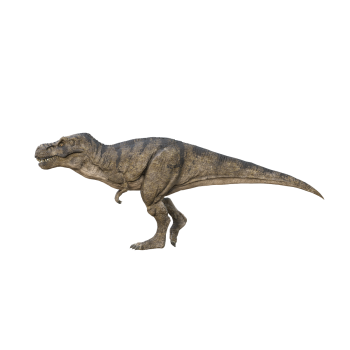
Tyrannosaurus Rex Walking 3D Animated Model

Tyrannosaurus rex, also known as Rexosaurus rex, is the largest dinosaur in the Tyrannosauridae. It lived in the Maastricht period at the end of the Cretaceous, about 68.5 million to 65 million years ago, and was one of the last non-avian dinosaurs before the Cretaceous-Tertiary extinction event. The body length is about 11.5-14.7 meters, the average hip height is about 4 meters, the highest can reach 5.2 meters, and the head height is nearly 6 meters. The average weight is about 9 tons, and the maximum weight can reach 14.85 tons. The forelimbs were very short, with only two clawed fingers, while the hind limbs were strong and powerful, able to support their huge weight, feeding on other dinosaurs, and were the most powerful land predators of the time.
3D animation of Tyrannosaurus rex model

3D animation of Tyrannosaurus rex model

He was a top predator in the late Cretaceous period, known for his enormous size and powerful abilities. Fossils were first discovered in 1902 by American paleontologist Barnum Brown in the Hale Creek area of Montana. The skull is huge, the teeth are sharp, the forelimbs are short, the hind limbs are strong, and the tail is long and powerful, making it an important tool for hunting and balancing the body. With a large body size and extremely strong biting force, it is one of the strongest known land predators. Fossils have been discovered in multiple regions around the world, especially in North America. It is one of the most well-known dinosaurs of the dinosaur era, but further research is needed on its classification and evolutionary history.
3D Animation of Spinosaurus

3D Animation of Spinosaurus

It is a large theropod carnivorous dinosaur that lived in northern Africa during the mid Cretaceous period, famous for its unique sail like dorsal spine and body shape adapted to aquatic life. It is one of the largest known carnivorous dinosaurs. The head is long and narrow, similar to modern crocodiles, with straight conical teeth that lack serrated edges and are suitable for hunting fish. The dorsal nerve spines are very tall, forming unique sail like structures that may be used to regulate body temperature, attract the opposite sex, threaten opponents, or attract prey. The living environment includes wetlands such as rivers, lakes, and swamps, and is active on land and near water, preying on fish and other aquatic animals.
3D animation of Tyrannosaurus rex model

3D animation of Tyrannosaurus rex model

It is a giant carnivorous dinosaur that lived during the late Cretaceous period, approximately 68.5 to 66 million years ago. He was one of the most famous and powerful land predators of the dinosaur era, known for his enormous size, strong jaws, and sharp teeth. Large in size, with a huge head and powerful jaw muscles, capable of producing extremely high biting force, capable of tearing through hard bones. There is a pair of short forelimbs, while their hind limbs are very strong, supporting their large bodies. Fossils have been discovered in multiple locations in North America, particularly in the western regions of the United States and Canada. It is a symbol of the dinosaur era.
Southern Giant Beast Dragon 3D Model Animation
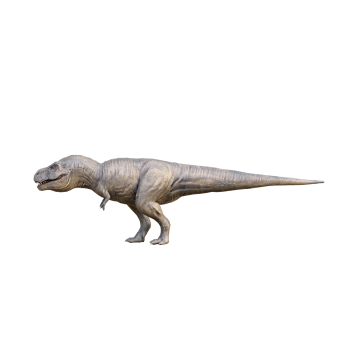
Southern Giant Beast Dragon 3D Model Animation

It is a giant carnivorous dinosaur that lived in the late Cretaceous period, belonging to the theropod dinosaurs. Fossils were mainly found in Argentina and are one of the largest terrestrial carnivores discovered in South America. Huge in size, comparable to the famous Tyrannosaurus rex. The head is large, with strong jaws and sharp teeth, suitable for tearing prey. The forelimbs are relatively small, while the hind limbs are very developed, supporting its massive body. The tail is long and heavy, and may play an important role in balancing the body and making quick turns. Living in the late Cretaceous period approximately 97 to 93 million years ago, he was the top predator in the ecosystem at that time. They feed on other large dinosaurs.
3D model of Tyrannosaurus rex with animation

3D model of Tyrannosaurus rex with animation

It is a giant carnivorous dinosaur that lived in the Late Cretaceous period. Known for its enormous size and powerful strength, Tyrannosaurus rex is one of the largest members of the Tyrannosauridae family. The head is huge, with strong jaws and sharp teeth, capable of easily tearing prey apart. The forelimbs are short and have two functional fingers and a degenerated third finger. The hind limbs are well-developed, supporting its massive body. It is estimated to be 11 to 13 meters long and weigh several tons, making it the top predator in the ecosystem at that time. Although many details about its behavior and ecological niche are still under study, Tyrannosaurus rex is undoubtedly one of the most famous and awe inspiring dinosaurs in history.
3D model of Tyrannosaurus rex with animation

3D model of Tyrannosaurus rex with animation

It is a giant carnivorous dinosaur that lived in the Late Cretaceous period. Known for its enormous size and powerful strength, Tyrannosaurus rex is one of the largest members of the Tyrannosauridae family. The head is huge, with strong jaws and sharp teeth, capable of easily tearing prey apart. The forelimbs are short and have two functional fingers and a degenerated third finger. The hind limbs are well-developed, supporting its massive body. It is estimated to be 11 to 13 meters long and weigh several tons, making it the top predator in the ecosystem at that time. Although many details about its behavior and ecological niche are still under study, Tyrannosaurus rex is undoubtedly one of the most famous and awe inspiring dinosaurs in history.
Blue Hairless Swift Raptors 3D Model Animation

Blue Hairless Swift Raptors 3D Model Animation

It is a medium-sized theropod dinosaur that lived in the Late Cretaceous period, with a body length of about 2.07 meters and a weight of about 15 kilograms. A bipedal, carnivorous dinosaur with a long and firm tail and a low skull. Known for its sharp teeth and claws, especially the sickle shaped claws on its second toe, which are its main hunting weapon. Velociraptors have larger brains, indicating that they are very intelligent dinosaurs. Usually formed into small groups during the rainy season, and gathered into large groups during the dry season to hunt large prey. Fossils have been discovered in Mongolia and northern China, and it is one of the largest dinosaurs in the Ceratopsidae family.
3D Animation Model of Megalosaurus

3D Animation Model of Megalosaurus

It is a small theropod dinosaur known for its unique jaw and slender hind limbs. The mandible does not have an external mandibular window, and the neural spines of the posterior dorsal vertebrae are fan-shaped and have hook shaped protrusions for attaching ligaments. The first metacarpal bone is short and thick, the cervical spine is retroverted, and the femur lacks the fourth trochanter. Phylogenetic analysis shows that Megalosaurus belongs to the Coelurosauria class, which is a type of theropod dinosaur. In addition, stomach fossils of Megalosaurus suggest that it may have fed on small lizards. The estimated running speed is about 17.8 meters per second. Although the relationship between Megalosaurus and birds is relatively distant, its research provides important insights into the theory that birds originated from theropod dinosaurs
Fish Dragon Animation 3D Model

Fish Dragon Animation 3D Model

It is a marine reptile that lived during the Jurassic and Cretaceous periods, belonging to the ichthyosaur order, and was the top predator in the ocean at that time. The body is streamlined with a long and pointed snout, making it perfect for capturing fish and other marine creatures. The limbs have evolved into a shape similar to fish fins, allowing for rapid swimming in water. It can reach a length of several meters and was one of the largest predators in the ocean at that time. Fossils have been found in multiple regions around the world, providing valuable information for us to understand ancient marine ecosystems. Despite having the word 'fish' in their names, ichthyosaurs are actually reptiles with a close genetic relationship to dinosaurs.
Sliding Dragon 3D Animation Model

Sliding Dragon 3D Animation Model

It is a type of marine reptile that lived during the Jurassic period, famous for its unique long neck and four paddle shaped limbs. Fossils were first discovered in the early 19th century in England. The body size of the Velociraptor is usually large, with a body length of up to 4 to 5 meters, and some species may even be larger. The neck is very flexible and can easily capture fish and other marine organisms in the water. Their bodies are streamlined and suitable for fast swimming, while their limbs are very suitable for propulsion in water. Although the Velociraptor is considered a top predator, its lifestyle and feeding habits remain a hot topic of research for paleontologists.
Tyrannosaurus Rex (with 3D animated model)

Tyrannosaurus Rex (with 3D animated model)

It is a giant carnivorous dinosaur that lived during the Late Cretaceous period about 66 million years ago. Known for its enormous size and powerful abilities, it is one of the largest known land carnivores. It can reach a length of up to 12 meters, with an estimated weight between 5 and 7 tons, and has strong hind limbs and shorter forelimbs. The head is huge, with sharp teeth and well-developed jaw muscles, capable of producing strong biting force. It has very sharp eyesight and smell, which makes it an excellent hunter. Although the forelimbs are short, the hind limbs are very strong, able to support their enormous weight and run quickly. He was a top predator in the late dinosaur era, and his fossils were found in North America
3D animation model of the secondary comb dragon

3D animation model of the secondary comb dragon

It is a dinosaur that lived during the Late Cretaceous period and belongs to the ornithischian order, hadrosauridae family. Known for its unique headband, which is shaped like a long trumpet that extends from the top of the head to the back. Medium in size, typically around 9 to 10 meters in length, and weighing up to 2.5 tons. The teeth and jaw structure have adapted to a plant-based lifestyle, especially chewing hard plant stems and leaves. The function of the crown has always been a hot topic for paleontologists, with various theories proposed, including its use for vocal communication, regulating body temperature, and olfaction. Fossils are mainly found in North America, especially in some areas of Canada and the United States.
Mongolian Velociraptor Model with 3D Animation

Mongolian Velociraptor Model with 3D Animation

It is a small carnivorous dinosaur that lived in the late Cretaceous period approximately 75 million years ago. Belonging to the Chirosauridae family, it is a very agile and intelligent dinosaur. The body is about 2 meters long and weighs about 15 kilograms. It has sharp claws and strong hind limbs, making it very suitable for fast running and hunting. Having a large head and large forward looking eyes, they have excellent stereoscopic vision, which helps them accurately determine distance and speed when hunting. The forelimbs are short and have sharp claws, which can be used to catch prey or engage in close combat. The long and stiff tail helps maintain balance while running at high speeds.
Fairy pterosaur (with 3D animated model)

Fairy pterosaur (with 3D animated model)

It is a genus of pterosaurs in the Pterosauridae superfamily, a large pterosaur with a crown and no teeth. Fossils were discovered in the Santana Formation in Brazil, dating back to the early Cretaceous period. The appearance resembles that of a toothless pterosaur, with the adult individual's head crown extending from the snout to the back of the head. The head crown of a fairy pterosaur is larger and more prominent than that of a toothless pterosaur. Both males and females have large crests, but females have relatively round crests. The body length is 2.5 meters, the wingspan is 5.4 meters, and the length of the skull is 90 centimeters. They seem to live along the coasts of South America, feeding mainly on fish.
Triangle Dragon 3D Animation Model

Triangle Dragon 3D Animation Model

It is a dinosaur that lived during the Late Cretaceous period, known for its prominent head features, having a huge bony neck shield and three horns, with the largest two horns located above the eyes and a smaller horn located above the nose. Belonging to the Ceratopsidae family, it is a herbivorous dinosaur with a huge body size, measuring about 6 to 9 meters in length and weighing up to several tons. Mainly distributed in today's North America region. Neck shields are believed to be used to protect them from predators and may also be used for display or courtship. Teeth have adapted to grind plants, indicating that they primarily feed on low growing plants. It is one of the important species in paleontological research.
Halbersaurus 3D Model Animation

Halbersaurus 3D Model Animation

It is a dinosaur that lived in the late Jurassic period and belongs to the suborder Sauropod. Renowned for its enormous size and long neck, it was one of the largest land animals that ever existed on Earth. The skeletal structure suggests that they may be semi aquatic animals, living partially in water, which helps support their weight and reduce energy expenditure during exercise. The head is relatively small, with a long tail and strong limbs, with the forelimbs slightly longer than the hind limbs. Teeth have adapted to feed on plants, possibly relying on low vegetation as their main diet. Although the fossil record of Euphorbia is relatively limited, their existence provides us with important clues about ancient ecosystems.
Sword Dragon (with 3D animated model)

Sword Dragon (with 3D animated model)

It is a dinosaur that lived during the Jurassic period, known for its unique large bony spines on its tail and spiny bone plates on its back. Relatively large in size, typically up to 9 meters in length and 4 meters in height. Jianlong is a herbivorous dinosaur that crawls on four legs, mainly supported by its forelimbs and propelled by its hind limbs. Its head is relatively small, and its jaw has teeth for cutting plants. The tail end has sharp spikes that may be used for self-defense. Fossils were first discovered in the 19th century and remain a hot topic of research for dinosaur enthusiasts and paleontologists to this day.
Sword horned Dragon 3D Model Animation

Sword horned Dragon 3D Model Animation

Also known as the top horned dinosaur, it is a herbivorous dinosaur belonging to the suborder of thick headed dinosaurs in the order Ornithischia, and lived in North America during the Late Cretaceous period. Length of 2 meters. Originating from the swollen headed dinosaur family, it is a bipedal herbivorous dinosaur. The thick and round skull is the most prominent feature of stegosaurs. Due to the femur being slightly longer than the tibia, the running speed of Stegosaurus may not be fast. Like other dinosaurs in the Pachycephalosaurus family, Stegosaurus had a thick skull composed of many small bone fragments that covered its eyes and neck like a semicircle. At birth, the head is not very thick, and as age increases, the skull will become thicker.
3D Animation Model of Egyptian Spinosaurus
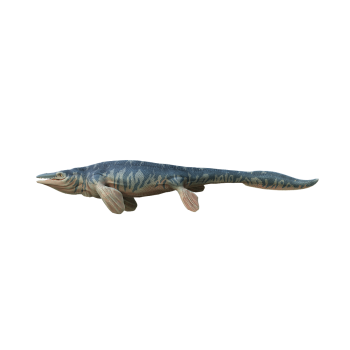
3D Animation Model of Egyptian Spinosaurus

It is a giant carnivorous dinosaur that lived during the Cretaceous period, approximately 111 million to 95 million years ago. Known for its unique sail like spine and massive body size, it is one of the largest known land carnivores, with a body length of up to 15 to 18 meters and an estimated weight of between 6 to 20 tons. The head is long and narrow, with sharp teeth, suitable for hunting fish and other aquatic animals. Its forelimbs are strong and suitable for swimming in water, while its tail may have a balancing effect. Mainly living near rivers and lakes, it may be a semi aquatic animal that can hunt in water and on land. Fossils were first discovered in Egypt.
Hofmann Canglong 3D Animation Model

Hofmann Canglong 3D Animation Model

It is a marine reptile that lived in the late Cretaceous period approximately 70 million years ago. Belonging to the Canglong family, it was one of the top predators in the ocean at that time. Known for its enormous size and powerful hunting ability, it can reach a length of 10 to 15 meters, with strong jaws and sharp teeth, making it perfect for hunting large marine organisms. The streamlined body is suitable for fast swimming, and its tail is strong and powerful, providing strong propulsion. The limbs have evolved into a paddle like shape, which helps to flexibly turn in the water. Fossils of Canglong are mainly found in North America, especially in the Huffman Formation in Kansas, USA.
3D animation of Tyrannosaurus rex model

3D animation of Tyrannosaurus rex model

It is a giant carnivorous dinosaur that lived in the late Cretaceous period about 66 million years ago. Known for its massive size and powerful hunting ability, it was one of the top predators on land at that time. The body length can reach about 12 meters, and the estimated weight is between 5 and 7 tons. The head is huge, with strong jaws and sharp teeth, capable of easily tearing prey apart. The forelimbs are short, but the hind limbs are well-developed, suitable for fast running. Tyrannosaurus rex is an iconic species of the dinosaur era, with fossils found in North America, particularly in the western regions of the United States and Canada.
Yitelong 3D Animation Model

Yitelong 3D Animation Model

It is a large carnivorous dinosaur that lived from the late Jurassic to early Cretaceous period. He was one of the most powerful predators on land at that time, known for his enormous size and powerful hunting ability. The body length is usually between 8 and 12 meters, and the weight can reach about 2 tons. Having strong hind limbs and sharp claws, it is very suitable for fast running and catching prey. The head is particularly large, with strong jaw muscles and sharp teeth, which can easily tear apart prey. Although their forelimbs are relatively small, they are still very powerful and can help them secure their prey during hunting. Fossils have been found in both North America and Africa.
3D animated dome dragon model

3D animated dome dragon model

It is a large herbivorous dinosaur from the Jurassic period. Living approximately 150 million years ago, mainly distributed in today's North America region. Known for its enormous size and unique skeletal structure, adult individuals can grow up to 20 to 30 meters in length and weigh up to 20 to 30 tons. The neck is very long, making it easy to forage for plants at high altitudes. The head is small with spoon shaped teeth, suitable for chewing hard plants. Belonging to the suborder Sauropod dinosaurs, it is one of the earlier members of this group. Strong limbs, adapted to walking on open plains. The tail is very long and may be used to maintain balance or as a defensive tool.
Anshihara Ceratopsian 3D Animation Model
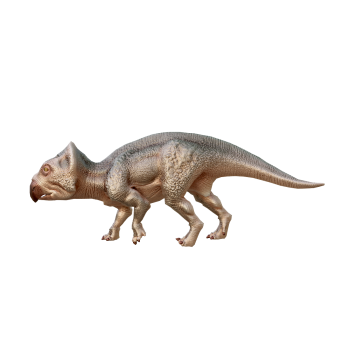
Anshihara Ceratopsian 3D Animation Model

It is a medium-sized ceratopsian dinosaur that lived in the Late Cretaceous period, mainly distributed in Mongolia. The body length is approximately between 2 and 4.5 meters, and the weight ranges from 150 to 800 kilograms. Among them, the body shape difference introduced by the Ankylosaurus as a standard is obvious. Their heads are relatively large, occupying about one-third of their body length, and they have a prominent neck shield at the back to protect their necks from attacks. Although belonging to the ceratopsian class, the head of Anchioceratops did not have horns, but had a small protrusion on the nasal bone. The mouth is located in the lower front of the head, and the front end has evolved into a keratinized beak, which can help them easily bite through thick plant roots.
Fiber horned dragon (with 3D animated model)

Fiber horned dragon (with 3D animated model)

It is a small ceratopsian dinosaur that lived in western North America during the Late Cretaceous period approximately 76 million years ago. The name comes from Greek and means' slender angular face ', which may refer to its relatively small head shield and horns. The body length is about 2 meters, and the estimated weight is between 68 and 200 kilograms. As a herbivorous animal, Ceratopsia may have fed on flowering plants, ferns, cycads, and pine and cypress plants at that time. Having a sharp beak shaped mouth, suitable for cutting plant leaves or needles. Fossils have mainly been discovered in Alberta, Canada and Wyoming, United States.
Megalosaurus (3D animated model)

Megalosaurus (3D animated model)

It is a small carnivorous dinosaur that lived during the Late Jurassic period and is considered one of the smallest known dinosaurs at that time. The name comes from Greek and means' beautiful jaw ', reflecting its delicate and narrow skull and conical nose. The body size is approximately between 60-90 centimeters, with an estimated weight of around 0.83 to 3.5 kilograms. It has slender hind limbs and a long tail, which helps maintain balance when moving. The forelimbs are relatively small, and the palm has three fingers, each with sharp claws, making it suitable for capturing prey. It feeds on small vertebrates and has the ability to prey on fast-moving small animals.
Haibaolong 3D Animation Model

Haibaolong 3D Animation Model

It is a marine reptile that lived during the Late Cretaceous Senonian period approximately 95 million years ago. Belonging to the Stegosauridae family of the plesiosauriformes order, it is a long necked plesiosaur with a genus name in Greek meaning 'ruler of the ocean'. Fossils are mainly found in North America, especially in the Graneros shale layers of the Midwest United States. The body length can reach 12 meters, with a very long neck and 65 vertebrae, about 6 meters in length, accounting for half of the body length. The length of the skull is 47 centimeters, the length of the teeth can reach 5 centimeters, and the length of the fin like limbs is approximately between 1.5 and 2 meters.
3D animation of the secondary comb dragon model
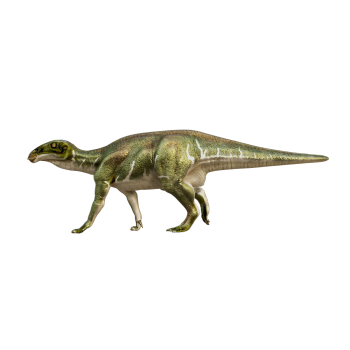
3D animation of the secondary comb dragon model

It is a type of dinosaur that lived during the Late Cretaceous period, belonging to the ornithischian order, hadrosauridae family. Famous for its unique head features, which include a hollow coronal bone extending backwards, which may be used for vocalization or visual display. Medium size, with a body length of about 9 meters and a weight of up to 2 tons. The body structure adapts to living in open forests and swamps, feeding on plants. Fossils are mainly found in North America, especially in Alberta, Canada and New Mexico, United States. This type of dinosaur holds significant importance in the field of paleontology as it provides important clues about dinosaur behavior and social communication.
Iguanodon (with 3D animated model)

Iguanodon (with 3D animated model)

It is a type of dinosaur that lived in the Jurassic period, belonging to the bird hipped dinosaur order. Its name comes from Greek, meaning "ostrich lizard", mainly because they have long legs and running ability similar to ostriches. Large in size, generally up to 10 meters in length and 3 meters in height. The head is relatively small with a beak shaped mouth, suitable for chewing plants. The tail of the avian dragon is long and strong, which can be used to maintain balance or as a defensive tool. It is a social animal that feeds on plants and mainly lives in forests and swamps. The forelimbs are relatively short, with five fingers, but the thumb is particularly developed, forming a sickle like structure for defense or digging.
Dragon King Animation 3D Model

Dragon King Animation 3D Model

Dracore, scientific name, is a genus of dinosaur in the family Pachycephalosauridae, which lived in North America during the Cretaceous period. It is a herbivorous dinosaur with small nail horns and lumps covering its skull, and a long mouth and nose. There is a well-developed upper temporal bone hole and a flat skull with thick armor, but it lacks the round arch of the thick headed dinosaur family. In addition, it also has a large amount of intradermal ossification, which is arranged in an irregular form: numerous nodules, small horns, and spikes. Although Dragon King Dragon existed during the Cretaceous period, the latest research suggests that Dragon King Dragon and Styx Dragon are ancestors of the swollen headed dragon, gradually evolving from each other.
3D action model of Shuangjilong

3D action model of Shuangjilong

It is a carnivorous dinosaur that lived in the early Jurassic period, approximately 200 million years ago. Fossils were first discovered in Arizona, United States. Shuangjilong is known for its unique head features, which include a pair of distinct bony processes on the top of the head that may have been used for display or as communication tools. The body length is about 6 to 7 meters and the weight can reach half a ton. It is a fast and agile predator that feeds on small dinosaurs and other animals. Strong jaw, sharp teeth, suitable for tearing prey. It is depicted in popular culture as being able to spray venom, but this feature has not been confirmed in fossil records.
Dasbury Dragon (with action 3D model)

Dasbury Dragon (with action 3D model)

It is a tyrannosaurid dinosaur that lived in the Late Cretaceous period, known for its strong physique and enormous size. With a length of up to 9 meters and a weight of about 4 tons, it was the top predator in the ecosystem at that time. The head is huge and has the largest teeth in the Tyrannosauridae family, making it very suitable for tearing prey. The forelimbs are short with only two fingers, while the hind limbs are well-developed with a long and heavy tail, which helps maintain body balance. Fossils were mainly found in Alberta, Canada, indicating that they may have preferred to live in environments near coastal plains and rivers.
Kunka Hunting Dragon (with action 3D model)

Kunka Hunting Dragon (with action 3D model)

It is a dinosaur that lived during the Cretaceous period and belongs to the theropod suborder. Its fossils were first discovered in Brazil. This dinosaur is known for its unique head features, with a prominent depression in the middle of its head resembling a "V" shape, which may have been adapted to its hunting habits. Medium sized, it is a carnivorous dinosaur that feeds on other small animals. Short forelimbs and well-developed hind limbs, suitable for fast running. The discovery of this dinosaur provides valuable information for our understanding of the Cretaceous ecosystem.