Freecreat category

Animals/Organics

Browse models in this category, preview details, then continue to download when ready.

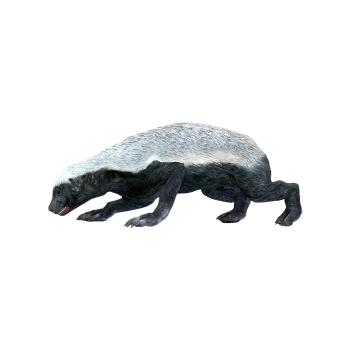
Honey Badger (3D animated model)

Honey Badger (3D animated model)

Honey Badger (scientific name: Mellivora capensis): is a carnivora, a ferret. There is a great difference in body size between males and females, with males sometimes weighing twice as much as females. The body is thick, the head is wide, the eyes are small, the ears are not visible, and there is a flat and blunt nose. The body is stout and the claws are strong, which can destroy the hive. The thick skin and rough hair can resist the attack of the bee colony. It is named for eating bee larvae and pupae. Distributed in Africa, West Asia and South Asia.
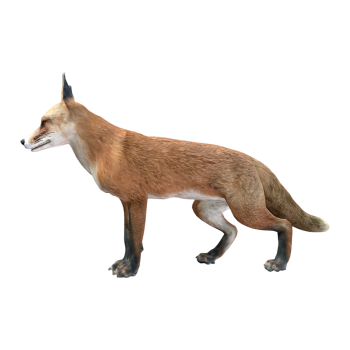
Red Fox (3D animated model)

Red Fox (3D animated model)

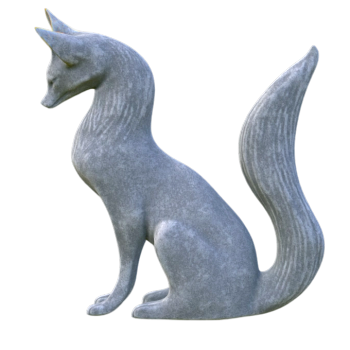
Red fox is a carnivora canidae fox mammals, also known as grass fox, red fox. The body size is slender; the snout is pointed, and the ears are large and pointed. The body color varies greatly due to different seasons and regions, from yellow to brown to dark red, and the larvae are light grayish brown. Common hair on the back is reddish brown, slightly yellowish on the shoulder and body. Black brown behind the ear, the hair color of the upper part of the back of the ear is significantly different from that of the head, which is black. The abdomen is white, and the legs are slender and black. The tail is thick and fluffy, and the tail tip is gray. Black stripes on the outside of the limbs extend to the foot surface. The body is covered with abundant hairs and long needle hairs; the paws are densely hairy; the base of the tail has subcaudal glands.
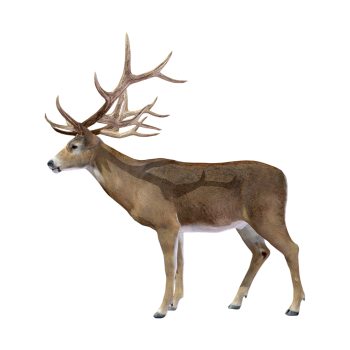
White-tailed deer (3D animated model)

White-tailed deer (3D animated model)

The white-tailed deer is an empty-toothed deer subfamily, empty-toothed deer. The white-tailed deer have a broad white tail with a reddish tan in summer and a slightly grayish brown in winter. An adult white-tailed deer has antlers, the antlers growing on the trunk stretch forward and the forks grow upward. The white-tailed deer's horns are not forked, and its wide brown tail is covered with a piece of white hair. When the white-tailed deer runs forward in danger alarm, its tail is tilted upward, revealing white. It is said that it can confuse the pursuer, and the name of the white-tailed deer comes from this.
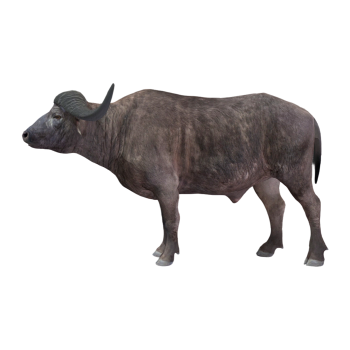
Buffalo (3D animated model)

Buffalo (3D animated model)

Buffaloes are mammals of the genus Buffaloidae in the order Artiodactyla. Body size hypertrophy. Large head; Both male and female heads have a pair of horns, the horns are long and slightly flat, curved, the upper part has many nostrils, the forehead is wide, the mouth is large, the upper part of the upper lip has two large nostrils, the skin is hard and smooth, hairless; The nose is wide; The eyes and ears are very large; The neck is short; Waist-abdominal protuberance, limbs are short; The skin is thick, the anterior part of the body is dense, and the back and chest and abdomen are sparse. The body color is mostly gray-black, but also yellow-brown or white. It is named for its habit of being fond of water. Life can reach 20-30 years.
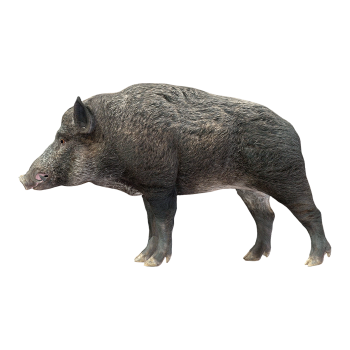
Wild Boar (3D animated model)

Wild Boar (3D animated model)

The wild boar (scientific name: Sus scrofa) is a medium-sized mammal in the order Artiodactyla, the family Swine. There are 17 subspecies. Weight 90-200kg; The body length is 1.5-2 meters, the tail length is 21-38cm, and the ear length is 24-26cm. Shoulder height is about 90cm. The size of the yield varies from region to region. The overall coat color is dark brown or black, the top layer is composed of harder setae, and there is a layer of soft fine hair below the bottom layer. The dorsum is covered with stiff and sparse needle hairs, the hairs are coarse and sparse, and there are some differences between subspecies and subspecies nuclear type.
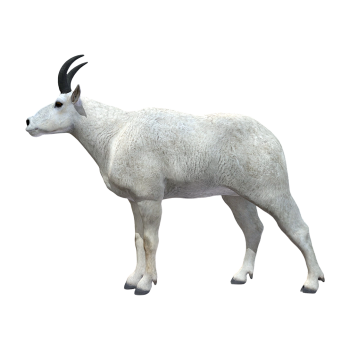
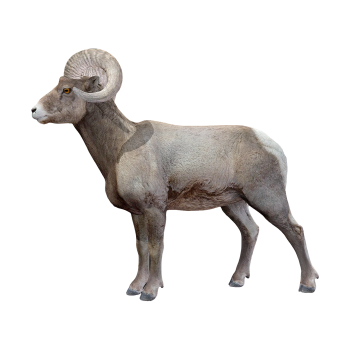
Canadian argali (3D animated model)

Canadian argali (3D animated model)

Canadian argali (scientific name: Ovis canadensis): Artiodactyla, boviidae, argali genus of mammals. There are 8 subspecies. Body length 1.5-1.8 meters, male weight 119-127kg, female weight 53-91kg. It is named for the crooked large horns of the ram. Although the ewe also has horns, it is much shorter and only slightly curved. The colors of the fur include light brown, gray and brown, while the hips and legs are white.
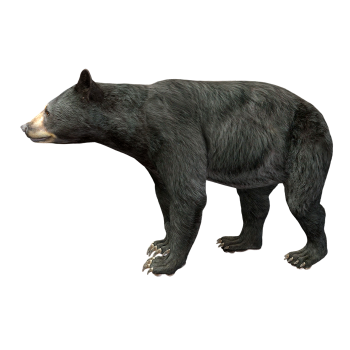
Black Bear (3D animated model)

Black Bear (3D animated model)

The black bear (Ursus thibetanus) is a carnivora bear genus of animals, also known as the Asian black bear. The black bear is of middle and equal size, with a thick body, a wide and round head and a short kiss. Naked nose; The eyes are very small and the eyesight is degraded, but the sense of smell and hearing are very sensitive. Developed wrist pads, thick and strong limbs, curved and sharp claws; The blind bear is commonly known as a bear because its face looks like a dog, and is called a crescent bear because its whole body is black, only with a crescent-shaped white hair on its chest.
Nama ancient rhomboid image (3D animated model)

Nama ancient rhomboid image (3D animated model)

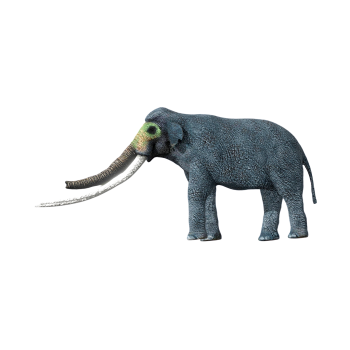
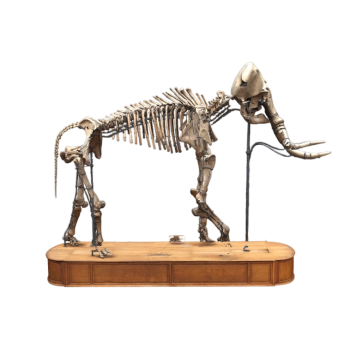
Nama ancient rhomboid (scientific name: Palaeoloxodon namadicus naumanni Matsumoto) is an extinct subspecies of the genus ancient rhomboid. The fossils are mainly found in the Middle Pleistocene to Late Pleistocene strata in North China. Its typical features include a dome-shaped skull, a well-developed frontal protrusion, a wide cranial and nasal bone structure, and a rhombic feature in the center of the tooth plate after molar abrasion. According to the skull morphology can be divided into the original "Stuttgart morphology" and derived "namadicus morphology".
Arrow Tooth Beast (3D Animated Model)

Arrow Tooth Beast (3D Animated Model)

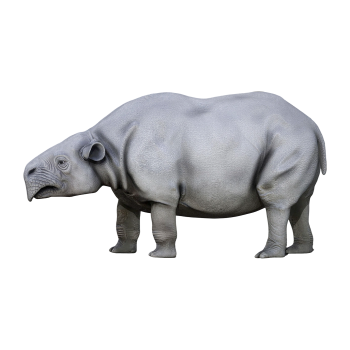
Arrowtooth (scientific name: Toxodon) is an extinct mammal of the family Arrowtooth, southern hoofed, living in South America from the Pliocene to the Pleistocene. Adult individuals can reach 2.75-3 meters in length, shoulder height is about 1.5-1.8 meters, body size is similar to rhinoceros, with thick skull and short neck characteristics, skull length accounts for about 1/3 of body length, eye socket is small and vision is weak, limb bones are thick and foot has three toe hook structure. Its inciror and molars can grow for life, with high crowns and shovel-shaped anterior projections of the lower inciror, similar to rodents in tooth structure, adapted to grind and feed on grassland plants.
Rhinoceros (3D animated model)

Rhinoceros (3D animated model)

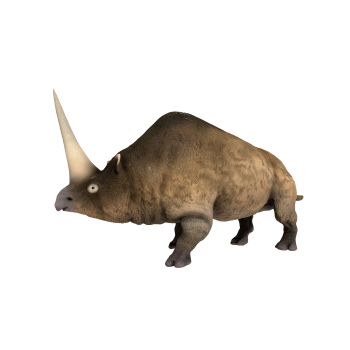
The board-toothed rhinoceros (Elasmotherium) is a kind of extinct giant rhinoceros, with a shoulder height of about 3.5 meters, a body length of more than 8 meters, and a weight of more than 8 tons. The average weight is more than 5 tons. There are horns up to 2 meters on the forehead. It is the largest horned rhinoceros in history and the largest rhinoceros, and it is the representative of the Pleistocene ancient rhinoceros.
White Rhino (3D animated model)

White Rhino (3D animated model)

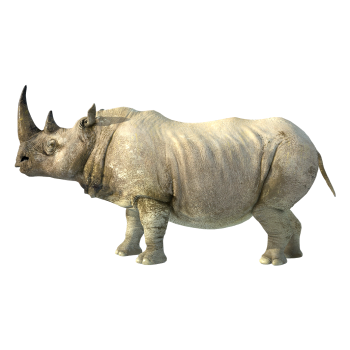
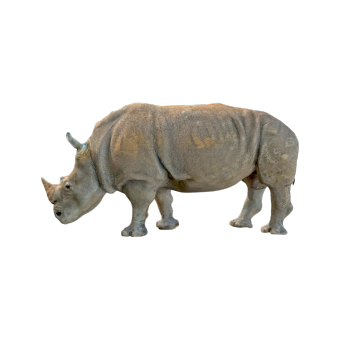
The white rhinoceros is a mammal of the genus White Rhinoceridae in the order Rhinoceridae. The body is round and thick, the skin is thick and smooth, and the body surface is similar to gray. The head is very long, the incisors and canines are degraded, and the developed 7 pairs of cheek teeth have a very thick calcareous layer. There are two horns, one large and one small, one in front and the other. The horns are not bone, but derivatives of epithelial tissue, which are accumulated by keratinous fibers, the medullary spines are connected with ligaments to support the head. The limbs are thick and strong, with three toes in the front and rear limbs. The upper lip is flat and wide, square, so it is called wide kiss rhinoceros and square kiss rhinoceros. The male weighs more than the female.
Moose (3D animated model)

Moose (3D animated model)

The moose is a mammal of the genus Camelidae in the order Artiodactyla. Moose is larger, generally 2-2.6 meters long.. The moose is named for its hump-shaped back hump and its horn-shaped mandible. Moose is distributed in Russia, Northern Europe, North America and other sub-frigid regions, and also in the northeast of China, the big and small Xing'an Mountains. Moose have a high status in many cultures. However, due to hunting and habitat destruction, moose is now included in China's "National Key Protected Wildlife List" and is recognized as a national first-level key protected animal.
Realistic raccoon (3D animated model)
Realistic raccoon (3D animated model)

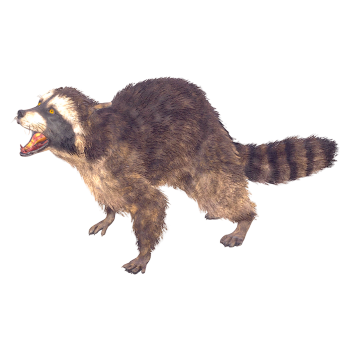
Raccoon (scientific name: Procyon lotor): a mammal of the order carnivora and raccoonidae, with an adult body length of 40-65cm, a tail length of 20-40cm, a weight of 4-10kg, and a male slightly larger than a female. Smaller body size. The face has black eye spots, the image is funny, nicknamed "masked thief"; the tail has 5 to 7 black and white ring patterns. The hair is dense, the whole body hair color is gray brown mixed, also can see the albino varieties. The claws cannot be contracted and are not sharp, but are very sensitive and can catch flying bugs.
Rhino

Rhino

The core highlight is the real expression of skin texture-the skin surface presents rough granular texture, full of fine wart-like protrusions and deep folds (the depth of folds varies with body parts, such as neck and shoulder folds, which are more obvious); The color is mostly dark gray, black gray or brown gray, which may have local traces of soil adhesion (simulating the activity state in natural environment); There is shadow transition at the skin folds, enhance the skin's heaviness and three-dimensional sense; The texture of horny horn is different from the skin, showing the characteristics of hard, smooth and with subtle growth lines, and the base of the horn is naturally connected with the head skin.
High Detail Brown Horse

High Detail Brown Horse

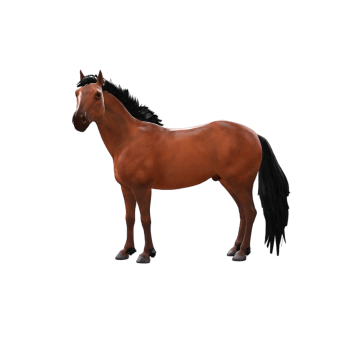
It presents the standard proportions of adult horses-shoulder height, body length, coordinated length of limbs, strong trunk, straight back or slightly natural radian, slender and powerful neck, moderate head proportion (natural connection with trunk), overall posture may be standing, walking or trotting (muscle tightness conforms to sports mechanics), restoring the horse's sense of strength and elegant posture. Details of the structure: muscle lines are clearly visible, such as the deltoid of the shoulder, back
Elephant and Lion Statue

Elephant and Lion Statue

Combination and sense of scene: Elephant and lion statues may be presented in the form of collocation (such as juxtaposition, interaction or forming a specific scene). The base design may be simple or with decorative lines. The overall atmosphere tends to be solemn, majestic or natural theme, which is suitable for virtual construction requirements such as garden landscape, interior decoration and cultural scene.
Mammoth

Mammoth

On the whole, the scheme may take regional characteristics and natural symbols as the core, and create design works with unique recognition and emotional resonance through the integration of materials, shapes and themes.
Fox

Fox

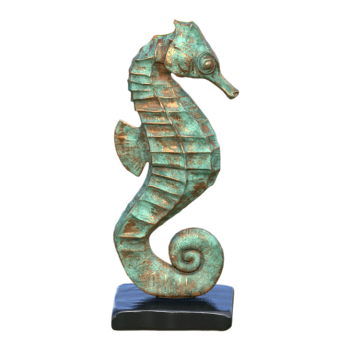
Hippocampus

Hippocampus

Sea otter skull

Sea otter skull

The sea otter (scientific name: Enhydra lutris) is a semi-aquatic mammal of the genus Sea Otter of the carnivores Mustelidae. Due to its dense fur, round body size and unique predation behavior of "tapping shells with stones", it has become one of the most iconic marine mammals along the North Pacific coast. As a "key species" of the ecosystem, its survival directly affects marine biodiversity and is also a flagship species for global marine conservation. The existing populations are mainly concentrated in the Russian Far East, the United States/Canada Alaska, California, Mexico Baja California.
Hippo Skull

Hippo Skull

Hippo scientific name: Hippopotamus amphibius, semi-aquatic giant mammal, stout, thick and hairless skin, saliva containing red pigment (UV protection); Developed incisors and huge canines (up to 50cm in males) are used for fighting and defense. It is distributed in sub-Saharan Africa, inhabiting rivers, lakes, swamps and other still water environments, occasionally in coastal mangroves.
Brown Bear Skull

Brown Bear Skull

Brown bear (scientific name: Ursus arctos) is one of the most widely distributed large terrestrial mammals in the northern hemisphere. It is widely distributed in Eurasia and North America. It is named for its brown or golden hair and is an important top predator in the ecosystem. It belongs to the Mamiaceae, including several subspecies, such as the grizzly bear (Ursus arctos horribilis) and the Kodiak brown bear (Ursus arctos middendorffi).
armadillo specimen

armadillo specimen

Armadillo, Armadillo (scientific name: Cingulata, family name: Dasypodidae) is a unique mammal living in the Americas. There are about 20 species. Its iconic feature is the bone plate carapace covering the whole body, which is called "living armor". Mainly distributed in Central and South America, north to the southern United States (such as the nine-banded armadillo Dasypus novemcinctus), south to Argentina. Belonging to the order Cingulata, it is closely related to the extinct eagle-toothed beast (Glyptodon) and is a unique branch of mammalian evolution in South America.
Giant Panda 3D Model Animation

Giant Panda 3D Model Animation

The giant panda is a rare animal unique to China, belonging to the giant panda genus of the bear family. The most prominent feature is its black and white hair color, the head and body are mainly white, while the eyes, ears, limbs and shoulders are black. It is mainly inhabited in the mountainous areas of Sichuan, Shaanxi and Gansu in China, living in high mountain forests at an altitude of 1200 to 3300 meters. Bamboo as a staple food, occasionally eat some small animals and insects. The digestive system is not suitable for digesting bamboo, so they need to consume large amounts of bamboo every day to get enough nutrients. It is a solitary animal, usually living alone except during the breeding season. It is classified as a vulnerable species.
Platypus 3D Model Animation

Platypus 3D Model Animation

The platypus is a unique semi-aquatic mammal native to eastern Australia and the island of Tasmania. It is one of the most primitive mammals in existence, with two modes of reproduction: oviparous and lactation. The shape combines the characteristics of a variety of animals: duck-like mouth, beaver-like tail and otter-like feet. The whole body is covered with thick and waterproof fur, which can adapt to cold waters. Mostly inhabited near rivers, streams and lakes, it excels at digging complex cave systems for shelter. It is a nocturnal animal, usually active in the early morning and dusk, feeding on insect larvae, shrimp, and other small aquatic organisms.
Black Rhinoceros 3D Model Animation FBX Model

Black Rhinoceros 3D Model Animation FBX Model

Black rhinoceros, also known as black rhinoceros, African two-horned rhinoceros, is the only animal in the genus rhinoceros. Despite the name "black rhinoceros", the body surface color is actually closer to gray-white. The distinctive feature is that the upper lip is long and coiled and stretchable, which can be used to peel the leaves on the branches. Feet short body fat, thick fur less, small eyes. It mainly inhabits small areas in eastern, central and southern Africa, including Kenya, Tanzania, South Africa and other countries. It is a herbivorous animal that feeds on leaves, branches, fruits and vines. They are solitary animals or form small groups. Once the most numerous species in the rhinoceridaceae, numbers have declined sharply due to habitat destruction and illegal hunting.
Lioness 3D Model Animation

Lioness 3D Model Animation

The lioness is an important member of the lion group, usually smaller than the male lion, no mane. In the lion to undertake the main hunting task, with a strong team to catch large prey. The body weight is generally between 110 and 140kg, and the body length can reach 1.4 to 1.7 meters. In the social structure of the lion, it is responsible for raising the cubs, while the male lion is responsible for protecting the territory. It is possible to change spouses many times during a lifetime, as the reign of male lions is usually shorter, generally 2 to 3 years. Despite playing a key role in hunting and raising offspring, in food distribution, it is usually fed after the lion king and the male lion.
Fox 3D Model Animation

Fox 3D Model Animation

The fox is a general term for a variety of small to medium-sized mammals in the genus Canidae. The body is slender, the head is triangular, the ears are large and pointed, the eyes are large and bright, and the pupils will be enlarged at night, allowing it to see the prey clearly in the dark. It is omnivorous and its food includes small mammals, birds, insects, fruits and seeds. Good at hunting, with a keen sense of hearing and smell, able to quickly capture prey. It has strong adaptability and can survive in many environments. It is a solitary animal with a strong sense of territory and is usually active at night. Nests are built in holes in the ground, rock crevices or tree holes, and the nests are covered with hay and leaves for warmth.
African Elephant 3D Model Animated GLB Model

African Elephant 3D Model Animated GLB Model

The African elephant is the largest terrestrial mammal in the world and belongs to the genus African elephant of the long-nose elephant family. The ears are very large, with five toes in the forefoot and three toes in the hindfoot. Long and curved, the tusk is an extension of the upper incisor and grows for life. It is a social animal, usually led by an older female elephant, and the group members are mostly females and young elephants. Male elephants leave the group at the age of 15 and usually live alone or form small groups. It feeds on grass, leaves, bark and fruit and needs a lot of food and water every day. Widely distributed in sub-Saharan Africa, inhabiting a variety of environments such as forests, grasslands and deserts. It is currently classified as a vulnerable species.
Brown Bear 3D Model Animation OBJ Model

Brown Bear 3D Model Animation OBJ Model

Brown bear is a large terrestrial mammal of the genus Urnidae, widely distributed in Eurasia and North America. It is one of the largest extant terrestrial carnivores, with males usually larger than females. The limbs are robust and powerful, with long and curved claws, suitable for digging and climbing. It is omnivorous and its diet includes berries, nuts, insects, fish, and small mammals. Eat in large quantities in the fall to store fat in preparation for winter hibernation. Mainly live in forests, mountains and tundra, with strong adaptability. It is a solitary animal with a strong sense of territory. The territory of male brown bears can reach hundreds of square kilometers.
Raccoon 3D Model Animation

Raccoon 3D Model Animation

The raccoon is a medium-sized, cute-looking mammal belonging to the carnivora raccoon family. Native to North America, it is now also distributed in parts of Europe and Asia. The most notable feature is a circle of dark fur around the eyes, which resembles "dark circles", in sharp contrast to the white face. The tail is long and fluffy, with five to seven black and white rings. It is omnivorous and its food includes insects, small animals, fish, nuts and fruits. Like to wash food in water, the front paws are very flexible, similar to human hands, able to grab food, open containers, and even perform simple operations. It is a nocturnal animal, resting mostly in trees during the day.
Lion Cub 3D Model Animation

Lion Cub 3D Model Animation

Lion cubs are young individuals of lions with ochre-colored spots, especially on the abdomen and legs. These spots help them camouflage in the long grass. Born very small, soft hair, petite body, but full of infinite vitality and curiosity. It consists of several adult lionesses and their offspring, with the male lion responsible for protecting the territory. Attempts to eat meat began at the age of four weeks, usually with the mother giving them back half-digested meat. In the process of growing up, will play and compete with brothers and sisters, exercise their strength and skills, learn hunting and survival skills. Gradually learn to live independently and become strong on the grassland.
Wild Boar 3D Model Animated GLB Model

Wild Boar 3D Model Animated GLB Model

Wild boar, also known as mountain boar, is a large mammal of the genus Swine. The body is strong, the limbs are thick and short, the head is long, the ears are small and upright, the anastomosis protrudes like a cone, and the tip is a bare cartilage pad (arch nose). Each foot has 4 toes, only the middle 2 toes land on the ground, the tail is thin and short, the canine teeth are developed, and the male upper canine teeth are exposed and tusk-shaped. The whole body is covered with coarse dark brown or black mane, the body color is brown or gray black, varies by region. It is an omnivorous animal, mainly plant food, but also eat insects, small mammals and carrion. Often in the early morning and evening activities, while hiding in the leaves to rest during the day. With a strong maternal love, will protect future generations.
FBX Model Wolf 3D Model Animation

FBX Model Wolf 3D Model Animation

Wolf is a large carnivorous mammal of the genus Canidae, with strong body, strong limbs, hair color varies with species and habitat, and has a good camouflage effect. The head is large, the snout tip is long, the eyes are almond-shaped, the ears are erect and pointed, and the tail is long and fluffy. It is a typical social animal, usually living in a family unit, with a strict hierarchy within the group, led by a pair of dominant individuals. With a high degree of intelligence and complex social behavior, through howl, body language and other ways to communicate. A wide range of food, mainly to ungulates for food. Highly adaptable and able to survive in extremely harsh environments.
Hippo Swimming 3D Model Animation

Hippo Swimming 3D Model Animation

The Wobo hippo, also known as the pygmy hippo, is a small hippopotamus in the Mammalian Hippoidae family. The body size is much smaller than that of ordinary hippopotamus. The adult weight is about 160 to 270kg, the body length is 1.5 to 1.75 meters, and the shoulder height is 75 to 83cm. The skin is thick and blackish brown to reddish purple, smooth and glabrous, with only a few hairs on the ends of the mouth, inside the ears, and on the tail. The head is round and short, the eyes and nostrils are born on the upper end of the face, and the webbing between the toes is not obvious, suitable for walking in the muddy rain forest. It mainly inhabits rainforests, swamps and streams in West Africa. It is a nocturnal animal that likes to move alone and feeds mainly on ferns, broad-leaved plants and fruits.
1 2 3 4 5 6 7 8 9 ... 12 Next