Krejiva Castle

Krejiva Castle

Craigievar Castle is a charming castle in Aberdeenshire, Scotland, and one of the most representative pink castles in Scotland. Located in the countryside of Aberdeenshire, it is renowned for its unique appearance and rich history. Built in the 17th century, it is a typical Scottish Baroque architecture. It is famous for its light pink exterior walls, spires, and spires, giving people a fairy tale like feeling. The appearance of the castle is very spectacular, as if it came out of a fairy tale. It is an important part of Scotland's historical heritage and a unique tourist attraction.
Ancient underground tombs in Alexandria, Egypt

Ancient underground tombs in Alexandria, Egypt

An ancient underground tomb in Alexandria, Egypt, known as Kom El Shoqafa Catacombs. It is one of the most important archaeological sites in Egyptian history and also one of the most famous tourist attractions in Alexandria. Built in the 2nd century AD, it is a cemetery from the ancient Roman era. This underground tomb was built to bury members of a wealthy Roman family during the reign of Alexander the Great in Alexandria, and is believed to be the burial site of a wealthy Roman family. The design is unique, combining art and religious elements from ancient Egypt, Greece, and Rome.
Traditional houses in Normandy, France

Traditional houses in Normandy, France

Linhai Jinshan Xiaowenfeng Pagoda

Linhai Jinshan Xiaowenfeng Pagoda

The Linhai Jinshan Xiaowenfeng Pagoda is an ancient pagoda located in Linhai City, Zhejiang Province, China. This tower, also known as Xiaowenfeng Pagoda or Xiaowenfeng Temple, is one of the important historical relics and cultural attractions in Linhai City. Built during the Northern Song Dynasty, around 960 to 1127 AD. It is a wooden pagoda with a height of about 33 meters and a total of seven floors. The tower body is slender and beautiful, with an elegant architectural style, making it one of the exemplars of ancient Chinese wooden towers. It is a landmark building in Linhai City and also a place for Buddhist activities. The tower houses Buddha statues and other religious relics, attracting numerous believers and tourists to worship and visit.
Ancient temples on Java Island, Indonesia

Ancient temples on Java Island, Indonesia

An ancient temple located in the central part of Java Island, Indonesia. It is located in Sleman District, Central Java Province, about 30 kilometers away from Yogyakarta City. It is a cultural heritage of Indonesia and is considered one of the oldest temples on Java Island. Built between the 8th and 9th centuries, it is a relic belonging to the ancient kingdom of Matron. This temple is built of stone, showcasing the ancient architectural style and religious beliefs of Java Island at that time. Its architectural style combines elements of Hinduism and Buddhism, which is common in many ancient temples in Indonesia. The architectural site is not large, but it still showcases the essence of ancient Javanese culture.
Balongseli Chapel

Balongseli Chapel

Baroncelli Chapel is a Renaissance chapel located inside the Basilica di Santa Croce in Florence, Italy. This chapel was completed by Italian painter Taddeo Gaddi in the late 14th to early 15th century. Known for its exquisite murals, which are works of Tadao Gadi. The mural depicts the life story of the Virgin Mary, as well as the suffering and resurrection of Christ. It is one of the important religious and artistic heritages of Florence.
Akadi Monastery on Crete Island

Akadi Monastery on Crete Island

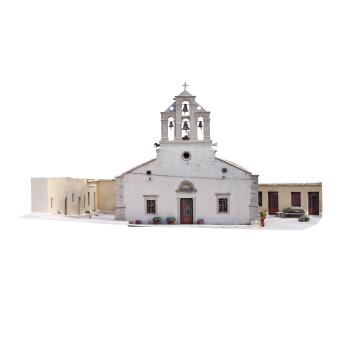
Arkadi Monastery, located on the island of Crete in Greece, is an Eastern Orthodox monastery with a long history and religious significance. This monastery was built in the 14th century and is considered one of the most important religious and cultural heritages of Crete. Renowned for its beautiful architecture and exquisite mural art. It is an important center of Eastern Orthodoxy, where monks live a devout life, dedicated to prayer, chanting, and serving believers. The monastery is equipped with facilities such as a church, residences for monks, and a library, providing a place for religious ceremonies and cultural activities for believers and tourists.
Claude Monet's former residence and art studio

Claude Monet's former residence and art studio

Claude Monet was a French Impressionist painter and is regarded as one of the important representatives of the Impressionist movement. He was born in the suburbs of Paris, France in 1840 and was an independent artist who had a profound impact on the later development of modern art. In painting, he emphasizes the expression of light and color, and depicts natural landscapes by capturing the instantaneous changes of natural light. He often paints outdoors, capturing the scenery at different times and under different weather conditions in order to capture the changes in light and atmosphere. He mainly creates landscape paintings, especially water and garden landscapes.
A small wooden house in the snow

A small wooden house in the snow

Darami Mosque

Darami Mosque

The Damri Masjid is a mosque located in Ahmedabad, Maharashtra, India. Located in the central area of Ahmedabad city, it is an important religious site in the region. It is a place where Muslim communities conduct worship and religious activities. The architectural style usually follows Islamic tradition and has typical mosque features. Built during the reign of the Sultanate of Ahmednagar in 1568. It has been designated as a monument of national importance.
Vietnamese Hindu temples

Vietnamese Hindu temples

A Hindu temple in Vietnam. It is the religious center of Hindus in the region. This temple was built to worship Hindu deities and provide a place for local Hindus to conduct religious ceremonies and celebrations. The activities of temples include religious rituals, sacrifices, celebration of festivals, and hosting community events. It showcases one of the seven Hindu architectural styles that evolved in Vietnam between the 8th and 16th centuries. It is a rare four story brick temple with a square plan, and the top of the tower is a scaled down replica of a classic Champa Hindu temple. These activities attract believers and tourists to visit and participate, to learn about Hindu culture and religious traditions.
Portsmouth Street Antique Shop, USA

Portsmouth Street Antique Shop, USA

Large old rural farmhouse in Normandy, France

Large old rural farmhouse in Normandy, France

Beishan Stone Carving Art Site in Chongqing, China

Beishan Stone Carving Art Site in Chongqing, China

A famous stone carving art site in Chongqing, China. It is one of the important representatives of Chinese stone carving art and also a world cultural heritage. It contains many reliefs and murals carved on rocks, covering historical periods from the Tang Dynasty to the Song Dynasty. These stone carvings showcase religious and philosophical ideas such as Buddhism, Taoism, and Confucianism, as well as historical and folk stories. It combines elements of Buddhism and Taoism, with exquisite carving techniques and vivid expression. Some of these works depict Buddhist scriptures and legendary stories, showcasing the spiritual essence of Buddhist faith and practice. Attracting the attention of numerous tourists and art enthusiasts.
Small houses in Normandy, France

Small houses in Normandy, France

French Normandy Farmhouse

French Normandy Farmhouse

Chouy Village Church, France

Chouy Village Church, France

Vicine Castle, France

Vicine Castle, France

Ch â teaudu Vexinfran ç ais is a historic castle located in the Vincennes region of France. It is a masterpiece of French architectural art, showcasing unique architectural styles and exquisite craftsmanship. Its architectural features include magnificent towers, elegant arches, and gorgeous decorations. As a historical heritage site, the Ch â teau de Vilaine in France attracts numerous tourists. People can feel the past glory and honor here, and learn about the history and culture of this region. The open area of the castle also frequently hosts exhibitions, concerts, and other cultural events, providing visitors with a rich experience.
Modern rural farm architecture

Modern rural farm architecture

A dilapidated and abandoned church

A dilapidated and abandoned church

Damaged abandoned buildings

Damaged abandoned buildings

Abandoned hotel buildings from the 20th century

Abandoned hotel buildings from the 20th century

Zhenru Temple

Zhenru Temple

Zhenru Temple is a Buddhist temple with a long history in Changning District, Shanghai, China. Built around 270 AD, it is one of the oldest Buddhist temples in the Shanghai area. The temple is located in a picturesque environment and occupies a vast area. It is an important Buddhist activity center that attracts numerous believers and tourists to visit and worship. Buddhist ceremonies, meditation classes, and other religious and cultural activities are often held in temples, providing people with opportunities to learn and experience Buddhist teachings. In addition to religious activities, Zhenru Temple also focuses on social welfare undertakings. Temples actively participate in charity and relief activities, helping impoverished and vulnerable groups.
Abandoned administrative building in the 19th century

Abandoned administrative building in the 19th century

Circular Romanesque Church

Circular Romanesque Church

The circular Romanesque church is a unique and beautiful architectural style that was prevalent in Europe from the 11th to the 13th century, blending elements of Romanesque and Byzantine styles. Known for its unique circular flat layout, it is typically constructed using sturdy stones. Usually, there is no traditional cross shape in the center of a church, but rather a circular, elliptical, or octagonal plane with a dome or semi-circular dome at the top. It was very popular in Europe at that time, representing the heyday of medieval architecture. Becoming the religious and cultural center of the local community, attracting believers and tourists to visit and worship.
German Outdoor Museum

German Outdoor Museum

It is an outdoor museum located near Trier, Germany. This museum aims to showcase the traditional way of life and culture of rural communities in Germany. In this museum, you can see the reconstruction or original sites of buildings, farms, workshops, and other facilities in German rural communities from the 19th and early 20th centuries. One of the exhibition areas is Dorfrathaus, which stands for village houses, showcasing the architectural styles and interior layouts of traditional village houses from different historical periods and regions. In addition, the museum also displays other types of buildings such as farms, barns, workshops, schools, and churches.
Carolingian Chapel

Carolingian Chapel

Carolingian Chapel refers to a church built in Europe during the Carolingian dynasty (8th to 9th centuries). It is a special type of medieval European architecture, whose design and decorative style were influenced by the Carolingian dynasty at that time. These chapels were usually built by Charlemagne and his successors for religious ceremonies and prayers of the royal family, nobility, or monasteries. The architectural style is usually simple and balanced, incorporating elements of Roman and Byzantine architecture. It is an important component of medieval European architecture with unique historical and cultural value.
Rinnb ö ck family private small church

Rinnb ö ck family private small church

The Rinnb ö ck Family Church is a small church located in Austria. Located in Upper Austria, Austria, near the city of Linz. It is a small church with a long history, named after the local Rinnb ö ck family. The church may have been built as a private church for the Rinnb ö ck family, providing them with a place for prayer and religious ceremonies. It is usually used by local residents and pilgrims, and may have certain religious and historical significance. May have unique architectural styles and decorations that reflect local culture and religious traditions.
Small religious buildings of the 18th century

Small religious buildings of the 18th century

Minimally designed small tea house

Minimally designed small tea house

Strei Church in Romania

Strei Church in Romania

Strei Church is an important church located in Romania. There is a small town called Strei located in Hornt County, Romania. It is an Eastern Orthodox church that enshrines the Virgin Mary (Maica Domnului). Built in the 15th century, it is a building with historical and cultural value. It showcases the traditional architectural style and artistic details of Romania. The appearance of the church is exquisite, with unique spires and carved decorations. It is one of the popular attractions visited by local residents and tourists. It is not only a religious site, but also an important part of Romanian history and culture.
Krishnabai Temple

Krishnabai Temple

The Krishnabai Temple is located on Mount Mahabali in Maharashtra, India, and is a highly respected ancient temple. This temple enshrines the Hindu deity Krishna, hence it is also known as the Krishna Temple. Built in the 13th century, it is a beloved place among pilgrims and tourists. It is renowned for its unique architectural style and magnificent landscape. The temple is located on a mountaintop at an altitude of 1294 meters, surrounded by beautiful natural scenery and mountains. It is a must visit destination for pilgrims and tourists heading to Mount Mahabali.
Japanese traditional houses

Japanese traditional houses

Johannes Pusey's Honorary Cemetery

Johannes Pusey's Honorary Cemetery

Johannes Prix was a renowned Austrian architect, born in 1941 and passed away in 2011. He and his partner WolfD Prix co founded the architectural firm CoopHimmelb (l) au. With its avant-garde and innovative design concepts, it has made a name for itself in the architecture industry. His works are renowned for their unique forms and spatial designs, breaking through the limitations of traditional architecture. Pusai's design works integrate art, technology, and social significance, showcasing his unique insights into architectural language and materials. He is widely praised for his contributions and innovations in the field of architecture.
Afsharom Tomb

Afsharom Tomb

The Tomb of Absalom is an ancient tomb located in Jerusalem, Israel, believed to be one of the holy sites in Jewish tradition. This tomb is believed to be the burial site of Absalom, the son of King David of the Jewish kingdom in the 1st century BC. Afsharom was the third son of King David and one of his most beloved sons. According to the Bible, during the reign of David, Afsharom was ambitious and attempted to usurp the throne, ultimately leading to conflicts with his father. Afsharom was ultimately killed in a battle. It is an important tourist attraction in Jerusalem.