Building
Scene of Mining Smelting Chemical Treatment Facilities
It is an industrial facility specifically designed for extracting mineral resources. Usually located in areas with abundant mineral resources, advanced smelting technology and chemical treatment methods are used to convert ores into valuable metals or compounds. These facilities include crushers, grinding machines, smelting furnaces, electrolytic cells, and chemical treatment equipment, which can process various ores. During the smelting process, the ore is first crushed and finely ground, and then subjected to high-temperature melting in a smelting furnace to separate valuable metals. Chemical treatment further purifies the metal and removes impurities. They are also important forces driving regional economic development and technological progress.
Eastern Avenue Sewage Treatment Pumping Station in Baltimore, USA
An important municipal facility located in Baltimore, Maryland, United States. Built in 1912, it was a key component of Baltimore's new sewer system at the time. Designed by architect Henry Brauns and chief engineer Calvin Hendricks, the exterior design of the pump station incorporates classical elements. By 1959, the pump station underwent modernization and was replaced with one diesel pump and five electric pumps, which are still in operation today. Although the museum was closed in 2011 due to budget issues, the Eastern Avenue pumping station continued to provide necessary services to Baltimore citizens around the clock.
Catonwood Heights Paper Mill, Utah
Located in Catonwood Heights, Utah, it is a historic landmark building with a history dating back to the 19th century. Originally used as a place for pulp and paper production, it was purchased by Desaret News Company in 1880 and built under the guidance of Henry Grow in 1883. Adopting the Romanesque Revival architectural style, constructed using nearby granite, and with hydraulic power as its main source of power. Over time, the old mill has undergone multiple changes. In 1892, due to a devastating fire, the mill suffered severe damage. In 2005, it was abandoned due to violation of building regulations.
The oldest mill in Baltimore, USA
Owens Mills, located in Baltimore County, Maryland, USA, is the largest and oldest surviving mill in Baltimore County. Built in the early 1790s by ambitious businessman and revolutionary patriot Samuel Owens. Not only is it a historical relic, but it is also a model of merchant mills established during the post-war investment boom. It showcases the characteristics of mill architecture from that era, with its red brick structure and historically significant mechanical components still preserved to this day. Although commercial operations have ceased, it has been preserved as a part of history and has become a symbol of local history and culture, attracting history enthusiasts and tourists to visit
Industrial factories during the Soviet era
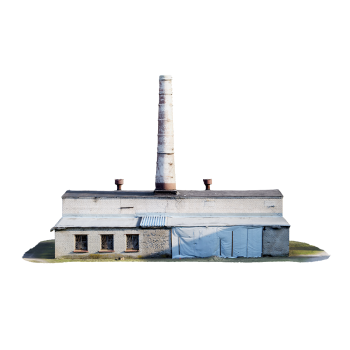
The industrial buildings of the Soviet era were an important symbol of the Soviet industrialization process, with large conventional models and sturdy structures, reflecting the Soviet era's emphasis on industrial production and national power. Between 1950 and 1957, the Soviet Union supported China's so-called "156 technology transfer projects", which involved the construction of large capital intensive factories in the heavy industry sector, the transfer of advanced machinery and equipment from the Soviet Union, and the provision of technical assistance and knowledge dissemination. The design and construction of the building reflected the political and economic background of the time, and it was widely present in the Soviet Union and countries within its sphere of influence, becoming a symbol of industrialization and modernization during that era
Abandoned power station in southern Fremantle, Australia
An abandoned power plant located in the NorthCoogee area of southern Fremantle, Western Australia, Australia. Once a prosperous power production facility, located near the city of Fremantle. The power station has been in a dormant state since 1985 and has a history of nearly 30 years. Although some people believe that this 71 year old building is a visual pollution, there are also views that it represents the unique history of electricity production in Western Australia and is worth preserving.. This site not only carries the local industrial history, but also becomes a striking seaside attraction due to its unique aesthetic of ruins.
Lithuanian traditional windmill
A traditional windmill located in Lithuania, whose history can be traced back several centuries. This type of windmill is known for its unique design and structure, typically featuring large sail wings and a vertical axis, which can effectively utilize wind power for operation. Not only is it an important tool in agricultural society, used for grinding and other agricultural processing tasks, but it has also become a symbol of local culture and history. Over time, these windmills gradually withdrew from practical use and became tourist attractions and educational bases, attracting tourists and scholars to learn about Lithuania's agricultural history and windmill technology.
Old British Fireworks Factory
A historic fireworks factory building located in the UK. This building is one of the iconic facilities of WellsFire, a company known for producing high-quality fireworks. The building itself has a unique industrial design style, reflecting the characteristics of industrial architecture from the late 19th century to the early 20th century. Its sturdy structure and spacious space provide an ideal environment for the production and testing of fireworks. It is part of the industrial heritage of the UK, witnessing the development and innovation of fireworks manufacturing techniques, while also carrying a memory of the region's industrial history.
Ancient barn in Finland
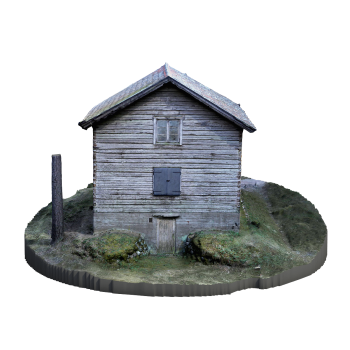
This ancient barn located in Paimio, Finland was built in 1832 and has significant historical and cultural value. Just a facility for storing grains, it also provides a unique social service: in years of low harvest, people can borrow grains here to ensure they can get through difficult times. It reflects the spirit of mutual assistance and the emphasis on agricultural stability in the society at that time. Over time, although its actual function may have changed, it remains a part of the history of the Paimio region, attracting tourists interested in historical architecture and Finnish cultural heritage.
Falklingen Iron and Steel Plant
The Volklingen Steel Plant is a historic steel plant located in Volklingen, Germany. Built in the late 19th century, it has undergone decades of development and growth. Plays an important role in the history of German industry and was once one of the largest steel production centers in the region. Known for its high-quality steel products, applied in fields such as construction, manufacturing, and transportation. We have adopted advanced production technology and equipment, continuously innovating and improving the production process to ensure product quality and efficiency. However, with the passage of time and economic changes, it experienced a difficult period at the end of the 20th century. Reorganized and modernized.
Random Model
Velociraptor 3D animated model
198 View
Vortox Vintage Desk Fan
237 View
Black marble bedroom door handle
192 View
Specimen of the Horned Antelope
133 View
Soviet S-75 missile launchers
252 View
Er Long Xi Zhu - Dark Wood Carving
325 View
Jade Belt Butterfly Specimen
301 View