Popular Science Education
Stamnos Pottery of Ancient Greece
Stamnos is a form of pottery common in ancient Greece and Rome, often used to hold wine or other liquids. This exhibit is now in the Museo Palazzo Corboli (Colbury Palace Museum).
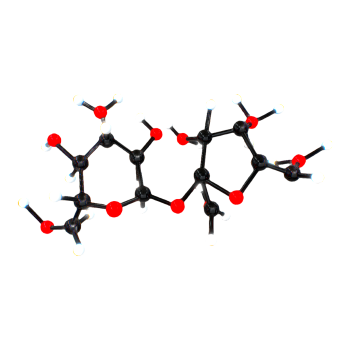
Chemical formula of maltose (molecular structure 3D schematic diagram)
Maltose is a disaccharide composed of two glucose molecules. It is usually generated when starch is broken down by enzymes. Maltose exists in sprouted grains in nature and is also produced during beer brewing and other fermentation processes. The chemical formula for maltose is C ₁₂ H ₂ O ₁₁. Maltose is a colorless crystal that usually contains one molecule of crystalline water. It has a melting point of 102 ℃ and is easily soluble in water. Its sweetness is 40% that of sucrose.
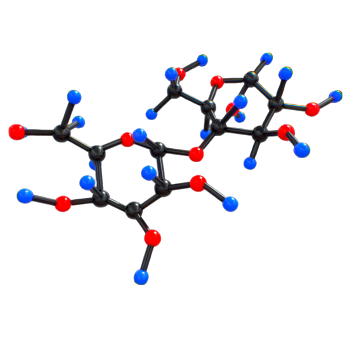
Chemical formula of vitamin D2 (molecular structure 3D schematic diagram)
Vitamin D2, chemically known as ergocalciferol, is an open-loop steroid formed by the breaking of chemical bonds in steroids under photochemical action, especially through the action of ultraviolet light and ergosterol.
Chemical formula of vitamin B1 (molecular structure 3D schematic diagram)
Vitamin B1 (VB1), also known as thiamine, is the earliest water-soluble vitamin purified by humans. Its chemical name is 3- [(4-amino-2-methyl-5-pyrimidinyl) - methyl] -5- (2-hydroxyethyl) -4-methylthiazolium chloride, which has the function of maintaining normal glucose metabolism.
Chemical formula of vitamin A (molecular structure 3D schematic diagram)
Vitamin A is a fat soluble vitamin, an organic compound with the chemical formula C20H30O. It is stable to heat, acid, and alkali, and is easily oxidized. Ultraviolet radiation can promote its oxidative damage. Vitamin A includes A1 and A2, with A1 being retinol. Vitamin A2, also known as 3-dehydroretinol, has a physiological activity that is 40% of that of vitamin A1.
Phospholipid bilayers (microscopic 3D schematic)
Phospholipid bilayer is a structure composed of two layers of phospholipid molecules and is a fundamental component of the cell membrane. A hydrophilic "head" and a hydrophobic "tail". The hydrophilic head faces the aqueous phase, while the hydrophobic tails approach each other, forming a bilayer structure. Having fluidity, allowing embedded proteins to move within the membrane. Being able to selectively allow certain substances to pass through while blocking others. The phospholipid bilayer isolates the interior of cells from the external environment. Through embedded proteins, phospholipid bilayers can regulate the entry and exit of ions, nutrients, and waste.
Multilayer phosphorene structure (microscopic 3D schematic diagram)
Phosphorene is a two-dimensional material composed of a single layer of black phosphorus atoms, possessing unique physical and chemical properties. Phosphocene is a single-layer phosphorus atom detached from black phosphorus, exhibiting a honeycomb like lattice arrangement but with a wavy bent structure.
Cubic porous skeleton
A cubic porous skeleton is a structure with a cubic shape and containing a large number of pores. This structure has wide applications in materials science and biotechnology, especially in fields such as bone scaffolds and gas storage.
Molecular structure of cyclodextrin
Cyclodextrin (CD) is a class of cyclic oligosaccharides formed by glucose units connected by α -1,4-glycosidic bonds. According to the number of glucose units contained, cyclodextrins are mainly divided into three types: alpha cyclodextrin (6 glucose units), beta cyclodextrin (7 glucose units), and gamma cyclodextrin (8 glucose units).
Core-shell micelle structure
Core shell micelles are nanostructures formed by self-assembly of amphiphilic molecules (such as block copolymers) in selective solvents. Its structural characteristics are a hydrophobic core and a hydrophilic shell. Composed of hydrophobic molecular segments, aggregated at the center of micelles, avoiding contact with water or other polar solvents. Composed of hydrophilic molecular segments, surrounded by a hydrophobic core, and interacting with water or other polar solvents.
Ketone-1,5-diphosphate carboxylase oxygenase (chemical reaction 3D schematic diagram)
Rubisco is one of the most abundant enzymes in nature, playing an important role in carbon fixation and photorespiration processes. Specifically, Rubisco participates in the dark reaction process after the light reaction in the photosynthetic reaction, catalyzing the carboxylation of ribulose-1,5-diphosphate (RuBP) and then cleavage to form two glycerol-3-phosphate (PGA) molecules. This reaction is a crucial step in the Calvin cycle.
Random Model
Three-stone gold diamond ring
193 View
TommyHilfiger Jacket
224 View
Vietnam An Lantern
129 View
3D Animation Model of a Bug Dog
283 View
Vintage vinyl record player
216 View
Huzur District Memorial Dinner Plate
113 View
17th century Dutch Bert ship
310 View