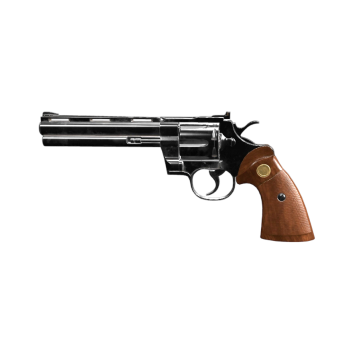
Game Ready Edition Colt Python Revolver
Game Ready Edition Colt Python Revolver

Adapt to the requirements of shooting games and military scenes-can be used as the main/secondary weapons of game characters, weapons depot display props or core elements of tactical scenes; Support in-game interaction (such as wheel rotation, hammer pulling, loading animation and other bone binding); The detailed design is compatible with the first-person perspective (FPV) and the third-person perspective (TPV) display, and the proportion of barrel and grip is suitable for the character to hold. The overall style realistic hard core, it conveys the precision and reliability of revolvers, adapts to various types such as tactical shooting games, western theme games or military simulation games, and meets the needs of weapon science popularization and military collection digitization.
Tanks

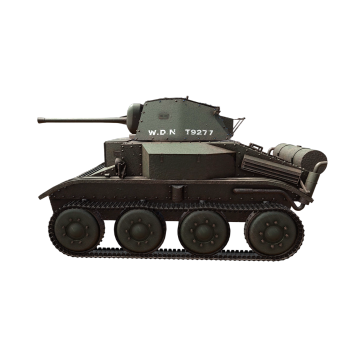
Tanks

Adapt to the requirements of military historical scenes-it can be used as the core equipment of reconnaissance mission scenes in the European battlefield and North African battlefield of World War II, or used for the construction of scenes such as armored troops marching and field deployment; The detailed design supports static display or dynamic simulation (such as track rotation, turret rotation, gun barrel pitch and other basic actions); The scale of the model conforms to the real size, it can interact with other World War II armored vehicles (such as British cruiser tanks and German light tanks) to form scenes. The overall style is realistic and rigorous, and the positioning and history of MK VII Tetrach tanks in World War II light armored forces are transmitted through accurate restoration.
Titan submersible

Titan submersible

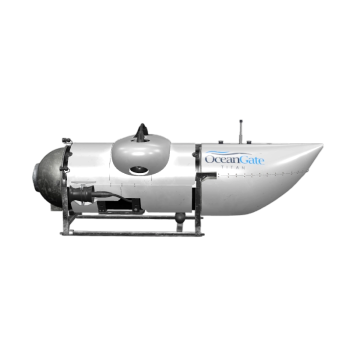
Adapt to the special scene requirements of deep-sea exploration-the model can be used as a core prop alone or integrated into deep-sea environment scenes (e. g. with submarine terrain, shipwreck, marine life and other elements); The detailed design supports static display or dynamic simulation (such as propeller rotation and mechanical arm activities), and is suitable for popular science animation, virtual roaming or engineering demonstration. The overall atmosphere is serious and professional, conveying the scientific and technological theme of "human exploration of deep sea limit, at the same time, through precise structural restoration, it indirectly reflects the technological breakthroughs of deep-sea submersibles in the fields of material science and fluid mechanics, and has both visual expression and popular science value.
folding rotorcraft

folding rotorcraft

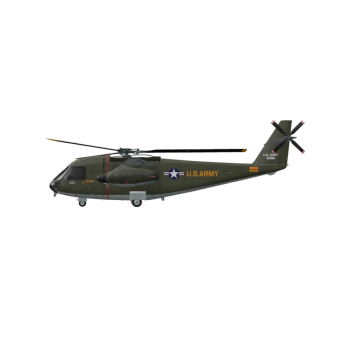
The layout of a single-seat or two-seat experimental machine is presented. The fuselage is streamlined (taking into account the lift of rotor mode and drag reduction of fixed wing mode). The wing is short-range flat wing or swept wing. The core feature is the foldable rotor system on the upper part of the fuselage-the rotor blades can be folded along the axis and stored above the fuselage or wing (simulating the experimental function of "rotor stowing and switching fixed wing flight"). The rotor shaft and transmission structure are clearly visible.
armored personnel carrier

armored personnel carrier

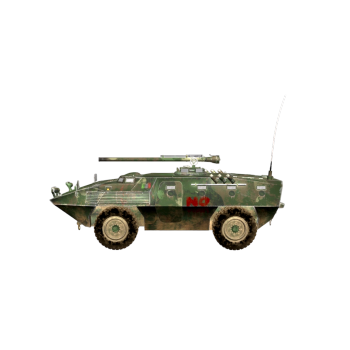
The exterior design of the Fiat 6614 is accurately restored, including rounded body lines, unique turret shapes, detailed wheels and suspension systems, etc. Even the welding seams of the body and the texture of weapons and equipment are clearly visible.
supersonic fighter

supersonic fighter

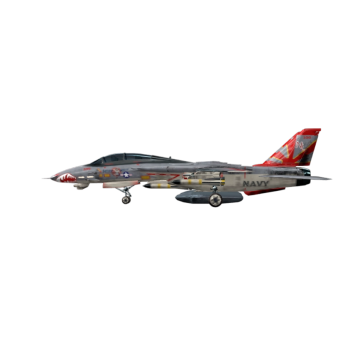
F-14 has participated in the Gulf War, the Kosovo War and other actual combat in history. Because the movie "Top Gun" (Top Gun) has become a global military cultural symbol, after retiring from the U.S. Navy in 2006, some of them are still serving in the Iranian Air Force (Iran is its only overseas user). Its variable sweep wing technology, long-range interception concept and iconic shape make it one of the most legendary fighters in aviation history.
Large explosive package

Large explosive package

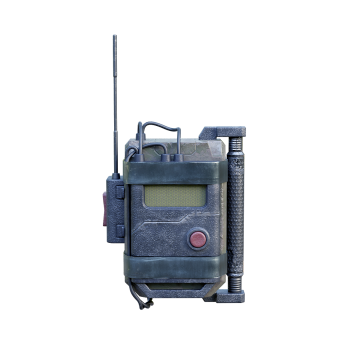
Improvised C4 Bomb

Improvised C4 Bomb

German 37 mmFLAK42 anti-aircraft gun

German 37 mmFLAK42 anti-aircraft gun

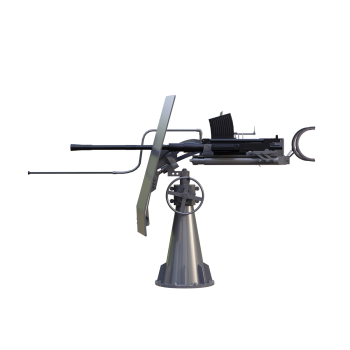
It is an anti-aircraft gun used by Germany during World War II and belongs to the FLAK series. It is an improvement on the earlier 37mm anti-aircraft gun, designed to improve the rate of fire and simplify the production process. The design makes it effective against low-flying enemy aircraft. The design uses lighter materials and improved construction to make it more flexible in combat. It can rotate 360 degrees, and the vertical shooting angle ranges from -7 ° to 90 °, which is suitable for various combat environments. It is used for air defense operations and can also be used as ground fire support when necessary. It was widely deployed in the German air defense forces and played an important role in many battlefields.
North Korea Hwasong-17 intercontinental ballistic missiles
North Korea Hwasong-17 intercontinental ballistic missiles

It is an intercontinental ballistic missile displayed by North Korea and debuted at a military parade in October 2020, the 75th anniversary of the founding of the Workers' Party of Korea. Carried by an 11-axis transport vertical launch vehicle, the size and configuration of this large missile indicate that North Korea has the ability to manufacture such vehicles, which has previously been a factor in limiting North Korea's ICBM power by preventing foreign-made TEL procurement. The first flight test took place on March 24, 2022, and North Korea announced that it had successfully tested the missile. The development of such missiles is seen as the core strike means of North Korea's self-reliance and nuclear deterrent.
German 20mmFLAK38 anti-aircraft gun

German 20mmFLAK38 anti-aircraft gun

It was a light anti-aircraft gun used by Germany in World War II. Designed by Rheinmetall, it is an improved model of FLAK30 to improve the rate of fire. The design began in the late 1930 s, and in 1939 it was accepted as the standard anti-aircraft gun for the German Army and was used extensively throughout the war. Used as a single-barrel towed gun, it was also installed on a variety of vehicles and fixed positions, including a quadruple-mounted version, which greatly enhanced anti-aircraft fire. Because of its excellent performance and high rate of fire, it became a nightmare for the Allied Air Force.
missile launcher

missile launcher

It is the key equipment used to launch, guide and control missiles in modern military equipment. It usually consists of the following parts: power system, guidance and control system, communication system and warhead system. Material selection is key to ensuring system performance and reliability, and commonly used materials include high-strength alloy steels, titanium alloys, and composite materials that require a balance between multiple requirements for strength, durability, corrosion resistance, and weight. The advantages include high-precision strike capabilities, long-range strikes, rapid response and deployment capabilities, as well as high-speed flight and complex flight trajectories, making it difficult for enemy defense systems to intercept.
Soviet Union SA-2 "Guidline" surface-to-air missile system

Soviet Union SA-2 "Guidline" surface-to-air missile system

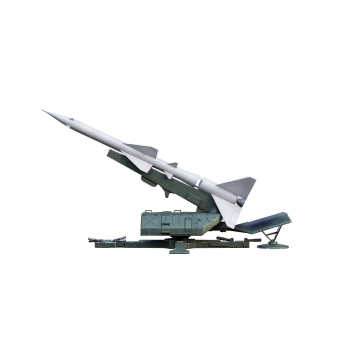
The Soviet Union called S-75Dvina, a medium-high altitude surface-to-air missile system. Since its first deployment in 1957, it has become one of the most widely deployed and used anti-aircraft missiles in history. Designed to defend against fixed targets and field forces, it is primarily aimed at small aircraft formations rather than large-scale air strikes. With a two-stage solid fuel booster, it can reach a top speed of 1864 mph, a range of 30 miles, and a shot height of more than 60,000 feet. The missile warhead weighs about 434 pounds and can be equipped with proximity, contact and command fuses, and some models can even be equipped with a nuclear warhead.
Brazil AvibrasFalc oHarpia Drones

Brazil AvibrasFalc oHarpia Drones

It is an unmanned aerial vehicle system Avibras developed by a Brazilian company and designed for military use. It is designed to perform a variety of tasks, including reconnaissance, target acquisition, fire support, damage assessment, land and sea surveillance, etc. The Falcão (meaning "eagle" in Portuguese) UAV was developed to meet the needs of the Brazilian army. It was designed with a national technology content in mind to meet the requirements of Brazil's national defense strategy. It reflects Brazil's progress and independent innovation capabilities in the field of UAV technology, and also demonstrates the cooperation model of Brazil's defense industry and its commitment to national security.
Russian BM-30 Tornado Rocket Launcher

Russian BM-30 Tornado Rocket Launcher

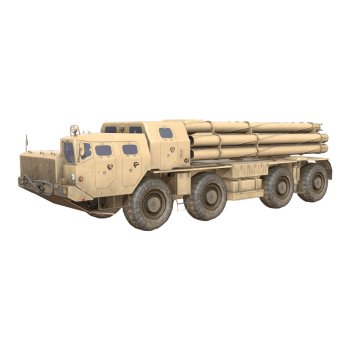
For a long time, due to media and practical reasons, people have only been familiar with the MLRS rocket artillery of the United States, and their understanding of the Soviet and Russian rocket artillery has only been limited to a one-sided view of the "Stalin organ". In fact, Russia now has the world's most advanced rocket launcher - the BM-30 Tornado. Tornado "is the third generation rocket artillery system developed by the Soviet Union/Russia after" Katyusha "and" Hail ". Katyusha gained worldwide fame during World War II. The stabilizer structure technology of the "Hail" rocket has been widely spread. Hail has equipped the armies of 56 countries, second only to the AK-47 rifle in terms of its impact.
Shahed-131 Special Edition Drone

Shahed-131 Special Edition Drone

It is a type of Shahed series unmanned aerial vehicle manufactured in Iran, which has played a significant role in the Ukrainian battlefield. Due to its slow, powerful, and relatively low-cost characteristics, it has been accused of intimidating Ukrainian cities far from the front lines, attacking energy grids and grain depots, and being associated with civilian casualties. Commonly referred to as a one-time attack or "kamikaze" aircraft, it carries explosives from the nose, takes off with rocket assistance, and ultimately dives to collide with the target. The design is simple yet clever, combining precision and cost-effectiveness, making it unique among strategic weapons. Its body is made of carbon fiber cloth and honeycomb structure.
American MK18Mod1 short barrel rifle

American MK18Mod1 short barrel rifle
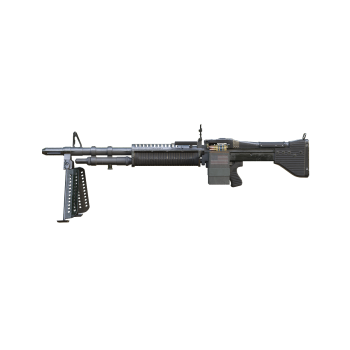
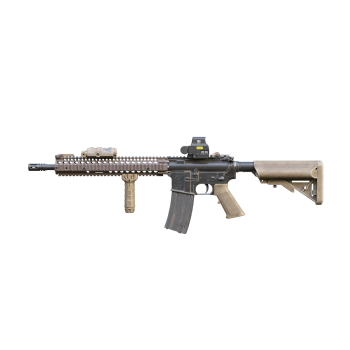
It is a short barrel M4A1 retrofit kit designed by the US Navy Ground Weapons Development Center. It is based on the modular functionality of the M16 series and adapts the weapon to the needs of close combat by replacing the upper receiver and short barrel. Specially using the MK18RISII guide rail from Daniel Defense Company in the United States. Due to its widespread use in special forces and frequent appearance in film, television, and games, it has become a model that gun enthusiasts are enthusiastic about replicating. The original design intention was to meet the mobility and rapid response needs of special operations units in indoor close combat environments.
American M60 machine gun

American M60 machine gun

Also known as the "general-purpose machine gun", it was widely used in the Vietnam War and favored by infantry due to its powerful firepower and reliability. Using a ammunition chain supply, the barrel can be quickly replaced, and the effective range reaches 1000 meters. Known for its durability and reliability in harsh environments, despite its heavy weight, it has a low firing rate and good shooting accuracy. Infantry affectionately call it 'ThePig' due to its massive size and huge ammunition consumption. The improved models of M60 machine gun, such as M60E3 and M60E4, have further improved their performance and battlefield adaptability by reducing weight and increasing accessory installation capabilities.
Soviet AK-74M assault rifle

Soviet AK-74M assault rifle

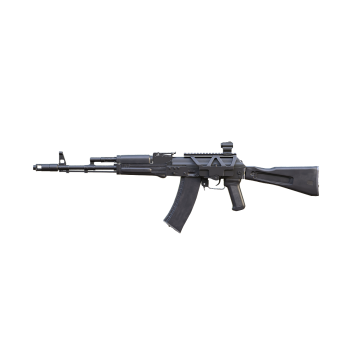
It is a modern assault rifle developed by the Soviet Union in 1987 and an improved version of the AK-74. It was officially launched in 1991 after the dissolution of the Soviet Union and produced by the Izhevsk Machinery Manufacturing Plant. M "stands for" modernization "and features a new folding stock and plastic handguard, as well as a design that allows for accessory boxes to be placed inside the stock. The weight has been reduced to 3.325 kilograms, and due to the use of plastic materials, its thermal conductivity is low, and its impact strength and wear resistance are better than wooden materials. Anti slip patterns have also been added, improving the comfort and reliability of use. It is commonly referred to as the 'Russian Black Rifle'.
Soviet AK-74 Automatic Rifle

Soviet AK-74 Automatic Rifle

It is an automatic rifle developed during the Soviet era, an improved version of the AK-47, and officially entered service in 1974. Using 5.45 × 39mm small caliber ammunition, this ammunition has a higher initial velocity and smaller recoil, making shooting more precise. This gun inherits the reliability and durability of the AK series, while making multiple design improvements to enhance shooting accuracy and range. The gun barrel is relatively long, with an effective range of up to 400 meters, and it is lightweight and easy to carry. Widely used in the military of the Soviet Union and its allies, and played an important role in multiple conflicts and wars. It is still adopted by the armies of many countries today.
SnowOwlSS Sniper Rifle

SnowOwlSS Sniper Rifle

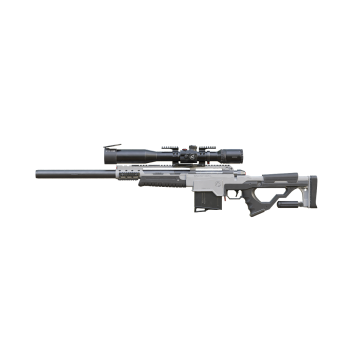
It is a modular sniper rifle carefully crafted by designer Wouter Kroon, designed specifically for carrying out covert missions. Standing out with its high adaptability and versatility, it allows users to quickly replace key components such as gun barrels and sights according to specific task requirements. Its design emphasizes concealment, portability, and ease of operation, while maintaining the precision and power required for sniper rifles. The launch of SnowOwlSS meets the needs of special forces, law enforcement agencies, and professional snipers for efficient sniper weapons in the ever-changing battlefield environment.
Russian PP-19-01Vitiaz submachine gun
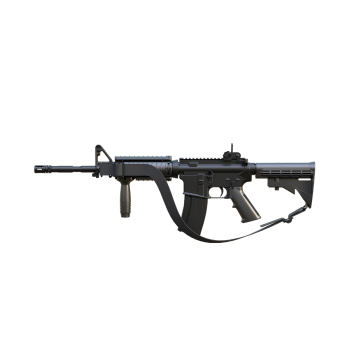
Russian PP-19-01Vitiaz submachine gun

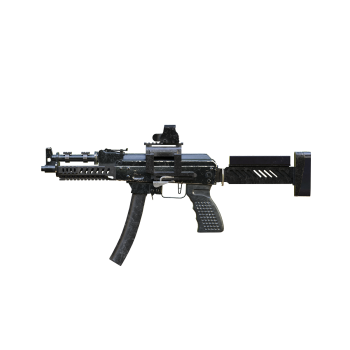
Also known as the "Warrior", it is a Russian made submachine gun designed by Izhmash based on the AKS-74U. The main improvement is to replace the magazine feeding system with a traditional magazine feeding system. Small scale production began in mid-2007 and was adopted by law enforcement agencies such as the Russian Ministry of Internal Affairs special forces OMON. It has up to 70% universality with AKS-74U parts, adopts a free action bolt and automatic principle of closed chamber waiting for firing, has a short receiver, uses 9mm pistol bullets, has a magazine capacity of 30 rounds, an effective range between 100 and 200 meters, and a theoretical firing rate of 750 rounds per minute.
Vertical grip M4A1 assault rifle

Vertical grip M4A1 assault rifle

It is a modern assault rifle known for its high reliability and versatility. The M4A1 equipped with a vertical grip further enhances its operability and stability. Vertical grip is an accessory typically installed beneath a rifle, providing a more stable grip for shooters. This design helps reduce recoil during shooting, improve shooting accuracy and quick aiming ability. The M4A1 rifle itself adopts a pneumatic operating principle and has a short stroke piston system, which enables it to maintain excellent performance in various environments. Modular design also allows for quick replacement of components to adapt to different tactical needs.
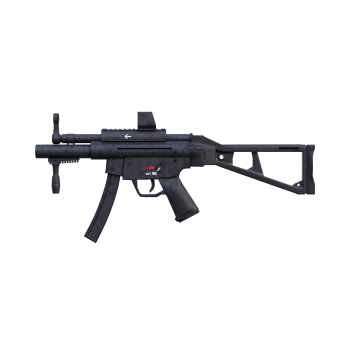
German HKMP5 submachine gun

German HKMP5 submachine gun

The 9mm submachine gun designed and manufactured by the German company Heckler&Koch has been known for its high firing rate, low recoil, and shooting accuracy since its development in the 1960s. The MP5 series includes multiple models, such as MP5A3, MP5SD micro acoustic model, and MP5K ultra short model, to meet different tactical needs. Adopting the same roller locking system as the G3 rifle ensures reliability and safety. Widely adopted by military and police forces in over 50 countries worldwide, it has become a signature weapon in counter-terrorism and special operations. Its magazine capacity is usually 15 or 30 rounds, with an effective range of 200 meters. Easy to carry and hide.
Belgian SCAR automatic rifle

Belgian SCAR automatic rifle

It is a modular light automatic rifle designed and manufactured by the Belgian company FNHerstal. It is mainly divided into two models: SCAR-L (light, using 5.56 × 45mm ammunition) and SCAR-H (heavy, using 7.62 × 51mm ammunition). Known for its high reliability, modular design, and versatility, it can quickly replace gun barrels to adapt to different combat needs. The original intention of the design is to provide a weapon that can perform well in various environments for special operations forces. Featuring a sturdy and durable structure, suitable for use under extreme conditions.
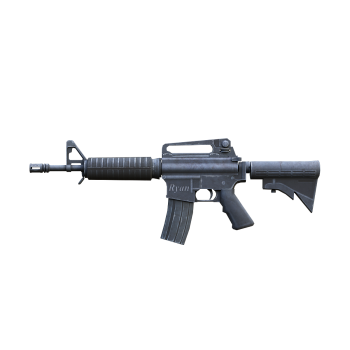
M4A1 Assault Rifle from the United States
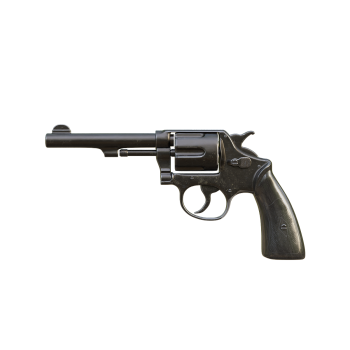
M4A1 Assault Rifle from the United States

It is an assault rifle adopted by the US Army in 1994 and a variant of the M16 rifle series. Widely acclaimed for its compact size, high shooting speed, and reliability. It is usually equipped with a foldable or extendable stock, as well as a short barrel, making it ideal for close combat. Using 5.56 × 45mm NATO standard ammunition and capable of semi-automatic and fully automatic shooting. It is also equipped with Picatinny rails, allowing users to install various accessories as needed. Due to its versatility and outstanding performance in various military operations, it has become a standard equipment for many armies and special forces around the world.
American M191 revolver

American M191 revolver

Also known as the Colt M1911 pistol, it is a semi-automatic handgun designed by the renowned American firearms designer John Moses Browning. It was adopted by the US military in 1911 and became the standard handgun. It served in two World Wars, the Korean War, and the Vietnam War until it was replaced by the M9 handgun in 1986. Known for its high loading capacity, fast magazine replacement, and excellent reliability, with a total production of over 2.5 million units, it is one of the best-selling handguns in history. The M1911 has had a profound impact on modern handguns worldwide, and many firearm enthusiasts still consider it the best combat handgun.
Belgian FNSCARMK-17 rifle

Belgian FNSCARMK-17 rifle

It is a modern combat rifle developed by Belgian company FN Herstal, specifically designed to meet the special operations needs of the US military. It belongs to the SCAR series, where "SCAR" stands for "Special Forces Combat Assault Rifle". The MK-17 model specifically uses 7.62 × 51mm NATO full power rifle ammunition, which has significant lethality and range. Known for its high modularity and multi caliber versatility, the gun is equipped with Picatinny rails that allow for quick replacement of parts according to mission requirements. The design emphasizes ergonomics, and operating components such as the handle and magazine buckle can be operated on both sides, suitable for left and right hand use.
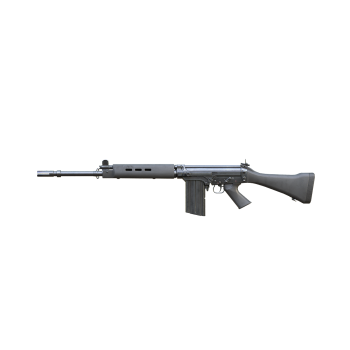
Belgian FAL automatic rifle

Belgian FAL automatic rifle

The full name is Fusil Automated L é ger, which stands for "Light Automatic Rifle". It is a famous combat rifle designed by Belgian firearms designer Eric Helstrom in the mid-20th century. It began service in the early 1950s and quickly became a standard equipment for many countries' armies, known as the 'right hand of the free world'. Adopting pneumatic automatic principle, 7.62 × 51mm NATO standard ammunition has the characteristics of long range and high power. It has a sturdy structure, high reliability, strong adaptability, and can work normally in harsh environments. Becoming one of the most successful rifles of the 20th century.
British AWM Sniper Rifle

British AWM Sniper Rifle

It is an abbreviation for "Arctic Warfare Magnum", meaning "Arctic Combat Magnum", and is a high-precision sniper rifle. Designed and manufactured by British Precision International, it was initially developed for the Arctic combat needs of the British military. Known for its excellent range, accuracy, and reliability, it is used by special forces and snipers in many countries. Use. 338 LapuaMagnum caliber ammunition, which has extremely high penetration and long-range shooting capabilities. The design includes a sturdy barrel, adjustable stock, and high-precision sight.
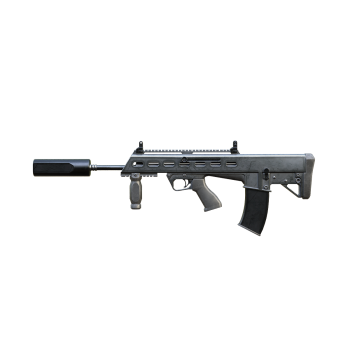
Bullpump rifle

Bullpump rifle

It is a firearm design characterized by placing the magazine and action mechanism inside the stock, thereby achieving a longer barrel length without increasing the overall length of the firearm. This design allows the Bullpu rifle to maintain a compact size while having better shooting accuracy and range. It usually has a short total length, making it easy to carry and operate, especially suitable for urban combat and internal use of vehicles. Due to its unique structural design, it is favored in some military and law enforcement agencies. This design also brings some operational challenges, such as magazine replacement and sight installation.
German Gewehr43 semi-automatic rifle

German Gewehr43 semi-automatic rifle
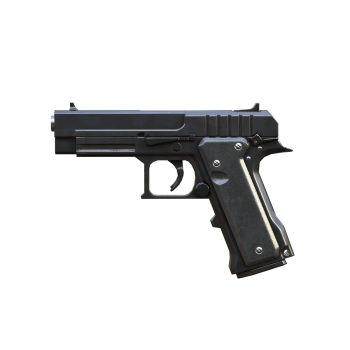
It is a semi-automatic rifle used by the German army during World War II, designed and produced by the German company Walter. Mass production began in 1942 and officially entered service in 1943. Using 7.92 × 57mm Mauser rifle ammunition, with a 10 round magazine, the effective range can reach 800 meters. Its design draws on the experience of G41 rifle, improves the air guiding system, enhances reliability and production efficiency. Technically equivalent to the M1 Garand rifle, but due to production capacity and material limitations, the output is lower. In the later stages of the war, due to resource constraints, the production process of G43 was simplified. It is an excellent semi-automatic rifle.
P228 automatic pistol

P228 automatic pistol

Developed by Swiss company SIG and produced by German company SAUER, it is a compact semi-automatic handgun. Launched on the market in 1988, it is a miniaturized version of the P226 pistol, featuring a dual row magazine design. Known for its ergonomic design, the grip shape is suitable for shooters of different palm sizes, with good directionality, and the dual action plate design makes operation more comfortable. In April 1992, it was officially adopted by the US military and named the M11 compact handgun. Along with the M9, it became the standard equipment of the US military, mainly used by military police and other personnel who needed miniaturized handguns. The magazine has a capacity of 13 rounds and a caliber of 9 millimeters.
VSSVntorez Microsonic Sniper Rifle from the Former Soviet Union
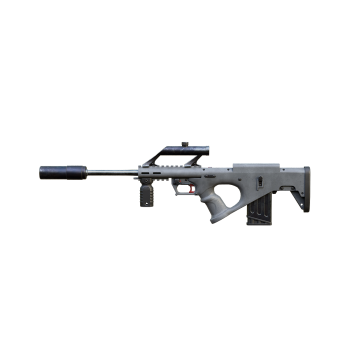
VSSVntorez Microsonic Sniper Rifle from the Former Soviet Union

VSS, also known as "Thread Cutting Machine", is a micro sound sniper rifle developed by the former Soviet Union. Featuring 9x39mm ammunition, it has the characteristics of low sound and almost no firing flames, making it suitable for close range sniping missions. Equipped with an integrated muffler, it can maintain the ability to penetrate Kevlar bulletproof vests even with reduced initial velocity. Equipped with semi-automatic single shot and fully automatic launch modes, suitable for different battlefield needs. Since the 1980s, it has been in service and widely equipped in Russian special forces and law enforcement agencies, particularly playing an important role in the Chechen conflict and the 2004 Beslan hostage crisis. Compact design, easy to disassemble and carry
Austrian AUG assault rifle

Austrian AUG assault rifle

It is an assault rifle produced by the Austrian company Steyr Manlicher, with the full name "Armee Universal Gewehr" meaning "military general-purpose rifle". It was adopted by the Austrian military in 1978 and is known for its reliability, accuracy, and versatility. Adopting a unique unsupported structure design, the barrel is located above the grip of the handgun, resulting in a shorter overall length of the gun, making it easy to carry and operate. It also has a modular design that allows for quick replacement of gun barrels of different lengths to meet different battlefield needs. Using 5.56 × 45mm NATO standard ammunition, it can be equipped with various accessories.
1 2 3 4 Next