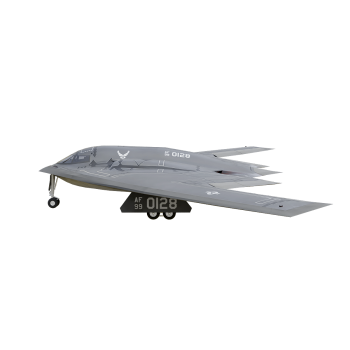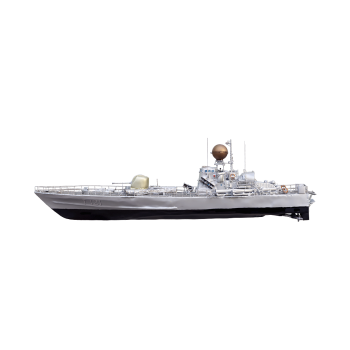
US Northrop Grumman B- 2 Spirit Bomber

US Northrop Grumman B- 2 Spirit Bomber

Nicknamed "Ghost", it is a low-detectability flying wing bomber developed by Northrop Grumman and Boeing in conjunction with the Massachusetts Institute of Technology for the US Air Force. It is the world's only active stealth strategic bomber, known for its excellent stealth technology and long-range strike capabilities. Capable of penetrating advanced air defense systems and performing nuclear/regular strike missions. Stealth design is not limited to radar detection, but also includes reducing infrared, visible light and noise signals, greatly reducing the possibility of detection and locking. With its unique design and powerful combat capability, it has become the core of the US Air Force's strategic strike force.
French aircraft carrier Charles de Gaulle(R91)

French aircraft carrier Charles de Gaulle(R91)

It is the flagship of the French Navy and the only nuclear-powered aircraft carrier in service outside the United States. Named after the famous French military leader and former President Charles de Gaulle, the aircraft carrier has become a symbol of French naval power since it entered service in 2001. Nuclear-powered propulsion, equipped with two K15 pressurized-water nuclear reactors, provides an almost unlimited range of operations and requires only shipboard supplies. The flight deck covers an area of 12000 square meters and can carry up to 40 aircraft, including Rafale M fighter jets and E-2C Hawkeye early warning aircraft. It is also equipped with advanced radar systems, air defense weapons and missile launch capabilities.
Soviet BTR-80 Armored Carrier

Soviet BTR-80 Armored Carrier

It is an 8 × 8 wheeled armored personnel carrier developed during the Soviet Union to replace BTR-60 and BTR-70 and was officially put into service in 1986. The design draws on the experience and lessons of BTR-70 in actual combat, and combines several key advantages to introduce various new equipment in accordance with the changes in the modern battlefield environment. The main armament was a 14.5mm KPVT machine gun and a 7.62mm PKT machine gun placed side by side, mounted on a turret at the front of the body. It also has amphibious capabilities. Designed with a degree of self-protection in mind, losing two of the eight wheels and still driving normally.
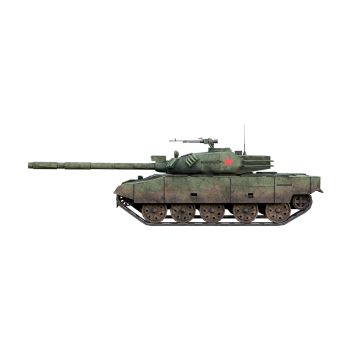
KpfPz 70 Main Battle Tank

KpfPz 70 Main Battle Tank

It is a main battle tank jointly developed by the United States and West Germany in the 1960 s, aiming to replace the US M60 and German M48 tanks. Launched in 1963, the project was jointly designed by the Allison division of General Motors in the United States and Krauss-Maffei in Germany, with a number of innovative technologies. The project was eventually canceled in 1970 due to cost overruns, technical challenges and disagreements between the two countries over weapons systems. Although it failed to achieve mass production, its technology and design had a profound impact on the development of later tanks. Germany applied the experience gained from the project to the next generation of tanks.
Willys Jeep SAS Desert Patrol

Willys Jeep SAS Desert Patrol

It is a jeep used by special forces during World War II and is famous for its excellent performance in desert operations. It was used by units such as the British Special Air Service Regiment and the Long Range Desert Group for missions deep behind enemy lines, performing reconnaissance, patrol and assault missions. Specially modified to suit desert environments and special operations needs. It is usually equipped with multiple machine guns to provide strong fire support. The cooling system has been modified to adapt to the high temperatures in the desert, providing the best airflow through the radiator by cutting off most of the front grille, ensuring maximum cooling efficiency. It is a multi-functional and highly mobile desert combat vehicle in World War II.
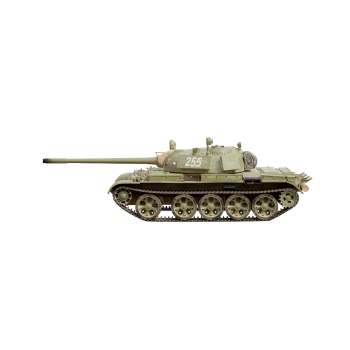
Soviet T-55A main battle tank

Soviet T-55A main battle tank

It is a main battle tank developed by the Soviet Union in the mid-20th century and is an improved model of the T-54 series. It was introduced into service in 1961 with enhanced nuclear, biological and chemical protection and improved armor compared to T-54. Designed for its firepower, protection and production convenience, it is a multi-purpose main battle tank whose main tasks include front-line operations, support infantry operations and anti-armor combat. Equipped with a 100mm D-10T2S rifled gun, the stability and fire control system of this main gun have been improved. The rugged design and relatively low cost made it one of the most widely used tanks of the second half of the 20th century.
Yugoslav M-84 main battle tank

Yugoslav M-84 main battle tank

It is a Yugoslav model based on the improvement of Soviet T-72 tanks. Production began in 1983 and entered service in 1984. The main features of the T-72 are retained, including large-caliber applicable artillery, automatic loading system, smaller volume, low profile and high-quality armor protection, while improvements have been made in multiple systems and attributes to make up for the T-72's technical comparison with Western tanks. Equipped with a 125mm 2A46M smoothbore gun, it can fire a variety of ammunition, including explosive penetrators, shaped shells and sub-caliber shells, with a high rate of fire of 8 rounds per minute. It was the main fighting vehicle in the Yugoslav army.
German HortenPlane fighter

German HortenPlane fighter

Also known as the HortenHo229, it was an all-wing jet fighter designed by the German Horton brothers during World War II. Known for its unique flying wing design, without the traditional fuselage and tail, this design significantly reduces drag, improves the lift-to-drag ratio and overall efficiency. It was the first jet-powered flying-wing aircraft whose design foreshadowed the direction of modern stealth technology and influenced later aircraft designs. Although it was not mass-produced at the time and failed to play an actual role in the war, its innovative design and contribution to aviation technology made it an important milestone in aviation history.
German GothaGo229 fighter

German GothaGo229 fighter

Also known as the HortenHoIX, it was a flying-wing jet fighter designed by the Holden Brothers at the end of World War II. Known for its unique flying wing layout and jet power system, it is considered a technological pioneer of modern stealth fighters. It is the only model in the series to achieve powered flight, equipped with two Juncker Jumo004B turbojet engines. The center cabin of the aircraft is made of welded steel pipe, while the wing part is made of multi-layer plywood. This design meets the strength requirements while reducing weight. Although it failed to mass produce and entered the war, its innovative design occupies an important position in the history of aviation.
British CenturionMKIII Tank

British CenturionMKIII Tank

It is a medium-sized tank developed by the United Kingdom after World War II and is the third model in the Centurion tank series. It is famous for its powerful firepower, strong armor and good mobility. The OQF 20-pounder gun equipped with 84mm caliber provided excellent accuracy at the time, and was equipped with a new dual-axis fully automatic stabilization system, allowing the gunner to fire while moving and maneuvering. There are two storage locations at the front of the body for the track links. In service in 1948, it was produced more than the MKII model and played an important role in the Korean War.
South Korea AS21Redback Infantry Fighting Vehicle

South Korea AS21Redback Infantry Fighting Vehicle

It is a modern infantry fighting vehicle designed by South Korea Hanwha Defense Company for the third phase of the Australian Army's "Land 400" project. Based on the upgrade of the K21 infantry fighting vehicle used by the South Korea army, the prototype was publicly shown for the first time in 2019. Known for its excellent protection, firepower and electronic equipment, it can immediately find the target and cause damage to it. The protection level is high, and the armor is made of homogeneous steel, which can resist 7.62mmAP attacks and reach the STANAG4569 secondary protection standard. It is also equipped with a hard kill active defense system, modular additional armor plates, and an integrated sensor kit with 360 ° coverage.
German HortenHo229 fighter

German HortenHo229 fighter

It was a revolutionary flying wing jet fighter developed by Germany during World War II and designed by the Holden Brothers. Known for its unique flying wing layout and jet power system, it is considered the technical prototype of modern stealth fighters. The wingspan is 16.76 meters, the captain is 7.47 meters, the shape is extremely streamlined, and the tailess flying wing design greatly reduces air resistance. The fuselage is mainly made of wood and composite materials, and the surface is coated with resin to reduce weight and reduce radar reflection signals. Although the Ho229 failed to mass produce and entered the war, its innovative design held an important place in aviation history.
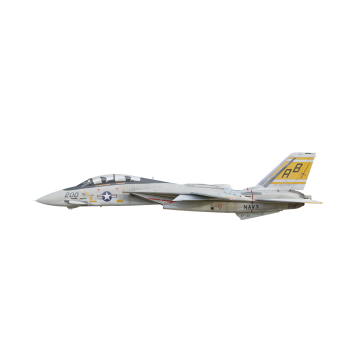
US F-14A Swordsmen Fighter

US F-14A Swordsmen Fighter

It is a supersonic two-seat two-engine multi-purpose carrier-based fighter developed by Grumman in the 1970 s. It is the first production model of F-14 "Tomcat. It is famous for its variable swept wing design, powerful power system and advanced avionics. It first flew on December 21, 1970 and entered service in 1974, replacing the F-4 Phantom II as the U.S. Navy's workhorse carrier fighter. Although it is now gradually retired, it still occupies an important position in aviation history and is an iconic fighter in the history of the US Navy.
Soviet Su-25 "Frogfoot" sonic attack aircraft (dark green camouflage)

Soviet Su-25 "Frogfoot" sonic attack aircraft (dark green camouflage)

It is a single-seat two-engine subsonic attack aircraft developed by the Soviet Union's Sukhoi Design Bureau and is mainly used for close air support. The nickname given by NATO is "frog foot". It has good subsonic performance and low-altitude maneuverability. The fuselage is short and thick. The bottom of the fully welded cockpit is equipped with 24mm titanium alloy bulletproof steel plates. It has strong survivability and can resist general ground artillery attacks. It can take off from airstrips, cooperate with Mi-24 armed helicopters, and cooperate with ground forces to attack tanks, armored vehicles and important fire points. The main feature is the ability to take off and land on airstrips close to the front line and perform close combat support missions.
American F-15EStrikeEagle Bombers

American F-15EStrikeEagle Bombers

It is a two-seater, supersonic fighter-bomber developed by McDonnell Douglas (now Boeing) based on the F-15 Eagle air superiority fighter, designed for all-weather strike missions. Entered service with the United States Air Force in 1988, known for its dual mission air superiority and ground attack capabilities. It is similar in shape to the F-15D, but with a number of improvements, including increased range, doubling the number of weapon racks, and adopting a digital fly-by-wire control system with automatic terrain tracking capability and an advanced electronic cockpit display system. The design and capabilities have made it an important asset for the United States Air Force.
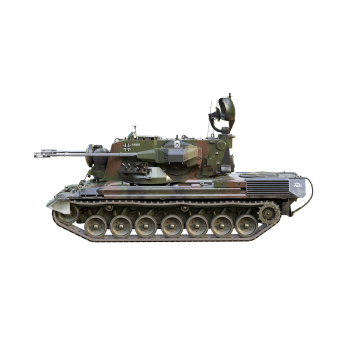
German Gepard 1A2 Anti-aircraft Gun System

German Gepard 1A2 Anti-aircraft Gun System

It is a self-propelled anti-aircraft gun system manufactured by the German Krauss-MaffeiWegmann company based on the Leopard 1 tank chassis. Equipped with a twin 35mm Erley hole KDA automatic gun, it has all-weather combat capability and can react quickly and strike air targets. It is the latest version in the Gepard series, designed to meet the defensive challenges of modern combat aircraft, attack helicopters, remote-controlled missiles and rockets in the 21st century, while also effectively countering drones. Its ballistic projectiles cannot be destroyed by electronic defense measures, and the resulting fragmentation cloud can reliably destroy the target.
American Wooden Motorboat

American Wooden Motorboat

It is a class of small, fast vessels used primarily for coastal patrol, anti-submarine warfare, and rapid deployment. It was used in both world wars, especially during World War II, where it played a major role in coastal defense and attack operations. The design emphasizes speed and mobility, enabling them to respond quickly to various maritime threats. In the war also used for reconnaissance, rescue and transport missions. The miniaturized design allows it to operate effectively in an offshore environment, providing the U.S. Navy with valuable flexibility and rapid response capabilities.
United States Navy aircraft carrier

United States Navy aircraft carrier

It is an important part of American maritime power and has a long history of development. It is one of the first countries to develop aircraft carriers. Its first aircraft carrier "Langley" was modified from a coal carrier and officially entered service in 1922. Played a decisive role in World War II, rapidly expanding the carrier formation. He played a vital role in the key battles of the Pacific War. Aircraft carriers are famous for their huge displacement, the number of carrier-based aircraft, and combat efficiency. At present, all aircraft use nuclear power, which is an important manifestation of the global military influence of the United States.
USS West Virginia Battleship

USS West Virginia Battleship

It's a Colorado-class battleship. In 1944 played an important role in the Second World War. Construction began in 1921, was launched in 1923, and commissioned in 1925. It was hit hard at Pearl Harbor, but was then repaired and returned to combat. In 1944, he participated in important battles such as the Philippine Naval Battle and the Gulf of Reitai Naval Battle, and supported the US military with its strong firepower. Equipped with nine 16-inch guns, it was one of the most powerful battleships in the U.S. Navy at the time. Its performance in the war proved its value as an offshore firepower platform until it was decommissioned after the war and eventually dismantled.
USS Oregon

USS Oregon

It is a battleship belonging to the United States Navy and belongs to the No. 3 battleship of the Indiana class. It is the second U.S. military ship named after Oregon. Construction began at the Union Steel Shipyard in San Francisco in 1891, launched in 1893, and finally commissioned in 1896. He took part in the Spanish-American War and the US-Philippine War, and left Hong Kong after the Boxer Rebellion, taking the lead in carrying a small number of Marines to Dagu to protect the local American expatriates. It was decommissioned in 1919 and loaned to Portland in June 1925 as a memorial ship. After Pearl Harbor, the Navy increased military supplies. Sold for dismantling 7 December 1942.
US Nimitz-class aircraft carrier

US Nimitz-class aircraft carrier

It is a type of nuclear-powered multi-purpose aircraft carrier in active service under the U.S. Navy, as the core force of the U.S. Navy's ocean-going battle group. The length of the ship is 332.8 meters, and the width of the ship is 40.8 meters (hull) to 76.4 meters (flight deck). It can carry a variety of carrier-based aircraft for different purposes, such as F-14, F/A-18, etc., with a total of about 90 aircraft. Equipped with the "Sea Sparrow" missile launcher, the "dense array" short-range defense weapon system, etc., to provide a strong self-defense capability. With its powerful combat capability and almost unlimited endurance, it has become a symbol of US naval power and one of the largest aircraft carriers in the world.
China aircraft carrier Liaoning

China aircraft carrier Liaoning

It is an aircraft carrier under the Chinese People's Liberation Army Navy that can carry fixed-wing aircraft, and it is also China's first aircraft carrier in service. It can carry more than 50 carrier-based aircraft, including J-15 carrier-based fighters, Zhi-9 carrier-based anti-submarine/multi-purpose helicopters, Zhi-8 transport helicopters, Ka-28 anti-submarine helicopters and Ka-31 early warning helicopters. It is equipped with domestic FL-3000N 24 combined short-range ship-to-air missiles, domestic 1130 11-tube near-fire guns, and domestic 10-tube anti-submarine rocket deep bomb launchers. Its service marks the Chinese navy has a real sense of the first aircraft carrier.
Russian aircraft carrier USS Kuznetsov
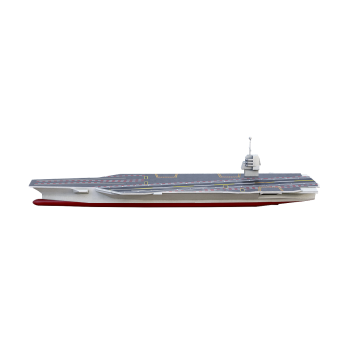
Russian aircraft carrier USS Kuznetsov

It is an aircraft carrier under the jurisdiction of the Russian Navy and is currently the only aircraft carrier in active service in Russia. It is equipped with CADS-N-1 "Kashtan" ship-based artillery combined with air defense weapons, AK630 6-tube 30mm gun, 3K-45 "granite" anti-ship missile, SA-N-9 air defense missile, etc. It can carry a variety of models such as Su-33 fighter jets, Ka-27 helicopters, Su-25UTG trainers, and Ka-31 early warning helicopters. With its all-access flight deck and the huge ski-jump take-off deck at the bow as its main features, it is an important force in the Russian Navy and can perform a variety of maritime tasks.
USS Gerald R. Ford

USS Gerald R. Ford

It is the first ship of the latest generation of Ford-class aircraft carriers in the US Navy, representing the backbone of the US military's maritime strike force in the 21st century. It can carry about 75 to 90 aircraft of various types. Equipped with improved sea sparrow missiles, rolling fuselage missiles and dense array short-range defense weapon systems, it provides a strong self-defense capability. Thanks to its nuclear propulsion, the Ford has almost unlimited endurance and can store up to 60 days of food. Its entry into service marks a significant advancement in the U.S. Navy's aircraft carrier technology, with its design and capabilities surpassing its predecessor, the Nimitz-class, to become one of the largest aircraft carriers in the world in many respects.
North Korea Chonma-HoV main battle tank

North Korea Chonma-HoV main battle tank

It is a main battle tank developed by North Korea. Its design is based on the Soviet T-62 tank and has been upgraded and improved in many aspects. The armor includes cast turrets, spacer armor, and explosive reactive armor, providing a degree of protection. The primary armament is a 115mm or 125mm smoothbore gun, and the secondary armament includes a 14.5mm anti-aircraft machine gun and a 7.62mm coaxial machine gun. The use of torsion bar suspension improves off-road maneuverability. It is a modern and improved model of North Korea based on the Soviet T-62 of tanks and combined with its own technology, reflecting North Korea's efforts to pursue self-reliance in tank design and manufacturing.
Croatian RTOP-12KraljDmitarZvonimir missile boat
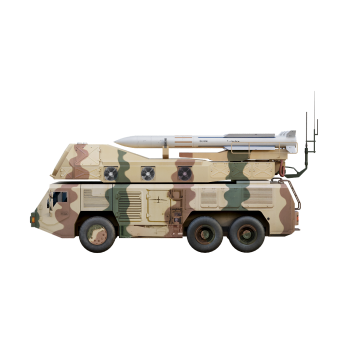
Croatian RTOP-12KraljDmitarZvonimir missile boat

It is a type of missile boat in the Croatian Navy, belonging to the Kralj class. Built by the Croatian Kraljevica shipyard, the keel was laid in 1993 and launched into service in 2001. It is equipped with four to eight RBS-15 anti-ship missiles, one Bofors 57mm MK1 naval gun and one AK-630 near-anti-ship gun. The length is 54.3 meters, the width is 8.5 meters, and the draft is 2.8 meters. It adopts three-axis propulsion and is equipped with three M-504 diesel engines. As part of the Croatian Navy, it demonstrates the modernization and self-construction of the country's naval forces.
Iran's "ThirdofKhordad" Air Defense Missile System

Iran's "ThirdofKhordad" Air Defense Missile System

It is a medium-range air defense missile system developed by Iran and first publicly demonstrated in 2014. The operational range is 50 to 200km and is capable of striking targets at an altitude of 25 to 30km. Using X-band active phased array radar, it can detect 100 targets at the same time, track 4 targets at the same time, and guide 2 missiles to attack one target. The shooting down of the US RQ-4 Global Hawk UAV on June 20, 2019, proved its operational capability. It is an important part of Iran's air defense system and demonstrates Iran's progress and autonomy in air defense technology.
Brazilian SRiachueloS-40 submarine

Brazilian SRiachueloS-40 submarine

It is the first boat of the regular-powered submarine of the Brazilian Navy, the "Liachuero" class, based on the design of the French "Scorpene" class submarine, built in Brazil with the technical support of France. The main dimensions of the hull are 75 meters × 6.2 meters × 5.8 meters, with a surface displacement of about 1709 tons and an underwater displacement of about 1870 tons. Equipped with 6 533mm torpedo tubes, it can launch F21 heavy torpedoes and "flying fish" Block 2 Mod 2 anti-ship missiles, with a total load of 18 missiles. Its service marks an increase in Brazil's naval power, increasing its influence and naval military strength in South America.
Brazil TECTRANVBT-2028 all-terrain vehicle

Brazil TECTRANVBT-2028 all-terrain vehicle

It is a 6x 6 all-terrain vehicle, designed by the Brazilian company Avibras, as the chassis of the AstrosII multiple rocket launch system. It provides good off-road performance, allowing the AstrosII system to be quickly deployed and transferred on various terrains. It has a strong carrying capacity and can support AstrosII system launchers and rocket launchers of different calibers. Cab armor was able to protect the crew from small caliber weapon fire and shell fragments. Because of its excellent maneuverability, carrying capacity and protection, it has become the ideal chassis choice for AstrosII rocket launch systems.
Brazil AvibrasAstrosIIMK-6EB multiple rocket launcher system

Brazil AvibrasAstrosIIMK-6EB multiple rocket launcher system

It is a multi-barrel rocket launcher system developed by Brazilian Avibras company and is famous for its modular design and diversified rocket caliber. With a modular structure, rocket launch boxes of different calibers can be quickly replaced, all of which are installed on the chassis of a 10-ton 6x 6 off-road vehicle. It is capable of firing multiple types of rockets, ranging from 9 to 60km, at different depths. Based on TECTRANVBT-20286x6 all-terrain vehicles, it provides good mobility and can be quickly deployed and transferred. With its excellent mobility, firepower and precision strike capabilities, it plays an important role in the modern battlefield
German GTKBoxer armored vehicle (Army Green)

German GTKBoxer armored vehicle (Army Green)

It is a multi-purpose armored combat vehicle produced by the German ARTECGmbH Industry Group. It is known for its concept of all-wheel drive and fast plug-in mission modules, which can be configured according to different combat needs. Composed of a driving module and a mission module, the mission module can be quickly replaced according to mission requirements to achieve a variety of combat configurations. The high-strength steel structure and modular armor components are installed on the outside to provide all-round protection, including attacks on shell shards and heavy machine gun shells. It has excellent cross-country capability. Because of its high flexibility, protection and versatility, it has become an important equipment for the armies of many countries.
German GTKBoxer armored vehicle (black)

German GTKBoxer armored vehicle (black)

It is a multi-purpose armored combat vehicle produced by the German ARTECGmbH Industry Group. It is known for its concept of all-wheel drive and fast plug-in mission modules, which can be configured according to different combat needs. Composed of a driving module and a mission module, the mission module can be quickly replaced according to mission requirements to achieve a variety of combat configurations. The high-strength steel structure and modular armor components are installed on the outside to provide all-round protection, including attacks on shell shards and heavy machine gun shells. It has excellent cross-country capability. Because of its high flexibility, protection and versatility, it has become an important equipment for the armies of many countries.
American M113A1 Armored Carrier

American M113A1 Armored Carrier

It is the standard model of the American M113 armored transport vehicle series, which is mainly used for cooperative tank operations and has an important military status. The main armament includes one 12.7mm heavy machine gun and two M60 7.62mm general-purpose machine guns. In actual combat, the U.S. military modified the M113A1 armored vehicle, enhanced its defensive armor, and installed defensive shields on both sides of the roof for the M60 machine gun. With amphibious capabilities, water travel uses track paddling, and water steering is similar to land. Both sides of the car body are provided with rubber panels that can control the water flow on the upper part of the crawler. It is one of the most produced armored vehicles since the second half of the 20th century.
Military Infantry Fighting Vehicle

Military Infantry Fighting Vehicle

It is an armored combat vehicle designed for transporting infantry and providing fire support. It is usually equipped with machine guns, machine guns and anti-tank missiles, which can move quickly on the battlefield and provide protection for infantry. It can not only transport infantry, but also provide fire support against enemy armored vehicles and infantry. Different levels of armor are used to provide protection to the occupants, and some modern combat vehicles also use composite armor to enhance protection. It has high mobility and can quickly deploy and fight in complex terrain. With amphibious combat capability, it can travel in the water, increasing the flexibility of its deployment. It plays an important role in the modern battlefield.
British Amazon Class 21 frigate

British Amazon Class 21 frigate

It is a type of frigate in the British Royal Navy in the 1970 s and 1990 s, designed to replace the old Leopard and Salisbury class frigates. Based on the MK-5/7 patrol ship, the scale-up design is suitable for a wide range of low-to medium-intensity combat tasks, including surface patrol and economic sea area maintenance. The full-load displacement is 3250 tons. In order to reduce the upper weight and facilitate the navigation performance, the superstructure is made of aluminum alloy. As the fire accident exposed the flammable properties of aluminum alloy, the subsequent ships switched to steel to build the superstructure.