Russia Su-30SM multi-function fighter

Russia Su-30SM multi-function fighter

It is a multi-functional fighter developed by the Russian Sukhoi Design Bureau based on Su-30MKI, specially designed for the Russian Air Force. This two-seat, two-engine fighter is known for its excellent maneuverability and advanced avionics equipment, and can perform a variety of tasks such as air superiority, ground attack and electronic warfare. The fuselage is made of titanium alloy and high-strength aluminum alloy, which has high maneuverability and is realized by thrust vector control. Equipped with N011M passive phased array radar, the maximum detection range of up to 400km, can track multiple targets at the same time. The weapon side is capable of carrying a weapon payload of up to 8 tons.
Russia Su-35 multi-role heavy fighter

Russia Su-35 multi-role heavy fighter

Also known as "Flanker-E" or "SuperFlanker", it is a single-seat dual-engine multi-purpose heavy fighter that has been deeply improved by the Russian Sukhoi Design Bureau on the basis of Su-27. It belongs to the fourth-generation and a half-fighter. It is known for its excellent maneuverability and advanced avionics, with long-range, multi-purpose, air optimization and strike characteristics. Two 117 engines provide vectoring thrust and are highly maneuverable, capable of launching guided missiles, unguided bombs and other weapons systems, while striking multiple aerial targets. The maximum carrying capacity of 8 tons, can carry all kinds of Russian precision guided weapons.
Russian Su-30MK multi-role fighter

Russian Su-30MK multi-role fighter

Also known as the Flanker-H is a two-seater, two-launch multi-role fighter developed by the Russian Sukhoi Design Bureau and is part of the Su-27 fighter family. It is designed to meet a variety of combat missions, including air superiority, ground attack, electronic warfare and maritime strikes. Features include its advanced avionics, strong weapon payload capabilities, and superior maneuverability. Two AL-31F turbofan engines are equipped with thrust vectoring capability, which allows the Su-30 MK to perform complex maneuvers. Maximum speed up to Mach 1.9 with a service ceiling of 17,300 meters
Russian Su-34 "Fullback" fighter/bomber (black)

Russian Su-34 "Fullback" fighter/bomber (black)

It is a twin-engine, two-seat, all-weather supersonic medium fighter/bomber developed by the Russian Sukhoi Design Bureau. is a derivative of the Su-27 "Flanker", originally known as Su-27IB, intended to replace the Su-24 "Fencer". The design retains the basic layout of the Su-27, including the fuselage structure, engines, wings, empennage and most of the on-board equipment, while using Su-30 canards to improve maneuverability. Characterized by its side-by-side two-seater cockpit and "platypus"-shaped nose, this design provides better ergonomics and collaborative efficiency.
Russian Su-34 "Fullback" fighter/bomber (blue camouflage)

Russian Su-34 "Fullback" fighter/bomber (blue camouflage)

It is a twin-engine, two-seat, all-weather supersonic medium fighter/bomber developed by the Russian Sukhoi Design Bureau. is a derivative of the Su-27 "Flanker", originally known as Su-27IB, intended to replace the Su-24 "Fencer". The design retains the basic layout of the Su-27, including the fuselage structure, engines, wings, empennage and most of the on-board equipment, while using Su-30 canards to improve maneuverability. Characterized by its side-by-side two-seater cockpit and "platypus"-shaped nose, this design provides better ergonomics and collaborative efficiency.
Russian Su-34 "Fullback" fighter/bomber (blue camouflage)

Russian Su-34 "Fullback" fighter/bomber (blue camouflage)

It is a twin-engine, two-seat, all-weather supersonic medium fighter/bomber developed by the Russian Sukhoi Design Bureau. is a derivative of the Su-27 "Flanker", originally known as Su-27IB, intended to replace the Su-24 "Fencer". The design retains the basic layout of the Su-27, including the fuselage structure, engines, wings, empennage and most of the on-board equipment, while using Su-30 canards to improve maneuverability. Characterized by its side-by-side two-seater cockpit and "platypus"-shaped nose, this design provides better ergonomics and collaborative efficiency.
Russian MiGUTS trainer

Russian MiGUTS trainer

It is an advanced jet trainer developed by Russia's United Aircraft Corporation (UAC) to replace the old L-39 jet basic trainer. Designed as a single-engine aircraft to reduce procurement and operating costs and improve economy. It will use the same AL-222-25 turbofan engine as the Yak -130, which is already manufactured in Russia. The design draws on elements of previous MiG-AT trainers, including the cockpit design, to speed up the development process. Its development reflects Russia's modernization efforts in the field of military aviation, especially to improve the efficiency and effectiveness of pilot training.
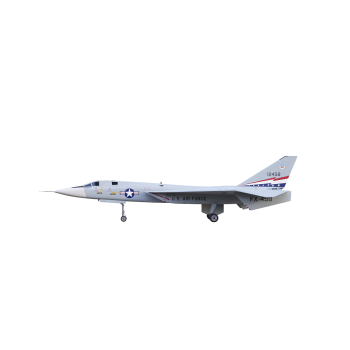
American XF-108Rapier Interceptor

American XF-108Rapier Interceptor

It was a high-altitude high-speed interceptor designed by North American Airlines in the late 1950 s to intercept Soviet long-range bombers. It is designed to fly at Mach 3 and has an operational range of 1,150 miles. It is equipped with four 20mm guns and is capable of carrying payloads of up to 4,000 pounds, including rockets and regular bombs. It is powered by two General Electric YJ93-GE-3AR turbojet engines, each with a thrust of 29,300 pounds. The size is very large compared to other aircraft of the time, with a length of 27 meters.
Russia IL-112V light military transport plane

Russia IL-112V light military transport plane

It is a light military transport aircraft developed by the Russian Ilyushin Aviation Complex for the Russian Ministry of Defense to replace the old An-26 and An-72/74 transport aircraft. The model has a twin-engine, high single-wing design, round fuselage structure, able to withstand heavy loads. Its design allows it to operate on short-range/unpaved runways, and is capable of automatic landing at ICAO Class II airports, as well as manual landing at airports with poor equipment or no radio equipment. The maximum takeoff weight is 21 tons and the maximum load is 5 tons. Not only transport aircraft tasks, but sometimes other military tasks.
Russian Type 20380 Escort Ship

Russian Type 20380 Escort Ship

As the first and largest frigate of the Russian Navy, the 20380 class frigate still plays a significant role in the Pacific Fleet and Baltic Fleet to this day. Although small in size, it still has strong air defense, anti submarine and other performance based on strong configuration, and can even be used to combat large tonnage warships. The captain width of the 20380 escort is 111.6 meters and 14 meters respectively, equipped with diesel engines, with a maximum cruising speed of 27 knots and an effective range of over 4000 nautical miles. It can take off and land the Ka-27 helicopter and has good anti submarine capabilities.
A-10 Thunderbolt Attack Aircraft (Nickname: Thunderbolt II)

A-10 Thunderbolt Attack Aircraft (Nickname: Thunderbolt II)

The A-10 attack aircraft (English: A-10, nickname: Thunderbolt II, translation: Thunderbolt II, often nicknamed "Warthog" or simply "Hog" by the US military, commonly known as the Fairchild A-10 "Thunderbolt II" attack aircraft) is a single seat twin engine attack aircraft of the United States. The A-10 attack aircraft relies on powerful firepower specifically for ground attacks and is the only model currently in service in the US Air Force responsible for providing intensive support missions to ground forces, including attacking enemy tanks, armed vehicles, important ground targets, etc.
Rafale fighter jet

Rafale fighter jet

The Rafale fighter, also known as the Dassault Rafale, is a French fourth and a half generation twin engine, delta wing, highly maneuverable, multi-purpose fighter aircraft. The true advantage of the Rafale fighter jet lies in its multi-purpose combat capability. This fighter jet is the most comprehensive in the world, not only capable of both sea and air operations, but also has strong capabilities in air combat, ground and sea attacks. Taking the F3 model as an example, the Rafale has advanced capabilities in sea attack, reconnaissance, and nuclear attack. The Rafale is a versatile fighter with comprehensive capabilities and balanced performance, capable of both aerial combat and ground attack.
F-4 Phantom II fighter jet

F-4 Phantom II fighter jet

The F-4 Phantom II is a two seater, twin engine, all-weather, long-range supersonic jet interceptor and fighter bomber developed by McDonnell Aircraft Corporation for the United States Navy. This aircraft has strong adaptability and entered service with the Navy in 1961. It was subsequently adopted by the United States Marine Corps and the United States Air Force, and by the mid-1960s, it had become a major component of the United States Air Force. The production of Mirage lasted from 1958 to 1981, with a total of 5195 aircraft produced, making it the most produced supersonic military aircraft in American history.
Japanese Type 87 reconnaissance and surveillance vehicle

Japanese Type 87 reconnaissance and surveillance vehicle

The Type 87 reconnaissance and surveillance vehicle is a wheeled armored vehicle developed by Komatsu Corporation in Japan and used by the Ground Self Defense Force for reconnaissance purposes. Each division and brigade of the Ground Self Defense Force is equipped with reconnaissance teams and tank company headquarters. The Ground Self Defense Force initially used two types of wheeled armored vehicles, the US M8 armored vehicle and M20 armored vehicle, both of which were only equipped in a few cases and had a short service period. The reason is that at that time (in the 1950s), Japan's road network was poor and most of the main national highways were unpaved. As a domestic mobile wheeled vehicle, its mobility was not strong, and the budget for equipping tracked vehicles such as the Type 60 armored personnel carrier was limited to support another type of vehicle.
B-2 bomber

B-2 bomber

A low detectability flying wing bomber, the B-2 bomber (nicknamed Spirit) is the only stealth strategic bomber in the world today, characterized by low detectability, commonly known as stealth capability. It can safely penetrate tight air defense systems for attacks. The stealth of B-2 is not limited to radar detection, but also includes reducing different signals such as infrared, visible light, and noise, minimizing the possibility of detection and locking. The B-2 can achieve a combat range of 12000 kilometers without refueling in the air, and up to 18000 kilometers with one refueling in the air.
Russian aircraft carrier Admiral Kuznetsov
Russian aircraft carrier Admiral Kuznetsov

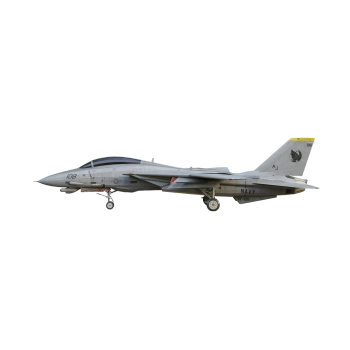
The Kuznetsov aircraft carrier is the first ship of the Soviet/Russian third-generation 1143.5 aircraft carrier. It is the first true aircraft carrier of the Soviet Union and Russia, the world's first aircraft carrier to have both inclined and straight flight decks and ski jump flight decks, and the latest and only operational aircraft carrier of the Russian Navy. It is the main ship of the Russian Navy. The Kuznetsov aircraft carrier began construction on April 1, 1982 at the Nikolayev Shipyard in the Soviet Union. It was launched on December 4, 1985 and commissioned on January 21, 1991. The name was derived from the Soviet Navy Commander in Chief during World War II, Nikolai Gracimovi
Navy jet aircraft

Navy jet aircraft

The Navy Jet is a high-speed jet aircraft designed specifically for naval aviation, typically used for various tasks such as fleet defense, anti submarine operations, aerial reconnaissance, and strikes. Capable of taking off and landing on aircraft carriers, with excellent maneuverability and advanced electronic warfare capabilities. The design takes into account the special requirements of the marine environment, such as the use of corrosion-resistant materials and adaptability to the marine climate. These aircraft are an important component of modern naval forces, providing air support and protection for the fleet.
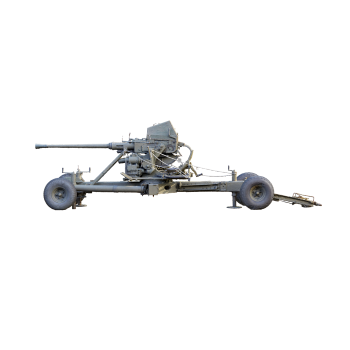
Bofors40mm automatic gun L/70

Bofors40mm automatic gun L/70

It is a multi-purpose automatic gun developed by the Swedish company ABBofors (now part of BAE Systems Bofors) in the late 1940s. Originally designed as a specialized anti-aircraft weapon, it later developed into a multifunctional weapon capable of launching armor piercing rounds and programmable ammunition. It is known for its high firing rate of 240 to 330 rounds per minute, high initial velocity of about 1000 meters per second, and long range of 12500 meters. Using 40 × 365mm R ammunition, it has a longer barrel and improved cooling system compared to the early Bofors 40mm L/60 gun.
Sukhoi Su-27 fighter jet

Sukhoi Su-27 fighter jet

It is a twin engine supersonic and super maneuverable fighter designed by the Soviet Sukhoi Design Bureau. Competing with the fourth generation large jet fighters of the United States such as the Grumman F-14 Tomcat and the McDonnell Douglas F-15 Eagle, it has a combat radius of 3530 kilometers, carries heavy aviation weapons, is equipped with cutting-edge avionics, and has excellent maneuverability. Originally designed for air superiority missions, subsequent derivative models were able to perform almost all types of air combat missions. Complementing the MiG-29 fighter design of the Mikoyan Design Bureau, they jointly formed the main fighter squadron of the Soviet Union and later the Russian Air Force
Saab JAS39 "Eagle Lion" fighter jet

Saab JAS39 "Eagle Lion" fighter jet

It is a lightweight single engine supersonic multi-purpose fighter manufactured by Saab in Sweden. Featuring a delta wing and duck shaped layout, adopting a relaxed stability design and a fly by wire flight control system. The later models are fully compatible with NATO. As of 2020, over 271 Eagle Lion aircraft of various models have been delivered, including A to F. The first flight was in 1988, and the first mass-produced aircraft was delivered in 1993. In 1996, it began serving in the Swedish Air Force. In 2003, upgraded models equipped with more advanced avionics and adapted to longer mission times began service. The main redesigned models of the Eagle Lion series.
The Viking flagship warship set sail

The Viking flagship warship set sail

Viking warships are collectively referred to as Viking flagship warships. As early as the end of the 8th century, ships had become an important symbol of Viking spirit. Viking warships are generally 70-100 feet long, well crafted, and can be considered works of art, reflecting the skills of Viking shipbuilders. It is a naval vessel designed for plundering or traveling at sea, light and narrow, with paddle holes on both sides. When sailing against the wind or needing to paddle hard, rowers can easily lower the sails and operate flexibly. Although lightweight, it is strong and resistant to wind and waves, making it easy to dock on the coast or connect into a fleet on the river.
Viking flagship warship

Viking flagship warship

Viking warships are collectively referred to as Viking flagship warships. As early as the end of the 8th century, ships had become an important symbol of Viking spirit. Viking warships are generally 70-100 feet long, well crafted, and can be considered works of art, reflecting the skills of Viking shipbuilders. It is a naval vessel designed for plundering or traveling at sea, light and narrow, with paddle holes on both sides. When sailing against the wind or needing to paddle hard, rowers can easily lower the sails and operate flexibly. Although lightweight, it is strong and resistant to wind and waves, making it easy to dock on the coast or connect into a fleet on the river.
Three row oared warship

Three row oared warship

The three row oared warship was a warship used in ancient Mediterranean civilization. The warship has three rows of oars on each side, with one person controlling one oar. Ancient warships had one row of oars on each side, with 25 oars per row; Double decker oared warships - warships with two rows of propellers. The origin of double decker oared warships may be Phoenicia. In the 7th to 4th centuries BC, fast and agile three row oared warships dominated the Mediterranean naval fleet. In the Persian Wars, three rows of oared warships played a crucial role: establishing Athens' maritime empire; The Peloponnesian War led to her decline.
Hurricane class 22800 frigate

Hurricane class 22800 frigate

The 22800 class frigate is a missile frigate built by Russia. With a displacement of 800 tons and a length of 67 meters, the ship is built using stealth technology and equipped with two Pearson diesel engines. It has a speed of 30 knots, a sailing distance of 2500 nautical miles, and a range of 15 days and nights. The ship is equipped with one "Armor" series artillery system and one 8-unit 3S14 vertical launch system, which can carry eight 3K14 club anti-ship missiles or eight 3M14 caliber ground attack cruise missiles. It may also be equipped with the "Onyx" supersonic anti-ship missile. The ship also carries 40 mines and one 25 ton small patrol boat.
Female General Class 21 Escort Ship

Female General Class 21 Escort Ship

The Type 21 frigate is a first class multi-purpose frigate commissioned by the United Kingdom in the 1970s. The ship's name is entirely derived from the names of Amazonian female warriors in ancient Greek mythology, commonly known as the "Female Generals" class in China. A total of eight ships were built and participated in the Falklands War, sinking two of them. The remaining six have been resold to the Pakistani Navy and are known as the "Promotion" class. The Type 21 frigate was a ship that successfully controlled costs, but also paid a painful price for it, prompting the Royal Navy to adopt stricter survival designs in the future.
P-1000 Ultra Heavy Tank

P-1000 Ultra Heavy Tank

The P-1000 super heavy tank was a type of super heavy tank planned by Nazi Germany and developed by the German company Krupp, but the plan was abandoned in 1943 and no P-1000 was produced. In early 1942, the German Weapons Agency's Fifth Division planned to develop the P-1000 super heavy tank. At that time, Nazi Germany's military development and strength had reached their peak, and Adolf Hitler himself was very interested in the project of developing super heavy tanks at the beginning. He believed that the larger the tank, the stronger it would be, and did not consider many practical issues at all.
Main battle tank Leopard 2A6

Main battle tank Leopard 2A6

The Leopard 2A6 is a type of main battle tank developed and equipped by Germany. It was improved from the Leopard 2A5 tank by the German company Klaus Maffei Weigman. The total length of the tank is 10.97 meters, the total height is 3 meters, the total width is 3.75 meters, and the combat weight is 60 tons. The biggest feature of this tank is the installation of Rheinmetall's 55 caliber Rh-120-L55 long barrel 120mm smoothbore gun. The muzzle velocity of this gun has been increased to 1750 meters per second, with a maximum range of 5000 meters, making it the world's longest range tank gun in service.
Domestic Type 15 Light Tank

Domestic Type 15 Light Tank

Type 15 light tank (formally named ZTQ-15, referred to as Type 15 light tank for short), code named Panther, is a light tank equipped by the Chinese People's Liberation Army Army, which is another key main battle equipment after Type 99 main battle tank. The Type 15 tank is equivalent in weight to the old Type 59 tank, but has stronger firepower, mobility, and protection. It can carry out "frontline firepower assault" and is also known as the "lightweight main battle tank" by the outside world. Compared with the main force of the Chinese Army's Type 99 tank, the Type 15 tank has a compact appearance and light weight, making it suitable for use in the western plateau areas of China and the densely populated water network in the south.
Russian Su-57 fighter jet

Russian Su-57 fighter jet

The Su-57 fighter jet is a single seat twin engine stealth multi-functional heavy fighter jet of the Russian Air Force, and is the fifth generation fighter jet of Russia (referred to as the fourth generation fighter jet by Western countries). The Su-57 fighter jet has a maximum takeoff weight of 35000 kilograms, a supersonic cruising speed of up to 1450 kilometers per hour, a top speed of 2140-2600 kilometers per hour, a combat radius of 1200 kilometers, a combat payload of up to 6 tons, and four built-in weapon compartments. It can achieve a good combination of flight performance and stealth performance, and has the ability to engage in aerial combat and ground attack. It has the characteristics of good stealth performance, short takeoff and landing distance, super maneuverability, and supersonic cruising.
F-22 Raptor fighter jet

F-22 Raptor fighter jet

The F-22 fighter jet is a single seat twin engine high stealth fifth generation fighter jet from the United States, and is the world's first fifth generation fighter jet to enter service. The combination of stealth performance, sensitivity, accuracy, and situational awareness of the F-22 fighter jet, combined with its air-to-air and air to ground combat capabilities, makes it the most comprehensive fighter jet in the world today. The F-22 fighter jet was jointly developed by Lockheed Martin and Boeing, and entered service with the US Air Force in the early 21st century to replace the F-15 fighter jet.
F-15 Eagle fighter jet

F-15 Eagle fighter jet

The F-15 fighter jet is a supersonic multi-purpose carrier based fighter jet from the United States. The F-15 fighter jet adopts a tandem dual seat swept wing aerodynamic layout, equipped with two turbofan engines, and has high maneuverability combat capability. This aircraft has comprehensive all-weather combat capabilities and can use advanced medium range air-to-air missiles to destroy enemy aircraft. It mainly performs aerial superiority combat tasks and has developed air to ground combat variants. Served for nearly 40 years, with a total production quantity of over 1200 aircraft and dozens of various modifications, exported to six countries. Participated in over 100 wars of all sizes and shot down more than 100 enemy planes. In the early 21st century, it was gradually replaced by F-22 fighter jets.
F-14 Tomcat

F-14 Tomcat

The F-14 fighter jet is a supersonic multi-purpose carrier based fighter jet from the United States. The F-14 fighter jet is designed with a dual seat, twin engine, twin vertical tail, variable sweep, and single wing layout. It was developed based on the requirements of the US Navy's fleet air defense and escort in the 1970s and 1980s, mainly for fleet defense, interception, strike, and reconnaissance missions. The F-14 fighter jet was developed by the American company Grumman at the end of 1967. The prototype made its maiden flight on December 21, 1970 and was delivered for use in May 1972.
Main Battle Tank Challenger 2

Main Battle Tank Challenger 2

The Challenger 2 main battle tank is a new generation of main battle tank developed by Vickers Defence Systems Group based on the Challenger 1 main battle tank. Redesign the turret based on the Challenger tank and introduce stealth technology; Replace with an L-30A1 120mm 55 caliber rifled gun; Significantly improved fire control, equipped with a French SAGEM VS-580-10 vehicle commander's all-round independent sighting instrument, TOGS-2 thermal imaging instrument, and neodymium yttrium garnet laser rangefinder; Upgraded data link system, it is the world's first main battle tank with the capability of "hunting and killing".
BMP-1 Infantry Fighting Vehicle

BMP-1 Infantry Fighting Vehicle

BMP-1 infantry fighting vehicle is a tracked infantry fighting vehicle developed by the Soviet Union in the mid-1960s. The BMP-1 infantry fighting vehicle has a total combat weight of 13.3 tons, with 3 crew members and 8 passengers. The maximum highway speed is 65 kilometers per hour and the maximum travel distance is 600 kilometers. The front of the car has a streamlined sloping deck with good bulletproof performance. The front of the vehicle can withstand attacks from 12.7mm bullets, and the single person turret at the top of the middle of the vehicle is equipped with one 2A28 73mm smoothbore gun, one 7.62mm parallel machine gun, and a top mounted AT-3 "refractory box" anti tank missile launcher.
Soviet T-34/85 Medium Tank

Soviet T-34/85 Medium Tank

The T-34/85 is a famous medium tank developed by the Soviet Union during World War II in 1943, based on the upgraded firepower of the T-34 medium tank. It is a new type of tank developed on the basis of the T-34/76. As the main tank model of the Soviet Union in the later stages of the war, it surpassed the T-34/76 in terms of firepower and armor. Compared with the Panther, the T-34/85 has lower firepower and armor, but its performance is reliable, its structure is simple, and it is easy to produce. Its total weight is lower than the Panther, and its overall combat capability surpasses that of German tanks, reaching the best level of the T-34 series.