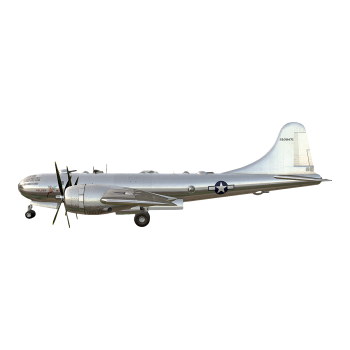
Boeing KC-46 tanker

Boeing KC-46 tanker

It is a strategic transport aircraft and aerial refueling aircraft developed by Boeing in the United States, derived from the Boeing 767 series models. The core support aircraft of the new era for the US military, the KC-46 aerial refueling aircraft, has completed its maiden flight. This aircraft will replace the decades old C-135 fleet and support the US military's combat aircraft in five continents. On October 29, 2021, according to media reports, Boeing announced that it has delivered its first KC-46A aerial refueling aircraft to Japan
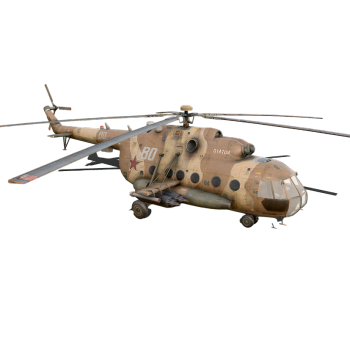
Kamov Ka-220 helicopter

Kamov Ka-220 helicopter

The Ka-220 helicopter (NATO codename: Hoop) is a Soviet transport helicopter that combines fixed wing and rotor systems. The Ka-220 helicopter combines the capabilities of a helicopter used for vertical takeoff and landing with those of a fixed wing aircraft. The Ka-220 has a large payload that is comparable in size to the Antonov An-12. The eight world records for altitude and speed that can be achieved by aircraft of the same class were all set by Ka-220, and not a single record has been broken.
Mig-23 UB dual seat trainer fighter jet

Mig-23 UB dual seat trainer fighter jet

It is a Soviet/Russian second-generation supersonic jet fighter. The MiG-23 fighter jet adopts a single seat variable sweep wing aerodynamic layout and is equipped with a turbojet engine. Its outstanding performance is high flight speed, reaching 2.35 times the speed of sound at high altitude and 1350 kilometers per hour at low altitude. It also has good horizontal acceleration, which is conducive to low altitude breakthrough, high-speed interception, and detachment after attack. MiG-23UB, a two seater trainer type MiG-23, also known as MiG-23UM. The internal code 23-511 made its maiden flight in May 1969. The first aircraft was modified from a MiG-23S model, and later from a MiG-23M model.
KV-2 Heavy Tank

KV-2 Heavy Tank

It is a heavy tank developed and equipped by the Soviet Union in 1942. The KV-2 heavy tank is assembled with a new turret and artillery on the chassis of the KV-1 heavy tank. The tank has a combat weight of 53 tons and a crew of 6 people. The main gun is the M10 152mm howitzer, which fires various types of shells including lethal grenades, explosive grenades, and armor piercing shells. The firing rate of the artillery is 2-4 rounds per minute. The maximum range for indirect shooting is 12000 meters. The armor piercing thickness when firing armor piercing shells can reach 124 millimeters. The maximum speed of the tank is only 26 kilometers per hour.
World War II German Fw-190 Fighter (Fokker Wolfe Fw-190)

World War II German Fw-190 Fighter (Fokker Wolfe Fw-190)

It was a single seat, single engine, straight wing, all metal piston fighter jet developed by Germany during World War II, and one of the best fighters in the mid to late stages of the war. The Fw-190 fighter, as a multi-purpose fighter, has outstanding performance and excellent high-speed maneuverability, making it unbeatable in combat against the Spitfire IX fighter, and even comparable to the later Spitfire XVI fighter. Its good field of view often allows it to use the S-breaking maneuver to reach the enemy's blind spot and then pull the lever to deliver fatal attacks to the enemy.
US F-14 supersonic multi-purpose carrier based fighter jet

US F-14 supersonic multi-purpose carrier based fighter jet

It is a supersonic multi-purpose carrier based fighter jet from the United States. The F-14 fighter jet is designed with a dual seat, twin engine, twin vertical tail, variable sweep, and single wing layout. It was developed based on the requirements of the US Navy's fleet air defense and escort in the 1970s and 1980s. Its main functions include fleet defense, interception, strike, and reconnaissance. In 1987, the F-14B equipped with improved engines was officially put into production to replace the Navy's F-4 Phantom. In 1988, the F-14 underwent further improvements and upgrades in radar, avionics, and missile mounting capabilities, and was named the F-14D "Super Tomcat"
Soviet Yak-9 Fighter

Soviet Yak-9 Fighter

The Yak-9 was a single engine fighter jet used by the Soviet Union during and after World War II.. The Yak-9 fighter jet is the final model of the Yak-7 series fighter jet, which is a modified version of the Yak-7 with all metal wings. It was developed in 1942 and includes long-range, ground attack, and trainer models. It was one of the main combat aircraft models of the Soviet Union during World War II, with 16769 produced, making it the largest fighter squadron.
The US World War II B-29 bomber

The US World War II B-29 bomber

It is an American propeller type strategic bomber. The B-29 bomber is a flat wing four engine aerodynamic layout, named after the B-17 bomber. It was the main bomber of the US Army Air Forces in the Asian theater of World War II and the largest aircraft in the air forces of various countries at that time. This aircraft is mainly used for strategic bombing and long-range bombing missions, and can also be used as an anti submarine, reconnaissance, and aerial refueling aircraft. It utilizes advanced technology at the time and is known as a "super air fortress". The first flight took place on September 21, 1942, and in August 1945, atomic bombs were dropped on Hiroshima and Nagasaki in Japan.
During World War II, American warships such as the Iowa class battleships

During World War II, American warships such as the Iowa class battleships

The Iowa class battleships are the largest displacement class battleships in the United States Navy. Four Iowa class battleships have been completed, making them the longest, most powerful, fastest (reaching 33 knots), and latest decommissioned battleships in the world. Four ships of the same type are still preserved. Due to the cancellation of the Montana class, the successor ship to the Iowa class, this battleship became the last class of battleships in the United States Navy. On September 2, 1945, the signing ceremony of Japan's unconditional surrender, which marked the end of World War II, was held on the main deck of the USS Missouri anchored in Tokyo Bay, making the ship famous worldwide.
Armored Combat Vehicle No. 3 Assault Gun during World War II

Armored Combat Vehicle No. 3 Assault Gun during World War II

The Sturmgesch ü tz III was the most extensively produced armored combat vehicle in Germany during World War II. It is manufactured based on the chassis of Tank No. 3. Germany initially intended to use mobile armored light artillery as infantry support. After continuous improvement and meticulous research, it was finally transformed into a tank destroyer in 1942. Until the end of the war, Germany produced a total of 10500 Panzer III assault guns.
During World War II, the super heavy tank Rat tank

During World War II, the super heavy tank Rat tank

The Rat type super heavy tank was designed by the German company Porsche at the end of World War II, with a combat weight of 188 tons, making it the heaviest tank at that time. It is precisely because of the extremely heavy body that the off-road capability of the mouse tank is extremely poor, ultimately resulting in its failure due to a lack of practical value.
Super heavy tank E-100 during World War II

Super heavy tank E-100 during World War II

In April 1943, Germany formulated a plan for the production of general-purpose, standardized, and serialized tanks, and the E-series tank plan was a manifestation of this idea. The E-series tanks include models such as E-5, E-10, E-25, E-50, E-75, and E-100. The E-100 super heavy tank has invested the most research and development resources among them. The development of E-100 began in June 1943 and was carried out by the Adola company. In 1944, Hitler issued an order to halt the development of the E-100 tank in order to concentrate on the development of the "Mouse" tank.
Me-262 fighter jet during World War II

Me-262 fighter jet during World War II

The Me-262 fighter, nicknamed Schwalbe and translated as Feiyan, was a jet fighter developed by Germany before World War II and the first jet fighter in human aviation history to be used in combat. The aircraft is equipped with jet engines and adopts a swept back wing aerodynamic layout, representing a new direction in the development of fighter jets and also opening a new page in the history of air combat. Although the Me-262 fighter jet was seen as the last resort of the Nazi German Air Force in dire straits, and its production quantity fell far short of the demand to turn the tide of the war, less than a year of actual combat proved that it was a powerful combat aircraft.
World War II Soviet heavy tank KV-1 heavy tank

World War II Soviet heavy tank KV-1 heavy tank

KV-1 heavy tank, designed by Joseph Yakovlevich Koshin of the Soviet Union in the early stages of World War II. Named after Marshal Klimt Yevlemovich Voroshilov, the Soviet Defense Commissioner. The KV-1 heavy tank weighs 46 tons and is equipped with a water-cooled diesel engine with a power of 410 kilowatts. It has a maximum highway speed of 35 kilometers per hour and a maximum driving range of 225 kilometers; Equipped with a 76.2mm tank gun and 4 7.62mm caliber DT machine guns, usually used in offensive operations as a vanguard to break through enemy defenses.
During World War II, the American bomber SBD Dauntless dive bomber
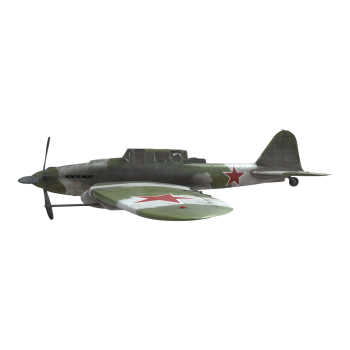
During World War II, the American bomber SBD Dauntless dive bomber

The SBD Dauntless was a three seat single engine carrier based dive bomber developed by Douglas Company in the United States, primarily active on the Pacific theater during World War II. In the early 1930s, with the help of a large number of government orders, the United States recovered from the catastrophic economic crisis, and its naval strength was strengthened due to the policy of expanding orders. In 1934, the United States Naval Aviation Administration began to replace its complex and disorganized carrier based dive bombers with a unified aircraft model.
During World War II, the Soviet fighter jet Il-2 attack aircraft

During World War II, the Soviet fighter jet Il-2 attack aircraft

The Il-2 attack aircraft was a type of ground attack aircraft developed and equipped by the Soviet Union during World War II.
World War II British heavy tank Churchill Mk VII

World War II British heavy tank Churchill Mk VII

The Churchill infantry tank was the last British infantry tank and the largest tank produced by Britain during World War II, with a total production of 5640 units. The Churchill tank is an infantry tank that replaces the Matilda, developed under the code name A20. However, during the development process, the UK discovered that the A20 prototype did not yet meet their requirements. So, in July 1940, Vauxhall Automobile Company accepted the contract to develop the A22 infantry tank. Produce the first prototype car 7 months later. In June 1941, the first batch of 14 production tanks were delivered to the British army.
1960s tracked tank BMP-1 infantry fighting vehicle

1960s tracked tank BMP-1 infantry fighting vehicle

The BMP-1 infantry fighting vehicle is a tracked infantry fighting vehicle developed by the Soviet Union in the mid-1960s, with a combat weight of 13.3 tons, 3 crew members, and 8 passengers. The maximum highway speed is 65 kilometers per hour and the maximum travel distance is 600 kilometers. The front of the car has a streamlined sloping deck with good bulletproof performance. The front of the vehicle can withstand attacks from 12.7mm bullets, and the single person turret at the top of the middle of the vehicle is equipped with one 2A28 73mm smoothbore gun, one 7.62mm parallel machine gun, and a top mounted AT-3 "refractory box" anti tank missile launcher.
During World War II, the American fighter P-51B

During World War II, the American fighter P-51B

The P-51B fighter was one of the main fighter planes of the United States Army Air Forces during World War II, and it made its maiden flight in 1940. The P-51B fighter jet is a model of the American North American company's P-51 Mustang, originally designed by the North American Aircraft Company in 1940 to replace the large number of P-40Ds provided by the United States to Britain as a replacement for the British fighter jet. On October 26 of the same year, the first prototype successfully flew, with the factory code NA-73 and the nickname "Wild Horse". The first batch of "Wild Horse" B was delivered to Britain in August 1941, and the actual combat test results were excellent.
Fighter Bf-109 during World War II

Fighter Bf-109 during World War II

The Bf-109 fighter was a single seat, single engine, single wing, all metal piston fighter jet from Germany. It was one of the main fighter planes of the Nazi German Air Force during World War II and also one of the most outstanding light fighters in terms of comprehensive performance. The Bf-109 fighter jet features wings located beneath the fuselage, a full face cockpit, retractable landing gear, and a body and wings made entirely of metal. It belongs to the new generation of fighter jets and outperforms the Zero fighter jet in terms of performance, making it the most widely used military aircraft by Axis air forces. The Bf-109 fighter jet was designed by Messerschmitt, a designer at the Bavarian Aircraft Works in Germany.
During World War II, the British fighter jet Typhoon fighter jet

During World War II, the British fighter jet Typhoon fighter jet

The Hawker Typhoon was a combat bomber produced by the United Kingdom during World War II, serving as a direct replacement for the Hawker Hurricane fighter and capable of performing mid to low altitude interception missions. The Typhoon fighter bomber can carry bombs and RP-3 rockets, giving it strong ground attack capabilities. It is precisely because of this that the Typhoon became one of the most successful ground attack aircraft of World War II.
High definition photogrammetric measurement of Soviet 2S3 tank
High definition photogrammetric measurement of Soviet 2S3 tank

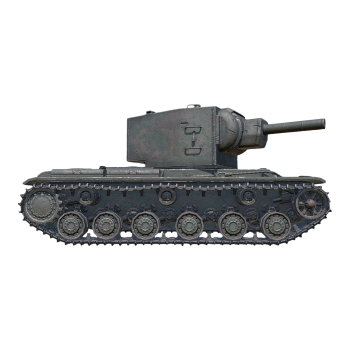
Soviet KV-2 Heavy Tank

Soviet KV-2 Heavy Tank

The KV-2 heavy tank was a type of heavy tank developed and equipped by the Soviet Union in 1942. The KV-2 heavy tank is assembled with a new turret and artillery on the chassis of the KV-1 heavy tank. The tank has a combat weight of 53 tons and a crew of 6 people. The main gun is the M10 152mm howitzer, which fires various types of shells including lethal grenades, explosive grenades, and armor piercing shells. The firing rate of the artillery is 2-4 rounds per minute. The maximum range for indirect shooting is 12000 meters. The armor piercing thickness when firing armor piercing shells can reach 124 millimeters. The maximum speed of the tank is only 26 kilometers per hour.
Soviet 2S3 self-propelled howitzer

Soviet 2S3 self-propelled howitzer

The 2S3 self-propelled howitzer is a 152mm self-propelled howitzer developed by the former Soviet Union in the late 1960s. This type of howitzer is composed of a PI-20 howitzer and a Sam-4 missile launch vehicle chassis, with a barrel length of 29 times the caliber, equipped with muzzle brakes and smoke exhaust devices, and loaded with ammunition by a mechanical loader. The body is enclosed and has strong three defense capabilities, making it suitable for air transportation. When firing grenades, the 2S3 howitzer has an initial velocity of 670 meters per second, a maximum range of 18.5 kilometers, and a maximum firing rate of 4 rounds per minute. It can fire various types of ammunition such as grenades, rocket extended range shells, armor piercing shells, as well as nuclear and chemical bombs.
Fictional Cold War era tank war game Tank

Fictional Cold War era tank war game Tank

Soviet Kamov Ka-35 helicopter

Soviet Kamov Ka-35 helicopter

North Wind God 955A Strategic Nuclear Submarine

North Wind God 955A Strategic Nuclear Submarine

The 955 strategic nuclear submarine (Russian: проекта 955 Борей, English: Project 955 Borey, NATO codename: Borei class/Dolgorukiy class, translated as the North Wind God class) is the fourth generation strategic nuclear submarine of Russia.
F/A-18 fighter attack aircraft

F/A-18 fighter attack aircraft

The F/A-18 Strike Fighter, also known as Hornet or Hornet Strike Fighter, is a third-generation supersonic jet fighter aircraft of the United States Navy
L-ATV Light Combat Tactical ATV

L-ATV Light Combat Tactical ATV

The L-ATV (Light Combat Tactical All-terrain Vehicle) is a light utility/combat utility vehicle, a joint light tactical vehicle of the United States military-led Army.
Soviet/Russian Mi-8 helicopter

Soviet/Russian Mi-8 helicopter

The Mi-8 helicopter (English: Mi-8 Transport Helicopter) is a medium-sized transport helicopter developed by the Miri Design Bureau of the Soviet Union from the late 1950 s to the early 1960 s. The Mi-8 is a twin-bladed, single-rotor, medium-sized helicopter. In 1964, the Mi-8 military and civilian types began to be put into production at the same time. It is the largest helicopter in the world and is known as the "Kalashnikov" in the helicopter kingdom ".
Heavy Military Transport Supply Truck 3D Model

Heavy Military Transport Supply Truck 3D Model

Military Realistic Black Stealth Fighter 3D Model

Military Realistic Black Stealth Fighter 3D Model

Large military helicopter

Large military helicopter

Lockheed CL-945 Loading Rotorcraft

Lockheed CL-945 Loading Rotorcraft

In the mid-60s, various forms of VTOL were all the rage. In 1965, Lockheed responded to a U.S. Army request for proposals with the CL-945 concept, a design for a stowed-rotor helicopter. At low speeds and when hovering, it will operate as a helicopter; at higher speeds, an aircraft-type propulsion system will power it; at speeds much higher than those normally reached by a helicopter, the rotor will stop rotating and will fold back and retract for minimal drag. This is a great idea, but there is a small problem, which is that it is very complicated, heavy and expensive.
FIAT Type 6614 Wheeled Armored Personnel Transporter 3D Model Military AR Model

FIAT Type 6614 Wheeled Armored Personnel Transporter 3D Model Military AR Model

The 6614 wheeled armored personnel carrier is a wheeled armored personnel carrier jointly developed by Italy's Fiat (FIAT) and Otto Melara (OTO Melara) in the late 1960 s.