German FlakpanzerGepard anti-aircraft gun

German FlakpanzerGepard anti-aircraft gun

It is a self-propelled anti-aircraft artillery system developed by Germany during the Cold War to provide mobile air defense capabilities for armored and mechanized forces against aerial threats such as low-flying aircraft and helicopters. Based on the chassis of the Leopard1 main battle tank, equipped with a double-mounted 35mm OerlikonKDA automatic gun, the turret can achieve 360-degree omnidirectional rotation, and the main gun can be almost vertical to a 90-degree angle. Equipped with advanced fire control systems, including search radar, tracking radar and laser range finders, these systems make it possible to accurately track and hit targets even when moving. It entered service in the 1970 s.
Pakistan Shaheen-II surface-to-surface ballistic missile

Pakistan Shaheen-II surface-to-surface ballistic missile

It is a medium-range surface-to-surface ballistic missile developed by Pakistan and is considered to be one of the Pakistan Army's most deterrent weapons. The range can reach 1500 to 2000 kilometers, which is enough to cover important targets in the area. It is a two-stage solid-fuel missile capable of carrying a regular or nuclear warhead. The missile is presumed to have a hit error of 350 meters, but it could be smaller, as Pakistan claims the missile has "surgical accuracy". The launch platform is a six-axle transport vertical launch vehicle. The successful test of the missile enhances Pakistan's strategic deterrence capability, especially amid tensions with India.
American M60A3 main battle tank

American M60A3 main battle tank

It is the ultimate improvement of the American M60 "Patton" series main battle tank and is known as the "ultimate Patton". In 1971 began to develop, code-named M60A1E3. During the development process, the reliability of key components such as the engine and passive sighting instrument was improved. Four more improvements were made in 1978, including the installation of a new rangefinder, a ballistic calculation device, an M240 aircraft gun, and an M239 smoke launcher. The fire control system has been significantly improved, improving the accuracy of shooting. Its design and improvement made it an important armored force for the United States and its allies during the Cold War.
armored personnel carrier

armored personnel carrier

It is an armored military vehicle designed to transport personnel and equipment in combat areas. The idea is to quickly transport infantry to any location on the battlefield and to resist light weapons attacks. Compared with infantry fighting vehicles, the level of armor protection is lower, usually not equipped with weapons exceeding 20mm caliber, and mainly focuses on transportation rather than direct participation in combat. The track type has lower ground pressure and better off-road maneuverability, but the track wears faster and usually requires long-distance transportation by rail or truck. It also has amphibious capabilities and can traverse waters, usually by propeller, water jet or track propulsion.
Indonesia Sigma-class frigate Diponegoro-class frigate

Indonesia Sigma-class frigate Diponegoro-class frigate

It is a light frigate equipped by the Indonesian Navy and developed and produced by the Dutch Damen Shipbuilding Group. Modular design, can adapt to a variety of operational needs, with excellent reliability and affordability. It has a length of 90.71 meters, a width of 13.02 meters, a draft of 3.60 meters and a displacement of 1,692 tons. The design focuses on low-track design, including reducing radar cross-sectional area, infrared signal, noise and vibration, so that it has better stealth performance. The main tasks include surface patrol, economic sea patrol and some anti-submarine operations.
stealth destroyer

stealth destroyer

It is a modern warship that is specially designed to reduce radar cross-sectional area (RCS) and infrared radiation, making it difficult to detect by the enemy. The inclined hull design and superstructure are adopted to avoid being perpendicular to the water surface to reduce the reflection of radar waves. Antennas and electronics are often conformal in design and built into the hull to reduce radar signals. The use of absorbing materials and special coatings is also a common means of reducing RCS. The design not only considers radar stealth, but also includes reducing infrared signatures to reduce the possibility of being detected by enemy infrared detection equipment.
United States USSJohnPaulJones(DDG-53) missile destroyer

United States USSJohnPaulJones(DDG-53) missile destroyer

It is the third U.S. Navy Arleigh Burke-class guided missile destroyer and the first ship of this class to be deployed on the west coast. Named after the United States Navy hero John Paul Jones, he inherited his motto: "I wish to have nothing to do with any ship that does not gallop, for I intend to go down a dangerous path." Construction began on 8 August 1990 at Bath Steel Works, launched on 26 October 1991 and commissioned on 18 December 1993. It represents the modern combat effectiveness of the U.S. Navy and is equipped with the most advanced weapons, engineering and damage control systems.
North Korea Musudan missile launcher

North Korea Musudan missile launcher
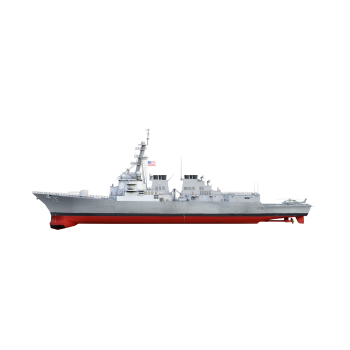
Also known as Hwasong-10, it is a road-mobile medium-range ballistic missile developed by North Korea. First developed in the 1990 s, its design was derived from Russia's R-27/SS-N-6 submarine-launched ballistic missile. It uses liquid propellant, has a payload capacity of about 1200kg, uses inertial guidance, and has an estimated range of between 2500 and 4000 kilometers. Designed to be able to carry a regular or nuclear warhead, the warhead weighs between 500 and 1200kg. It is based on the MAZ series of vehicles, which can carry and launch missiles and have good maneuverability.
American Arleigh Burke-class missile destroyer

American Arleigh Burke-class missile destroyer

It is a type of multi-mission surface warship of the United States Navy, known for its comprehensive combat capability. Able to operate independently or as part of carrier strike groups, surface action groups, amphibious reserve groups and supply groups. Heart is the Aegis combat system, which integrates the ship's sensors and weapons systems to counter anti-ship missile threats. The design focuses on stealth and protection capabilities. It is equipped with a "three defenses" filtration and ventilation system for nuclear, biological, and chemical warfare. The hull has a strong ability to withstand attacks. It was the first destroyer used by the U.S. Navy after World War II to adopt steel ships. With its strong combat capability and advanced technology, it continues to play an important role in the U.S. Navy.
Soviet BMP-1 Infantry Fighting Vehicle
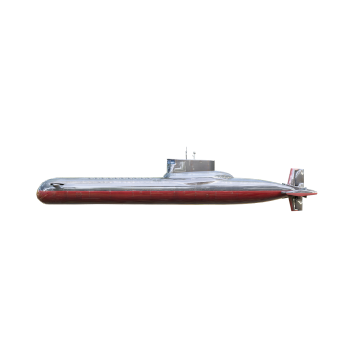
Soviet BMP-1 Infantry Fighting Vehicle

It is a type of infantry fighting vehicle designed and produced in the Soviet era. The main task is to enable infantry to keep up with the speed of tanks and provide cover to eliminate enemy forces. Have good mobility and a certain degree of protection. The body is welded with armor to withstand small-caliber bullets and fragmentation, and carries artillery and machine guns to support infantry in street battles. The main weapon is a 73mm caliber 2A28 low-pressure smoothbore gun, which can fire high-explosive anti-tank shells and grenades, with 40 rounds of ammunition. The front upper armor of the car body is 6mm, arranged at an inclination of 10 °, providing a certain degree of ricoche probability. Tilt design to increase protection
Military submarine

Military submarine

It is a kind of ship that can operate underwater, with concealment and strong strike capability. It is mainly used for military purposes, such as anti-ship, anti-submarine operations, intelligence gathering, mine-making and special operations. There are two main categories: regular-powered submarines and nuclear-powered submarines. regular-powered submarines use diesel engines and battery packs, while nuclear-powered submarines use nuclear reactors as power sources, with the latter having almost unlimited underwater endurance. Key features include its streamlined design to reduce underwater drag and its ability to dive to a depth of hundreds of meters. Equipped with a variety of weapons, such as torpedoes, missiles and mines, capable of striking targets at sea and on land.
Volkswagen Worker4X4EB Heavy Truck

Volkswagen Worker4X4EB Heavy Truck

The four-wheel drive electronic brake version of the Volkswagen Worker is a heavy truck with military DNA. It was originally designed for the Brazilian army and later converted to civilian use. Known for its excellent off-road ability and durability, it can cope with various extreme conditions and terrain. The design focuses on practicality and reliability, and adopts hydraulic suspension system. Because of its rugged construction and excellent off-road performance, it is also popular in the civilian market and is used by mining, energy companies and the transportation of materials in remote areas. It has proved its reliability and versatility under various extreme conditions, whether it is military or civilian operations.
Brazilian NPaGurupi-P47 Patrol Vessel

Brazilian NPaGurupi-P47 Patrol Vessel

It is a patrol ship of the Brazilian Navy, belonging to the Grajaú class. Ordered in 1994, it was one of the fourth batch of two ships of the class. It was launched on September 6, 1995 and commissioned on April 23, 1996. It is also equipped with a semi-hard-hulled speedboat capable of carrying 10 people and an inflatable boat capable of carrying 6 people. The name derives from the river of the same name on the border of the Brazilian states of Pará and Maranhão, and is the second ship in the Brazilian Navy to bear the name "Gurupi. Mainly in Rio de Janeiro, Sao Paulo and Espírito Santo coastal areas of the mission, under the South-East Navy detachment.
Anti-mine ambush protection vehicle

Anti-mine ambush protection vehicle

It is a military vehicle designed to withstand landmine and improvised explosive device attacks and to maximize the survivability of the vehicle and its occupants. The main features include the V-shaped underbody structure, which can disperse the energy generated by the explosion to both sides and reduce the damage to the occupants in the car. It usually has high ground clearance to reduce the impact of blast waves, and heavy armor protection to resist attacks from small caliber weapons and shell fragments. The protection capability requirements include resisting the attack of 7.62x 54AP bullets, air explosion protection at a distance of 155mm around the roof and surrounding area, and being able to defend against anti-infantry mines, anti-tank mines, etc.
German HortenPlane fighter

German HortenPlane fighter

Also known as the HortenH.IX or Ho229, it was a full-wing jet fighter designed by the German Horton Brothers during World War II. Known for its unique flying wing design, without the traditional fuselage and tail, this design helps reduce drag and improve lift. It was the world's first full-wing jet aircraft. Its design was very avant-garde at that time. In theory, it could achieve a speed of more than 600 miles per hour, far exceeding other fighters at that time. Despite numerous technical problems and the fact that the only powered prototype crashed after several test flights, it was one of the most unusual combat aircraft tested during World War II.
German Kanonenjagdpanzer Tank Destroyer

German Kanonenjagdpanzer Tank Destroyer

It was a German tank destroyer designed and built during the Cold War. There is a 90mm anti-tank gun, derived from the obsolete M47Patton tank. The design is similar to JagdpanzerIV in World War II. He served in the West German and Belgian armies from 1965 to 1990. A total of 770 were built. As the Soviets deployed T-64 and T-72 main battle tanks, they could not be confronted at long distances, and so gradually became obsolete. Characterized by its high maneuverability and low profile, its armor is only 50mm at its thickest point and has a crew of 4, including the captain, driver, gunner and loader.
Russia IvanGrenBDK11711 large landing ship
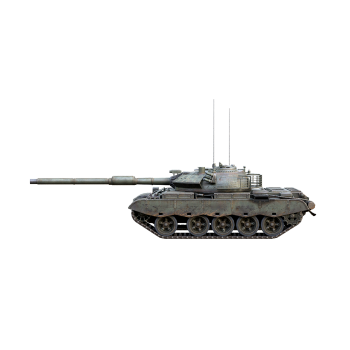
Russia IvanGrenBDK11711 large landing ship

It is a large landing ship built by the Russian Navy and built by the Yantar shipyard. It is the largest landing ship built by Russia since the collapse of the Soviet Union. It is designed to transport military equipment and materials, as well as landing troops. Capable of transporting 300 soldiers, 13 main battle tanks or 36 armored personnel carriers. It is equipped with anti-aircraft missile system, 76mm AK-176 naval gun and 30mm AK-630M-2 near-defense weapon system. Helicopter operation capability is also available to support Ka-29 or Ka-27 helicopter landings and hangar facilities.
Chinese Type59 main battle tank

Chinese Type59 main battle tank

It is a Chinese-made main battle tank, based on the Soviet T-54A tank design. It was first produced in 1958, served in 1959, started mass production in 1963, and stopped production in 1980, producing about 9500 vehicles. It was the main equipment of the Chinese People's Liberation Army until the early 21st century. During the service, it underwent many improvements, including the replacement of the 100mm smoothbore gun with a 105mm rifling gun, which became the cornerstone of subsequent Chinese tank designs. It has a traditional post-war layout with a battle bay at the front, an engine bay at the rear, and a cast dome-shaped turret at the center.
British MorrisLRC armored reconnaissance vehicle

British MorrisLRC armored reconnaissance vehicle

It was a British light armored reconnaissance vehicle produced during World War II and built by MorrisMotorsLimited. Known for its unique three-seat layout, the driver is in the middle, flanked by a machine gunner and an anti-tank gunner/radio operator. Based on the chassis of a Morris light truck, it is equipped with a 0.55-inch Boys anti-tank rifle and a 0.303-inch Bren light machine gun, providing fire support against lightly armored targets and infantry. The total weight is about 3.7 tons, the length is slightly more than 4 meters, and the top speed can reach 50 miles per hour.
United States M3A1Half-Track armored personnel carrier

United States M3A1Half-Track armored personnel carrier

It was an armored personnel carrier widely used by the United States during World War II, capable of carrying 13 crew members, including commanders, drivers, co-pilots and soldiers. It was an improved model of the M3 and was first accepted in October 1943. The main improvements included the addition of the M49 machine gun ring frame, replacing the original machine gun base. Semi-tracked vehicles, known for their larger interiors and more seating, became standard equipment for the U.S. armored infantry. It is used as a command vehicle and ambulance, and can also perform a variety of tasks designed by the M2. The design used many commercial components to improve reliability and production speed, and its design was standardized in 1940.
Soviet GAZ69AKOPA light off-road vehicle

Soviet GAZ69AKOPA light off-road vehicle

It is a light off-road vehicle produced by the Soviet Gorky Automobile Factory (GAZ), produced in 1952-1972. Known for its ruggedness and reliability, it was particularly suited to China's military needs and road conditions at the time. With high ground clearance and a solid chassis structure, it is equipped with a four-wheel drive system, which is suitable for operation under various harsh conditions. Equipped with a 2.1-liter four-cylinder engine, it can provide 55 horsepower, a maximum speed of 90 km/h, and a maximum mileage of 600 kilometers. Its repair and maintenance is relatively simple, further enhancing its practicality in the army.
Israel Makmat160mm mortars

Israel Makmat160mm mortars

is a self-propelled heavy mortar based on the chassis of the M4 Sherman tank, developed by Israel in the 1960 s. This mortar system was used to provide fire support during the Yom Kippur War in 1973 and the Lebanon Campaign, although the limited protection it provided was characterized by its huge 160mm mortar, installed in the chassis and turret of the original Sherman tank, Located in front of the engine. It is the embodiment of the innovative ability of Israeli engineers to allow the use of the new Israeli M-66 mortar, which is capable of firing 40kg shells and has a range of about 9.6 kilometers.
T-001 modern military truck

T-001 modern military truck

It is a multi-purpose platform truck designed for military use. It is known for its excellent off-road performance and tactical mobility, and can perform tasks in various complex terrain conditions. The design focuses on modularity and flexibility, enabling the ability to quickly switch between different mission configurations as needed. It adopts a four-wheel drive system and is equipped with a powerful engine to provide sufficient power. The suspension system is specially designed to withstand heavy loads and maintain stability on harsh roads. The design and manufacture embody the advanced technology of modern military engineering, and have excellent performance in terms of tactical flexibility, protection ability and adaptability.
American M274Mule Multi-Purpose Platform Truck

American M274Mule Multi-Purpose Platform Truck

Refers to the multi-functional platform truck "Mule" (Mule) under the desert camouflage paint, equipped with recoilless guns. It is a four-wheel drive, gasoline-powered truck that can carry up to half a ton of load in off-road conditions. It was introduced in 1956 and remained in use until the 1980 s. It was widely used in the Vietnam War to transport ammunition, goods, personnel and weapons. Can be modified to carry almost any type of regular weapon. Especially suitable for desert environments, this paint helps the vehicle camouflage in desert terrain and reduces the possibility of being discovered by the enemy. It occupies an important place in military history.
Russian Project22160-class patrol ship

Russian Project22160-class patrol ship

It is a large patrol ship built for the Russian Navy. It is mainly used to perform patrol, monitoring and protection tasks in open and closed waters. Construction began in February 2014, and as of December 2016, there are five ships under construction, the first of which joined the Russian Navy in December 2018. The design features include a modular design, with a length of 94 meters, a width of 14 meters, a height of 3.4 meters, a standard displacement of about 4,550 tons, and a capacity of 80 personnel. Equipped with a retractable hangar and helicopter deck, capable of supporting a 12-ton rescue helicopter. Enhance the operational capabilities of the Russian Navy in multiple fleets
Russian Grachonok-class anti-sabotage and large guard vessels

Russian Grachonok-class anti-sabotage and large guard vessels

It is an anti-sabotage and large guard vessel of the Russian Navy. The purpose of the design is to combat destructive terrorist forces in the waters near the base and in the area close to the base, and also to assist the border defense service of the Russian Federal Security Service in solving the problem of protecting and maintaining the Russian state border. It has a single deck, a steel hull and a cab made of aluminum-magnesium alloy, with a continuous main deck, a developed superstructure, and a tilted bow and stern. The ship was equipped with a crane for work on the stern. Since 2008, 26 have been built, playing an important role in the protection of Russian naval bases.
British ChieftainMk3 main battle tank

British ChieftainMk3 main battle tank

It is a British main battle tank designed during the Cold War and is an improved model of the Chieftain series of tanks. Originally commissioned in 1966, it is known for its strong firepower, advanced armor and good mobility. The Mk3 model has been further improved on the basis of the original design to improve its performance on the battlefield. It was equipped with a 120mm L11A5 rifled gun, which was specially designed for Chieftain and became the NATO standard caliber. It was an important model in the series, and its design and performance were in a leading position among the main battle tanks of the time.
Russia Project22800KarakurtClass missile frigate

Russia Project22800KarakurtClass missile frigate

It is a new type of small missile frigate of the Russian Navy, designed by the Almaz Design Bureau. It has been in service since 2018 and is designed to complement the Buyan-M-class frigates for offshore operations to provide more ocean-going capabilities. Design features include a stealthy superstructure and integrated mast, equipped with phased array radar panels, emphasizing high maneuverability, stability and wave resistance. The main weapons include Kalibr-NK cruise missiles launched from the eight-unit UKSK vertical launch system, capable of hitting targets within a range of about 2500 kilometers. These ships enhance the Russian Navy's operational capabilities across multiple fleets.
Soviet Union MT-LB multi-purpose light armored tractor

Soviet Union MT-LB multi-purpose light armored tractor

It is a multi-purpose amphibious auxiliary armored tracked vehicle developed by the Soviet Union in the late 1960 s. Since 1964, began to serve in the armed forces of the Soviet Union, and was widely used for its excellent cross-country ability and amphibious characteristics. The original design was to replace the old AT-P artillery tractor, which could only transport heavily armed soldiers and also tow artillery. The vehicle structure includes a fully welded steel armored hull that provides protection from small arms fire and shell fragments. It is equipped with a 7.62mm PKT machine gun for self-defense. It plays a role in some areas with its reliability and versatility.
Soviet MiG-29 "Fulcrum" fighter (gray-green)
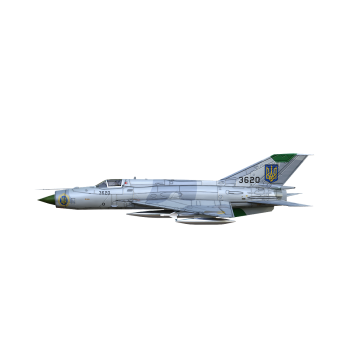
Soviet MiG-29 "Fulcrum" fighter (gray-green)

It is a light and medium-sized double-engine, front-line air superiority fighter developed by the Soviet Union's Mikoyan-Gurevich Design Bureau. As the first model of the Soviet Union defined as the fourth-generation fighter in terms of design ideas, the "Advanced Tactical Fighter" program was born in the late 1960 s to counter the US "FX" program. The prototype first flew on October 6, 1977 and began equipping troops in 1983. Known for its excellent maneuverability and versatility, it can perform air superiority combat, close air combat, ground attack and reconnaissance missions. With a total production of more than 1600, it is an excellent multi-role fighter.
Soviet MiG-21 "Fishbed" fighter (gray-blue)

Soviet MiG-21 "Fishbed" fighter (gray-blue)

It is a second-generation supersonic jet fighter with a single-seat delta-wing aerodynamic layout developed by the Soviet MiGaoyang Design Bureau in the 1950 s. It is known for its lightness, flexibility, fast climbing and good transonic and supersonic maneuverability. Its main tasks are high-altitude high-speed interception and reconnaissance, and can also be used for ground attacks. It was designed by the Soviet Union in 1953, the prototype flew in 1955, and began to equip troops in 1958, becoming the main air-control fighter of the Soviet Air Force in the 1960 s. It is one of the most produced and equipped jet fighters in the 20th century. Because of its excellent performance and wide use.
Soviet MiG-21 "Fishbed" fighter (brown)

Soviet MiG-21 "Fishbed" fighter (brown)

It is a second-generation supersonic jet fighter with a single-seat delta-wing aerodynamic layout developed by the Soviet MiGaoyang Design Bureau in the 1950 s. It is known for its lightness, flexibility, fast climbing and good transonic and supersonic maneuverability. Its main tasks are high-altitude high-speed interception and reconnaissance, and can also be used for ground attacks. It was designed by the Soviet Union in 1953, the prototype flew in 1955, and began to equip troops in 1958, becoming the main air-control fighter of the Soviet Air Force in the 1960 s. It is one of the most produced and equipped jet fighters in the 20th century. Because of its excellent performance and wide use.
Soviet MiG-21 "Fishbed" fighter (dark green fan color)

Soviet MiG-21 "Fishbed" fighter (dark green fan color)

It is a second-generation supersonic jet fighter with a single-seat delta-wing aerodynamic layout developed by the Soviet MiGaoyang Design Bureau in the 1950 s. It is known for its lightness, flexibility, fast climbing and good transonic and supersonic maneuverability. Its main tasks are high-altitude high-speed interception and reconnaissance, and can also be used for ground attacks. It was designed by the Soviet Union in 1953, the prototype flew in 1955, and began to equip troops in 1958, becoming the main air-control fighter of the Soviet Air Force in the 1960 s. It is one of the most produced and equipped jet fighters in the 20th century. Because of its excellent performance and wide use.
American F-14 Tomcat fighter

American F-14 Tomcat fighter

It is a two-seater, two-launch supersonic carrier-based multi-purpose heavy fighter developed by the American Grumman Company (now Northrop Grumman Company) for the U.S. Navy. Mainly used for escort, fleet air defense, interdictions and close air support, designed to replace F-4 fighters. Development began in 1967, the prototype first flew on December 21, 1970 and was delivered in 1972. With the variable sweep mid-single wing design, the wing sweep angle can be automatically adjusted in the range of 20 ° to 68 ° to adapt to the best performance at different speeds and altitudes. The U.S. Navy retired its last F-14 in 2006.
Japanese JASDFF-2A fighter

Japanese JASDFF-2A fighter

It is a multi-purpose fighter equipped by the Japan Air Self-Defense Force, jointly developed by Mitsubishi Heavy Industries and Lockheed Martin. Based on the F-16 fighter design of the United States, it has been modified for Japan's application needs and geographical characteristics. The overall size is larger than F-16, and it has excellent low-altitude and low-speed flight performance. With the status of "anti-ship backbone", it can carry 4 anti-ship missiles at one time, and its combat radius can reach 833 kilometers, which is equivalent to the round-trip distance from Tokyo to Kyushu. The design combines advanced technology from Japan and the United States, and is an important air combat platform for the Japan Air Self-Defense Force.