Japanese Samurai Helmet

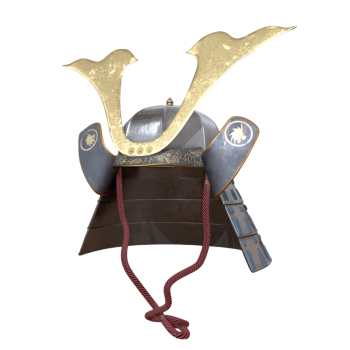
Japanese Samurai Helmet

Japanese samurai helmet, called "kabuto" (kabu) in Japanese. It is an important part of traditional Japanese armor and is mainly used to protect the head and neck of the samurai. The dome part is riveted from several metal plates and is used to protect the top of the head. The golden horn decoration on the helmet is a front stand, designed to show the wearer's strength and serve as a deterrent to enemies on the battlefield. Samurai helmet is not only protective equipment, but also a symbol of samurai identity, status and family tradition.
Spanish seventeenth-century blunderbuss

Spanish seventeenth-century blunderbuss

One of the core physical evidence of Spanish military history, focusing on the development and military application of firearms technology in Spain in the 17th century. These firearms are not only the material carrier of the military hegemony of Spain's "Golden Century" (1492-1700), but also the key witness of the transformation of modern military technology in early Europe, bearing the multiple historical connotations of "imperial expansion", "technological innovation" and "war memory.
Spanish eighteenth-century blunderbuss

Spanish eighteenth-century blunderbuss

This firearm is one of the core physical evidence of Spanish military history, focusing on the development and military application of firearm technology in Spain in the 18th century. These firearms are not only the material carrier of Spain's "golden century" military hegemony, but also the key witness of the transformation of modern military technology in early Europe, carrying the multiple historical connotations of "imperial expansion", "technological innovation" and "war memory.
Spanish sixteenth-century short-tube blunderbuss

Spanish sixteenth-century short-tube blunderbuss

The sixteenth-century short-barrelled firearm is one of the core material evidence of Spanish military history, focusing on the development and military application of firearm technology in Spain in the sixteenth century. These firearms are not only the material carrier of the military hegemony of Spain's "Golden Century" (1492-1700), but also the key witness of the transformation of modern military technology in early Europe, bearing the multiple historical connotations of "imperial expansion", "technological innovation" and "war memory.
Spanish sixteenth-century blunderbuss

Spanish sixteenth-century blunderbuss

One of the core material evidence of Spanish military history, focusing on the development and military application of firearms technology in Spain in the 16th century. These firearms are not only the material carrier of the military hegemony of Spain's "Golden Century" (1492-1700), but also the key witness of the transformation of modern military technology in early Europe, bearing the multiple historical connotations of "imperial expansion", "technological innovation" and "war memory.
Toledo Type 43 Cannon

Toledo Type 43 Cannon

The Toledo Type 43 Cannon "(" Cannon 43a Toledo ") was a classic artillery model produced by the Toledo Arsenal in Spain in the 16th century. Spanish conquistadors in Peru, Chile war, carrying 43 type artillery to deter the indigenous people. When Spain suppressed the "Araucan War" in Chile in 1582, the roar of Type 43 cannons not only destroyed the indigenous stone fortresses, but also accelerated the colonization process through psychological deterrence.
Toledo Type 42 Cannon

Toledo Type 42 Cannon

The Toledo Type 42 Cannon "(Cannon 42a Toledo) was a classic artillery model produced by the Toledo Arsenal in Spain in the 16th century. In the "struggle for hegemony in the Mediterranean" between the Ottoman Empire and Spain, Toledo artillery was deployed in Sicily, Naples and other places controlled by Spain. In the Battle of Le Banto in 1571, the Type 42 cannon carried by the Spanish fleet caused a devastating blow to the Ottoman battleship. Its stone shells could penetrate the thick wooden hull of the Ottoman paddle sailboat and were called "the smasher of the sea fortress".
Antique Chinese bronze dagger

Antique Chinese bronze dagger

Wizard's Dagger
Wizard's Dagger

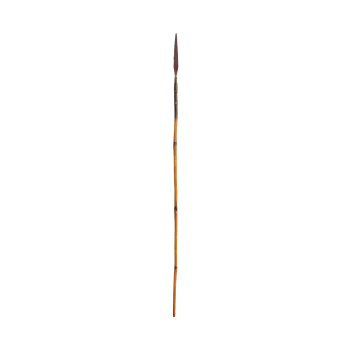
Simple bamboo spear

Simple bamboo spear

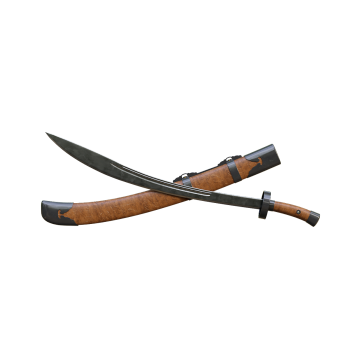
Short curved knife

Short curved knife

It is a curved single blade sword that originated in the Middle East and has a long history, appearing around 2000 BC. Known for its elegant curved shape and sharp cutting edge, the blade is usually curved with a sharp tip, making it easy to stab and cut. The design of the knife handle is diverse, some are decorated beautifully, while others are simple and practical, suitable for the needs of different users. It is a practical weapon and a symbol of identity and status. In history, it was a iconic equipment for many Middle Eastern and Asian aristocrats and warriors. Over time, the short curved sword gradually evolved into a cultural symbol and was used in various rituals and celebrations.
Cross shaped long curved knife

Cross shaped long curved knife
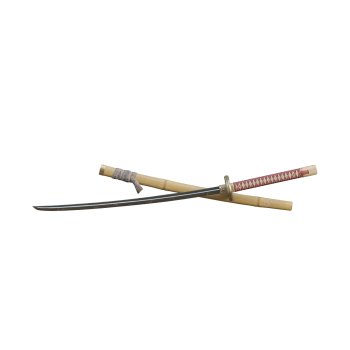
It is an ancient and unique weapon that originated in the Middle East, especially with a long history in Persian culture. Known for its curved blade and cross shaped handle, it is usually forged from high-quality steel and extremely sharp. The curved design of the blade not only increases its attack range, but also enhances its cutting ability, making it highly lethal on the battlefield. The handle design of the cross shaped long curved knife helps provide better grip and control, while also being decorative. Over time, the cross shaped long curved sword gradually evolved into a cultural symbol, often appearing in various works of art and historical documents.
3D model of Japanese samurai sword

3D model of Japanese samurai sword

Also known as the Japanese sword or samurai sword, it is a traditional Japanese single blade sword renowned for its sharp, curved blade and exquisite craftsmanship. Not only is it a symbol of the Japanese samurai class, but it is also an important part of Japanese culture. The production technology is very complex, involving forging, quenching, tempering, and fine grinding processes of the blade. The blade usually presents a unique curve, which not only increases the cutting force of the blade, but also makes it more flexible when swung. The handle design takes into account the user's grip comfort and efficiency, while the sheath is usually made of hardwood or metal, which not only protects the blade but also reflects a certain degree of decoration.
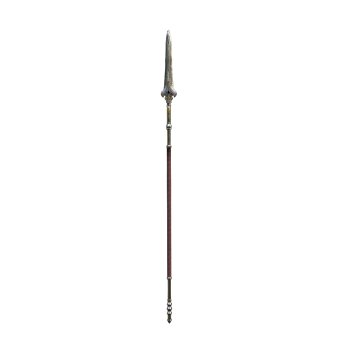
Exquisite long spear weapon

Exquisite long spear weapon

Ancient Viking copper scepter
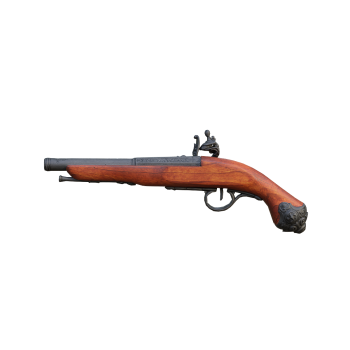
Ancient Viking copper scepter

It is a copper scepter used by ancient Vikings. Compact and lightweight, usually cast from brass, with a small head and a hole for installation on a wooden handle. Easy to carry, suitable for all day wear, ready for self-defense at any time. The design is simple and practical, and the copper material on the head can generate a significant impact force when struck. Viking warriors and Russian warriors both used this weapon, which was widely circulated in Europe, Scandinavia, and Russia from the 9th to the 11th century. The replica scepter mentioned has a head made of cast brass and is mounted on a hardwood handle, reproducing the style of early medieval weapons.
Flintlock colonial handgun

Flintlock colonial handgun

It is a common firearm in the 18th century, which uses flint or flint pieces as ignition devices. When the trigger is hit by a hammer, sparks are generated, igniting the gunpowder. Ammunition needs to be manually reloaded and loaded through the barrel opening, including gunpowder, pellets, and paper pads. The paper pads provide a sealing effect to ensure that gunpowder and pellets are tightly compressed inside the barrel. In combat, these weapons are usually only used for single shot shooting because the loading method is very slow and there is usually no time to reload. Therefore, soldiers who have fired have to pull out their swords or knives, or if they cannot reload them in time, use pistols as sticks.
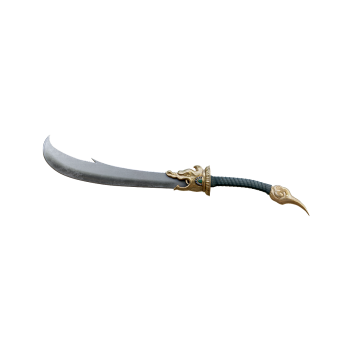
Longtou Big Knife

Longtou Big Knife

14th century armed sword
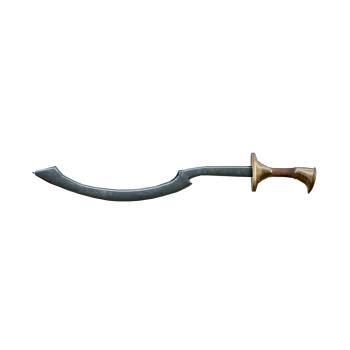
14th century armed sword

It is an early 14th century armed sword belonging to the XIV type in the Oakeshott classification. Known for its unique design and historical value. The sword body is wide and usually has four thin central blood grooves that extend to about half of the sword body. The hilt is designed for one handed use and is equipped with a slightly curved handguard and a wheel shaped hilt. It was very common in 13th and 14th century Europe. As soldiers transitioned from lock armor to plate armor, the use of this sword type in combat also changed, typically used in conjunction with small shields. It is an important reference for studying the development of medieval swordsmanship.
The sickle shaped sword of ancient Egypt

The sickle shaped sword of ancient Egypt

Also known as' Khepash ', it is a symbolic weapon in ancient Egyptian civilization, with a history dating back to around 3000 BC. The characteristic is that the sword body is curved, resembling a crescent moon, and the sword tip is sharp. Not only is it a weapon in actual combat, but it is also a symbol of power for pharaohs and senior officials, commonly seen in religious ceremonies and celebrations. The design gives it a unique advantage on the battlefield, with a curved sword body that increases the range and power of strikes, while the sharp tip of the sword can be used for stabbing. Over time, the Khenpash gradually disappeared from the battlefield, but its status as a symbolic weapon remained unchanged.
Late 19th century double barreled handgun

Late 19th century double barreled handgun

It is a work from the late 19th century and is currently housed in a museum in the New Songki area. Composed of two vertically arranged gun barrels, the bottom of the barrel is decorated with geometric floral patterns and the manufacturer's logo "SCHLEGELMILCHINOEDENBURG". The barrel starts from an octagon about 7 centimeters long, gradually becomes hexagonal, and finally becomes circular. The outer part of the gun barrel is also decorated with carved floral patterns. The trigger is surrounded by a brass trigger guard that extends all the way to the top of the stock. On the trigger guard, there are carved oak leaves and the initials "C...".
18th century British curved sword

18th century British curved sword

Also known as' Hanger ', it is a lightweight single blade sword commonly used in close combat for cavalry or infantry. The characteristic is that the sword body is narrow, the sword tip is sharp, and the sword handle is short, making it easy to quickly pull out and wield. The sword body usually has a slightly curved shape, which helps for quick and accurate stabbing and cutting in combat. It was very popular in 18th century England, especially during the Napoleonic Wars, and became one of the standard equipment for soldiers. The design is simple and practical, suitable for quick use on the battlefield. In addition to military use, it is often used as a personal defense weapon or as a symbol of identity and status.
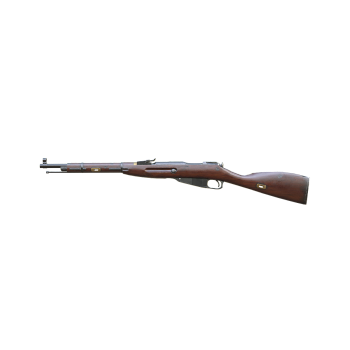
Mosengan M1938 carbine gun

Mosengan M1938 carbine gun

M38, abbreviated as M38, is a new type of carbine designed and finalized by the Soviet Union in 1938 based on the M1907 carbine. As a shortened version of the M1891/30 rifle, it is mainly designed for the needs of non frontline combat units such as cavalry, artillery, and messengers, to meet their demand for shorter and lighter weapons. The overall length of the rifle is the same as the M1907 carbine, without a bayonet, but it maintains a high degree of consistency with the M1891/30 rifle in other aspects, such as a guard sight, metric gauge, and circular section receiver. The range of the gauge is relatively short, from 100 meters to 1000 meters, with increments of 100 meters.
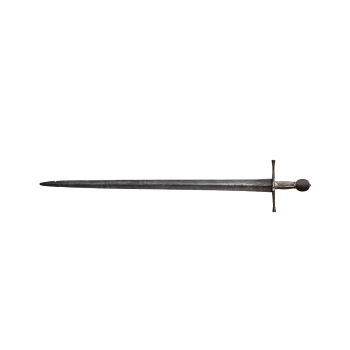
15th century armed sword

15th century armed sword

Also known as the Knight Sword, it was a cross shaped sword used with one hand during the Middle Ages. This type of sword is straight edged and double-edged, with a handle designed for one handed use and a blade length of approximately 70 to 80 centimeters. Widely used between approximately 1000 and 1350 and often depicted in contemporary art works. In the 14th and 15th centuries, with the development of plate armor, the long sword emerged. The long sword is longer and heavier than the armed sword, designed for use with both hands to tackle more advanced armor challenges, and its longer attack range is also more suitable for infantry combat.
16th century European flintlock gun

16th century European flintlock gun

It is an early firearm that originated in 16th century Europe and is the successor to the matchlock gun. By using flint and gunpowder to ignite bullets, they can be fired. The working principle is that when the trigger is pulled, the flint will rub against the gunpowder to produce sparks, igniting the gunpowder loaded in the barrel and pushing the bullet out. Compared to previous matchlock guns, it is more reliable because it does not rely on a continuously burning matchlock to ignite gunpowder, reducing the risk of ignition failure caused by wind or humid weather. The emergence of flintlock guns greatly increased the firepower and range on the battlefield, while also reducing the exposure time of soldiers when loading ammunition.
Chinese Qing Dynasty Sword

Chinese Qing Dynasty Sword

Known as the 'Qing Sword', it is one of the representatives of ancient Chinese cold weapons. Not only sharp and practical, but also exquisitely crafted, with high artistic and historical value. There are various types, including official swords, folk swords, etc. Among them, official swords embody the ultimate craftsmanship of that time. There are various shapes, and the sword body is usually slender and straight. During the Qianlong period, the imperial "Heaven, Earth, and Man" series of swords were the pinnacle of craftsmanship. These swords were not only used in actual combat, but also as symbols and ceremonial items of the royal family. The design and production of Qing Jian integrated the influence of Chinese and foreign cultures at that time, and is a witness to cultural exchange between China and foreign countries.
Medieval axe gun

Medieval axe gun

It is a composite weapon that combines the functions of an axe and a firearm, typically consisting of a long handle and an axe blade, with a barrel mounted on one side of the axe blade. In certain historical periods, such as the Middle Ages and Renaissance, it was used for battlefields and hunting. Allow users to use the axe part for slashing in close combat, while using firearms for shooting from a distance. Due to its weight and complexity, axe guns may not be as flexible as single function weapons in practical use. The design of the axe gun also reflected the development of weapon manufacturing technology at that time and the demand for tactical diversity. It is no longer used as a collectible.
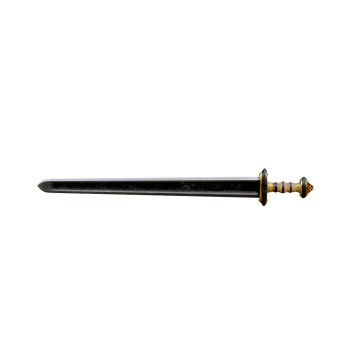
Medieval Anglo Saxon sword

Medieval Anglo Saxon sword

It is a sword from early medieval Europe, mainly popular in England from the 5th to the 11th century. Known for its excellent craftsmanship and combat performance. Usually made of iron or steel, with a slender blade on both sides and a sharp tip, suitable for stabbing and chopping. The hilt of the sword is often exquisitely decorated, reflecting the social hierarchy and status symbols of that time. The production technology is quite advanced, and the sword body has been folded and forged multiple times to enhance its durability and sharpness. Over time, design and manufacturing technologies continue to evolve, but their basic features and functions remain unchanged. It is an important weapon for warriors and an important component of the cultural and social structure at that time
Nordic Viking battle axe

Nordic Viking battle axe

It is an ancient Nordic weapon that is not only an important equipment for Viking warriors in battle, but also an important symbol in their culture. Usually made of sturdy wood and metal, the axe handle is long and straight, and the axe has a wide semi-circular shape with a sharp edge, suitable for chopping. The weight and balance design make it highly effective in close combat, allowing for easy splitting of shields and armor. Viking warriors often used battle axes as personal weapons, not only as combat tools but also as symbols of identity and status. The design and production techniques reflect the Vikings' exquisite mastery of craftsmanship and profound understanding of combat skills.
The Farsin Sword of the Renaissance period

The Farsin Sword of the Renaissance period

It is a single blade curved knife that originated in medieval Europe and further developed and became popular during the Renaissance period. The characteristic is that the blade is curved and the tip of the sword is sharp, usually used for chopping rather than stabbing. During the Renaissance, with the rise of firearms, traditional swordsmanship gradually evolved, and the Farsin sword became a beloved weapon among soldiers and civilians due to its practicality and ease of operation. The curved blade design is not only suitable for chopping, but also convenient for use in narrow spaces, such as in forests or urban street battles. The hilt is usually shorter, making it easier for both hands to grip and increase the power of the strike.
The double-edged sword of ancient Sparta Copis

The double-edged sword of ancient Sparta Copis

The Kopis sword of ancient Sparta was a double-edged sword known for its curved blade and sharp tip. Originating from Greece in the 8th century BC, it is one of the iconic weapons of Spartan warriors. The design is very suitable for close combat, the curved shape can increase cutting power, and the sharp tip can be used for stabbing. The sword body is usually made of bronze or iron, and the hilt is made of wood or bone, sometimes reinforced with metal. Spartan warriors were known for their rigorous military training and combat skills, and the Kopys sword became a deadly weapon in their hands.
Waraxe "Horn"

Waraxe "Horn"

It is an ancient and powerful weapon that played an important role on medieval battlefields. Known for its unique design and outstanding combat performance. The axe body is usually made of sturdy steel, with sharp edges that can easily split through enemy armor and shields. The axe handle is made of high-quality wood, carefully polished and treated to ensure a comfortable and durable grip. Not only is it a deadly weapon, but it is also a symbol of honor and strength for warriors. Its design often incorporates decorative elements, such as carved patterns. In battle, with its weight and strength, it can deliver heavy blows to the enemy, and even determine the outcome of the battle with just one swing.
The Atagan Sword during the Ottoman Empire period

The Atagan Sword during the Ottoman Empire period

It is a single blade weapon from Türkiye during the Ottoman Empire. Its characteristic is having a reverse curved or concave blade, with a size between a military knife and a machete. The design allows it to both pierce and cut, with a blade width that remains consistent from the handle to the tip, which is not common in other similar weapons. It was first widely used in the 16th century, especially by the elite Ottoman army - Janissary. Not only is it known for its practicality in combat, but it has also become a symbol of identity and status due to its decorative and symbolic qualities. The hilt of a sword is usually made of bones, horns, silver, or ivory, and is divided into two wide ears on the left and right sides.
TK-502 single handed curved knife

TK-502 single handed curved knife

It is a one handed curved knife known for its unique design and outstanding performance. The blade has an elegant curve, suitable for one handed grip, making it easy to wield quickly and attack accurately. The blade is sharp and forged from high-quality steel, ensuring excellent cutting ability and durability. The handle design conforms to ergonomic principles, providing a good grip and control, and can maintain stability even in intense battles. Not only is it a practical weapon, but it is also a beautiful artwork. Whether for practical use or as a collectible, TK-502 is a good choice.
Big Bone Double Hand Sword

Big Bone Double Hand Sword

The two handed bone sword is an ancient and mysterious weapon, usually made of sturdy bones, with a slender blade and a hilt that can hold both hands tightly to increase strength and speed when wielded. This type of sword is not commonly seen on ancient battlefields, but once it appears, it often represents the user's extraordinary strength and combat skills. Due to its rarity and uniqueness, the two handed bone sword is regarded as a symbol of power and status in many cultures. However, due to the special nature of its production materials, the two handed bone sword is not commonly seen in reality, but rather exists more as a cultural symbol or an imaginative presence in artistic creation.
Cannon 43 Toledo

Cannon 43 Toledo

It is a cannon of great historical significance, which is housed in the Spanish National Army Museum in Toledo, Spain. This cannon is not only a symbol of military engineering and artillery technology development, but also witnesses an important period in Spanish military history. Its existence allows visitors to experience the weight of history and the brutality of war up close. As a part of museum collections, it has attracted tourists and researchers from all over the world with its unique historical value and cultural significance, becoming an indispensable part of understanding Spanish military history.
1 2 Next