


Nature/Plants
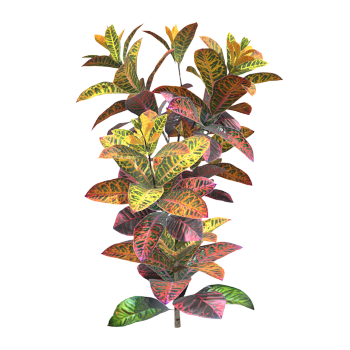
Light purple hairy croton
Light purple hairy croton is a shrub, 1-2 meters tall; The tender branches, petioles, and inflorescences are covered with light purple brown or light purple waxy star shaped soft hairs; The branches are hairless. The leaves are thin and leathery, oblong elliptical or elliptical ovate in shape, 9-13 cm long and 3-5 cm wide, with a short pointed to gradually pointed tip at the top, a nearly circular base, and a full margin. The tender leaves turn black after drying, with sparse star shaped soft hairs along the midrib and lateral veins. The growing leaves become hairless; There are 3 basal veins, 3-4 pairs of lateral veins, and a curved arch connection near the edge; The petiole is 1.5-5 centimeters long and has two pedunculated cup-shaped glands at the top.
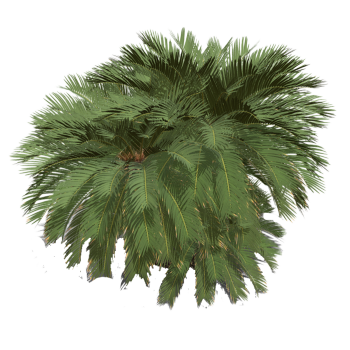
Cycas
Cycas revoluta Thunb., an evergreen plant in the Cycas family, is palm shaped with a cylindrical trunk; The scales and leaves are triangular ovate in shape, with spines on the petiole. When young, they are densely covered with yellow brown felt; Nutritious leaves are ovate and narrowly lanceolate in shape; The male bulbous flower is cylindrical in shape. The seeds are oval in shape, red in color, with a smooth middle seed coat and an orange red outer seed coat when mature. The spore and leaf ball stage is from May to July, and the seeds mature from September to October According to legend, the development of Cycas requires the supply of iron. When it weakens, if iron powder is given, it will not be difficult to recover; It is called "Su Tie" because it has the same effect when nailed with iron nails into the stem.

Dwarf Ivy
Dwarf ivy, also known as upright ivy, is a non climbing evergreen shrub. This is a very slow growing evergreen dwarf shrub that can grow up to 1 meter high and have a width of about 1 meter.

Forsythia
False Forsythia is a plant belonging to the family Verbenaceae and the genus False Forsythia. Shrubs, about 1.5-3 meters high; Branches have thorns, and young branches have soft fur. Leaves opposite, rarely whorled, leaves ovate elliptical or ovate lanceolate, papery, apex short pointed or blunt, base wedge-shaped, with soft hairs. The inflorescence is terminal or axillary, often arranged in a conical shape; Calyx tubular, hairy, approximately 5 millimeters long, 5-lobed, with 5 edges; The corolla is usually blue purple, about 8 millimeters long, slightly irregular, 5-lobed, with flattened lobes and slight hairs on the inside and outside. The drupe is spherical, hairless, glossy, with a diameter of about 5 millimeters. It is reddish yellow when ripe and surrounded by enlarged persistent sepals. Native to tropical America.

Redrlowered Loropetalum
Loropetalum Chinense (Latin name: Loropetalum Chinense), also known as Loropetalum Chinense, Loropetalum Chinense, Loropetalum Chinense, Loropetalum Chinense, Loropetalum Chinense, Loropetalum Chinense, Loropetalum Chinense, Loropetalum Chinense, Loropetalum Chinense, Loropetalum Chinense, Loropetalum Chinense, Loropetalum Chinense, Loropetalum Chinense, Loropetalum Chinense, Loropetalum Chinense, Loropetal. The bark is dark gray or light gray brown, with many branches. The tender branches are reddish brown and densely covered with star shaped hairs. Leaves are leathery and alternate in texture, oval or elliptical in shape, measuring 2-5cm in length with a short pointed tip. The base is round and asymmetrical, with star shaped hairs on both sides. The entire margin is dark red on the leaf surface and gray on the back. There are 4 petals, with a purple red linear length of 1-2cm, and 3-8 flowers clustered at the ends of small branches. The capsule is brown in color and nearly oval in shape.

Thick Calyx Lingxiao
Campsis Radians (L.) Seed It is a plant belonging to the Wisteriaceae family and the Lingxiao genus. It is a vine with aerial roots and can grow up to 10 meters in length. There are 9-11 small leaves, ranging from elliptical to ovate in shape, with a pointed tail at the top and a wedge-shaped base. The edges are toothed and covered with short hairs at least along the midrib. Calyx bell shaped, about 2 centimeters long, slightly curled outward, without raised longitudinal ribs. The corolla tube is slender, funnel-shaped, and ranges from orange red to bright red. The capsule is cylindrical in shape, 8-12 centimeters long, about 2 millimeters thick, peduncle, hard shelled.
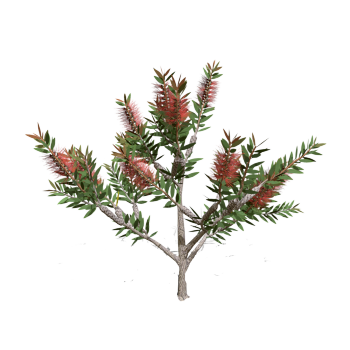
Red Thousand Layer Tree Seedlings
Callistimon rigidus, scientific name of the Red Thousand Layer, is an evergreen shrub that can grow up to 4 meters high. Its leaves are sharp and shaped like a spear, and it can grow up to 8 centimeters in length. In summer, it will produce red bottle brush shaped flowers that grow 15 centimeters long, with yellow tips on the stamens. This plant is native to Australia.
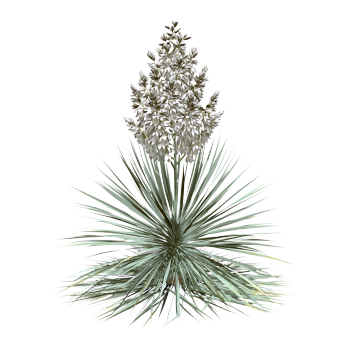
Blue Long Sequence Tequila
Perennial shrub like or small tree like plants, with a height of several meters. The overall tree trunk is 4.5 meters high, with a canopy at the top. The leaves are nearly lotus shaped, clustered at the top of the stem, and the lower leaves are dry and often do not fall off. The leaves are narrow lanceolate, thin and hard, with a maximum length of 60 centimeters, but the leaf width rarely exceeds 15 millimeters. The tips gradually become thinner, and the leaf color is mostly gray green. The inflorescence is a spike shaped large flower that can reach up to 1 meter in height and is white in color.

Tulsi
Saint Basil, also known as God Basil, Dipper Leaf, Dipper or Gabo, is a perennial herbaceous plant in the genus Lamiaceae. It is native to the Indian subcontinent and is widely planted in Southeast Asia and tropical regions. Saint Basil is an upright small shrub that stands between 30-60 centimeters tall. The leaves are green or purple in color and interact with each other. Purple flowers.

Sleeping Hibiscus
Hanging Bellflower is a shrub plant in the Malvaceae family, belonging to the genus Hanging Bellflower. The plant height can reach up to 3 meters; Small branches covered in soft hairs; Leaves ovate lanceolate or ovate, apex gradually pointed, base broadly wedge-shaped or nearly rounded, with blunt teeth, both surfaces nearly hairless or veins sparsely covered with stellate soft hairs; The flower has a solitary leaf axil or branch tip, with small bracteoles spoon shaped and long hairs on the edges. The sepals are bell shaped, and the corolla is red and drooping cylindrical. The upper part is slightly expanded, and the stamen column extends outside the corolla. The stigma is head shaped; The fruit is a fleshy berry like body that splits after drying; The flowering period lasts throughout the year. The hanging lily is native to Mexico and Colombia, and is distributed in provinces such as Guangdong and Yunnan in China. I prefer environments with high temperatures, humidity, and ample sunlight.
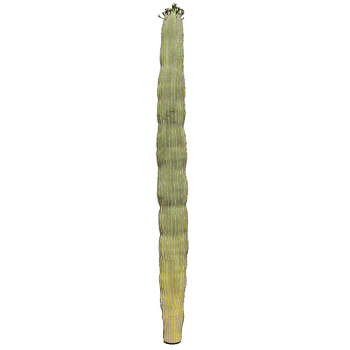
saguaro
Carnegie gigantea: It is the only species in the Cactaceae family and the genus Gigantea, and is also one of the tallest cactus varieties in the world. Its scientific name is named in honor of American entrepreneur and philanthropist Andrew Carnegie. The plant is tall and columnar, with branches in the shape of candlesticks and sharp edges. The trunk has dense, sturdy, and thick spines that can grow up to 3.8 centimeters in length, on 12-30 protruding vertical sharp edges. The thorn base has brown fluffy hair and radiating thorns. The flower thorn is trumpet shaped and blooms on the thorn base near the top of the stem. The berry is red in color and the flesh is edible. It is known as the "fairy peach".

Ku Liu
Salix elaeagnos, also known as bitter willow, olive willow, gray white willow or desert willow, is a flowering plant that grows in Central, Southern and Southwest Asia. It is an upright shrub that can grow up to 3 meters tall and 5 meters wide, with narrow gray green leaves that can grow up to 20 centimeters long. It turns yellow in autumn. In spring, green male inflorescences appear together with leaves, and the male inflorescences have yellow anthers. Like all willow trees, this species is dioecious.

Mexican Orange Blossom
Choisya ternata is an evergreen shrub that can grow up to 3 meters tall. Its leaves have three small leaves, emitting a fragrant aroma that, when crushed, emits a scent reminiscent of basil. White flowers emit a fragrance and appear in spring (sometimes with limited repeated flowering in autumn). Choisya ternata is a flowering plant in the Rutaceae family, known as Mexican orange blossom or Mexican orange.

Manglietia insignis
Red flowered Magnolia is a type of trumpet flower in South America, which blooms with large and fragrant flowers. The International Union for Conservation of Nature has listed this species as extinct in the wild, although like other members of the genus, its popularity as an ornamental plant ensures its survival. Red flowered Magnolia is a shrub or small tree that can grow up to 3 to 4 meters tall. These huge, drooping funnel-shaped flowers have white and pink tones. The shape of these flowers is very similar to that of Brugmansia suavelens, but can be distinguished by their long corolla at the edges of 3 to 6 centimeters and a very narrow, elongated tubular extension at the base of the corolla.
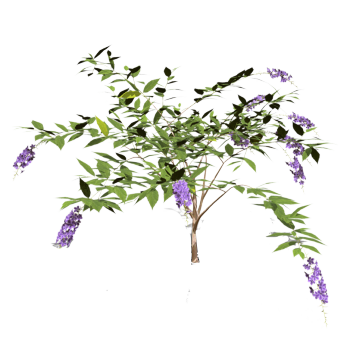
Flowering false forsythia
False Forsythia is a plant belonging to the family Verbenaceae and the genus False Forsythia. Shrubs, about 1.5-3 meters high; Branches have thorns, and young branches have soft fur. Leaves opposite, rarely whorled, leaves ovate elliptical or ovate lanceolate, papery, apex short pointed or blunt, base wedge-shaped, with soft hairs. The inflorescence is terminal or axillary, often arranged in a conical shape; Calyx tubular, hairy, approximately 5 millimeters long, 5-lobed, with 5 edges; The corolla is usually blue purple, about 8 millimeters long, slightly irregular, 5-lobed, with flattened lobes and slight hairs on the inside and outside. The drupe is spherical, hairless, glossy, and surrounded by enlarged persistent sepals. The flowering and fruiting period is from May to October, which can last throughout the year in the south. Native to tropical America.

Echinocactus
Echinocactus grusonii Hildm. is a perennial succulent plant of the genus Echinocactus in the family Cactaceae. The plant is light yellow green in color, with many light yellow wool like spines on the top; The stem is round and spherical, the sphere is large, light yellow green, and there are many light yellow wool like spines at the top; Flowers solitary at the tip, yellow, glossy, trumpet shaped. Flowering period in summer. Jinhu is native to the desert regions of Mexico and is distributed in dry, hot, and dry tropical deserts. Jinhu prefers a warm, dry, and sunny environment, is not tolerant to low temperatures, avoids waterlogging, and prefers loose, fertile, and calcareous sandy loam soil.
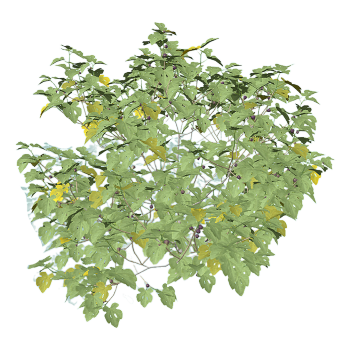
Fig
Ficus carica Linn. (Latin name: Ficus carica Linn.) is a deciduous shrub or small tree in the Ficus genus of the Moraceae family. The plant has many branches, and the leaves are small lobes ovate with irregular blunt teeth on the edges; The fruit grows between the leaf axils and is pear shaped, with a purple red or yellow color when ripe. Figs actually have flowers, but the inflorescence is a hidden inflorescence, and the flowers are hidden in the fruit. The fruits that are usually consumed are mainly the flowers of figs. Wild fig trees can only be pollinated by insects such as fig wasps.

Hua Zhu Qilin
Huazhu Qilin is native to Somalia and South Africa, and is a woody succulent plant. Euphorbia plants in the Euphorbiaceae family. The plant height is 10-20 meters and the plant width is 2-3 meters. Stem columnar, branched, 4-5 angled, succulent, medium green to dark green, and forming a broad water chestnut crown, 15 cm long, resembling a candlestick or pagoda. The edge has a deep serrated ridge, bearing a pair of spines and small leaves. Small flowers, purple red in color. The flowering period is in spring. Watering: Drought resistant, water less when first planted, water once a week during the growth period, and once a month in winter. Lighting: Full day illumination. Fertilization: I prefer to fertilize and fertilize once a month during the growth period.

Cordyline australis
Jianye Zhujiao is an evergreen shrub with a height of up to 3 meters. It has an upright stem with few branches, dense leaf scars on the stem, and leaves clustered at the top. It is purple red or green with red stripes, leathery and broad lanceolate, with hard and obvious ribs in the middle. The petiole is 10-15 cm long, and the leaf cap is 30-40 cm long. The flowers are conical inflorescences, attached to the top leaf axils, light red, and the fruit is a berry.

opuntia ficus-indica
Pear Cactus Indica (L.) Mill It is a fleshy shrub or small tree of the Cactus genus in the Cactaceae family, commonly known as "Xiantao" in western Sichuan. The plant is 1.5-5 meters tall. The branches and leaves are light green or gray green in color, with a wide oval shape, inverted oval shape to oblong shape, flat surface, and many small nests; When it blooms, the flowers are bright orange red, and when the fruit matures, it looks like a pear, so it is called a pear cactus; The flowering period is from May to June.

Pear fruit cactus seedlings
Pear Cactus Indica (L.) Mill It is a fleshy shrub or small tree of the Cactus genus in the Cactaceae family, commonly known as "Xiantao" in western Sichuan. The plant is 1.5-5 meters tall. The branches and leaves are light green or gray green in color, with a wide oval shape, inverted oval shape to oblong shape, flat surface, and many small nests; When it blooms, the flowers are bright orange red, and when the fruit matures, it looks like a pear, so it is called a pear cactus; The flowering period is from May to June.

Turtle backed bamboo
Monstera deliciosa Liebm. is a climbing vine like shrub in the Araceae family. The stem is thick and green, with pale crescent shaped leaves and fleshy aerial roots; The leaves are arranged in two rows, with a long stem and a heart-shaped oval shape. The leaves are thick and leathery, and the edges are feather shaped and split; The inflorescence stem is rough, the spatula is thick and leathery, the flesh inflorescence is nearly cylindrical, the flowers are unisexual, light yellow, and the flowering period is from August to September; The berry is light yellow in color and the fruit is edible. Due to its bamboo like branches, huge green leaves, and unique appearance resembling patterns on a turtle shell, it is named "Turtle backed Bamboo".

Gold and silver wood (honeysuckle)
Lonicera japonica, Lonicera japonica is a perennial deciduous shrub. The fruit is dark red round. Gold and silver "refers to the color of the flower, which is white at the beginning, corresponding to silver, yellow when it is dying, corresponding to gold. honeysuckle is cold-resistant as its name implies, hence the name gold and silver honeysuckle. "Famous doctors record" gold and silver honeysuckle can dispel wind, heat, detoxification, flowers can extract aromatic oil, seeds into the oil can be made of soap. In the Qing Dynasty, Chen Zengshou wrote "Lonicera Flower" that "the heart of the heart is exhausted in March, and the honeysuckle should be called to endure the spring flower." To express their love for gold and silver honeysuckle. Lonicera has the florid language of mutual companionship, extensive financial resources, courage and tenacity.

Purple Shrub Flower Plant 3D Model
Random Model


Specimen of tree sparrow bunting
195 View

Kebab
144 View

Wooden Bear Landscape Column
183 View

sea urchin skeleton specimen
140 View

Caohailong 3D model animation
141 View

MARTA CQ312 Italy Metro Train
186 View

Traditional Indian Food Malai Tikka
171 View

Wasp 3D Model Animation
100 View
