Popular Science Education
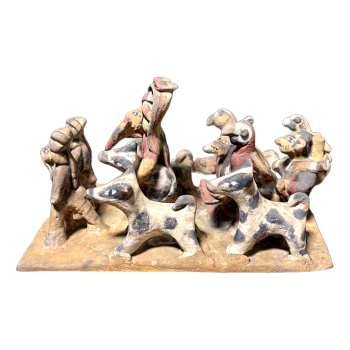
Nazca Culture Ritual Scene Slate
This artifact is from the Nazca culture, from about AD 200 to 600. The Nazca culture is known for its complex rituals and religious practices, and this ceramic plate shows an important aspect of the social and cultural life of the time.
William III Statue
William III (William III, 4 November 1650-8 March 1702), also known as William of Orange, was king of the Netherlands, England, Scotland, and Ireland. He ascended to the throne of England in 1689 through the "Glorious Revolution" and ruled with his wife Mary II until her death in 1694. In 1688, William III launched the "Glorious Revolution" with the support of the English nobility, overthrowing his father-in-law James II and becoming king of England, Scotland and Ireland. His rule marked the triumph of Protestantism and parliamentary power.
Grigore Kobaltescu bust
Gregoré Kobarzescu is a famous Romanian geologist and paleontologist, known as the founder of Romanian geology and paleontology. The research of Grigore Kobalzescu not only laid the foundation of Romanian geology and paleontology, but also provided unique insights into petroleum geology. His work had a profound influence on later scientific research.
Babylonian cuneiform inscription "Caillou Michaux"
Caillou Michaux "is a Babylonian cuneiform inscription that records a contract made by a father, Nirah nasir, to donate farmland to his daughter Dur Sharrukinaia'itu. This inscription adopts an ancient writing style, symbolizing ancient and famous writing traditions. It provides a detailed description of the donated land, the names of the donors and beneficiaries, and includes a series of sacred curses to prevent the inscription from being destroyed or the donation from being questioned.
Bronze decorative axe
Bronze decorative axe discovered in Tomb 697 at the Hallstatt Cemetery in Austria.
The Denard currency during the Roman Republic period
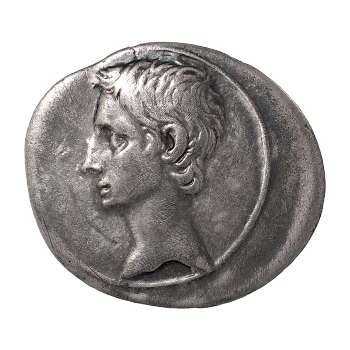
Denarius is an ancient Roman silver coin that was first introduced around 211 BC. Widely used during the Roman Republic and Roman Empire, it became the main currency unit at that time. Octavianus, later known as Augustus, was the first emperor of the Roman Empire and ruled from 27 BC to 14 AD. On the Denard coins issued between 44 BC and 27 BC, his portrait and various symbols of Roman power and victory were usually engraved.
Migvie Kirk Monument in Aberdeenshire
Migvie Kirk is located on a small road northwest of Tarland in Aberdeenshire. This irregularly shaped stone is made of gneiss and is 2.1 meters high. The front of the stone faces east, away from the gate you just walked through. The front is mostly occupied by carved crosses and decorative patterns. The outline of the cross is unusual, with four arms intersecting at the center. The upper corner is carved into the shape of a metal ring, as if this cross is a pendant depiction. Appropriate lighting and a little imagination are needed to see clearly, but there are other carvings on the area left by the angle of the cross.
King Gustav Vasa's gilded crown helmet
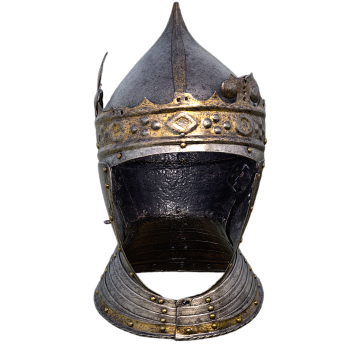
The gilded crown adopts a medieval style, symbolizing Gustav Vasa as both a part of the old alliance and a part of the newly established hereditary monarchy. The helmet was used at Gustav Vasa's funeral in 1560, when witnesses mentioned a helmet decorated with a gilded crown. The helmet was purchased for the king by Klaus Heigel, the king's agent, in Augsburg.
Prehistoric Stone Tombs Site in Kilmatin Canyon
The prehistoric stone tomb site in Kilmatin Gorge, Scotland, has a history of approximately 4000 years and is a large circular tomb.
Roman currency Denar
Denarius is an ancient Roman silver coin that was first introduced around 211 BC. Widely used during the Roman Republic and Roman Empire, it became the main currency unit at that time. Octavianus, later known as Augustus, was the first emperor of the Roman Empire and ruled from 27 BC to 14 AD. On the Denard coins issued between 44 BC and 27 BC, his portrait and various symbols of Roman power and victory were usually engraved.
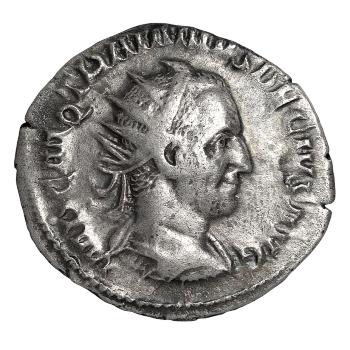
Roman currency Antoninian
Antoninianus is a silver coin from the Roman Empire period, introduced by Emperor Caracalla in 215 AD. Although its face value is two Denarius, its weight is much lower than that of two Denarius. Antoninian initially contained about 49.5% silver, but over time its silver content continued to decrease, reaching only 2.5% silver by 274 AD.
Swedish King Eric XIV's Parade Armor
This armor may have been manufactured in Alboga, Sweden around 1562 and sent to Antwerp, Belgium for decoration by goldsmith Elisaeus Libaerts. This armor was worn by King Eric XIV on October 2, 1564, when he returned to Stockholm with his military entourage after launching a military operation in Blekinge, southern Sweden.
The seal of the Diocese of John and Paul
The seal of the Diocese of John and Paul bears the inscription of Lake Eger and Krems on the banks of the Danube River. The 17th century seal depicts the martyrs John and Paul, both wearing armor and helmets, one holding a sword and the other holding a palm branch.
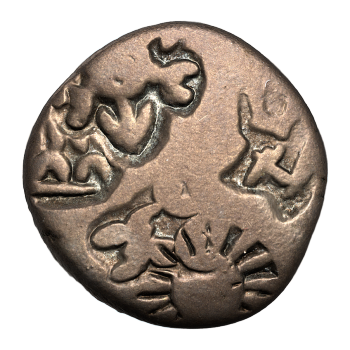
Silver Tapping of Karshapana during the Peacock Dynasty
Karshapana is a silver currency in ancient India, which first appeared around the 6th century BC. They are usually issued by merchants and bankers, not by the state. These coins usually have one to five or six symbols, initially only stamped on the front of the coin. During the Peacock Dynasty (approximately 322-185 BC), the Kalshapana coin was widely used. The weight of these coins is usually around 3.4 grams. Coins usually have symbols such as the sun on them. These silver struck coins ceased to be minted in the 2nd century BC and continued to have a wide-ranging impact on trade and economy for the next five centuries.
The Victory of Crassus Greek Coloane
The Victory of Krates Greek Stoa is an ancient Greek architectural relic. This colonnade is located in the Holy Land of Delphi, near the Temple of Apollo. It was built between 478 BC and 470 BC to commemorate the Athenians' victory in the Persian Wars.
The Monument of Intef
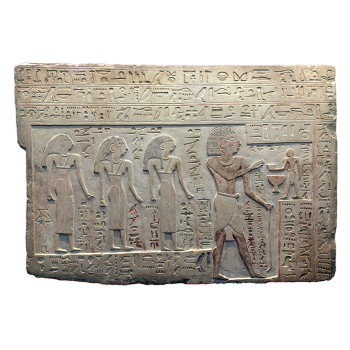
The Intef Stele is a stone tablet from the Middle Kingdom period of ancient Egypt, dating back to around 2000-1988 BC. It records the life and achievements of Intef. The top of the stone tablet bears the name of Nebhepetre Mentuhotep II, the founder of the Middle Kingdom. Intef claimed to be his servant and served as the fortress supervisor.
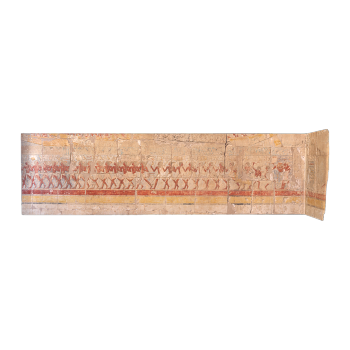
The painted reliefs of the Bakhrihat Shepsut Temple
The pictographic characters carved by colored painting have repeated lintel reliefs with the words neb ankh, djed, and was written on them; All life, stability, and governance. The relief is located in the northwest corner of the column hall of the Hassel Church in the Hadbahrihat Shepsut Temple in Egypt.
Random Model
Zhou Qingding's sculpture "Elephant"

373 View
Select chair
182 View
Toyota Hilux Pickup
221 View
Willys Jeep SAS Desert Patrol
195 View
German Exakta VX 19 camera
164 View
Guppy Fish 3D Model Animation
109 View