Franz Joseph I

Franz Joseph I

Franz Joseph I (August 18, 1830 – November 21, 1916) was the Emperor of Austria and Austria Hungary (December 2, 1848 – November 21, 1916). The grandson of the last Holy Roman Emperor Franz II, nephew of Ferdinand I, and eldest son of Archduke Franz Karl. On June 28, 1914, the Sarajevo Incident occurred. In July, at the instigation of Foreign Minister Count Bertold, Franz Joseph rashly issued an ultimatum to Serbia, leading to the outbreak of World War I.
Theodor Leschetsky

Theodor Leschetsky

Theodor Leschetizky (1830-1915) was a Polish pianist, composer, and music educator. In his early years, he was brought by his father to Vienna to study piano with Cherni. At the age of 11, he conducted a piano concerto with Mozart's son Franz Krzysztof Wolfgang Mozart, and began teaching piano at the age of 14. Afterwards, he worked at the St. Petersburg Conservatory of Music. He is one of the most famous piano teachers in history, and has also composed some piano pieces and two operas. His famous students include Paderewski and Arthur Schnabel.
Edward Ur

Edward Ur

Edward Ur is a lawyer and the mayor of Vienna. From 1832 to 1840, he was a local judge and then became a private lawyer. In 1848, he served as a captain in the National Guard and became a member of the Vienna City Council in 1861. Edward served as mayor from 1882 to 1889. During his tenure, Edward was particularly dedicated to fire and rescue services as well as the Vienna market.
Carl Miller

Carl Miller

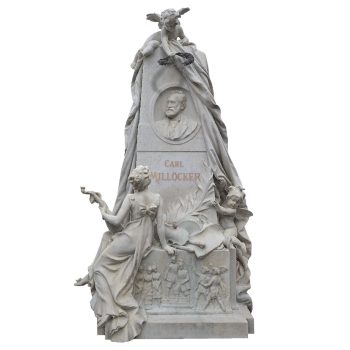
Karl M ü ller (1842-1899) was an Austrian composer and conductor who began learning to play the flute at a very young age. He was a student at the Vienna University of Music and Performing Arts (formerly known as the Vienna Music Friends Association Music Academy), and at the age of 16, he became a flutist at the Joseph City Theatre under the direction of Franz von Supp è. In 1869, he was appointed as the conductor of the Second Orchestra of the Vienna Theatre. Regarded as one of the three great masters of Viennese classical light opera, alongside Johann Strauss II and Franz von Supp é.
Anton Stoch

Anton Stoch

Anton Stoch (1813-1887) was an Austrian composer and choir conductor. He is the choir conductor of the Vienna Men's Singing Association, the Frohsinn Singing Association in Linz, and the Lower Austrian Singing Association, as well as the orchestra conductor of the Vienna Theater and the Joseph City Theater. He passed away in Vienna at the age of 74. His honorary tomb is located at the Vienna Central Cemetery.
Standing Christ

Standing Christ

This model is a standing Christ, with his right hand leaning against a low wall. This individual character was originally part of a group of characters. It may depict the scene of Christ and an adulterous woman, or the scene of Christ and a Samaritan woman by the well. Now collected in the Heiligenkreuz Monastery Museum
Bishop's bust

Bishop's bust

The bishop's bust at the Heiligenkreis Monastery Museum. Giovanni Giuliani's head made of basswood was initially placed on a choir stall in the university church. After renovation work, it entered the museum.
Striped pattern base tray

Striped pattern base tray

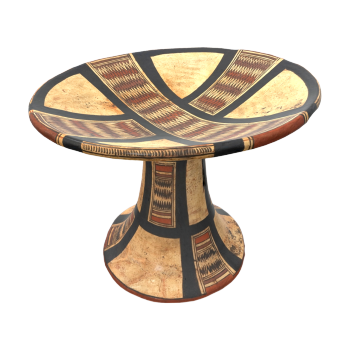
The Macaracas style in the Gran Cocl é region was produced between approximately 1000 and 1050 AD. This multicolored ceramic plate features a base and a high saturation of decorative design, retaining some elements of Conte style, such as thick black lines outlining patterns and the use of purple. The typical features of Macaracas style, such as claw and lizard patterns, are replaced by horizontal lines in red and purple, as well as lines resembling bird beaks, all surrounded by thick black lines.
The Austrian Fountain on Freion Square

The Austrian Fountain on Freion Square

The Austrian Fountain on Freion Square in Vienna's First District. This fountain was designed by Ludwig von Schwantaler, and the statue was made by the Royal Bavarian Ore Foundry in Munich under the guidance of Ferdinand Miller. This fountain was unveiled on October 16, 1846, consisting of a four-way basin made of Mathausen granite, a pillar surrounded by oak trees, allegorical figures symbolizing the four main rivers of the monarchy at the time (Danube, Po, Elbe, Vistula), and an Austrian statue draped in a star cloak, wearing a wall crown, holding a spear and shield.
Austria

Austria

This sculpture is a symbol of Austria, located at the end of the Austrian Fountain on Freion Square in Vienna's first district. The sculpture depicts a woman holding a spear and shield, with the emblem of the empire engraved on her shield. This sculpture was designed by Munich sculptor Ludwig Schwantaler in 1844 and cast by Ferdinand von Miller in Munich until it was completed in 1846. During the Habsburg monarchy, Austria's image was seen as a symbol of a multi-ethnic Austrian state. Later, she became a fable of the Austrian nation-state. Her name corresponds to the Latin name of Austria.
Jars from the 18th period of the ancient Egyptian dynasty

Jars from the 18th period of the ancient Egyptian dynasty

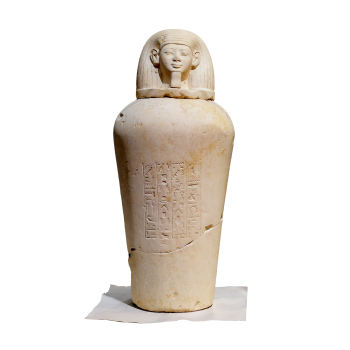
It is a cultural relic from the 18th period of the ancient Egyptian dynasty, approximately from 1400 BC to 1352 BC, during the reigns of Thutmose III to Amenhotep III. Discovered by Egyptologist Howard Carter and millionaire businessman Theodore M. Davis in King's Valley in 1902. Carter later discovered Tutankhamun's tomb, while Davis donated these artifacts to the Harvard University Museum of the Ancient Near East. Usually a set of four pieces is used to store the internal organs of mummified corpses. This exquisitely carved jar is one of three excavated jars in King's Valley.
Winter Fable

Winter Fable

The Winter Fable "is a sculpture located in the Austerlitz Castle Park. This sculpture depicts a man wearing a fur hat and fur scarf, holding a large tree branch in his hand. This sculpture was created by Ignaz Lenglach. Ignaz Lenglach (July 25, 1698, near Persenberg - around 1780, Baden) was a German born Baroque sculptor who primarily worked in southern Moravia. His works have diverse styles, including bottles and jars, little angels, reliefs, busts, and animal images
White tailed deer pattern ceramic disc

White tailed deer pattern ceramic disc

The Conte style ceramic plate from the Gran Cocl é region dates back to around 700 to 1000 AD. This type of plate features the typical color of Conte style (red circular base, black and red patterns on cream base). The typical pattern at the center of the plate is a white tailed deer (Odocoli virginianus), which repeatedly appears in this style and may symbolize some mythological significance. Remarkably, the claw details in the pattern became more stylized in the subsequent Macaracas style (1000-1150 AD)
Cleveland Museum of Art Silver Horn

Cleveland Museum of Art Silver Horn

The silverware collected by the Cleveland Museum of Art, made in about 700 AD, is from Central Asia or Xizang and belongs to the early works of the eighth century. Made of silver and decorated with gold plating, presenting a magnificent appearance. Showcased the creator's exquisite craftsmanship and delicate skills. The specific purpose is still unknown, but they may have been used as decorations for religious ceremonies or aristocratic residences. The design and decoration of the utensils used complex geometry, animal and plant patterns and character images, which showed the cultural characteristics and artistic style of Central Asia or Xizang at that time. It is the Cleveland Museum of Art through J H. One of the important collectibles purchased by the Wade Fund.
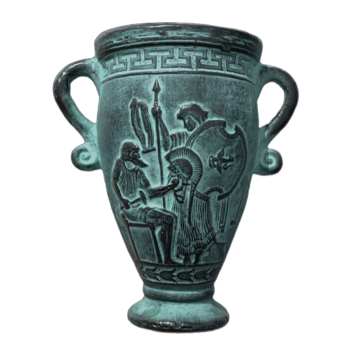
Cleveland Museum of Art silverware - Cup
Cleveland Museum of Art silverware - Cup

The silverware collected by the Cleveland Museum of Art, made in about 700 AD, is from Central Asia or Xizang and belongs to the early works of the eighth century. Made of silver and decorated with gold plating, presenting a magnificent appearance. Showcased the creator's exquisite craftsmanship and delicate skills. The specific purpose is still unknown, but they may have been used as decorations for religious ceremonies or aristocratic residences. The design and decoration of the utensils used complex geometry, animal and plant patterns and character images, which showed the cultural characteristics and artistic style of Central Asia or Xizang at that time. It is the Cleveland Museum of Art through J H. One of the important collectibles purchased by the Wade Fund.
Copy Stream Vase

Copy Stream Vase

The design inspiration for replicating stream vases usually comes from streams in nature, which may use flowing lines and shapes to simulate the flow of water. Copying stream vases may target a wide range of consumer groups, especially those who like natural style decoration but do not pursue high-value collectibles. Move. The replica stream vase can be made of various materials, such as ceramic, glass, metal, or plastic, depending on the production technology and design requirements The design of such vases may also reflect a concern for environmental protection, reminding people to cherish the natural environment by imitating natural landscapes.
Ceramic disc with humanoid pattern

Ceramic disc with humanoid pattern

The Conte style ceramic plates from the Gran Cocl é region were made between approximately 700 and 1000 AD. This dish is known for its iconic Conte style color (red base, black and red patterns on cream base). The center of this plate features a typical humanoid pattern, which appears in multiple plates of the same style, indicating that it may represent an image from some mythology. Especially this specific humanoid pattern has been used in multiple advertising campaigns and has become a well-known popular image.
Austrian Baden Shooting Competition Commemorative Medal

Austrian Baden Shooting Competition Commemorative Medal

This badge was made to commemorate the 12th Lower Austrian Province Shooting Competition held in Baden, Austria. The badge depicts a shooter dressed in historic attire, holding a target and rifle. In the background, we can see the main facade of W ü rzburg Castle and the city emblem of Baden. There is a plaque on the back of the badge that reads' GG LINDNER M Ü NCHEN ', indicating the company that produced this badge. This badge is made of silver plated brass, 4.5 centimeters high, and was made in 1911.
Cleveland Museum of Art Silverware - Vase

Cleveland Museum of Art Silverware - Vase

The silverware collected by the Cleveland Museum of Art, made in about 700 AD, is from Central Asia or Xizang and belongs to the early works of the eighth century. Made of silver and decorated with gold plating, presenting a magnificent appearance. Showcased the creator's exquisite craftsmanship and delicate skills. The specific purpose is still unknown, but they may have been used as decorations for religious ceremonies or aristocratic residences. The design and decoration of the utensils used complex geometry, animal and plant patterns and character images, which showed the cultural characteristics and artistic style of Central Asia or Xizang at that time. It is the Cleveland Museum of Art through J H. One of the important collectibles purchased by the Wade Fund.
Panama circular base disk

Panama circular base disk

It is a ceramic plate with a circular base, belonging to the Conte style, made approximately between 700 and 1000 years ago, from the Gran Cocl é region, and now belongs to the archaeological category of Panama. This dish is known for its unique Conte style colors (red, black on cream base, and circular base). The center of the plate usually features a typical animal image, such as a white tailed deer, and is decorated with details such as claws, which become more stylized in the subsequent Macaracas style.
Scyphate Gold Bowl

Scyphate Gold Bowl

The gold bowl named Scyphate was created between 1059 and 1067, belonging to the Byzantine Empire period, which was Byzantine art in the 11th century. It is a shallow bowl commonly used for drinking alcohol or as a ceremonial utensil. With a diameter of 2.5 centimeters and made of pure gold, it showcases the exquisite metal craftsmanship and decorative art of the Byzantine period. Byzantine art is renowned for its ornate decorations, religious themes, and symbolism, and was used in religious ceremonies or court celebrations at the time. The design and production reflect the emphasis on refined living and religious beliefs in Byzantine culture. It is currently housed in the Cleveland Museum of Art.
Rax Mountain Bear Cave Association Commemorative Medal
Rax Mountain Bear Cave Association Commemorative Medal

This badge was created to celebrate the 15th anniversary of the Alpine Association's "Rax Mountain Bear Cave Association". There is a standing bear in the center of this circular badge. The back of the badge originally had a pin, but it has now been lost. The diameter of the badge is 4 centimeters.
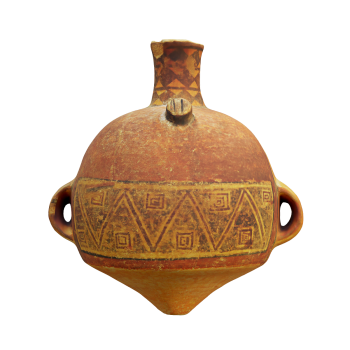
Late Inca civilization pottery

Late Inca civilization pottery

It is a type of pottery unique to the late Inca civilization, which lasted from approximately 1450 AD to 1552 AD, the peak of the Inca Empire, until the arrival of the Spanish conquerors. Pottery with distinct characteristics, with a spherical or oval body, a pointed bottom, handles or "wings" on both sides, and a wide and flat mouth at the top. The pottery art of the Inca period is famous for its rich colors and exquisite decorations. Decoration usually includes geometric patterns, animal and plant images, or mythological stories, which not only showcase the aesthetic concepts of the Incas, but also reflect their religious beliefs and social values.
Circular base animal decoration disc

Circular base animal decoration disc

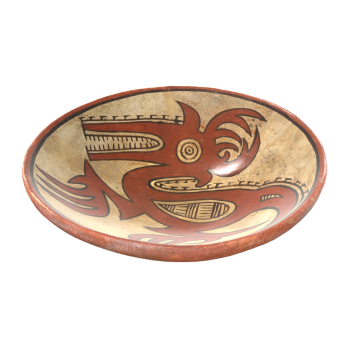
It is a ceramic plate with a circular base and animal shaped design, belonging to the Conte style, made approximately between 700 and 1000 years ago, from the Gran Cocl é region, and now belongs to the archaeological category of Panama. This type of ceramic is known for its unique central pattern, often depicting images of animals or mythical creatures, painted in black and red on a white or cream background, with edges often red. The decorative style of the plate reflects the characteristics of ceramic art during the Conte period, and its central pattern may represent a mythical creature with important cultural symbolic significance.
Da Wei De Kong Mandala

Da Wei De Kong Mandala

The Dawei King Kong Mandala was created in 1991 by monks from the Gelug sect at the Minneapolis Museum of Art in the United States. This mandala is made of colored silicate and adhesive on wood. Mandala is a visual representation of the Buddhist universe, used for meditation and enlightenment rituals. The process of making mandalas takes four weeks and is sanctified through prayer, ritual music, and performance.
Pottery made by Chim ú culture

Pottery made by Chim ú culture

It is a pottery made by the Chim ú culture, dating back to the Intermedio Tard í o period, approximately between 200 and 600 AD. Chim ú culture is an important civilization in the history of the Andean region of South America, known for its exquisite metalworking and large-scale architectural works. The pottery art of this period demonstrated a high degree of technological and artistic achievement, reflecting the political division and cultural diversity of the society at that time. Not only is it a practical daily item, but it is also an important archaeological material for studying cultural and social structures, religious beliefs, and artistic styles.
Offering bronze sculptures of Bodhisattvas

Offering bronze sculptures of Bodhisattvas

The bronze sculpture dedicated to Bodhisattva was created in 596 AD and is now housed in the Minneapolis Museum of Art in the United States. This cultural relic represents the formation stage of Chinese Buddhist sculpture, which is a small, portable copper religious sacrificial statue. The characteristics of this cultural relic are linear clothing folds and a mandala (body halo) with flame patterns, which are only represented by engraved lines. These characteristics suggest that artists may have worked based on paintings or sketches brought back from holy sites in India.
Collins Bowl - Bonn University Academic Art Museum

Collins Bowl - Bonn University Academic Art Museum

The Corinthian bowl collected by the Academic Art Museum of the University of Bonn is an ancient Greek pottery dating back to around 575 BC, representing the pinnacle of pottery production during the Corinthian period. The excavation location of this bowl is unknown, but its exquisite craftsmanship and decoration showcase the superb skills of ancient Greek potters. The bowl wall is very thin, the bottom is low, the belly is spherical, the mouth edge is noticeably outward sloping, and there are handles installed horizontally on both sides. The bowl is adorned with a circular decorative strip, with two to three groups of warriors depicted on one side and riders galloping to the left on the other side. These patterns not only beautify pottery, but also reflect the wars, myths, and nature worship of ancient Greek society
Collins style wine jug - Academic Art Museum of Bonn University

Collins style wine jug - Academic Art Museum of Bonn University

A Corinthian wine jug, collected at the Academic Art Museum of the University of Bonn, is a pottery piece produced in Corinth between 625 BC and 600 BC. Collins was a leader in pottery production at that time, and its products were widely exported throughout the Mediterranean region. The specific location where this pottery was unearthed is unknown. It is a pot with a three leaf shaped mouth edge and a sometimes upturned strap handle, which connects the mouth edge and shoulder. The black painting technique invented by Collins was used for drawing. It is an important type of ancient Greek pottery, and its design and decorative style reflect the prosperity of Greek culture and art.
Jules Verne Memorial

Jules Verne Memorial

The Jules Verne Memorial is a work located in Vigo Port, Galicia, Spain. This monument was created by Spanish sculptor Jose Morales. He is a famous French writer whose adventure novels are usually set in exotic places. Although Jules Verne had only been to Vigo a few times, Vigo's bay was permanently locked in literary memory in "Twenty Thousand Leagues Under the Sea," even though Captain Nemo's Nautilus was suspended during his oceanic journey. From this place overlooking the bay, Verne sat with a book in his hand, on the tentacles of a giant squid, the enemy of the crew of the Nautilus.
Odysseus

Odysseus

Odysseus, also known as Ulysses in Latin, is the legendary king of Ithaca in western Greece, son of Laertes and grandson of Alceus. My wife is Penelope. He participated in the Trojan War and captured the city in the tenth year of the war using the Trojan horse strategy. Afterwards, he went through a long journey of ten years and finally returned to his hometown to reunite with his family after enduring numerous hardships. This story is recorded in the epic poem 'Odyssey'.
Silver sacrificial bowl

Silver sacrificial bowl

This silver bowl was created by the famous silversmith Maung ShweYon from Myanmar. The bottom of the bowl is engraved with the silversmith's logo, a sitting deer in a 16 o'clock star, and the silversmith's initials' M. ' S.Y.'。 This bowl depicts ten scenes from Patachara's hard experience before becoming an outstanding Arhat and the main disciple of Buddha. Her story is included in "Therigatha," a collection of poems written around 1880 and currently housed in the Minneapolis Museum of Art
The "Candy Box" pottery made by Henry Amiro

The "Candy Box" pottery made by Henry Amiro

Henri Amiro was a French ceramic artist in the early 20th century, known for his exquisite mold making and decorative ceramics. The work 'Bonbonni è re' (candy box) is a typical representative of the early 20th century, showcasing his artistic style and techniques. It is one of the collections of the Parthenay Museum of Art and History in France. This piece was not glazed, which was very rare at the time. Amiro's work is not only a practical container, but also a sculptural artwork showcasing his artistic talent, reflecting the high level of French ceramic art in the early 20th century.
Statue in Seville Garden

Statue in Seville Garden

The statue in Seville Garden was created by artist Artur Coelho and is located in the Jardim Rainha D. Maria Garden in Seville
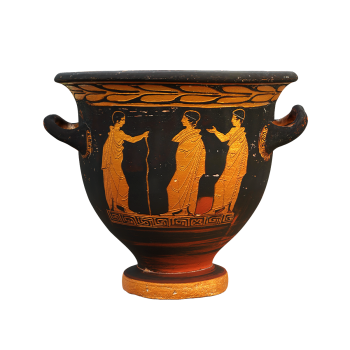
Attic Red Pottery Bottle - Bonn University Art Museum

Attic Red Pottery Bottle - Bonn University Art Museum

It is a masterpiece of ancient Greek pottery art, currently housed in the Bonn University Art Museum. Known for its unique shape and decorative style, it is characterized by patterns drawn with black or dark brown pigments on reddish brown clay, creating sharp contrasts. It usually has a wide mouth rim and a downward contracting neck, shaped like an inverted bell, hence the name "Bell Ceramic Bottle". In ancient Greece, it was widely used to mix water and wine, and was an indispensable container for banquets and social events. The patterns on the bottle usually depict mythological stories, daily life scenes, or animals, and these intricate paintings showcase the superb skills of ancient Greek artists.