The bowl depicting the 'female cavalry'

The bowl depicting the 'female cavalry'

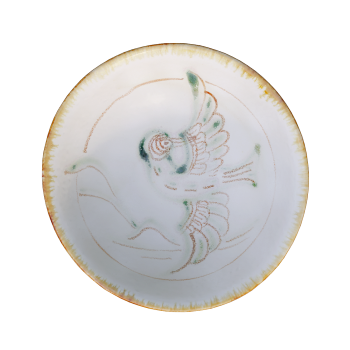
The bowl depicting a female knight "is an Iranian artwork from the 12th to 13th centuries, currently housed in the Minneapolis Museum of Art in the United States. This artwork is a bowl depicting a lady riding a horse. Mina'i ware is a type of pottery from the Seljuk period in Iran (1038-1194). This period may be the most creative era in Persian pottery production. In addition to gold-plated vessels, minai vessels, and monochrome blue glaze, underglaze painted pottery was also produced. These bowls represent a popular variation of black design painted under transparent turquoise colored glaze.
Bamboo tube seen in the mountains

Bamboo tube seen in the mountains

It is an artwork created by Zhang Zongfan, inheritor of the intangible cultural heritage of Baoqing bamboo carving, and his students using bamboo carving techniques. Baoqing bamboo carving is a traditional handicraft in Shaoyang City, Hunan Province, China, known for its exquisite carving techniques and unique artistic style. The unique cultural charm and artistic expression showcase the tranquility and harmony of the mountain scenery. The work has a novel concept, atmospheric composition, sharp knife technique, and exquisite knife skills. Through more than ten years of learning and practice, I have proficiently mastered various key techniques of Baoqing bamboo carving. It is not only a continuation of traditional handicrafts, but also a praise for natural beauty and cultural significance, with high artistic value and collection significance.
The wedding box made by Umbriach

The wedding box made by Umbriach

The wedding box made by Umbridge is a 14th century artwork currently housed in the Minneapolis Museum of Art in the United States. This piece is a wedding box made by Baldasaray Deli Umbriach. The Umbriaci Workshop was an important ivory and bone carving workshop in northern Italy from around 1375 to possibly as late as 1433. They are now known as wedding boxes, which are approximately one foot wide with lids rising in the center. Their products may have been made for inventory rather than individual commissions, meeting the market demand for engagement and wedding gifts.
Bronze Tripod Cauldron of the Shang Dynasty

Bronze Tripod Cauldron of the Shang Dynasty

The "Shang Dynasty Bronze Tripod" is a tableware from the 12th to 11th centuries BC, currently housed in the Minneapolis Museum of Art in the United States. The prototype of the tripod is a rough pottery of the same shape and name made during the Erlitou Culture period (around 3000-2000 BC). The edge of this tripod has thunder patterns, which is a symbol of copper casting in the Shang Dynasty.
Elegant Fun "bamboo tube

Elegant Fun "bamboo tube

The bamboo green carving handicraft carefully created by Zhang Zongfan, inheritor of the intangible cultural heritage of Baoqing bamboo carving, and his students. Under the name of "elegance and fun", it reflects the pursuit of refined lifestyle in traditional Chinese culture. Adopting the unique bamboo carving technique of Baoqing bamboo carving, the outer layer of green skin of bamboo is used for detailed carving. Depicting elements such as mountains, waters, flowers, birds, calligraphy, or poetry that literati and scholars love, vivid natural landscapes or cultural images are presented through exquisite knife techniques and profound expressive power. It is not only a practical object, but also a collectible with profound cultural significance and artistic value.
The stone lintel of the Lord God Vishnu

The stone lintel of the Lord God Vishnu

The portrait of this stone lintel is based on Buddhist legend, depicting the monarch god Vishnu holding a stick, wheels, lotus flowers, and conch shells. Produced in the 12th century AD, it is currently housed in the Minneapolis Museum of Art. His two companions stood on either side: Lakshmi holding a lotus flower, and Saraswati holding a stringed instrument. Vishnu's vehicle, the winged Garuda, appeared behind him, with 10 incarnations of Vishnu carved on top.
Aztec vase

Aztec vase

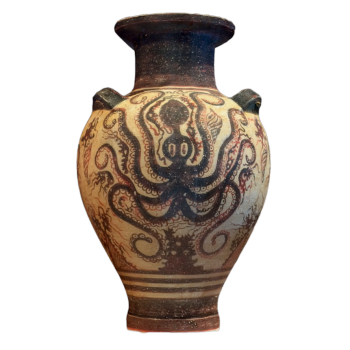
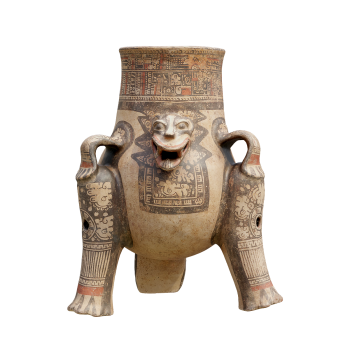
The Aztec vase is one of the rich cultural heritages of the Aztec civilization, which was particularly prominent in the post classical period of central Mexico. The Aztecs were skilled in pottery art, and their vases were both practical and ceremonial, often depicting complex patterns of black, red, and orange, depicting myths, wars, or everyday life scenes. These vases are not only containers, but also carry important cultural and religious meanings, often used in ceremonies and celebrations. The Aztecs had advanced ceramic technology, using the "sliding" technique to coat the surface of pottery with colored mud before firing, in order to achieve precise pattern design.
Autumn Pond Dew Flowers "Bamboo Green Slices

Autumn Pond Dew Flowers "Bamboo Green Slices

It is a traditional handicraft created by Zhang Zongfan, inheritor of the intangible cultural heritage of Baoqing bamboo carving, and his students. Baoqing bamboo carving is renowned for its exquisite bamboo green carving technique, which utilizes the outer layer of green skin of bamboo for artistic creation. It is appreciated for its delicate texture and vivid expressive power. With the theme of "Autumn Pond Dew Flowers", the serene beauty of the lotus pond in autumn is showcased through exquisite carving techniques. Depicting elements such as lotus flowers, lotus leaves, and dewdrops, the carving on bamboo leaves conveys the freshness and tranquility of lotus ponds in autumn mornings, as well as the vitality and tenderness of flowers nourished by dew.
Flower and Bird Vase

Flower and Bird Vase

Flower and bird vases are porcelain from the late Joseon Dynasty and were made around the late 19th to early 20th century. This porcelain vase is decorated with underglaze blue, with an outer diameter of 34.3 centimeters and an overall height of 49.4 centimeters. Its design is themed around birds and flowers, reflecting the delicacy and beauty of the porcelain art of the Joseon Dynasty. The porcelain vase was donated by the Mountain Chamber of Commerce to the Cleveland Museum of Art in memory of Jiro Yamanaka, with donation number 1989.117. This work not only showcases the traditional culture of the Korean Peninsula, but also reflects the craftsmanship of porcelain making at that time, and is one of the important collections of the Cleveland Museum of Art.
Roy Fuller

Roy Fuller

Roy Fuller "is a work of art from the 19th and 20th centuries, currently housed in the Minneapolis Museum of Art in the United States. This work is by a dancer named 'Roy Fuller'. Roy Fuller (1862-1928) was an American dancer, actor, and choreographer. She played a key role in the development of 'free dance', which was the predecessor of modern dance. She not only choreographed her own body movements, but also her silk costumes and patented stage lighting technology. Fuller received a warm welcome in Paris and became a part of the Art Nouveau movement, associated with symbolism.
Bamboo spring carved hat bucket

Bamboo spring carved hat bucket

Baoqing bamboo carving is a traditional handicraft in Shaoyang City, Hunan Province, known for its exquisite bamboo and green carving techniques. As the inheritor of intangible cultural heritage of this technique, Zhang Zongfan and his students jointly completed an exquisite bamboo spring carved hat barrel work. The technique of bamboo spring carving is adopted, which is a craft of carving on bamboo springs (the inner layer of bamboo skin). Through fine manual carving, complex patterns and perspective effects are created as decorations. It showcases the exquisite craftsmanship of Baoqing bamboo carving and a profound understanding of traditional culture. The carved patterns are exquisite and detailed, with distinct layers. Light and shadow penetrate through the gaps of the carving, creating a unique visual effect.
The Three Graces of Dance, Meihui

The Three Graces of Dance, Meihui

The Three Graces of Dance "is a 19th-century French artwork currently housed in the Minneapolis Museum of Art in the United States. This artwork is a sculpture shaped like three goddesses named 'Three Graces'. In Greek mythology, Charites, also known as Graces, are three or more goddesses who represent charm, beauty, nature, human creativity, kindness, and fertility. They are usually considered daughters of Zeus and the ocean goddess Eurynome. In Roman mythology, they are called Gratiae, which means' grace '
Chinese cloisonn é vase

Chinese cloisonn é vase

Cloisonn é vase is one of the traditional Chinese handicrafts, known for its exquisite enamel craftsmanship and rich colors. The cloisonn é vase is made using the copper body cloisonn é enamel process, which involves using fine copper wire to create a pattern on the copper body, then filling it with enamel glaze, and undergoing high-temperature firing, polishing, and other processes. Its characteristics are bright colors, fine patterns, and luxurious texture. Cloisonn é vases not only have high artistic value, but also contain rich cultural connotations. It integrates various traditional Chinese art forms such as painting, sculpture, and metalworking, and is a treasure of Chinese traditional arts and crafts.
Ancient vases

Ancient vases

Ancient Chinese ceramic vases also have rich cultural significance. They not only demonstrated the superb skills of ancient craftsmen in technology, but also reflected the social trends and aesthetic tastes of the time in art. For example, the cloisonn é vases of the Qing Dynasty are famous for their exquisite enamel craftsmanship and rich colors. Ancient vases are not only witnesses of history and culture, but also the crystallization of art and craftsmanship. They provide us with important perspectives on understanding ancient societies and are still cherished by museums and private collectors around the world.
Double cup maze cup 1950.83. b

Double cup maze cup 1950.83. b

The Double Cup Maze Cup is a 16th century German made artifact collected by the Cleveland Museum of Art, dating back to approximately 1530. This piece is made of maple wood and decorated with gold and silver plating. The crossbar on its left side measures 10.4 centimeters (4 1/8 inches). It is a double cup-shaped maze cup lid with a clever design that can be used as a sharing cup. This lid is engraved with the emblem of Judaism, indicating that it may be related to Jewish culture. The Cleveland Museum of Art, through J H. Wade Fund purchased this work.
Blue glazed Kashan kettle

Blue glazed Kashan kettle

The blue glazed Kashan kettle is a 12th century Iranian Kashan pottery, currently housed in the Minneapolis Museum of Art in the United States. This work is a type of kettle, featuring a full body, birds, plants, and low relief calligraphic patterns. It is one of the few similar deep blue glazed vessels in the late Seljuk period of the Kashan workshop. Kashan pottery is a type of pottery from the Seljuk period in Iran (1038-1194). This period may be the most creative era in Persian pottery production. In addition to gold-plated vessels, minai vessels, and monochrome blue glaze, underglaze painted pottery was also produced.
Dragonfly and Lotus Pond Theme Bamboo Green Slices

Dragonfly and Lotus Pond Theme Bamboo Green Slices

Baoqing bamboo carving is a traditional handicraft in Shaoyang City, Hunan Province, China, known for its exquisite carving skills and unique artistic style. As the inheritor of the intangible cultural heritage of Baoqing bamboo carving, Zhang Zongfan and his students jointly completed this work, which is an outstanding representative of this traditional craft. The bamboo green carving technique is adopted, which involves carving on the green outer skin of bamboo, using the natural color and texture of bamboo green to create lively dragonfly and lotus pod patterns. Dragonflies symbolize agility and change, while lotus pods symbolize holiness and vitality. The combination of the two showcases the beauty of harmony in nature and is also rich in auspicious meanings of traditional Chinese culture.
During the Spring and Autumn Period and the Warring States Period, wine pots were used

During the Spring and Autumn Period and the Warring States Period, wine pots were used

The Chinese Warring States period wine pot, from the 5th to 4th centuries BC, is now collected at the Minneapolis Museum of Art. During the Warring States period, a new trend of bronze decoration emerged, which used inlay techniques to depict more vivid painting scenes. Generally speaking, inlay involves inserting very thin gold, silver, or copper foil wires into thin lines engraved on the copper surface. The technique of decorating copperware with turquoise or even rarer turquoise has existed since the Erlitou Culture period. In the late Spring and Autumn period and the Warring States period, this technique, which now includes more gold and silver inlay, began to be widely used, and the most exquisite vessels and accessories, such as hooks, were made during this period.
Shang Dynasty wine vessels

Shang Dynasty wine vessels

Gou is a wine vessel from the 12th to 11th centuries BC, currently housed in the Minneapolis Museum of Art in the United States. This work is a tall wine glass, with its trumpet shaped top gradually narrowing to the slender center, and then expanding again to the slightly outward turned bottom. Archaeological evidence shows that bronze spears first appeared during the Erligang period of the Shang Dynasty. The gradual decline of wine vessels may be related to King Zhou's denigration of alcohol consumption, as he believed that excessive drinking led to the collapse of the Shang Dynasty. This temple is decorated with a variant of the gluttonous mask. The entire vessel has a tight spiral background pattern, known as the thunder pattern, which is a symbol of copper casting in the Shang Dynasty.
Pine Forest Landscape Bamboo Spring Carving

Pine Forest Landscape Bamboo Spring Carving

Baoqing bamboo carving is a traditional handicraft in Shaoyang City, Hunan Province, China, known for its exquisite carving skills and unique artistic style. This technique uses bamboo springs (the inner layer of bamboo skin) as carving materials, and through meticulous manual carving, creates works with rich cultural connotations and artistic value. As the inheritor of the intangible cultural heritage of Baoqing bamboo carving, Zhang Zongfan and his students jointly completed this work, demonstrating superb carving skills and a profound understanding of natural landscapes. The fine lines and clear layered composition vividly depict the natural beauty of the pine forest, including the towering trees, lush branches and leaves, and the tranquil atmosphere of the forest
Ceramic containers from the Inca Empire period

Ceramic containers from the Inca Empire period

It is a ceramic container from the Inca Empire (1470 to 1532) period, with distinct Inca cultural characteristics. Usually spherical or elliptical in shape, with a narrow neck and wide mouth at the top and a narrow bottom, making it ideal for storing and transporting liquids. Plays an important role in daily life and is also used as a sacrificial container in religious and ceremonial activities, reflecting the worship and prayers of the Incas towards gods. In 2023, an Inca style Ar í balo ceramic container was returned by the heir of Isabel Pereda from Argentina, completing his journey back home. It is a manifestation of the increasing awareness of international cooperation and cultural heritage protection.
Ming Dynasty Tibetan Green Tara Statue

Ming Dynasty Tibetan Green Tara Statue

The Tibetan style Green Tara statue from the Ming Dynasty is a 15th century Ming Dynasty artwork, currently collected at the Minneapolis Museum of Art in the United States. Green Tara is the incarnation of Avalokitesvara Bodhisattva. Tara, also known as Tara in Sanskrit, is the full name of Saint Salvation Tara Buddha Mother. In ancient China, she was referred to as Tara Bodhisattva or Tara Guanyin. Tara has many different manifestations, including 21 Tara, 500 Tara, and others, all of which are incarnations of Avalokitesvara Bodhisattva. Green Tara is the main deity of all Tara, capturing all the merits of the other 20 incarnations.
Peruvian Chancay style pottery

Peruvian Chancay style pottery

Known for its unique "black background and white flowers" style, it is one of the most representative works of art in Peru's pre Spanish coastal civilization. Mainly using white as the base, drawing geometric patterns and vivid animal images in black or brown, such as fish, monkeys, cats, birds, as well as complex mesh patterns, squares, and Greek patterns. The production techniques include manual molding, as well as commonly using molds and small sculptures for decoration. Some vessels are decorated with head models on their necks, usually accompanied by headpieces, earrings, and facial paintings, known as "Chinas". In 2023, Swiss authorities returned Chancay style pottery.
Bird shaped vessels at the Minneapolis Museum of Art in the United States

Bird shaped vessels at the Minneapolis Museum of Art in the United States

The bird shaped vessels made between 100 BC and 600 AD are now collected at the Minneapolis Museum of Art in the United States. It occupies an important position in ancient art, has practical functions, and often carries rich symbolic meanings and cultural values. The design reflects the ancient people's observation and imitation of the natural world, as well as their worship and respect for the characteristics of birds.. In many cultures, birds symbolize freedom, sky, spirit, or divinity, so these vessels may be used in religious ceremonies or as ceremonial objects to express social status. It showcases the superb skills of ancient craftsmen and allows us to glimpse the aesthetic taste and spiritual world of ancient society.
amphora

amphora

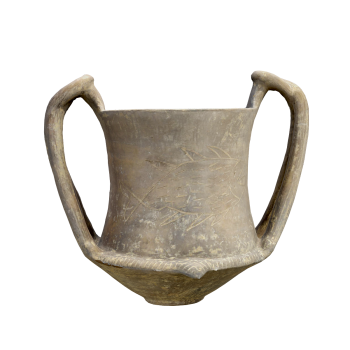
AmFora (double eared jar) is an ancient container used as a storage jar and is one of the main shapes in Greek pottery, with two handles and a neck narrower than the bottle body. They are used for storing and transporting olives, grains, oil, and wine, and sometimes for funerals and as tombstones. As a container, Amfora Vase also holds a place in culture and art, with rich cultural significance and artistic value in both ancient and modern times.
The bowl depicting the 'deer in the forest'

The bowl depicting the 'deer in the forest'

It is a 12th century pottery piece currently housed in the Minneapolis Museum of Art in the United States. This work is a bowl depicting the pattern of "deer in the forest". It is a part of Rayy Ware, a type of pottery from the Seljuk period in Iran (1038-1194). This period may be the most creative era in Persian pottery production. In addition to gold-plated vessels, minai vessels, and monochrome blue glaze, underglaze painted pottery was also produced. These bowls represent a popular variation of black design painted under transparent turquoise colored glaze.
Bronze teapots and wine vessels from ancient China

Bronze teapots and wine vessels from ancient China

The bronze teapot from the 5th century BC is an important ancient Chinese bronze wine vessel, currently housed in the Minneapolis Museum of Art in the United States. Belonging to the category of hunting scene pots, it is decorated with four main hunting scenes depicting people using spears, knives, and bows to hunt birds, deer, wild boars, and tigers. The depiction of human activities in bronze art represents a revolutionary transformation, in stark contrast to the strict symmetry and hierarchical sacred symbols and stylized animal patterns of the Shang and Zhou dynasties. The theme of this bronze pot seems to be more secular rather than religious, showing a side of social life at that time.
Curly Mouse

Curly Mouse

The Curly Mouse is an artwork from the second half of the 19th century, currently housed in the Minneapolis Museum of Art in the United States. This artwork is a redwood sculpture shaped like a curled mouse. This piece is the work of Japanese woodcarver Masao Suzuki (1815-1890), known for his intricate details and vivid expressiveness.
Bowl with 'Willow Vine'

Bowl with 'Willow Vine'

The blue glazed pottery bowl is a 12th century pottery item currently housed in the Minneapolis Museum of Art in the United States. This work is a bowl decorated with a "willow vine" pattern. It is a part of Rayy Ware, a type of pottery from the Seljuk period in Iran (1038-1194). This period may be the most creative era in Persian pottery production. In addition to gold-plated vessels, minai vessels, and monochrome blue glaze, underglaze painted pottery was also produced. These bowls represent a popular variation of black design painted under transparent turquoise colored glaze.
Chim ú - Lambayeque style ceramic bottle from Peru

Chim ú - Lambayeque style ceramic bottle from Peru

It is a cultural artwork originating from the northern coast of Peru, produced between approximately 1000 and 1470 AD. This ceramic bottle is renowned for its unique artistic style and exquisite craftsmanship, often adorned with rich patterns and symbolic images, reflecting the religious beliefs and daily life of the society at that time. In history, due to various historical reasons, some ceramic bottles have been lost overseas. It was once auctioned by W&H Peacock Auction Company in the UK, but fortunately, it was successfully recovered and returned to its original country in 2023. The return of cultural relics reflects the international community's emphasis and efforts on the protection of cultural heritage.
Green glazed pottery bowl

Green glazed pottery bowl

The blue glazed pottery bowl is a 12th century pottery item currently housed in the Minneapolis Museum of Art in the United States. This work is a bowl with a blue glaze. It is a part of Rayy Ware, a type of pottery from the Seljuk period in Iran (1038-1194). This period may be the most creative era in Persian pottery production. In addition to gold-plated vessels, minai vessels, and monochrome blue glaze, underglaze painted pottery was also produced. These bowls represent a popular variation of black design painted under transparent turquoise colored glaze.
The Bird in the Leaves

The Bird in the Leaves

The Bird in the Leaf is a mosaic art from Türkiye, which is currently collected in the Minneapolis Museum of Art. The theme of this work is birds and plants, showcasing the Islamic art style of the 4th and 5th centuries.
Peruvian Lambayeque style ceramic bottle

Peruvian Lambayeque style ceramic bottle

It is an artwork representing the pre Columbian culture of Peru. This type of ceramic bottle usually has exquisite technical and aesthetic features, as well as rich cultural symbolic significance. Known for its technical quality and aesthetic features, it reflects the development of the region's culture and the evolution of its style. It showcased the superb craftsmanship of the craftsmen at that time and conveyed profound cultural and religious messages through its designs and patterns. In the late middle period, techniques such as molding, application, and etching were used. Returned by Swiss authorities in 2023 and successfully recognized as a Peruvian national treasure. The return of ceramic bottles is not only a respect for cultural heritage, but also a recognition of historical continuity.
A Kashan pottery kettle in the shape of a ram

A Kashan pottery kettle in the shape of a ram

The "Ram shaped Kashan pottery kettle" is a 13th century Iranian artwork currently housed in the Minneapolis Museum of Art in the United States. This artwork is a water kettle shaped like a ram. This work is part of the Kashan pottery, using transparent turquoise colored glaze and black underglaze painted decoration. Although there are relatively few circular ceramic sculptures in Islamic art, decorative patterns were popular on metal and ceramic vessels in Iran and Türkiye during the Seljuk rule. The shape of a bull is the most common, but there are also vessels in the shape of camels, rams, and lions.
Ancient Greek black painted narrow necked pottery jar

Ancient Greek black painted narrow necked pottery jar

Made around 540 BC, it is a ceramic artwork from the Attica region of ancient Greece. This pottery jar is characterized by black painting techniques and is jointly completed by potters and painters. The black painting technique involves using black pigment to depict images on pottery, then carving details and applying clear paint to create a sharp contrast during the firing process. Usually between 47 and 61 centimeters in height, its surface is painted with mythological scenes, war scenes, or sports competition patterns. Not only for practical purposes such as storing wine or olive oil, but also as an important medium for showcasing the cultural and artistic achievements of ancient Greece.