The Queen Louis Memorial

The Queen Louis Memorial

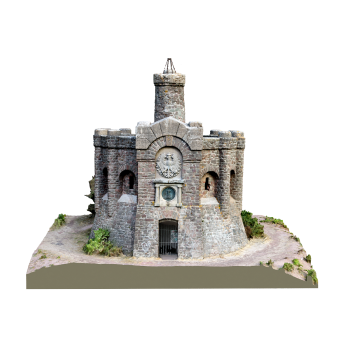
A commemorative building located in Svensk, Germany, built in honor of Queen Louis of Prussia. She was the wife of King Frederick William III of Prussia, known for her beauty and tragic early death. This monument is a typical representative of the Romantic period in the 19th century, showcasing deep nostalgia and respect for the queen. It was once part of East Prussia, but now belongs to the Kaliningrad Oblast of Russia. The design blends Gothic and classical elements, reflecting the architectural style and artistic aesthetic of the time. Not only is it a personal memory of the Queen, but also a symbol of German history and culture.
Longmen Grottoes in Henan, China

Longmen Grottoes in Henan, China

Located on both sides of the Yishui River in the southern suburbs of Luoyang City, Henan Province, China, it is one of the four major grottoes in China and a world-renowned treasure trove of Buddhist art. Excavated from the Northern Wei Dynasty to the Tang Dynasty, it lasted for more than 400 years and showcased the peak of ancient Chinese Buddhist sculpture art. Known for its grand scale, exquisite art, and rich content. There are over 2100 caves, more than 100000 Buddha statues, as well as a large number of inscriptions and pagodas in the grotto complex. The most famous among them is the Lushena Buddha, which is 17.14 meters high and has a solemn and dignified face. It is an iconic sculpture of the Longmen Grottoes. In 2011, it was listed as a World Cultural Heritage site by UNESCO.
Lessing Memorial

Lessing Memorial

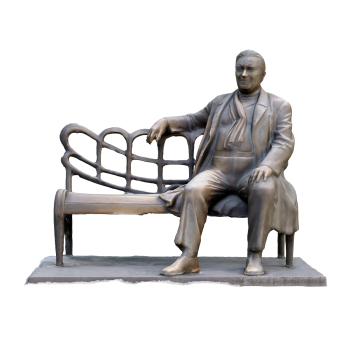
Tilgarten, located in Berlin, was designed and installed by Otto Lessing. Established in memory of the famous German poet, playwright, and critic Gotthold Ephraim Lessing. Not only renowned for his literary creations, but also highly respected for his contributions to drama theory and religious philosophy. His works and ideas have had a profound impact on German culture and the Enlightenment movement, particularly his reflections on civic self-awareness and contributions to drama. In addition, Vienna's Jewish Square also has a memorial statue of Lessing, which has been standing there since 1981 and was created by Sigfried Shahruks.
German Goslar Hunter Memorial

German Goslar Hunter Memorial

A commemorative building located in Goslar, Germany, close to the defense works of the old city. To commemorate the members of the Goslar Hunter Corps who sacrificed their lives in two world wars, while also reminding the living of the importance of history and peace. It is not only a tribute to the lost lives, but also a warning to the living, prompting people to reflect on the painful consequences of war. It is an important cultural and historical landmark in the city, where commemorative events are held every year to honor the brave warriors who sacrificed their lives for the country and educate the new generation about the cost of war and the value of peace.
Statue of Japanese Daozu God

Statue of Japanese Daozu God

A traditional symbol of faith on the Izu Peninsula in Shizuoka Prefecture, Japan. Daozu gods are deities who protect roads and travelers. In Japanese culture, they are often placed on both sides of roads, especially at intersections in mountainous areas, to bless the safety of passing pedestrians. These stone statues usually appear in pairs, with ancient and rustic images, reflecting the characteristics of Japanese folk art. Known for its long history and unique style. Not only is it an object of local faith, but it has also become a tourist attraction that attracts visitors. Often using rounded carving techniques, it showcases a primitive and mysterious charm, reflecting the ancient Japanese reverence for nature and gods.
Joanna Baillie Memorial in South Lanarkshire, Scotland

Joanna Baillie Memorial in South Lanarkshire, Scotland

A monument located southeast of Bothwell Parish Church in South Lanarkshire, Scotland. It was established in memory of Scottish poet and playwright Joanna Baillie (1762-1851). She was an innovative writer during the Romantic period, with works including poetry, drama, historical and religious writing, as well as autobiography and other forms. This monument was built around 1899 and features an Italian style design with a square plan and arcade, built on a polished granite pedestal. It is not only a tribute to an outstanding female writer, but also a celebration of the local cultural history.
Ashoka Lion Head Pillar

Ashoka Lion Head Pillar

It is an important symbol of the Peacock Dynasty in ancient India, built by King Ashoka in the 3rd century BC. The top of this pillar is decorated with four lions sitting back-to-back, symbolizing strength, courage, and dominance. These lions are placed on a huge cylindrical pedestal with carved wheels, which is an important symbol of Buddhism representing the teachings of the Buddha. Not only is it an outstanding representative of peacock dynasty art, but it is also one of the national symbols of India. This reflects King Ashoka's support and promotion of Buddhism, as well as his pursuit of peace and justice. The replica of this pillar is now used as the national emblem of India.
The Seahorse and Eagle Statue in Baltimore, USA

The Seahorse and Eagle Statue in Baltimore, USA

The sculpture located in Baltimore, Maryland, USA, was designed by Edmond Romulus Amateis and built in 1927. This artwork is not only appreciated for its exquisite design and historical value, but also symbolizes strength and elegance. Seahorses represent the mystery and diversity of the ocean, while eagles symbolize strength and freedom. The combination of two animals creates a unique visual effect in art, showcasing the harmonious coexistence between different organisms in nature. This sculpture is not only a representation of animal forms, but also a profound reflection on the relationship between humans and nature.
Brass statue of a poor nun priest

Brass statue of a poor nun priest

The Sisters of Poverty is a Catholic women's religious group founded by Luigi Maria Palazzolo in Bergamo, Italy in the 19th century. Established due to Father Palazzolo's education and care for impoverished individuals, especially impoverished women. Committed to creating shelters and educational institutions to help marginalized groups obtain better living conditions and educational opportunities. Members follow the teachings of the priest and are committed to serving the poorest and most socially abandoned people, including orphans, homeless, sick, elderly, and other individuals in need.
Chinese Song Dynasty Wooden Carving of Water Moon Guanyin Statue

Chinese Song Dynasty Wooden Carving of Water Moon Guanyin Statue

Shuiyue Guanyin, also known as the "Bent Leg Guanyin", is a non-traditional expression of Guanyin Bodhisattva. This image of Guanyin Bodhisattva involves lifting one foot and sitting cross legged, presenting a more casual and relaxed posture. Unlike the traditional solemn and dignified image of Guanyin, the crossed legged Water Moon Guanyin conveys a more intimate and unrestrained atmosphere, reflecting the infinite compassion and tolerance of Guanyin Bodhisattva towards sentient beings in Buddhism. This form of manifestation of Guanyin Bodhisattva is usually depicted as sitting or floating on the surface of water, often accompanied by bright moonlight in the background, symbolizing wisdom and purity.
The Blue faced Vajra Buddha statue at Shengman Temple in Japan

The Blue faced Vajra Buddha statue at Shengman Temple in Japan

A Buddha statue enshrined in Shengman Temple, Shinbori 1-chome, Edogawa ku, Tokyo, Japan. Qingmian Diamond, also known as Qingshi Big Diamond. Known for its unique blue face, it is one of the iconic cultural relics of Shengman Temple. Representing the Vajrayana in Buddhism, symbolizing fearlessness and strength, it is often depicted as a protector deity, protecting Buddhism from evil spirits. Shengman Temple is a Buddhist temple with a long history, and the blue faced Vajra statue inside is not only a symbol of religious belief, but also a manifestation of artistic and cultural heritage. The existence of this Buddha statue not only attracted many believers to come and worship, but also provided valuable physical materials for the study of Buddhist art.
Tyrannosaurus skull fossil

Tyrannosaurus skull fossil

Tyrannosaurus (Tyrannosaurus) is a genus under Tyrannosauridae. The only effective species is the model species Tyrannosaurus rex or Rexosaurus rex. It is a large carnivorous dinosaur with a length of about 15 meters, a hip height of about 5 meters, and a weight of about 8 metric tons to 13 tons. The Maastricht order, which lived at the end of the Cretaceous, was about 67 million to 66 million years ago. It was one of the last dinosaur populations before the Cretaceous-Tertiary extinction event. Fossils are distributed in the United States and western Canada in North America, and the distribution range is wider than that of other Tyrannosauridae. Western North America in the late Cretaceous period is an independent continent of Larramidia.
Tyrannosaurus rex skeleton fossil

Tyrannosaurus rex skeleton fossil

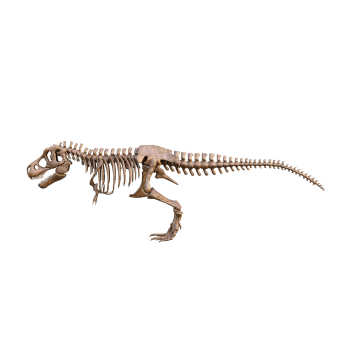
Tyrannosaurus belongs to the Tyrannosaurus genus of the Tyrannosauridae superfamily and is the only species in this genus. It was named in 1905 by American paleontologist and member of the American Academy of Arts and Sciences, Henry Osborne. If we refer to the translation format of other dinosaur species, it would be more appropriate to translate its species name as' King Tyrannosaurus'. Adult Tyrannosaurus rex is about 12 meters long and weighs around 7 tons, making it one of the largest land predators in Earth's history. Although the current size of Tyrannosaurus rex has been challenged by large Allosaurus and Spinosaurus, considering the depth of research and cultural influence, it is still truly the king of dinosaurs.
Fossil of triangular keel frame

Fossil of triangular keel frame

Triceratops is a herbivorous dinosaur belonging to the family Ceratopsidae in the order Ornithischia. It is a dinosaur resembling a rhinoceros, with a bulky appearance, thick legs, three horns on the head, and a large bone plate extending backwards at the back of the skull to form a neck shield. There is a short horn above the beak and two long horns above the eye sockets. The horns of Triceratops are defensive weapons that can scare off predators. The tail is short and pointed, and the feet are like hooves. Distributed in North America, it lived in the late Cretaceous period, approximately 68 to 65 million years ago. Triceratops often take advantage of their clustered lifestyle to protect their young; When facing enemies, often bow down and use horns to resist predators.
Stegosaur skeleton fossil

Stegosaur skeleton fossil

The stegosaur is an animal belonging to the family Stegosauridae in the suborder Stegosauria of the order Ornithischia, also known as the Bone Plate Dragon. The head is small, and the tip of the mouth has a bird like pointed beak without teeth. The teeth are distributed on both sides of the mouth and are very small. Strong and robust in appearance, weighing up to 4 tons, with 5 toes on the front legs and 3 toes on the back legs; The front legs of the stegosaur are slightly shorter, while the hind legs are longer and more robust. Jianlong is named after its large sword board and sharp tail spikes on its tail. Living in the late Jurassic to early Cretaceous period. The diet is herbivorous. Due to their small teeth, they cannot grind plants and can only eat some low moss or fern plants.
Fossil skeleton of plesiosaur

Fossil skeleton of plesiosaur

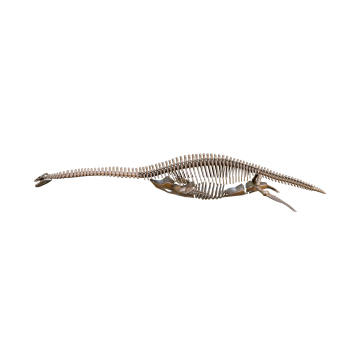
Plesiosaur is a collective term for the extinct marine reptiles of the genus Plesiosaur, belonging to the suborder Diptera and the order Pterosauriformes. It is a group adapted to living in shallow water environments, with large individuals and long necks, hence its name. It began to appear in the late Triassic period and spread all over the world by the Jurassic period, and became extinct by the end of the Cretaceous period. The plesiosaur were incredibly large in size and ruled the oceans of the Mesozoic era alongside ichthyosaurs. Its living habits are similar to modern sea lions, mainly living in the ocean and feeding on fish. It can be divided into long necked plesiosaurs and short necked plesiosaurs. Survived from Jurassic to Cretaceous.
Saint Joan of Arc marble statue

Saint Joan of Arc marble statue

Joan of Arc, also known as the Maiden of Orleans, was a famous military leader and national hero in French history. Born in 1412 in East Remi, France, she claimed to have received divine revelation from a young age, demanding that she lead the French army to resist the occupation of England. During the Centennial War in the middle of the 15th century, Joan of Arc successfully lifted the siege of Orleans by England in 1429. This victory greatly encouraged the French people and helped French Crown Prince Charles VII to be crowned king. Unfortunately, Joan of Arc was captured by the English in 1430 and burned at the stake in 1431 on charges of heresy and witchcraft.
Statue of King Vakhtang Georgi

Statue of King Vakhtang Georgi

He is a famous ruler in Georgian history, known for his rule over the Mtsvari River. Known for his military talent and political wisdom, he established strong defensive fortifications in the Mtzwali River region to protect his kingdom from foreign invasion. During the reign, the territory of the Kingdom of Georgia was expanded and its national strength was strengthened. It is also known for its support for art and architecture, having built many churches and palaces along the Mtsvari River, some of which still stand today and become part of Georgia's historical and cultural heritage. His rule is regarded as a golden age in Georgian history.
Prussian Tower Monument

Prussian Tower Monument

The Avilsbach wine region, located near Trier, Germany, is a tower shaped structure situated in a prominent position above the vineyards, built in 1910. The charm of the surrounding scenery is not only an observation deck, but also a monument commemorating Prussia's contribution to promoting the Moselle Valley wine industry and its then field director. Not only is it a popular destination for wine enthusiasts and tourists, but it is also a symbol of local natural beauty and cultural heritage. Tourists can enjoy the magnificent scenery of vineyards and surrounding countryside here, and experience the rich history and cultural atmosphere of the region.
Small shrines in Japan

Small shrines in Japan

The Utsov Monument in Ukraine

The Utsov Monument in Ukraine

The Utesovmonument is a monument located in Odessa, Ukraine, created by Pixelated Realities to commemorate the famous Soviet singer Leonid Utesov. He is one of the most popular and influential singers in the former Soviet Union in the 20th century, and his music works are widely appreciated. This monument is a tribute to his musical contributions and a part of Odessa's rich cultural heritage. A public space located in the center of Odessa, becoming a popular attraction for local residents and tourists.
Valentin Cameron Princip's Mausoleum Stone Coffin

Valentin Cameron Princip's Mausoleum Stone Coffin

The sarcophagus of Valentine Cameron Prinsep's tomb is a historic and significant memorial building dedicated to this famous British artist. He was an outstanding artist of the Victorian era in 19th century England, known for his paintings and illustrations. The work covers various themes, including history, literature, and portraits. His artistic style is unique, expressive, and appreciated by many artists at the time. His tomb sarcophagus is a part of British cultural heritage, bearing witness to his significant position and influence in the art world.
Tu Di Temple

Tu Di Temple

Tudi Temple is a traditional Chinese temple dedicated to the God of Land, also known as Tudi Gong Temple or Tudi Ye Temple. It is an important place for believing in land gods and ancestors, widely present in cities, villages, and farmland across China. Originating from the worship and gratitude towards the land god. Land is regarded as the protector of agriculture, and people believe that the land god can bless the harvest of crops, the peace of families, and the prosperity of communities. It has also become a gathering place for many farmers and residents, where people come to worship the land god on specific festivals and important occasions. Usually built in the central area of villages or cities, the architectural style varies depending on the region and cultural background
Matthias Hofherr's Honorary Cemetery

Matthias Hofherr's Honorary Cemetery

Matthias Hofherr is a famous German musician and composer, whose music works mainly focus on classical music. He has achieved significant success in his field and made important contributions to the music industry. This cemetery signifies that Hofherr was granted a special honor of being buried in a cemetery considered particularly important after his death. This honor cemetery is usually reserved for those who have made outstanding contributions to society, culture, or art. People paid tribute to his musical talent and contributions, and regarded him as an important figure in the music industry.
Charles Francois Jacques' work "Crocodile and Snake Fight - Belgium"

Charles Francois Jacques' work "Crocodile and Snake Fight - Belgium"

It is a famous artwork, also known as the 'Belgian Struggle', created by Belgian artist Charles Fran ç ois Jean Baptiste Rave in 1848 as a sculpture. It depicts a fierce battle between a huge crocodile and a snake in the water. Their bodies intertwine to form a dynamic and dramatic picture. The crocodile opened its huge mouth, trying to bite the snake, while the snake tangled around the crocodile, trying to survive. It is also a part of Belgian cultural heritage.
Kopan Maya Site Altar

Kopan Maya Site Altar

The ancient city of Copan is an important site of the Maya civilization, located in western Honduras. There is an altar in the ruins called AltarCopan. Built in the 6th century AD, it is one of the important cultural relics of the ancient city of Copan. The shape is a rectangular platform with exquisitely carved reliefs on top. The reliefs depict scenes from Maya mythology and history, including deities, rulers, and other characters from Maya mythology. These reliefs are presented with intricate carvings and details, reflecting the artistic style and religious beliefs of Maya culture. The exquisite reliefs depict scenes of Maya mythology and history, which are of great significance for studying Maya civilization and its religious beliefs.
Sanxingdui portrait gold mask

Sanxingdui portrait gold mask

The golden mask is a golden artifact unearthed from the 5th sacrificial pit in the Sanxingdui site's sacrificial area. After testing, its gold content is about 85%, silver content is about 13% to 14%, and there are other impurities.
Shang Dynasty Bronze Beast Faced Pattern Square Cauldron

Shang Dynasty Bronze Beast Faced Pattern Square Cauldron

Fangding "means a square cooking utensil with two ears and four feet. During the Shang and Zhou dynasties, it was popular and commonly used as sacrificial vessels, such as the excavated animal face milk nail patterned square cauldron, Simuwu square cauldron, and Hedang square cauldron.
German sculptor Heinz Mack's work 'The Sandburg Builder'

German sculptor Heinz Mack's work 'The Sandburg Builder'

The Sandcastle Builders, a work by German sculptor Heinz Mack. The sculpture depicts a scene of a group of children building sandcastles on the beach. The sculpture showcases the lively postures and focused expressions of the children. They use tools such as buckets and shovels to busily shape sandcastles on the beach. Each child has their own role and actions, creating a vivid and realistic scene. It showcases the creativity, collaborative spirit, and joy demonstrated by children in games. Represents the joy and carefree feeling of childhood.
Altar created by Gian Battista Piranesi

Altar created by Gian Battista Piranesi

An altar created by Italian architect and artist Gian Battista Piranesi, located in the Santa Maria del Priorato church in Rome. He was a renowned architect, artist, and printmaker of the 18th century, known for his research on ancient Roman architecture and culture. The altar he created at the Church of Santa Maria del Priorato is one of his masterpieces. This is a Baroque style altar, adorned with magnificent decorations and intricate carvings.
Chapter 26: Diamond Top Temple Stone Buddha

Chapter 26: Diamond Top Temple Stone Buddha

The 26th Diamond Summit Temple is a Buddhist temple located in Kyoto, Japan. Also known as Jingangfeng Temple, officially known as "Crane Peak Mountain Jingang Temple", it is one of the representative temples of Japanese Zen Buddhism. It is located in the Ukyo ku of Kyoto City and is known as one of the most beautiful temples in Japan, renowned for its unique architecture and beautiful gardens. Built in the 14th century, it is a temple dominated by Zen Buddhism. It is renowned for its highly artistic architecture and gardens. The main building of the temple is the Golden Hall, which houses a statue of Avalokitesvara Bodhisattva. It has attracted many tourists and believers who come to visit temples, appreciate gardens, experience meditation, and enjoy tea.
Ancient Maya Civilization Stone Tablet

Ancient Maya Civilization Stone Tablet

A stone monument located in Copan, Honduras, is one of the relics of the ancient Maya civilization. Copan is an ancient Mayan city ruins located in the Copan Valley in western Honduras. An important stone monument was discovered in this site. It is a huge pillar, usually carved from a single boulder, often used to commemorate important events or rulers. Carving symbolic patterns, pictograms, and decorations of ancient Maya civilization, showcasing the artistic and religious features of Maya culture. It may have been built to commemorate a ruler or important event. The Kopan Site is an important archaeological site.
Lianglong skull fossil

Lianglong skull fossil

Lianglong is a dinosaur belonging to the family Lianglong in the order Saurischia. The neck is long, the head is small, and the position of the nostrils is higher than the eyes; The front of the mouth has flat teeth, while the sides and back have no teeth; Strong limbs, short forelimbs, long hind limbs; The buttocks are higher than the front shoulders; Each palm has 5 fingers (toes); The tail is longer than the neck and gradually narrows towards the end, forming a whip like shape, with over 10 human bones in the middle. The name Shuanglianglong comes from two protrusions that protrude from the top of the human character bone, resembling double beams, and is commonly referred to as Lianglong. Living in western North America during the late Jurassic period. Living in groups, when there is a shortage of local food, they collectively migrate to distant places. Plant eating, feeding on leaves and ferns.
Skull fossil of helmet dragon

Skull fossil of helmet dragon

Corythosaurus, also known as Guanlong, Cockscomb Dragon, Helmet Headed Dragon or Helmet Headed Dragon, meaning "helmet lizard", is a genus of hadrosaurids in the subfamily Leucisaurinae. It lived in North America during the Upper Cretaceous period, about 75 million years ago. It has a duck like face and a high helmet like protrusion on top of its head, hence its name. Helmeted dragons have a gentle temperament and lack defensive equipment such as spines and claws, which means they can only rely on their sharp and developed visual and auditory organs to prevent predator attacks. It is a herbivorous dinosaur that mainly feeds on pine leaves, fruits, tender branches, and magnolia leaves.
Amorosaurus skull fossil

Amorosaurus skull fossil

Amurasaurus is a genus belonging to the subfamily Leucisaurinae in the family Hadrosauridae, and lived in East Asia during the Upper Cretaceous period. It has a platypus like nose and an empty crown on its head, but no fossil of the crown has been found yet. The fossil of an adult Amurlong is rare, but it is estimated to be at least 6 meters long. Like other members of the Lycosauridae subfamily, it is primarily a bipedal herbivorous dinosaur. Living in the Late Cretaceous period 74 to 65 million years ago, it was discovered in Russia, China Heilongjiang, Europe, and Asia.