
Blue Phoenix Butterfly Specimen

Blue Phoenix Butterfly Specimen

Blue swallowtail butterfly is an insect of the genus Papilionidae in the family Papilionidae. The wingspan is 95-120mm. The wings are black with an indigo velvet sheen. The male butterfly has yellow white markings on the front edge of its hind wings and black spots on the outer red ring of its buttocks; There are several arc-shaped red spots on the outer edge of the dorsal side of the hind wing, and three red spots on the buttock angle. There are three subspecies in China.
Bush's snail shell

Bush's snail shell

The snail is a shellfish, belonging to the family Protogastropoda. The shell is in the shape of a gyroscope, with an enlarged snail layer. The height and width of the shell are not significantly different, and the surface of the shell is smooth or has spiral ribs, spines, or protrusions. The spiral tower is high, the shell top is blunt, and the suture line is shallow. All screw layers are convex, but the body layer is slightly concave near the suture line. The shell is round, and the edge of the outer lip is sharp. The shell surface has rich colors and complex patterns, with many variations.
White tea plum specimen

White tea plum specimen

Camellia is a small tree in the Camellia genus of the Theaceae family. Branches sparse, tender branches hairy; Leaves leathery, elliptical in shape, dark green and shiny when dried on top, brownish green below, hairless; The flowers vary in size, with soft hairs on the flower buds and sepals, and wide, inverted petals that are red in color; Capsule spherical, seed brown, hairless; The flowering period is from November to March of the following year. Because its flower shape combines the characteristics of plum blossom and camellia, it is named Camellia. Camellia prefers warmth and moisture, prefers light but is slightly tolerant to shade, and avoids strong light. It is a semi negative plant and is suitable for growing in well drained, humus rich, and moist slightly acidic soil. The main propagation method of Camellia sinensis is through cutting propagation.
Black striped dragonfly specimen

Black striped dragonfly specimen

The Black striped Velociraptor is an insect in the family Scolopoda and genus Velociraptor. Males have a belly length of 56-59 millimeters and hind wings of 46-48 millimeters. Male upper and lower lips are yellow, and the anterior edge of the upper lip is black. The base of the front and back lips is green yellow. Green with one black "T" - shaped stripe. The top of the head, antennae, and back of the head are black. The front of the chest and back is green with no markings, while the chest and spine are yellow; Yellow green color on the side of the chest. There is a small black dot above and in front of the stomata. The wings are transparent, the anterior veins are yellow, the wing veins are black, and the wing moles are yellow brown. The abdomen is black with blue spots. The first and second abdominal segments are enlarged, with the base of the first and second segments being green. The lateral sides of the third to seventh segments each have three blue spots and one longitudinal spot of the same color.
Viewing the specimen of the Twilight eyed Butterfly
Viewing the specimen of the Twilight eyed Butterfly

The forest night eyed butterfly, also known as the black tree shade butterfly, belongs to the order Lepidoptera, family Nymphalidae, and genus Nymphalidae. It is mainly distributed in Guizhou, Yunnan, Zhejiang, Jiangxi, Fujian, Guangdong, Guangxi, Hainan, Chongqing, Sichuan, Xizang, Taiwan and other places. Its characteristics are brown, dark brown, or yellow brown on the back and abdomen of the body, and the shape of the forewings is similar to a right angled triangle, while the hindwings are nearly oval shaped. In Taiwan, adult butterflies can be seen year-round and belong to multiple generations. Its main activity time is when the sky is close to dusk, hence it is named "Twilight Eye Butterfly". The larvae of the night eyed butterfly are hosted by the brown leaved dogweed of the Poaceae family.
Black Phoenix Butterfly Specimen

Black Phoenix Butterfly Specimen

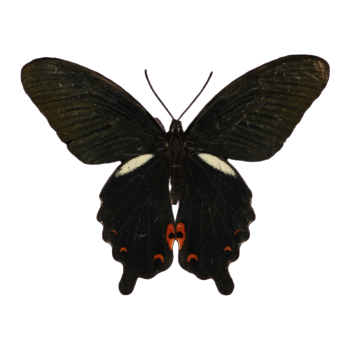
The black swallowtail butterfly is a species of the swallowtail genus in the family Papilionidae. Spread the wings 80-90mm wide. The main feature is that the surface of the wings is almost entirely black. The difference between males and females lies in the presence of white strip-shaped transverse spots on the leading edge of the lower wing surface of male butterflies; Female butterflies do not have it, and their wings are lighter in color. Male butterflies have orange red crescent shaped markings on the underside of their lower wings, while female butterflies have more developed markings than male butterflies.
Huang Qiuying specimen

Huang Qiuying specimen

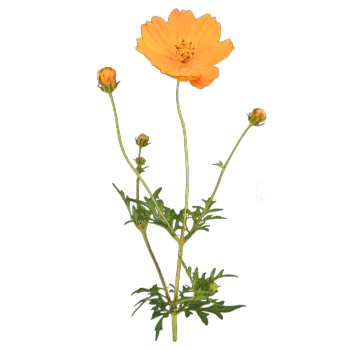
Huang Qiuying is an annual herbaceous plant of the Asteraceae family. The branches and leaves are paired bipinnate compound leaves with lanceolate lobes; The flowers are tongue shaped, with two types: single and double. The colors are mostly yellow, golden, orange, and red; Skinny fruit brown in color; The flowering period for spring sowing is from June to August, and for summer sowing it is from September to October; Also known as "sulfur chrysanthemum", it is named after its golden color, resembling a mineral called sulfur. Native to Mexico, it can naturally grow in alkaline soil areas below 1600 meters above sea level. Prefer warmth, not cold resistant, avoid extreme heat. Likes light, drought resistant and thin, prefers sandy soil with good drainage. Avoid strong winds and plant in a leeward location.
Sea curled specimen

Sea curled specimen

Haijuan, a type of shell, is medium to large in size, slender, and has many layers of snails. The shell surface usually has many spiral ribs and significant thick longitudinal ribs. Discovered on the west coast and Penghu Islands. From the Yellow Sea to the South China Sea, Indonesia, Malaysia, and Singapore. Keelung, in the western waters of Taiwan, Mosquito Pit in Gongliao Township, Taipei County, Lukang in Changhua County, Kaohsiung County, Penghu, Penghu Inland Sea, Danshui in Taipei County, Baishawan Coast in Taipei County, Hualien Coast, Anping in Tainan City, Donggang in Pingtung County, Jinning in Kinmen, Jincheng, Jinsha, Jinhu, and Lieyu. Mature individuals have a well-developed and broad outer lip on their shell; The water pipe trench is also very deep, and the leading edge of the outer lip usually extends beyond the water pipe trench.
Golden Phoenix Butterfly Specimen

Golden Phoenix Butterfly Specimen

The golden phoenix butterfly is an animal belonging to the family Papilionidae in the order Lepidoptera. The golden butterfly is a medium-sized butterfly with a wingspan of 70-84 millimeters. The underside of the wings is black brown with black veins, and the wing chambers have yellow spots; The base of the dorsal surface of the forewings is dark yellow, with a black sub outer edge and a row of small yellow spots inside; The posterior wing has a black broad border in the sub outer edge area, gray blue stripes on the inner side, yellow stripes on the outer side, and an orange red circular spot in the buttock area. The posterior wing has a pair of slender caudal processes. The golden phoenix butterfly is also known as the yellow phoenix butterfly, fennel phoenix butterfly, or carrot phoenix butterfly.
Turtle foot specimen

Turtle foot specimen

Common names for turtle feet: Buddha's Hand Shell, Stone Snail, Dog Claw Snail, Turtle Feet, Chicken Crown Shell, Chicken Feet, Chicken Feet, Guanyin Palm. The body is divided into a head and a handle, generally 2-3 centimeters wide and 3-5 centimeters high. The head is light yellow and green in color. The handle is soft and brown or yellow brown in color, with small calcareous scales arranged tightly on the surface. The largest individual has a head width of up to 44 millimeters, a height of 27 millimeters, a handle width of 25 millimeters, and a length of 15 millimeters. The head is flattened on the side, and the shell chamber is formed by 8 shell plates including the rib plate, back plate, upper side plate, peak plate, and kiss plate. The base has a row (21-31) of small side plates that rotate.
Turtle foot specimen

Turtle foot specimen

Common names for turtle feet: Buddha's Hand Shell, Stone Snail, Dog Claw Snail, Turtle Feet, Chicken Crown Shell, Chicken Feet, Chicken Feet, Guanyin Palm. The body is divided into a head and a handle, generally 2-3 centimeters wide and 3-5 centimeters high. The head is light yellow and green in color. The handle is soft and brown or yellow brown in color, with small calcareous scales arranged tightly on the surface. The largest individual has a head width of up to 44 millimeters, a height of 27 millimeters, a handle width of 25 millimeters, and a length of 15 millimeters. The head is flattened on the side, and the shell chamber is formed by 8 shell plates including the rib plate, back plate, upper side plate, peak plate, and kiss plate. The base has a row (21-31) of small side plates that rotate.
Garden snail specimen

Garden snail specimen

The garden snail belongs to the "Halix" snail genus, which is native to central western Europe such as France and England. It usually inhabits gardens or shrubs, hence it is called the "garden snail" or the scattered snail. There are dense and delicate engraved patterns, with multiple dark brown spiral shaped bands that block the yellow spots or stripes that intersect with them., Shells have 4.5 to 5 snail layers, with a shell height of 29 to 33 millimeters and a shell width of 32 to 38 millimeters. The shell surface has obvious threads and growth lines, and the spiral part is short. The embryonic snail layer is smooth, and the body snail layer is particularly enlarged, with extreme inclination in the forward direction.
giraffe

giraffe

wild boar

wild boar

cattle

cattle

Brown bear

Brown bear

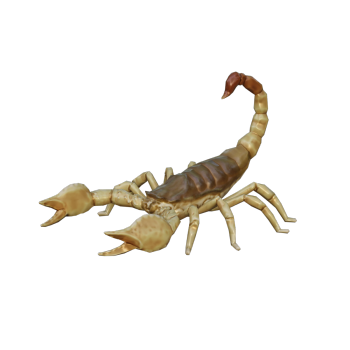
scorpion

scorpion

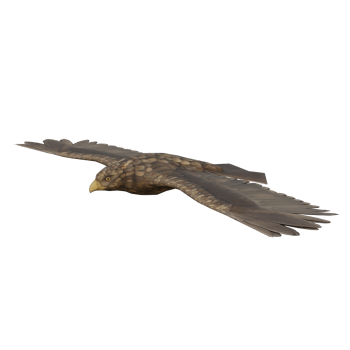
Golden Eagle

Golden Eagle

crocodile

crocodile

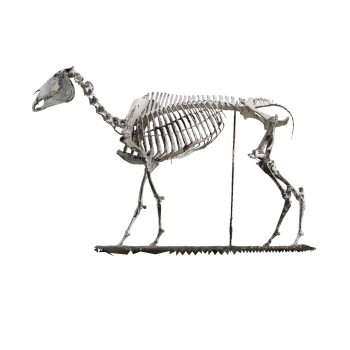
Horse skeleton

Horse skeleton

Horses are herbivorous animals belonging to the genus Malcoma in the order Quetziformes, and currently exist as two subspecies: domesticated horses and wild horses. Wild horses have upright and non drooping mane on their necks, extremely short forehead hair, long tail hair, and no distance hair on their limbs. In summer, the upper body is light brown, red brown, and reddish brown, while in winter, the back of the skin is light brown; Family horses are divided into heavy, small, and miniature horses according to their breeds; Jiama has long limbs, solid bones, well-developed tendons and ligaments, hard hooves, diverse fur colors, mostly chestnut, green, and black, well-developed sweat glands, and strong chewing power. With a developed system, it has a keen sense of hearing and smell, strong sensitivity to light, and can also see surrounding objects at night.
Terror bird skull

Terror bird skull

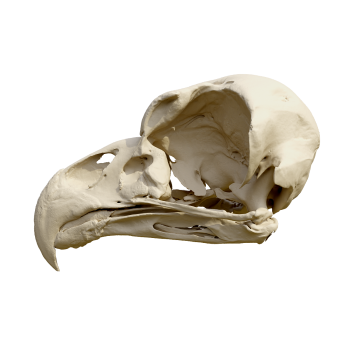
Dinornitidae is a bird species in the ostrich order of the terror bird family. The abdominal feathers are yellow, and the other parts are yellow and black in color. Enlarged body, degeneration of upper limbs, and short and thick lower limbs; The neck is covered with feathers and is relatively short; There are three toes. In 1843, it was named the terror bird by Owen, meaning a large bird that can scare people. Resting in the primitive lowlands and coastal forest grasslands of the southern islands of New Zealand. Living as a couple, each pair has their own territory. Cannot fly, runs slower than ostriches. They feed on berries, grass seeds, and roots, and sometimes also collect some insects. It is one of the largest birds on Earth.
Rhinoceros skeleton

Rhinoceros skeleton

Rhinoceros is a large mammal in the family Rhinocerotidae of the order Rhinoceros. Fat and clumsy, with thick and rough skin arranged in folds; The fur is sparse and hard; The ears are oval in shape; Big and long head; Short and thick neck; No canine teeth; The tail is thin and short, and the body is yellow brown, brown, black or gray; Solid single or double horns on the head and nose; Both males and females have double horns, with females having longer horns than males. Rhinos are distributed in Asia, such as India in South Asia; It inhabits sparse grasslands and dense forests in tropical and subtropical regions. They often come out to forage in the early morning, evening, or night, with poor vision and sensitive sense of smell and hearing; Living alone often with little contact between individuals.
Amazon parrot skull

Amazon parrot skull

The Amazon parrot is a bird species of the Amazon parrot genus in the parrot family of the parrot order, also known as the orange winged Amazon parrot. The body is strong and sturdy, with a square shaped tail that is relatively short; The face is covered in hard hair; The mouth is thick and strong, with a hooked shape. Most of the feathers are green, with yellow green edges; Orange iris of the eyes; Yellow between the crown, eyes, and thighs; The main flight feathers are purple blue, and the secondary flight feathers are purple blue and distributed in the feather petals and wing tips; There is a slight red color at the turning point of the wings.. Has migratory habits. They feed on figs, nuts, flowers, seeds, and fruits, and sometimes forage in crops such as banana groves or corn fields.
Eagle owl skull

Eagle owl skull

The eagle owl is a bird species belonging to the family Scombridae in the order Scombriformes. No significant facial features; The upper body is dark brown in color, with black transverse spots on the tail feathers; The throat and forehead are light gray white, and the feather edges are light brown yellow; The remaining part of the lower body is white, with brown longitudinal stripes on the chest and wide reddish brown patches on the abdomen, forming incomplete horizontal spots; Iris bright golden yellow; Mouth peak angle gray or blue black, with a shallow tip; Wax film dark green or green brown; The tarsus is dark yellow or yellow green. Distributed in eastern to southern Asia, and in northeastern, northern, and eastern China. Nocturnal, active at dusk or night. The food is mainly insects, but also includes frogs, lizards, birds, rodents, etc.
Pigeon skull

Pigeon skull

Pigeons are animals of the pigeon genus in the pigeon family of the pigeon shaped order. The body length is 295-360 millimeters. The head, neck, chest, and upper back are slate gray, with metallic green and purple flashes on the upper back and front chest. The rest of the back is light gray, with a black horizontal spot on each wing. The tail feathers are slate gray, with a wide black horizontal spot at the end, similar to males and females. Widely distributed, except for Antarctica, high latitude regions in the Northern Hemisphere, and extremely arid areas in deserts. Most of them inhabit forests or forests, while some inhabit open areas or near cliffs. Active during the day and returning to their nest at night, but trained pigeons can fly at night if they do not return to their habitat before evening.
Huangxiangliu Monkey Skull

Huangxiangliu Monkey Skull

The Saguinusimperator, a species of marmoset in the family Tamarix, is a type of marmoset monkey. He has two long white beards and is accustomed to sitting quietly together to eat and rest. Another way of saying it is called "Emperor" is because it resembles Wilhelm II of Germany. The fur is mainly gray with yellow spots on the chest. Living in the dense Amazon rainforest. Residing in the upper canopy of tropical rainforests or tropical forest grasslands, rarely active on the ground. Eat fruits, nuts, and other plant-based foods, as well as insects, spiders, frogs, small lizards, and bird eggs.
Trilobite Fossil

Trilobite Fossil

Trilobites are arthropods belonging to the order Tetraodontiformes in the phylum Arthropoda. The body is divided into three parts: head, chest, and abdomen; There is a carapace on the back, which is longitudinally divided into three pieces. The head is covered with a hard shell, called a cephalothorax; The central raised part of the head armor is called the head saddle, and the shape and size of the head saddle vary greatly depending on the type; The anterior part of the head saddle is the skull, on which there are eyes; There are also shells wrapped around the abdomen and tail. Named after the longitudinal division of the carapace on the back into three pieces. Widely distributed in ancient oceans, fossils are found on all continents today. I like to live in warm shallow sea areas and feed on algae, protozoa, and other organisms.
Upper half skull of ferret

Upper half skull of ferret

The ferret (Mustelapulourius furo) is a mammal belonging to the family Mustelidae in the order Carnivora. The body of a ferret is slightly slender, streamlined, with a round body and no sharp corners or flat areas. Distributed in southern Canada and Oklahoma and Kansas in the United States. Ferrets love to play and live in groups. They mostly sleep throughout the day and prefer quiet environments. They are highly alert to external stimuli. Ferrets lack sweat glands and are not suitable for high temperature environments. When frightened, they will empty their anal glands and secrete musk. Ferrets are carnivorous animals that mainly feed on small vertebrates such as mice and rabbits.
Velociraptor skeleton fossil

Velociraptor skeleton fossil

Velociraptor, also known as Velociraptor, is a dinosaur belonging to the family Velociraptor in the order Saurischia, also known as Velociraptor. Covered in feathers all over the body; Not big in size, similar in size to a turkey. China and Mongolia lived in Asia during the late Cretaceous period. Enjoy living in groups. Carnivorous animals mainly hunt small dinosaurs, dinosaur eggs, dinosaur juveniles, and small mammals. Due to their agile actions, they are known as the 'fast robbers'. It is the first discovered theropod dinosaur in Asia. In 1971, the fossil specimen "Dinosaur in a Battle" was discovered by a Polish exploration team, and as a result, this fossil specimen is considered a national treasure by Mongolia.
White Rhinoceros Skull

White Rhinoceros Skull

The white rhinoceros is a mammal belonging to the family Rhinocerotidae in the order Neodactyla. The body is round and robust, the skin is thick and smooth, and the surface of the body is approximately gray; The head has special features, but the incisors and canines have degenerated. The developed 7 pairs of cheek teeth have a very thick layer of limestone; There are two horns, one large and one small, one in front and one behind. The horns are not made of bone, but are derivatives of epithelial tissue, formed by the accumulation of keratin fibers. Distributed in southern and northeastern Africa, mainly active in the morning and evening, and rolling or resting in muddy water at other times; When the weather is cool, they lie under the shade of trees and take a nap, living alone or forming small groups. They are distributed in southern and northeastern Africa and feed on grass.
Otter skull

Otter skull

The marmot is a mammal belonging to the family Muridae in the order Rodentia of the class Mammalia; Also known as groundhog. The largest terrestrial and burrowing herbivorous and hibernating wild animal in the squirrel family. There are 14 subspecies worldwide, with 4 species in China. Distributed in Siberia and Mongolia of Russia, and also in Inner Mongolia of China. Resting in plateaus, meadows, foothills, and other areas, the lower edge of sunny slopes in plains and mountains is its high-density aggregation zone. Active during the day, with a large appetite, gnawing on a large amount of grass every day, enduring hunger and satiety, and preferring juicy feed with high water content, post rain grass, and dew grass. Likes to live in groups, easy to drive, does not harm people, is not heat-resistant, afraid of direct sunlight, and has strong disease resistance.
Soft shell glans bone

Soft shell glans bone

Soft shelled turtles, also known as soft shelled turtles, refer to aquatic turtles belonging to the order Turtles and family Turtles. Soft shelled turtles are distributed in freshwater streams and lakes in Asia, Africa, and North America. The characteristics of soft shelled turtles are a round, soft crust like pancake, webbed legs, a long head and neck, and nostrils located at the front of the fleshy long nose (female turtles are noticeably larger than male turtles). There are two main species of soft shelled turtles in the New World, the prickly soft shelled turtle and the smooth soft shelled turtle, whose dorsal shells are gray or brown. The smooth shell turtle has a shell length of about 35 centimeters, while the soft shell turtle has a shell length of about 45 centimeters, mainly distributed in the United States. There are two species of soft shelled turtles in the Old World: African turtles and Malay turtles.
South American Half Skull Fossil

South American Half Skull Fossil

Hippidion, also known as South American horse, is a member of the horse family in the order of odd hooves. In the mid-19th century, some horse fossils were discovered on the grasslands of South America and handed over to British paleontologist Richard Owen. After restoration, Owen found that they were similar to modern horses, but smaller in size and were ponies, commonly translated as South American horses in China. The body size is not as big as a donkey, with a shoulder height of less than 1.4 meters and a weight of over 200 kilograms. The body shape of a South American horse is similar to that of a pony, with a short and sturdy body, short limbs, and a large head, making it look uncoordinated. Like modern horses, it is suitable for gnawing on hard grass rich in silicon.
Hamster skull

Hamster skull

The Cricetinae subfamily is the smallest subfamily of the Cricetidae family, including only the Palearctic (Eastern Hemisphere) hamsters, which are small rodents. There are about 60 genera, with 3 genera and 9 species in China. Short and thick body shape; Short tail; Cheek pouch; Most types of skulls have no obvious ridges; The skull does not significantly enlarge; Listening to bubbles; Molar chewing mask with conical tooth tips. It inhabits a wide range of environments, including grasslands, deserts, semi deserts, farmland, and alpine grasslands. No hibernation habit; All of them are terrestrial species, mainly engaged in cave living, living by digging caves, with complex cave systems and specialized warehouses for storing food; Strong adaptability. Mainly feeds on plants, but also on animal carcasses.
Green iguana skull

Green iguana skull

The green iguana is an animal belonging to the genus of American green iguanas in the family Hymenonidae of the order Perciformes. Young green iguanas typically have a green body and use it to evade attacks from predators; As one grows older, green will gradually fade away and be replaced by colors such as light yellow, light blue, or brown; The main features of green iguanas include comb like scales on the back, black circular stripes on the tail, and large, drooping throat fans in adult males. Also known as: American Green Iguana. Distributed in tropical rainforest areas from Mexico to Paraguay in Central and South America. Omnivorous animals primarily consume small insects, eggs, and other animal based foods during their infancy, and eventually transition to plant-based diets in adulthood