Yellow Scientific Submarine

Yellow Scientific Submarine

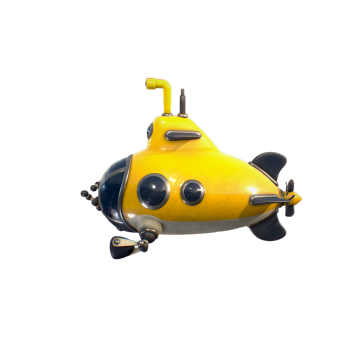
Streamlined hull design is adopted to reduce underwater resistance. The main body color is eye-catching yellow (to improve recognition and safety). Scientific research equipment such as observation window, detection instrument interface and sampling robot arm may be equipped. Laboratory space, navigation system and life support device may be included inside or included to meet the needs of scientific research tasks in deep sea or offshore.
Rosalind Boathouse

Rosalind Boathouse

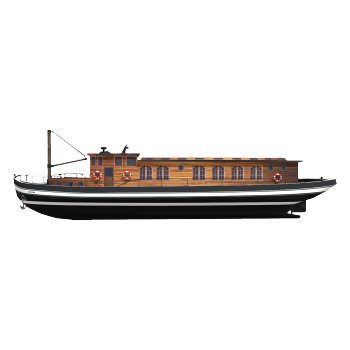
Rosalind Boathouse is a unique water living facility that combines modern design with a comfortable living space. It is not only suitable for vacation and leisure, but also as an ideal choice for long-term residence.
AHTS VOS Hunter (1979)

AHTS VOS Hunter (1979)

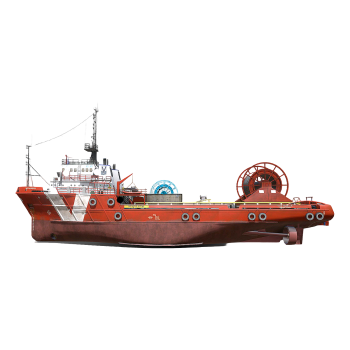
AHTS VOS Hunter is an Anchor Handling Tug Supply (AHTS) built in 1979. Such vessels are mainly used for installation and towing work on offshore drilling platforms, as well as to provide rescue and support services in emergency situations.
Titanic

Titanic

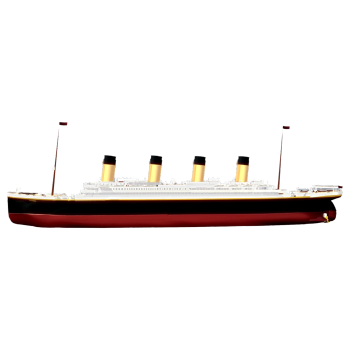
The Titanic (RMS Titanic) is a luxury cruise ship owned by the British White Star Line. Construction began on March 31, 1909, at the Harland and Wolf shipyard, launched on May 31, 1911, and completed sea trials on April 2, 1912. However, on the night of April 14, the Titanic collided with an iceberg, causing the hull to break and eventually sink.
Сибирь-900 Small Fishing Boat

Сибирь-900 Small Fishing Boat

Vessel "dubasa" in Vistula, Poland
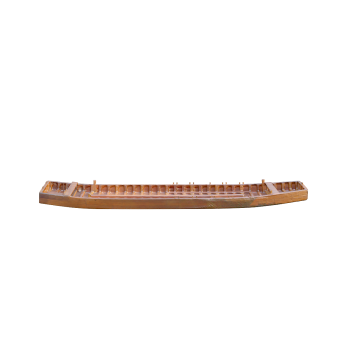
Vessel "dubasa" in Vistula, Poland

It is a kind of ship used for inland water transportation in Poland. Widely used between the 16th and 18th centuries, it is known for its unique design and function, mainly for transporting grain. The design is adapted to the natural conditions of the Viswa River, with a flat hull and slightly upturned bow and stern. It has a large load capacity and can carry 600-800 barrels of grain. It usually consists of 12-14 crew members who are responsible for operating the vessel and transporting cargo. It is now housed in the National Maritime Museum in Gdansk, Poland. It is an important part of Polish water transport and an important symbol of Polish culture and history.
Vessel "galar" in Veswa, Poland

Vessel "galar" in Veswa, Poland
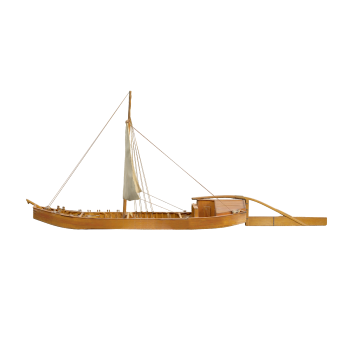
It is an important inland water transport vessel in the history of Poland. It was widely used in the late 18th and early 19th centuries, mainly for transporting timber and other goods. The design is adapted to the natural conditions of the Viswa River. They are usually without masts, and the hull is made of wooden boards, with the bow and stern slightly upturned, relative to the flat bottom. The deadweight is about 280 to 400 barrels, and the crew is 6 to 8 people. It is an important part of Polish water transportation and an important symbol of Polish culture and history, reflecting the characteristics and technological development level of river transportation at that time.
Vessels of the "Bull" type in the Veswa River, Poland
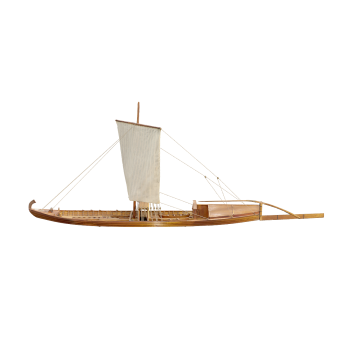
Vessels of the "Bull" type in the Veswa River, Poland

It is an important inland water transport vessel in the history of Poland. This kind of ship is famous for its strong construction and strong carrying capacity, and is mainly used to transport bulk commodities such as grain. It was widely used on the Vistava River during the 16th to 18th centuries, especially in the southern regions of Poland. The design is adapted to the natural conditions of the Vistava River, with a flat and sturdy hull capable of carrying heavy loads, with a sharp bow and a strong stern to accommodate the flow and shoals of the river. It is an important part of Polish water transport and an important symbol of Polish culture and history. Models of these ships are kept in the National Maritime Museum in Gdansk, Poland.
Traditional boats on the Vishwa River in Poland
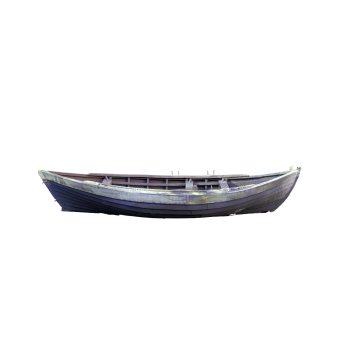
Traditional boats on the Vishwa River in Poland

It is a model of a traditional Polish vessel that represents the large flat-bottomed boats used to transport food on the Vishwa River from the 16th to 18th centuries. Known for its enormous size and carrying capacity, it is capable of carrying 1100-1140 barrels of grain and requires a crew of 16-18 to operate. It was the largest barge on the Vistava at the time, with a flat bottom and solid structure, with a sharp bow and a strong stern. Designed to adapt to the natural flow of the river, the crew uses sails and paddles to control the ship's progress. An opportunity for history lovers to learn about and recreate the history of navigation in Poland.
Kuź nica fishing boat

Kuź nica fishing boat

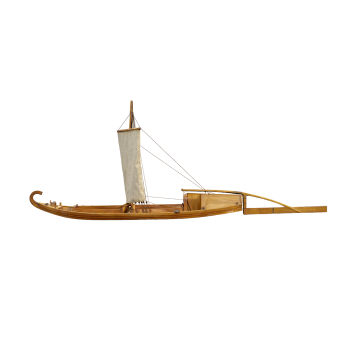
A sailing rowboat used by fishermen from Kuź nica is equipped with a central plate box with two slots. This design enhances the stability of the boat. In 1994, the historic and cultural boat was acquired by the Gdansk National Fisheries Museum and became part of the museum. The National Maritime Museum in Gdansk, Poland, was established in 1962 to collect, study and preserve artifacts related to shipping, international trade, fisheries and maritime workers. The fishing boat shows the region's reliance on and use of traditional fishing tools at the time.
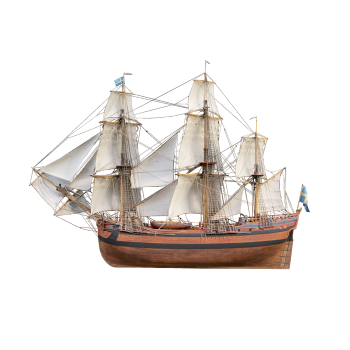
Swedish three-masted ship Baltica

Swedish three-masted ship Baltica

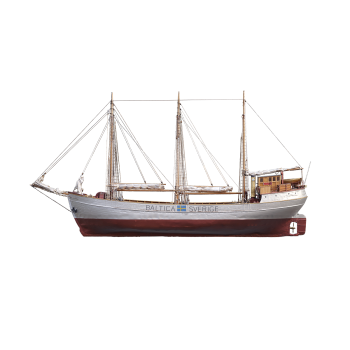
It was launched in 1940 as a cargo ship, mainly on the route between Gotland and the Swedish mainland. Known for its rugged construction and navigational ability, it plays an important role in maritime transport. It sank due to a leak on April 9, 1963, but fortunately, all five crew members survived and were rescued by a passing ship three days later. Its history and its ultimate fate became a landmark event in Swedish maritime history. The original model of the Baltica is preserved in the Swedish Maritime Museum, providing future generations with a detailed interpretation and commemoration of the famous sailboat.
Swedish passenger steamship Nortelje

Swedish passenger steamship Nortelje

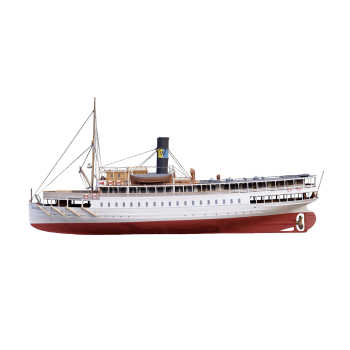
It was a passenger steamboat built in 1900 by the Stockholm WilliamLindberg Shipyard and designed by the ErnstHemberg of Designers. The ship served the Stockholm-Furusud-Norrtälje route for many years and was a common sight in the Stockholm archipelago. Since 1968, the Nortelje was moored in Norrtälje Harbour and opened to the public as a museum ship and restaurant. Its original model was ranForss by Gö at the Swedish Maritime Museum between 1965 and 1970.
Sweden Ettan Steam Ferry

Sweden Ettan Steam Ferry

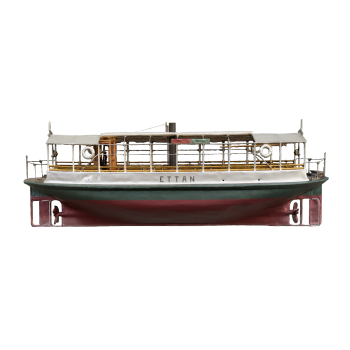
Ettan ("No.1") was a steam ferry that was launched in 1886 at the WilliamLindberg Shipyard in Stockholm, Sweden. The ferry serves a number of routes between the 14 islands within the city of Stockholm. The design and construction of Ettan reflects the technical characteristics of steam-powered ships in the late 19th century. Its original model, built by JanClaesson at the Swedish Maritime Museum between 2015 and 2021, provides insight into the historic steam ferry.
9th century Gokstadsskeppet Viking ship
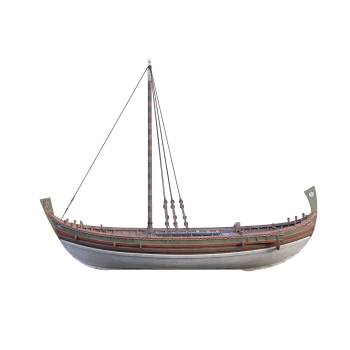
9th century Gokstadsskeppet Viking ship

A 9th-century Viking ship, it was discovered in 1880 in a tomb mound in Gokstad, Norway. It is constructed of plywood and is mainly used for war, trade, and the transportation of people and goods. The crew is about 40 to 70 people, and the maximum speed can reach 11-12 knots. Through the analysis of the annual rings of the wood, it is determined that the ship was built in about 890 years. The design and construction techniques demonstrate the advanced Viking shipbuilding skills as a powerful marine vehicle and a noble burial place for Viking chiefs, reflecting the social importance of the ship in Viking culture. Preserved at the Viking Ship Museum in Oslo
Roman Period Anse de Laurons 2 Sailboat

Roman Period Anse de Laurons 2 Sailboat

was the shipwreck of a small Roman-period galleon, dated to the end of the 3rd century AD, probably sunk in a storm, and was at anchor for refuge in the shallow port of Laurons, west of modern-day Marseille, France. It is about 15 meters long and has an estimated displacement of about 30 tons. It may only trade between small ports on the local coast. When the ship was sunk, its left side was quickly covered with sediment, ensuring an excellent state of preservation down to the deck and even the railing. There are preserved rigging elements, spare rudders, and fragments of wooden panels that may cover the cargo hold, as well as rarely preserved structures used to support the side rudders. This reconstruction is based on the plans of R.Bockius
United States Navy 26-foot motorcycle lifeboat
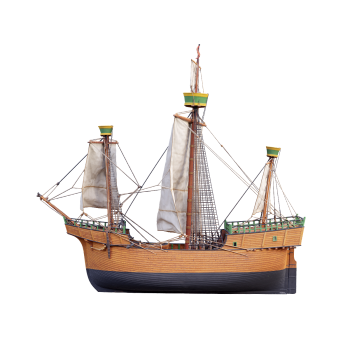
United States Navy 26-foot motorcycle lifeboat

It was a multi-purpose vessel widely used during World War II. Designed by the Navy to withstand the impact of 20-foot waves and be able to perform tasks in extreme sea conditions, such as rescue in a storm or impact the hull without damage. Designed to be carried on naval vessels as lifeboats, officers' boats, shore group boats, mail boats, etc. The FRP structure far exceeds the general military specifications, can maintain the comfort of passengers during the mission, and has excellent handling performance and easy handling. It has a safe design, such as a circular passenger area. After decommissioning, it is often purchased by the private sector for various purposes, including leisure and commercial use.
Kalak sailing ship

Kalak sailing ship

They were large ships used for trade, war and exploration in the 15th and early 16th centuries. Originating in the Mediterranean, it is a product of the development of sailing technology. It is known for its stability on rough seas, and has plenty of space to load cargo and supplies, suitable for long-distance sailing. Known as a "holk" in northern Europe, and were built of clinker, meaning they used an overlapping wood board structure, which was considered strong and durable at the time. The design includes a tall forecastle and stern, and multiple masts, usually equipped with square sails and Latin sails, allowing it to adapt to different wind directions.
Royal Barge, Baron Anders von Hopken, Sweden
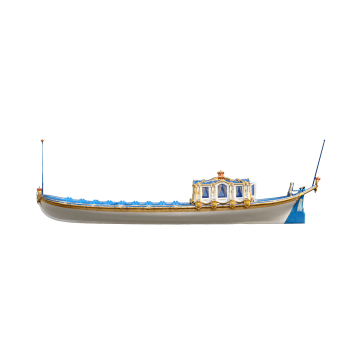
Royal Barge, Baron Anders von Hopken, Sweden

It was a Swedish royal barge built in 1759. The ship was built by shipyard owner Eric Hånga at the Jatkojoki shipyard in Finland and launched that year with a length of 130 feet, capable of carrying 6000 barrels of French salt, equivalent to 295 Swedish tons. The registered port is Stockholm, and the shareholders include a number of businessmen. Named after Anders Johann von Hopken, a famous Swedish politician, cultural figure, one of the founding members of the Swedish Academy of Arts, and one of the founders of the Royal Swedish Academy of Sciences. Burned outside the Djurgardsvarvet in Stockholm in 1804.
Swedish Vasaorden Royal Barge

Swedish Vasaorden Royal Barge

It is a Swedish royal barge designed by FredrikHenrikafChapman. It was built in 1774. It was used for ceremonial occasions such as state visits and royal weddings. It was 18.6 meters long and 3.2 meters wide. It was first used for the 1774 wedding of Prince Carl and Princess Hedwig Elizabeth Charlotte of Holstein-Gotorp. It was presided over by King Gustav III. The original barge was destroyed by fire at a navy dock in Stockholm in 1921, but two years later, in 1923, an exact replica was built and launched. It is still used in official ceremonies.
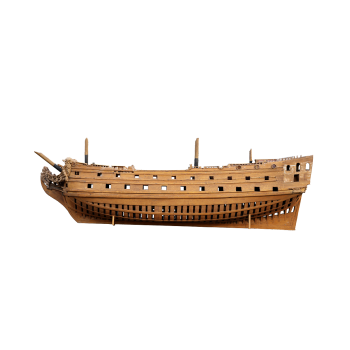
Western powers naval battleships

Western powers naval battleships

They were the main ships of the navies of Western powers from the mid-17th century to the mid-19th century, and they formed the core force of maritime combat at that time. Originating from large sailing ships, this three-or four-masted ship has a towering structure at the rear, usually carrying heavy artillery, and is distributed on two decks. It usually has three decks, equipped with bottom deck guns of 30 to 48 pounder shells, middle deck guns of about 24 pounder shells, and upper deck guns of 30 or more 12 pounder guns. As a symbol of sea power at that time, it was not until the emergence of steam-powered battleships that they gradually withdrew from the stage of history.
Swedish NordicFolkboat Sailing

Swedish NordicFolkboat Sailing

A Swedish-designed sailboat, designed by JacIversen and TordSund, originally built in 1942. Originally built with a wooden hull, a glass-and-steel version was developed, simulating a traditional wooden hull structure. There are cruise accommodation facilities, while others are optimized for competition and have minimal internal facilities. Fully equipped boats can usually accommodate four people, with two main bunks and a front "V" bunk. It is known for its excellent sailing performance and ease of driving. With its classic design, nautical performance and build quality, it has become one of the most popular sailing ships in history.
S/S Norrland wooden shell open steamship (1837)
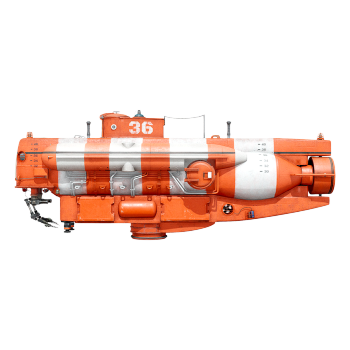
S/S Norrland wooden shell open steamship (1837)

It is a historically significant wooden shell steamship designed by Swedish engineer and industrialist Otto ECarlsund. It is the first steamship to provide regular passenger and freight services between Stockholm and Ume å, sailing in the Gulf of Bothnia. The design marks an important milestone in Sweden's maritime transportation, not only improving regional connections but also promoting economic and industrial development. The operation of this ship not only laid a foundation for Sweden's steamship shipping industry, but also demonstrated Sweden's progressiveness in ship design and engineering. The original drawings are preserved in the Swedish National Maritime Museum.
BT-01 research submarine

BT-01 research submarine

The BT-01 submarine is a multi-purpose 2WD submarine model designed by Japanese manufacturer Tamiya.
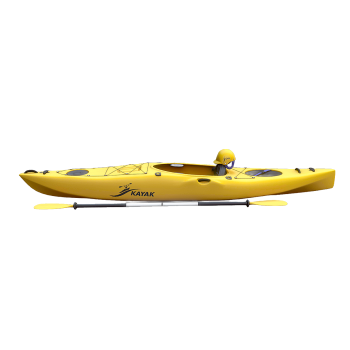
Rubber kayak 3D model

Rubber kayak 3D model

Dock winch

Dock winch

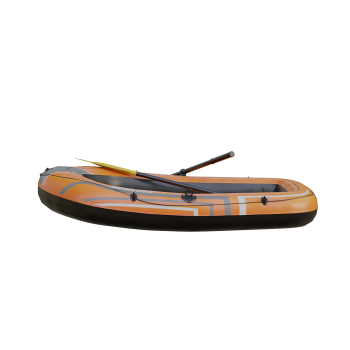
Inflatable small boat 3D model
Inflatable small boat 3D model

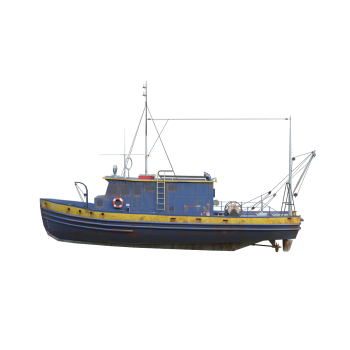
Fishing boat

Fishing boat

LEUSDEN Dutch West India Company Slave Ship

LEUSDEN Dutch West India Company Slave Ship

It is a slave ship operated by the Dutch West India Company (WIC). On January 1, 1738, the ship sank at the mouth of the Maroni River in Suriname, carrying 716 African prisoners, of which only 16 survived. This disaster is one of the most serious tragedies in Dutch shipping history, but little is known about it. This ship was one of the last WIC vessels used for transporting slaves and the only one specifically designed for this purpose. On each voyage, the ship transported an average of 660 slaves who were chained and tightly packed in the Caribbean Sea. A total of 10 slave voyages were conducted, and only 73% of the slaves arrived at their destination alive.
Kawasaki 310XUltrai water motorcycle

Kawasaki 310XUltrai water motorcycle

It is a high-performance water motorboat known for its outstanding power and luxurious configuration. Equipped with a 1498cc inline four cylinder turbocharged engine and intercooler, it can provide an astonishing 310 horsepower, making it one of the most powerful water personal transportation vehicles on the market. Equipped with advanced 22.5 ° deep V hull design, providing excellent stability and maneuverability. It also features Kawasaki Smart Reverse Deceleration (KSRD) function, 7-inch TFT color instrument display screen, and smartphone connectivity function, providing drivers with convenient operating experience and rich information display.
Inflatable boat 3D model (VisionPro)

Inflatable boat 3D model (VisionPro)

Known as a rubber boat or inflatable boat, it is a lightweight and flexible water transportation vehicle. Made of high-strength PVC or other synthetic materials, the interior of the ship is filled with air and has good buoyancy and stability. Inflatable boats are easy to carry and store because they can be deflated and folded, taking up less space. Inflatable boats are suitable for various water environments, including rivers, lakes, oceans, etc. They can be used for leisure fishing, water sports, rescue operations, and other purposes. There are various designs available, including single, double, or multi person models, and different sizes and shapes can be chosen according to usage needs. Usually equipped with air valves and oars for easy inflation, deflation, and paddling.
French submarines during World War I

French submarines during World War I

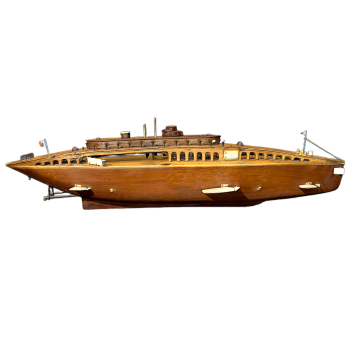
During World War I, French submarines (Sous marin de la Premi è re Guerre mondiale) played an important role in naval battles. At the beginning of World War I, the French Navy had 62 submarines.
Royal Mail Ship Titanic

Royal Mail Ship Titanic

RMS Titanic, also known as the Royal Mail Ship Titanic, was a luxury passenger liner owned by the British White Star Line in the early 20th century. It was designed by shipbuilders Alexander Carlisle and Thomas Andrews and built by the Harland&Wolff shipyard located in Belfast, Northern Ireland. On its maiden voyage on April 14, 1912, the Titanic collided with an iceberg in the North Atlantic and sank the next morning. This accident resulted in 1513 deaths, making it the largest maritime disaster of the 20th century.
Modern wooden two-stage sailboat 3D model

Modern wooden two-stage sailboat 3D model

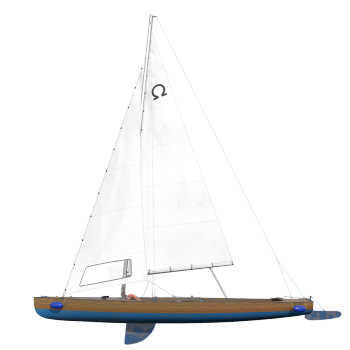
Sailboat is a ship that uses wind power to move forward. It is an ancient water transportation tool after boats and rafts, with a history of more than 5000 years. According to the number of masts, it can be divided into single masted sailboats, double masted sailboats, and multi masted sailboats; Divided by ship type, there are flat bottomed and pointed bottomed sailboats; According to the head type, sailboats are divided into wide headed, narrow headed, and pointed headed.
Private speedboat 3D model

Private speedboat 3D model

Fast boats have small tonnage, high speed, flexible maneuverability, and a displacement of usually tens of tons. They can travel at speeds of 30 to 40 knots, with some reaching up to 50 knots.
Vosper Electric Torpedo Ship

Vosper Electric Torpedo Ship

During World War II, the Royal Navy had the smallest and fastest warships. This type of torpedo tube has four 18 inch torpedo tubes on the washed deck. Other responsibilities include mine sweeping, as well as transporting and collecting special agents and assault personnel to and from enemy coastlines.
1 2 3 Next